Ingredient
Ginger
생강
Romanization: saenggang
Fresh ginger root, used in small amounts to brighten kimchi paste and marinades and to tame the strong smells of fish and meat.
Flavor
Hot, peppery and citrusy when fresh; warming and mellow when simmered.
 Photo: Schlaghecken Josef, CC BY-SA 4.0, via Wikimedia Commons
Origin & History
Ginger (Zingiber officinale) is thought to come from hot, humid South and Southeast Asia. When it reached Korea is unknown, but the Goryeo-era medical text Hyangyak gugeupbang already lists it as a medicinal plant, suggesting early cultivation. In Korea's climate the plant does not flower; it is propagated from pieces of rhizome planted in mid-April to early May and dug from late summer until just before frost.
Production has long been concentrated in North Jeolla and South Chungcheong, and Bongdong (in Wanju, North Jeolla) is traditionally regarded as the country's first ginger-growing site. Korean growers classify varieties as small, medium and large ginger, the small types being the most pungent.
In the kitchen ginger is mainly a seasoning: grated into kimchi paste alongside garlic, scallions and jeotgal, and added to braises and marinades to remove fishy or gamey odors. It is also candied as saenggang-jeonggwa and simmered into ginger tea, a traditional home remedy for colds.
Nutrition
| Calories | 42 kcal |
|---|---|
| Protein | 1 g |
| Fat | 0.2 g |
| Carbohydrates | 9.8 g |
| Fiber | 2.6 g |
| Sodium | 4 mg |
Notable forManganese · Potassium
Values from the Korean Food Composition Table (RDA, 2015 data). Ginger is used by the teaspoon, so per-serving contributions are very small. Actual values vary with ingredients, portion size and preparation.
Health Benefits
- Traditional use: Korean medicine has long used ginger for digestion, chills and nausea, and ginger tea remains a household cold remedy.
- What research suggests: According to NCCIH, ginger may help reduce nausea and vomiting in pregnancy and may ease menstrual cramps; evidence for motion sickness is generally not supportive.
- Side effects: Large amounts can cause heartburn, stomach upset or mouth irritation. Anyone taking medication or considering ginger supplements should talk with a healthcare provider.
Informational, not medical advice. Talk to a qualified professional about your own health and diet.
Dishes with Ginger
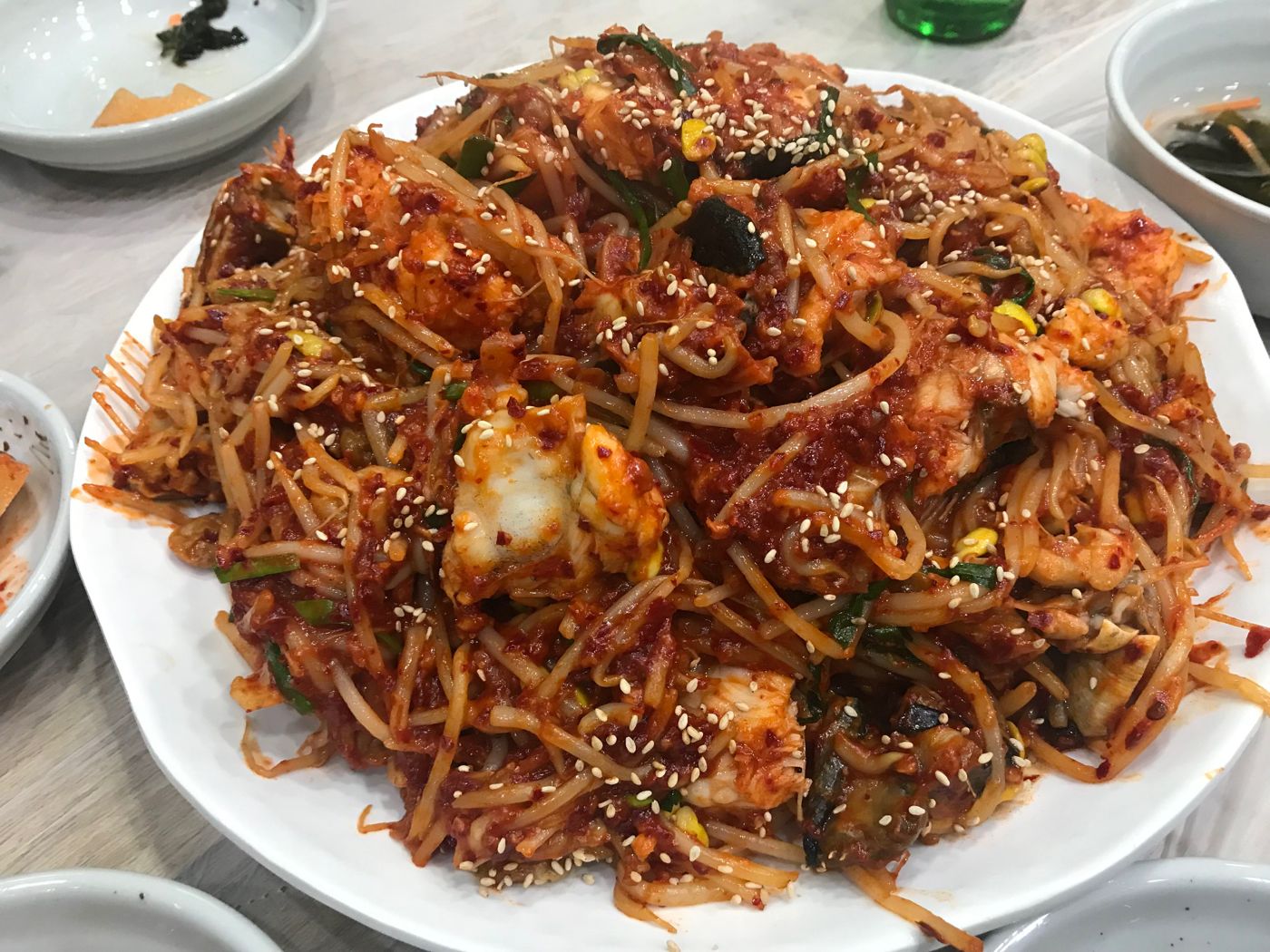 Agu-jjim (Spicy Braised Monkfish)아귀찜Monkfish braised with a mountain of soybean sprouts and minari in a fiery chili sauce thickened with starch — a Masan specialty now eaten across Korea.
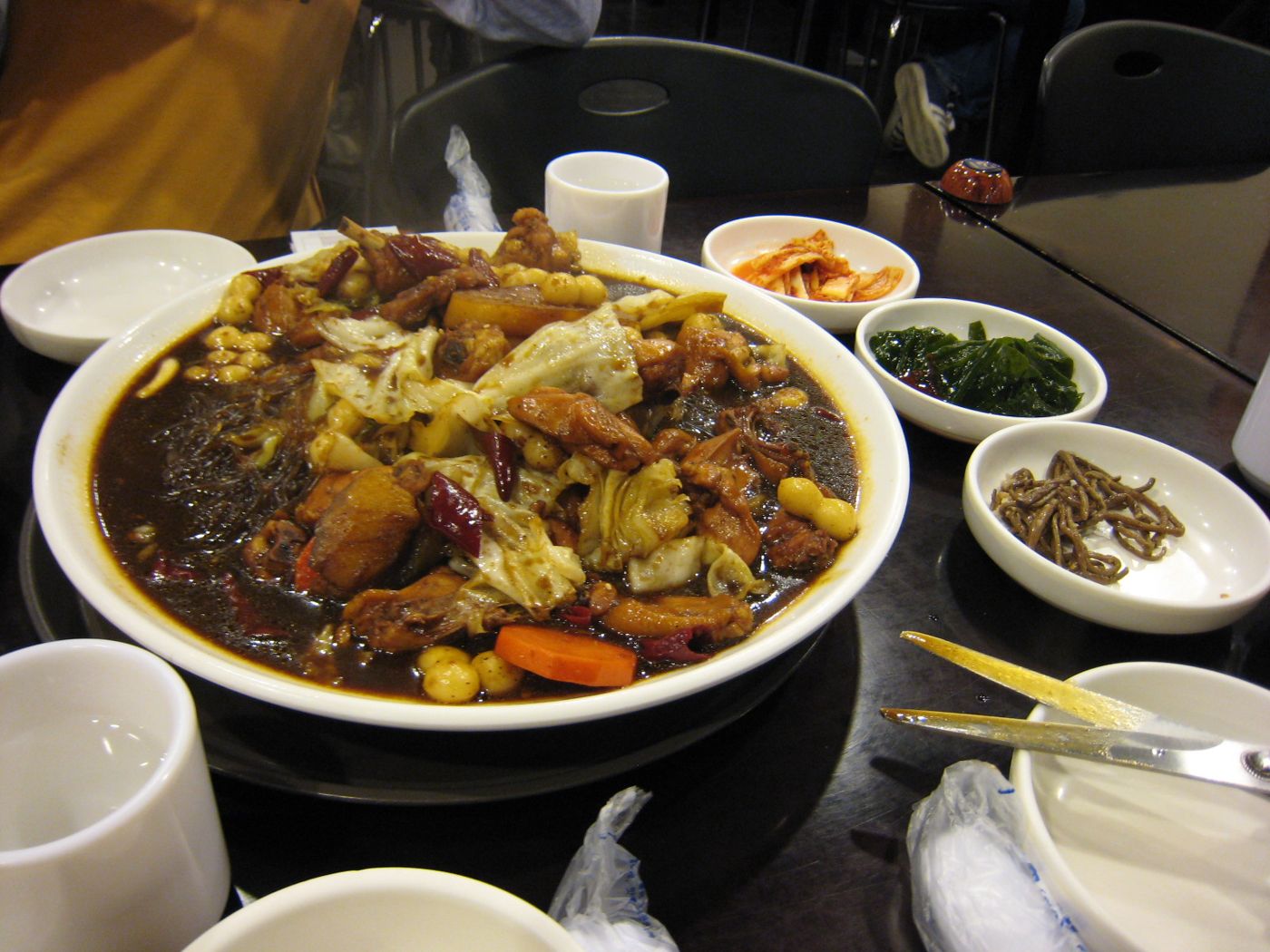 Andong Jjimdak (Soy-Braised Chicken with Glass Noodles)안동찜닭Chicken braised hard in a sweet soy sauce with potatoes, vegetables, dried chilies and glass noodles — a 1980s invention of Andong's old market, not a yangban heirloom.
 Napa Cabbage Kimchi배추김치Salted napa cabbage layered with a red paste of chili, garlic, ginger and fermented seafood, then left to ripen: the kimchi most people picture first.
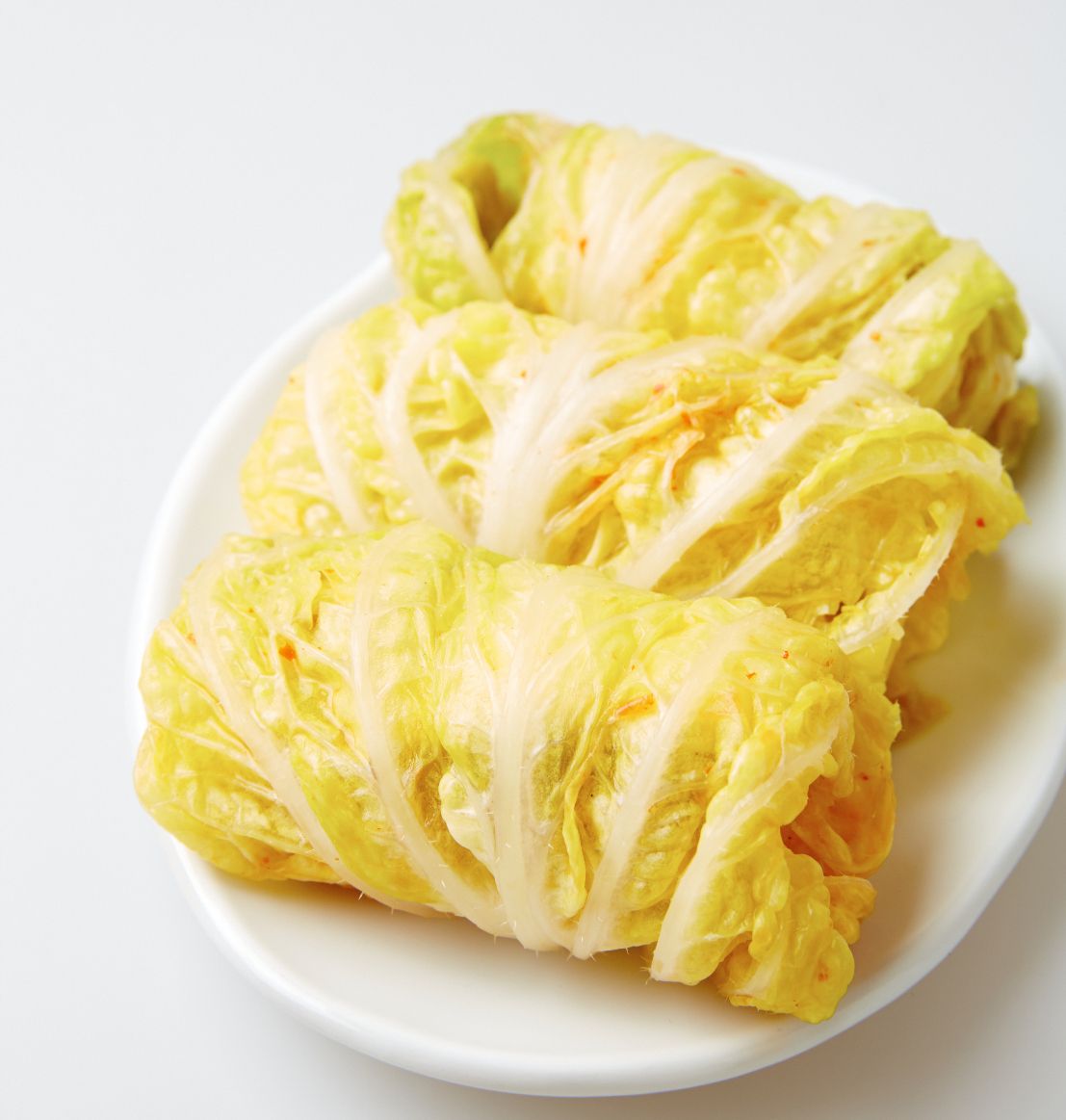 White Kimchi백김치Napa cabbage stuffed with radish, pear, chestnut and jujube and ripened in a clear, cool brine — kimchi with no chili flakes, mild and refreshing.
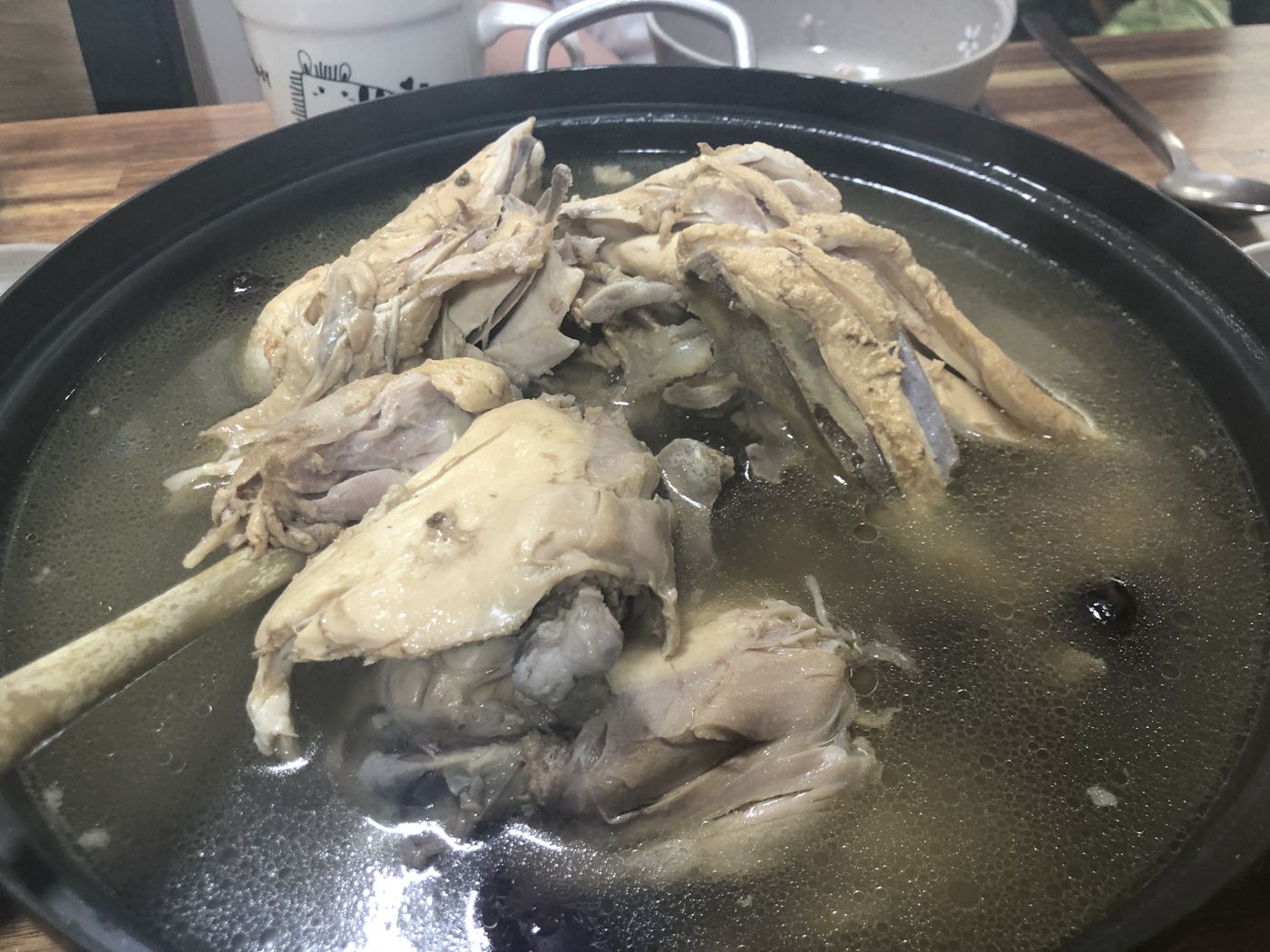 Baeksuk (Plain Whole Boiled Chicken)백숙A whole chicken simmered in plain water with garlic until falling-apart tender, eaten with salt and pepper, then followed by rice porridge cooked in the broth.
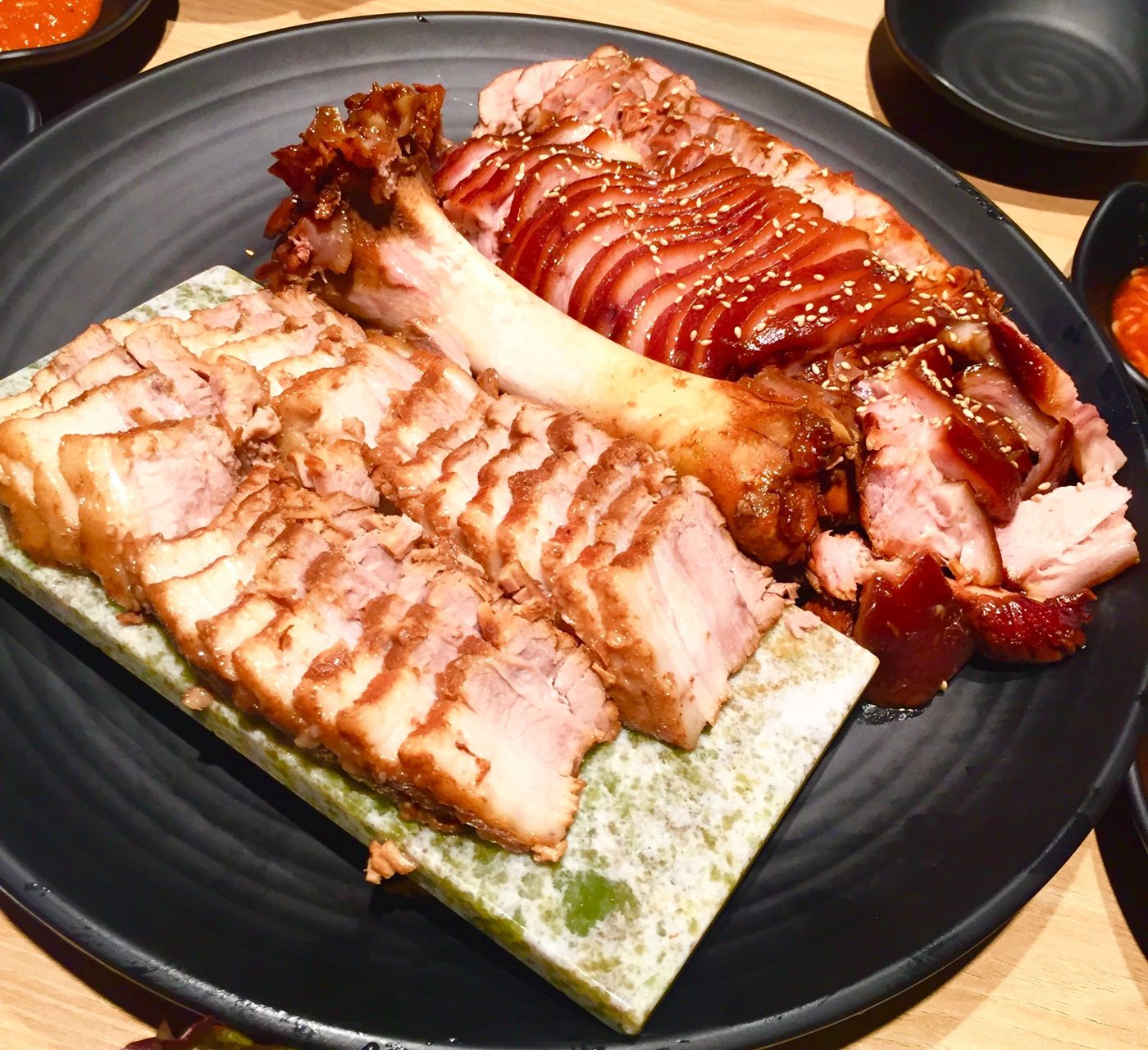 Bossam (Boiled Pork Wraps)보쌈Pork belly simmered with doenjang and aromatics, pressed and sliced, then wrapped in salted cabbage with spicy radish and salted shrimp — a feast dish built for sharing.
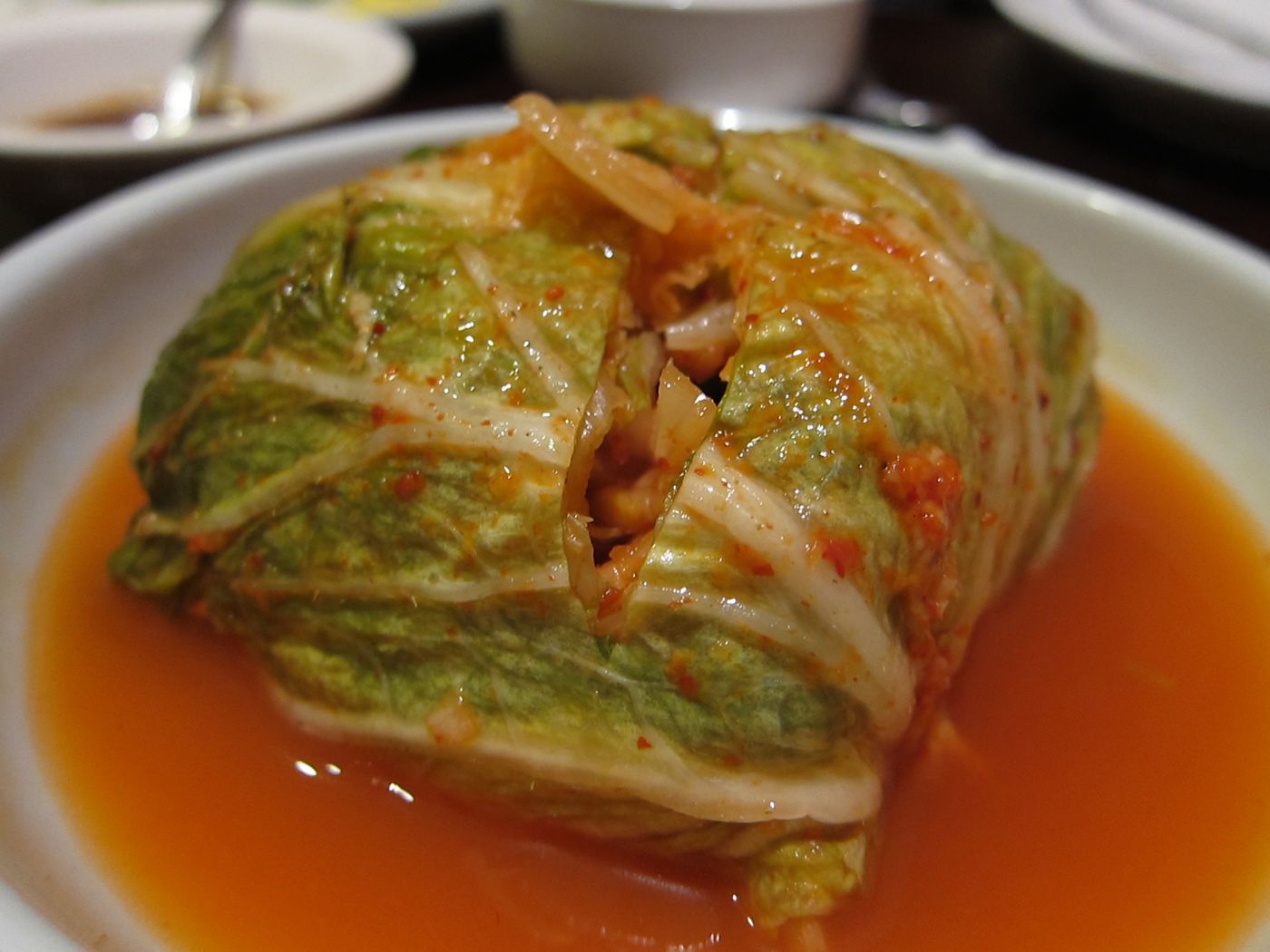 Wrapped Kimchi보쌈김치Cabbage, radish, fruit, nuts and seafood bundled inside whole cabbage leaves — the lavish wrapped kimchi of Gaeseong, made for honored guests.
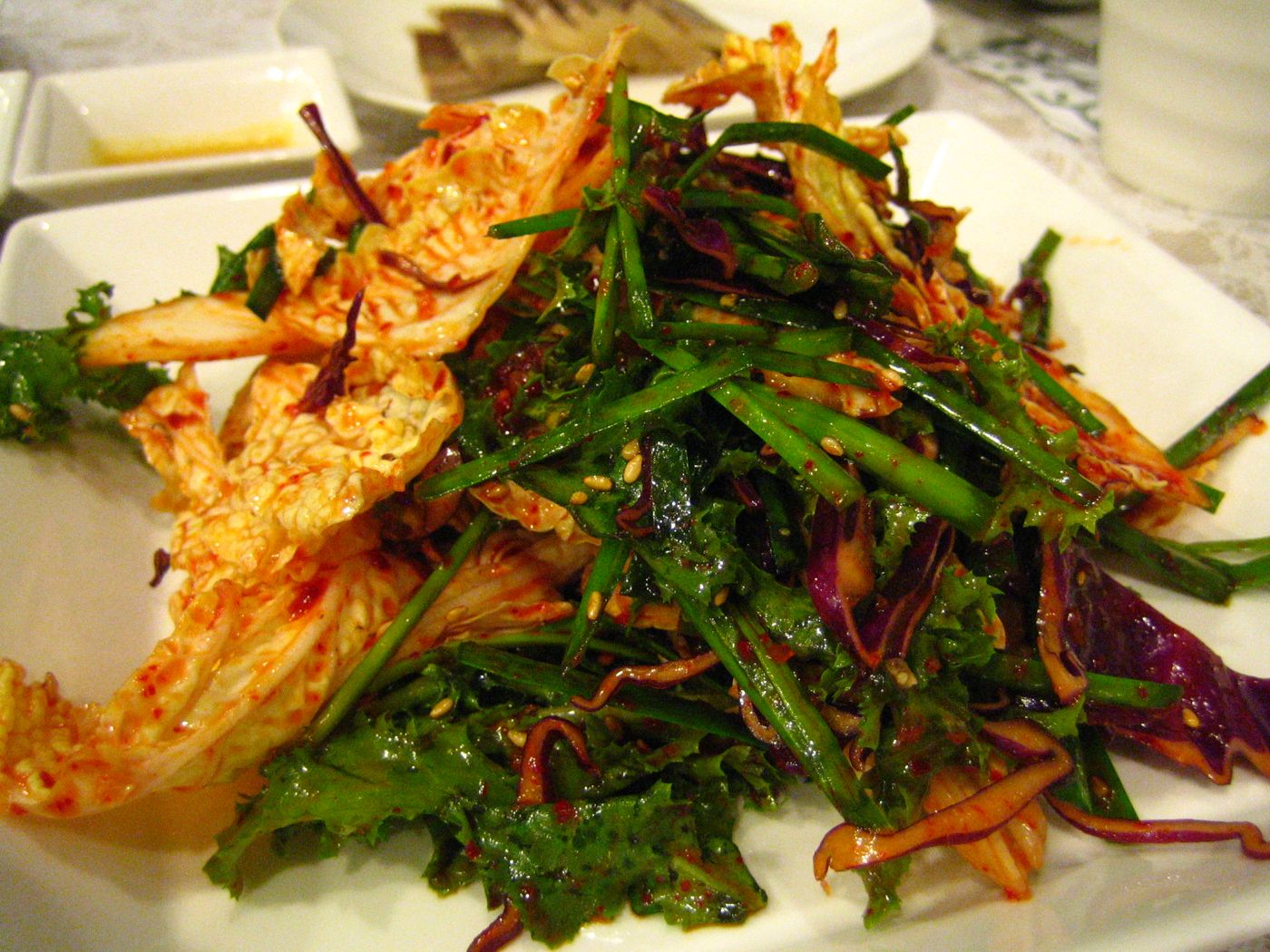 Garlic Chive Kimchi부추김치Whole garlic chives tossed with anchovy fish sauce and plenty of chili — a quick kimchi eaten fresh or ripe, known by a different name in nearly every province.
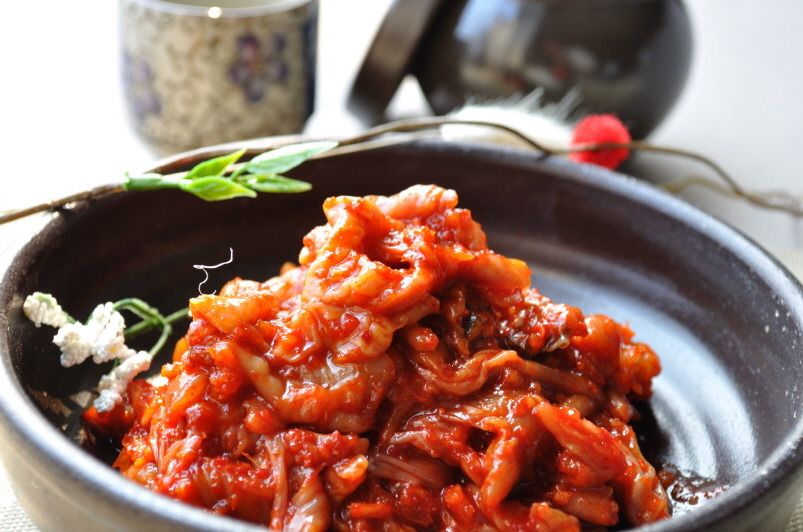 Salted Pollock Tripe창난젓Pollock intestines cured in salt, then cut and dressed with chili, garlic and green onion — a chewy, savory East Sea jeotgal, often mixed with radish.
- Ponytail Radish Kimchi총각김치Small, firm radishes kimchi'd whole with their green tops in a chili and salted-shrimp paste — crunchy, juicy and a fixture of the winter kimjang.
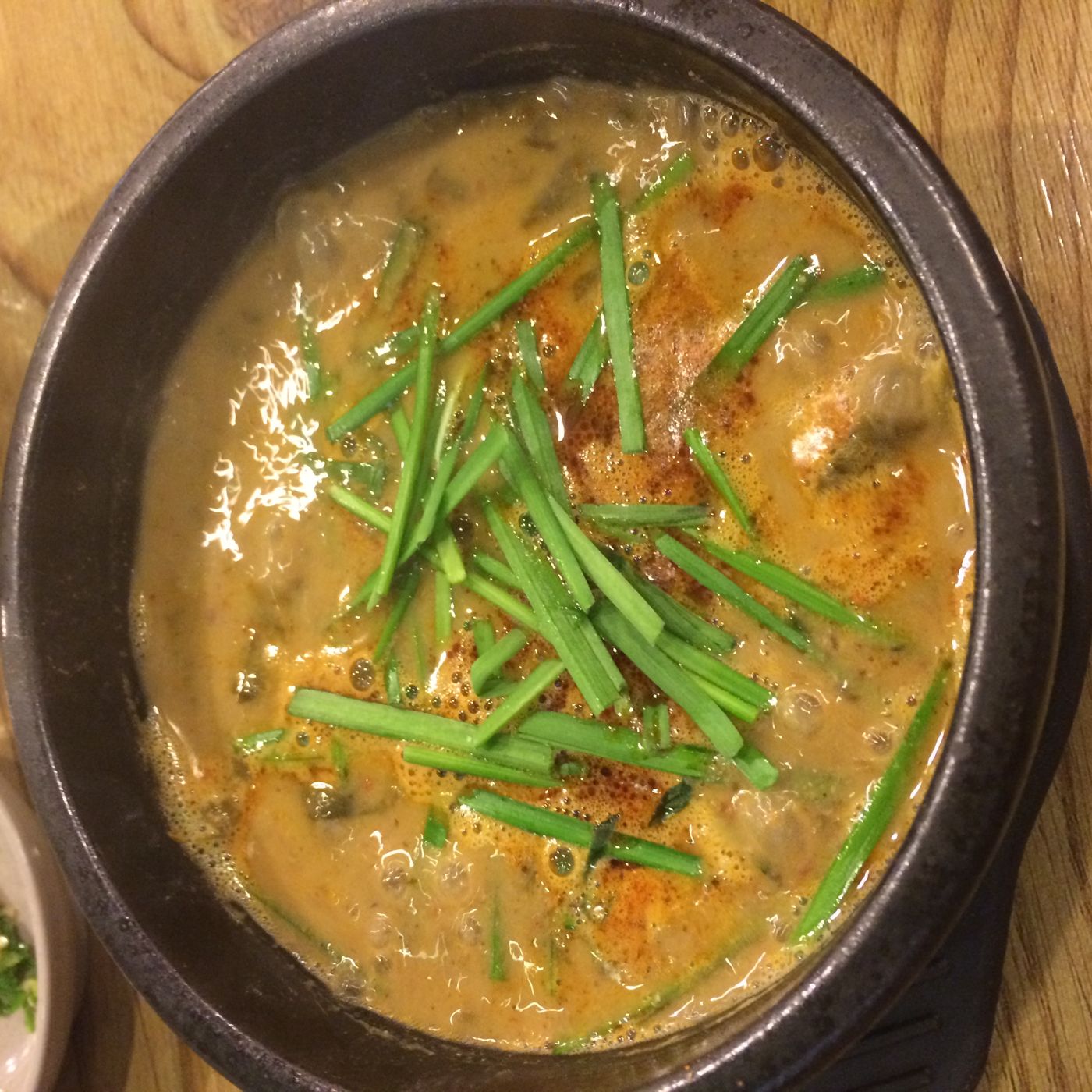 Chueotang (Loach Soup)추어탕Pond loaches simmered and ground into a thick, earthy soup with dried greens, doenjang and perilla, sharpened with chopi pepper — an autumn harvest dish turned year-round restorative.
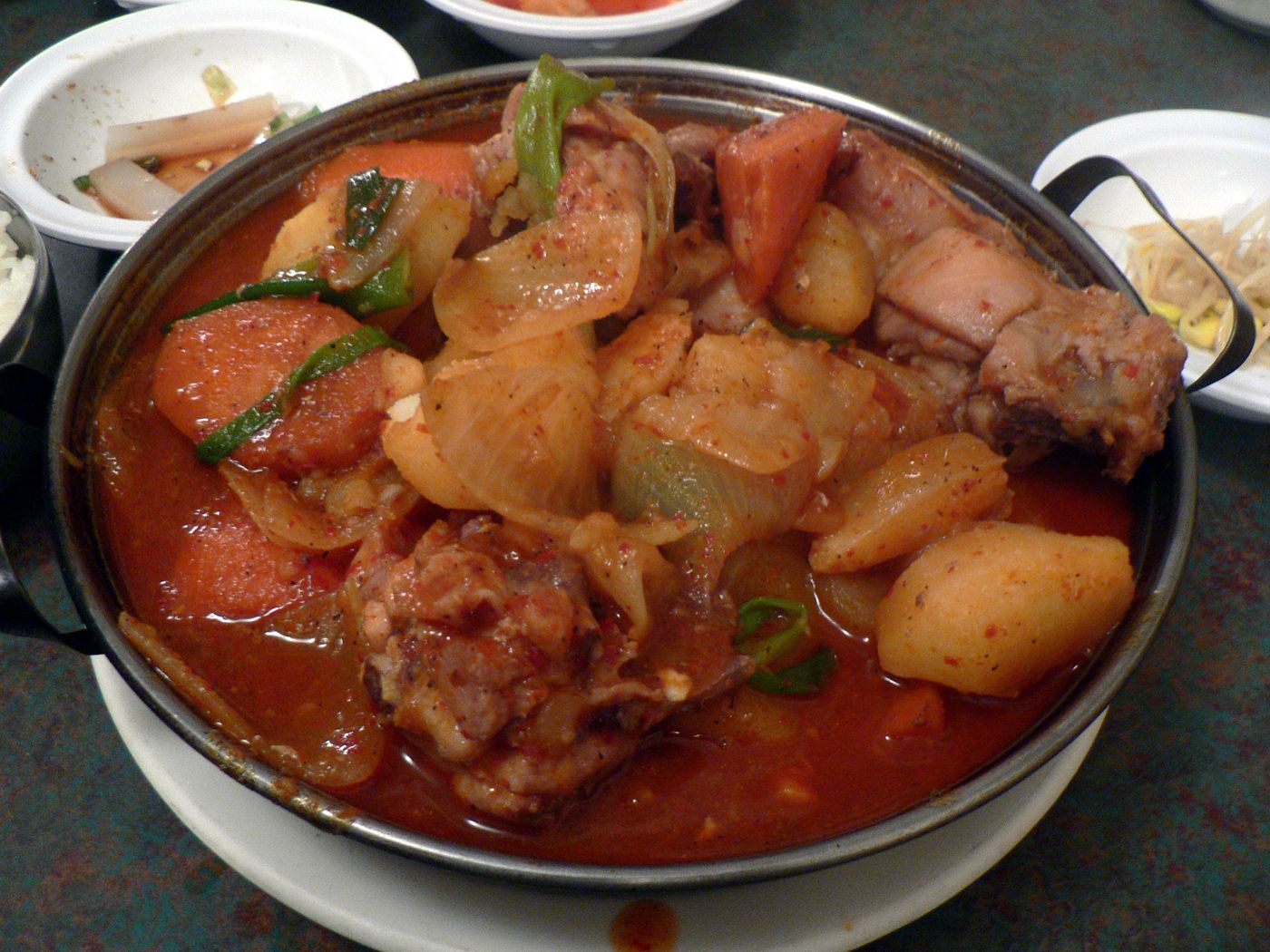 Dak-bokkeumtang (Spicy Braised Chicken)닭볶음탕Bone-in chicken and potatoes braised in a red chili sauce until it thickens and clings — long known as dakdoritang, a name whose origin is still debated.
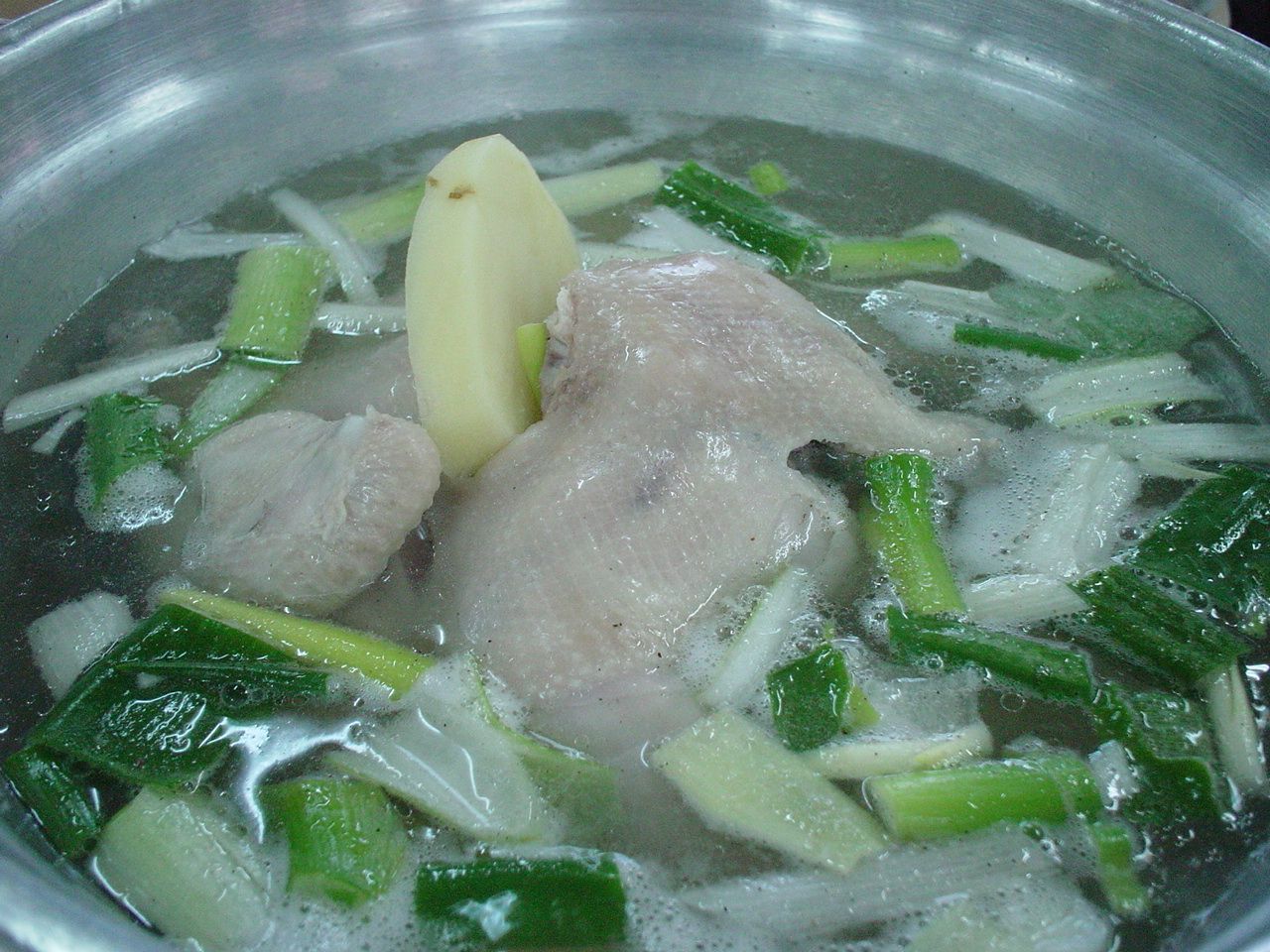 Dak Hanmari ("One Whole Chicken" Hot Pot)닭한마리A whole chicken simmered at the table with potatoes, rice cakes and green onion, dipped in a vinegar-mustard sauce, then finished with noodles in the broth — a Dongdaemun original.
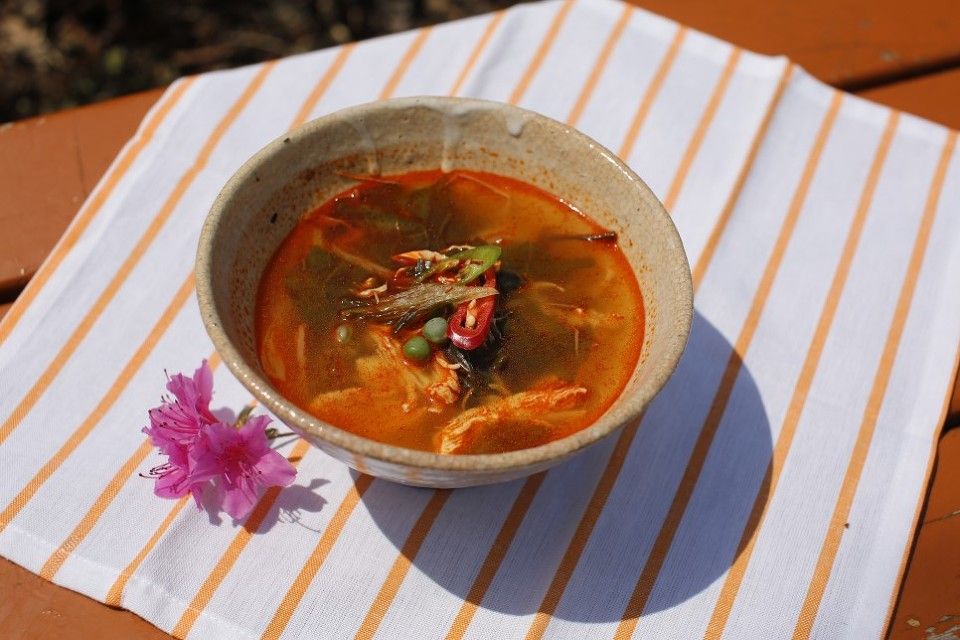 Dakgaejang (Spicy Chicken Soup)닭개장Shredded chicken simmered with bracken, taro stems and plenty of green onion in a fiery chili-oil broth — the chicken cousin of yukgaejang.
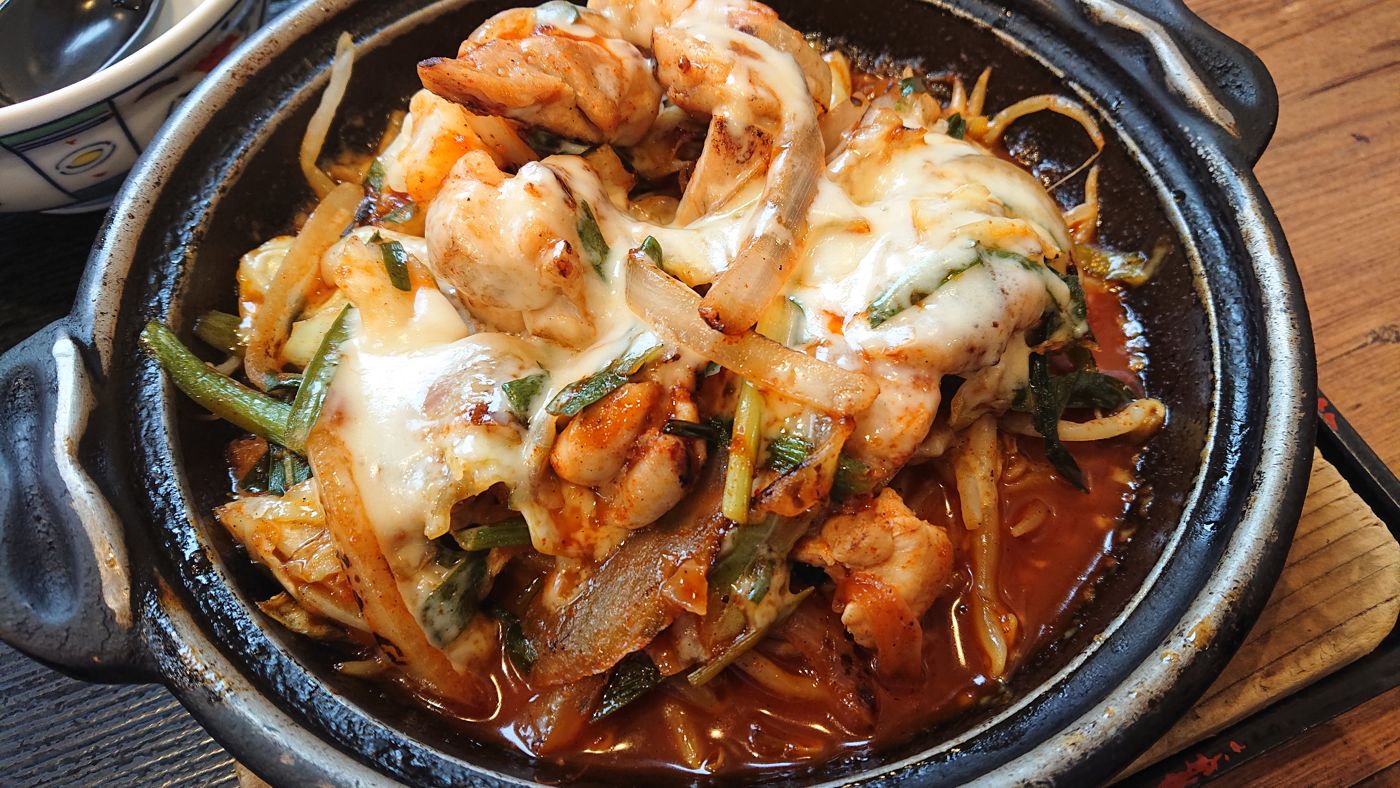 Dakgalbi (Spicy Stir-Fried Chicken)닭갈비Chicken marinated in a fiery gochujang sauce and cooked on a big iron pan with cabbage, sweet potato and rice cakes — Chuncheon's signature dish, finished with fried rice.
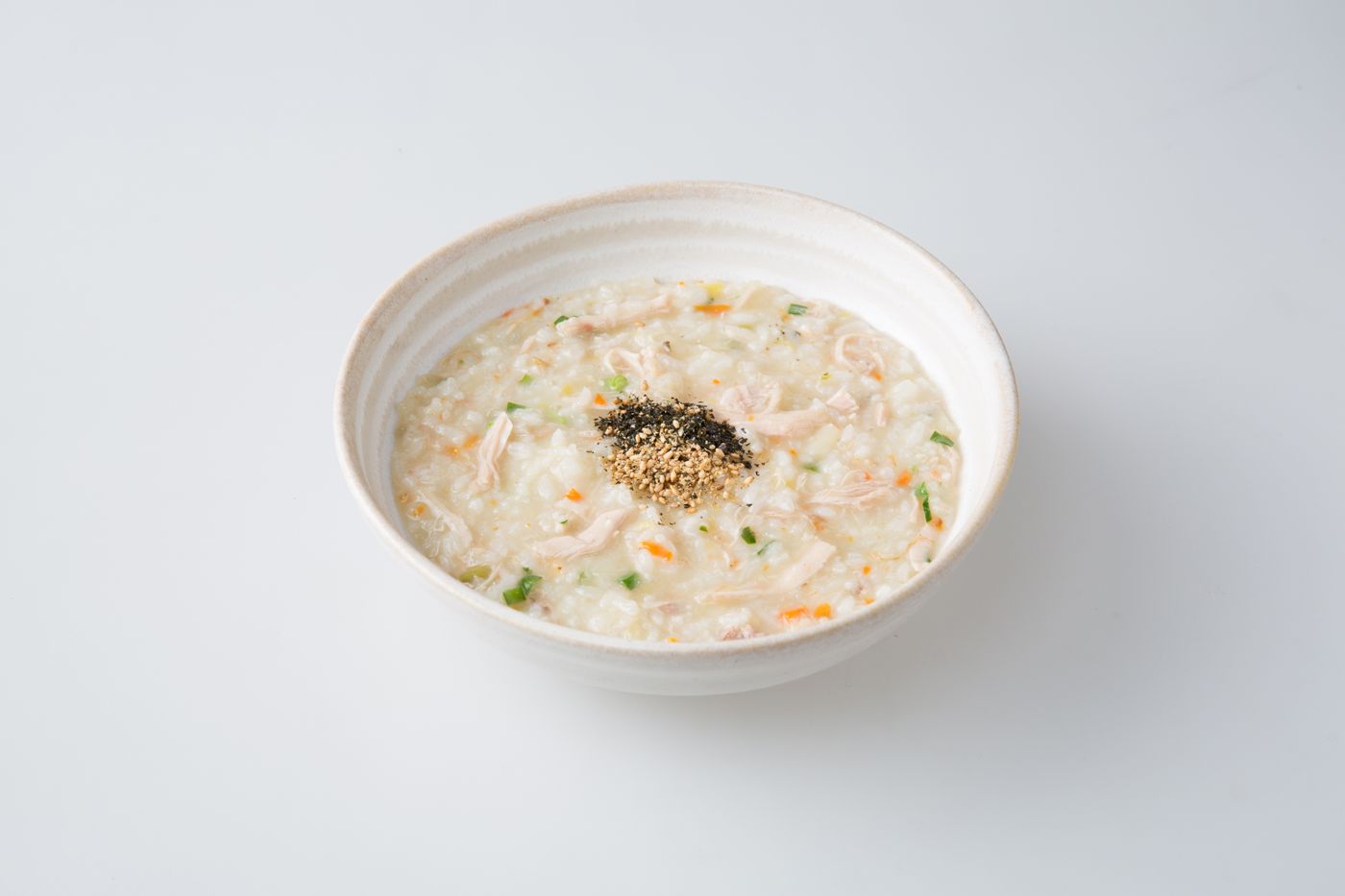 Dakjuk (Chicken Rice Porridge)닭죽Soft rice simmered in a clear chicken broth with shredded meat — a gentle, easy-to-digest porridge long served as summer restorative and sick-day food.
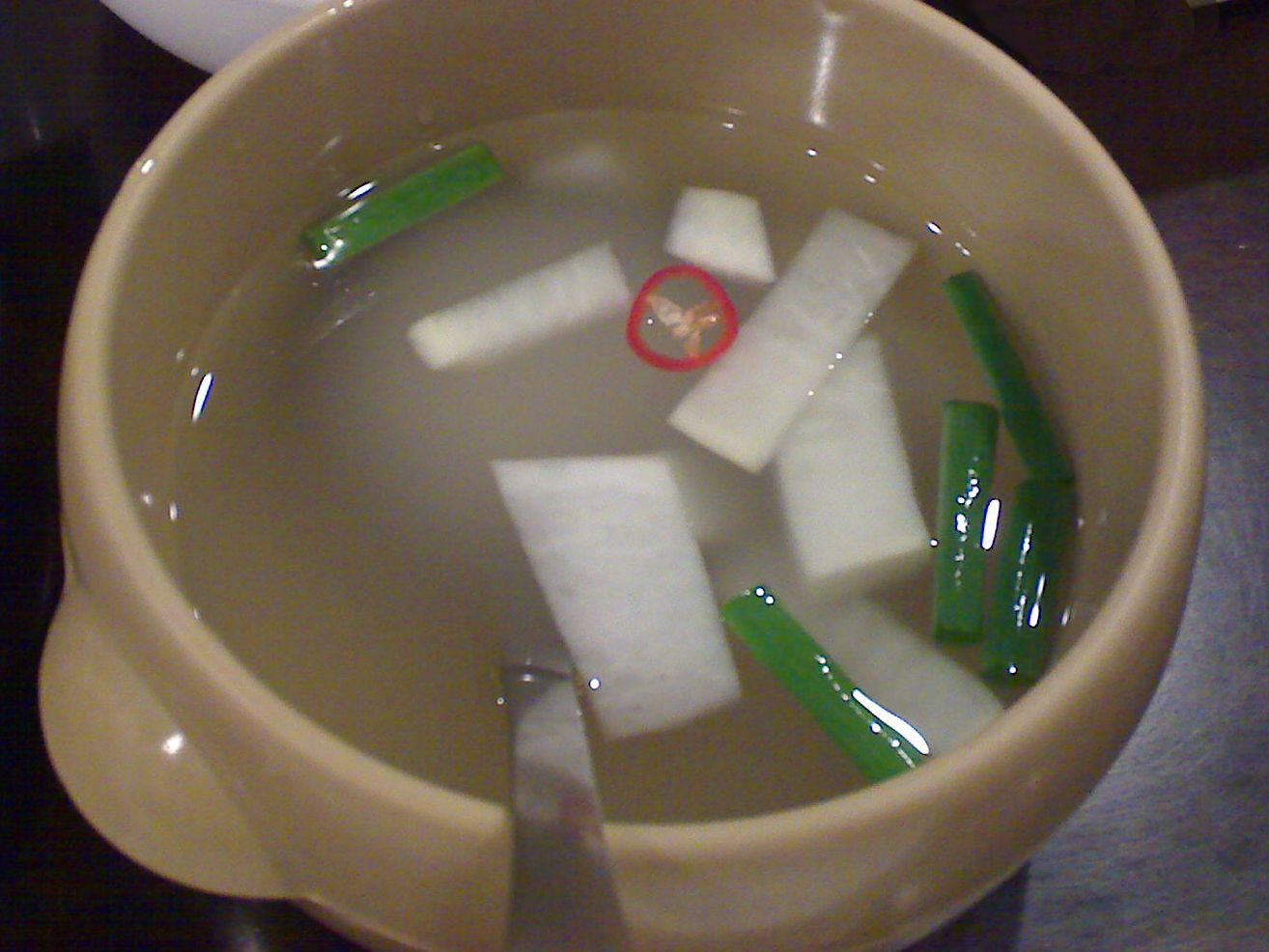 Radish Water Kimchi동치미Whole radishes steeped in a clear salt brine with pear, ginger and green chili — a winter water kimchi whose tangy broth is prized on its own.
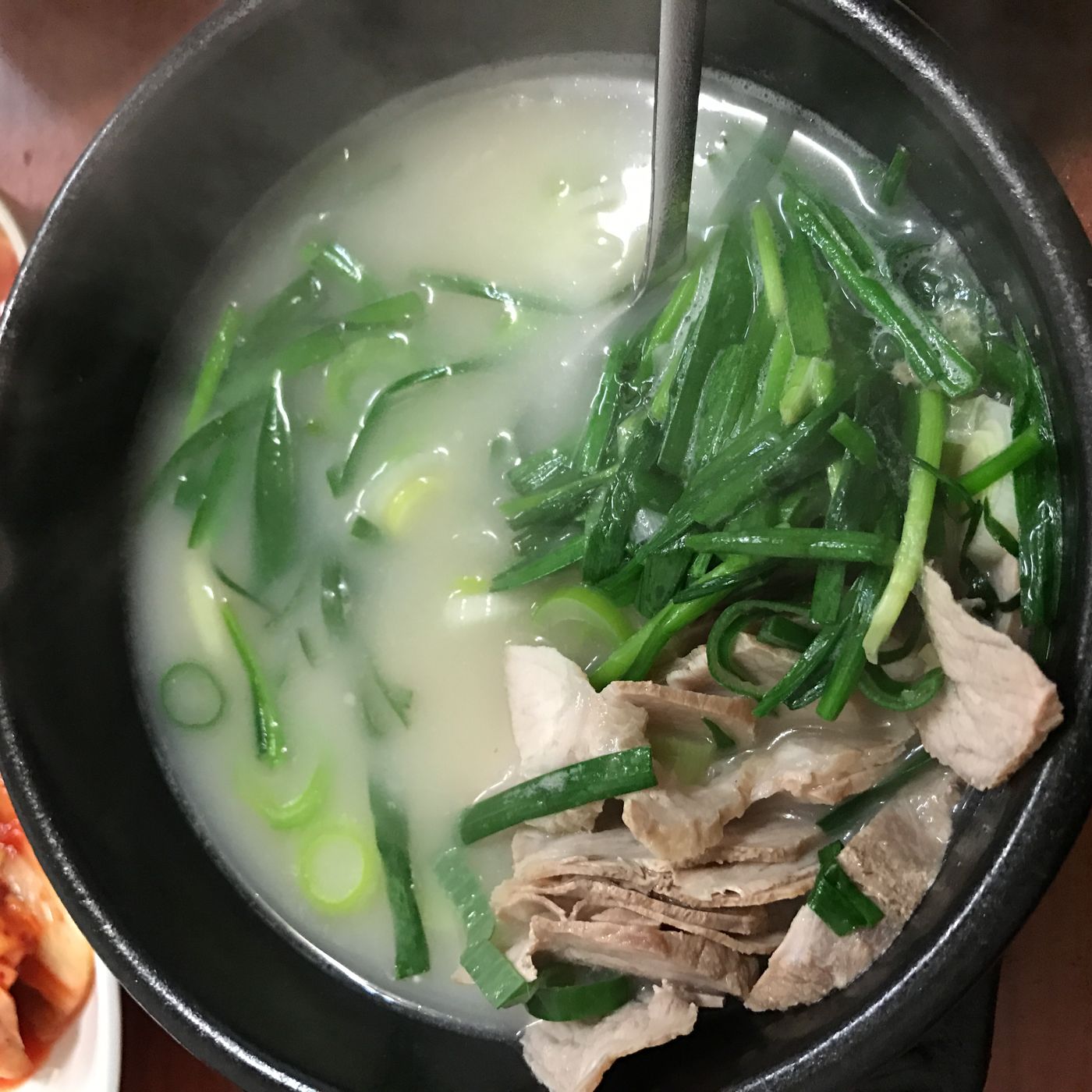 Dwaeji Gukbap (Busan Pork and Rice Soup)돼지국밥Slices of boiled pork in a milky pork-bone broth over rice, seasoned at the table with salted shrimp and garlic chives — Busan's signature everyday bowl.
- Spicy Lightly Salted Oysters어리굴젓Fresh oysters lightly salted and ripened with chili — a short-keeping winter jeotgal famous in Seosan and Ganwoldo in South Chungcheong.
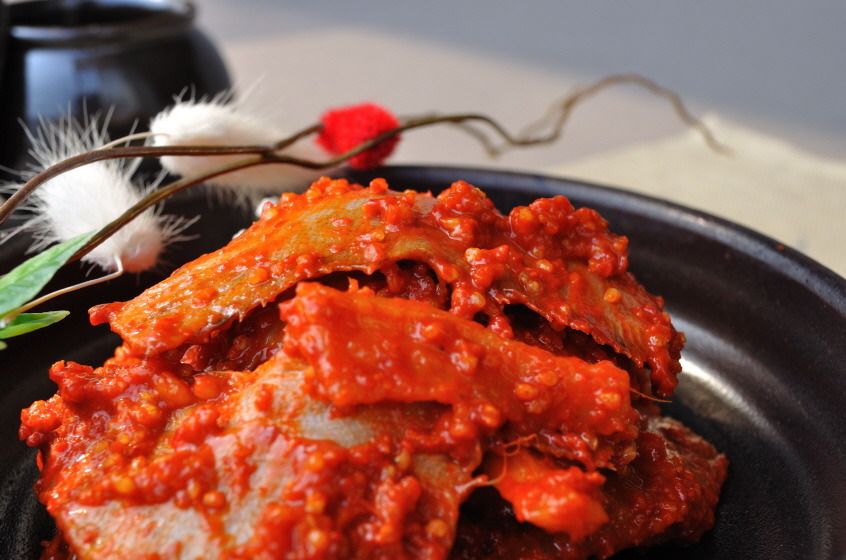 Fermented Flatfish with Millet가자미식해Salted flatfish fermented with foxtail millet, malt, radish and chili — the tangy, spicy sikhae of Hamgyeong, carried south to the Gangwon coast.
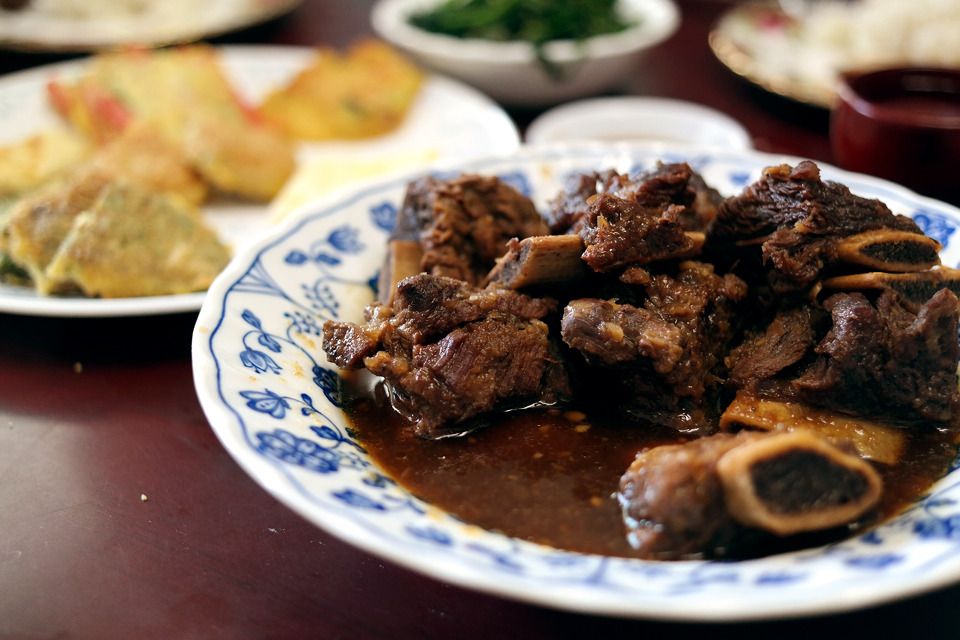 Galbi-jjim (Braised Beef Short Ribs)갈비찜Beef short ribs simmered slowly in soy sauce, pear and garlic with radish, carrot, chestnuts and jujubes until glossy and tender — a dish for holidays and honored guests.
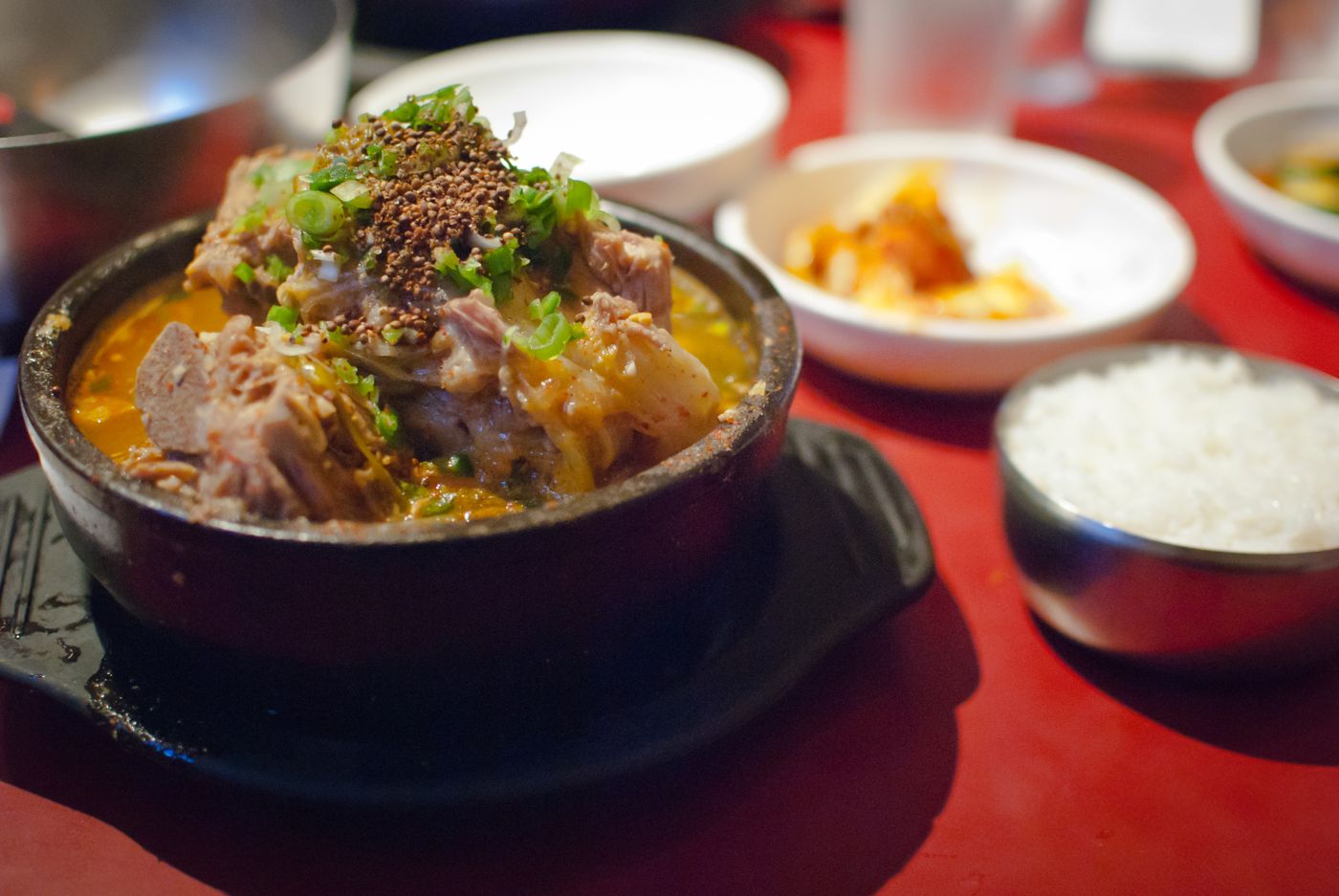 Gamjatang (Pork Bone and Potato Stew)감자탕Meaty pork spine simmered with potatoes, cabbage greens and perilla in a spicy doenjang-chili broth — a big shared pot of picking meat off the bones.
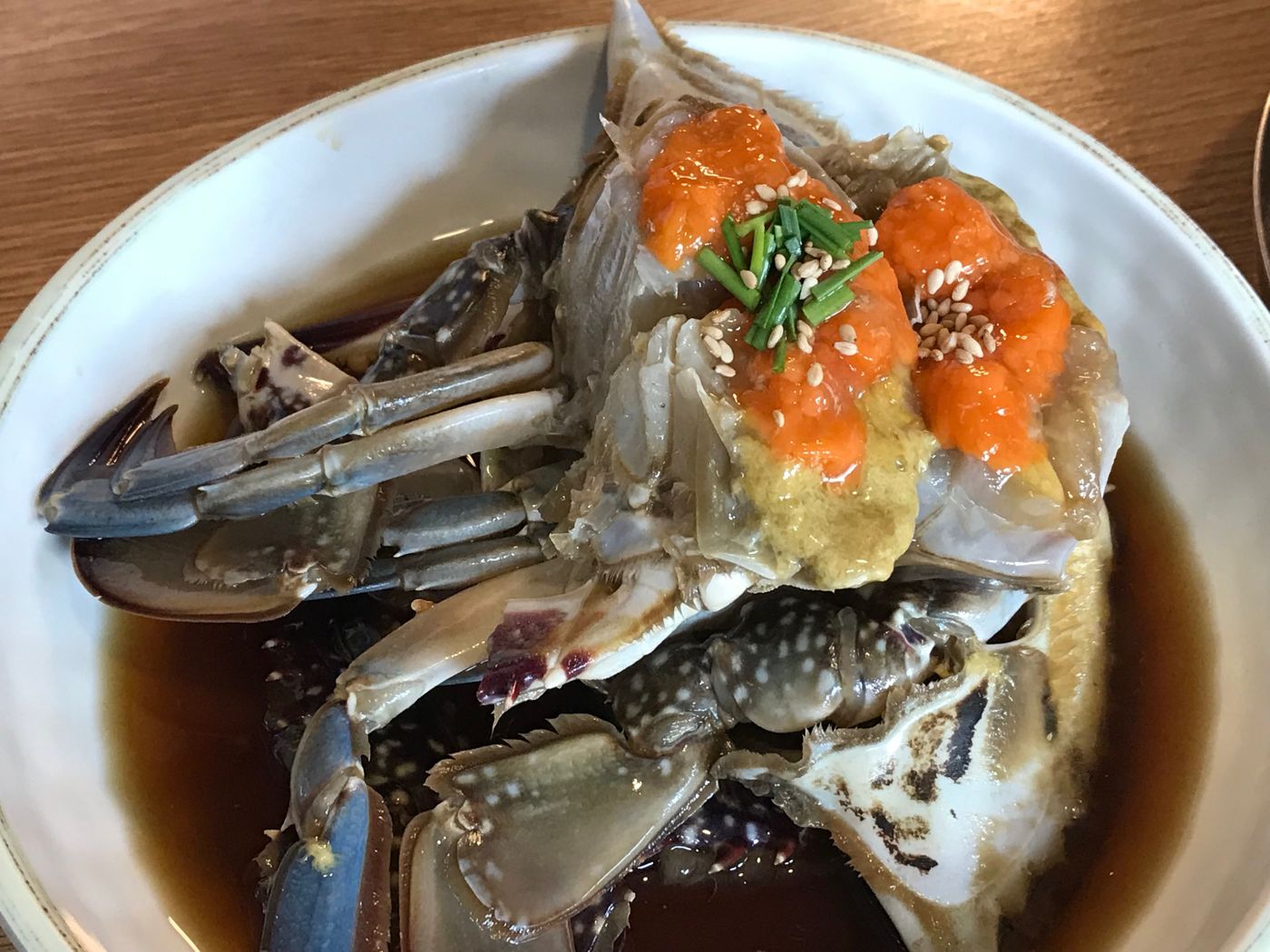 Soy-Marinated Raw Crab간장게장Raw crabs steeped in a boiled-and-cooled soy marinade until silky and savory — a centuries-old preserve, eaten by spooning rice into the shell.
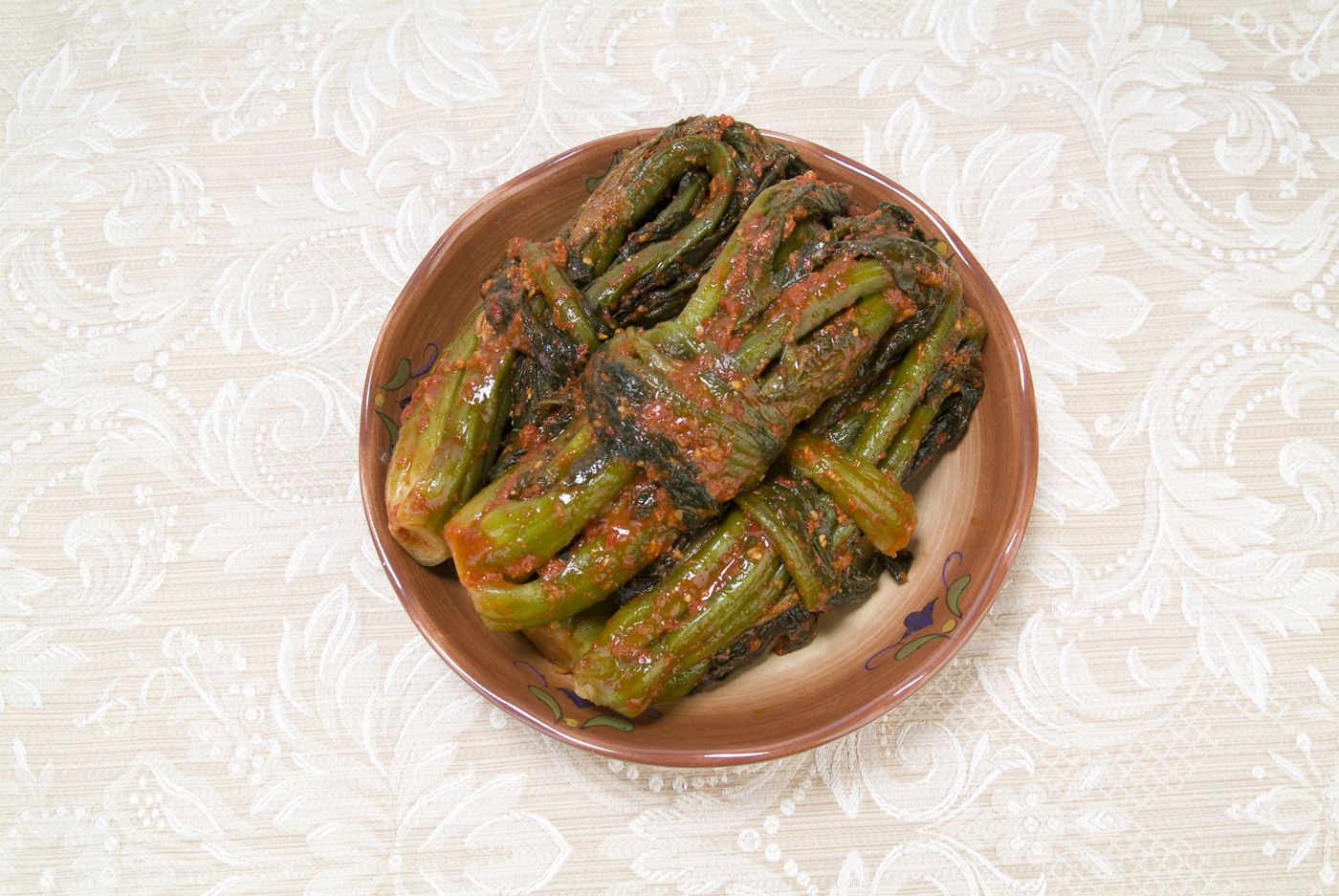 Mustard Leaf Kimchi갓김치Leaf mustard rolled in a chili and anchovy paste and fermented until its nose-tingling bite mellows — a Jeolla specialty, famously from Dolsan in Yeosu.
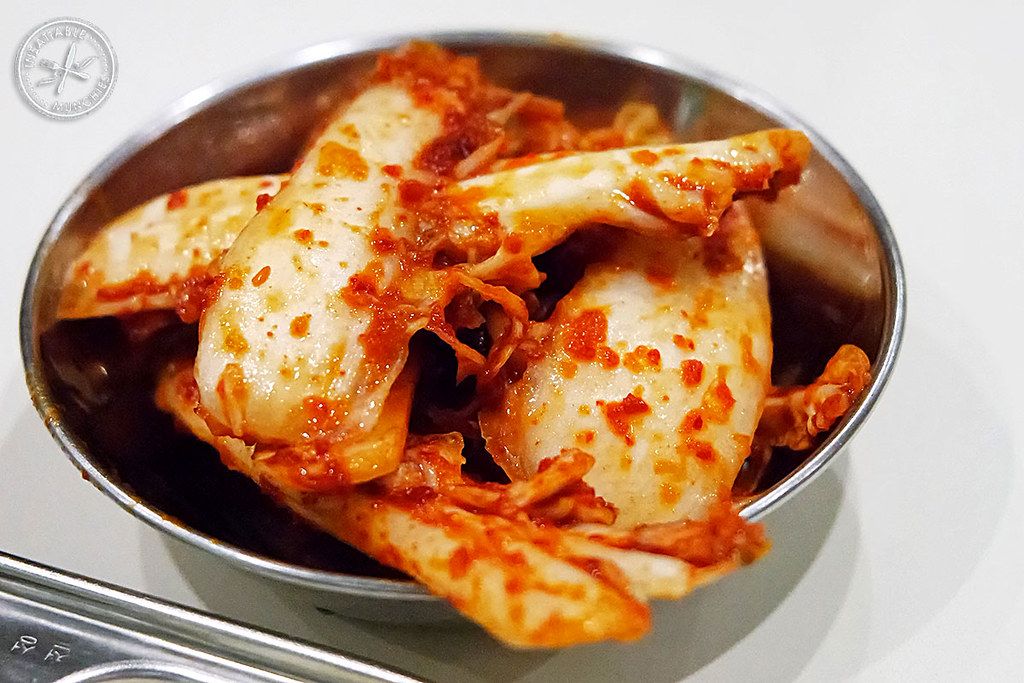 Fresh Cabbage Kimchi겉절이Napa cabbage salted only briefly, then tossed with chili, garlic and fish sauce and eaten the same day — kimchi at its freshest, crisp and bright.
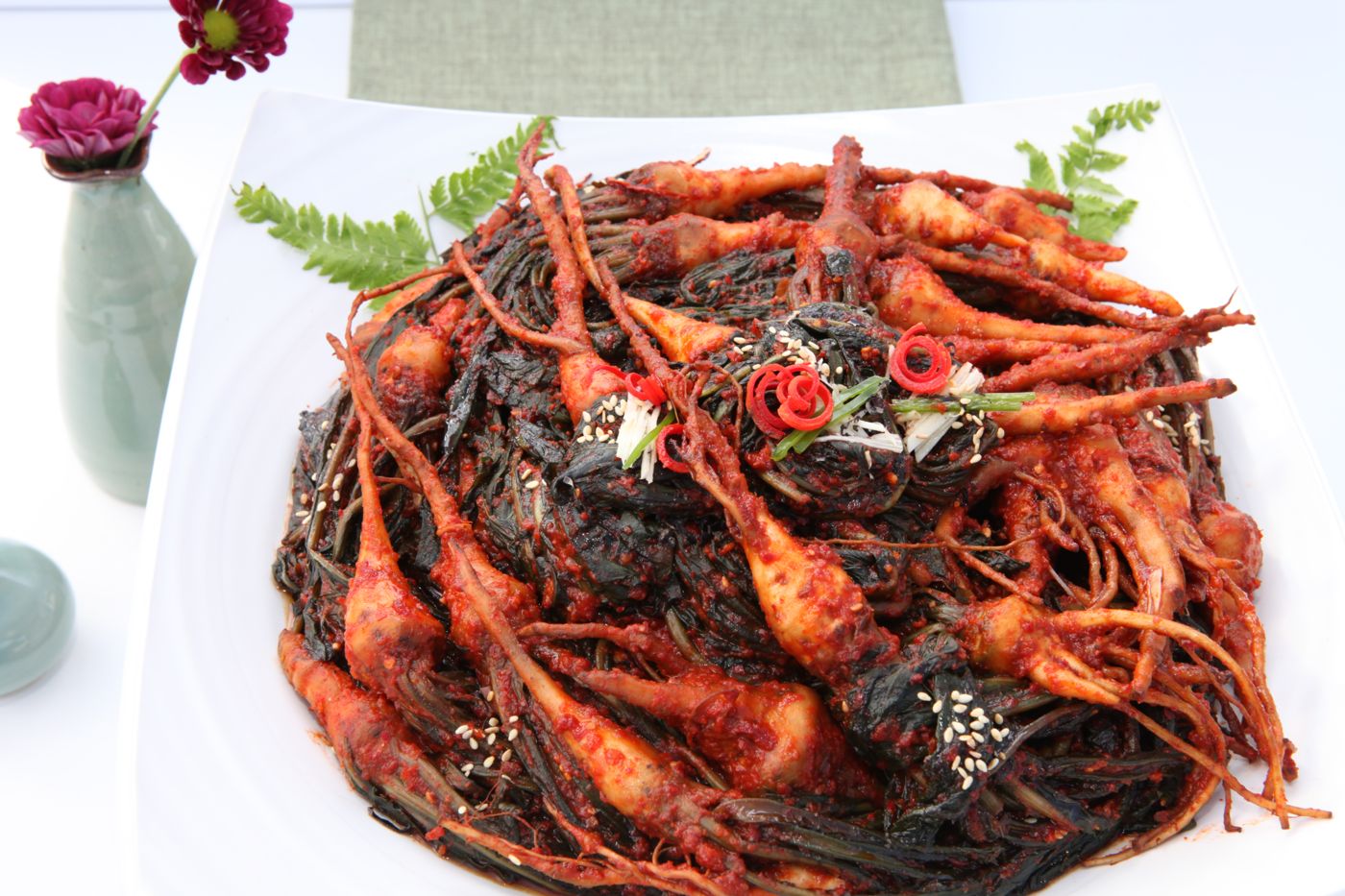 Bitter Godeulppaegi Kimchi고들빼기김치A bittersweet Jeolla kimchi of whole godeulppaegi greens and roots, soaked for days to tame the bitterness and dressed with anchovy jeotgal and chili.
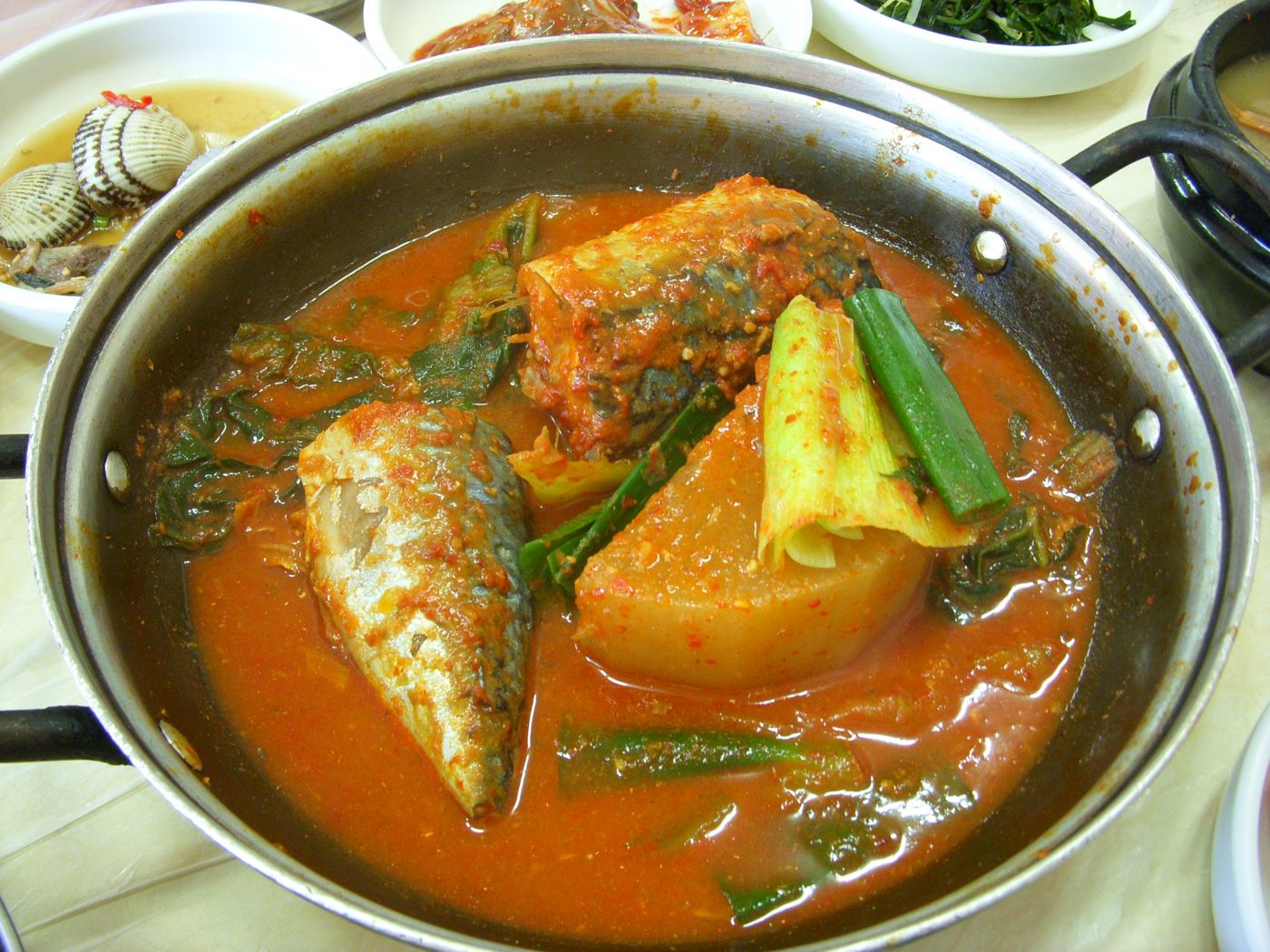 Godeungeo Jorim고등어조림Mackerel braised on a bed of Korean radish in a spicy soy and chili sauce — a warming, rice-friendly dish where the radish is often the best part.
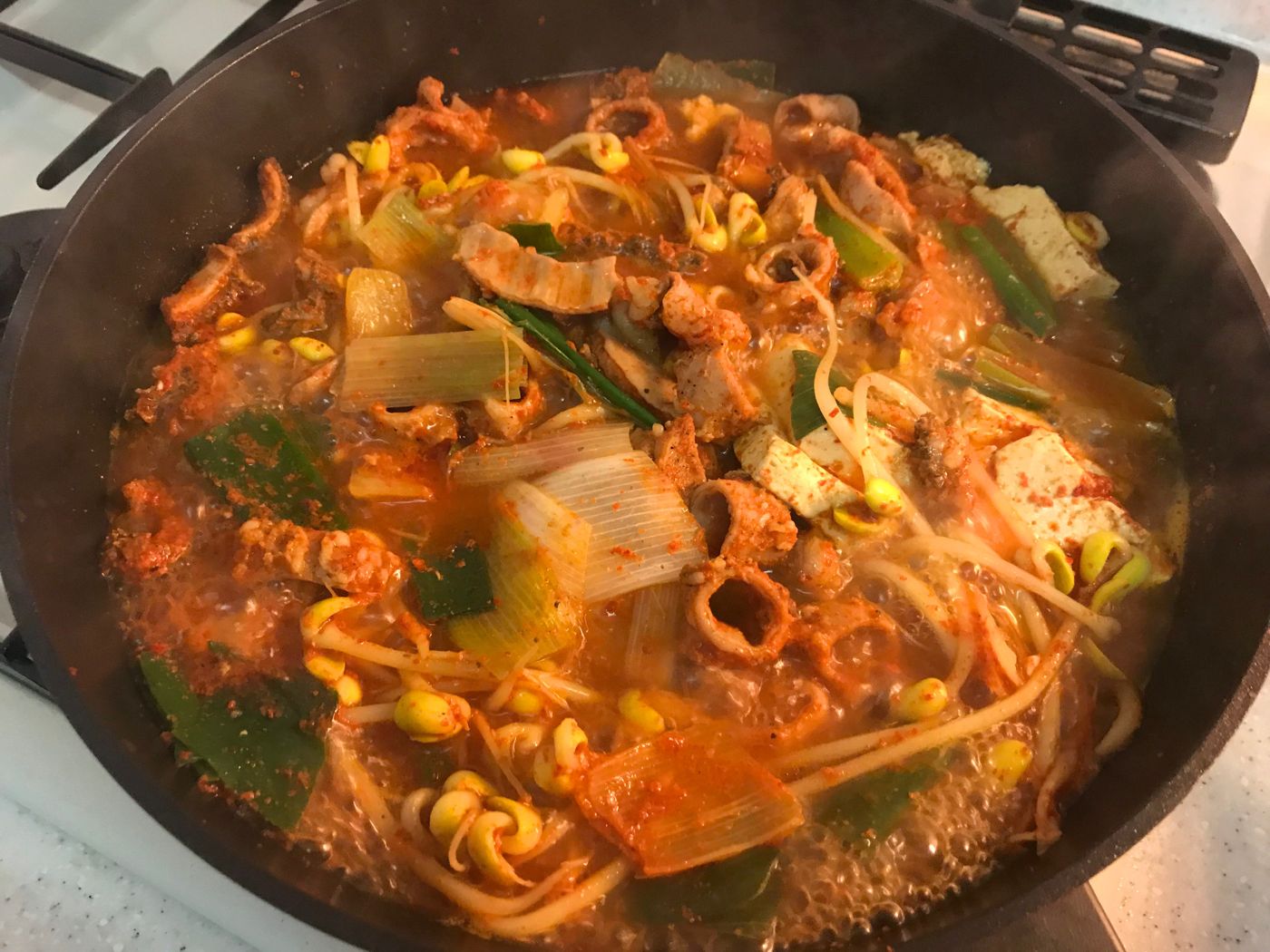 Gopchang Jeongol (Beef Intestine Hot Pot)곱창전골Cleaned beef small intestine and tripe simmered at the table with vegetables, mushrooms and glass noodles in a spicy broth — a rich, chewy hot pot for cold nights.
- Oyster Radish Kimchi굴깍두기Cubed radish kimchi folded through with fresh raw oysters — a short-lived winter kimchi, eaten within days while the oysters are still sweet.
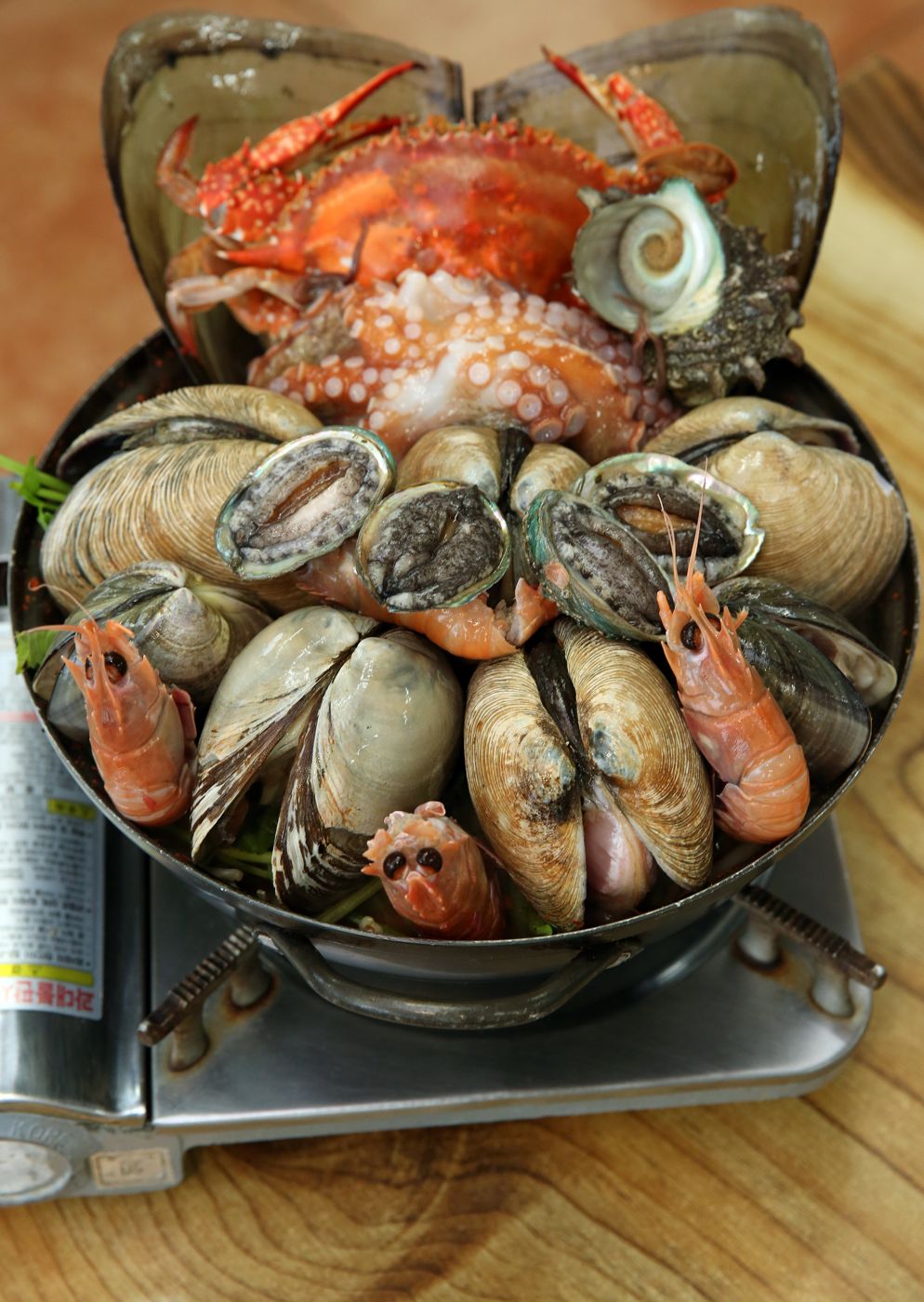 Haemul Tang (Spicy Seafood Hot Pot)해물탕Blue crab, octopus, shrimp, clams and sea squirt simmered with radish and water dropwort in a bright, spicy gochujang broth — a seafood feast in one pot.
- Pumpkin Kimchi for Stew호박김치Thick slices of pumpkin fermented with cabbage or young radish greens, then simmered into a mellow stew — a Hwanghae and Chungcheong cooking kimchi.
- Spicy Skate Salad홍어회무침Strips of raw or lightly fermented skate, firmed in vinegar and tossed with minari, radish and a sweet-sour gochujang dressing — Jeolla's feast-day salad.
- Hwangtae Gui (Grilled Seasoned Dried Pollock)황태구이Winter-cured dried pollock softened, opened flat and grilled with a glossy gochujang glaze — tender, savory and a specialty of Gangwon's mountain drying yards.
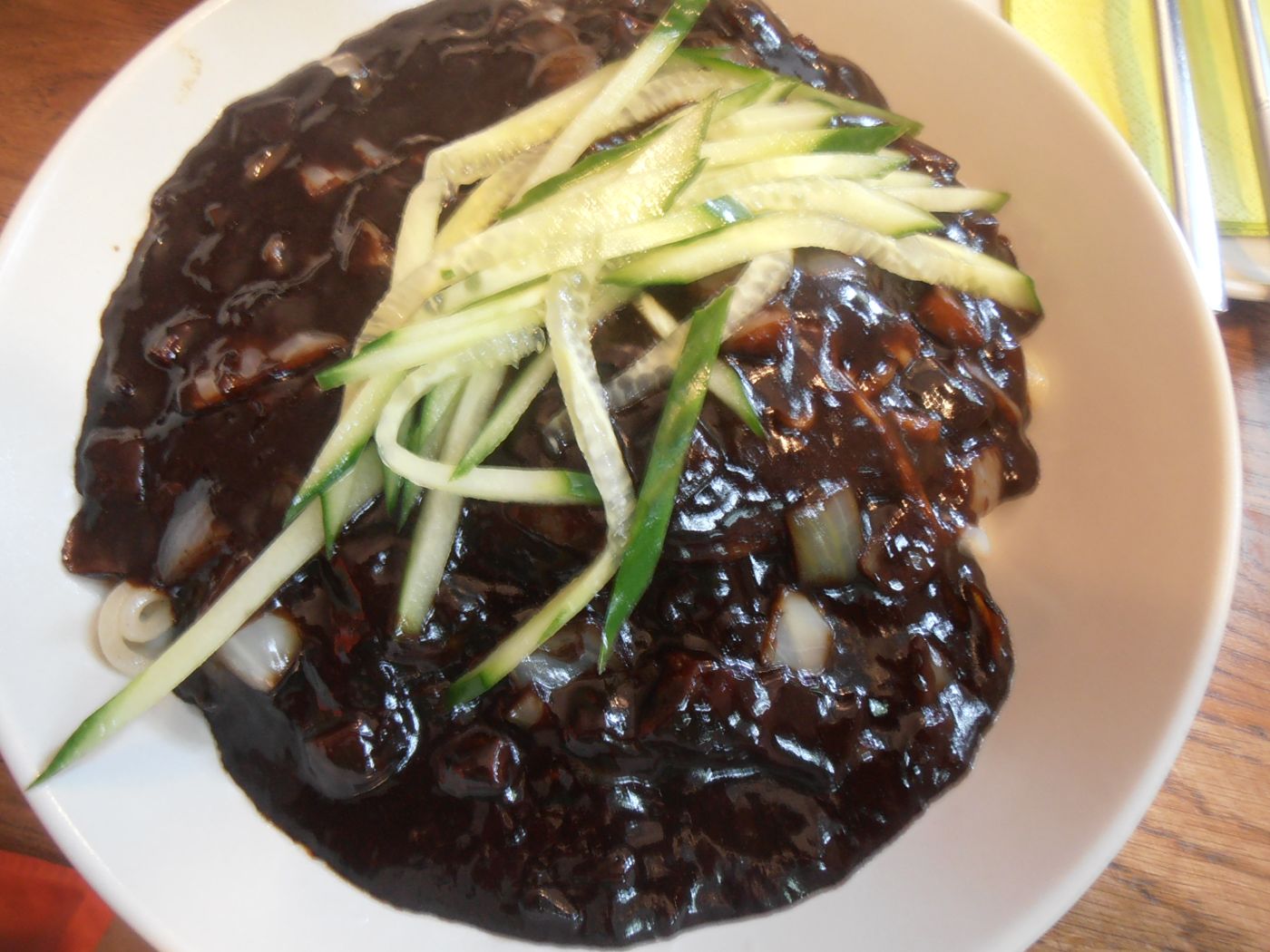 Jajangmyeon (Noodles in Black Bean Sauce)자장면Wheat noodles under a glossy sauce of chunjang fried with pork, onion and potato — the Korean-Chinese dish born among Shandong migrants in Incheon, contested origin claims and all.
- Soy Sauce Water Kimchi장김치Cabbage and radish cured in soy sauce instead of salt, floated in a lightly sweet soy brine with pear, chestnut and pine nuts — a court and gentry kimchi.
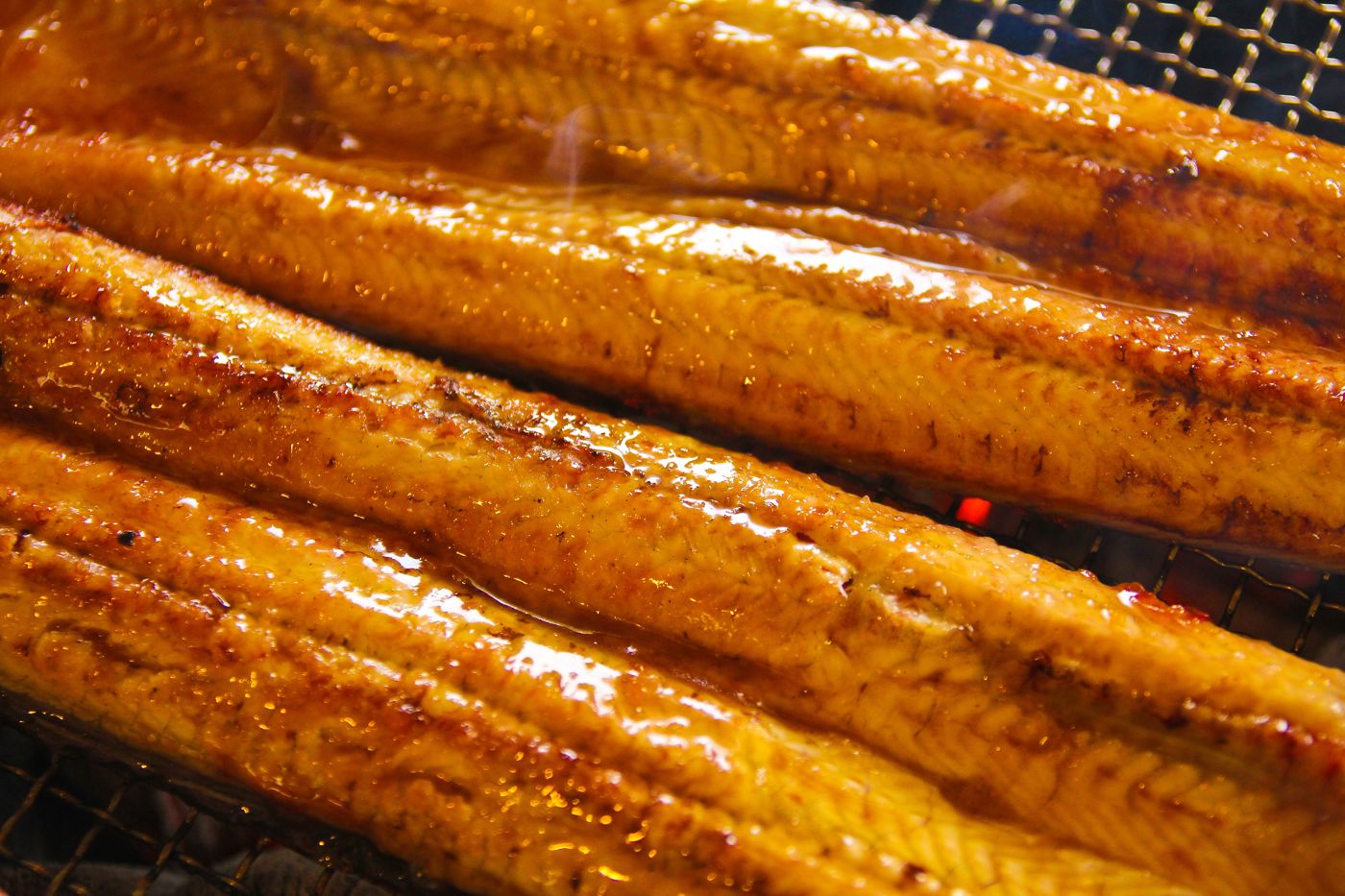 Jangeo-gui (Grilled Eel)장어구이Freshwater eel grilled over a flame, then brushed with a sweet-savory soy and gochujang glaze: a rich summer stamina dish tied to Gochang's pungcheon eel.
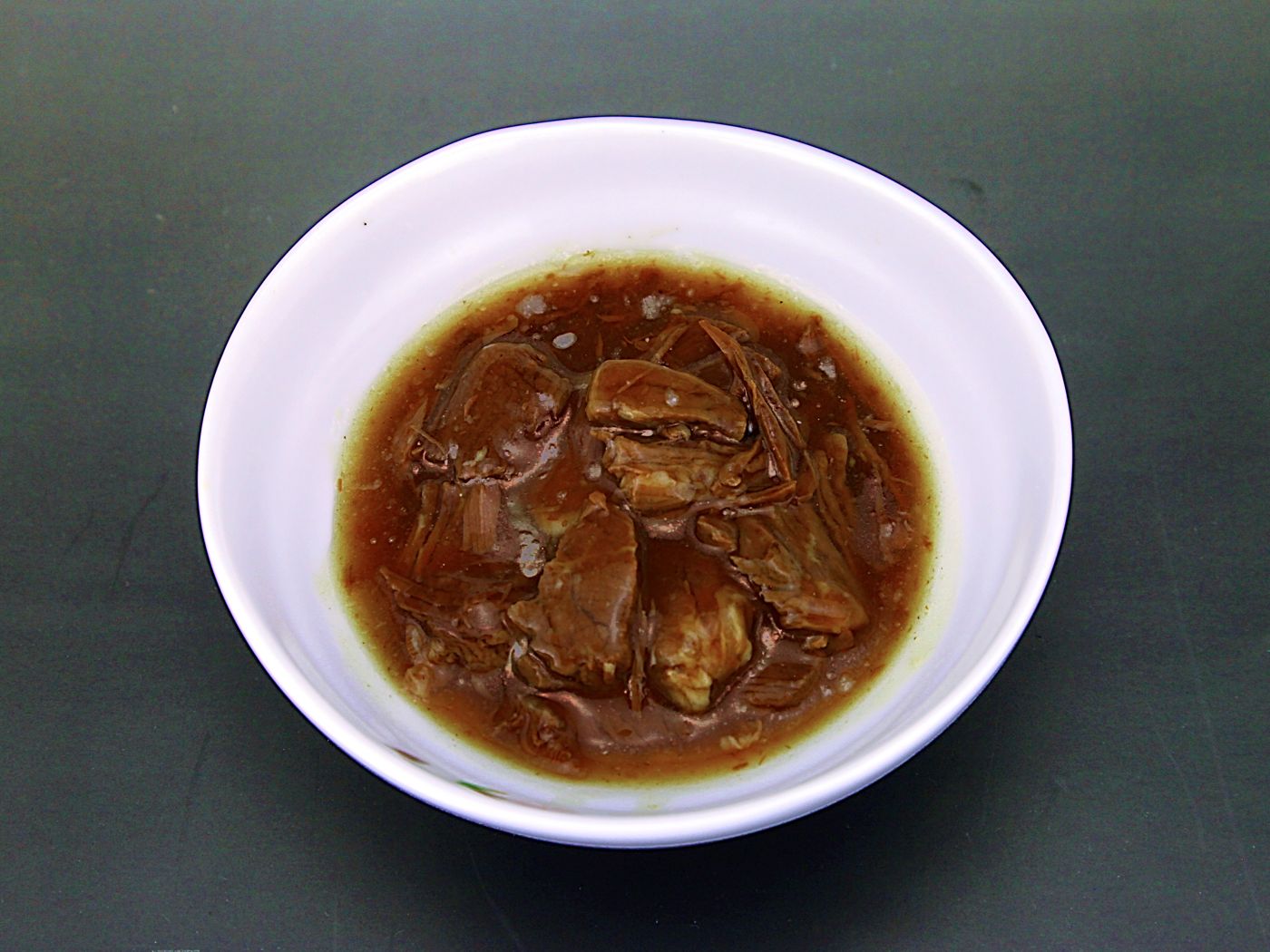 Jangjorim장조림Lean beef simmered in soy sauce until tender, then torn into strands and served in its savory broth, often with eggs, garlic and mild peppers.
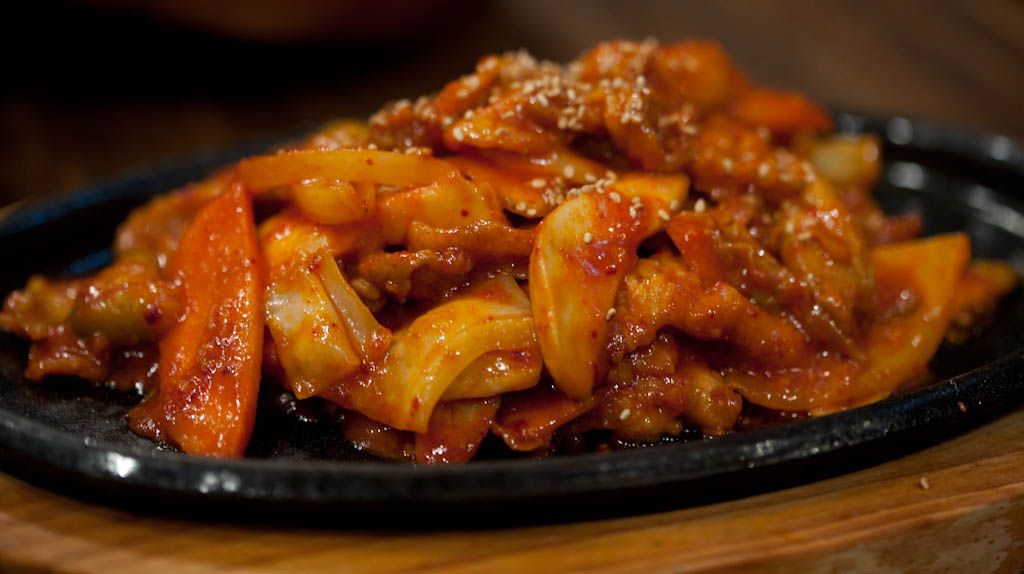 Jeyuk Bokkeum (Spicy Stir-Fried Pork)제육볶음Thin slices of pork marinated in gochujang, garlic and ginger, then stir-fried with onion and green onion — a hearty, spicy staple of home and diner tables.
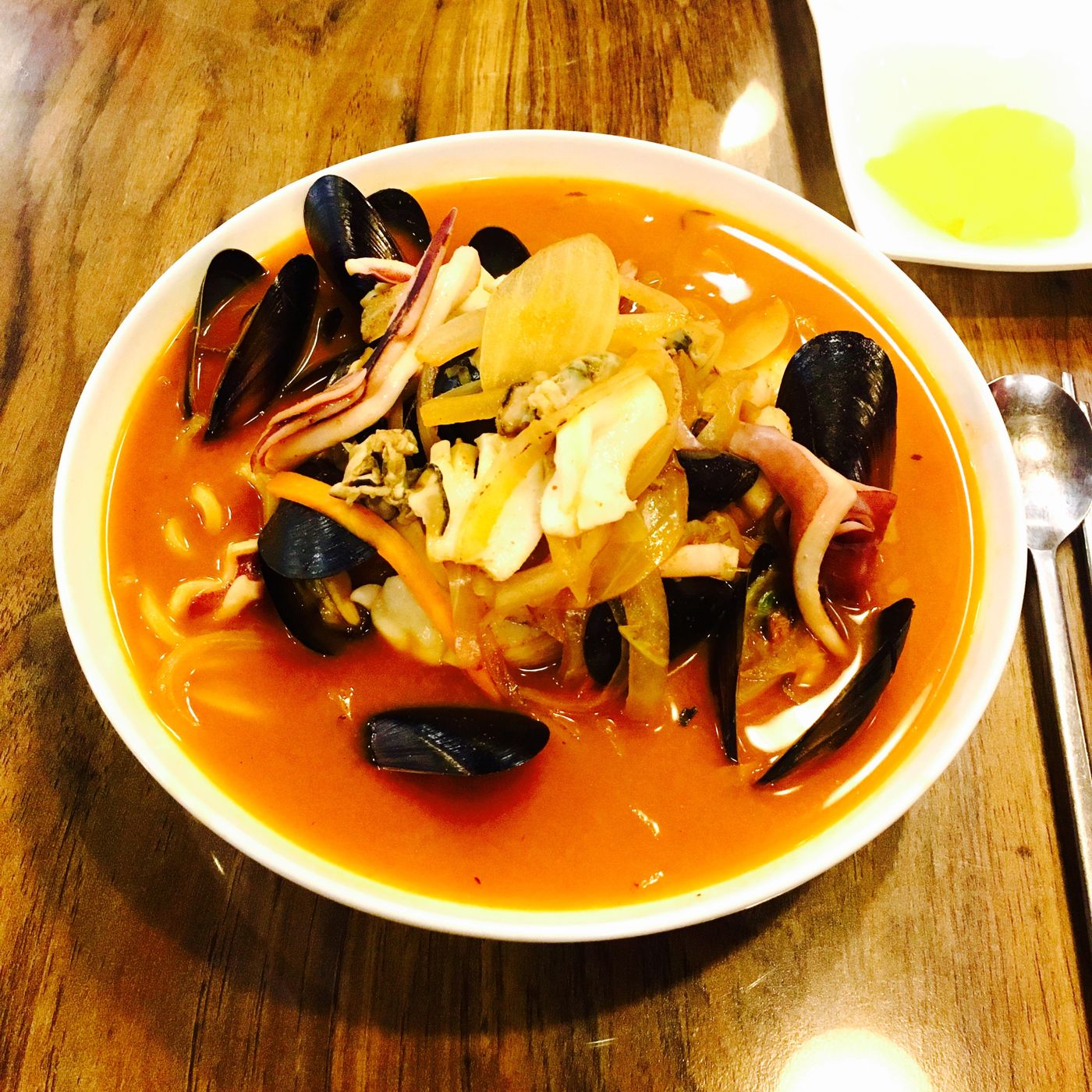 Jjamppong (Spicy Seafood Noodle Soup)짬뽕Thick wheat noodles in a fiery red broth of stir-fried pork, squid, shellfish and vegetables — the Korean-Chinese restaurant's spicy counterpart to jajangmyeon.
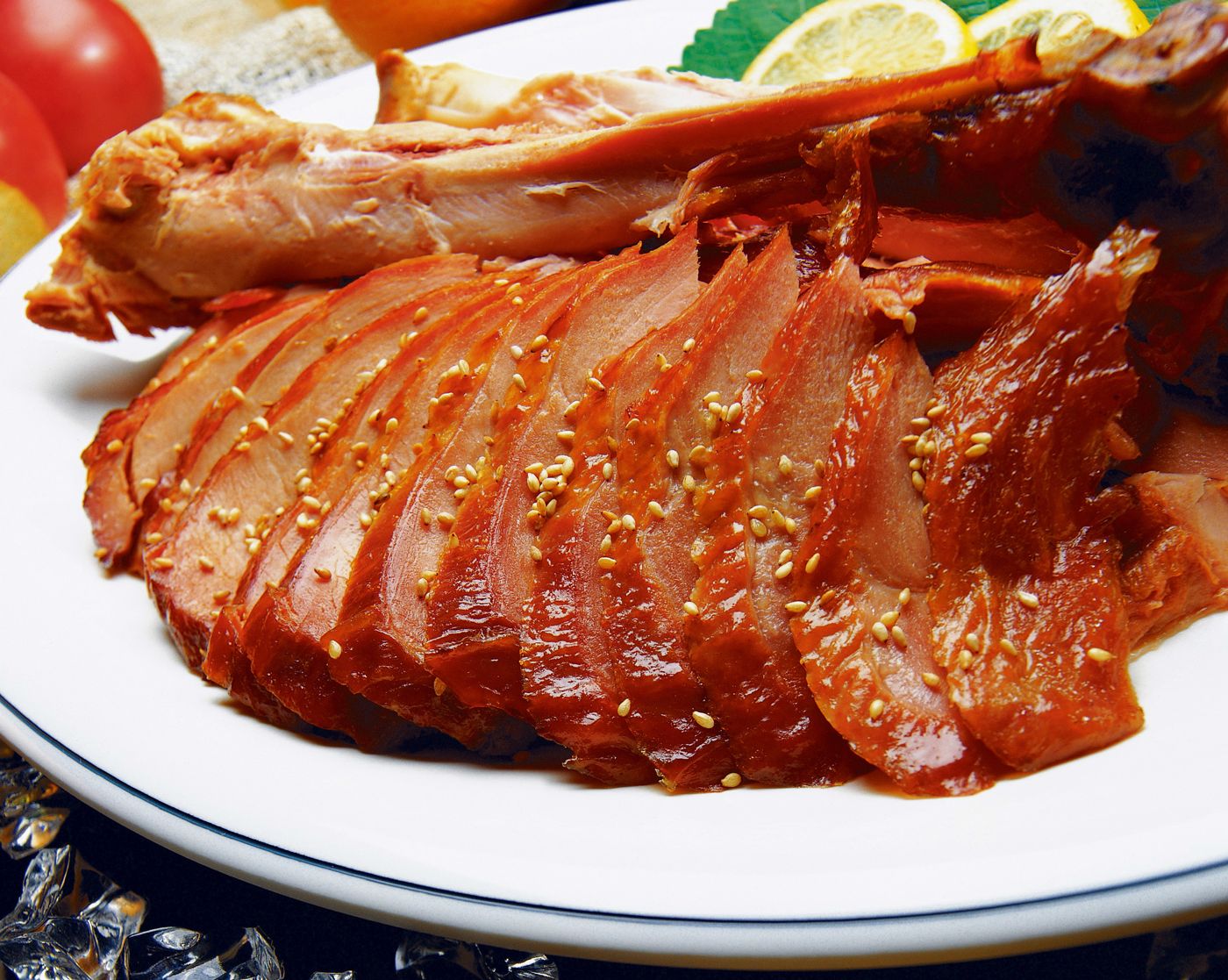 Jokbal (Braised Pig's Trotters)족발Pig's trotters simmered until tender, then braised in soy sauce and spices until glossy and sliced — a postwar Seoul specialty of Jangchung-dong.
 Cubed Radish Kimchi깍두기Korean radish cut into neat cubes and tossed with chili, garlic and salted shrimp — crunchy, juicy and a classic partner to rich soups.
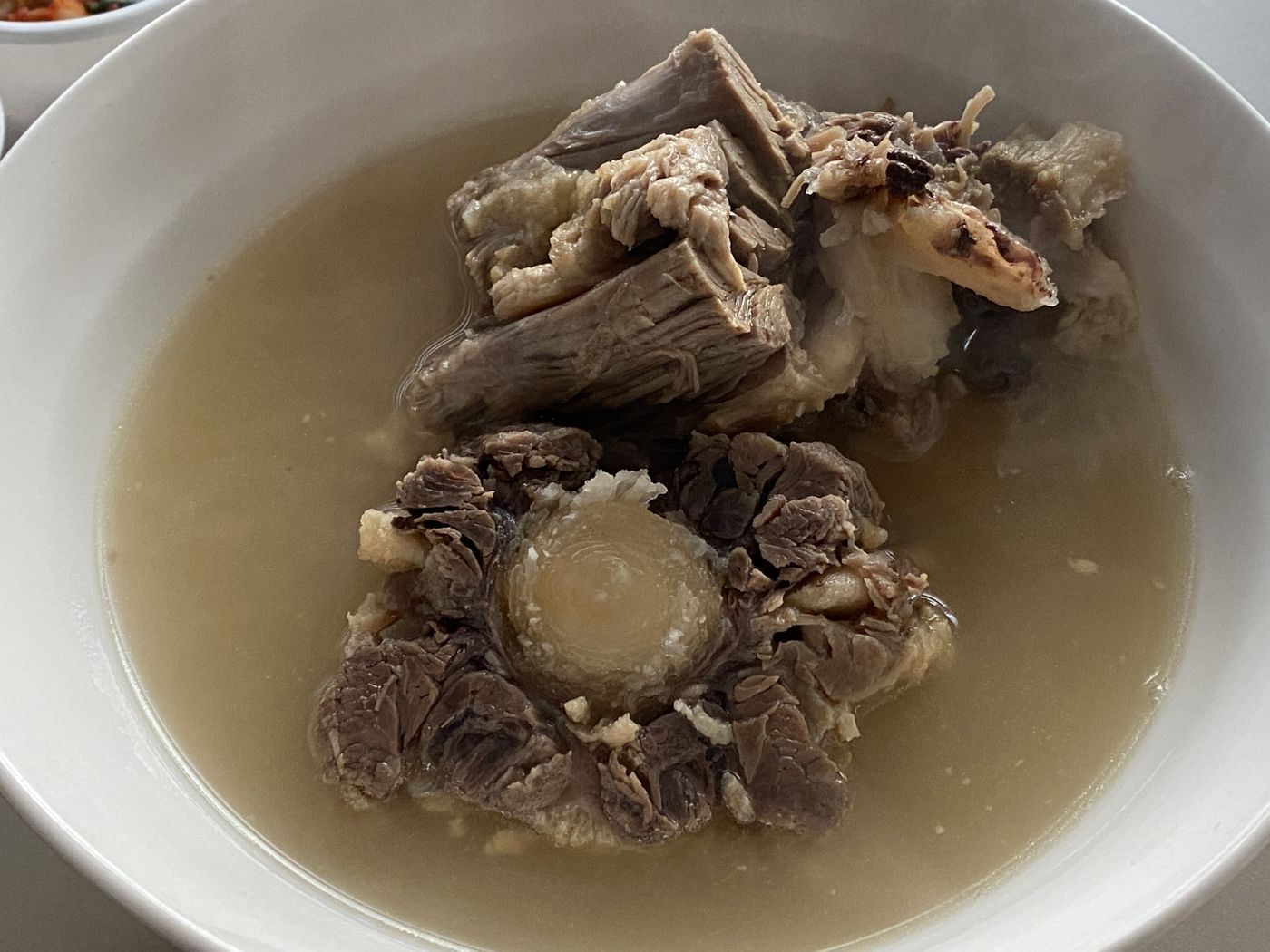 Kkori-gomtang (Oxtail Soup)꼬리곰탕Oxtail simmered for hours until the meat slips from the bone, in a rich, savory broth ladled over rice. A gomtang built on a single cut.
- Kodari Jorim (Braised Semi-Dried Pollock)코다리조림Half-dried Alaska pollock braised with radish in a sweet, spicy soy-gochugaru sauce until the chewy flesh soaks up the glaze.
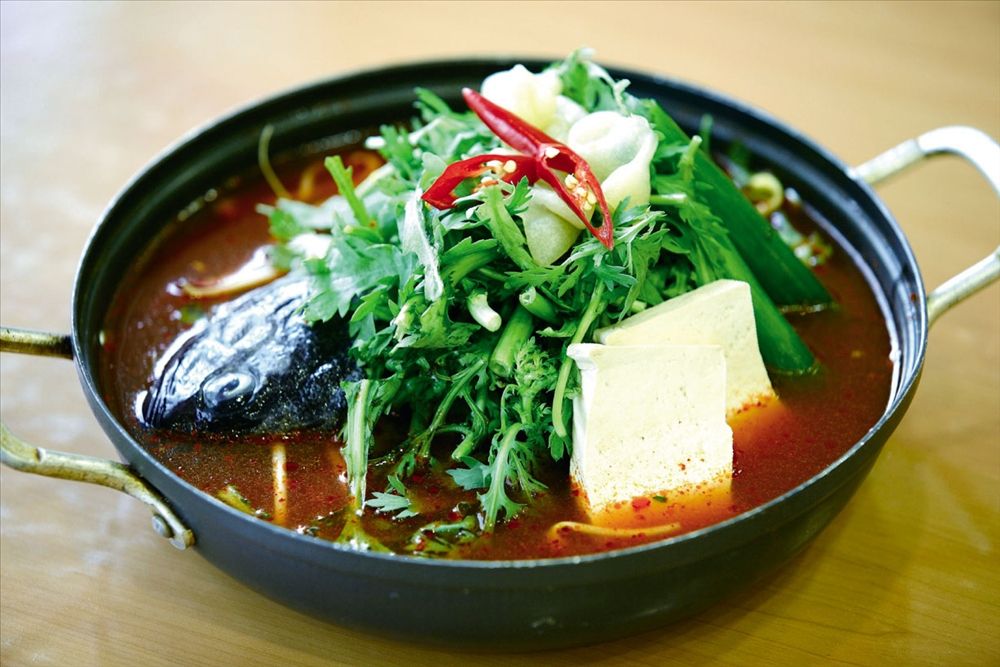 Maeuntang (Spicy Fish Stew)매운탕Fish — freshwater or sea — simmered with radish, tofu and fragrant greens in a fiery gochugaru and gochujang broth; the stew that follows sashimi and fills riverside restaurants.
- Cut Cabbage Kimchi막김치Napa cabbage cut into bite-size pieces before salting and tossed with the seasoning all at once — the quick, everyday way to make cabbage kimchi.
 Mandu (Korean Dumplings)만두Thin wrappers folded around pork, tofu, kimchi and sprouts, then steamed or boiled — a Goryeo-era arrival from China that became a winter staple of the North.
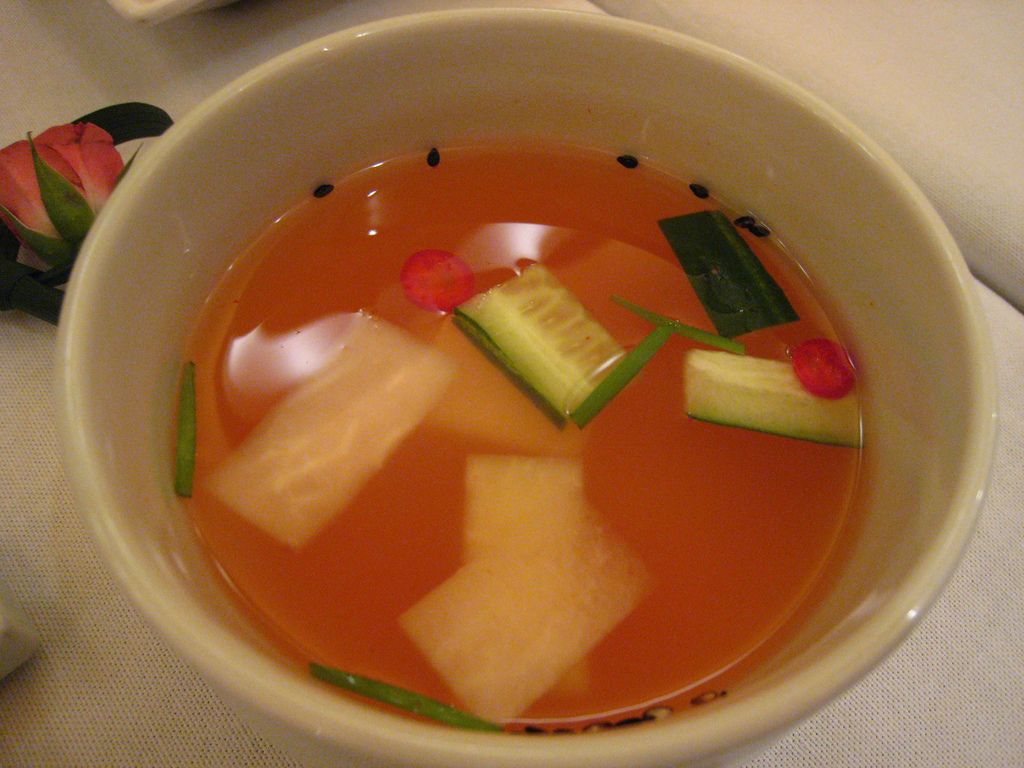 Radish and Cabbage Water Kimchi나박김치Thin squares of radish and napa cabbage in a lightly salted, pink-tinted broth — a mild, refreshing water kimchi eaten by the spoonful.
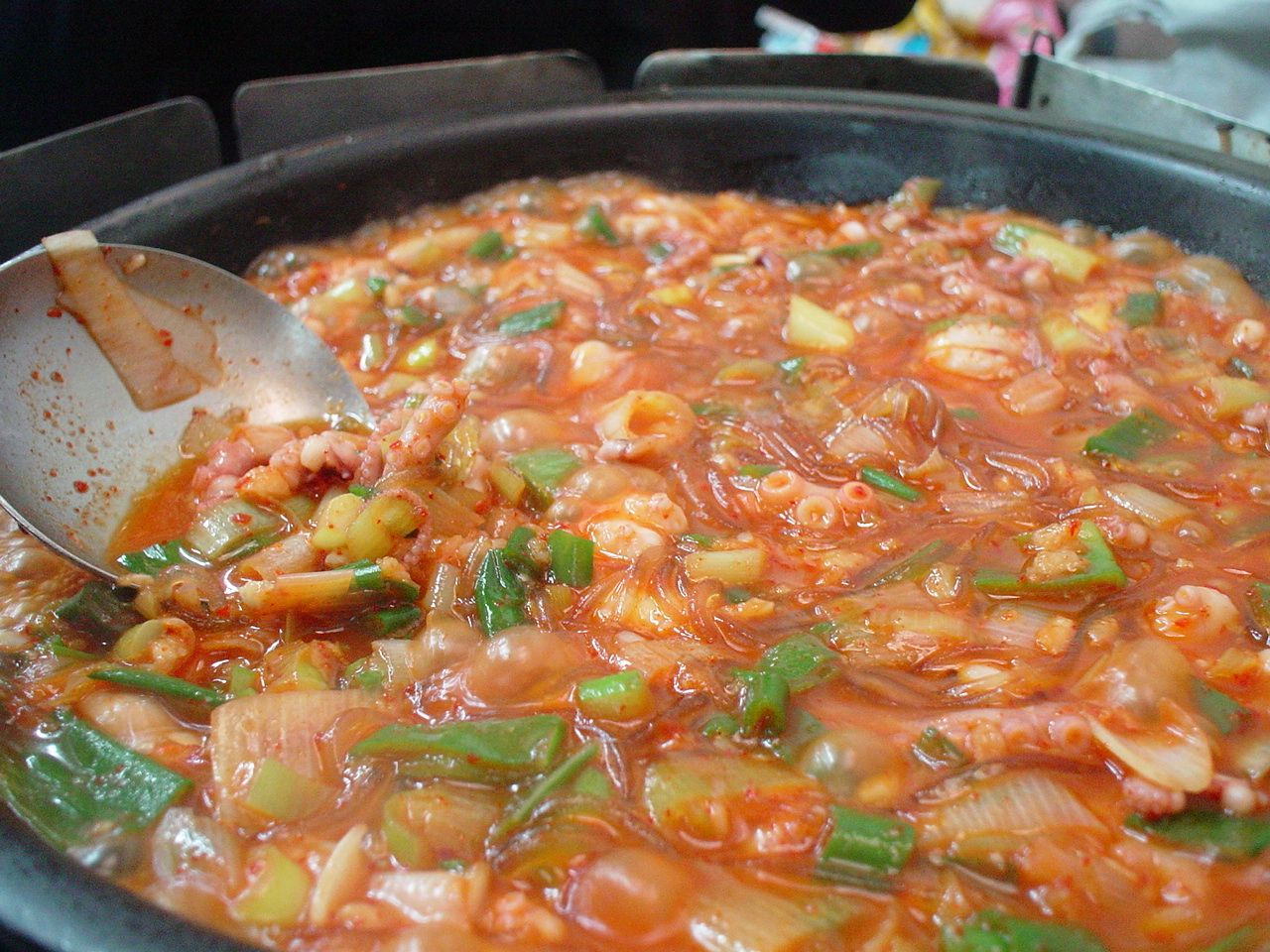 Nakji Bokkeum (Spicy Stir-Fried Octopus)낙지볶음Long-arm octopus stir-fried fast over high heat with onion and a fiery gochugaru sauce, usually served with rice and a mild soup to calm the heat.
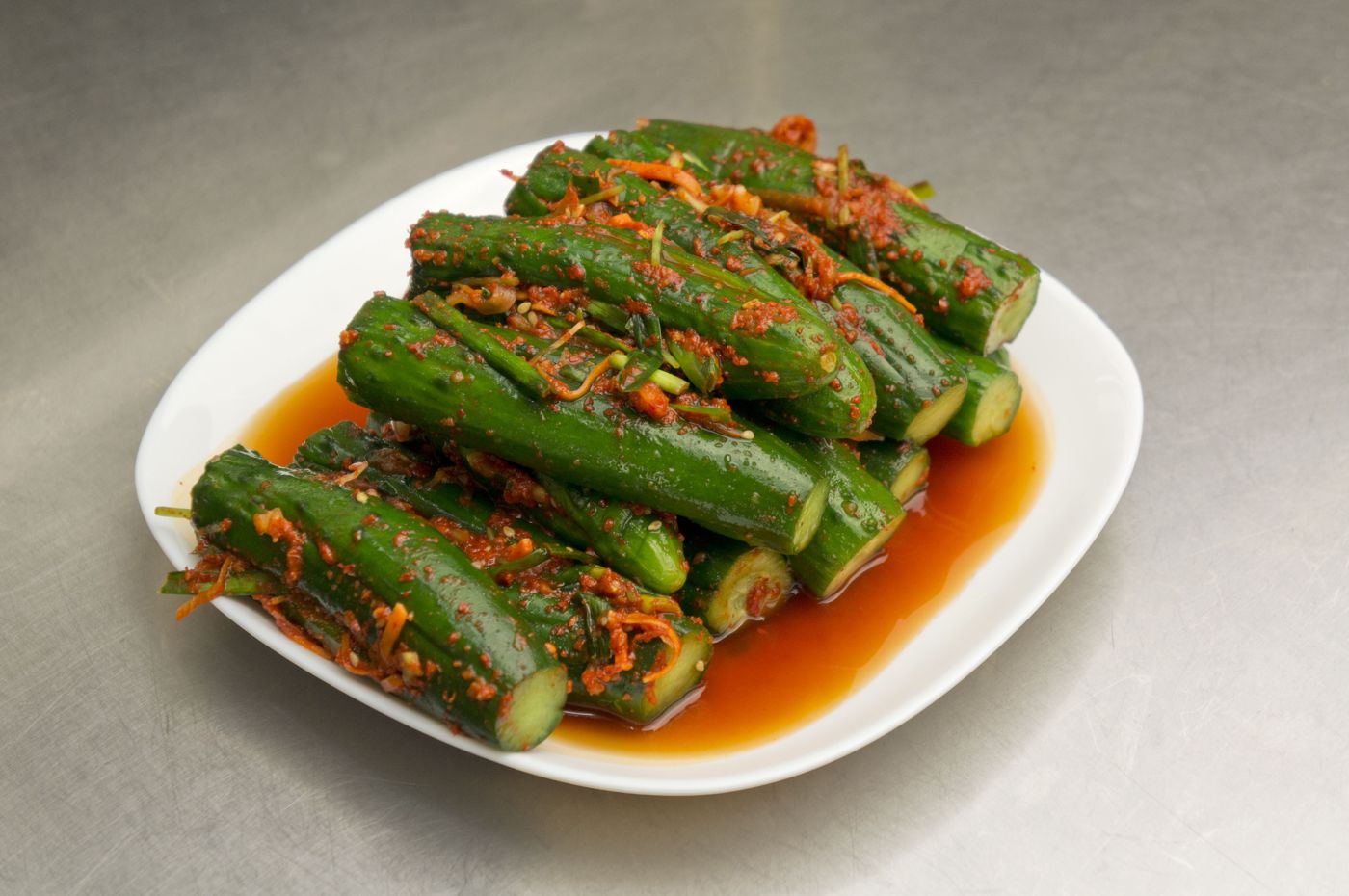 Stuffed Cucumber Kimchi오이소박이Cucumbers slit and stuffed with garlic chives, chili and garlic — a crisp, refreshing summer kimchi meant to be eaten young.
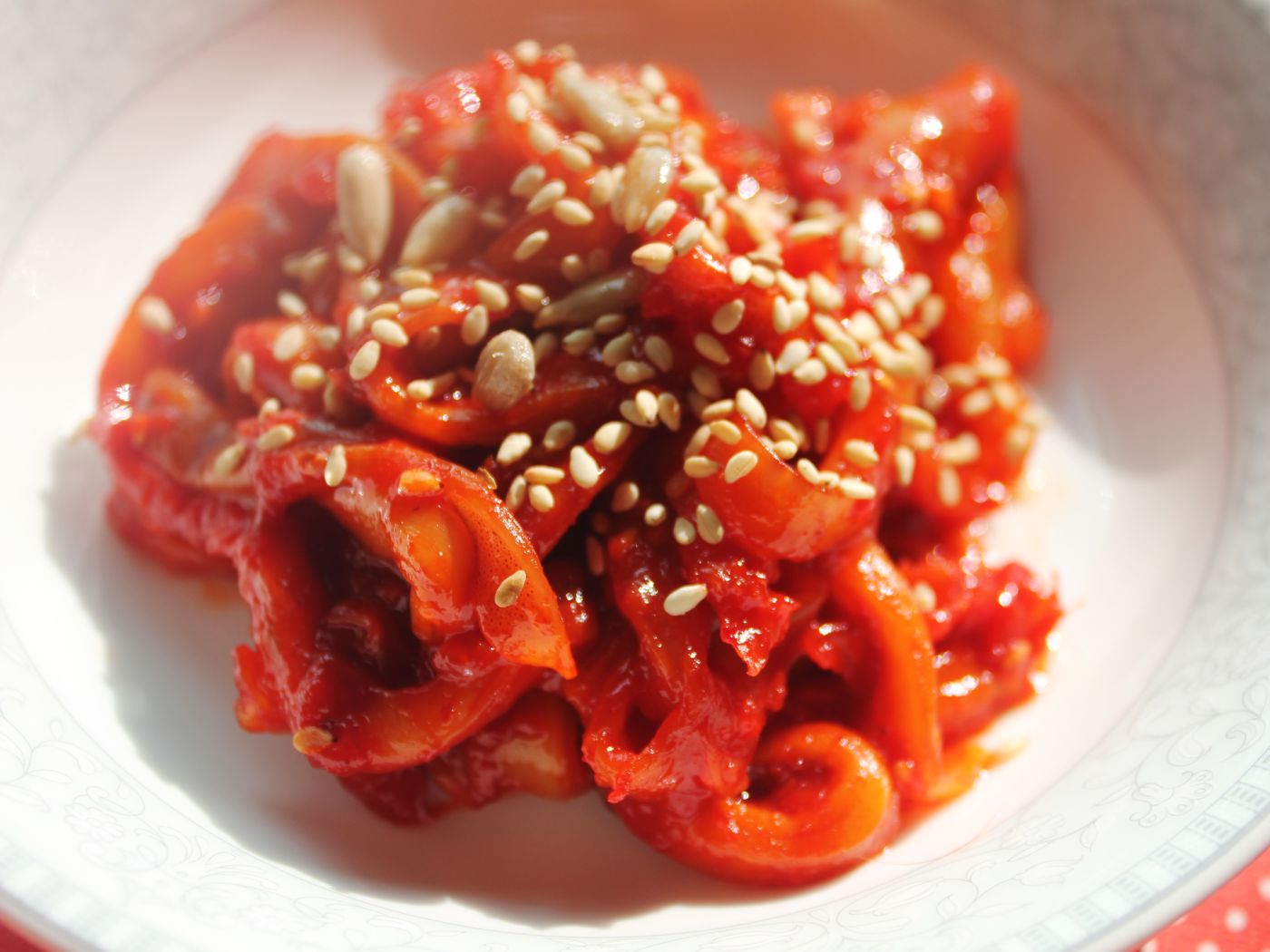 Salted Squid오징어젓Squid cured in salt, then sliced and tossed with chili, garlic and a touch of syrup — chewy, sweet-savory jeotgal from the East Sea coast.
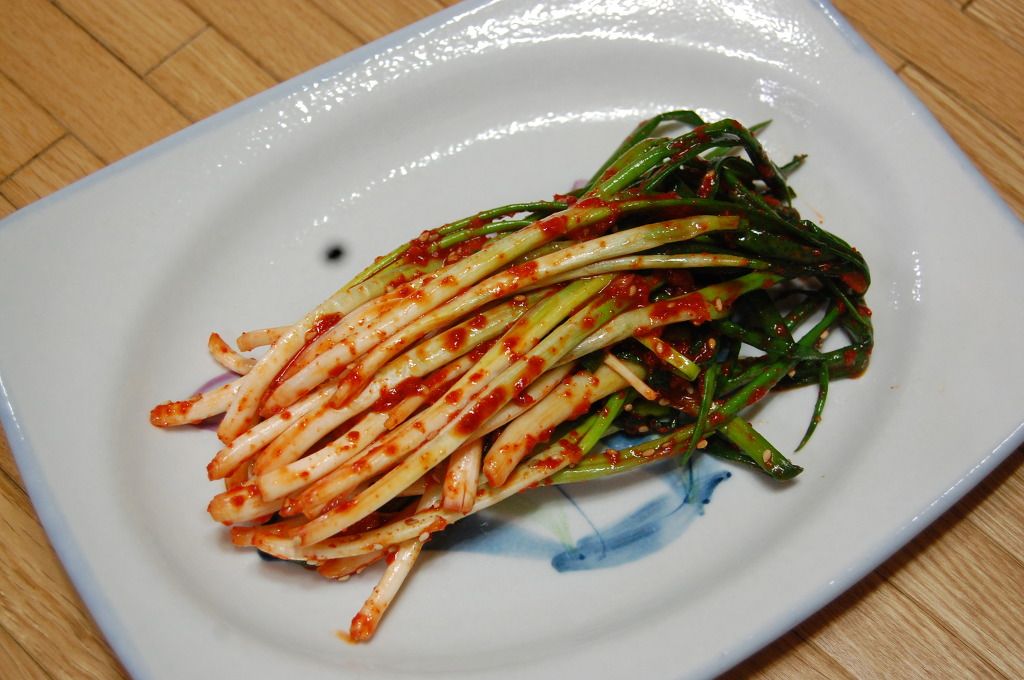 Green Onion Kimchi파김치Slender Korean green onions coated in a thick chili and anchovy-sauce paste — pungent when fresh, mellow and savory once ripe.
- Saengtae Jjigae (Fresh Pollock Stew)생태찌개Chunks of fresh, never-frozen pollock simmered with radish, tofu and a red chili broth, finished with water dropwort and crown daisy — a winter stew prized for its clean, bracing taste.
- Chunky Radish and Cabbage Kimchi섞박지Big, flat-cut pieces of radish and cabbage mixed in one chili and jeotgal seasoning — a late-autumn “mixed” kimchi, and the name for big radish kimchi today.
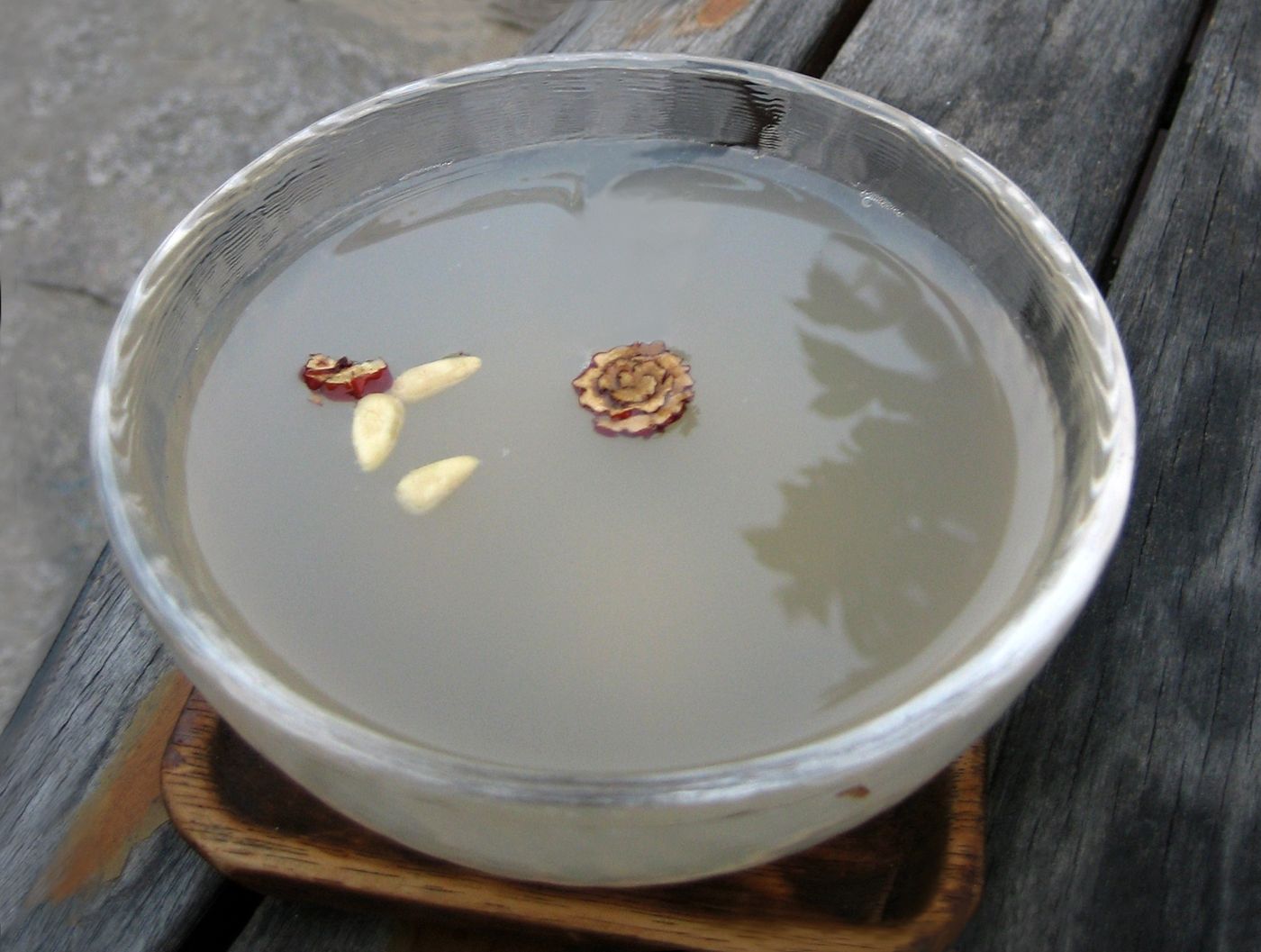 Sikhye (Sweet Malted Rice Drink)식혜Cooked rice steeped in barley-malt water until it sweetens and the grains float, then chilled — the traditional after-feast drink of Korean holidays.
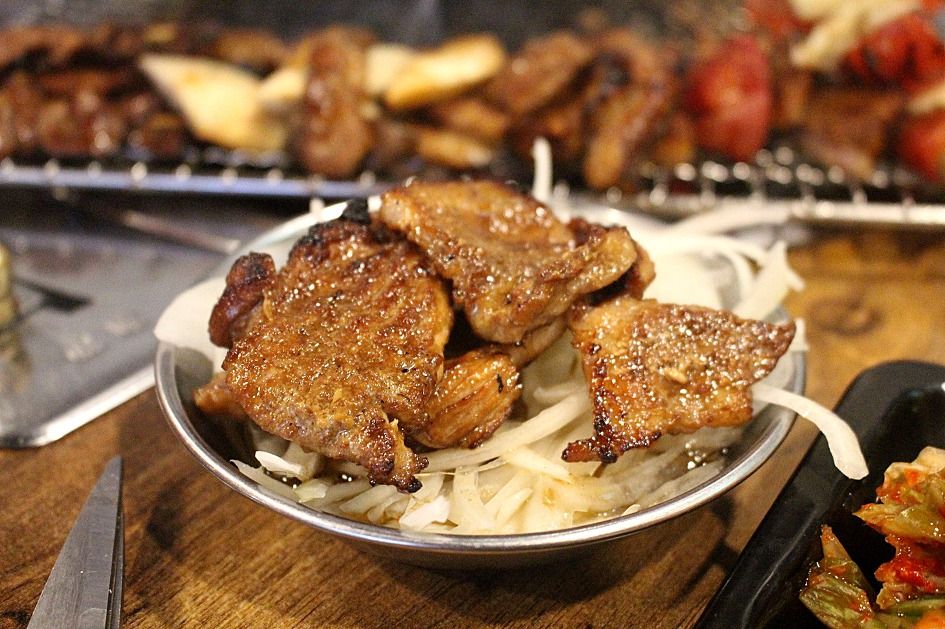 So-galbi-gui (Grilled Beef Short Ribs)소갈비구이Beef short ribs scored to the bone, marinated with soy, pear, garlic and sesame and grilled over charcoal — Korea's celebration barbecue, best known in Suwon's salt-seasoned style.
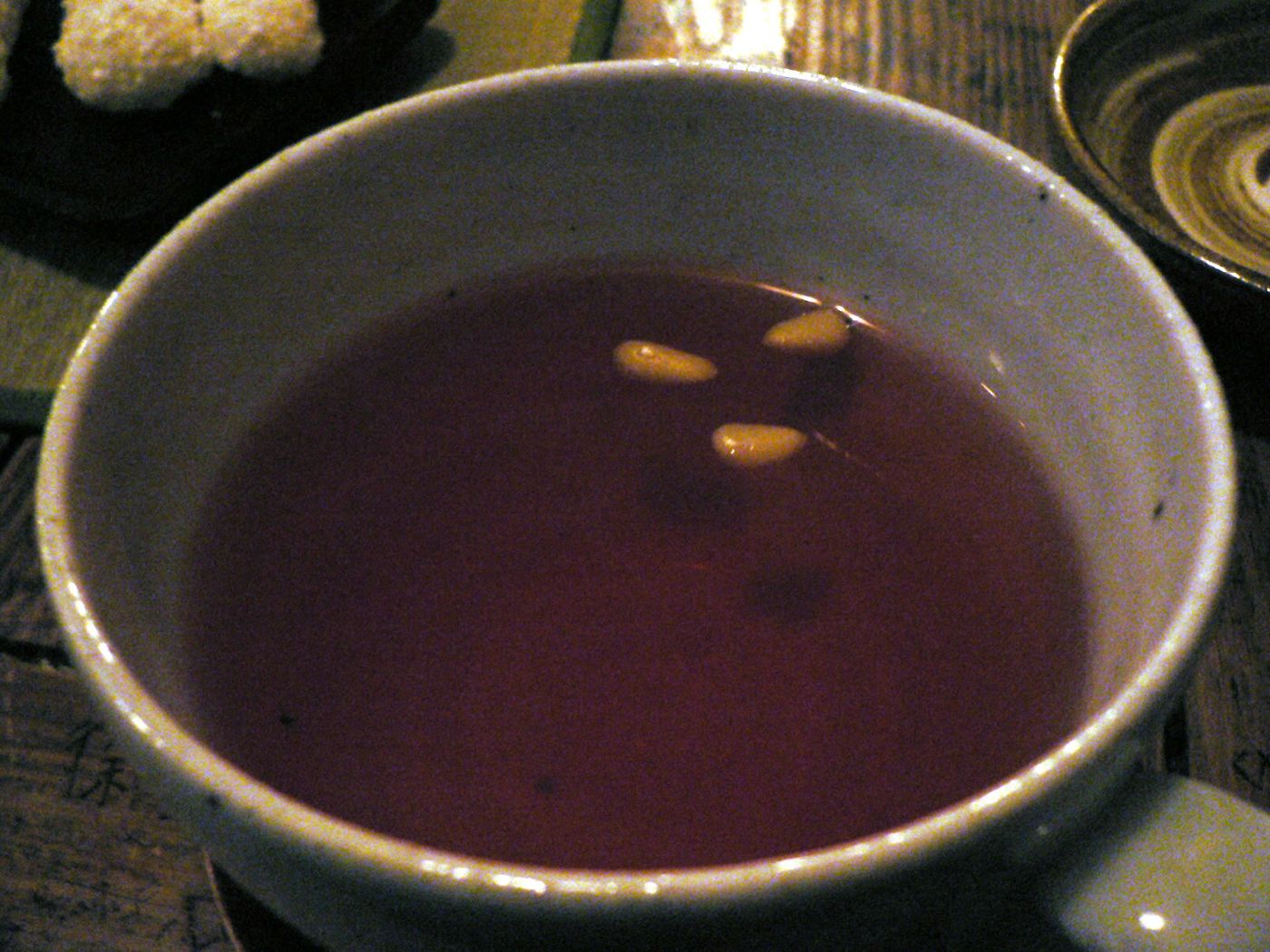 Sujeonggwa (Cinnamon-Ginger Punch with Dried Persimmon)수정과A cold, spicy-sweet punch of ginger and cinnamon simmered separately, sweetened, and served with softened dried persimmons and pine nuts — a New Year drink for guests.
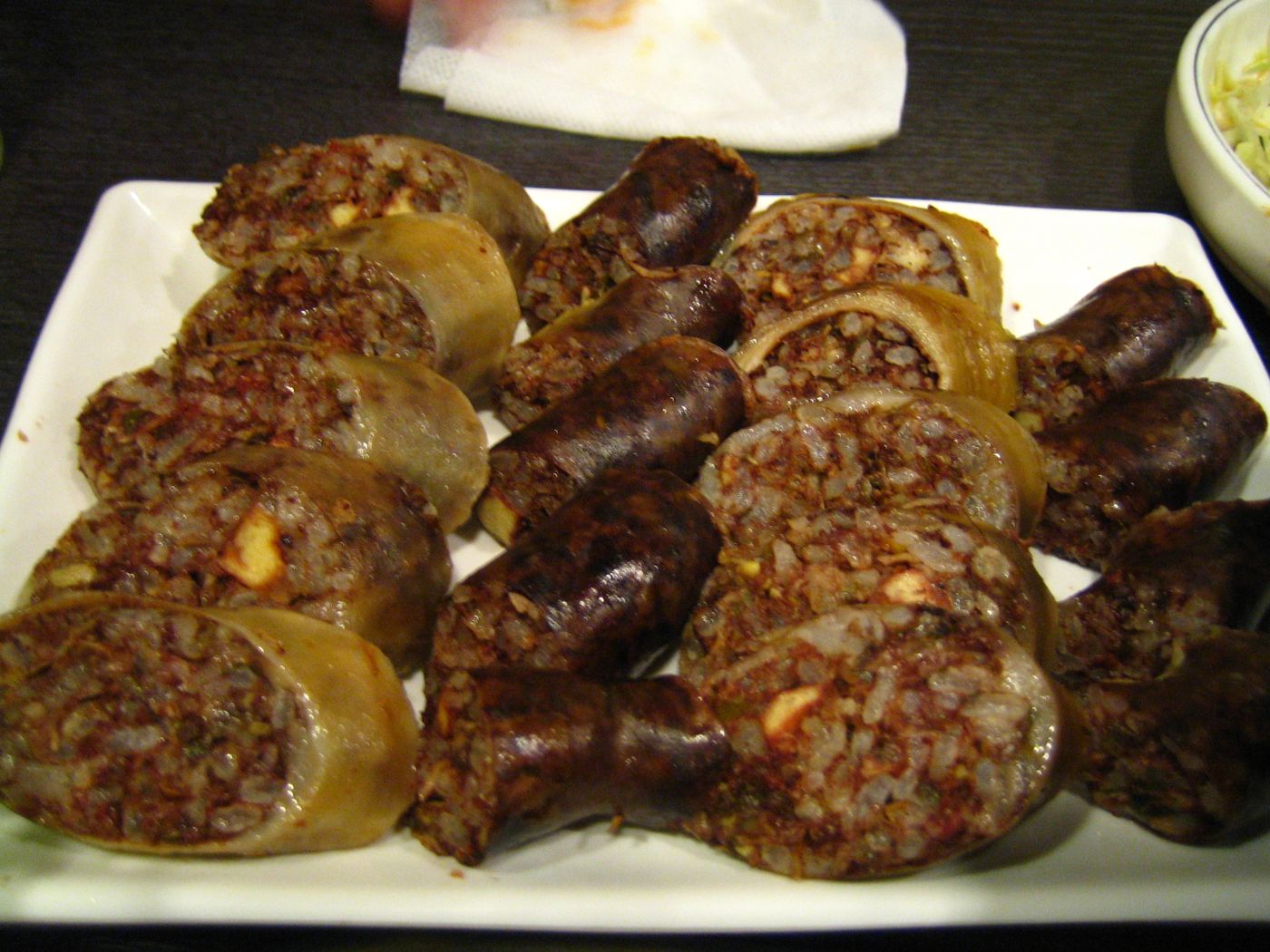 Sundae (Korean Blood Sausage)순대Pork intestine stuffed with pig's blood, glutinous rice, glass noodles and vegetables, then steamed — a northern farmhouse food that became a nationwide street snack.
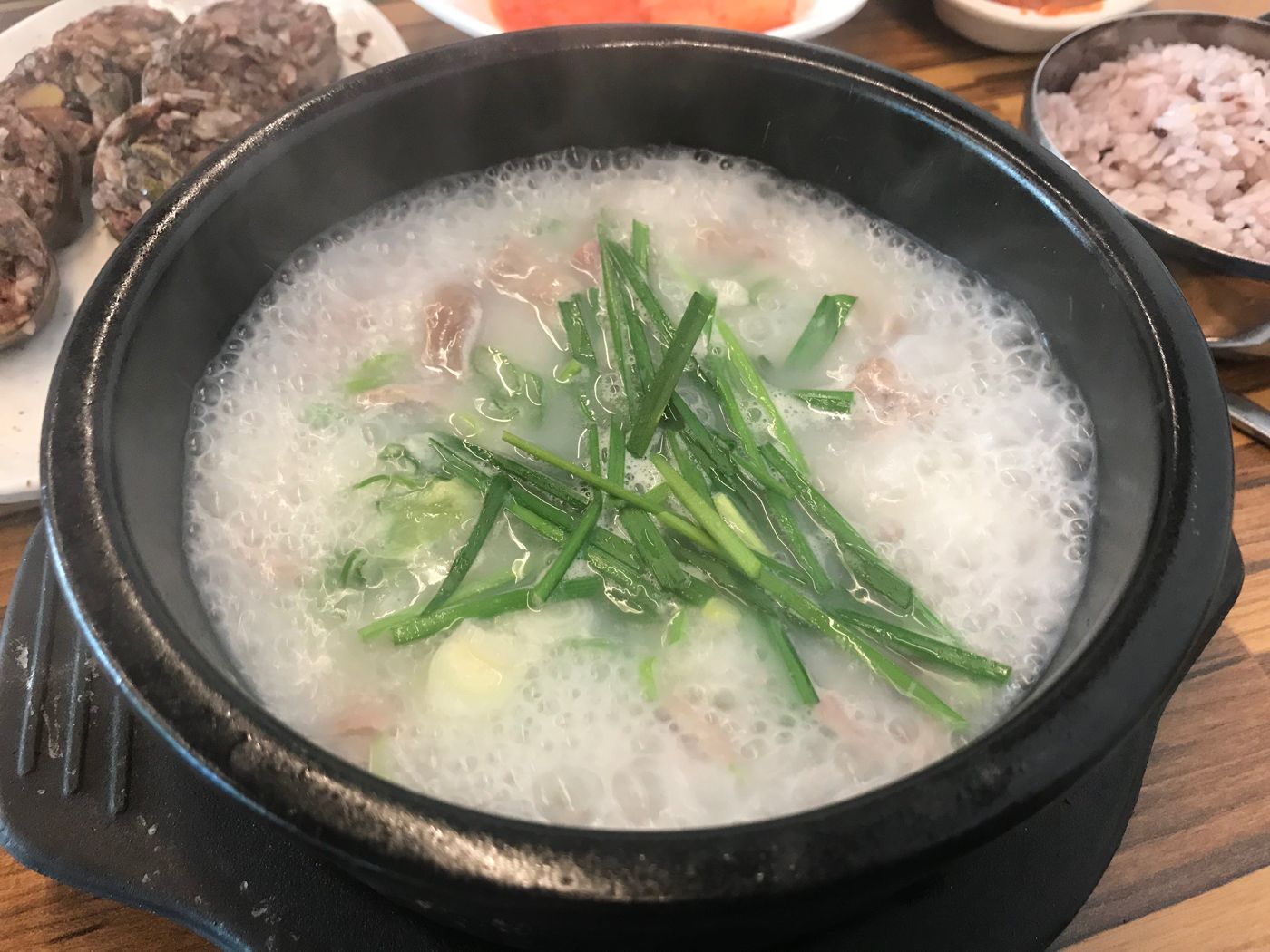 Sundaeguk (Blood Sausage Soup)순댓국Slices of Korean blood sausage and pork offal in a rich pork-bone broth, seasoned at the table with salted shrimp — a cheap, hearty market-day bowl served with rice.
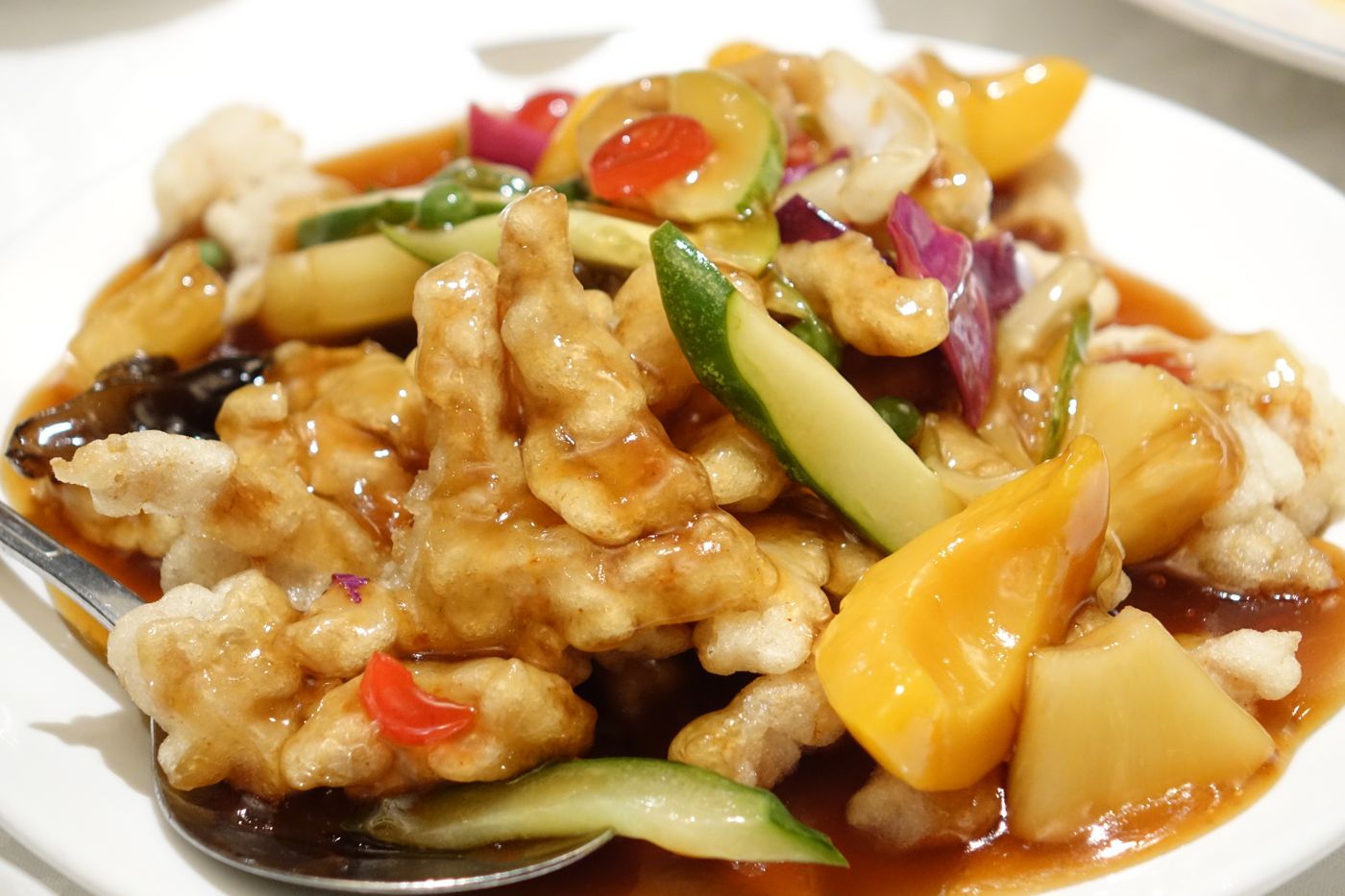 Tangsuyuk (Sweet and Sour Pork)탕수육Strips of pork in a crisp starch batter, fried twice and dressed with a glossy sweet-and-sour vegetable sauce — the shared platter of the Korean-Chinese restaurant.
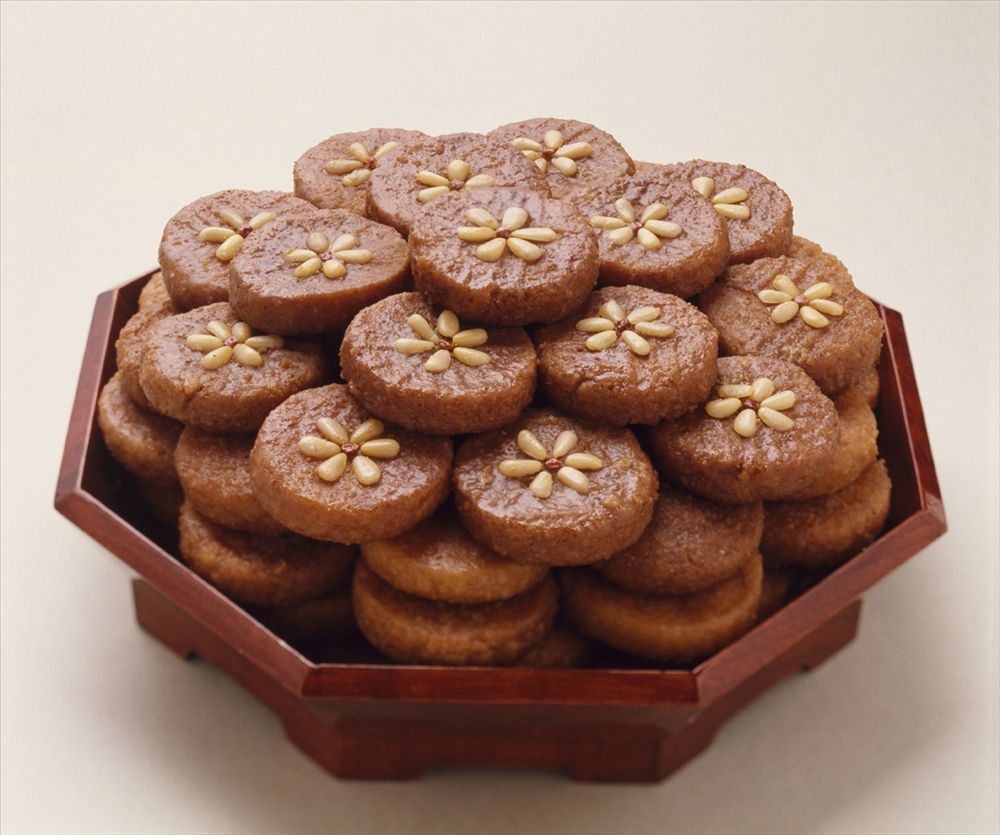 Yakgwa (Honey Cookies)약과Wheat dough rubbed with sesame oil and bound with honey, pressed into a carved mold, slow-fried and soaked in syrup — the best-known of Korea's honey-and-oil pastries.
- Green Cabbage Kimchi양배추김치Crisp, quick kimchi of round green cabbage — once South Korea's stand-in when napa ran short, and still an everyday summer kimchi in North Korea.
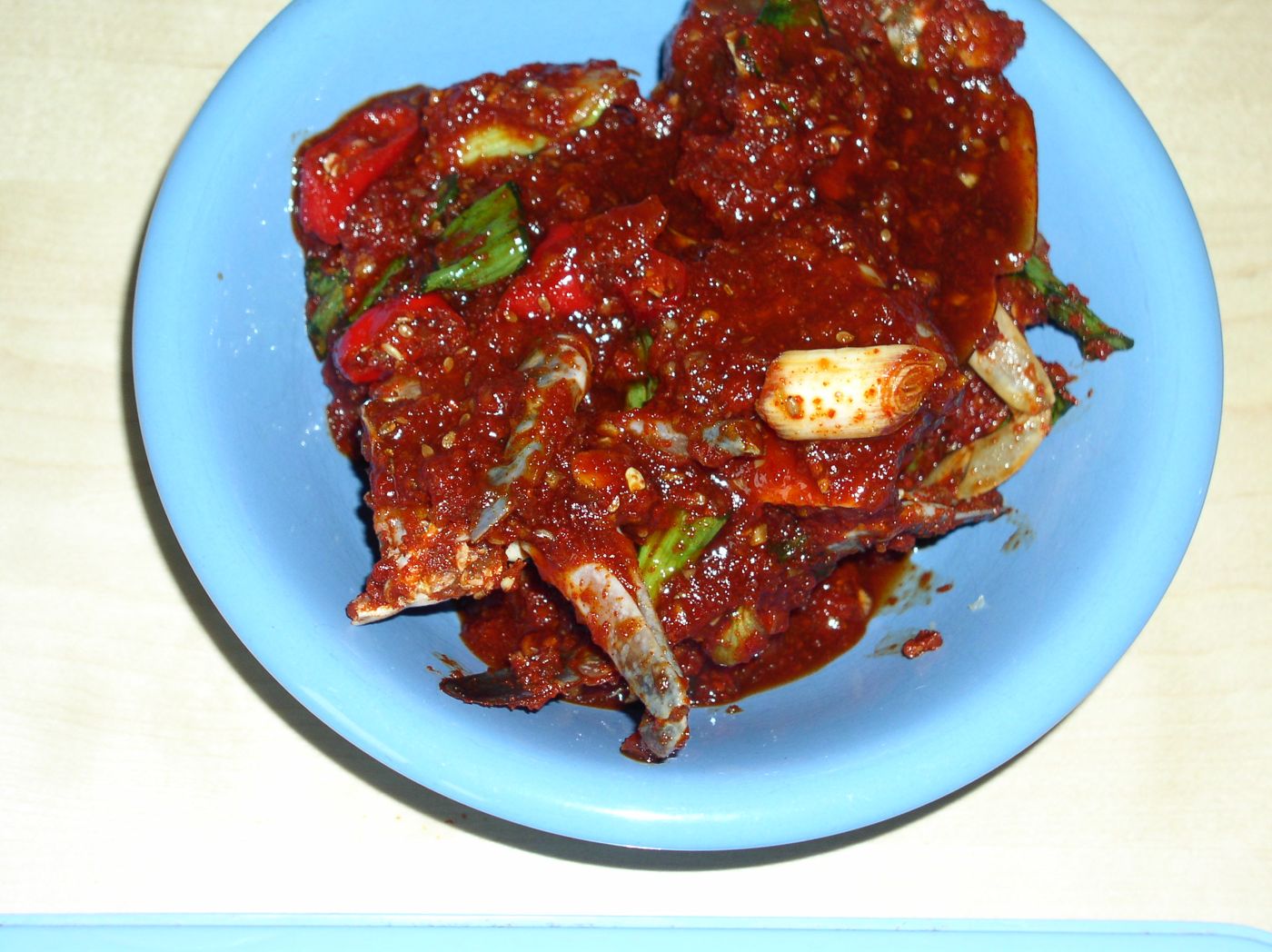 Spicy Marinated Raw Crab양념게장Raw crab pieces tossed in a glossy chili, garlic and soy dressing and eaten within days — sweet, fiery and a specialty of Yeosu's gejang restaurants.
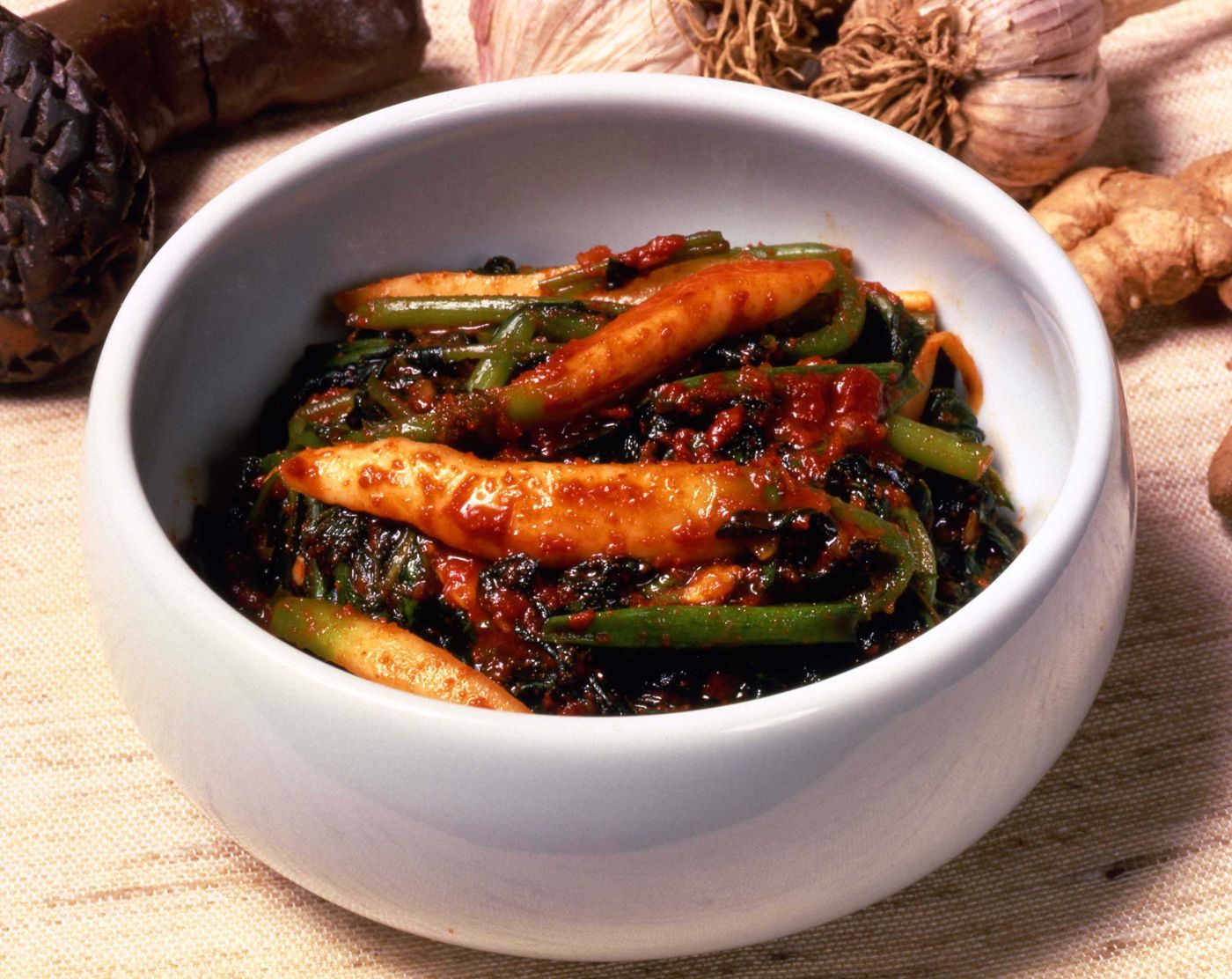 Young Summer Radish Kimchi열무김치Tender young radish greens in a loose, lightly spicy brine thickened with flour or rice paste — the classic summer kimchi, served over noodles and barley rice.