Jeotgal · Salted seafood 젓갈
Spicy Lightly Salted Oysters
어리굴젓
Romanization: eoriguljeot
Fresh oysters lightly salted and ripened with chili — a short-keeping winter jeotgal famous in Seosan and Ganwoldo in South Chungcheong.
- Serves
- 25
- Prep
- 30 min
- Cook
- 3 min
RegionChungcheong
Jump to recipeRecipe
Ingredients · Serves 25
- 500 gFresh shucked oysters, sold for raw consumptionsmall oysters are traditional
- 1 LCold waterwith 1 tbsp salt, for rinsing
- 35 gCoarse sea salt (cheonilyeom), non-iodizedabout 7% of the oyster weight
- 1 tbspGlutinous rice flouror wheat flour
- 80 mlWaterfor the paste
- 3 tbspGochugaru (Korean chili flakes)
- 3 clovesGarlicminced
- 1 tspGingerfinely slivered
- 50 gKorean pearfinely slivered; optional
- 1 stalkGreen onionfinely sliced
- 1 tspSugaroptional
Method
Technique: Making Jeotgal
Step 1: Pick over the oysters for bits of shell. Rinse them by swishing gently in the salted water rather than under plain running water (traditional makers wash oysters in seawater, which keeps them plump), changing the water once. Drain in a colander for 15 minutes.
Step 2: Toss the oysters gently with the coarse salt in a glass or ceramic container. Cover and refrigerate (4°C or below) for 3–4 days; the oysters will firm up and release a clear liquid.
Step 3: Meanwhile, whisk the rice flour into the water and cook over low heat for 2–3 minutes until thin and glossy. Cool completely, then stir in the gochugaru and let it soak for 1–2 hours so the chili swells and turns deep red.
Step 4: Pour off most of the liquid from the oysters. Fold in the chili paste, garlic, ginger, pear, green onion and sugar with a spoon, handling the oysters gently so they stay whole.
Step 5: Pack into a clean jar, press out air, seal and refrigerate for another 5–7 days, until the flavor is rounded and savory.
Step 6: Serve a spoonful at a time with rice. Keep refrigerated, use clean utensils, and eat within about 2 weeks. Discard if it smells sour or off, turns slimy or shows mold.
Origin & History
Eoriguljeot is oyster jeotgal made with only a little salt and seasoned with chili. The Encyclopedia of Korean Folk Culture explains the name: the prefix eol- carries a sense of "not quite" or "half-done," and eolgan means a light salting, so eori-jeot is lightly salted jeotgal and eoriguljeot is lightly salted oysters. Because the salt is low, it does not keep for long and is eaten as soon as it ripens — unlike plain guljeot, which is salted heavily and cured for months. What sets it apart from other oyster jeotgal, the Encyclopedia of Korean Culture notes, is the chili.
Seosan in South Chungcheong, and above all the tidal island of Ganwoldo, are its best-known homes. Ganwoldo oysters are small and dark, with fine frilled edges that take up the seasoning, and local eoriguljeot is said to have been sent to the court as tribute. A popular story credits the monk Muhak with presenting it to King Taejo from the hermitage on the island, but the folk encyclopedia points out that this is oral tradition not found in Joseon records. In 1986 Ganwoldo eoriguljeot was one of eight regional specialties chosen when Korea's postal service launched mail-order sales of local products.
It was traditionally made in winter, when oysters are at their best, and eaten into spring. Today it is made all over the country and served both with rice and as a drinking snack.
Key Ingredients
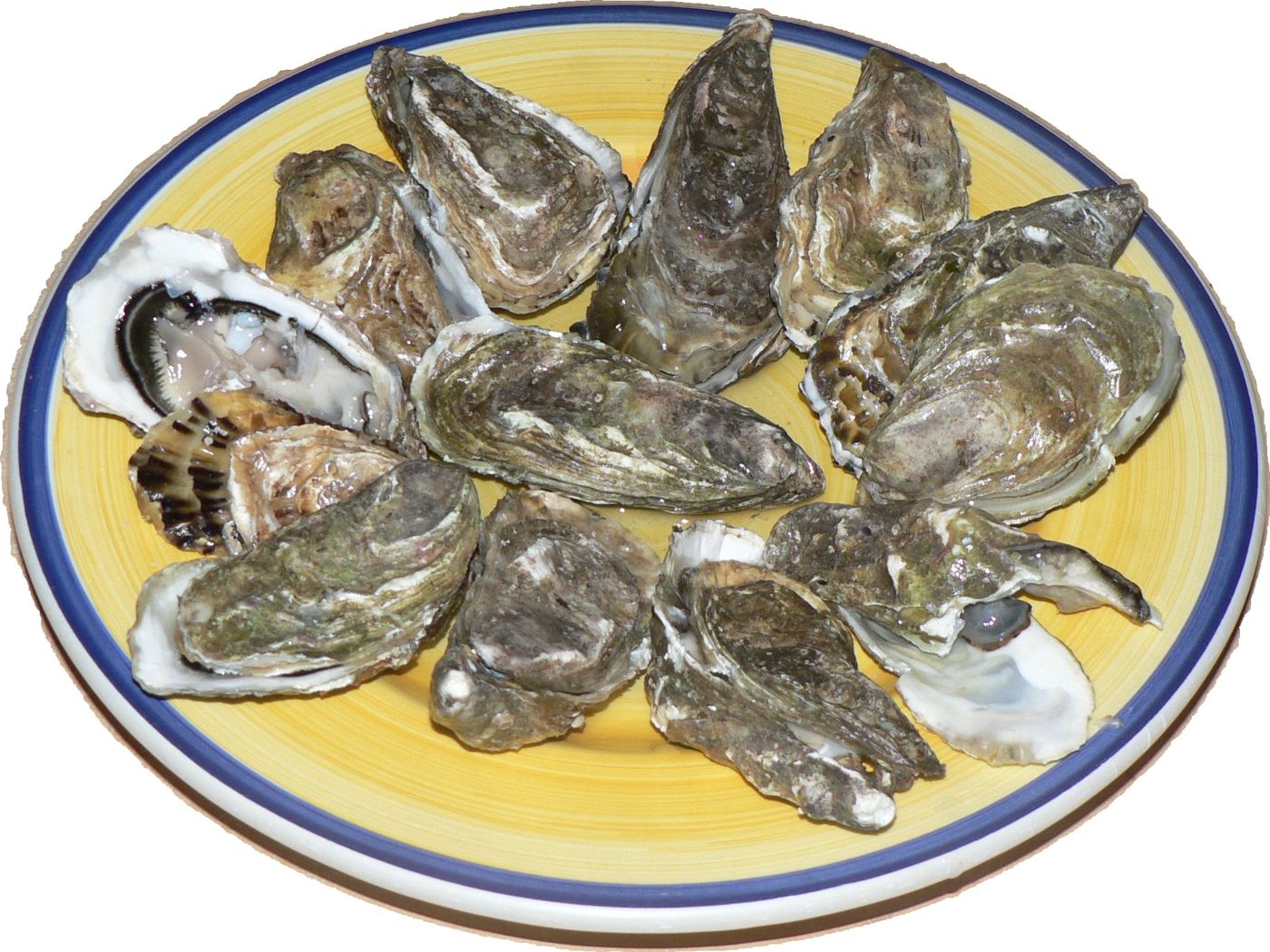 Oyster (gul)굴Plump, briny oysters, many of them grown on hanging lines in the bays around Tongyeong. Koreans eat them raw, cooked into rice, porridge, soup and pan-fried jeon, or salted with chili as eoriguljeot.
 Sun-Dried Sea Salt천일염Coarse sea salt made by evaporating seawater with sun and wind in tidal-flat salt pans, most of it from Sinan County off Korea's southwest coast. It is the everyday salt for salting cabbage and making jang.
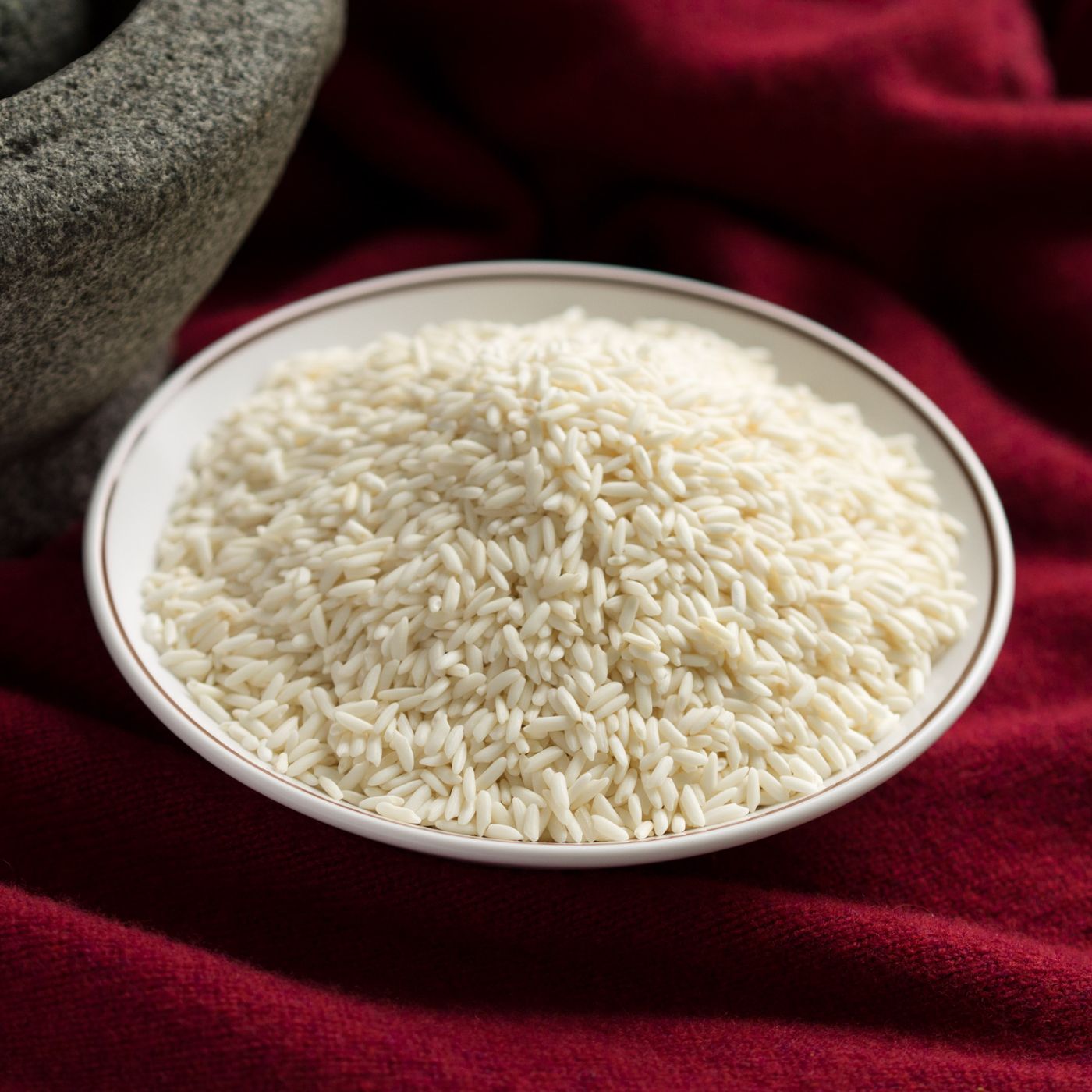 Glutinous rice (sweet rice)찹쌀Opaque, chalk-white grains of glutinous rice that steam into a chewy, elastic mass. Chapssal is the rice of festivals and comfort food: pounded into rice cakes, sweetened into yaksik, and tucked inside the chicken of samgyetang.
 Gochugaru고춧가루Korean red chili powder, made from dried red peppers ground coarse or fine. It gives kimchi, gochujang and countless banchan their color and warmth.
 Garlic마늘Used raw, minced, pickled and roasted, garlic is one of the essential aromatics of Korean food — in seasonings, marinades, kimchi and namul.
 Ginger생강Fresh ginger root, used in small amounts to brighten kimchi paste and marinades and to tame the strong smells of fish and meat.
- Korean Pear배The large, round, crisp and very juicy Korean pear (bae). Beyond eating fresh, it is grated into meat marinades and sliced into mild kimchi for natural sweetness.
 Green onion파Korean green onion (pa), from thick-stemmed daepa to slender scallions — chopped into nearly every seasoning sauce, soup and kimchi, and the star of pa-kimchi.
Nutrition
| Calories | 18 kcal |
|---|---|
| Protein | 1.7 g |
| Fat | 0.5 g |
| Carbohydrates | 1.6 g |
| Fiber | Not reported |
| Sodium | 475 mg |
Notable forIron · Calcium
From the Korean Food Composition Table entry “Pacific oyster, Seasoned, Salt-fermented” (굴, 참굴, 양념젓갈(어리굴젓); per 100 g: 91 kcal, 8.6 g protein, 2,374 mg sodium, 8.8 mg iron, 196 mg calcium; fiber not reported), scaled to the serving size. Actual values vary with ingredients, portion size and preparation.
Health Benefits
- Iron and minerals: oysters are mineral-rich; in the composition table a 20 g serving of eoriguljeot supplies about 1.8 mg of iron and 39 mg of calcium.
- Traditional regard: Ganwoldo eoriguljeot has a local reputation as nourishing and good for coughs — a traditional belief rather than an established health effect.
- Low in calories: a serving has under 20 kcal; the main nutritional caution is salt.
Regional Variations
- Ganwoldo (Seosan): oysters washed in seawater and salted, then mixed with chili that has been soaked in thin flour paste or cooled rice-rinsing water, and left to ripen for about ten days.
- Seosan: older recipes worked cooked foxtail millet into the chili seasoning, a practice now less common.
- Yesan: adds sugar, anchovy fish sauce and slivered pear, ginger and green onion.
- Dangjin: a quick style, ready to eat in three or four days.
- Court style: a 1976 Korean cooking encyclopedia contrasts the Chungcheong version, seasoned with salt and chili only, with a palace version that adds green onion, garlic, radish, pear, chestnut and sugar.
Pairings
- Gim Gui (Seasoned Roasted Laver)김구이Sheets of laver brushed with sesame or perilla oil, sprinkled with salt and toasted until crisp — eaten wrapped around spoonfuls of rice.
 Doenjang Jjigae (Soybean Paste Stew)된장찌개A thick, savory stew of fermented soybean paste with tofu, zucchini and whatever the season offers — the everyday pot at the center of the Korean table.
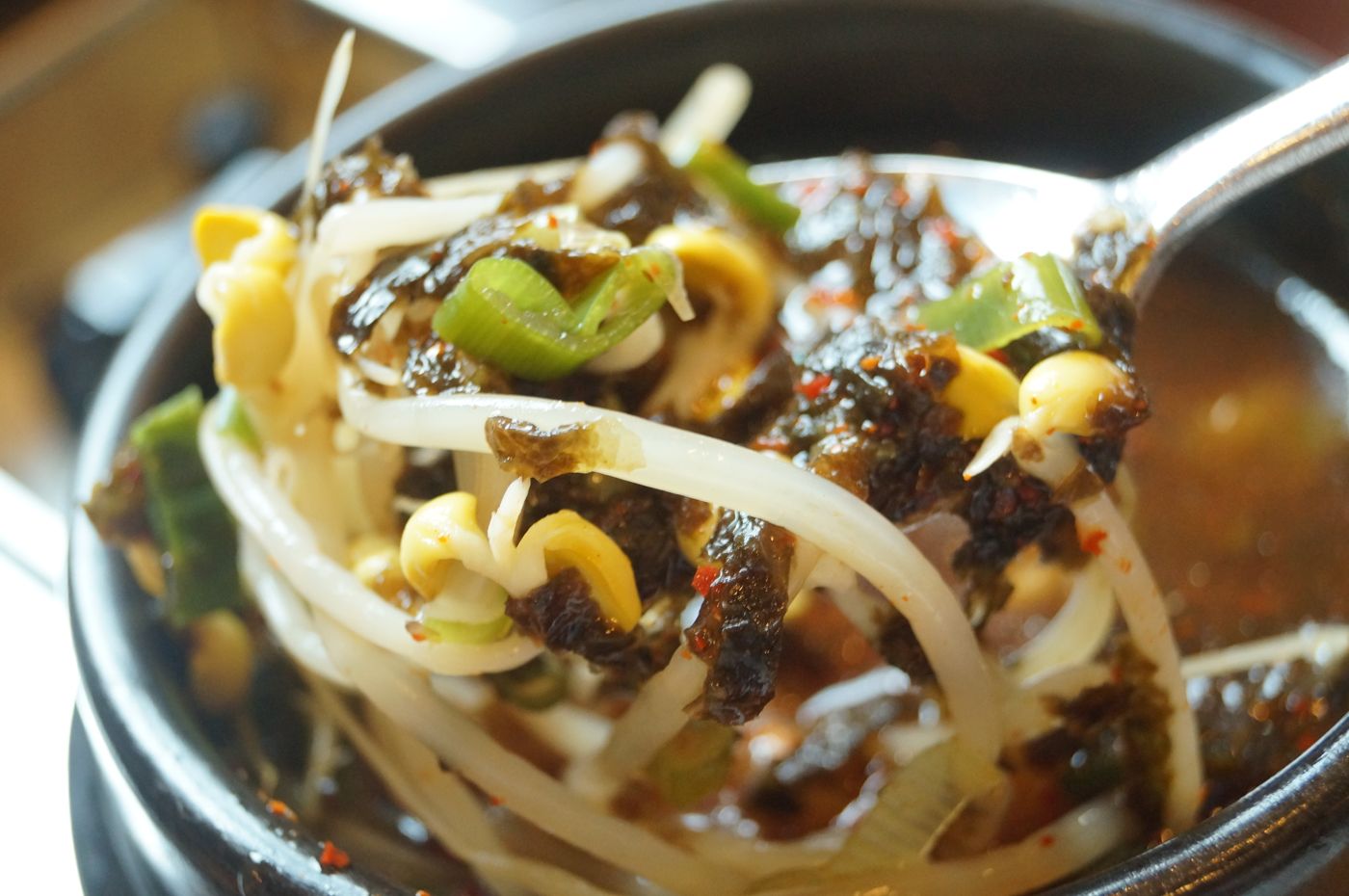 Kongnamul Guk (Soybean Sprout Soup)콩나물국A clear, light soup of soybean sprouts in anchovy-kelp stock, seasoned with salt or soup soy sauce — an everyday guk and a favorite morning-after cure.
Sources
- 01Korean Food Composition Table: Pacific oyster, Seasoned, Salt-fermented — National Institute of Agricultural Sciences
- 02어리굴젓 - 한국민족문화대백과사전 (Encyclopedia of Korean Culture)
- 03간월도 어리굴젓(看月島 어리굴젓) - 한국민족문화대백과사전 (Encyclopedia of Korean Culture)
- 04어리굴젓 - 한국민속대백과사전 (Encyclopedia of Korean Folk Culture)
- 05Vibrio and Oysters - Centers for Disease Control and Prevention
- 06About Vibrio Infection - Centers for Disease Control and Prevention
Last updated