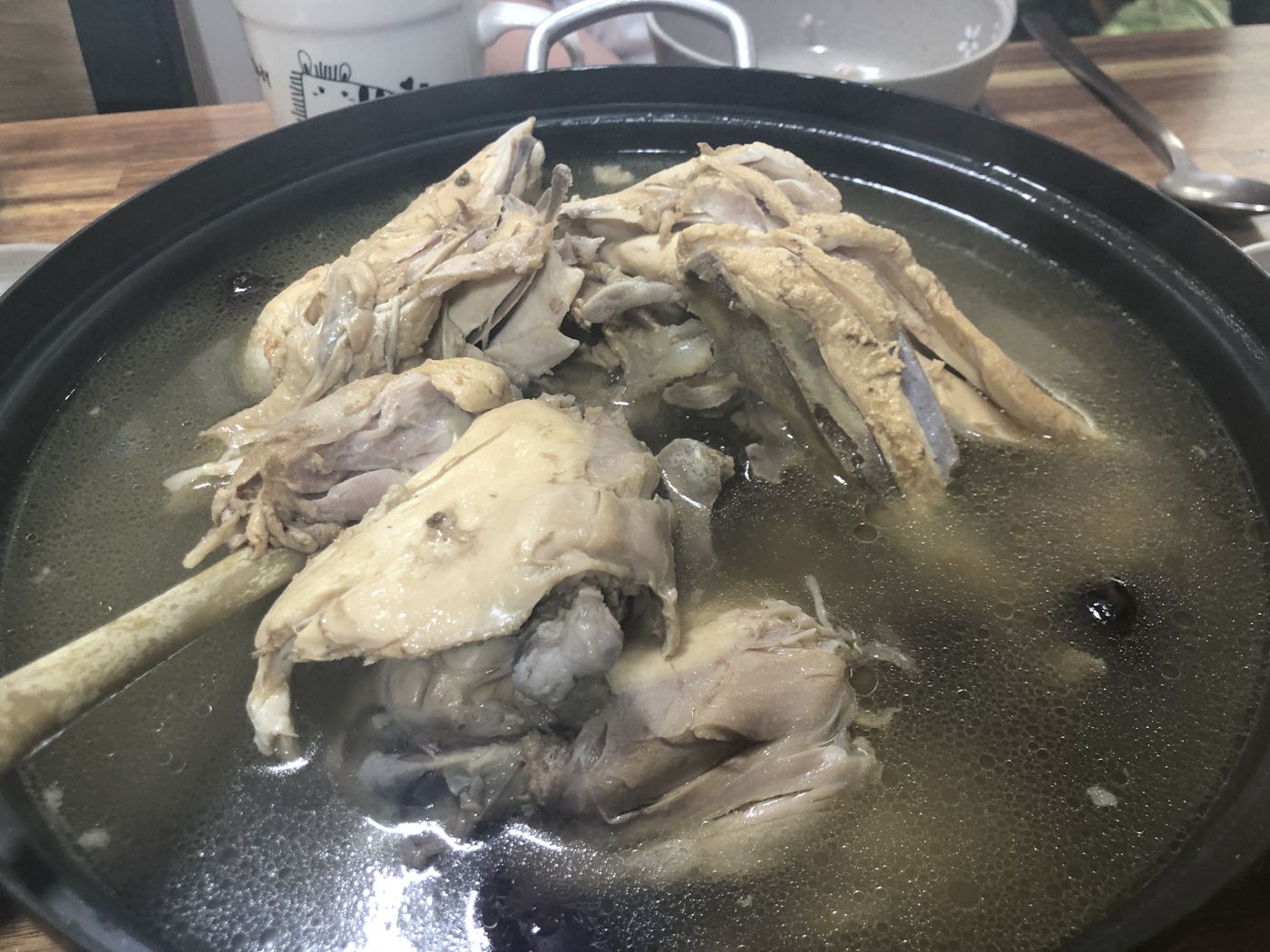
 Photo: Choi Kwang-mo, CC0, via Wikimedia Commons
Guk & Tang · Soups 국·탕
Baeksuk (Plain Whole Boiled Chicken)
백숙
Romanization: baeksuk
A whole chicken simmered in plain water with garlic until falling-apart tender, eaten with salt and pepper, then followed by rice porridge cooked in the broth.
- Serves
- 4
- Prep
- 15 min
- Cook
- 90 min
Recipe
Ingredients · Serves 4
- 1 Whole chickenabout 1.2–1.5 kg, cavity cleaned, excess fat trimmed
- 3 lWater
- 15 clovesGarlicwhole, peeled
- 1 stalkLarge green onion (daepa)half in chunks, half finely sliced
- 1 thumbGingersliced
- 4 Dried jujubes (daechu)optional
- 150 gGlutinous rice (chapssal)soaked 1 hour, for the porridge
- to serveSalt and black pepper
Method
Technique: Making Guk and Jjigae, Making Yuksu: Anchovy-Kelp Stock, Making Juk
Step 1: Rinse the chicken cavity briefly under cold running water, keeping splashes away from other food, and pat dry; trim off loose fat and the tail. Wash the sink and your hands afterward.
Step 2: Put the chicken in a large pot with the water, garlic, green-onion chunks, ginger and jujubes. Bring to a boil and skim off the foam.
Step 3: Simmer, partly covered, for 60–70 minutes, until the leg moves loosely in its joint and the thigh reaches at least 165 °F (74 °C).
Step 4: Lift the chicken onto a platter. Serve the meat with small dishes of salt and pepper for dipping, and bowls of the broth topped with sliced green onion.
Step 5: For the porridge, skim some fat from the remaining broth, add the soaked rice and the soft garlic, and simmer 20–25 minutes, stirring often, until thick. Stir in any leftover shredded meat and season with salt.
Origin & History
Baeksuk means "white-cooked": meat or fish boiled in plain water without seasoning. The Encyclopedia of Korean Folk Culture notes that any meat or fish can be cooked this way, but chicken gives the best clear broth, so in everyday speech baeksuk has come to mean dak-baeksuk, whole boiled chicken. It is a dish of the summer dog days and of convalescence, eaten for its tender meat and rich broth; see boknal and summer foods.
The folk encyclopedia separates it from its better-known relative samgyetang: samgyetang is a young chicken cooked with ginseng, jujubes, chestnuts and ginkgo, while baeksuk is chicken and water, perhaps with garlic. The traditional way to finish a pot is to cook glutinous rice in the remaining broth as porridge (dak-juk). Before chicken became the default, the encyclopedia adds, baeksuk of freshwater fish such as crucian carp, catfish and carp was more often eaten as a restorative.
Modern versions have multiplied. Hanbang baeksuk adds medicinal herbs such as milk vetch root (hwanggi), jujubes and chestnuts; nurungji baeksuk steams the chicken over soaked glutinous rice in a pressure cooker so that the rice forms a chewy, scorched crust; and in autumn, pine-mushroom (songi) baeksuk is a specialty of the mountain areas where the mushrooms are gathered. Duck (ori) baeksuk is another popular summer restorative.
Key Ingredients
- Chicken (dak)닭Chicken appears in Korea's founding legends and on its summer tables: young birds simmered whole with ginseng in samgyetang, chili-marinated pieces stir-fried as Chuncheon's dakgalbi, and the fried chicken of modern takeout culture.
 Garlic마늘Used raw, minced, pickled and roasted, garlic is one of the essential aromatics of Korean food — in seasonings, marinades, kimchi and namul.
 Green onion파Korean green onion (pa), from thick-stemmed daepa to slender scallions — chopped into nearly every seasoning sauce, soup and kimchi, and the star of pa-kimchi.
 Ginger생강Fresh ginger root, used in small amounts to brighten kimchi paste and marinades and to tame the strong smells of fish and meat.
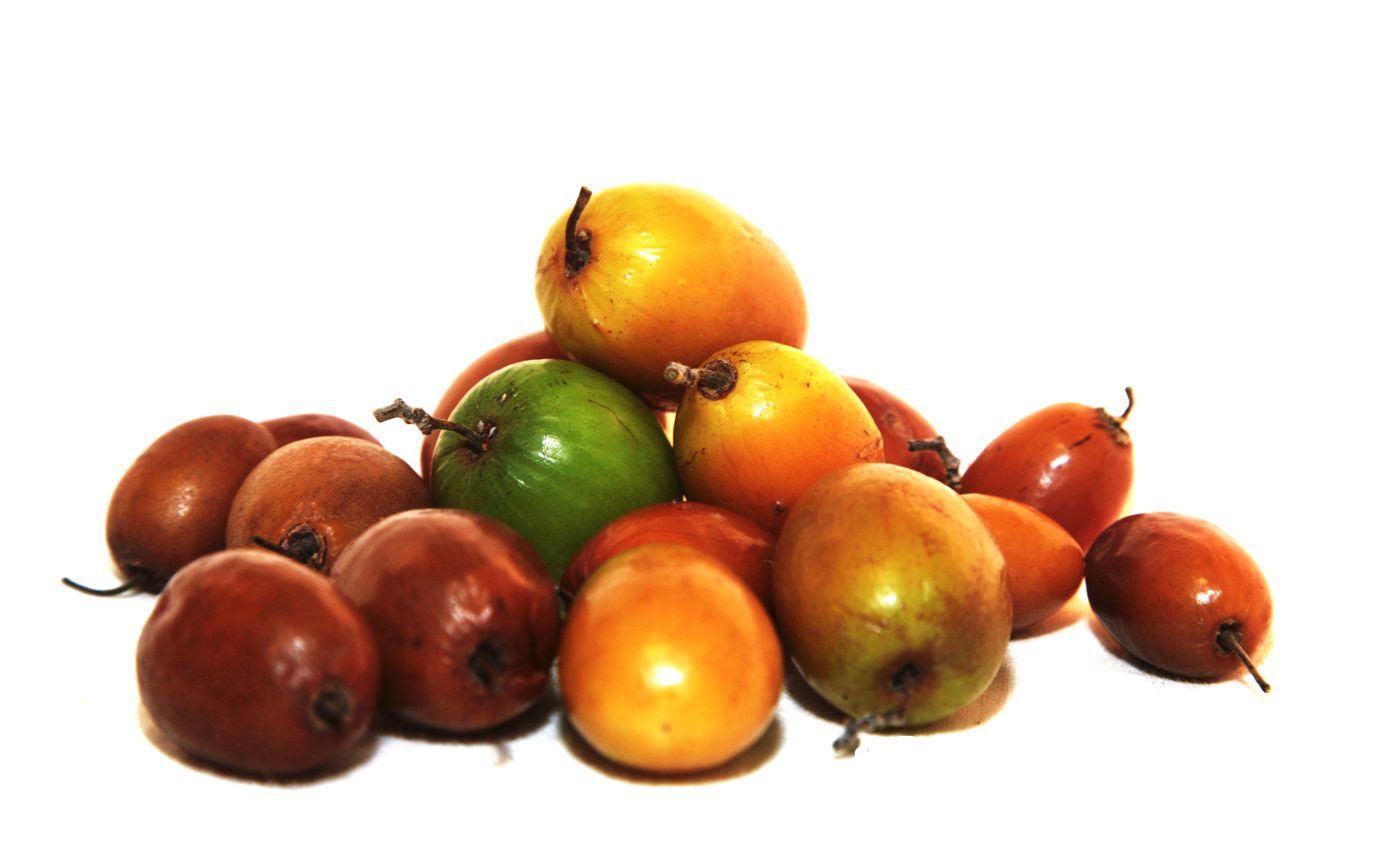 Jujube (red date)대추The small, wrinkled red fruit of the jujube tree, dried until sweet and chewy. An essential of ancestral-rite and wedding tables, it sweetens teas and herbal soups and garnishes rice cakes and festive dishes.
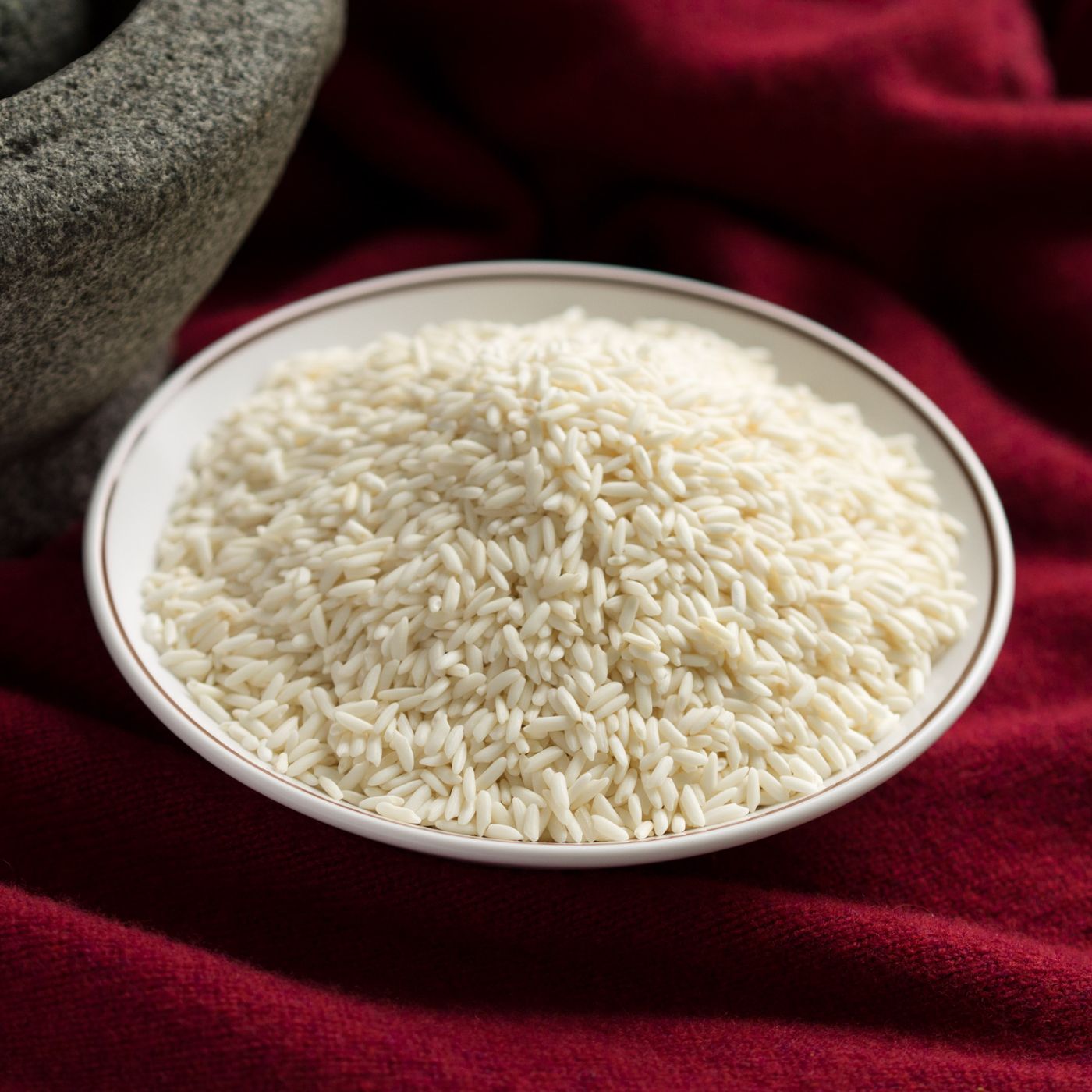 Glutinous rice (sweet rice)찹쌀Opaque, chalk-white grains of glutinous rice that steam into a chewy, elastic mass. Chapssal is the rice of festivals and comfort food: pounded into rice cakes, sweetened into yaksik, and tucked inside the chicken of samgyetang.
Nutrition
| Calories | ~342 kcal |
|---|---|
| Protein | ~25.8 g |
| Fat | ~12.9 g |
| Carbohydrates | ~27.4 g |
| Fiber | ~1.2 g |
| Sodium | ~299 mg |
Notable forProtein
Scaled from MFDS's calculated (not laboratory-analyzed) value for restaurant dak-baeksuk (닭백숙; per 100 ml: 56 kcal, 4.23 g protein, 2.11 g fat, 4.49 g carbohydrate, 0.2 g fiber, 49 mg sodium, 0.57 g saturated fat, 14.8 mg cholesterol) to its 610 ml serving; the source does not specify what makes up the carbohydrate. The low sodium reflects unsalted broth; salt added at the table is extra. MFDS's calculated institutional-catering version (519 mg sodium per 100 ml, 270.6 ml serving) gives about 1,400 mg sodium, showing how much depends on seasoning. Actual values vary with ingredients, portion size and preparation.
Health Benefits
- A simple, high-protein dish; the folk encyclopedia notes that chicken meat is lean, fine-textured and easy to digest, with most of its fat in the skin, where it is easy to remove.
- Because nothing is added but water and garlic, the cook controls the salt entirely — the unsalted broth is low in sodium by the MFDS calculation.
- Traditionally served to people recovering from illness and to older adults; see Korean food for older adults. That is a custom, not a medical claim.
Regional Variations
- Dak-baeksuk: the basic version — whole chicken, garlic and water, with salt and pepper at the table and porridge to finish.
- Hanbang baeksuk: cooked in a broth of medicinal herbs, jujubes and chestnuts.
- Nurungji baeksuk: chicken pressure-cooked over glutinous rice that crisps into a scorched-rice crust.
- Songi baeksuk: with pine mushrooms in autumn, a specialty of the Taebaek and Sobaek mountain ranges where they grow.
- Ori baeksuk: duck simmered with ginseng, milk vetch, garlic, jujubes and chestnuts for more than an hour.
Pairings
 Cubed Radish Kimchi깍두기Korean radish cut into neat cubes and tossed with chili, garlic and salted shrimp — crunchy, juicy and a classic partner to rich soups.
 Napa Cabbage Kimchi배추김치Salted napa cabbage layered with a red paste of chili, garlic, ginger and fermented seafood, then left to ripen: the kimchi most people picture first.
- Buchu Muchim부추무침Raw Korean chives tossed with soy sauce, chili flakes, vinegar and sesame — a pungent, garlicky salad that cuts through grilled meat and rich soups.
Sources
- 01백숙 (Baeksuk) — Encyclopedia of Korean Folk Culture (한국의식주생활사전)
- 02닭백숙 (Dak-baeksuk, restaurant and catering, calculated) — MFDS K-FIND food composition database
- 03서울의 역사가 담긴 닭한마리 냄비 (The dak-hanmari pot that holds Seoul's history) — Park Chan-il, Seoul Metropolitan Government magazine, February 2022
- 04Safe Food Handling — U.S. Food and Drug Administration
- 05Global Perspectives on Allergen Labeling: Harmonization of Regulations and Practices — Allergy, Asthma & Immunology Research, 2025
Last updated