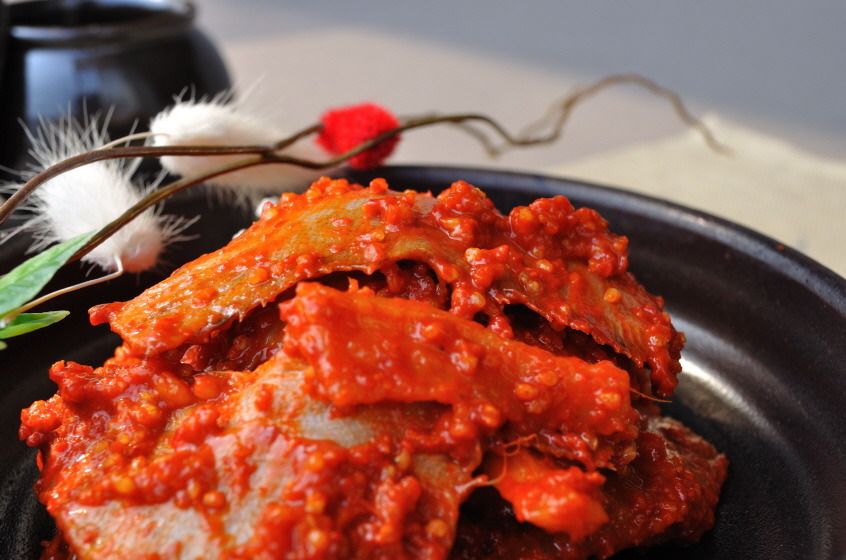
 Photo: kyungeun, CC BY 4.0, via Wikimedia Commons
Jeotgal · Salted seafood 젓갈
Fermented Flatfish with Millet
가자미식해
Romanization: gajami-sikhae
Salted flatfish fermented with foxtail millet, malt, radish and chili — the tangy, spicy sikhae of Hamgyeong, carried south to the Gangwon coast.
- Serves
- 25
- Prep
- 60 min
- Cook
- 25 min
RegionNorthern Provinces (Hwanghae, Pyeongan, Hamgyeong) · Gangwon · Sokcho
Jump to recipeRecipe
Ingredients · Serves 25
- 1 kgSmall flatfish (gajami), very fresh or previously frozenabout 8–10 fish, 15–20 cm long
- 100 gCoarse sea salt (cheonilyeom), non-iodizedabout 10% of the fish weight
- 200 gFoxtail millet (jopssal)about 1 cup; or short-grain rice
- 3 tbspBarley malt powder (yeotgireum)
- 60 gGochugaru (Korean chili flakes)about ¾ cup, divided
- 3 tbspGarlicminced, divided
- 1 tbspGingerminced
- 1 kgKorean radish (mu)cut into thick matchsticks
- 1 tbspFine saltfor the radish
- 1 tbspSugaroptional
- 1 tbspToasted sesame seeds
Method
Technique: Making Jeotgal
Step 1: Scale the fish, cut off the heads, fins and tails, remove the innards and rinse well. Layer them with the coarse salt in a glass or ceramic container, cover and refrigerate for 2 days.
Step 2: Rinse off the salt, pat dry and lay the fish on a rack in the refrigerator, uncovered, for 1–2 days until the surface is dry and the flesh firm and slightly leathery. Cut each fish crosswise into strips about 1.5 cm wide, bones and all.
Step 3: Rinse the millet and cook it with a little less water than usual (about 1¼ cups) so the grains stay firm and separate. Spread it out to cool completely.
Step 4: Mix the cooled millet with the malt powder, half the gochugaru, two-thirds of the garlic and all the ginger, then fold in the fish. Pack into a clean crock or jar, press down firmly, cover and leave in the refrigerator, or a spot no warmer than about 10°C, for 5–7 days, until the grain has softened and liquid begins to rise.
Step 5: Toss the radish with the fine salt for 30 minutes, then squeeze it dry in a cloth. Mix it with the remaining gochugaru and garlic, the sugar and sesame seeds, and fold it thoroughly through the fish mixture.
Step 6: Repack, press down and refrigerate for another 3–5 days, until the flavor is tangy, spicy and rounded and the fish bones have softened. Keep refrigerated, use clean utensils, and eat within about 3 weeks; discard if it smells putrid rather than pleasantly sour, or shows mold.
Origin & History
Sikhae (식해, 食醢) is fish fermented with salt and cooked grain. It is easily confused with sikhye (식혜), the sweet rice-and-malt drink — the names differ by a single vowel, and both use cooked grain softened by malt — but sikhae is a savory, chili-red side dish of fish. The Encyclopedia of Korean Folk Culture explains its place on the coast: the west, with plenty of sea salt, developed heavily salted jeotgal, while the east, where salt was scarcer, combined a lighter salting with the lactic fermentation of grain. As the grain ferments it sours, and the acid protects the fish and gives sikhae its tang.
Fish sikhae appears in Korean records from the 15th century: the cookbook Sanga yorok (c. 1450) describes salted fish packed into a crock between layers of cooked rice. Gajami-sikhae, made with flatfish (gajami), is the best-known example today and is above all a dish of Hamgyeong Province, on the far northeast coast. The Encyclopedia of Korean Culture describes it as a preserved food that makes good use of the clear-water flatfish of the East Sea and the millet of the north, and notes that adding malt (yeotgireum) to the millet sets the Hamgyeong version apart, since the malt sugars the grain's starch.
According to the folk encyclopedia, it reached South Korea with refugees from Hamgyeong during the Korean War, and today it is made along the Gangwon coast north of Gangneung, including the Sokcho area. Other East Sea communities make sikhae with cooked rice instead of millet, and on the east coast a version without chili was traditionally placed on ancestral-rite tables. Before refrigeration it was put down at kimjang time and eaten over a short season; now it is made year round.
Key Ingredients
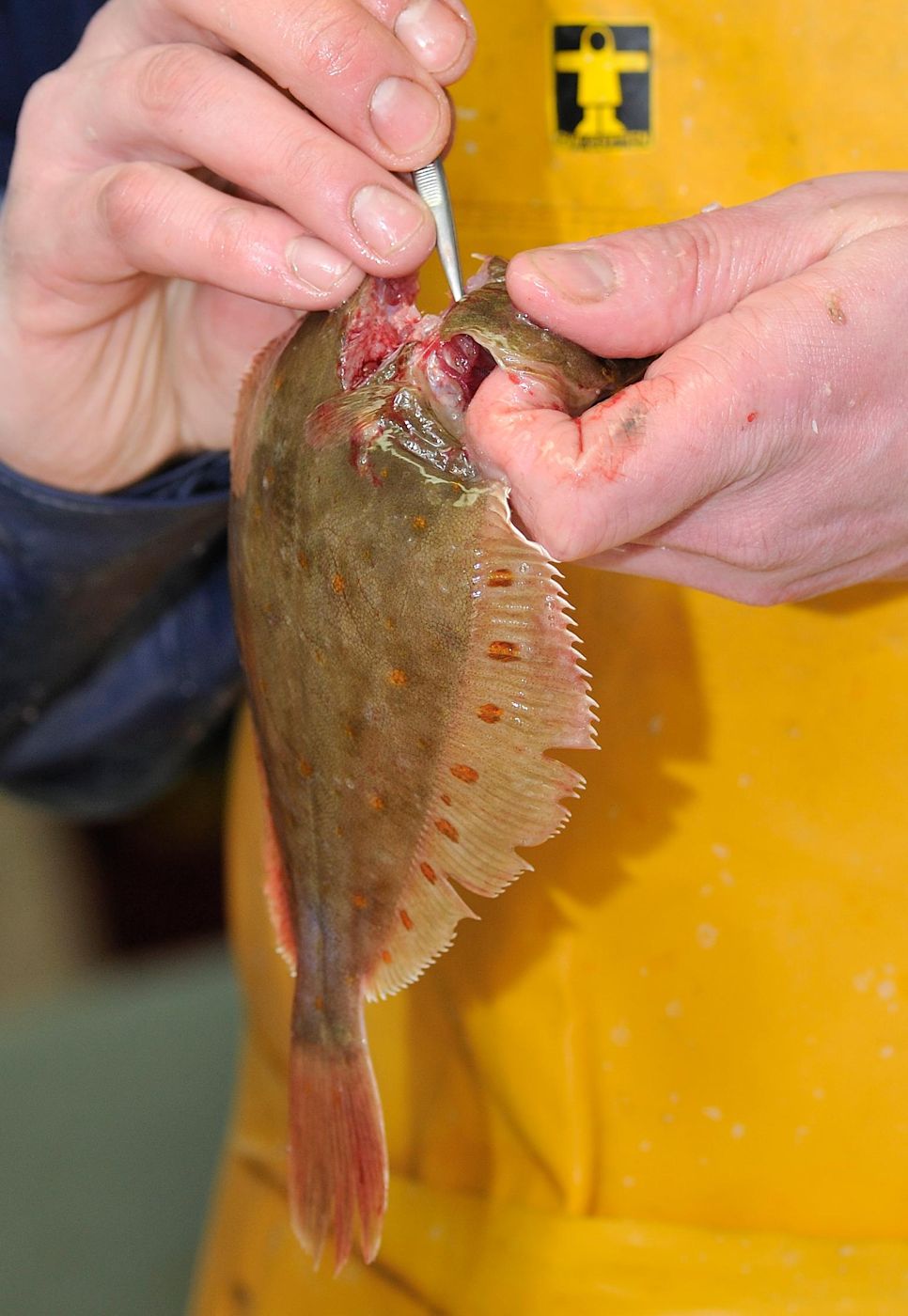 Flatfish (gajami)가자미Right-eyed flatfish of the East Sea, grilled, braised and dried, and best known in gajami-sikhae, the Hamgyeong-style flatfish fermented with millet, radish and chili.
 Sun-Dried Sea Salt천일염Coarse sea salt made by evaporating seawater with sun and wind in tidal-flat salt pans, most of it from Sinan County off Korea's southwest coast. It is the everyday salt for salting cabbage and making jang.
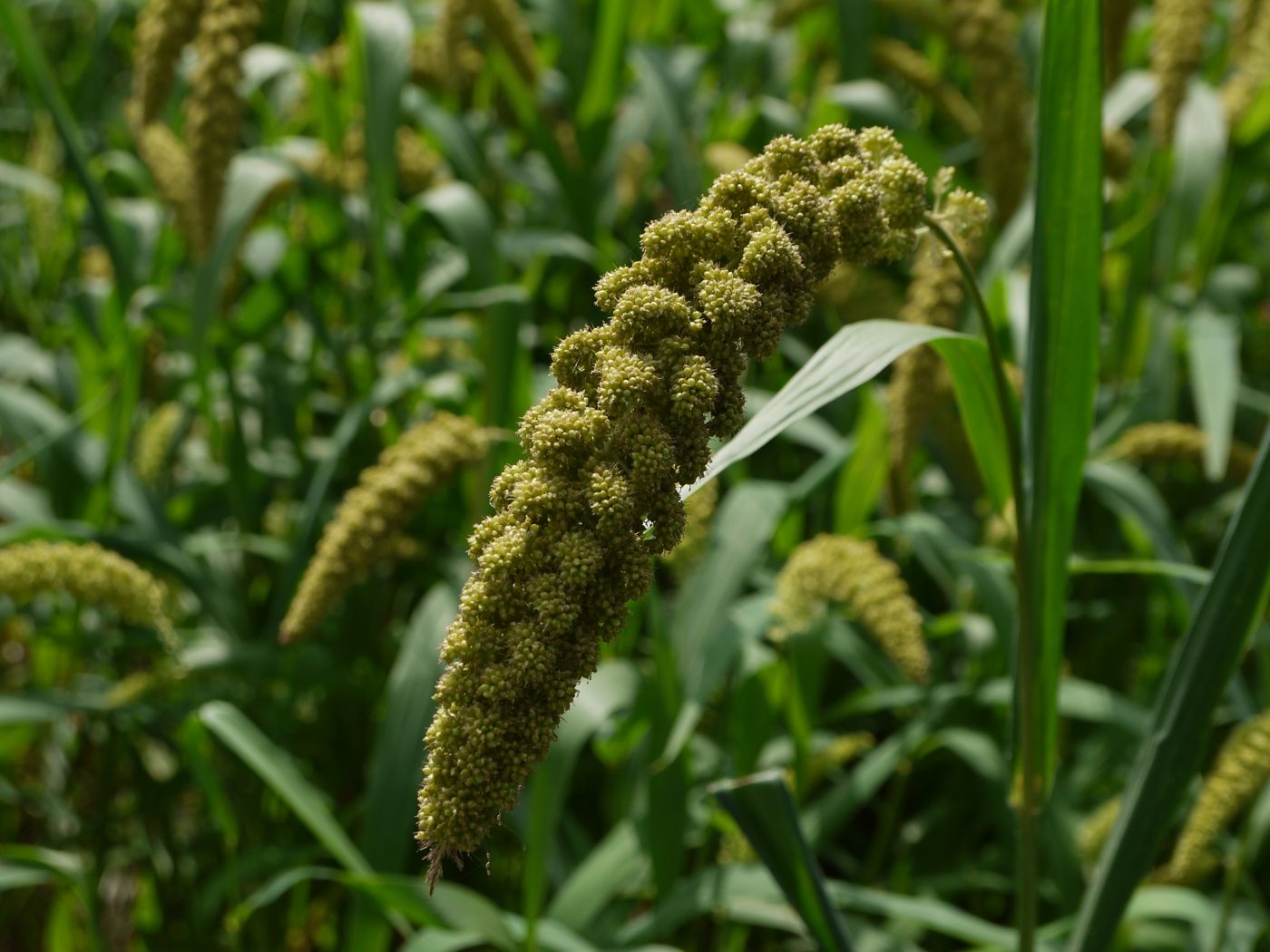 Foxtail millet좁쌀Tiny, round, golden grains of hulled foxtail millet, the grain of the plant Koreans call jo. Once a staple second only to rice, it now appears as a sunny fleck in mixed-grain rice, in five-grain rice for the first full moon, and in the fermented fish of the far northeast.
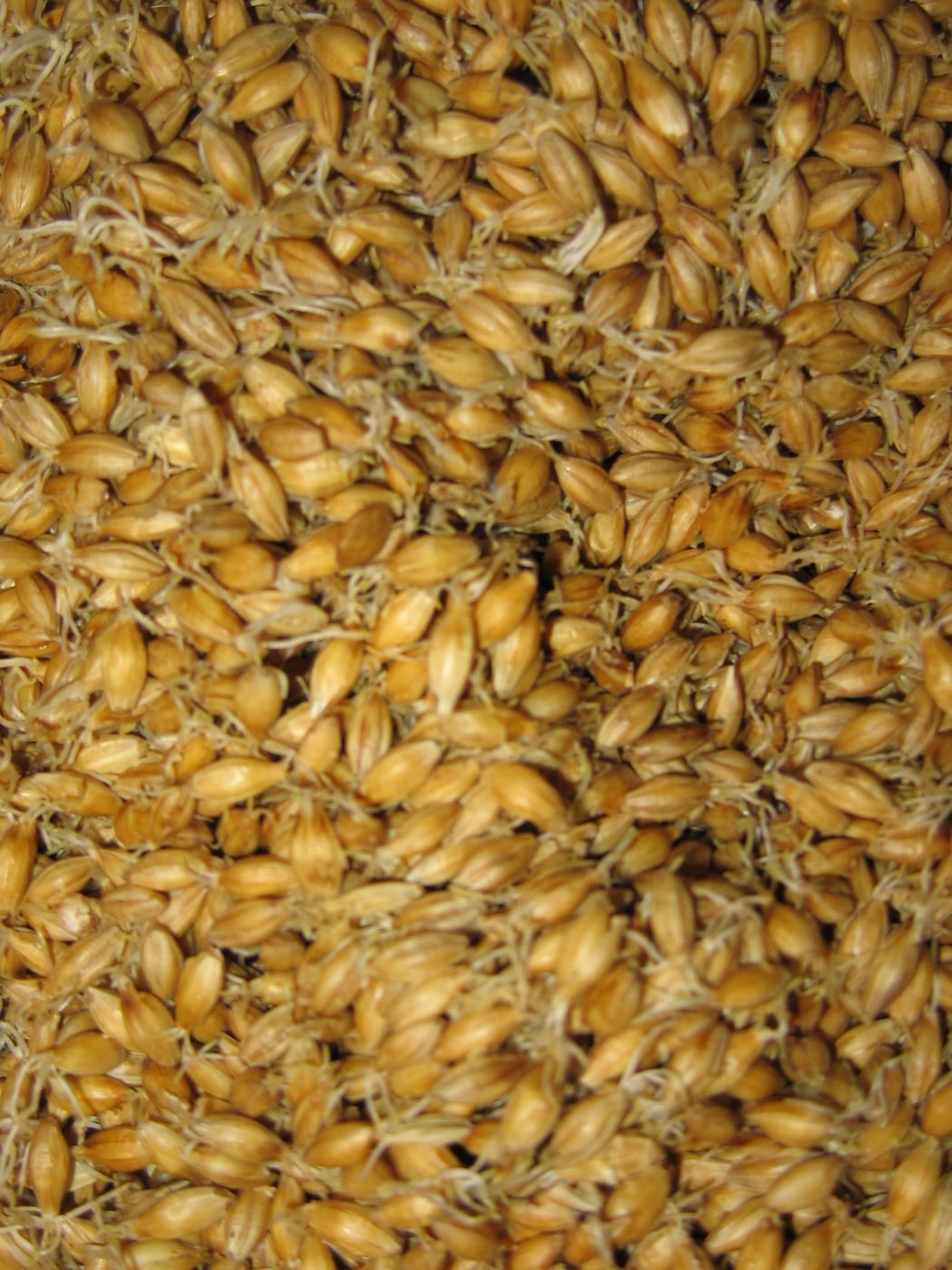 Yeotgireum (Barley Malt Powder)엿기름Barley sprouted for a few days, dried and ground. Soaked and strained, its enzyme-rich water turns starch into sugar, which makes it the engine of sikhye, yeot, jocheong and traditional gochujang.
 Gochugaru고춧가루Korean red chili powder, made from dried red peppers ground coarse or fine. It gives kimchi, gochujang and countless banchan their color and warmth.
 Garlic마늘Used raw, minced, pickled and roasted, garlic is one of the essential aromatics of Korean food — in seasonings, marinades, kimchi and namul.
 Ginger생강Fresh ginger root, used in small amounts to brighten kimchi paste and marinades and to tame the strong smells of fish and meat.
 Korean radish무A stout, heavy white radish, often tinged pale green near the top. It is cubed for kkakdugi, left whole in the clear brine of dongchimi, shredded into salads and simmered into broths.
 Sesame참깨Toasted sesame seeds and sesame oil (chamgireum) finish countless Korean dishes, adding a nutty aroma and gloss.
Nutrition
| Calories | 54 kcal |
|---|---|
| Protein | 4.4 g |
| Fat | 1.9 g |
| Carbohydrates | 4.7 g |
| Fiber | 1.6 g |
| Sodium | 274 mg |
Notable forCalcium · Protein · Vitamin A
From the Korean MFDS food composition database (K-FIND) entry for home-style gajami-sikhae (가자미식해, analyzed; per 100 g: 134 kcal, 11.1 g protein, 4.8 g fat, 11.6 g carbohydrate, 4.1 g fiber, 685 mg sodium, 296 mg calcium, 118 µg RAE vitamin A, 74 mg cholesterol), scaled to the serving size. Actual values vary with ingredients, portion size and preparation.
Health Benefits
- Calcium from the bones: the fish is eaten bones and all, softened by fermentation; in the database figures a 40 g serving supplies about 120 mg of calcium.
- Lactic fermentation: a study of gajami-sikhae fermented at 5–20°C found lactic acid bacteria such as Latilactobacillus sakei, Lactiplantibacillus plantarum and Leuconostoc species dominating, and concluded that cool temperatures make for the best fermentation. Whether these bacteria benefit health is still being researched.
- Less salty than many jeotgal: at about 685 mg sodium per 100 g in the database, it carries well under half the sodium of most salt-cured jeotgal, because the grain ferment does part of the preserving.
Regional Variations
- Hamgyeong: the defining style — small flatfish salted and pressed, then fermented with cooked foxtail millet, malt powder, garlic, ginger and chili, with salted radish strips folded in at the end.
- Gangwon coast: carried south by Hamgyeong refugees; the fish is often semi-dried before mixing and the batch ripens for two weeks or more.
- Other East Sea sikhae: cooked rice instead of millet, and other fish such as pollock, mackerel, sandfish and anchovy.
- For ancestral rites: east-coast households traditionally made a chili-free version for the ritual table.
Pairings
- Mu Guk (Beef and Radish Soup)뭇국Thin squares of Korean radish and beef stir-fried in sesame oil, then simmered into a clear, gently sweet broth seasoned with soup soy sauce — a year-round everyday guk.
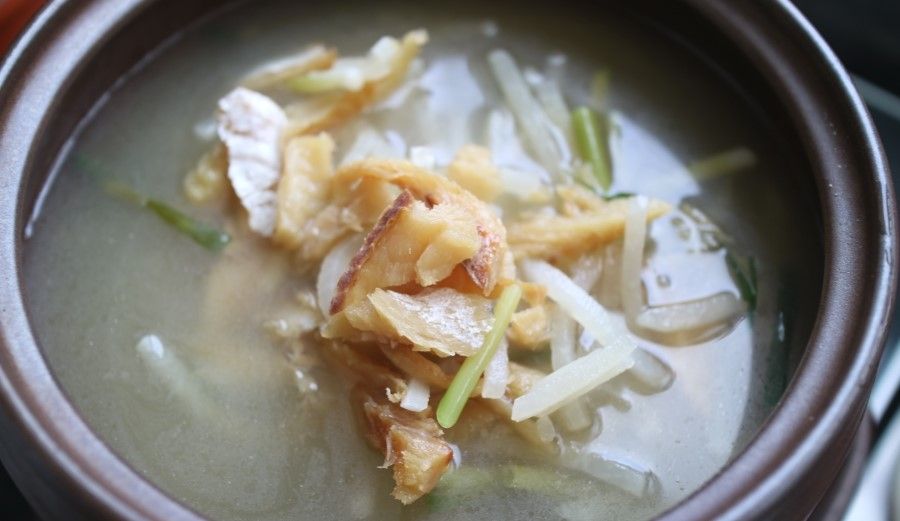 Bugeo Guk (Dried Pollock Soup)북엇국Shredded dried pollock sautéed in sesame oil and simmered into a milky, savory broth with radish, tofu and a ribbon of egg — Korea's favorite morning-after soup.
- Kongnamul-bap (Soybean Sprout Rice)콩나물밥Rice steamed over a bed of soybean sprouts, often with a little beef, and eaten with a spoonful of soy-and-scallion sauce — a thrifty one-pot meal from Chungcheong.
Sources
- 01가자미식해 — MFDS K-FIND food composition database
- 02가자미식해(가자미食醢) - 한국민족문화대백과사전 (Encyclopedia of Korean Culture)
- 03식해 - 한국민속대백과사전 (Encyclopedia of Korean Folk Culture)
- 04가자미 - 한국민속대백과사전 (Encyclopedia of Korean Folk Culture)
- 05식혜 - 한국민속대백과사전 (Encyclopedia of Korean Folk Culture)
- 06Diversity of a Lactic Acid Bacterial Community during Fermentation of Gajami-Sikhae — Foods (2022)
Last updated