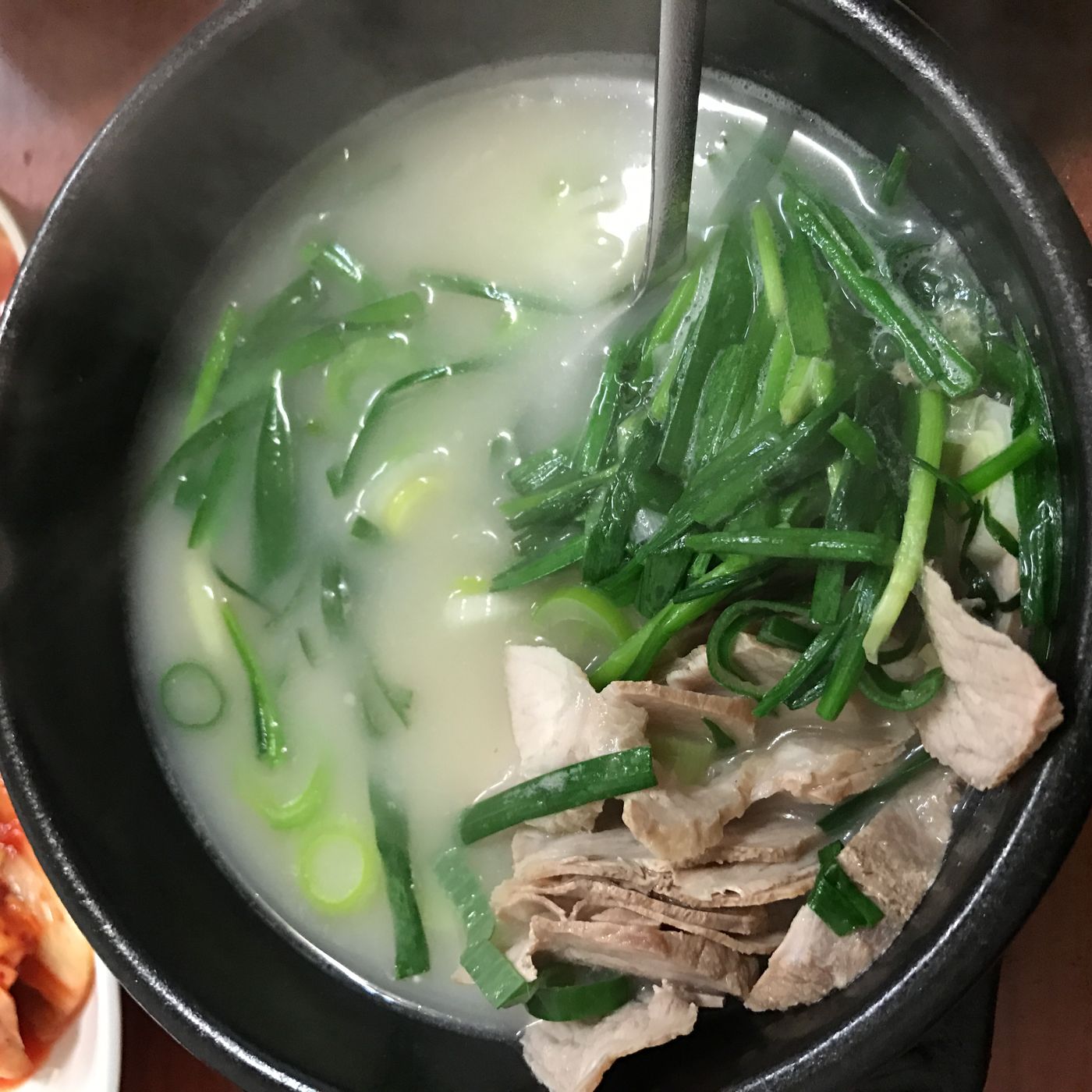
 Photo: chomjong, CC BY 2.0, via Wikimedia Commons
Guk & Tang · Soups 국·탕
Dwaeji Gukbap (Busan Pork and Rice Soup)
돼지국밥
Romanization: dwaeji-gukbap
Slices of boiled pork in a milky pork-bone broth over rice, seasoned at the table with salted shrimp and garlic chives — Busan's signature everyday bowl.
- Serves
- 6
- Prep
- 130 min
- Cook
- 300 min
RegionBusan · Gyeongsang · Daegu
Jump to recipeRecipe
Ingredients · Serves 6
- 2 kgPork leg or back bones
- 800 gPork shoulder or boneless head meatin two or three pieces
- 6 lWaterplus more for topping up
- 1 largeOnionhalved
- 2 stalksLarge green onion (daepa)1 whole, 1 sliced for serving
- 10 clovesGarlic
- 20 gGingersliced
- 1 tbspDoenjang
- 100 mlSoju
- 6 bowlsCooked rice
- 100 gGarlic chives (buchu)cut into 3 cm lengths, for the table
- to tasteSalted shrimp (saeujeot)for the table
- to tasteSeasoned chili paste (dadaegi)optional; gochugaru mixed with garlic and a little broth
Method
Technique: Making Guk and Jjigae, Making Yuksu: Anchovy-Kelp Stock
Step 1: Soak the bones in cold water for 2 hours, changing the water once. Blanch them in boiling water for 10 minutes, drain and rinse well.
Step 2: Return the bones to a clean pot with the 6 liters of water. Bring to a vigorous simmer and keep it there for 4–5 hours, topping up with boiling water; a steady boil turns the broth milky.
Step 3: After about 3 hours, add the pork shoulder, onion, whole daepa, garlic, ginger, doenjang and soju — the folk encyclopedia notes cooks use soju, *doenjang* and ginger to tame the porky smell. Simmer about 1 hour, until the meat is tender.
Step 4: Lift out the meat, let it rest under a cover, then slice thinly. Strain the broth and skim off the fat.
Step 5: To serve, put rice and slices of pork in each bowl. Pour boiling broth over, drain it back into the pot and repeat two or three times (*toryeom*) to heat the rice, then fill the bowl.
Step 6: Top with sliced green onion. Set out garlic chives, salted shrimp and chili paste so each diner can season the bowl. Serve with kimchi.
Origin & History
Dwaeji-gukbap is a broth made by long-simmering pork bones, poured over rice with slices of boiled pork (pyeonyuk or suyuk). It belongs above all to Busan and the southeast: the Encyclopedia of Korean Folk Culture describes it as a strongly regional dish found in Busan, Masan, Miryang and Daegu, while Seoul, Gyeonggi and Chungcheong lean toward blood-sausage and ox-head gukbap instead.
Its origins are told several ways. The folk encyclopedia records a legend tracing it to a Goryeo king distributing pork to the people, but gives most weight to the Korean War: refugees from the north crowded into Busan made a seolleongtang-like soup from pork by-products, easier to come by than beef bones, and US military bases nearby supplied meat scraps. The entry suggests the dish began as a northern soup in the manner of garigukbap and became a Gyeongsang specialty as those refugees settled, spreading quickly through the 1950s and 1960s.
The Korea Tourism Organization emphasizes a later push: large pig farms that appeared with industrialization made pork cheaper than beef, and meat-processing plants in Busan supplied the by-products for gukbap. Either way, it became an inexpensive, filling meal and a morning-after favorite. VisitKorea counts more than 700 specialist restaurants in the city.
Key Ingredients
 Pork (dwaeji-gogi)돼지고기Korea's most widely eaten meat, prized cut by cut: fatty belly for samgyeopsal, neck for the grill, lean legs for boiled suyuk and stir-fried jeyuk. Pork also anchors Jeju Island's feast cooking.
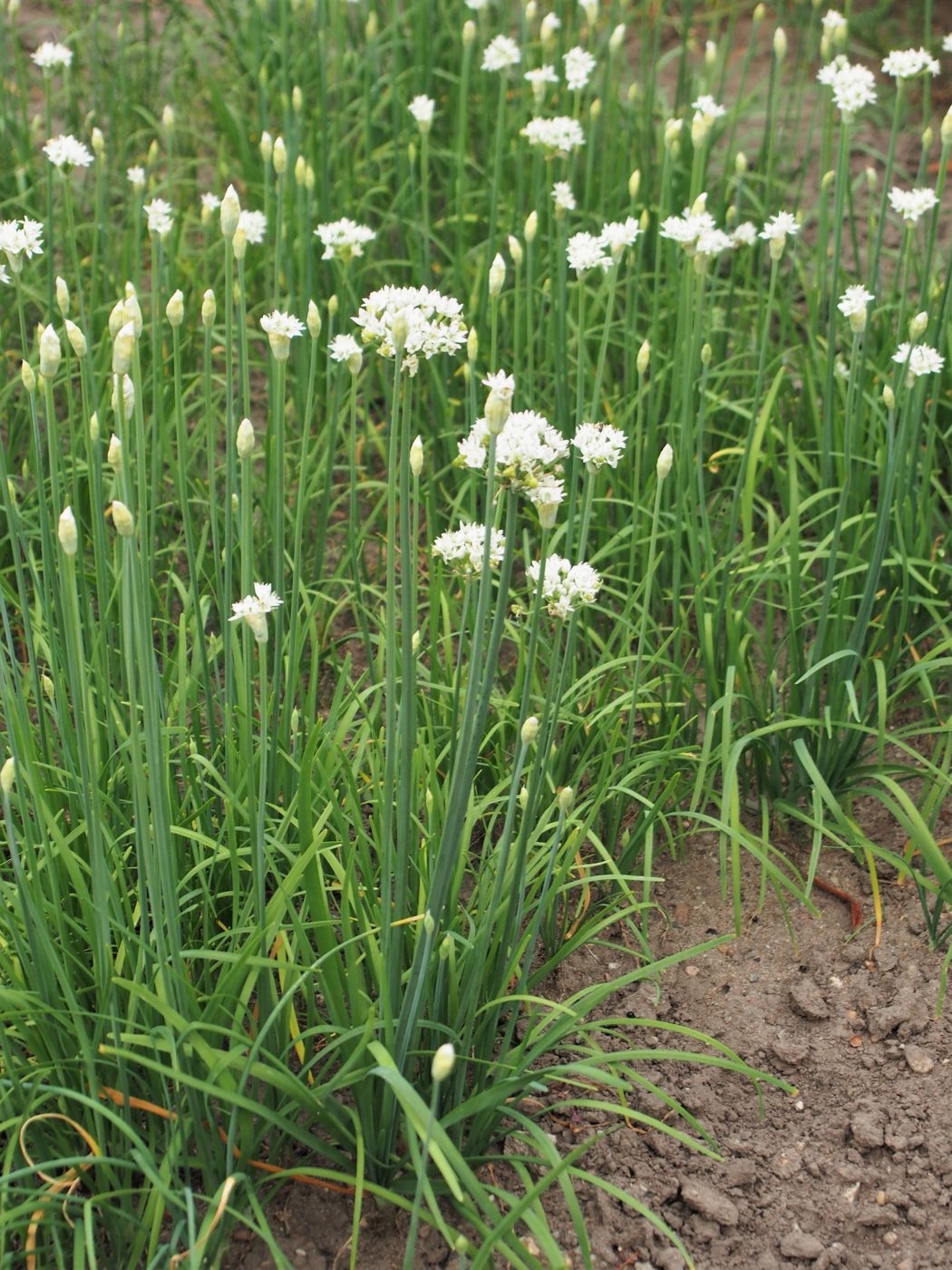 Garlic chives (buchu)부추Flat-leaved garlic chives with a bright, garlicky perfume. Tossed raw into buchu-muchim, folded into savory pancakes and tucked into cucumber kimchi.
 Salted fermented shrimp새우젓Tiny shrimp packed in salt and left to ferment — a jeotgal (salted seafood) that seasons kimchi and stews and accompanies boiled pork with briny, savory depth.
 Green onion파Korean green onion (pa), from thick-stemmed daepa to slender scallions — chopped into nearly every seasoning sauce, soup and kimchi, and the star of pa-kimchi.
 Garlic마늘Used raw, minced, pickled and roasted, garlic is one of the essential aromatics of Korean food — in seasonings, marinades, kimchi and namul.
 Ginger생강Fresh ginger root, used in small amounts to brighten kimchi paste and marinades and to tame the strong smells of fish and meat.
 Doenjang된장Fermented soybean paste — the savory foundation of doenjang-jjigae, many soups and dressings for namul. It is one of Korea's core jang, or fermented sauces.
 Gochugaru고춧가루Korean red chili powder, made from dried red peppers ground coarse or fine. It gives kimchi, gochujang and countless banchan their color and warmth.
 Rice쌀Short, round grains of japonica rice that cook up glossy, soft and gently clinging. Steamed white rice, bap, is the center of the Korean table: every banchan, soup and stew is planned to be eaten with it.
Nutrition
| Calories | ~912 kcal |
|---|---|
| Protein | ~66.4 g |
| Fat | ~38.6 g |
| Carbohydrates | ~74.8 g |
| Fiber | Not reported |
| Sodium | ~1092 mg |
Notable forProtein · Zinc · Selenium
Bone broth cannot be estimated reliably from raw ingredients, so these figures are scaled from the MFDS analysis of restaurant dwaeji-gukbap (per 100 g: 76 kcal, 5.53 g protein, 3.22 g fat, 6.23 g carbohydrate, 1.0 g fiber as reported, 91 mg sodium, 0.64 mg zinc, 4.62 µg selenium) to the database's 1.2 kg bowl, rice included. Salted shrimp added at the table is extra and can easily double the sodium. The folk encyclopedia gives a much lower figure of about 480 kcal per bowl, so portion size matters a great deal. The source lists about 12.0 g of fiber per serving, which is implausible for a meat broth, so fiber is shown as not reported. Actual values vary with ingredients, portion size and preparation.
Health Benefits
- A complete one-bowl meal: pork for protein, rice for energy, and the analyzed bowl also supplies zinc and selenium.
- The folk encyclopedia points out that it turns bones and by-products into an affordable, nourishing meal.
- Garlic chives added at the table bring a little freshness and greenery.
Regional Variations
- Busan style: a relatively clear broth, compared in the folk encyclopedia to gomtang.
- Miryang style: a milky-white broth that recalls seolleongtang.
- Daegu style: more spices and more offal in the bowl.
- What goes in: restaurants offer meat only, offal only (naejang-gukbap), blood sausage (sundae-gukbap) or mixed; ttaro-gukbap serves the rice on the side.
- Broth: VisitKorea distinguishes a clear broth made by boiling pork in water alone from a rich one cooked with bones.
Pairings
- Buchu Muchim부추무침Raw Korean chives tossed with soy sauce, chili flakes, vinegar and sesame — a pungent, garlicky salad that cuts through grilled meat and rich soups.
 Cubed Radish Kimchi깍두기Korean radish cut into neat cubes and tossed with chili, garlic and salted shrimp — crunchy, juicy and a classic partner to rich soups.
 Napa Cabbage Kimchi배추김치Salted napa cabbage layered with a red paste of chili, garlic, ginger and fermented seafood, then left to ripen: the kimchi most people picture first.
Sources
- 01돼지국밥 (Dwaeji-gukbap) — Encyclopedia of Korean Folk Culture (한국의식주생활사전)
- 02Dwaejigukbap: Busan's Representative Local Dish — VisitKorea (Korea Tourism Organization)
- 03국밥_돼지고기 (Dwaeji-gukbap, restaurant, analyzed) — MFDS K-FIND food composition database
- 04Global Perspectives on Allergen Labeling: Harmonization of Regulations and Practices — Allergy, Asthma & Immunology Research, 2025
- 05Sodium reduction — World Health Organization fact sheet
Last updated