Kimchi 김치
Chunky Radish and Cabbage Kimchi
섞박지
Romanization: seokbakji
Big, flat-cut pieces of radish and cabbage mixed in one chili and jeotgal seasoning — a late-autumn “mixed” kimchi, and the name for big radish kimchi today.
- Serves
- 30
- Prep
- 60 min
- Cook
- 5 min
RegionSeoul & Gyeonggi · Suwon · Gyeongsang
Jump to recipeRecipe
Ingredients · Serves 30
- 1.5 kgKorean radish (mu)1 large radish, cut into flat pieces about 4 × 4 cm and 1 cm thick
- 750 gNapa cabbageabout ½ head, cut into 5 cm pieces
- 70 gCoarse sea salt (cheonilyeom), non-iodizedfor salting
- 2 tbspGlutinous rice flourfor the paste
- 200 mlWaterfor the paste
- 60 gGochugaru (Korean chili flakes)about ¾ cup
- 3 tbspAnchovy fish sauce (myeolchi-aekjeot)
- 2 tbspSalted shrimp (saeujeot)finely chopped
- 3 tbspGarlicminced
- 1 tbspGingerminced
- 1 tbspSugar
- 4 stalksGreen onionscut in 4 cm lengths
- 50 gWater dropwort (minari) or mustard greenscut in 4 cm lengths; optional
Method
Technique: Making Kimchi
Step 1: Toss the radish and cabbage pieces with the salt in a large bowl and leave for 1–1½ hours, turning every 30 minutes, until the cabbage bends without snapping and the radish is slightly flexible.
Step 2: Meanwhile, whisk the rice flour into the water and cook over low heat, stirring, for 2–3 minutes until thin and glossy. Let it cool completely.
Step 3: Rinse the vegetables once or twice in cold water and drain well in a colander for 30 minutes. Taste a piece of radish: it should be lightly salty.
Step 4: Mix the cooled paste with the gochugaru, fish sauce, salted shrimp, garlic, ginger and sugar and leave for 10 minutes so the chili swells.
Step 5: Toss the radish with the seasoning first so it takes on an even red color, then add the cabbage, green onion and minari and mix gently with gloved hands.
Step 6: Pack tightly into a clean container, pressing out air, and leave about 3 cm of headspace. Leave at room temperature for 1 day, then refrigerate. It is good after 3–4 days and best within about 3 weeks, turning more sour with time. Use clean utensils and discard if slimy or moldy.
Origin & History
Seokbakji (standard spelling 섞박지) takes its name from seokda, “to mix”: several vegetables are cut into large pieces and mixed together in one seasoning, usually with jeotgal. The Encyclopedia of Korean Culture traces its first mention to Sallim gyeongje in the mid-Joseon period. The Encyclopedia of Korean Folk Culture points to the court record of King Jeongjo's 1795 sixtieth-birthday banquet for his mother at Hwaseong, which lists a gyochimchae — “mixed kimchi” — without saying how it was made.
The first full recipe is in Gyuhap chongseo (1809). It is lavish: lightly salted radish, cabbage and mustard greens, cucumbers kept from summer, eggplant stored in ash, and wax gourd, layered in a buried crock with salted yellow croaker, shad and big-eyed herring, plus octopus, abalone and conch, then seasoned with sea staghorn, green onion, garlic, chili and ginger and topped up with croaker and oyster brine. The Encyclopedia of Korean Culture notes that it marks a turning point, when kimchi seasoned with jeotgal and seafood began to take over from vegetables cured in salt alone. Early-20th-century classifications kept the distinction: kimchi made with many vegetables and seafood all at once was seokbakji.
The word has since shifted. In restaurants serving seolleongtang and other gukbap, “석박지” now usually means radish kimchi cut much larger and flatter than kkakdugi. A 2023 Kyunghyang Shinmun language column points out that 석박지 is not in standard dictionaries, that oversized radish kimchi is called 석박지 in some Gyeongsang dialects, and that the standard term for it is simply kkakdugi. The recipe below splits the difference: big radish pieces in the old manner, mixed with cabbage.
Key Ingredients
 Korean radish무A stout, heavy white radish, often tinged pale green near the top. It is cubed for kkakdugi, left whole in the clear brine of dongchimi, shredded into salads and simmered into broths.
 Napa cabbage배추The tall, pale, tightly headed cabbage at the heart of Korea's best-known kimchi. Salted, layered with seasoning and left to ferment, it becomes baechu-kimchi; fresh, it goes into soups, wraps and quick salads.
 Sun-Dried Sea Salt천일염Coarse sea salt made by evaporating seawater with sun and wind in tidal-flat salt pans, most of it from Sinan County off Korea's southwest coast. It is the everyday salt for salting cabbage and making jang.
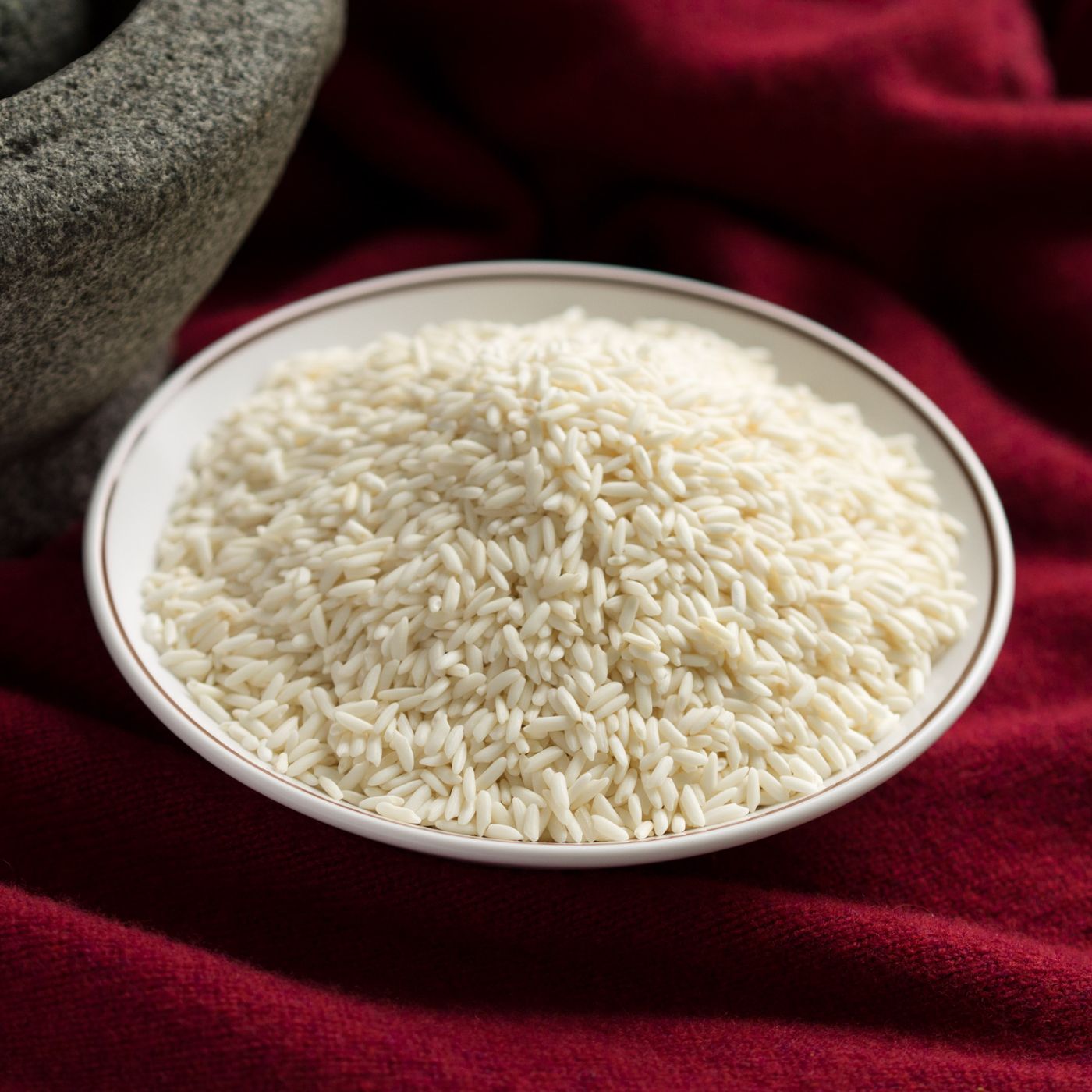 Glutinous rice (sweet rice)찹쌀Opaque, chalk-white grains of glutinous rice that steam into a chewy, elastic mass. Chapssal is the rice of festivals and comfort food: pounded into rice cakes, sweetened into yaksik, and tucked inside the chicken of samgyetang.
 Gochugaru고춧가루Korean red chili powder, made from dried red peppers ground coarse or fine. It gives kimchi, gochujang and countless banchan their color and warmth.
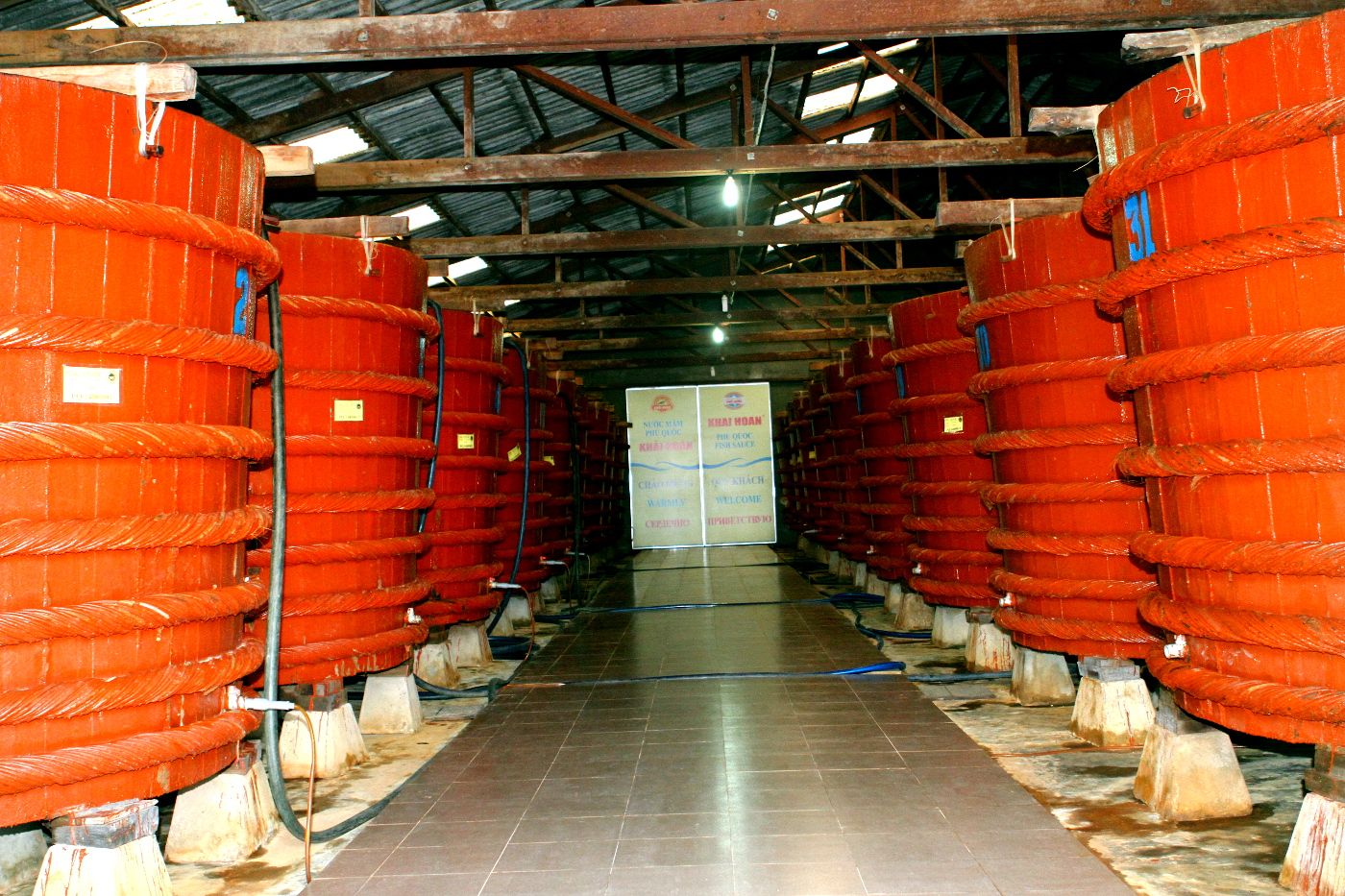 Anchovy fish sauce멸치액젓The clear amber liquid drawn from salted, fermented anchovies. A jeotgal in liquid form, it is the savory backbone of much southern-style kimchi and a quick seasoning for soups and namul.
 Salted fermented shrimp새우젓Tiny shrimp packed in salt and left to ferment — a jeotgal (salted seafood) that seasons kimchi and stews and accompanies boiled pork with briny, savory depth.
 Garlic마늘Used raw, minced, pickled and roasted, garlic is one of the essential aromatics of Korean food — in seasonings, marinades, kimchi and namul.
 Ginger생강Fresh ginger root, used in small amounts to brighten kimchi paste and marinades and to tame the strong smells of fish and meat.
 Green onion파Korean green onion (pa), from thick-stemmed daepa to slender scallions — chopped into nearly every seasoning sauce, soup and kimchi, and the star of pa-kimchi.
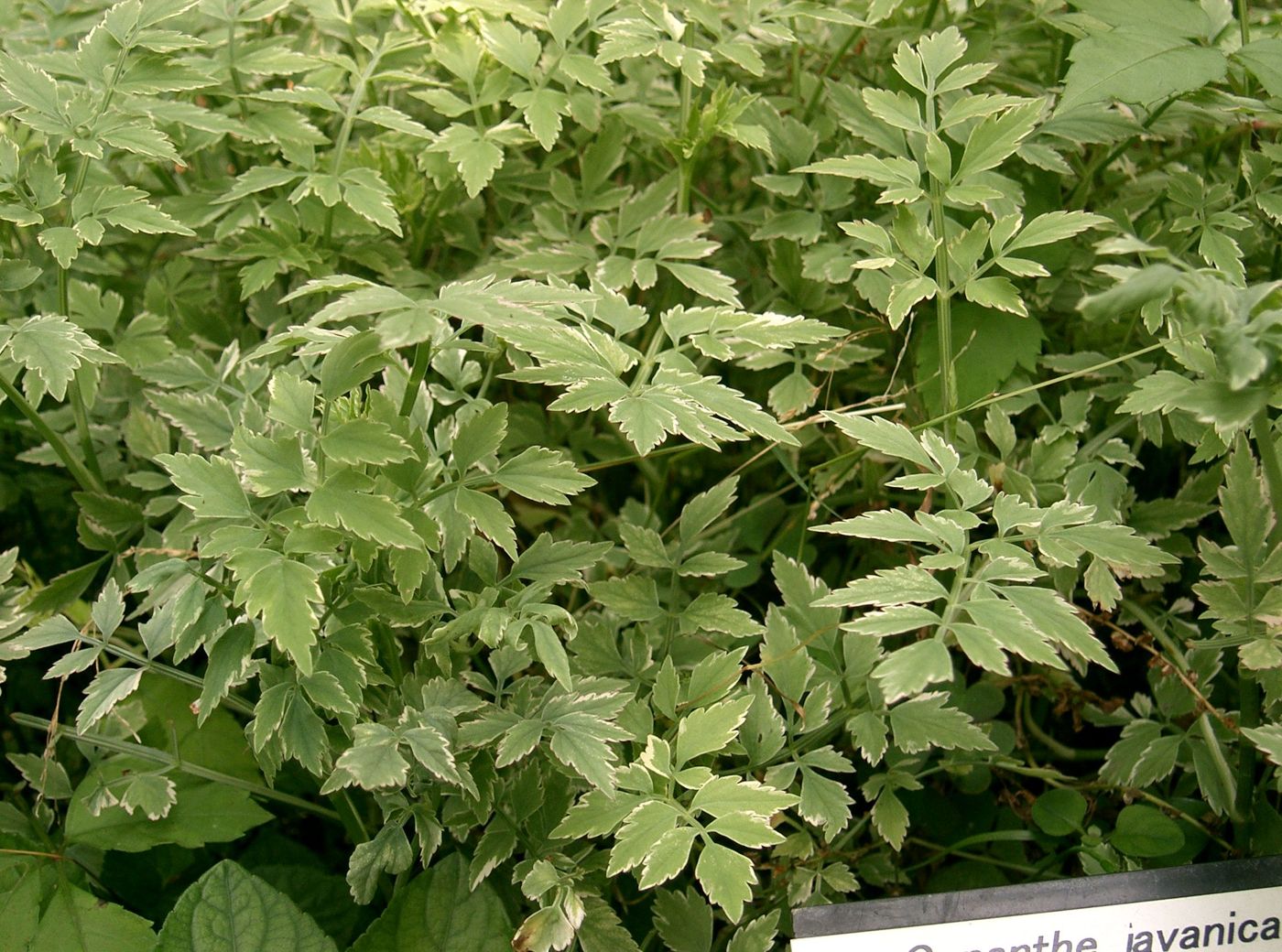 Minari (water dropwort)미나리A long-stemmed, aromatic water plant with a fresh, celery-like perfume. Blanched and dressed as minari-muchim, tucked into kimchi, wrapped into little bundles for minari-ganghoe and piled into fish stews and hot pots.
Nutrition
| Calories | ~24 kcal |
|---|---|
| Protein | ~0.9 g |
| Fat | ~0.2 g |
| Carbohydrates | ~4.6 g |
| Fiber | ~1.6 g |
| Sodium | ~319 mg |
Notable forDietary fiber · Vitamin K
Estimated from Korean Food Composition Table values for finished kimchi, weighted to this recipe's 2 : 1 radish-to-cabbage ratio: two parts “Kimchi, Kkakduki” (per 100 g: 40 kcal, 2.7 g fiber, 523 mg sodium) to one part “Kimchi, Baechukimchi” (per 100 g: 38 kcal, 2.5 g fiber, 551 mg sodium, 70 µg vitamin K). The table has no seokbakji entry, and restaurant and institutional versions are often far saltier. Actual values vary with ingredients, portion size and preparation.
Health Benefits
- Vegetables and fiber: a serving contributes an estimated 1.6 g of fiber for about 24 kcal.
- Vitamin K from cabbage: the cabbage adds an estimated 18 µg of vitamin K per serving.
- Fermented vegetables: like other kimchi it ripens with naturally occurring lactic acid bacteria; research on the health effects of fermented vegetables is ongoing.
Regional Variations
- Joseon household style: radish, cabbage, mustard greens, cucumber, eggplant and wax gourd with several kinds of jeotgal and fresh seafood, as in Gyuhap chongseo.
- Dong-a seokbakji: a hollowed wax gourd filled with croaker brine and aromatics, sealed in autumn and opened in winter.
- South Gyeongsang: jeoneo-seokbakji and galchi-seokbakji, named for the gizzard-shad or hairtail jeotgal used to season them.
- Gukbap-restaurant style: large, flat slabs of radish in a sweet-savory chili seasoning, served alongside seolleongtang and gomtang.
Pairings
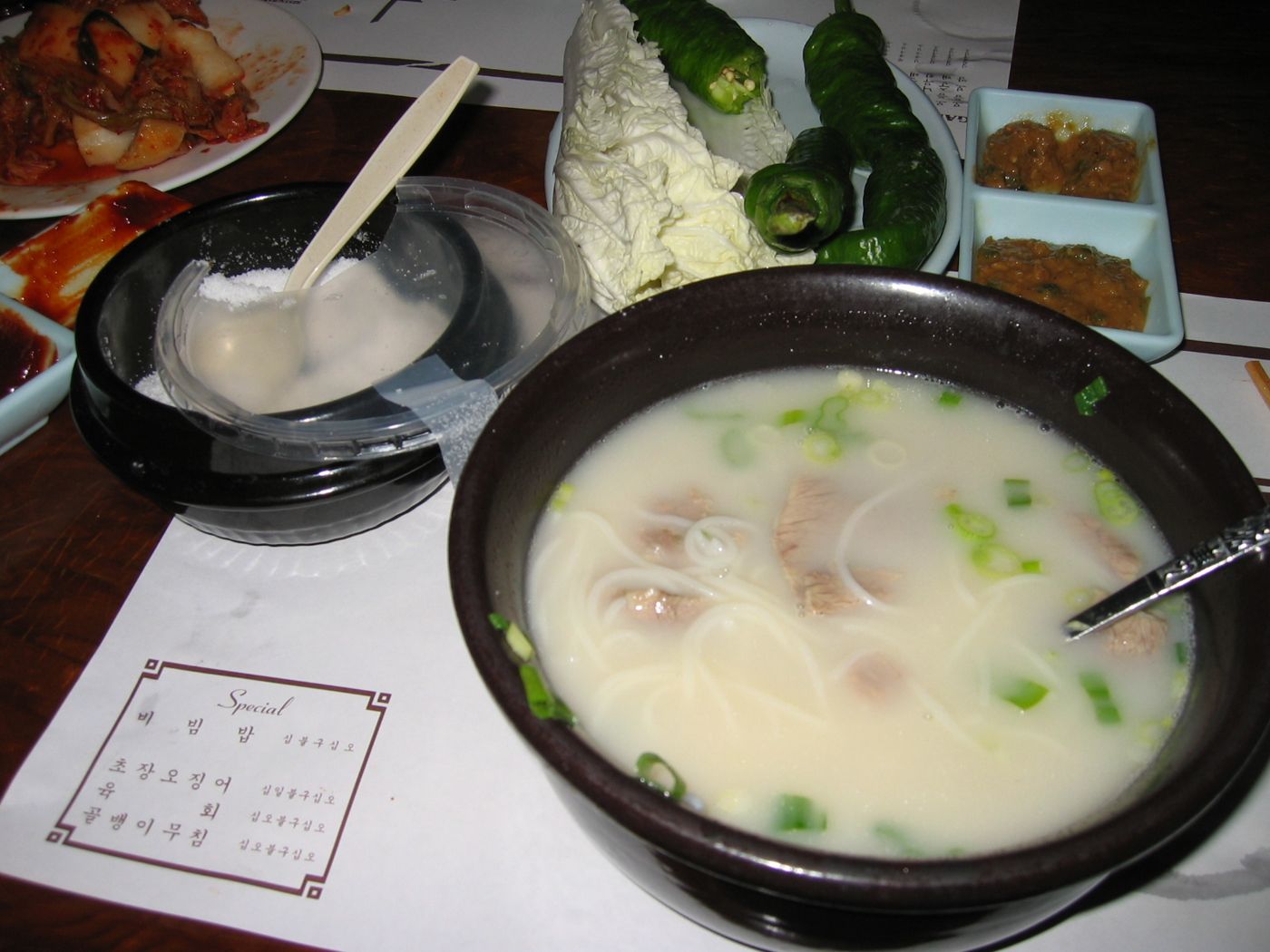 Seolleongtang (Ox Bone Soup)설렁탕Ox bones and beef simmered for hours into a milky-white broth, served unsalted over rice with sliced meat — each diner seasons it at the table.
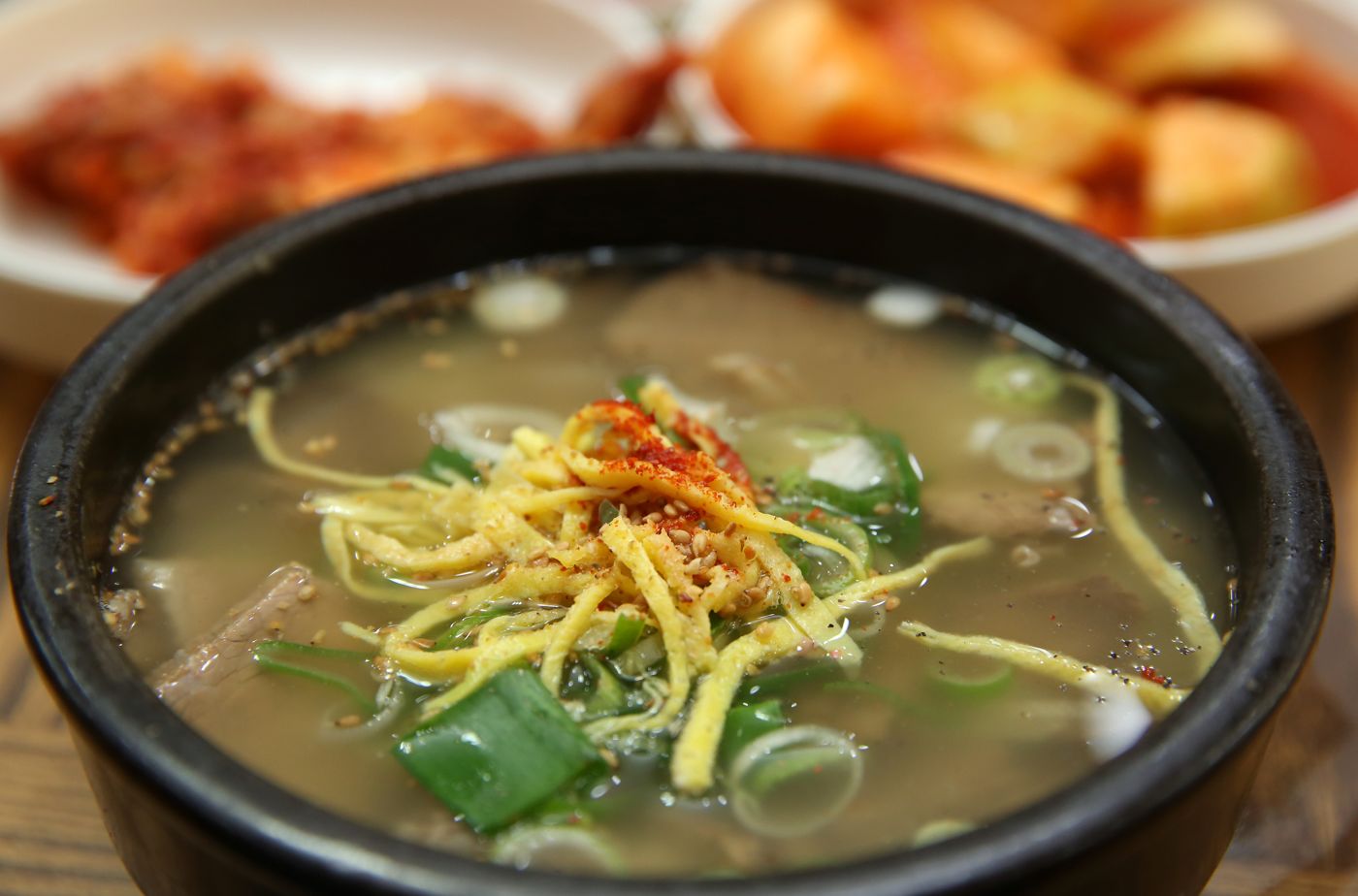 Naju Gomtang (Naju Clear Beef Soup)나주곰탕Brisket, shank and other beef cuts simmered into a clear, gently rich broth, poured over rice and topped with green onion — the market-day soup of Naju in South Jeolla.
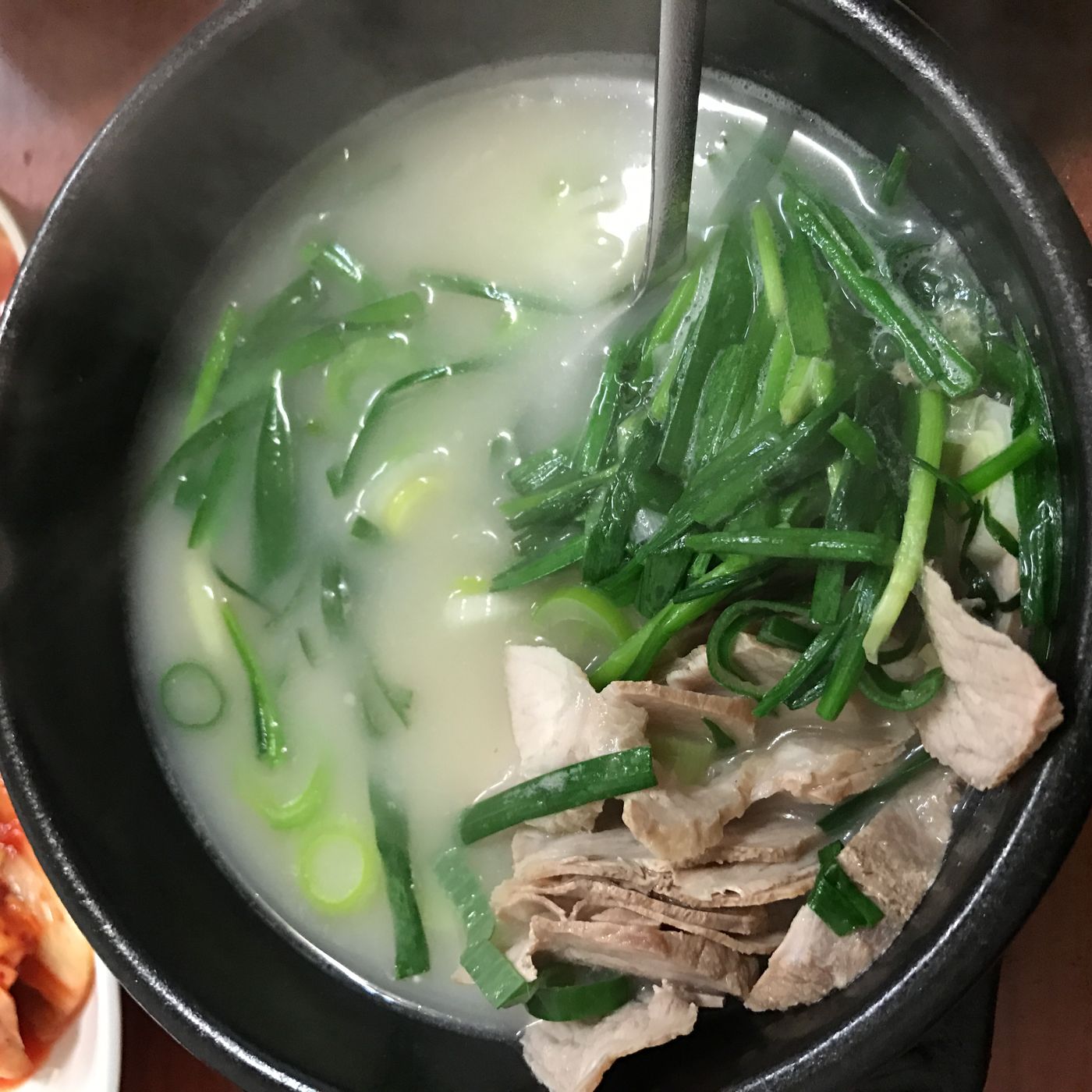 Dwaeji Gukbap (Busan Pork and Rice Soup)돼지국밥Slices of boiled pork in a milky pork-bone broth over rice, seasoned at the table with salted shrimp and garlic chives — Busan's signature everyday bowl.
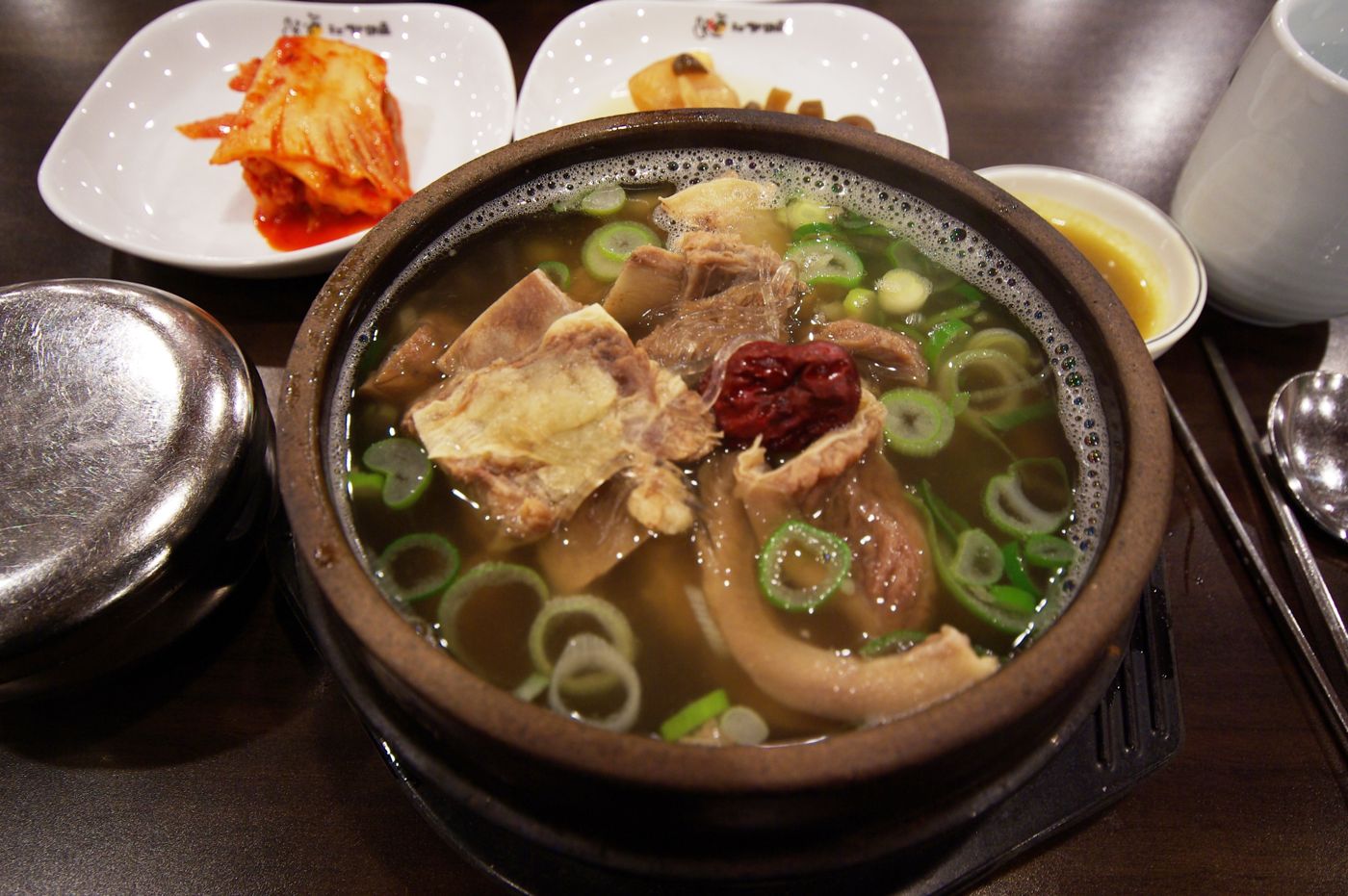 Galbitang (Beef Short Rib Soup)갈비탕Beef short ribs simmered until the meat slips from the bone, served in a clear, soy-seasoned broth with radish — a court banquet soup turned everyday restaurant bowl.
Sources
- 01섞박지 - 한국민족문화대백과사전 (Encyclopedia of Korean Culture)
- 02섞박지 - 한국민속대백과사전 (Encyclopedia of Korean Folk Culture)
- 03[우리말 산책] 설렁탕집에선 섞박지를 내놓지 않는다 — 경향신문 (Kyunghyang Shinmun, 2023)
- 04Korean Food Composition Table: Kimchi, Kkakduki, Prepared with cubed radish — National Institute of Agricultural Sciences
- 05Korean Food Composition Table: Kimchi, Baechukimchi, Prepared with Kimchi cabbage — National Institute of Agricultural Sciences
Last updated