 Photo: Nicole Cho (nchoz) at Flickr, CC BY-SA 2.0, via Wikimedia Commons
Kimchi 김치
Radish and Cabbage Water Kimchi
나박김치
Romanization: nabak-kimchi
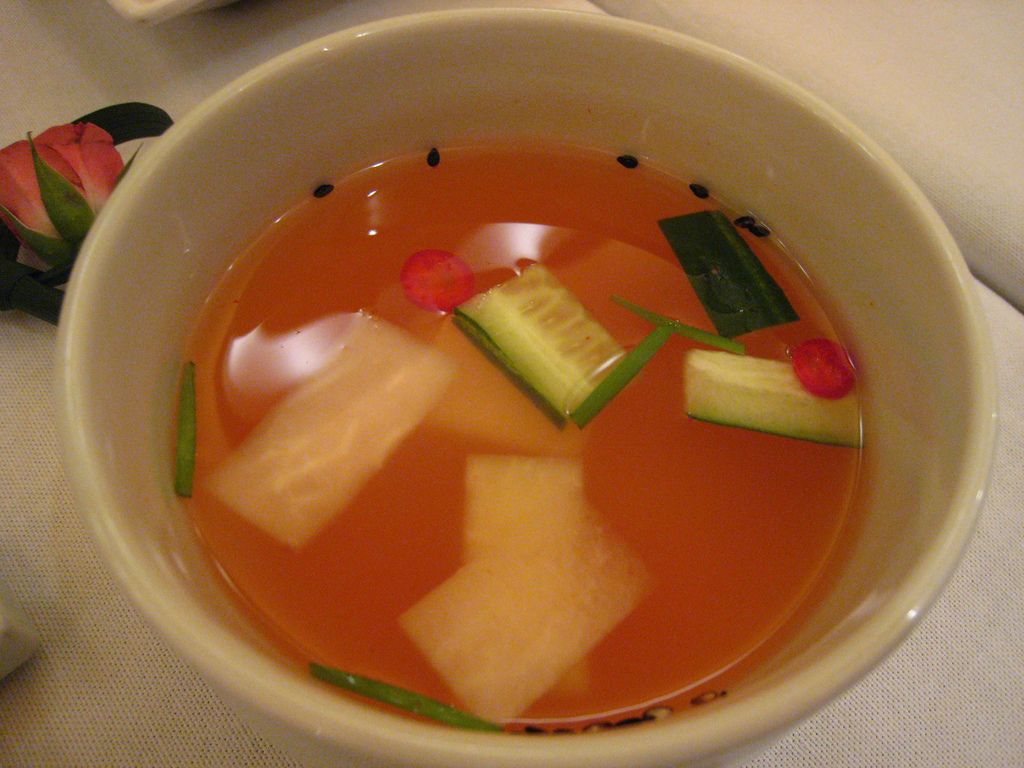
Thin squares of radish and napa cabbage in a lightly salted, pink-tinted broth — a mild, refreshing water kimchi eaten by the spoonful.
- Serves
- 10
- Prep
- 30 min
- Cook
- 0 min
RegionJeju
Jump to recipeRecipe
Ingredients · Serves 10
- 300 gKorean radish (mu)
- 200 gNapa cabbage inner leaves
- 1 tbspCoarse sea salt (non-iodized)for salting the vegetables
- 3 clovesGarlicthinly sliced
- 1 small knobGingerthinly sliced
- 2 stalksGreen onionscut into 3 cm lengths
- 1 Fresh red chilithinly sliced, optional
- 1 tbspGochugaru (Korean chili flakes)for tinting the broth
- 1.5 LWater
- 1 tbspFine sea saltfor the broth; adjust to taste
- 1 tbspSugar
Method
Technique: Making Kimchi
Step 1: Cut the radish and cabbage into thin squares about 2.5 cm across.
Step 2: Toss with the coarse salt and let stand for 20–30 minutes. Do not rinse; tip off and discard any liquid released.
Step 3: Wrap the gochugaru in a piece of cheesecloth or a fine sieve and swish it in the 1.5 L of water, squeezing gently, until the water turns pale pink. Stir in the fine salt and sugar until dissolved; the broth should taste lightly salty.
Step 4: Combine the salted vegetables with the garlic, ginger, green onions and red chili in a clean glass jar or container and pour in the broth.
Step 5: Cover and leave at room temperature for about 1 day, until small bubbles appear and the broth tastes faintly sour.
Step 6: Refrigerate and serve chilled, with plenty of broth. It is at its best within 1–2 weeks; discard if the vegetables turn slimy or mold appears.
Origin & History
Nabak-kimchi is a mul-kimchi (water kimchi): radish and napa cabbage sliced thin and steeped in a gently seasoned broth, which is sipped along with the vegetables.
Its name already appears in older texts such as Gyugon siuibang and Saekgyeong without any explanation, which suggests the dish was well known by then. The Jeungbo sallim gyeongje (1766) gives a recipe built on radish, ginger and green onion.
It is especially associated with spring, though its cool, clean flavor makes it welcome in any season, and it is a traditional companion to rice cakes and other festive foods.
Key Ingredients
 Korean radish무A stout, heavy white radish, often tinged pale green near the top. It is cubed for kkakdugi, left whole in the clear brine of dongchimi, shredded into salads and simmered into broths.
 Napa cabbage배추The tall, pale, tightly headed cabbage at the heart of Korea's best-known kimchi. Salted, layered with seasoning and left to ferment, it becomes baechu-kimchi; fresh, it goes into soups, wraps and quick salads.
 Garlic마늘Used raw, minced, pickled and roasted, garlic is one of the essential aromatics of Korean food — in seasonings, marinades, kimchi and namul.
 Ginger생강Fresh ginger root, used in small amounts to brighten kimchi paste and marinades and to tame the strong smells of fish and meat.
 Green onion파Korean green onion (pa), from thick-stemmed daepa to slender scallions — chopped into nearly every seasoning sauce, soup and kimchi, and the star of pa-kimchi.
 Gochugaru고춧가루Korean red chili powder, made from dried red peppers ground coarse or fine. It gives kimchi, gochujang and countless banchan their color and warmth.
Nutrition
| Calories | 14 kcal |
|---|---|
| Protein | 0.7 g |
| Fat | 0.1 g |
| Carbohydrates | 2.5 g |
| Fiber | 2.4 g |
| Sodium | 842 mg |
Notable forDietary fiber
From the Korean Food Composition Table entry “Kimchi, Nabakkimchi, Prepared with sliced radish, Watery” (per 100 g: 7 kcal, 421 mg sodium), scaled to the serving size. Homemade batches vary with salting and seasoning. Actual values vary with ingredients, portion size and preparation.
Health Benefits
- Light and mild: made with little or no chili and no fermented seafood, it is one of the gentlest kimchi in flavor and very low in calories.
- Vegetables in broth: radish and napa cabbage contribute vitamin C and folate, and the broth is traditionally valued as a palate-cleanser alongside heavier dishes.
- Fermented broth: the broth carries lactic acid bacteria from the vegetables; research on the health effects of fermented vegetables is ongoing.
Regional Variations
- Jeju: nabak-kimchi is listed among Jeju's characteristic kimchi.
- Color: the broth is usually tinted pale red by steeping chili flakes in a cloth, so the liquid stays clear; some versions use shredded red chili or omit chili entirely.
- Additions: cucumber, Korean pear or water dropwort (minari) are common seasonal additions.
Pairings
 Japchae (Glass Noodles with Vegetables)잡채Chewy sweet potato glass noodles tossed with stir-fried vegetables, mushrooms and beef in soy sauce and sesame oil — Korea's essential celebration dish.
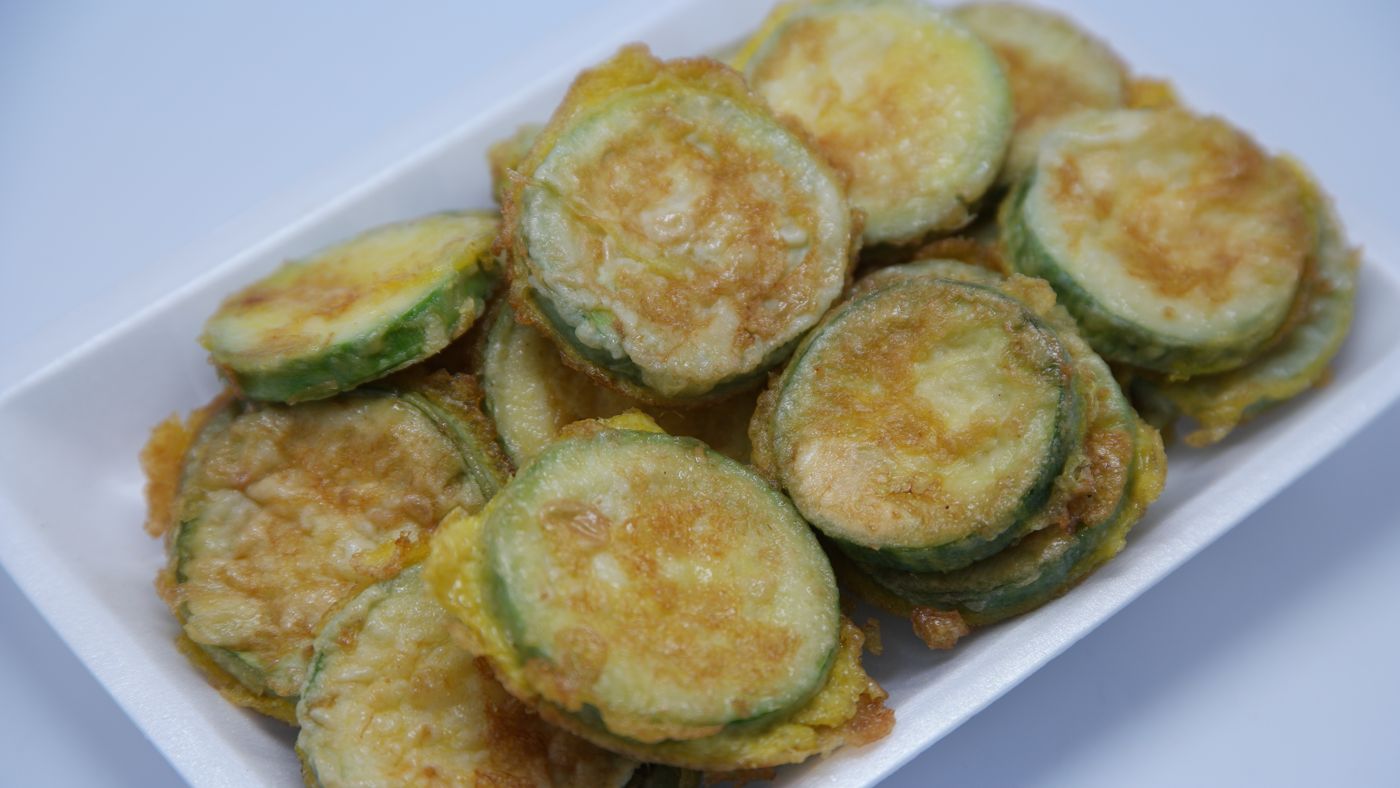 Hobak Jeon (Pan-Fried Zucchini)호박전Rounds of Korean zucchini dusted with flour, dipped in egg and pan-fried until golden — a soft, sweet jeon for holidays and everyday meals.
 Gyeran Jjim (Steamed Egg)계란찜Eggs whisked with water or broth and gently steamed into a silky, savory custard, often seasoned with salted shrimp and served bubbling hot.
Sources
- 01Korean Food Composition Table: Kimchi, Nabakkimchi, Prepared with sliced radish, Watery — National Institute of Agricultural Sciences
- 02나박김치 - 한국민족문화대백과사전 (Encyclopedia of Korean Culture)
- 03김치 - 한국민족문화대백과사전 (Encyclopedia of Korean Culture)
- 04Is my kimchi safe to eat? - Oregon State University Extension Service
Last updated