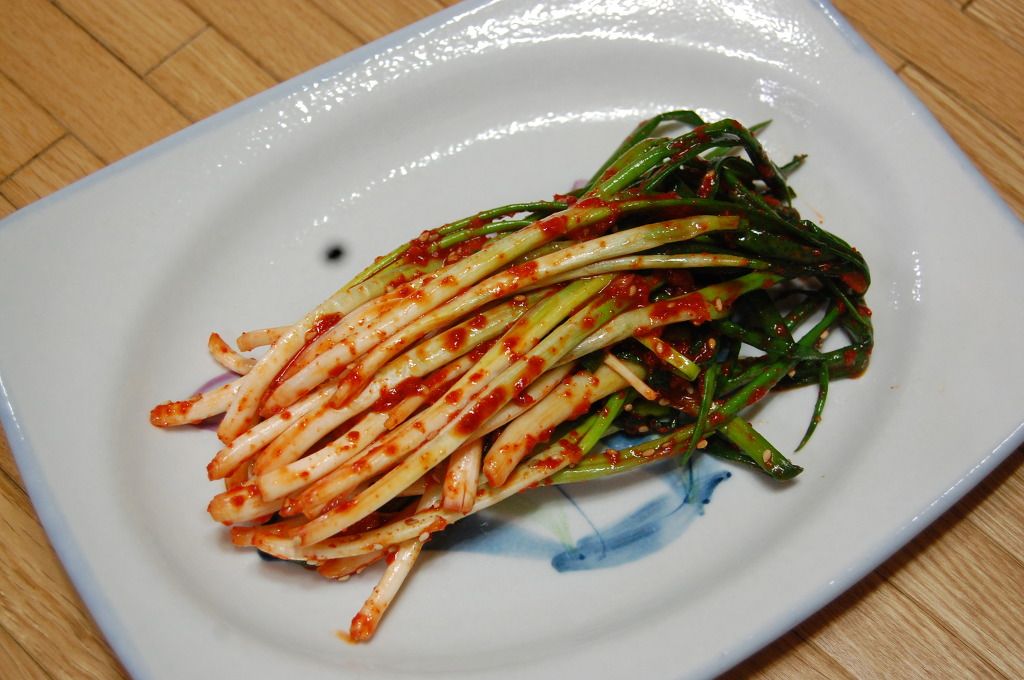
 Photo: 백합이, CC BY 4.0, via Wikimedia Commons
Kimchi 김치
Green Onion Kimchi
파김치
Romanization: pa-kimchi
Slender Korean green onions coated in a thick chili and anchovy-sauce paste — pungent when fresh, mellow and savory once ripe.
- Serves
- 25
- Prep
- 40 min
- Cook
- 5 min
RegionJeolla
Jump to recipeRecipe
Ingredients · Serves 25
- 1 kgJjokpa (slender Korean green onions)or thin scallions
- 100 mlAnchovy fish sauce (myeolchi-aekjeot)
- 2 tbspGlutinous rice flourfor the rice paste
- 200 mlWaterfor the rice paste
- 60 gGochugaru (Korean chili flakes)about ⅔ cup
- 2 tbspGarlicminced
- 1 tspGingerminced
- 1 tbspSugar
- 1 tbspToasted sesame seeds
Method
Technique: Making Kimchi
Step 1: Trim the roots, peel away any withered outer layers and wash the green onions well. Drain thoroughly.
Step 2: Lay the onions in a wide tray with the white ends together. Pour the fish sauce over the white parts and let them sit for 20–30 minutes, turning once, until the bulbs soften slightly.
Step 3: Meanwhile, cook the glutinous rice flour and water over medium heat, stirring, for 3–5 minutes into a thin paste. Cool completely.
Step 4: Tilt the tray and pour the fish sauce into a mixing bowl. Stir in the rice paste, gochugaru, garlic, ginger and sugar to make a thick seasoning.
Step 5: Coat the onions with the seasoning, working it into the white parts first and then down the greens. Sprinkle with sesame seeds.
Step 6: Gather 4–5 onions at a time, fold them in half and coil into small bundles. Pack tightly into a clean container.
Step 7: Leave at room temperature for about 1 day, then refrigerate. Pa-kimchi is usually best after it has ripened for several days and keeps for a few weeks chilled; discard if slimy or moldy.
Origin & History
Pa-kimchi is made with whole green onions, most often jjokpa, a slender, mild variety, bound in a thick seasoning of chili flakes, garlic and fermented anchovy sauce. It is a dish that improves with a little age: as it ripens, the sharp bite of the raw onion softens into something sweeter and more rounded.
Anchovy sauce (myeolchi-aekjeot) is central to the modern dish, and green onion kimchi is especially beloved in the Jeolla provinces, where it is often preferred to cabbage kimchi.
Key Ingredients
 Green onion파Korean green onion (pa), from thick-stemmed daepa to slender scallions — chopped into nearly every seasoning sauce, soup and kimchi, and the star of pa-kimchi.
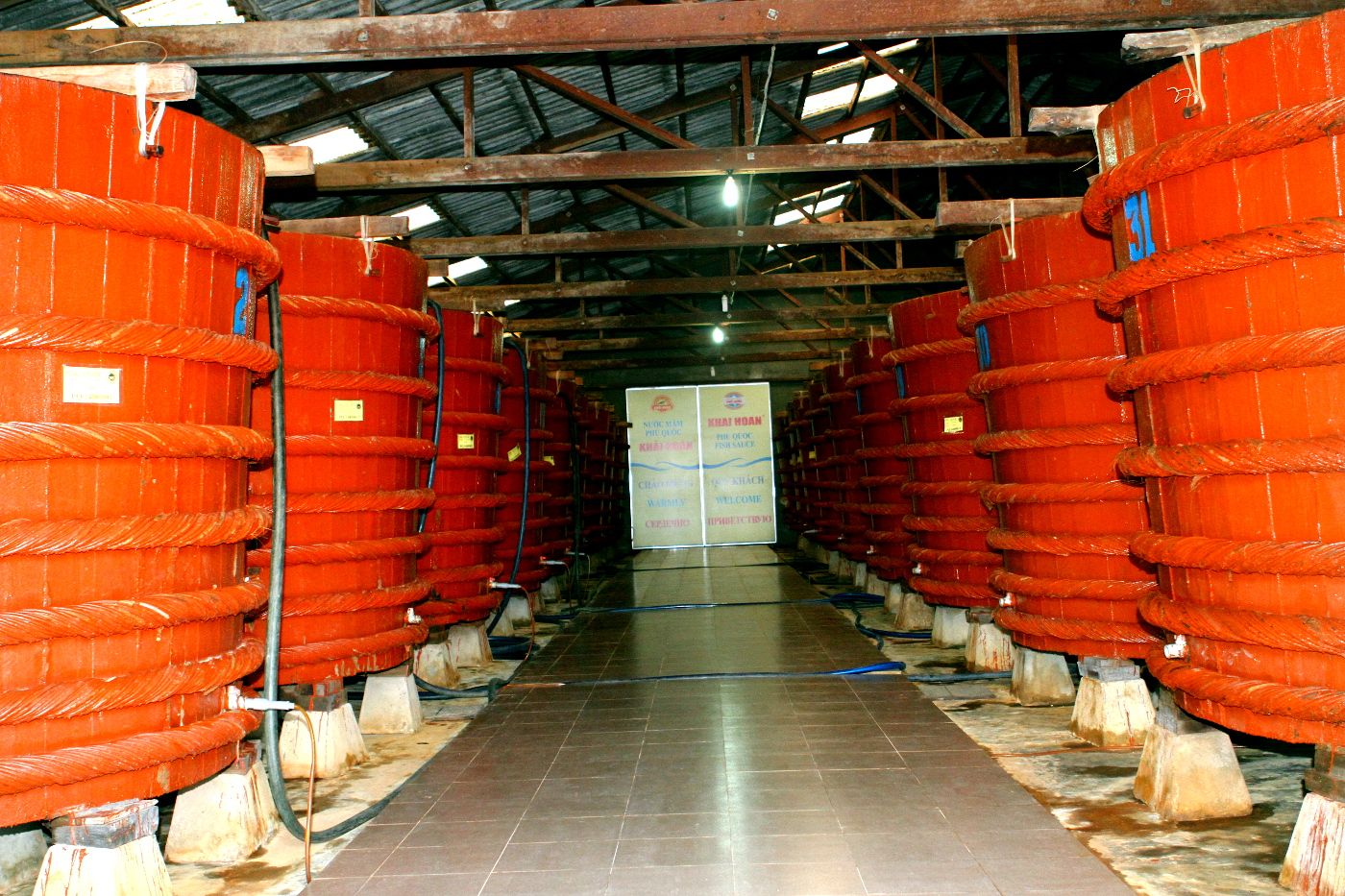 Anchovy fish sauce멸치액젓The clear amber liquid drawn from salted, fermented anchovies. A jeotgal in liquid form, it is the savory backbone of much southern-style kimchi and a quick seasoning for soups and namul.
 Gochugaru고춧가루Korean red chili powder, made from dried red peppers ground coarse or fine. It gives kimchi, gochujang and countless banchan their color and warmth.
 Garlic마늘Used raw, minced, pickled and roasted, garlic is one of the essential aromatics of Korean food — in seasonings, marinades, kimchi and namul.
 Ginger생강Fresh ginger root, used in small amounts to brighten kimchi paste and marinades and to tame the strong smells of fish and meat.
 Sesame참깨Toasted sesame seeds and sesame oil (chamgireum) finish countless Korean dishes, adding a nutty aroma and gloss.
Nutrition
| Calories | 20 kcal |
|---|---|
| Protein | 1 g |
| Fat | 0.2 g |
| Carbohydrates | 3.4 g |
| Fiber | 1.8 g |
| Sodium | 262 mg |
Notable forDietary fiber
From the Korean Food Composition Table entry “Kimchi, Pakimchi, Prepared with green onion” (per 100 g: 49 kcal, 655 mg sodium), scaled to the serving size. Homemade batches vary with salting and seasoning. Actual values vary with ingredients, portion size and preparation.
Health Benefits
- Allium greens: raw green onions are rich in vitamin K and also provide vitamin C and carotenoids, though a small serving of kimchi supplies only part of that.
- Fermented vegetables: pa-kimchi is fermented by lactic acid bacteria from its ingredients; research on the health effects of fermented vegetables is ongoing.
- Big flavor, small portions: a few strands go a long way, which suits its role as a condiment-like banchan.
Regional Variations
- Jeolla: research on regional preferences notes that people in North Jeolla favor pa-kimchi, often over napa cabbage kimchi.
- Kimjang leftovers: a thrifty home practice is to mix spare green onions with the seasoning left over from making cabbage kimchi.
- Seasoning base: recipes vary between anchovy sauce alone and blends that add salted shrimp, glutinous rice paste or fruit for sweetness.
Pairings
 Napa Cabbage Kimchi배추김치Salted napa cabbage layered with a red paste of chili, garlic, ginger and fermented seafood, then left to ripen: the kimchi most people picture first.
 Gyeran Mari (Rolled Omelet)계란말이Beaten egg cooked in thin layers and rolled into a soft, striped log, then sliced — a gentle, everyday banchan and a lunchbox classic.
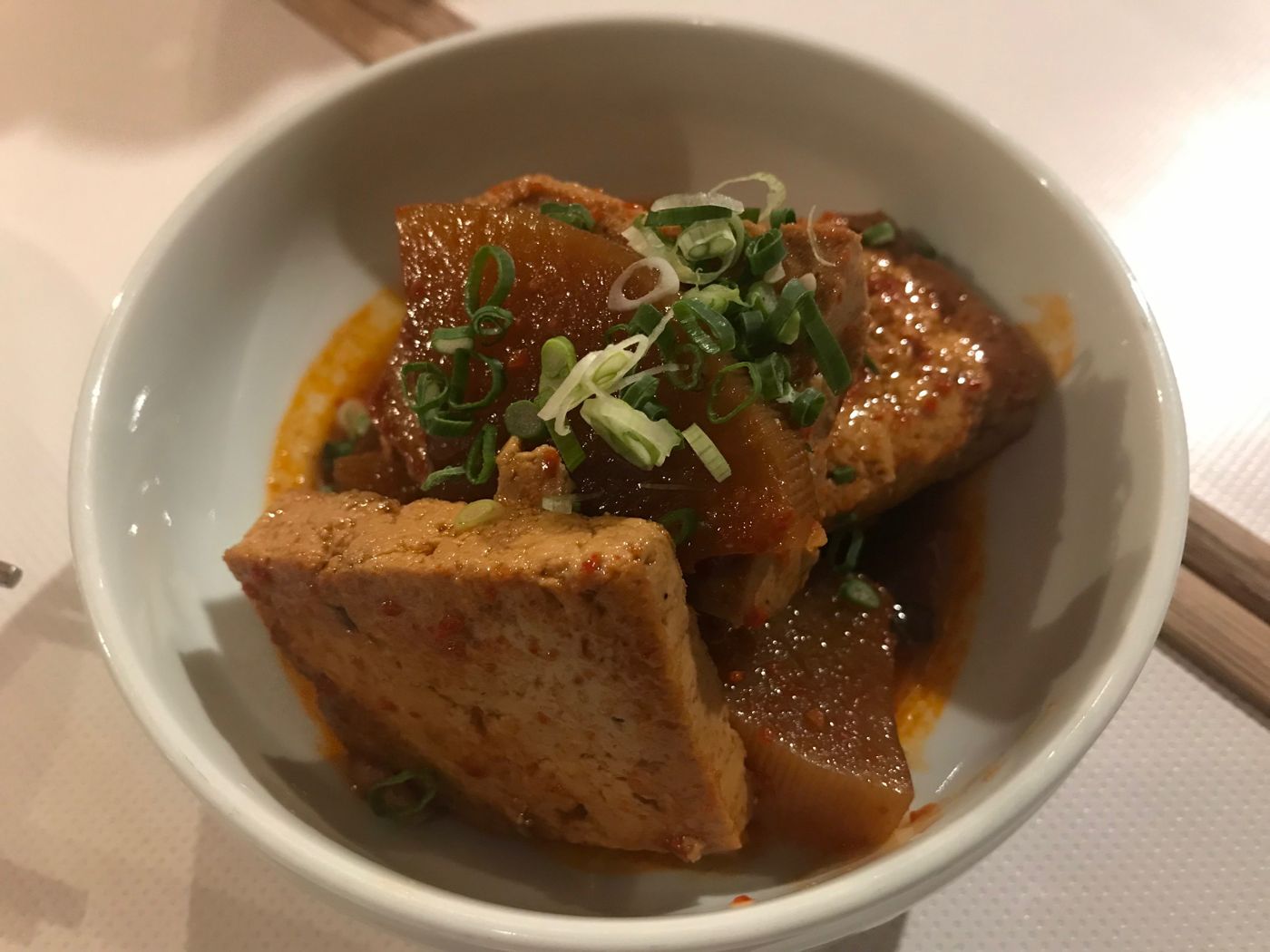 Dubu Jorim두부조림Slices of firm tofu pan-fried until golden, then simmered in a garlicky soy and chili sauce — an inexpensive, protein-rich staple of Korean home cooking.
Sources
- 01Onions, spring or scallions (includes tops and bulb), raw (FDC 170005) — USDA FoodData Central
- 02Korean Food Composition Table: Kimchi, Pakimchi, Prepared with green onion — National Institute of Agricultural Sciences
- 03Formation of Biogenic Amines in Pa (Green Onion) Kimchi and Gat (Mustard Leaf) Kimchi (Foods, 2019)
- 04파김치 - 세계한민족문화대전 (Encyclopedia of Overseas Korean Culture)
- 05Understanding and Making Kimchi - Colorado State University Extension (Food Smart Colorado)
Last updated