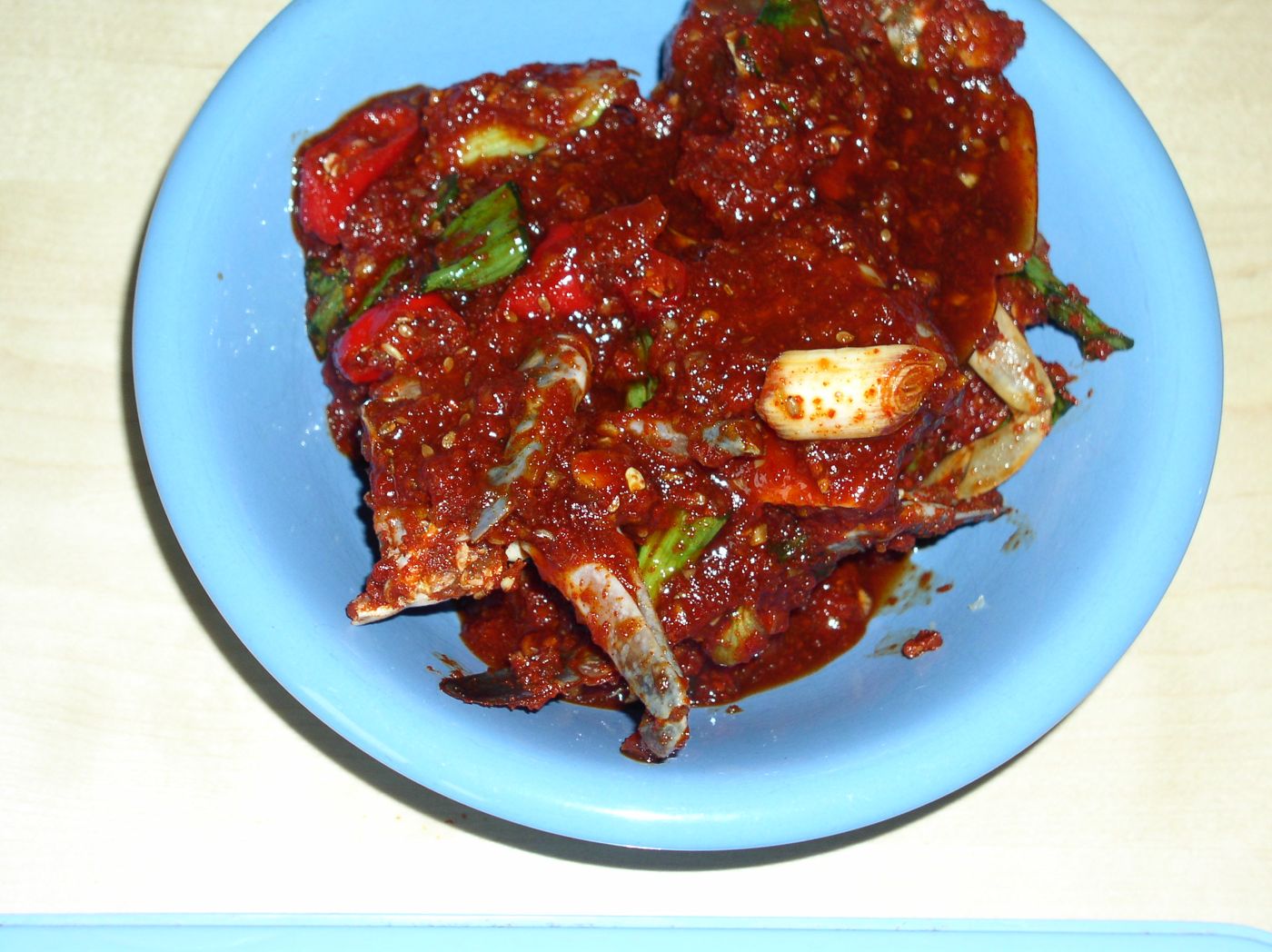
 Photo: johl (a flickr user), CC BY-SA 2.0, via Wikimedia Commons
Jeotgal · Salted seafood 젓갈
Spicy Marinated Raw Crab
양념게장
Romanization: yangnyeom-gejang
Raw crab pieces tossed in a glossy chili, garlic and soy dressing and eaten within days — sweet, fiery and a specialty of Yeosu's gejang restaurants.
- Serves
- 6
- Prep
- 40 min
- Cook
- 0 min
RegionJeolla · Yeosu · Gyeongsang
Jump to recipeRecipe
Ingredients · Serves 6
- 3 Very fresh blue crabs (kkotge)about 900 g; previously frozen is fine
- 5 tbspSoy sauce (ganjang)
- 6 tbspGochugaru (Korean chili flakes)
- 4 tbspRice or corn syrup (mulyeot)
- 1 tbspSugar
- 2 tbspGarlicminced
- 1 tspGingerminced
- 100 gKorean peargrated
- ½ Onionthinly sliced
- 2 Fresh green and red chiliessliced
- 2 stalksGreen onionscut in 3 cm lengths
- 1 + 1 tbspToasted sesame seeds and sesame oil
Method
Technique: Making Gejang: Marinated Raw Crab
Step 1: Chill the crabs in the freezer for about 1 hour (or use crabs that were frozen solid and thawed overnight in the refrigerator). Scrub the shells and undersides well under cold running water.
Step 2: Remove the apron and lift off the top shell, keeping any roe and tomalley in it. Pull off and discard the gills and mouthparts, trim the leg tips, and cut each body into 4–6 pieces with a heavy knife or kitchen shears. Crack the claws lightly so the seasoning can reach the meat.
Step 3: In a large bowl, stir together the soy sauce, gochugaru, syrup, sugar, garlic, ginger and pear, and leave for 10 minutes so the chili swells into a paste. Scrape in the roe and tomalley from the shells.
Step 4: Add the crab pieces, onion, chilies and green onions and toss with gloved hands until every piece is coated. Finish with the sesame seeds and sesame oil.
Step 5: Pack into a clean container with any remaining seasoning, cover and refrigerate (4°C or below) for at least 3 hours, or overnight, so the dressing soaks in.
Step 6: Eat within 2–3 days, keeping it refrigerated and using clean utensils; this style does not keep like soy-marinated gejang. Discard if it smells off or the flesh turns mushy.
Origin & History
Yangnyeom-gejang is the chili-dressed branch of the gejang family. Where ganjang-gejang steeps whole crabs in soy sauce for a week, this version coats cut raw crab in a thick seasoning of chili powder, garlic, soy sauce and sweetener, and is eaten fresh. Korean references treat both as kinds of jeotgal; Korea's food-safety agency also files home-made seasoned crab gejang under salted seafoods.
The Encyclopedia of Korean Folk Culture describes the southern style: in South Jeolla and South Gyeongsang, blue crabs are first soaked in soy sauce, then lifted out and dressed with chili, chives, onion, chili powder, garlic, ginger, sugar and sesame before a short rest. North Gyeongsang skips the soak and tosses the crab straight into chili powder, soy sauce, garlic, chopi (Korean prickly ash), ginger juice and sesame oil. Both reflect an older southern habit of quick, lightly cured crab: Jeolla's beolddeok-gejang, made from small rock crabs, keeps so poorly that it has to be eaten “in a flash.”
Its best-known modern home is Yeosu. According to the Digital Yeosu Culture encyclopedia, restaurants in Bongsan-dong built a reputation for set meals (gejang-baekban) of seasoned or soy-sauce crab with rice and side dishes, made with blue crabs and the small, hard-shelled minkkotge that locals call dolge. The lane, long known as Bongsan's “gejang alley,” was formally developed as a food street in 2009.
Key Ingredients
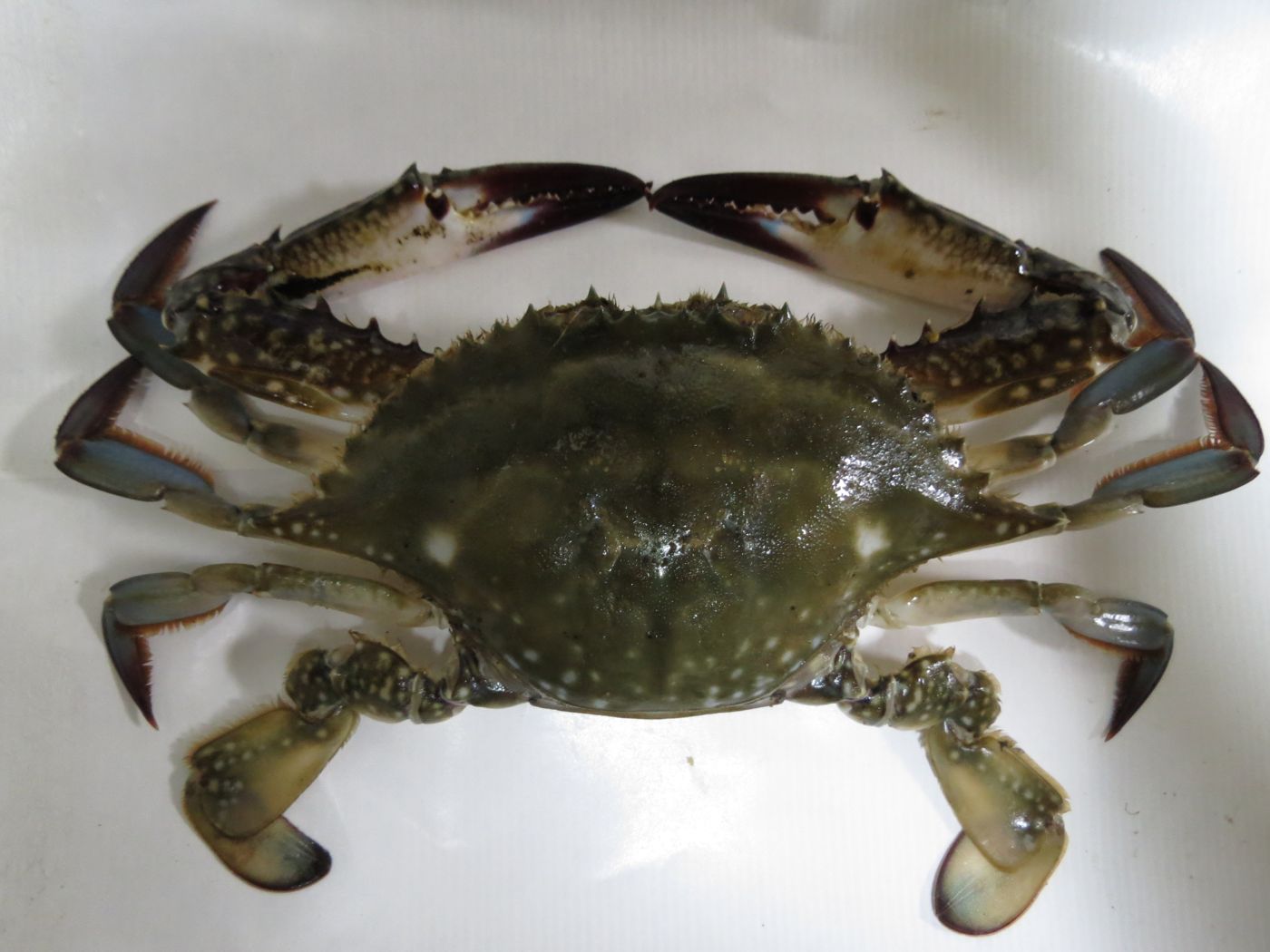 Swimming crab (kkotge)꽃게Korea's everyday crab: a blue-green swimming crab from the West Sea, sweet-fleshed and rich with roe in season. It is steamed, cooked into stews, and steeped raw in soy sauce as ganjang-gejang.
 Soy sauce간장Korean soy sauce, in two main kitchen forms: pale, salty guk-ganjang (soup soy sauce) brewed the traditional way from meju, and darker, sweeter jin-ganjang for braises and marinades.
 Gochugaru고춧가루Korean red chili powder, made from dried red peppers ground coarse or fine. It gives kimchi, gochujang and countless banchan their color and warmth.
 Korean grain syrup물엿A clear, glossy syrup used to sweeten and glaze braised and stir-fried banchan. Its traditional relative, jocheong, is a darker malt syrup made by slowly boiling down saccharified rice.
 Garlic마늘Used raw, minced, pickled and roasted, garlic is one of the essential aromatics of Korean food — in seasonings, marinades, kimchi and namul.
 Ginger생강Fresh ginger root, used in small amounts to brighten kimchi paste and marinades and to tame the strong smells of fish and meat.
- Korean Pear배The large, round, crisp and very juicy Korean pear (bae). Beyond eating fresh, it is grated into meat marinades and sliced into mild kimchi for natural sweetness.
 Yangpa (onion)양파The bulb onion, literally the "Western scallion." A latecomer to Korea, it is now everywhere: sweetening stir-fries and braises, pickled in soy sauce as yangpa-jangajji, and served raw beside grilled meat.
- Korean Chili Peppers (Fresh)고추Fresh Korean chili peppers, eaten green (putgochu) or red (hong-gochu): from the fiery cheongyang-gochu to the small, wrinkled, mild kkwari-gochu that is braised and stir-fried as banchan.
 Green onion파Korean green onion (pa), from thick-stemmed daepa to slender scallions — chopped into nearly every seasoning sauce, soup and kimchi, and the star of pa-kimchi.
 Sesame참깨Toasted sesame seeds and sesame oil (chamgireum) finish countless Korean dishes, adding a nutty aroma and gloss.
Nutrition
| Calories | 49 kcal |
|---|---|
| Protein | 5.1 g |
| Fat | 0.3 g |
| Carbohydrates | 6.3 g |
| Fiber | 2.4 g |
| Sodium | 402 mg |
Notable forSelenium · Calcium · Vitamin B12
From the Korean MFDS food composition database (K-FIND) entry for home-style seasoned blue crab gejang (꽃게장_양념, analyzed; per 100 g: 97 kcal, 10.2 g protein, 12.6 g carbohydrate including 8.8 g sugars, 804 mg sodium, 265 mg calcium, 58.4 µg selenium, 1.71 µg vitamin B12, 46 mg cholesterol), scaled to the serving size. Actual values vary with ingredients, portion size and preparation.
Health Benefits
- Selenium and calcium: in the database figures, a 50 g serving supplies about 29 µg of selenium — roughly half the adult requirement — and about 130 mg of calcium.
- Protein with little fat: crab is lean, with about 5 g of protein per serving.
- Chili and aromatics: the seasoning adds beta-carotene from the chili; most of the calories come from the sweetened dressing rather than the crab.
Regional Variations
- South Jeolla and South Gyeongsang: crab soaked briefly in soy sauce, then drained and dressed with chili, chives, onion, garlic, ginger, sugar and sesame.
- North Gyeongsang: raw crab tossed directly in chili powder and soy sauce with garlic, chopi powder, ginger juice and sesame oil.
- Yeosu (dolge-jang): small rock crabs (minkkotge) — little meat but rich flavor — served in seasoned and soy-sauce versions alongside blue crab.
- Beolddeok-gejang (South Jeolla): small rock crabs steeped whole or in pieces and eaten within a day or two, a close cousin of the seasoned style.
Pairings
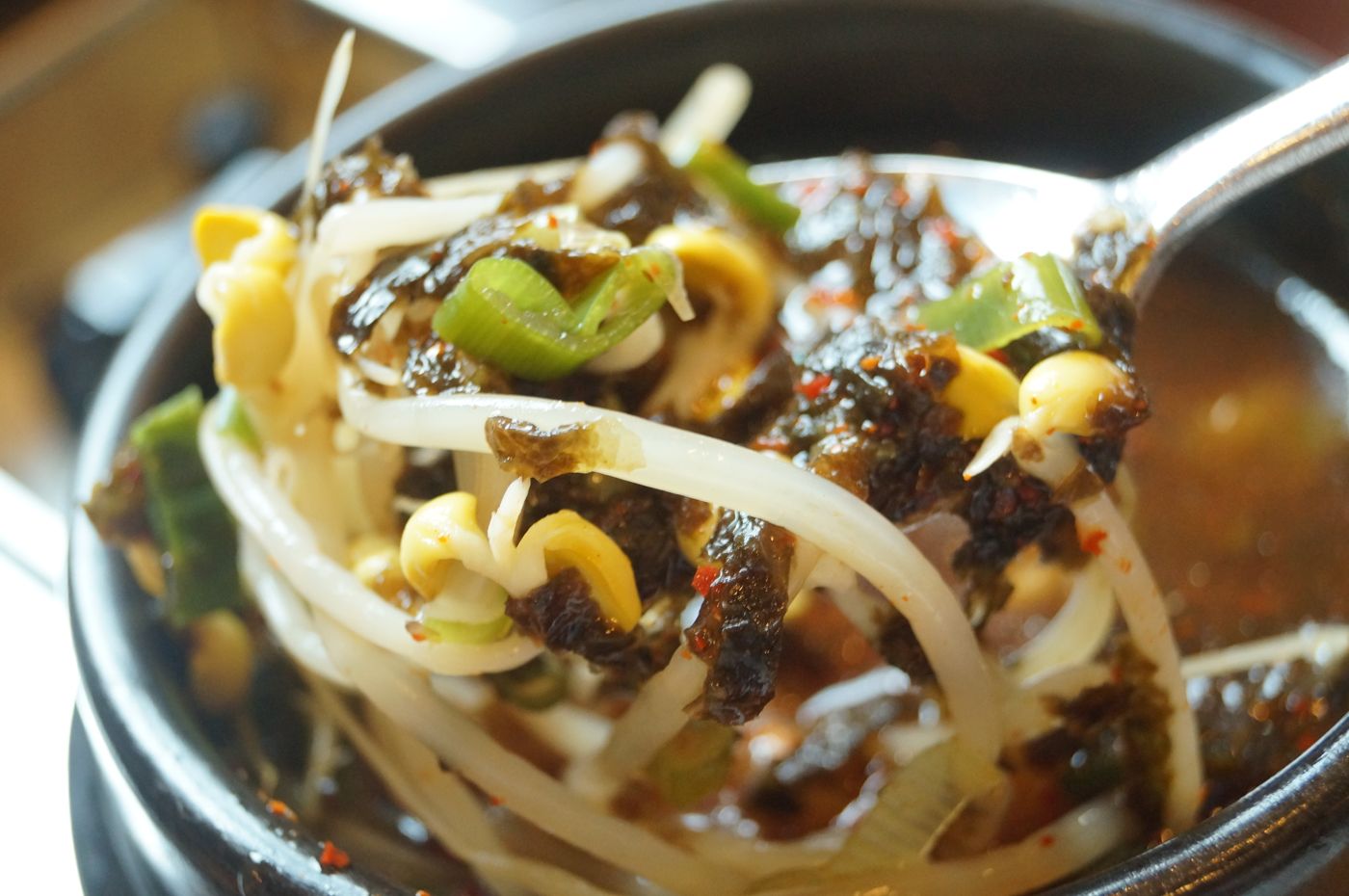 Kongnamul Guk (Soybean Sprout Soup)콩나물국A clear, light soup of soybean sprouts in anchovy-kelp stock, seasoned with salt or soup soy sauce — an everyday guk and a favorite morning-after cure.
- Gim Gui (Seasoned Roasted Laver)김구이Sheets of laver brushed with sesame or perilla oil, sprinkled with salt and toasted until crisp — eaten wrapped around spoonfuls of rice.
 Gyeran Jjim (Steamed Egg)계란찜Eggs whisked with water or broth and gently steamed into a silky, savory custard, often seasoned with salted shrimp and served bubbling hot.
Sources
- 01꽃게장_양념 (Seasoned blue crab gejang) — MFDS K-FIND food composition database
- 02게장 - 한국민속대백과사전 (Encyclopedia of Korean Folk Culture)
- 03봉산동 게장백반거리 - 디지털여수문화대전 (Digital Yeosu Culture Encyclopedia)
- 04Survival of foodborne pathogens in raw ready-to-eat crab marinated in soy sauce — International Journal of Food Microbiology (2016)
- 05The association between blood cadmium level, frequency and amount of gejang (marinated crab) intake — Annals of Occupational and Environmental Medicine (2016)
- 06Preventing Vibrio Infection - Centers for Disease Control and Prevention
Last updated