Kimchi 김치
Ponytail Radish Kimchi
총각김치
Romanization: chonggak-kimchi
Small, firm radishes kimchi'd whole with their green tops in a chili and salted-shrimp paste — crunchy, juicy and a fixture of the winter kimjang.
- Serves
- 25
- Prep
- 60 min
- Cook
- 5 min
Recipe
Ingredients · Serves 25
- 2 kgChonggak radishes, with greensabout 2 bunches
- 100 gCoarse sea salt (cheonilyeom), non-iodizedabout ⅔ cup
- 2 tbspGlutinous rice flourfor the rice paste
- 250 mlWaterfor the rice paste
- 60 gGochugaru (Korean chili flakes)about ⅔ cup
- 60 mlAnchovy fish sauce (myeolchi-aekjeot)
- 2 tbspSalted fermented shrimp (saeujeot)finely chopped
- 8 clovesGarlicminced
- 1 tbspGingerminced
- 1 tbspSugar
- 100 gGreen onions or Korean chives (jjokpa)cut into 4 cm lengths
Method
Technique: Making Kimchi
Step 1: Trim off the hairy root tips and any yellowed leaves. Scrape away blemishes with the back of a knife, keeping the skin where possible, and wash well, especially where the greens meet the root. Halve or quarter any radishes thicker than about 4 cm, splitting them down through the leaves so each piece keeps its greens.
Step 2: Spread the radishes in a large tub and scatter the salt over them, mostly on the roots. Salt for 1–1½ hours, turning halfway, until the greens are limp and the roots bend slightly.
Step 3: Meanwhile, whisk the rice flour into the water and cook over medium heat, stirring, for 3–5 minutes until thin and glossy. Cool completely.
Step 4: Rinse the radishes once and drain in a colander for 30 minutes. Taste a piece of root: it should be lightly seasoned.
Step 5: Toss the radishes with the gochugaru first so the color takes evenly. Then add the cooled paste, fish sauce, saeujeot, garlic, ginger, sugar and green onions, and mix well with gloved hands.
Step 6: Fold the greens of two or three radishes around their roots to form small bundles and pack tightly into a clean jar, pressing out air and leaving 5 cm of headspace. Pour any seasoning left in the bowl over the top.
Step 7: Ferment at cool room temperature for 1–2 days, until it smells lightly sour, then refrigerate. It is good after about a week and at its best after 2–3 weeks; it keeps for a couple of months chilled, growing more sour. Keep it pressed down, use clean utensils, and discard if slimy or moldy.
Origin & History
Chonggak-kimchi is made from chonggak-mu, small radishes with compact, firm roots that are pickled whole, leafy tops and all. The Encyclopedia of Korean Folk Culture traces the closest early relative of today's recipe — radish with its greens, seasoned with chili, green onion, garlic, ginger and salted fish — to the Jeungbo sallim gyeongje of 1766, although radish kimchi in general is far older.
For much of the 20th century the radish went by other names, such as altari or aldari, and kimchi made from it was called almu-kimchi or almu-kkakdugi. A 1948 cookbook gives a clear recipe for it under the kkakdugi heading. The name chonggak-kimchi surfaces in print only around 1959–1961, in a women's magazine and newspaper kimjang features; the 1988 revision of standard Korean then adopted chonggak-mu over altari-mu.
The name is usually explained by the radish's shape. Chonggak (總角) originally described the way unmarried boys bound their hair into two horn-like knots before they came of age; the plump root with its sprig of leaves is said to resemble that hairstyle, and the word later came to mean a bachelor. Since the 1970s chonggak-kimchi has become one of the most commonly made kimjang kimchi, alongside napa cabbage kimchi.
Key Ingredients
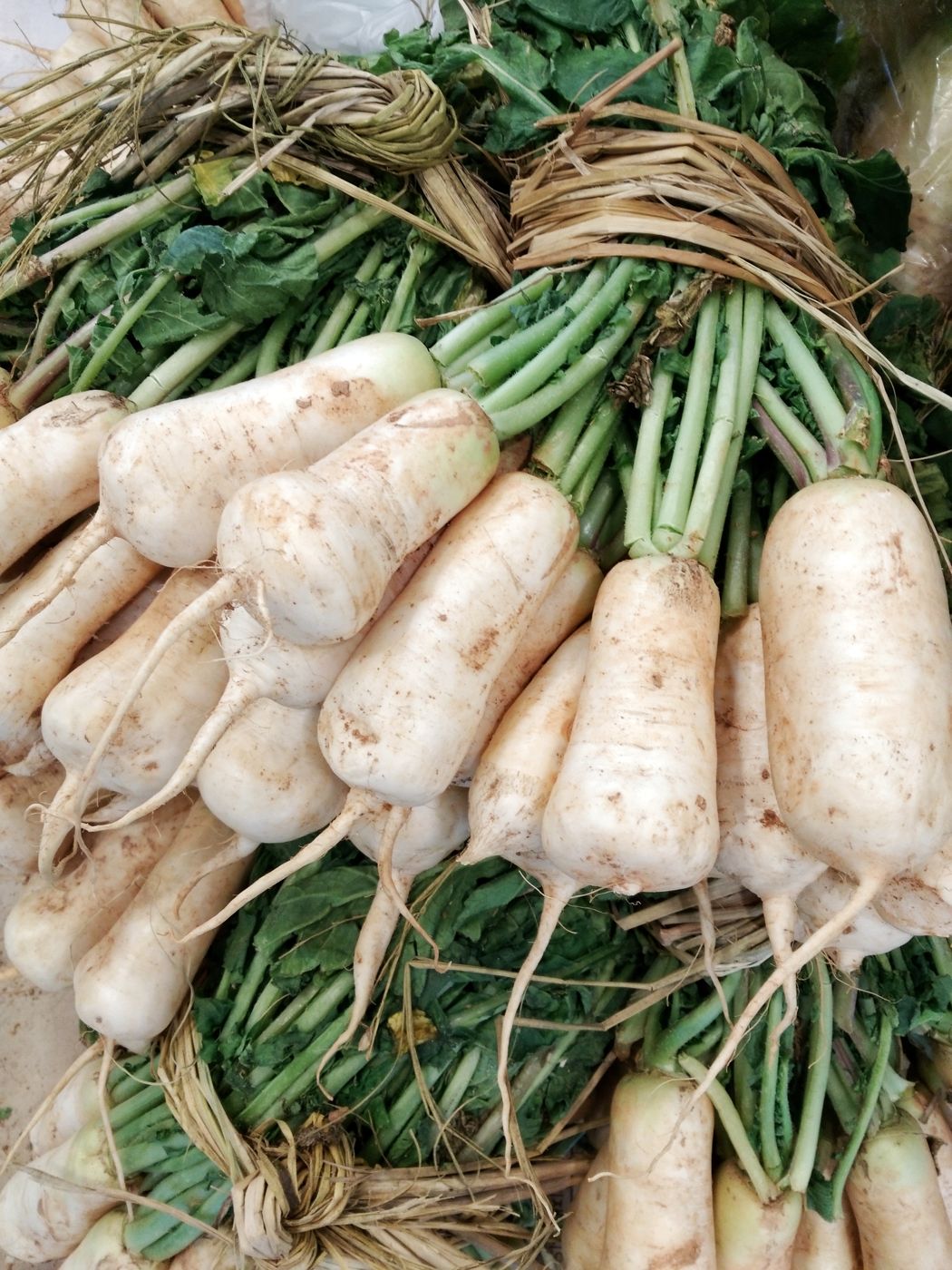 Chonggak radish (ponytail radish)총각무Small, plump, finger-length radishes sold with their long green tops still attached. Pickled whole, roots and leaves together, as crunchy chonggak-kimchi.
 Sun-Dried Sea Salt천일염Coarse sea salt made by evaporating seawater with sun and wind in tidal-flat salt pans, most of it from Sinan County off Korea's southwest coast. It is the everyday salt for salting cabbage and making jang.
 Gochugaru고춧가루Korean red chili powder, made from dried red peppers ground coarse or fine. It gives kimchi, gochujang and countless banchan their color and warmth.
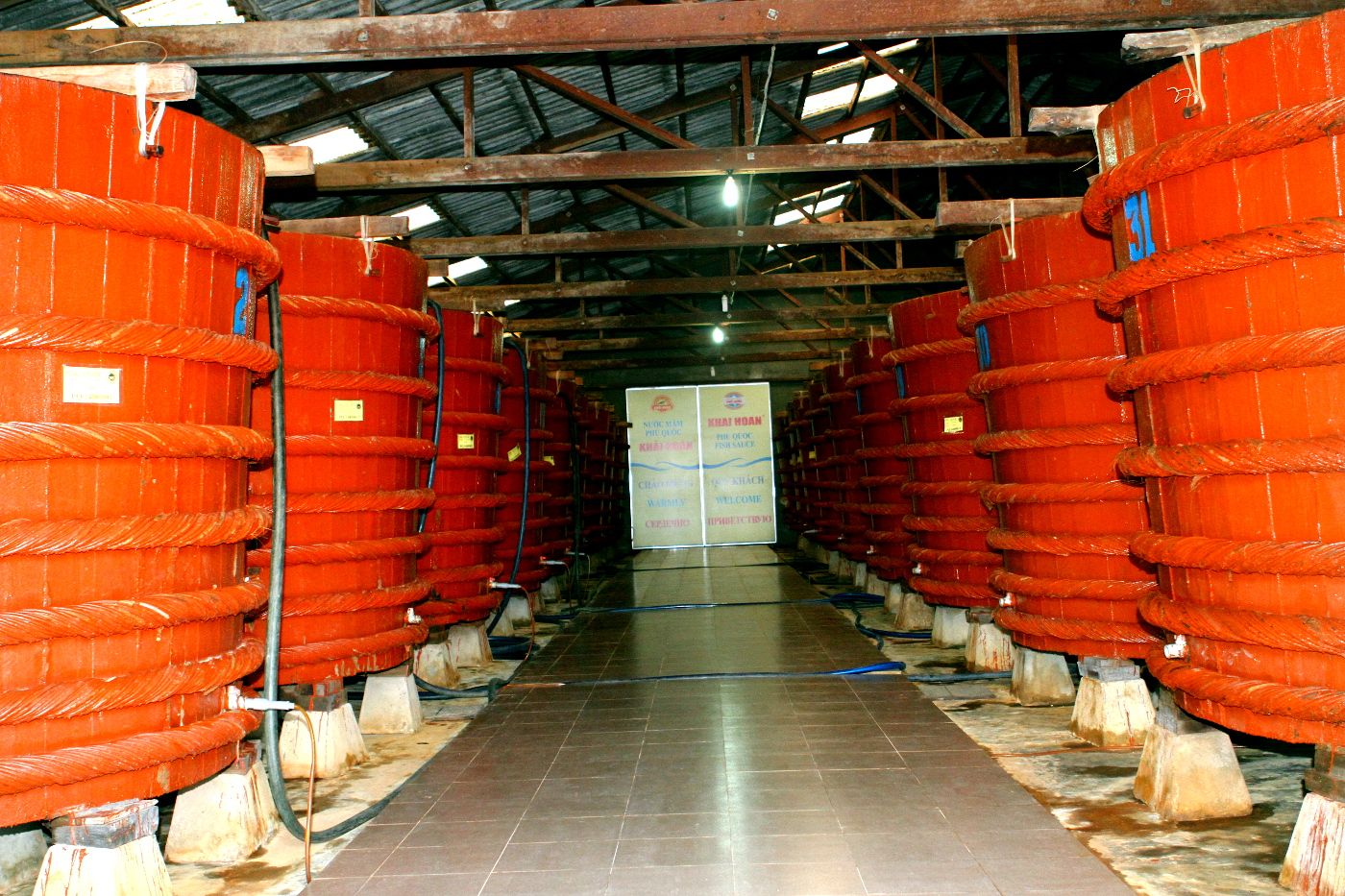 Anchovy fish sauce멸치액젓The clear amber liquid drawn from salted, fermented anchovies. A jeotgal in liquid form, it is the savory backbone of much southern-style kimchi and a quick seasoning for soups and namul.
 Salted fermented shrimp새우젓Tiny shrimp packed in salt and left to ferment — a jeotgal (salted seafood) that seasons kimchi and stews and accompanies boiled pork with briny, savory depth.
 Garlic마늘Used raw, minced, pickled and roasted, garlic is one of the essential aromatics of Korean food — in seasonings, marinades, kimchi and namul.
 Ginger생강Fresh ginger root, used in small amounts to brighten kimchi paste and marinades and to tame the strong smells of fish and meat.
 Green onion파Korean green onion (pa), from thick-stemmed daepa to slender scallions — chopped into nearly every seasoning sauce, soup and kimchi, and the star of pa-kimchi.
Nutrition
| Calories | 25 kcal |
|---|---|
| Protein | 1.2 g |
| Fat | 0.2 g |
| Carbohydrates | 4.7 g |
| Fiber | 1.4 g |
| Sodium | 378 mg |
Notable forDietary fiber · Vitamin K
From the Korean Food Composition Table entry “Kimchi, Chongkakkimchi, Prepared with small radish” (per 100 g: 42 kcal, 630 mg sodium, 2.4 g fiber), scaled to the serving size. Homemade batches vary with salting and seasoning. Actual values vary with ingredients, portion size and preparation.
Health Benefits
- Root and leaf together: because the greens are eaten along with the radish, Korean references note that chonggak-kimchi is especially nourishing; the leaves contribute vitamin K and other nutrients the root alone lacks.
- Fiber and crunch: a serving offers a little dietary fiber for very few calories.
- Fermented vegetables: it ripens through naturally occurring lactic acid bacteria, and unpasteurized kimchi contains live microbes; how much they benefit health is still being studied.
Regional Variations
- Chonggak-kkakdugi: the standard style, generously seasoned with chili, garlic, ginger, salted shrimp and a glutinous rice paste.
- Roots and greens apart: for a tidier jar, some cooks season the roots and greens separately, layering the lightly seasoned greens on top with a little water to keep the radishes from drying out.
- Chonggak-dongchimi: a chili-free water kimchi in which the whole radishes ripen in salt brine with garlic, ginger and green onions.
- Over-ripe kimchi: once a winter batch turns very sour, it is often rinsed and simmered into stews.
Pairings
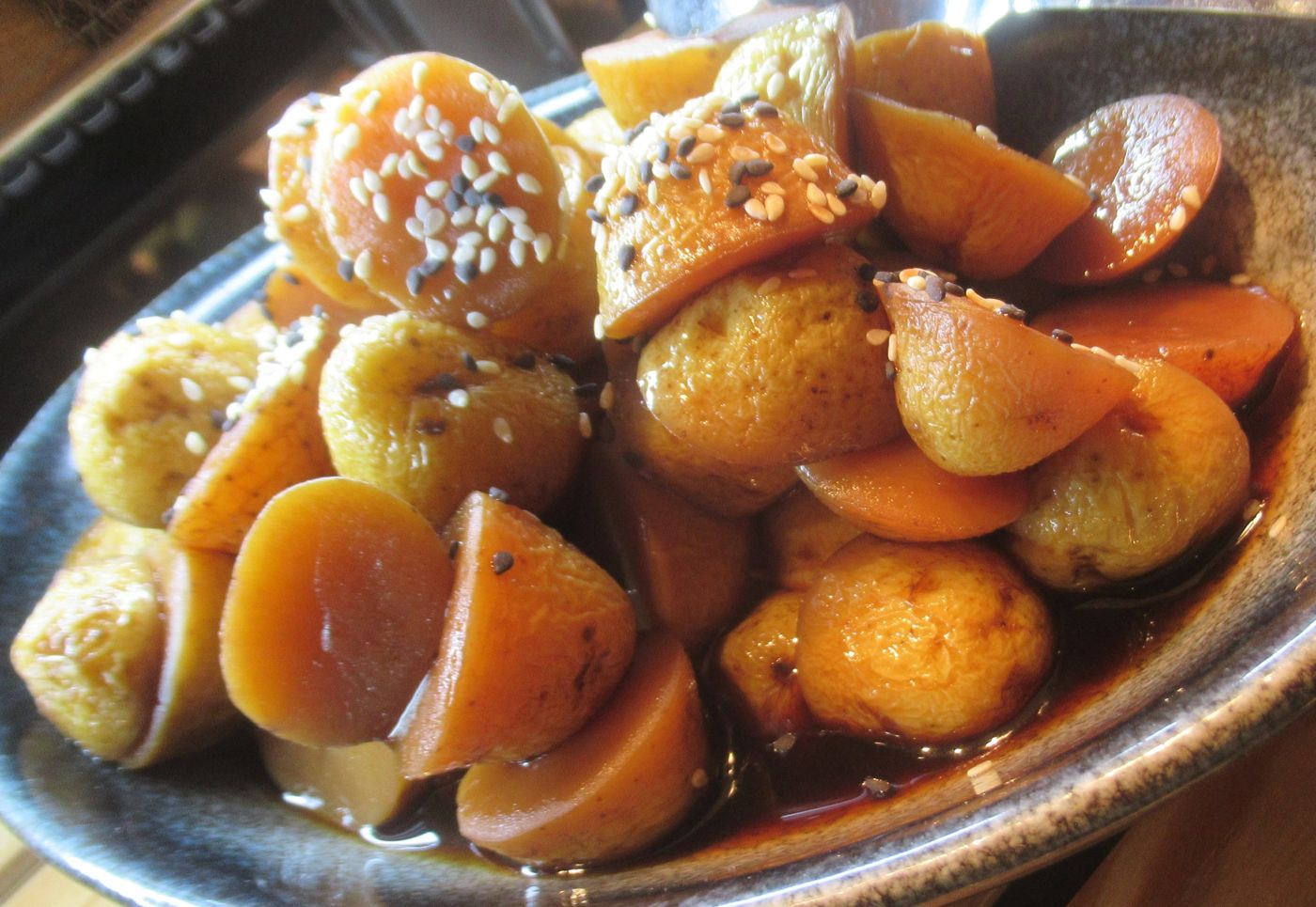 Gamja Jorim감자조림Cubed potatoes simmered in soy sauce, garlic and a touch of sweetness until tender and glossy — a comforting, child-friendly staple of the Korean home table.
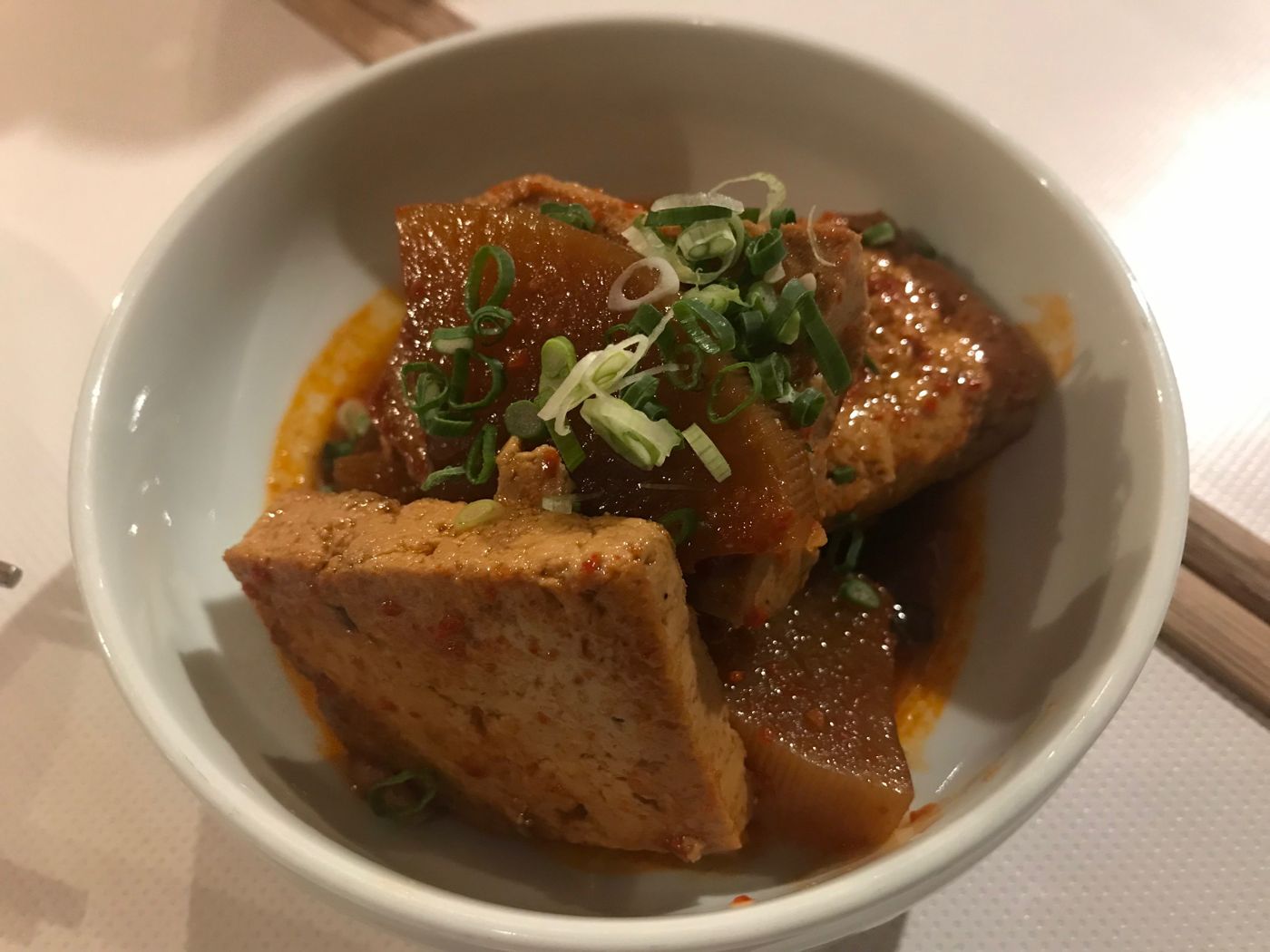 Dubu Jorim두부조림Slices of firm tofu pan-fried until golden, then simmered in a garlicky soy and chili sauce — an inexpensive, protein-rich staple of Korean home cooking.
 Gyeran Mari (Rolled Omelet)계란말이Beaten egg cooked in thin layers and rolled into a soft, striped log, then sliced — a gentle, everyday banchan and a lunchbox classic.
Sources
- 01Korean Food Composition Table: Kimchi, Chongkakkimchi, Prepared with small radish — National Institute of Agricultural Sciences
- 02총각김치(總角김치) - 한국민족문화대백과사전 (Encyclopedia of Korean Culture)
- 03총각김치 - 한국민속대백과사전 (Encyclopedia of Korean Folk Culture)
- 04[홍성호 기자의 열려라! 우리말] '총각'을 닮아서 '총각무'라고 하죠 - 한국경제 생글생글
- 05Is my kimchi safe to eat? - Oregon State University Extension Service
Last updated