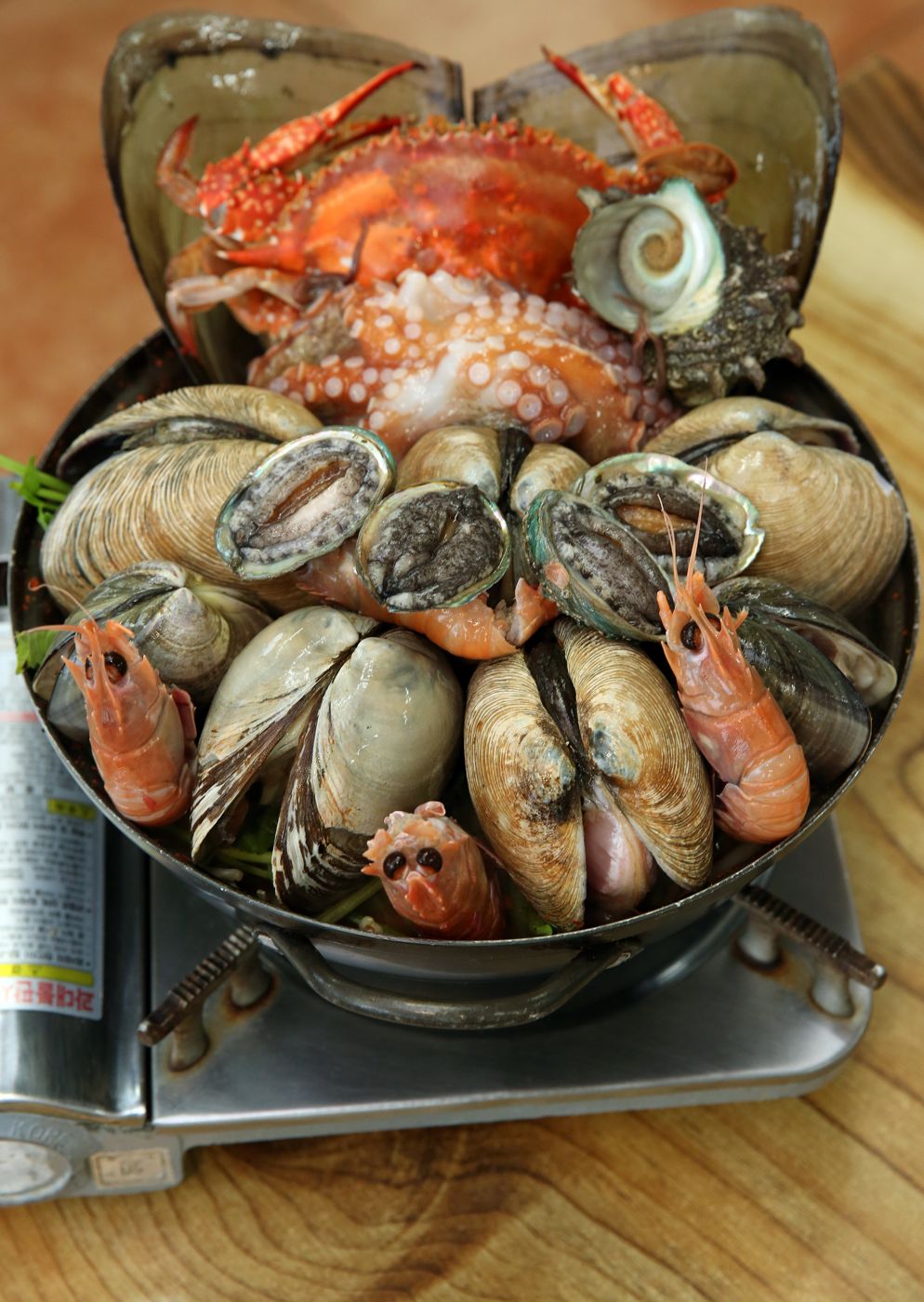
 Photo: Republic of Korea from Seoul, Republic of Korea, CC BY-SA 2.0, via Wikimedia Commons
Guk & Tang · Soups 국·탕
Haemul Tang (Spicy Seafood Hot Pot)
해물탕
Romanization: haemul-tang
Blue crab, octopus, shrimp, clams and sea squirt simmered with radish and water dropwort in a bright, spicy gochujang broth — a seafood feast in one pot.
- Serves
- 4
- Prep
- 40 min
- Cook
- 30 min
RegionChungcheong · Jeolla · Gyeongsang
Jump to recipeRecipe
Ingredients · Serves 4
- 2 Blue crabs (kkotge)about 600 g, scrubbed, leg tips trimmed, cut into pieces; keep the top shell
- 1 Long-arm octopus (nakji)about 200 g, cleaned and cut into 6 cm lengths
- 8 Large shrimp (saeu)shell on, deveined
- 300 gShort-necked clams (bajirak)purged in salted water
- 1 smallSquid (ojingeo)optional, cleaned, scored and cut
- 100 gSea squirt (mideodeok)optional, rinsed
- 200 gKorean radish (mu)cut into thin 3 cm squares
- 150 gSoybean sprouts
- 60 gWater dropwort (minari)cut into 4 cm lengths
- 1 stalkLarge green onion (daepa)sliced on the diagonal
- 2 Red and green chili pepperssliced on the diagonal
- 1.2 lRice-rinsing water or anchovy-kelp stock
- 3 tbspGochugaru
- 1 tbspGochujang
- 1½ tbspGarlicminced
- 1 tspGingerminced
- 1 tbspSoup soy sauce (guk-ganjang)plus salt to taste
- 1 tspNeutral oil
Method
Technique: Making Guk and Jjigae, Making Yuksu: Anchovy-Kelp Stock
Step 1: Boil the clams in 500 ml of the rice water or stock just until they open; discard any that stay shut. Lift them out and strain the liquid through a fine sieve to remove grit.
Step 2: In a wide pot, warm the oil and briefly stir-fry the gochujang, gochugaru, garlic and radish for 1–2 minutes. Pour in the clam liquid and the rest of the stock, bring to a boil and simmer 10 minutes, until the radish is nearly tender.
Step 3: Add the crab and its top shell, and cook 5 minutes, until the shells turn red.
Step 4: Add the shrimp, squid, sea squirt, ginger and bean sprouts and simmer 3–4 minutes. Season with soup soy sauce and salt.
Step 5: Return the clams to the pot and add the octopus, water dropwort, green onion and chilies. Cook just 1–2 minutes, until the octopus curls and turns opaque, and serve at once at the table.
Origin & History
Haemul-tang is a pot of mixed seafood — typically blue crab, long-arm octopus, shrimp, clams and the small sea squirt mideodeok — simmered with radish and water dropwort in a broth seasoned with gochujang, gochugaru and garlic. The Encyclopedia of Korean Folk Culture describes the result as hot and spicy yet clean-tasting, a way to taste many kinds of fresh seafood at once.
The folk encyclopedia traces the idea through centuries of seafood soups. The fifteenth-century Sanga yorok includes a soup of cod skin; the early-sixteenth-century Suun japbang has gizzard-shad and three-color fish soups; the seventeenth-century Eumsik dimibang records clam, sea cucumber and abalone soups; and Juchan, thought to date from the early nineteenth century, has a crab soup (haetang) of the kind central to today's pot. With sea on three sides and a long, deeply indented coastline, Korea developed seafood cooking that changed with every season and region.
The folk encyclopedia's method shows the care involved: crabs scrubbed and their sharp leg tips cut off, octopus rubbed with salt or flour without bursting the ink sac, shrimp deveined, clams purged in salt water and boiled separately for their broth. Ingredients go into the pot in order of cooking time, with octopus last, so that nothing turns tough.
Key Ingredients
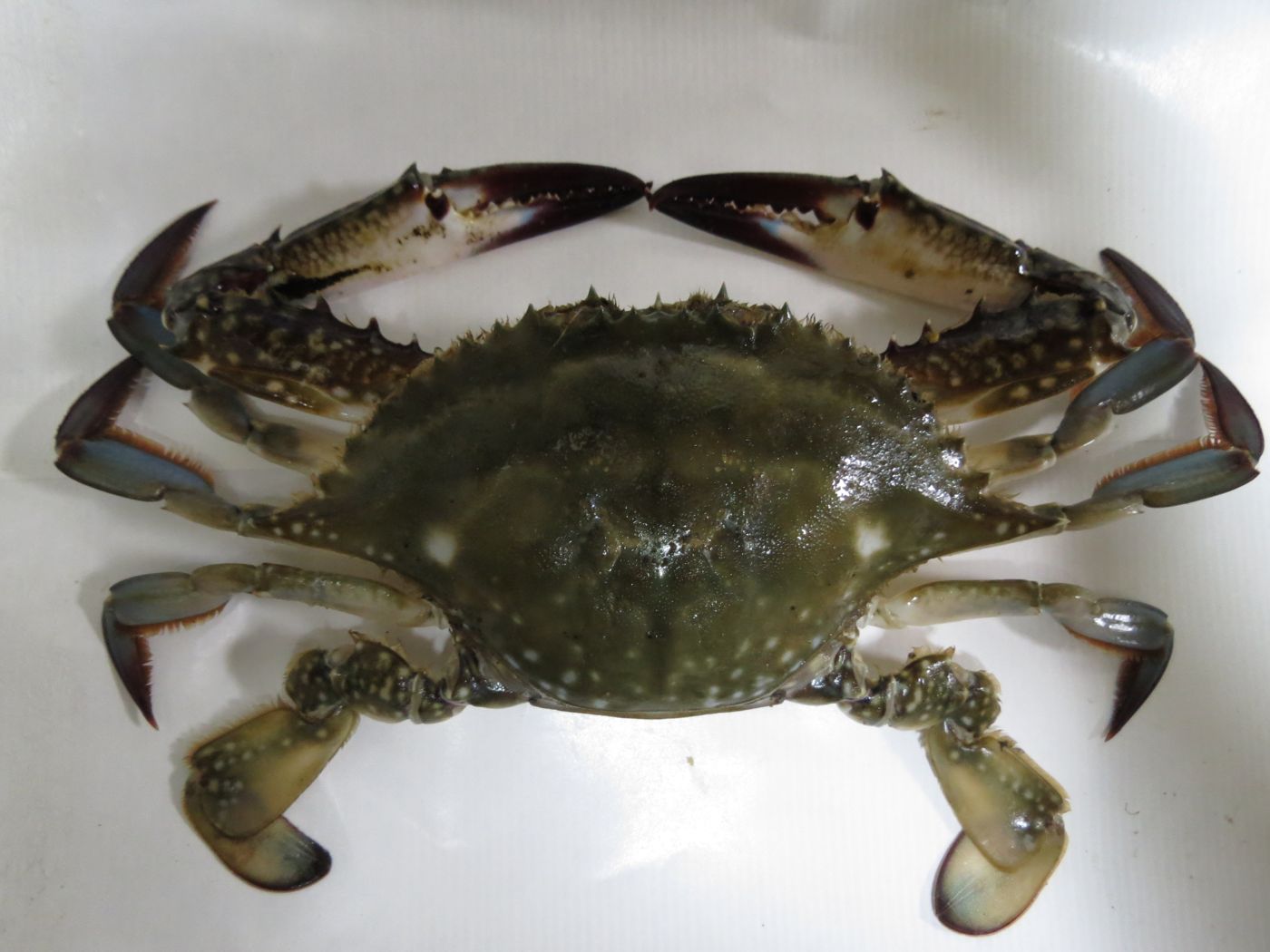 Swimming crab (kkotge)꽃게Korea's everyday crab: a blue-green swimming crab from the West Sea, sweet-fleshed and rich with roe in season. It is steamed, cooked into stews, and steeped raw in soy sauce as ganjang-gejang.
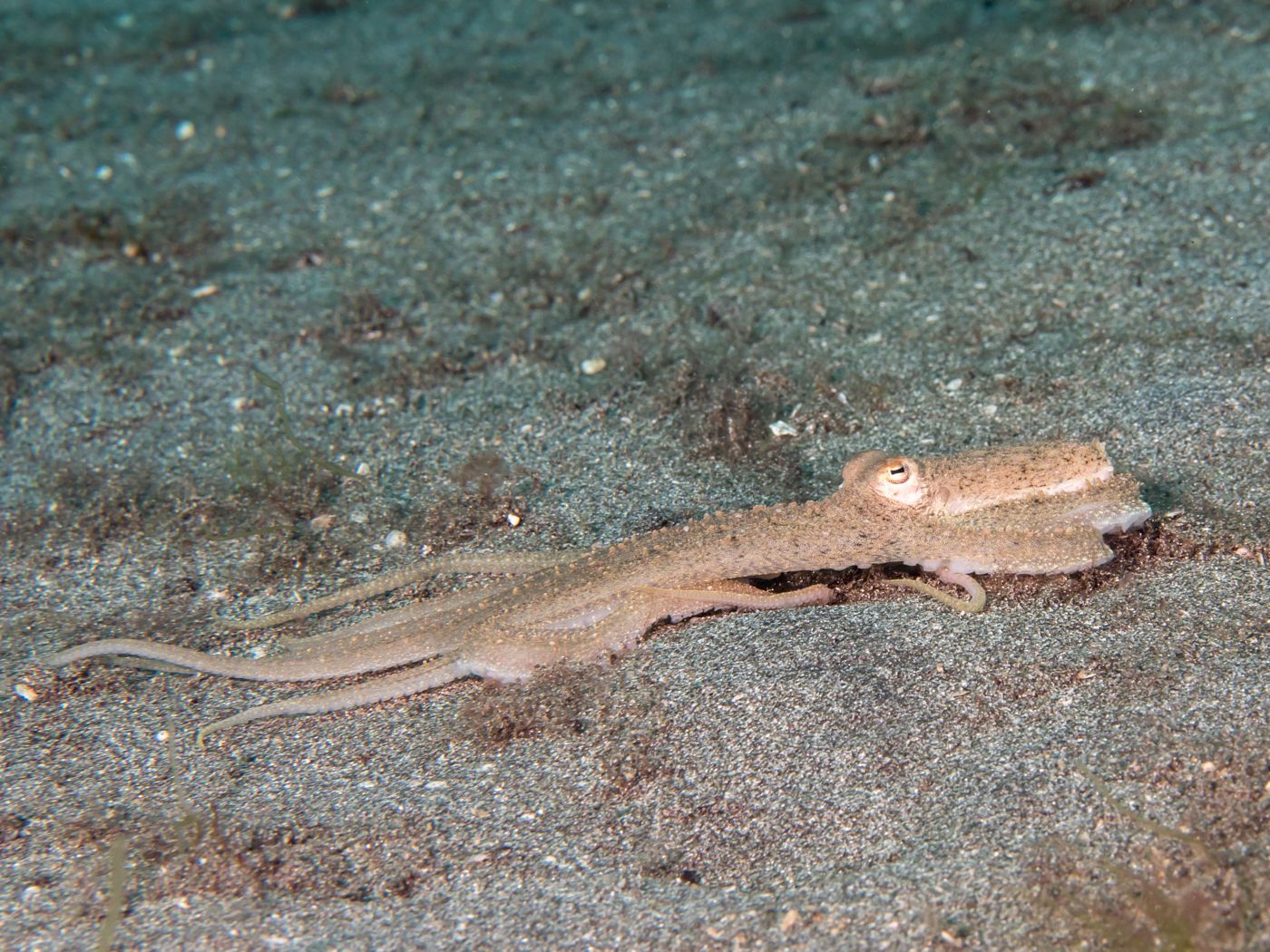 Long-arm octopus (nakji)낙지A slender octopus with long, thin arms, dug from the tidal mudflats of South Jeolla. Koreans eat it stir-fried with chili, in clear yeonpo-tang, and famously raw as sannakji.
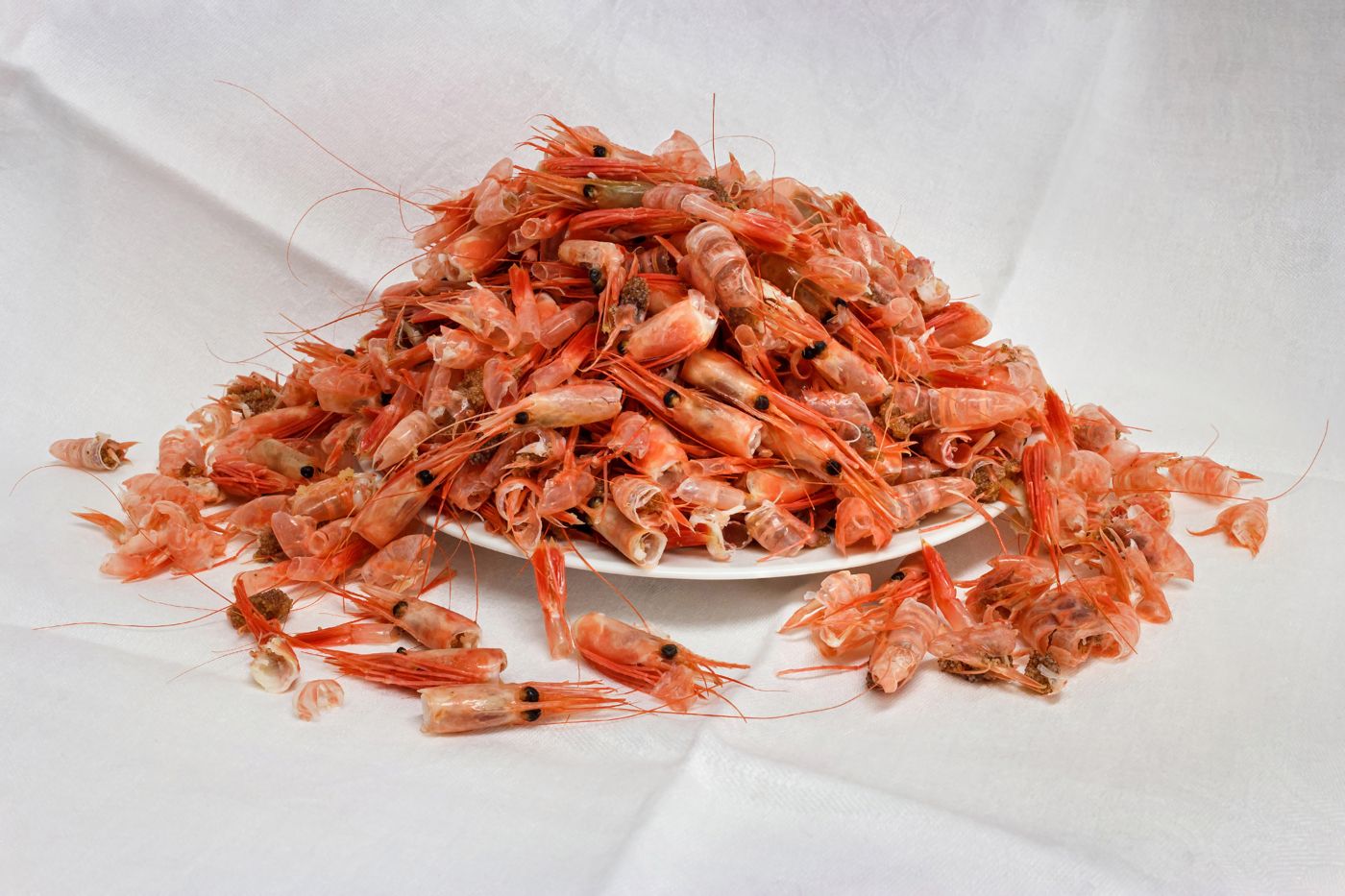 Shrimp (saeu)새우Shrimp in every size, from the tiny jeotsaeu salted to season kimchi to the large daeha. Mostly a West Sea catch, shrimp turn up across the Korean table, fresh, fried, braised and dried.
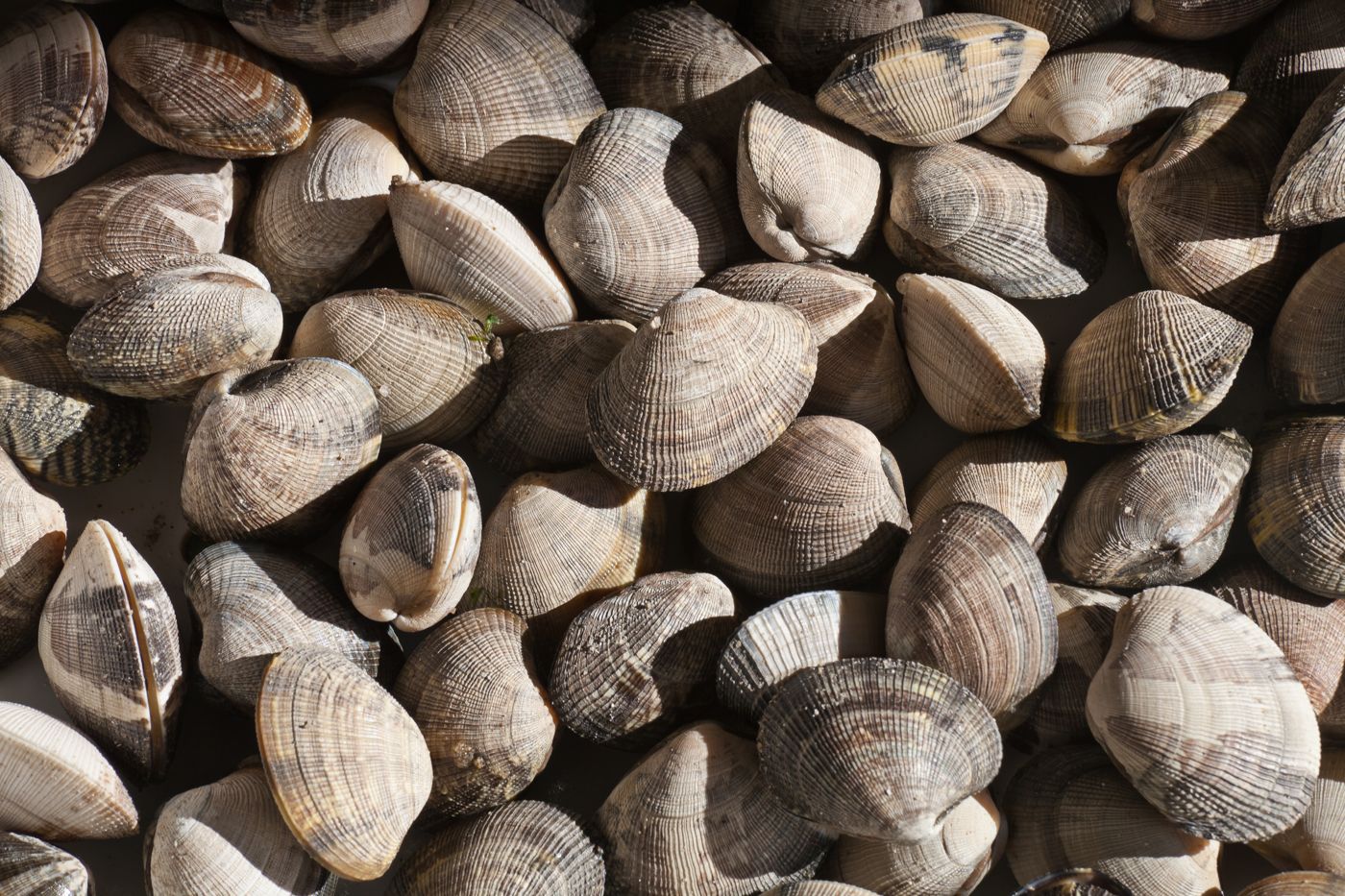 Manila clam (bajirak)바지락Small, ridged tidal-flat clams that give Korean soups and noodle broths their clean, sweet depth. Bajirak are the clams of bajirak-kalguksu, the west coast's clam noodle soup.
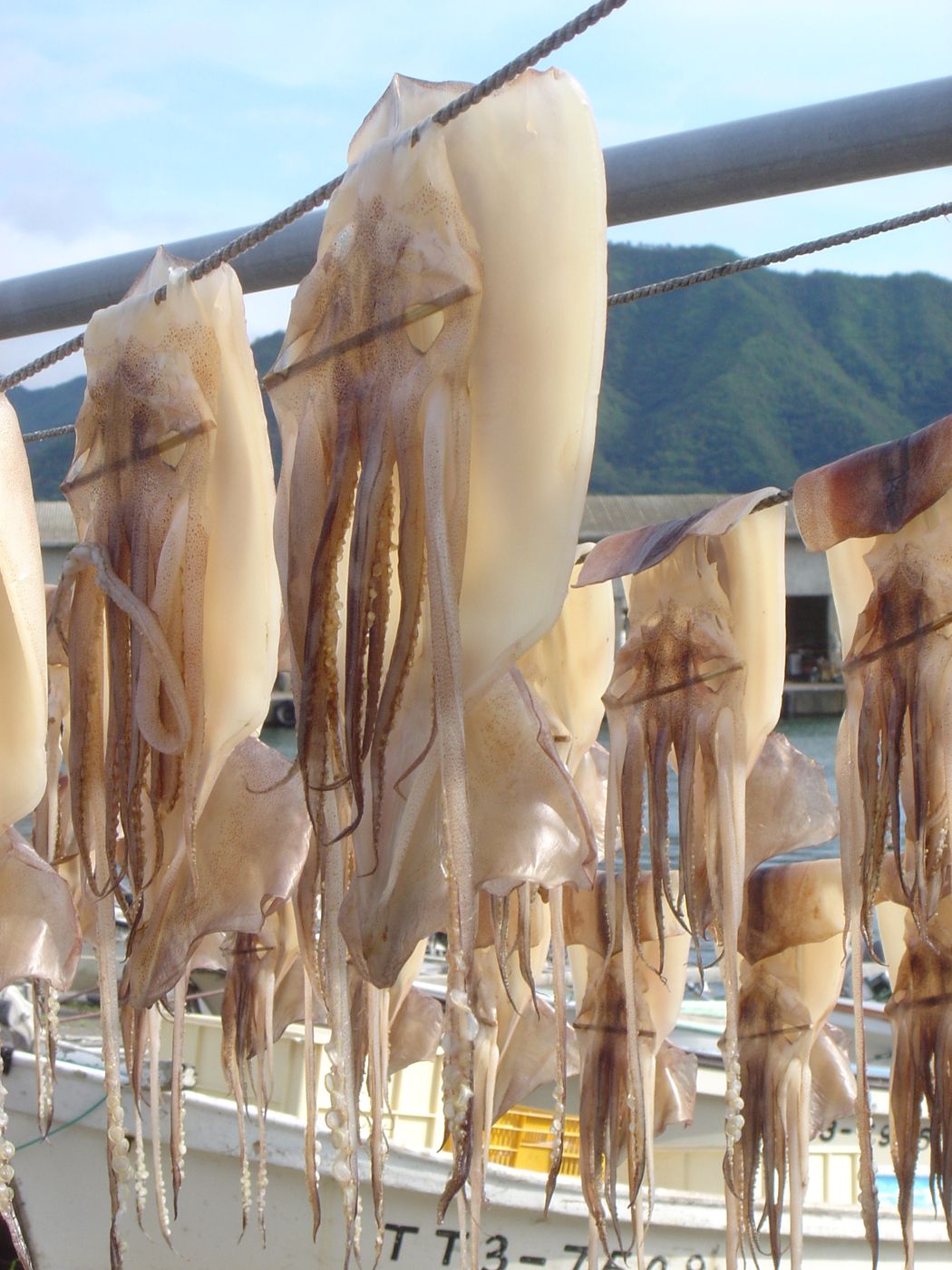 Squid오징어Fresh squid for stir-fries, pancakes and stuffed ojingeo-sundae, and dried squid — whole, sun-cured bodies or sweet-salty shredded jinmichae — that has become one of Korea's best-loved pantry foods.
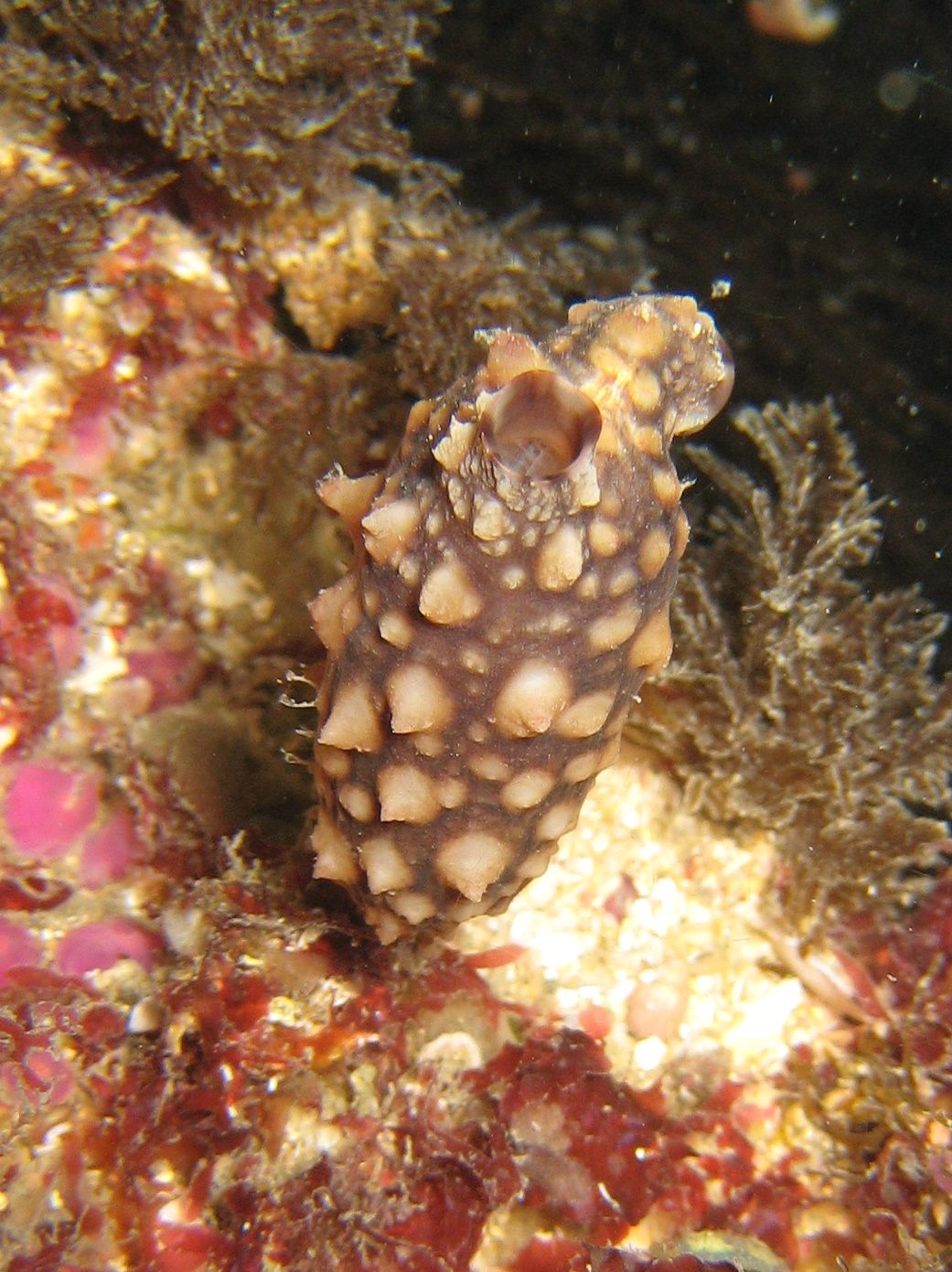 Warty sea squirt (mideodeok)미더덕A small, stalked sea squirt farmed in Jindong Bay near Masan. Its crunchy, briny pouch bursts with sea-scented liquid and flavors doenjang stews and Masan's braised dishes.
 Korean radish무A stout, heavy white radish, often tinged pale green near the top. It is cubed for kkakdugi, left whole in the clear brine of dongchimi, shredded into salads and simmered into broths.
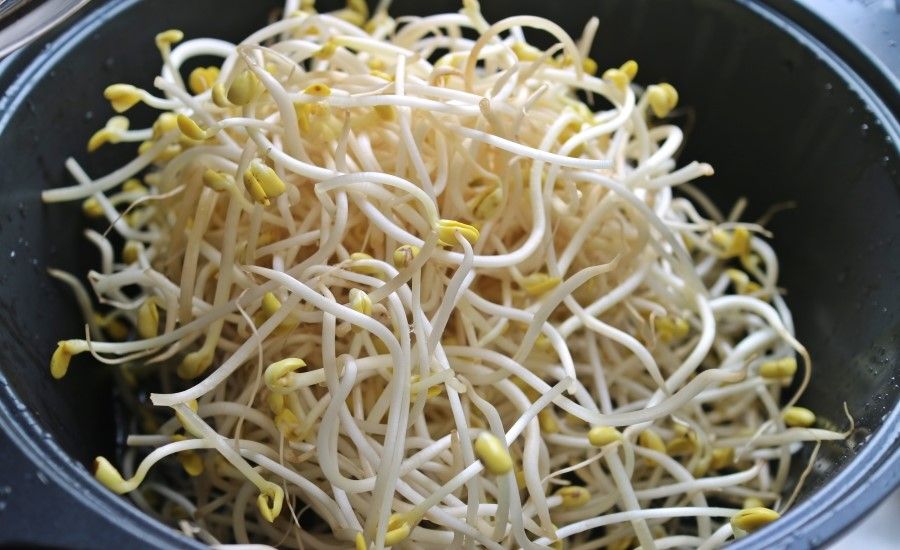 Soybean sprouts콩나물Soybeans sprouted in the dark until they grow long, pale stems topped with a yellow bean. A staple of everyday Korean cooking in kongnamul-muchim, clear sprout soup and sprout rice.
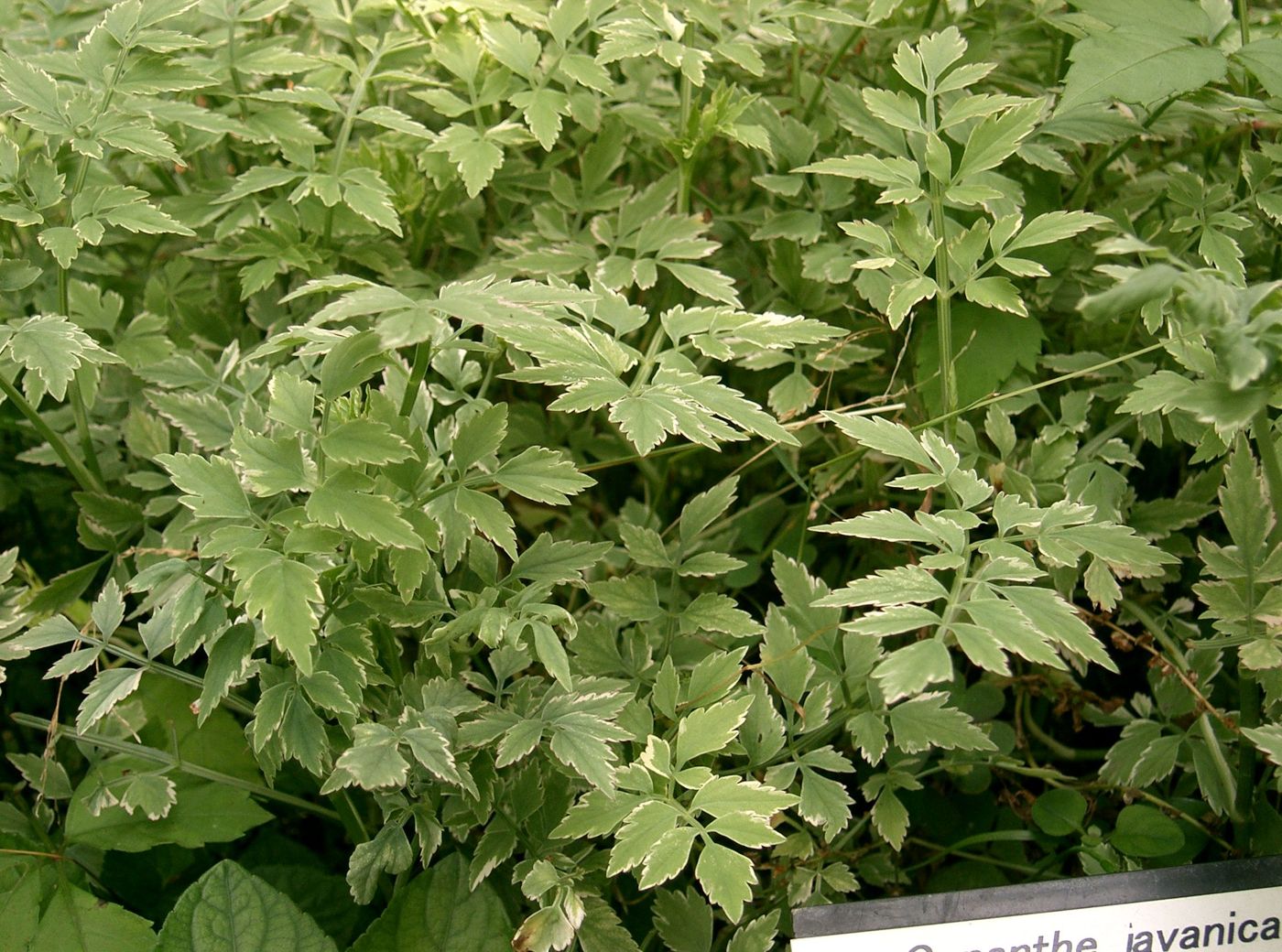 Minari (water dropwort)미나리A long-stemmed, aromatic water plant with a fresh, celery-like perfume. Blanched and dressed as minari-muchim, tucked into kimchi, wrapped into little bundles for minari-ganghoe and piled into fish stews and hot pots.
 Green onion파Korean green onion (pa), from thick-stemmed daepa to slender scallions — chopped into nearly every seasoning sauce, soup and kimchi, and the star of pa-kimchi.
- Korean Chili Peppers (Fresh)고추Fresh Korean chili peppers, eaten green (putgochu) or red (hong-gochu): from the fiery cheongyang-gochu to the small, wrinkled, mild kkwari-gochu that is braised and stir-fried as banchan.
 Gochugaru고춧가루Korean red chili powder, made from dried red peppers ground coarse or fine. It gives kimchi, gochujang and countless banchan their color and warmth.
- Gochujang고추장Fermented red chili paste — sweet, savory and hot. Made from meju powder, glutinous rice, malt and gochugaru, it is a later addition to Korea's family of jang.
 Garlic마늘Used raw, minced, pickled and roasted, garlic is one of the essential aromatics of Korean food — in seasonings, marinades, kimchi and namul.
 Ginger생강Fresh ginger root, used in small amounts to brighten kimchi paste and marinades and to tame the strong smells of fish and meat.
 Soy sauce간장Korean soy sauce, in two main kitchen forms: pale, salty guk-ganjang (soup soy sauce) brewed the traditional way from meju, and darker, sweeter jin-ganjang for braises and marinades.
 Rice쌀Short, round grains of japonica rice that cook up glossy, soft and gently clinging. Steamed white rice, bap, is the center of the Korean table: every banchan, soup and stew is planned to be eaten with it.
Nutrition
| Calories | ~270 kcal |
|---|---|
| Protein | ~39.8 g |
| Fat | ~4.7 g |
| Carbohydrates | ~16.6 g |
| Fiber | Not reported |
| Sodium | ~2046 mg |
Notable forProtein · Vitamin B12 · Selenium · Zinc
Scaled from the MFDS analysis of restaurant haemul-tang (해물탕; per 100 g: 45 kcal, 6.63 g protein, 0.78 g fat, 2.77 g carbohydrate, 341 mg sodium, 82 mg calcium, 1.27 mg zinc, 31.5 µg selenium, 3.07 µg vitamin B12, 78 mg cholesterol) to the database's 600 g serving: about 18 µg vitamin B12, 190 µg selenium, 7.6 mg zinc, 490 mg calcium and 470 mg cholesterol. The source reports 1.0 g fiber per 100 g, which seems high for a seafood broth, so fiber is shown as not reported; iron is listed as 0, which is implausible for shellfish and is not used. Actual values vary with ingredients, portion size and preparation.
Health Benefits
- High in protein and low in fat by the MFDS analysis, and an excellent source of vitamin B12 and selenium, with zinc and calcium from the shellfish.
- The folk encyclopedia notes that seafood protein is rich in essential amino acids and its fat is largely unsaturated.
- Shrimp, clams, crab and squid are on the FDA's list of "best choices" lowest in mercury; see seafood, omega-3s and mercury.
Regional Variations
- Chungcheong: the folk encyclopedia describes local blue crab, short-necked clams and webfoot octopus (jjukkumi) as the base.
- South Jeolla: squid, crab, shrimp, clams, whelk and sea squirt with onion, carrot, bean sprouts, water dropwort and crown daisy in an anchovy broth, topped with a chili paste.
- South Gyeongsang: the broth is made with doenjang dissolved in water and strained.
- Haemul-jeongol: a similar seafood assortment arranged in a wide pan and cooked at the table; MFDS lists it as a separate dish.
Pairings
 Gyeran Mari (Rolled Omelet)계란말이Beaten egg cooked in thin layers and rolled into a soft, striped log, then sliced — a gentle, everyday banchan and a lunchbox classic.
 Kongnamul Muchim콩나물무침Soybean sprouts cooked under a lid until just tender, then tossed with garlic, green onion and sesame oil — crisp, nutty and on tables across Korea.
 Napa Cabbage Kimchi배추김치Salted napa cabbage layered with a red paste of chili, garlic, ginger and fermented seafood, then left to ripen: the kimchi most people picture first.
Sources
- 01해물탕 (Haemul-tang) — Encyclopedia of Korean Folk Culture (한국의식주생활사전)
- 02해물탕 (Haemul-tang, restaurant, analyzed) — MFDS K-FIND food composition database
- 03Selecting and Serving Fresh and Frozen Seafood Safely — U.S. Food and Drug Administration
- 04Advice about Eating Fish — U.S. Food and Drug Administration
- 05Global Perspectives on Allergen Labeling: Harmonization of Regulations and Practices — Allergy, Asthma & Immunology Research, 2025
- 06Sodium reduction — World Health Organization fact sheet
Last updated