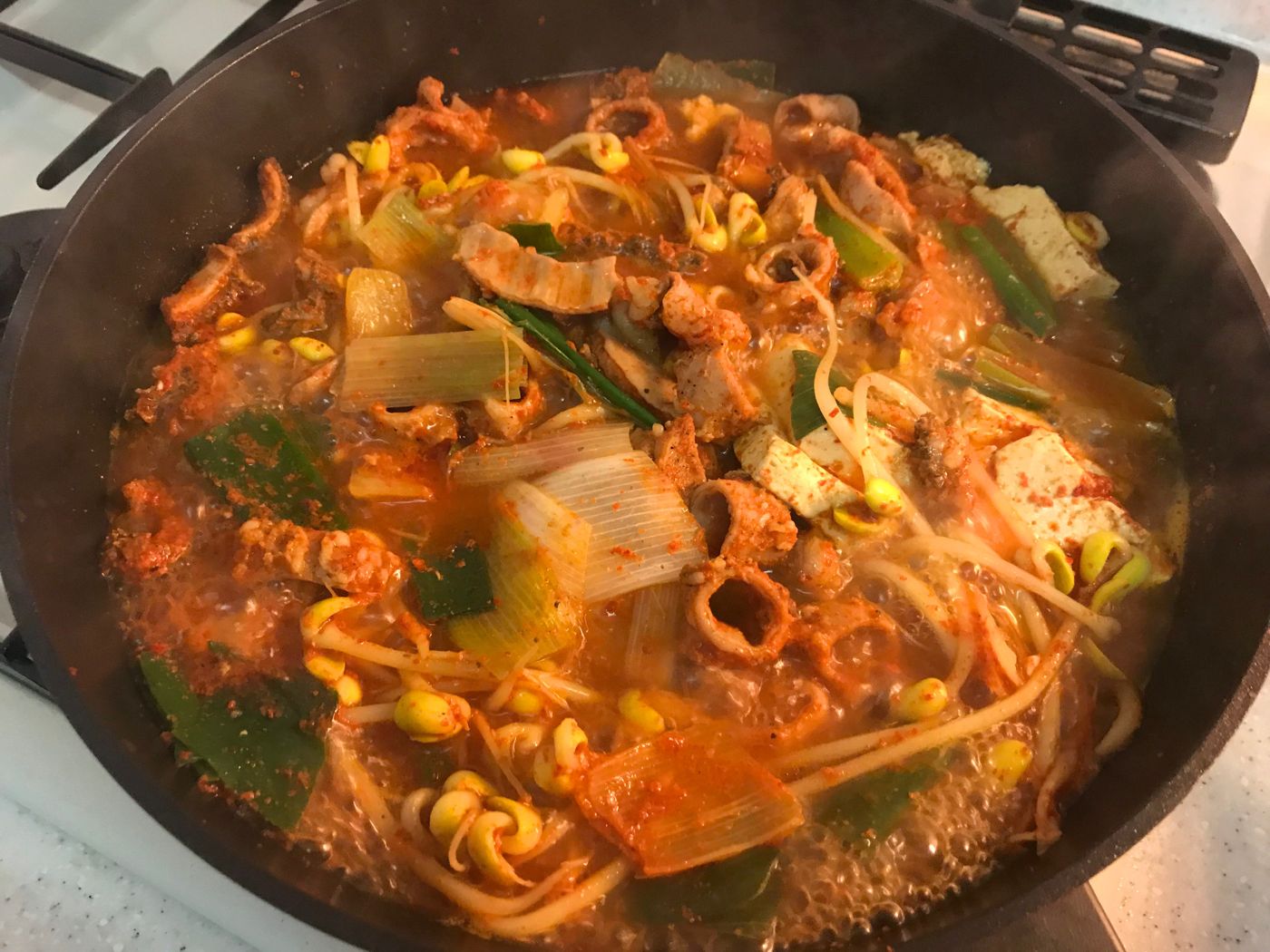
 Photo: lazy fri13th, CC BY 2.0, via Wikimedia Commons
Jjigae · Stews 찌개
Gopchang Jeongol (Beef Intestine Hot Pot)
곱창전골
Romanization: gopchang-jeongol
Cleaned beef small intestine and tripe simmered at the table with vegetables, mushrooms and glass noodles in a spicy broth — a rich, chewy hot pot for cold nights.
- Serves
- 4
- Prep
- 40 min
- Cook
- 60 min
RegionSeoul & Gyeonggi · Daegu · Chungcheong
Jump to recipeRecipe
Ingredients · Serves 4
- 500 gBeef small intestine (gopchang), raw and trimmed
- 200 gBeef tripe (yang), cleanedoptional
- 3 tbsp eachAll-purpose flour and coarse saltfor cleaning
- 1 thumbGingersliced, for parboiling
- 6 clovesGarlic4 whole for parboiling, 2 minced
- 1.2 lBeef or anchovy-kelp stock
- 1 Onionsliced
- 150 gCabbagecut into large pieces
- 100 gOyster mushroomstorn
- 100 gEnoki mushroomstrimmed
- 50 gCrown daisy (ssukgat)
- 1 stalkLarge green onion (daepa)sliced on the diagonal
- 50 gSweet potato glass noodles (dangmyeon)soaked 30 minutes
- 3 tbspGochugarufor the seasoning paste
- 1 tbspGochujang
- 2 tbspSoup soy sauce (guk-ganjang)
- 1 tbspRice wine (cheongju) or mirim
- ¼ tspBlack pepper
Method
Technique: Making Guk and Jjigae, Making Yuksu: Anchovy-Kelp Stock
Step 1: Soak the intestine and tripe in cold water for 30 minutes to draw out blood, changing the water once. Rub them well with the flour and salt, then rinse thoroughly, running water through the tubes. Trim off thick surface fat but keep the creamy *gop* inside; tying the ends of long pieces helps keep it in.
Step 2: Parboil in fresh water with the ginger and whole garlic for 30–40 minutes, until tender. Drain, rinse and cut into 4–5 cm pieces. Wash your hands, sink and boards with hot soapy water.
Step 3: Mix the gochugaru, gochujang, soup soy sauce, rice wine, minced garlic and pepper with a few spoonfuls of the stock into a paste.
Step 4: In a wide, shallow pot, arrange the cabbage, onion and mushrooms in sections and pile the intestine and tripe in the center with the paste on top. Pour in the stock.
Step 5: Bring to a boil at the table and simmer 10–15 minutes, until the vegetables are soft and the broth is rich and orange. Add the noodles, crown daisy and green onion for the last 3–4 minutes.
Step 6: Eat from the pot, topping up with stock as it reduces.
Origin & History
Gopchang-jeongol joins two things: gopchang, the small intestine of cattle (or pigs), and jeongol, a hot pot arranged in a wide pan and cooked at the table. The Encyclopedia of Korean Folk Culture notes that the word gopchang is now usually read as "intestine with gop" — gop being fat, here the rich, creamy fat and digestive juices inside the beef intestine — though a 1936 newspaper glossary explained it as "curved intestine." Beef intestine has a long place in Korean cooking: the 1809 household manual Gyuhap chongseo stuffs it with minced beef, pheasant and chicken and steams it, much like today's sundae, and court and upper-class cooks used offal widely with ginger, garlic, pepper and chopi to mask its smell.
Jeongol has its own history. Both the Encyclopedia of Korean Culture and the folk encyclopedia cite the eighteenth-century Gyeongdo japji, which describes a pan shaped like a soldier's felt hat, with vegetables blanched in the hollow center and meat grilled on the flat brim; only around the turn of the twentieth century, they suggest, did the grill-pan become the broth-filled pot cooked at the table that diners know now. The folk encyclopedia lists gopchang-jeongol among the established kinds of jeongol. Exactly when the intestine hot pot first appeared is not documented.
Its modern popularity follows the meat trade. The folk encyclopedia explains that before refrigeration offal spoiled fast and was mostly a fall and winter food, believed to help the body withstand cold. When large slaughterhouses opened at Majang-dong and Doksan-dong in Seoul in the 1960s and 1970s, cheap fresh by-products became available daily, and gopchang alleys grew up nearby — at Garibong-dong for factory workers of the Guro industrial complex, and at Hwanghak-dong and Wangsimni, which survive today. For decades it was food for laborers and students who could not afford beef; now it is simply a favorite.
Key Ingredients
 Yangpa (onion)양파The bulb onion, literally the "Western scallion." A latecomer to Korea, it is now everywhere: sweetening stir-fries and braises, pickled in soy sauce as yangpa-jangajji, and served raw beside grilled meat.
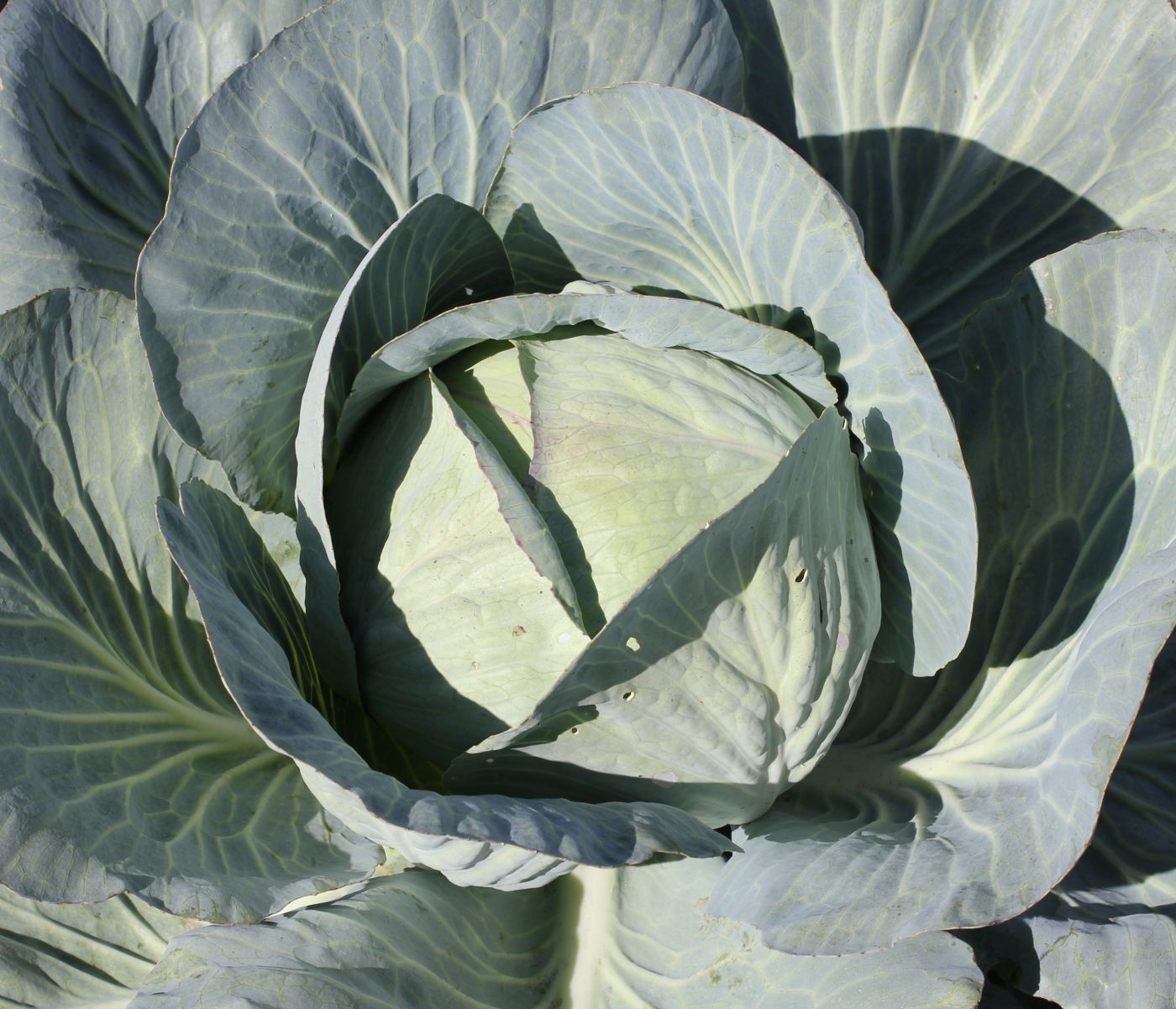 Yangbaechu (cabbage)양배추The round, tightly headed European cabbage — the "Western baechu." Crunchy and sweet, it is shredded raw, made into quick kimchi, steamed as a wrap and stir-fried into dakgalbi and tteokbokki.
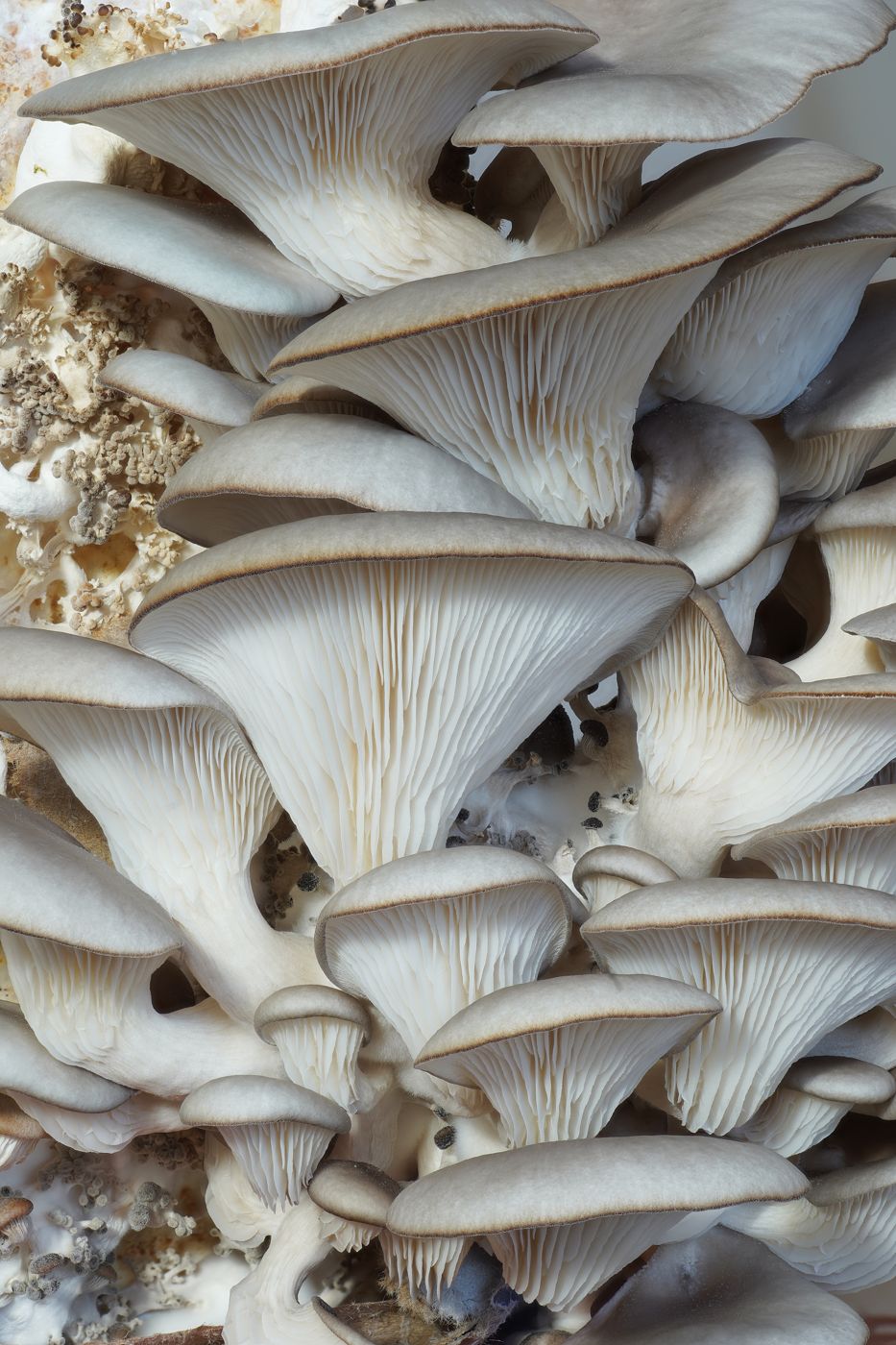 Neutari-beoseot (oyster mushroom)느타리버섯Soft gray-brown mushrooms with fan-shaped caps that grow in overlapping clusters. Mild and silky when cooked, they are Korea's everyday mushroom for namul, soups, stir-fries and jeon.
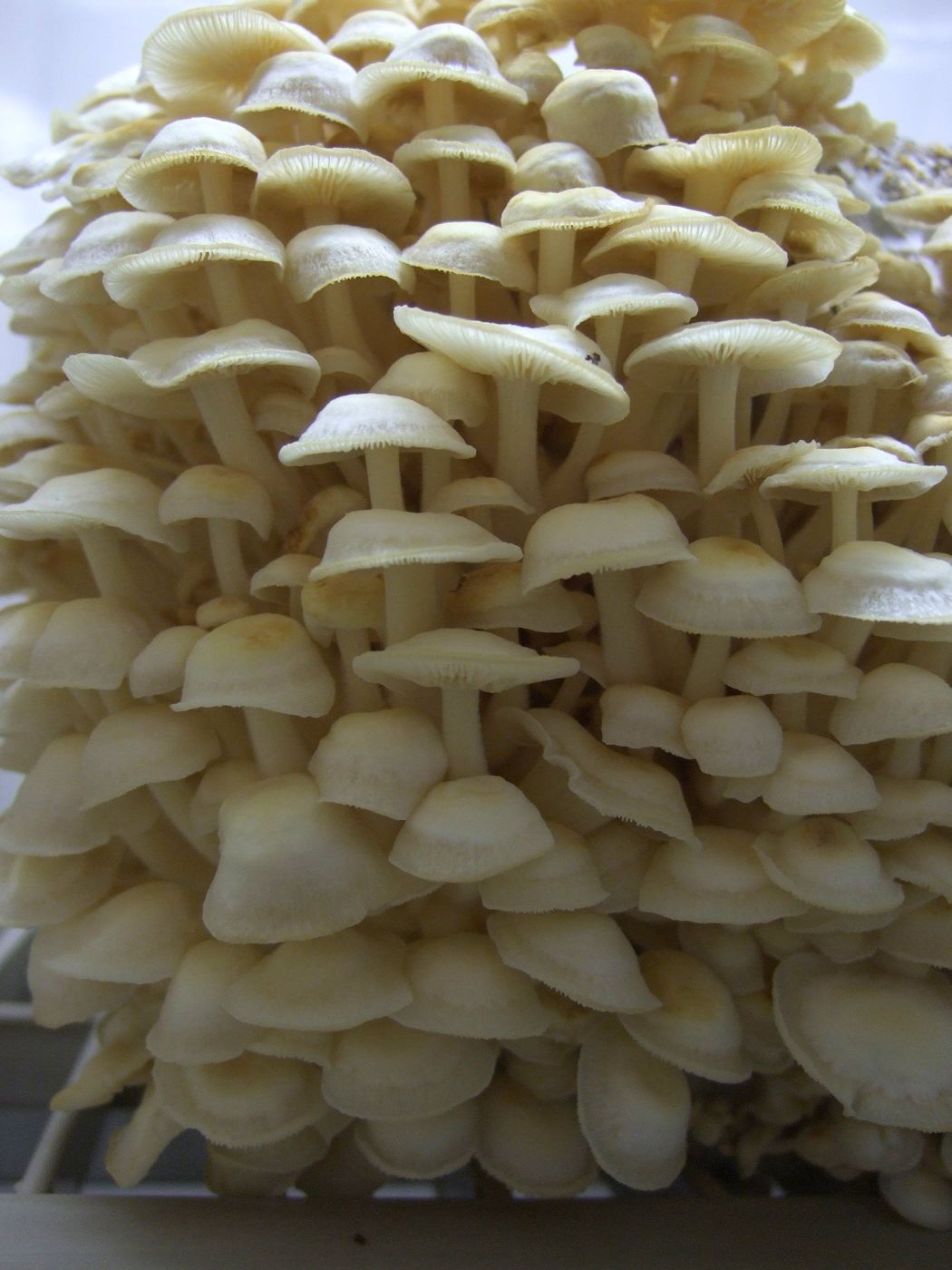 Paengi-beoseot (enoki mushroom)팽이버섯Long, slender, ivory-white stems topped with tiny caps, sold in tight bundles. Crisp-tender and mild, enoki is added at the last minute to stews and hot pots, and should always be eaten well cooked.
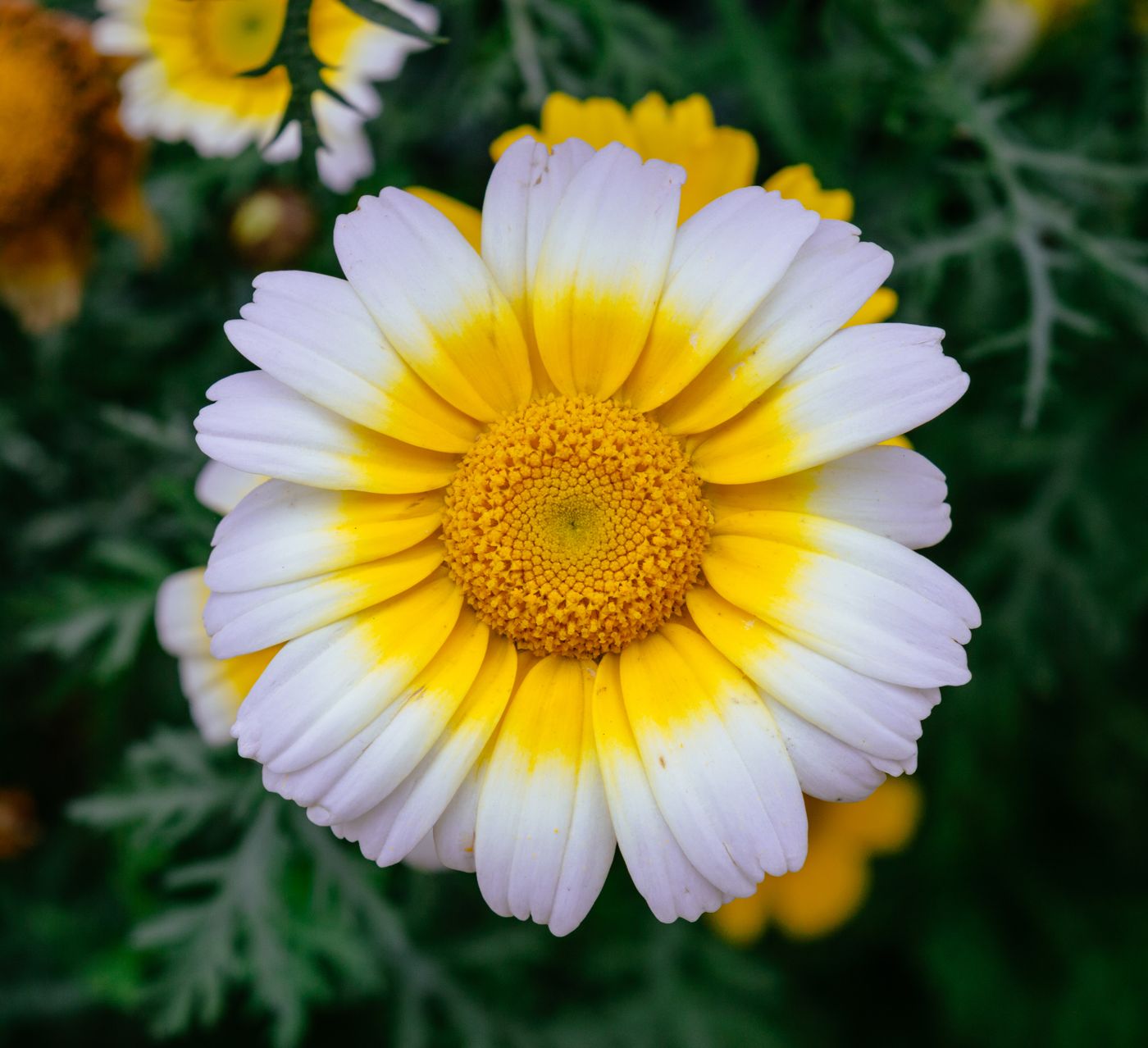 Ssukgat (crown daisy)쑥갓An edible chrysanthemum grown for its feathery, deeply lobed leaves and tender stems. Its bold, resinous perfume finishes spicy fish stews and hot pots, and it is a classic leaf for the ssam basket and quick namul.
 Green onion파Korean green onion (pa), from thick-stemmed daepa to slender scallions — chopped into nearly every seasoning sauce, soup and kimchi, and the star of pa-kimchi.
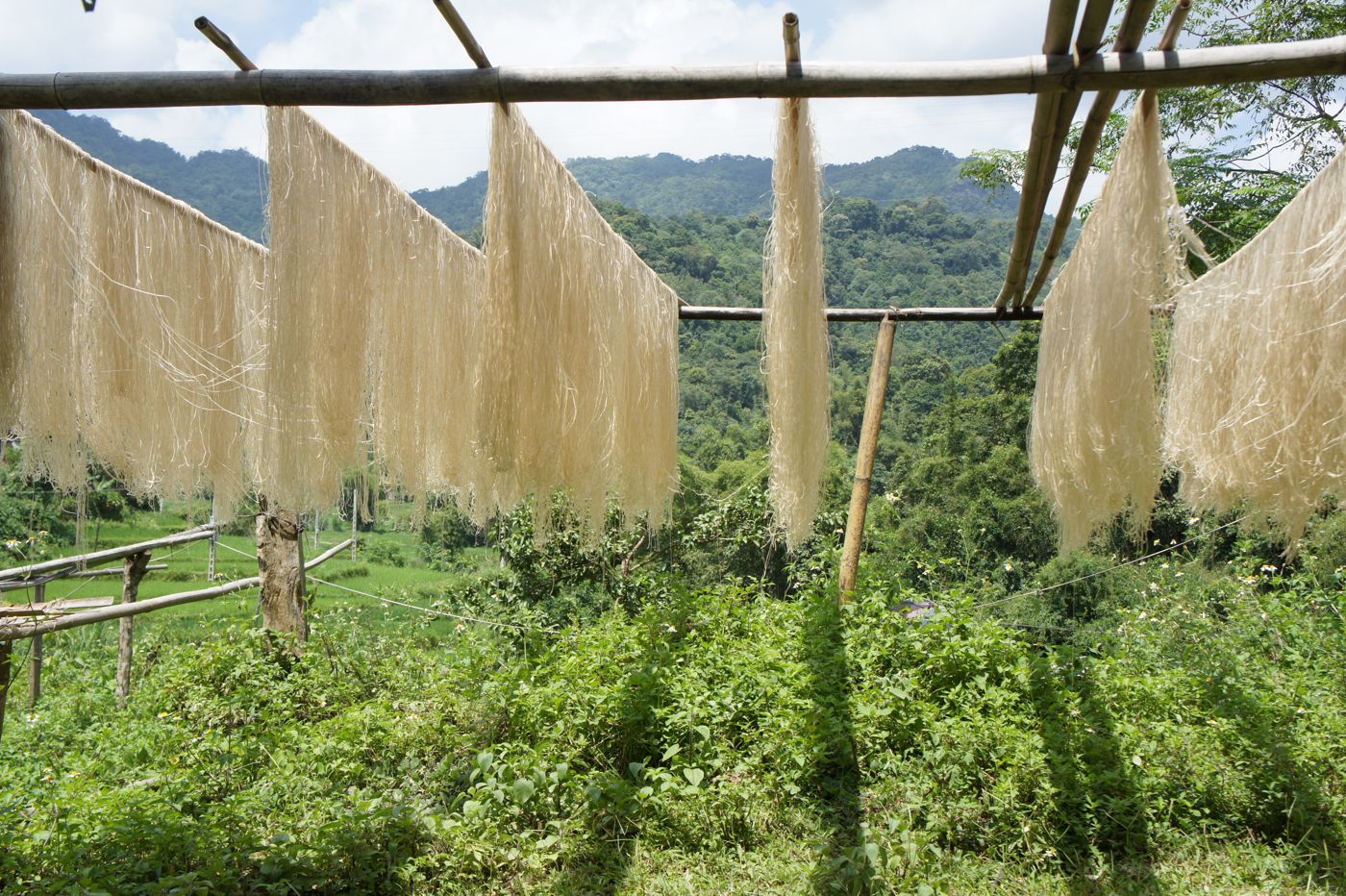 Sweet potato glass noodles당면Chewy, translucent noodles made from sweet potato starch. Introduced from China in the late Joseon period and mass-produced from 1919, they became the heart of modern japchae.
 Gochugaru고춧가루Korean red chili powder, made from dried red peppers ground coarse or fine. It gives kimchi, gochujang and countless banchan their color and warmth.
- Gochujang고추장Fermented red chili paste — sweet, savory and hot. Made from meju powder, glutinous rice, malt and gochugaru, it is a later addition to Korea's family of jang.
 Soy sauce간장Korean soy sauce, in two main kitchen forms: pale, salty guk-ganjang (soup soy sauce) brewed the traditional way from meju, and darker, sweeter jin-ganjang for braises and marinades.
 Garlic마늘Used raw, minced, pickled and roasted, garlic is one of the essential aromatics of Korean food — in seasonings, marinades, kimchi and namul.
 Ginger생강Fresh ginger root, used in small amounts to brighten kimchi paste and marinades and to tame the strong smells of fish and meat.
Nutrition
| Calories | ~528 kcal |
|---|---|
| Protein | ~41.6 g |
| Fat | ~27.3 g |
| Carbohydrates | ~29.2 g |
| Fiber | Not reported |
| Sodium | ~1782 mg |
Notable forProtein · Selenium · Zinc · Cholesterol
Scaled from the MFDS analysis of restaurant beef gopchang-jeongol (곱창전골_소고기; per 100 g: 88 kcal, 6.93 g protein, 4.55 g fat, 4.87 g carbohydrate, 297 mg sodium, 1.38 g saturated fat, 75.5 mg cholesterol, 10.6 µg selenium, 0.8 mg zinc) to the database's 600 g serving — about 8 g saturated fat and 450 mg cholesterol. The source reports 2.2 g fiber per 100 g (about 13 g per serving), which looks high for a meat-heavy hot pot, so fiber is shown as not reported; it also lists iron as 0, which is implausible for offal and is not used. A separate MFDS calculated value (111 mg sodium per 100 ml, 570 ml serving) gives about 630 mg sodium, showing how much versions differ. Actual values vary with ingredients, portion size and preparation.
Health Benefits
- A high-protein dish by the MFDS analysis, and a source of selenium and zinc.
- Using intestine and tripe makes use of the whole animal; the folk encyclopedia notes that offal is nutritionally comparable to meat at a lower price.
- Mushrooms, cabbage, onion and crown daisy bring vegetables to an otherwise rich pot.
Regional Variations
- Seoul (Hwanghak-dong and Wangsimni): the folk encyclopedia names these as Seoul's surviving gopchang alleys; the earliest shops there specialized in gopchang stir-fried with vegetables, then grilled gopchang from the 1980s.
- Daegu and Yesan: the folk encyclopedia also points to well-known gopchang streets in Daegu and Yesan in South Chungcheong.
- Naejang-jeongol: the folk encyclopedia lists a mixed-offal hot pot alongside gopchang-jeongol; in Korean usage the large intestine is daechang, distinct from the small-intestine gopchang.
- Pork version: cheaper pork intestine, which the folk encyclopedia notes is thinner and is turned inside out and washed before cooking, unlike beef intestine.
Pairings
 Kongnamul Muchim콩나물무침Soybean sprouts cooked under a lid until just tender, then tossed with garlic, green onion and sesame oil — crisp, nutty and on tables across Korea.
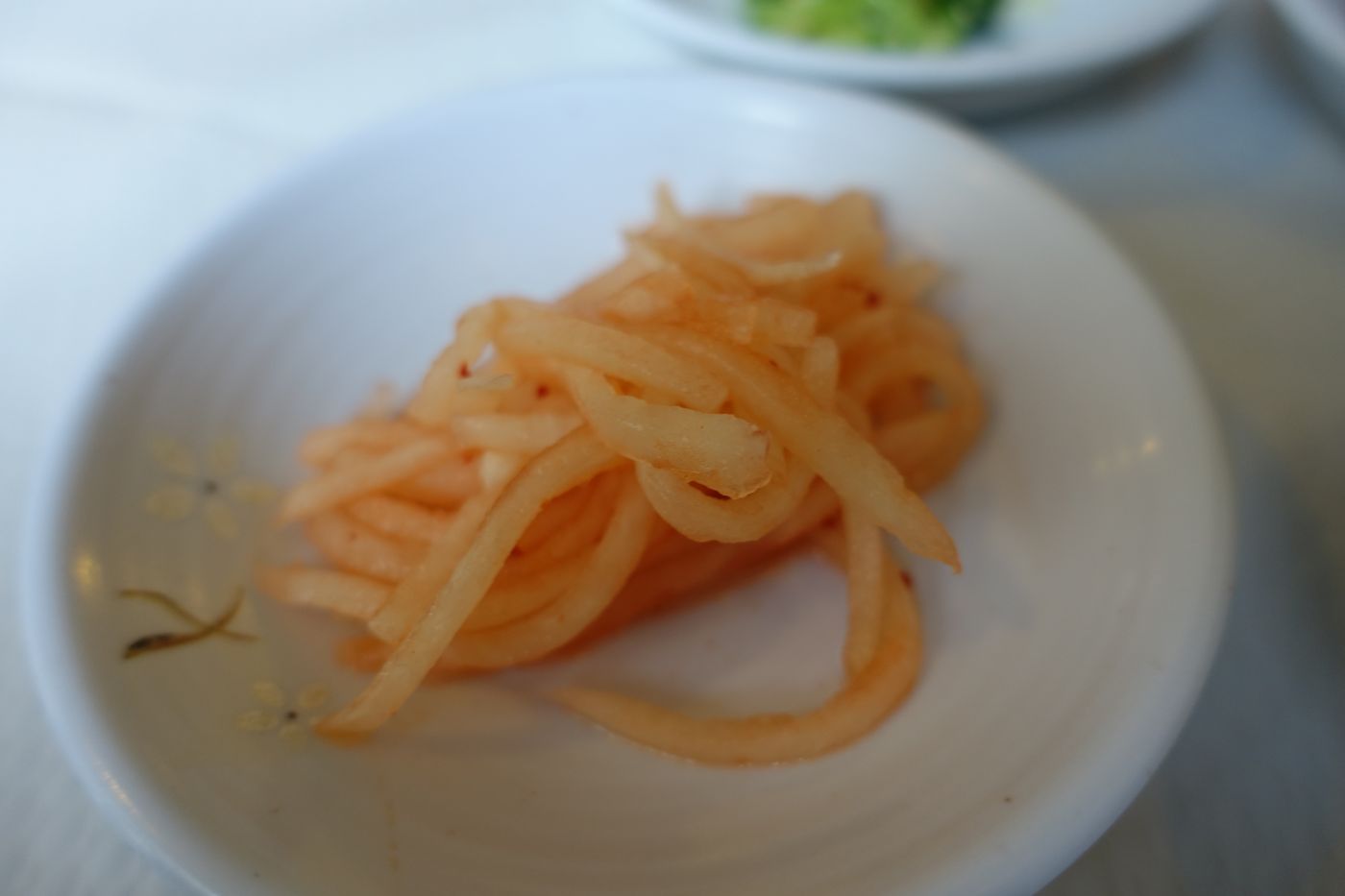 Musaengchae무생채Fine matchsticks of Korean radish dressed raw with chili flakes, a little vinegar and sugar — crisp, sweet-sharp and best made just before the meal.
 Cubed Radish Kimchi깍두기Korean radish cut into neat cubes and tossed with chili, garlic and salted shrimp — crunchy, juicy and a classic partner to rich soups.
Sources
- 01곱창 (Gopchang) — Encyclopedia of Korean Folk Culture (한류문화사전)
- 02곱창구이 (Gopchang-gui) — Encyclopedia of Korean Folk Culture (한국의식주생활사전)
- 03전골 (Jeongol) — Encyclopedia of Korean Folk Culture (한국의식주생활사전)
- 04전골 (Jeongol) — Encyclopedia of Korean Culture
- 05곱창전골_소고기 (Beef gopchang-jeongol, restaurant, analyzed) — MFDS K-FIND food composition database
- 06Safe Food Handling — U.S. Food and Drug Administration
Last updated