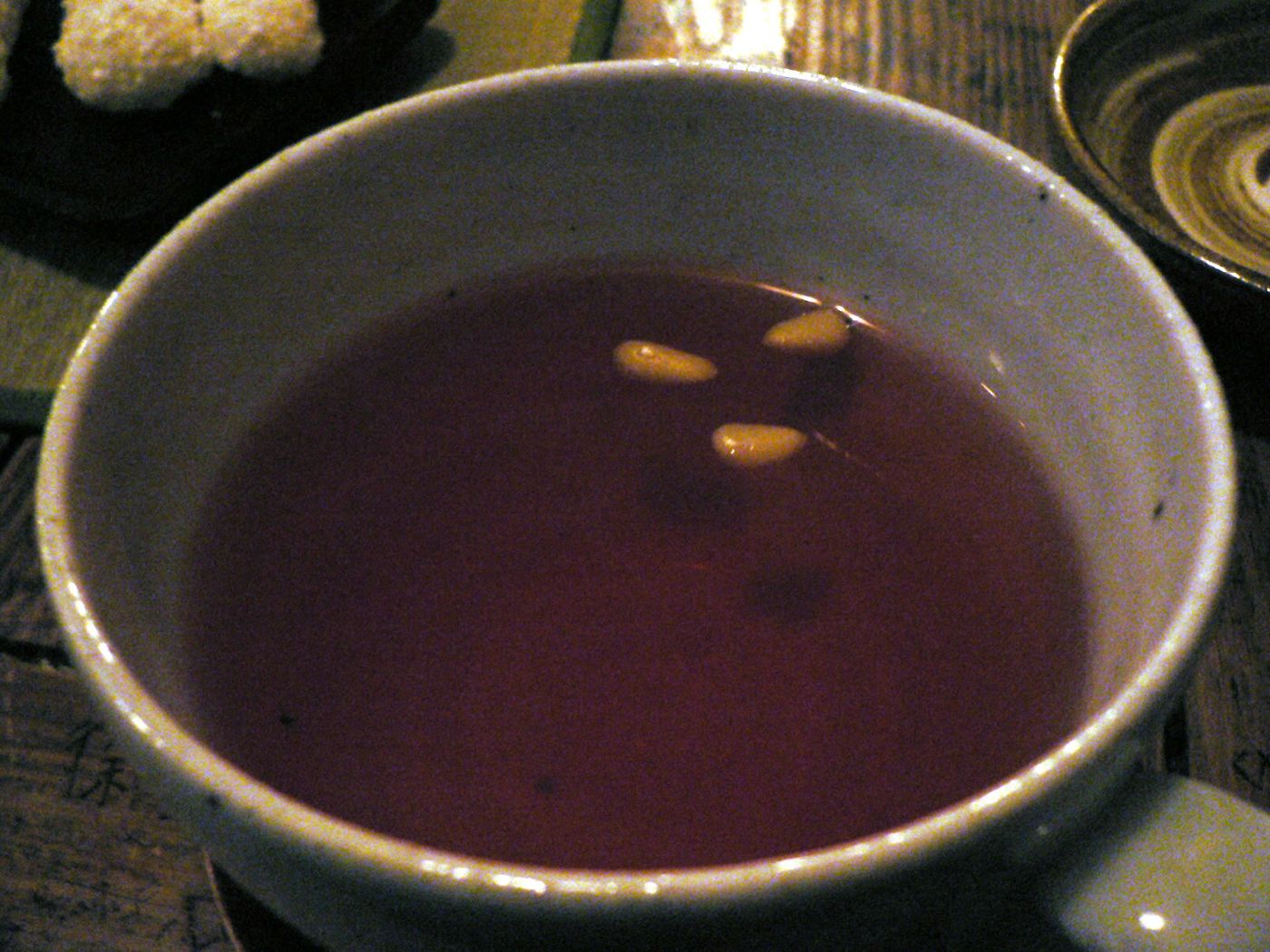
 Photo: abex, CC BY-SA 2.0, via Wikimedia Commons
Eumcheong · Traditional drinks 음청류
Sujeonggwa (Cinnamon-Ginger Punch with Dried Persimmon)
수정과
Romanization: sujeonggwa
A cold, spicy-sweet punch of ginger and cinnamon simmered separately, sweetened, and served with softened dried persimmons and pine nuts — a New Year drink for guests.
- Serves
- 10
- Prep
- 20 min
- Cook
- 50 min
RegionSeoul & Gyeonggi · Gangwon
Jump to recipeRecipe
Ingredients · Serves 10
- 100 gFresh gingerpeeled and thinly sliced
- 30 gCinnamon sticks (preferably cassia)broken into pieces and rinsed
- 3 LWaterdivided
- 150–200 gSugar (white, brown or a mix)or part honey
- 5 Dried persimmons (gotgam)stems and seeds removed
- 5 Walnut halvesoptional, to stuff the persimmons
- 1 tbspPine nutsto garnish
Method
Step 1: Put the ginger in one pot with 1.5 L water and the cinnamon in another pot with 1.5 L water. Boil each for 10 minutes, then simmer gently for 30 minutes. Cooking them separately keeps each flavor bright.
Step 2: Strain both liquids through a fine sieve or cloth into one pot. Add the sugar, bring back to a boil, and simmer 5 minutes, skimming off any foam. Taste and adjust the sweetness.
Step 3: Cool the punch completely and refrigerate until very cold, ideally overnight.
Step 4: If using walnuts, slit each persimmon, fold it around a walnut half and press closed. Soak the persimmons in a little of the cold punch for 2–3 hours, until plump and soft.
Step 5: Serve the punch ice-cold in small bowls with a persimmon (whole or sliced) and a few pine nuts floating on top. It keeps about a week refrigerated.
Origin & History
Sujeonggwa is a chilled drink of ginger and cinnamon boiled in water, sweetened, and served with dried persimmons (gotgam) that soften in it, scattered with pine nuts. The name means liquid jeonggwa, the counterpart to the candied fruits described in hangwa. Its preparation and season are covered in traditional beverages; this entry follows how the recipe changed.
According to the Encyclopedia of Korean Folk Culture, the name sujeonggwa first appears in a 1765 court banquet record, Sujak uigwe, and early versions were far from today's drink. Wonhaeng eulmyo jeongni uigwe, the record of King Jeongjo's 1795 royal procession, lists several sujeonggwa made with pear, yuja, pomegranate, honey and pine nuts, or pear with black pepper, and the cookbook Gunhak hoedeung classifies a pear-and-yuja version as "mixed-fruit sujeonggwa," next to the dried-persimmon kind. In other words, the word once covered a family of fruit punches.
Sources disagree on exactly when the familiar spices arrived. The Korean Food Promotion Institute quotes the late-nineteenth-century Siui jeonseo steeping persimmons in strong ginger tea, and notes that cinnamon appears to be a relatively late addition; the folk encyclopedia's survey dates ginger to the 1939 Joseon yoribeop, which also marks the switch from honey to sugar. Later twentieth-century cookbooks wrapped walnuts in the persimmons (gotgam-ssam) before floating them. Today sujeonggwa is a winter drink, made once the persimmons have dried and kept through the first lunar months, and is still prepared in quantity for guests who come to pay New Year respects. See persimmon and ginger.
Key Ingredients
 Ginger생강Fresh ginger root, used in small amounts to brighten kimchi paste and marinades and to tame the strong smells of fish and meat.
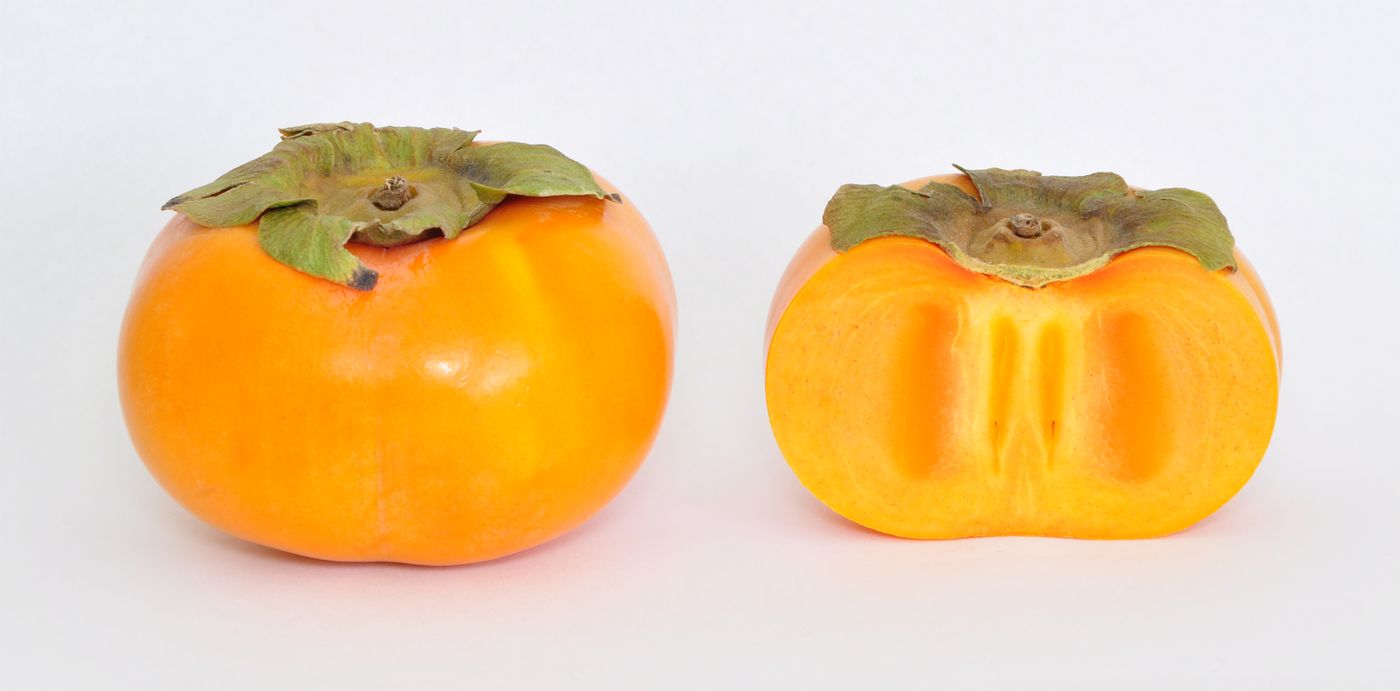 Gam (persimmon), gotgam and hongsi감Korea's emblematic autumn fruit, eaten crisp as dangam, spoon-soft as hongsi, and peeled and air-dried into chewy, sugar-frosted gotgam. Dried persimmons are essential on the ancestral-rite table and steep in sujeonggwa punch.
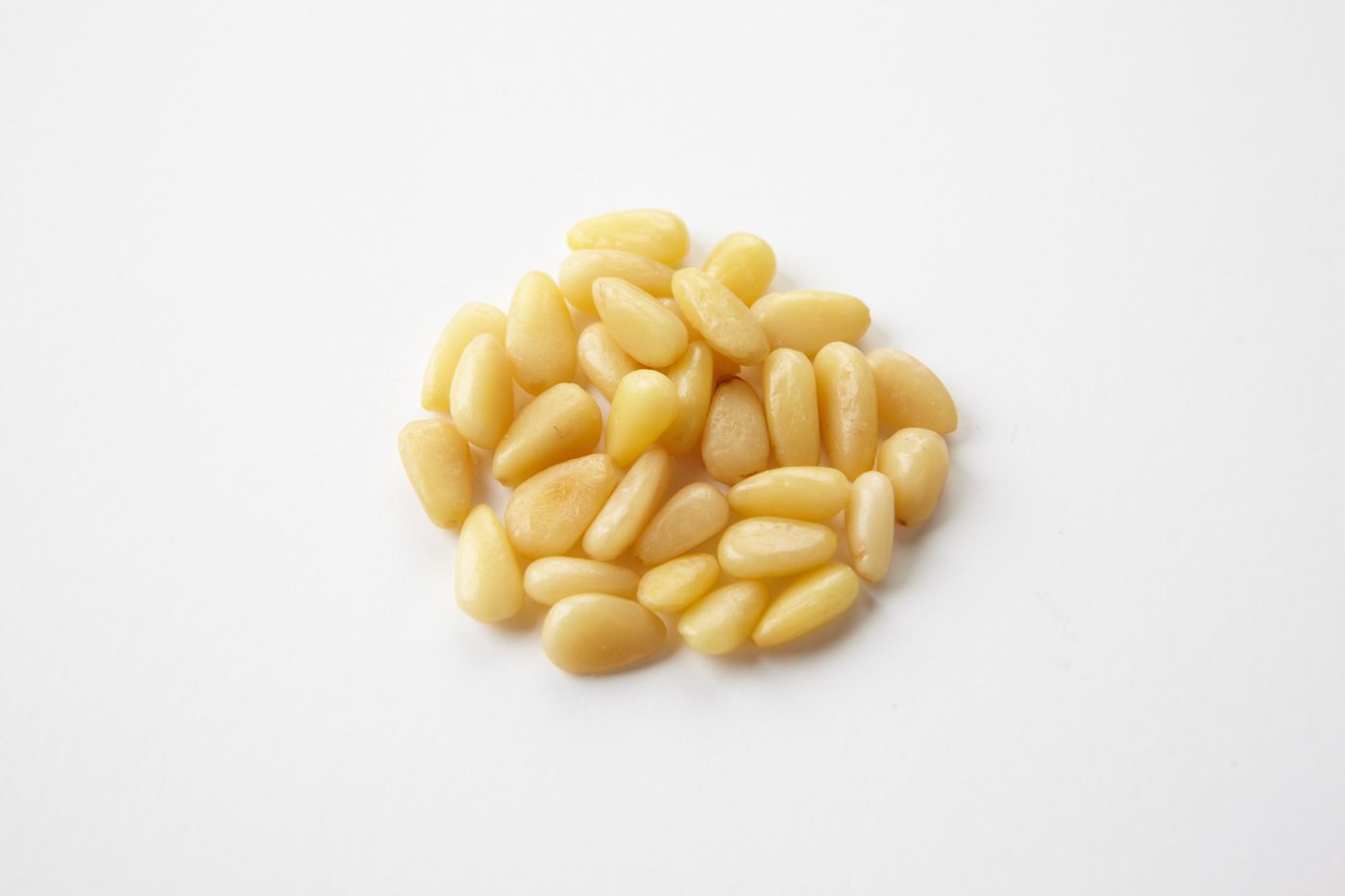 Pine nuts잣Creamy, ivory seeds of the Korean pine, scattered as a finishing garnish on punches, porridges and braises, or ground into the delicate porridge jatjuk. Gapyeong in Gyeonggi-do is the country's pine-nut capital.
Nutrition
| Calories | 66 kcal |
|---|---|
| Protein | 0.1 g |
| Fat | 0.1 g |
| Carbohydrates | 16 g |
| Fiber | 0 g |
| Sodium | 28 mg |
From the Korean Food Composition Table entry “Sujung-gwa, Korean traditional beverage made with cinnamon, Canned” (수정과, 캔; per 100 g: 33 kcal, 8.0 g carbohydrate, all of it sucrose, 14 mg sodium), scaled to 200 g. This is a commercial canned drink. The recipe above uses a little more sugar, and a whole dried persimmon adds roughly another 60–80 kcal and some fiber. The drink itself is not a meaningful source of vitamins or minerals. Actual values vary with ingredients, portion size and preparation.
Health Benefits
- Fragrant and fat-free: ginger and cinnamon give strong flavor with almost no fat or sodium.
- Traditionally warming: in Korean food lore ginger and cinnamon are warming ingredients, and the drink was considered a good finish to a rich holiday meal; these are traditional beliefs rather than proven effects.
- Dried persimmon: the floating persimmon adds natural sweetness and some fiber.
Regional Variations
- Geonsi-sujeonggwa (dried persimmon): the standard version today, with ginger, cinnamon, sugar or honey and pine nuts.
- Pumpkin sujeonggwa (Gangwon): pumpkin simmered with ginger and cinnamon, with dried persimmons added, according to the Korean Food Promotion Institute.
- Gotgam-ssam: persimmons stuffed with walnuts before soaking, a twentieth-century refinement.
- Historic fruit sujeonggwa: pear, yuja and pomegranate in honey water, as recorded in Joseon court documents.
Pairings
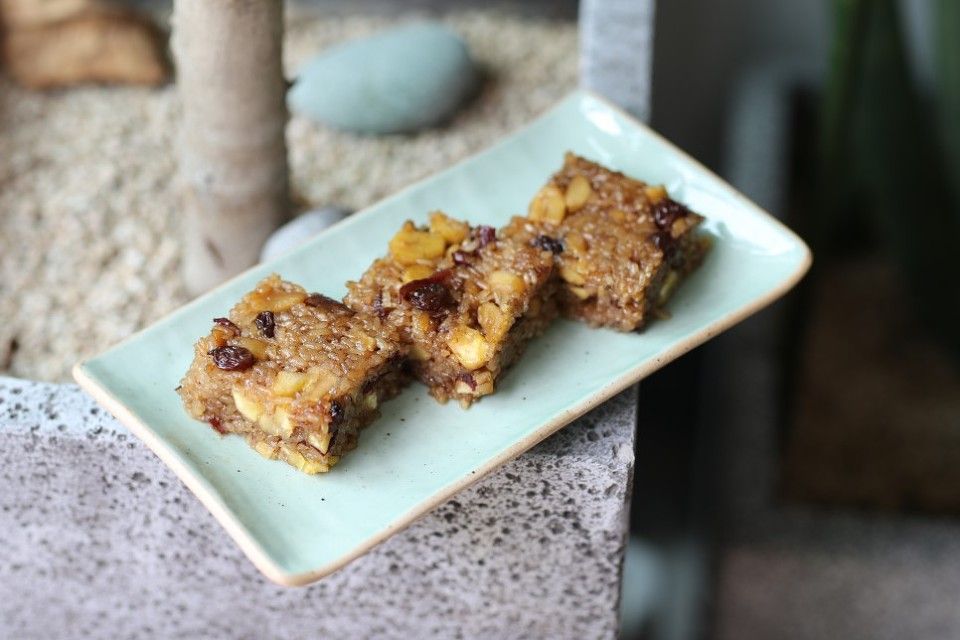 Yaksik (Sweet Rice with Chestnuts, Jujubes and Pine Nuts)약식Steamed glutinous rice darkened with soy sauce, brown sugar and honey and studded with chestnuts, jujubes and pine nuts — a full-moon festival food also called yakbap.
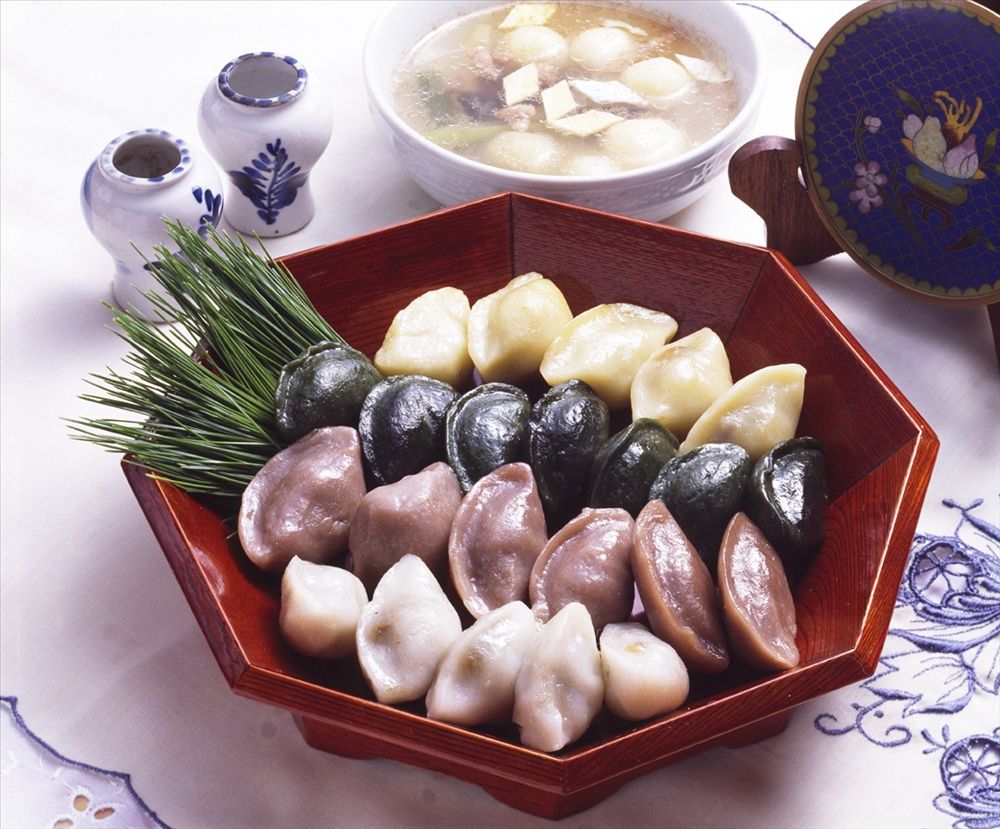 Songpyeon (Half-Moon Rice Cakes)송편Small half-moon cakes of rice dough filled with sweet sesame, beans or chestnut and steamed on a bed of pine needles — the rice cake of Chuseok, made with the new harvest.
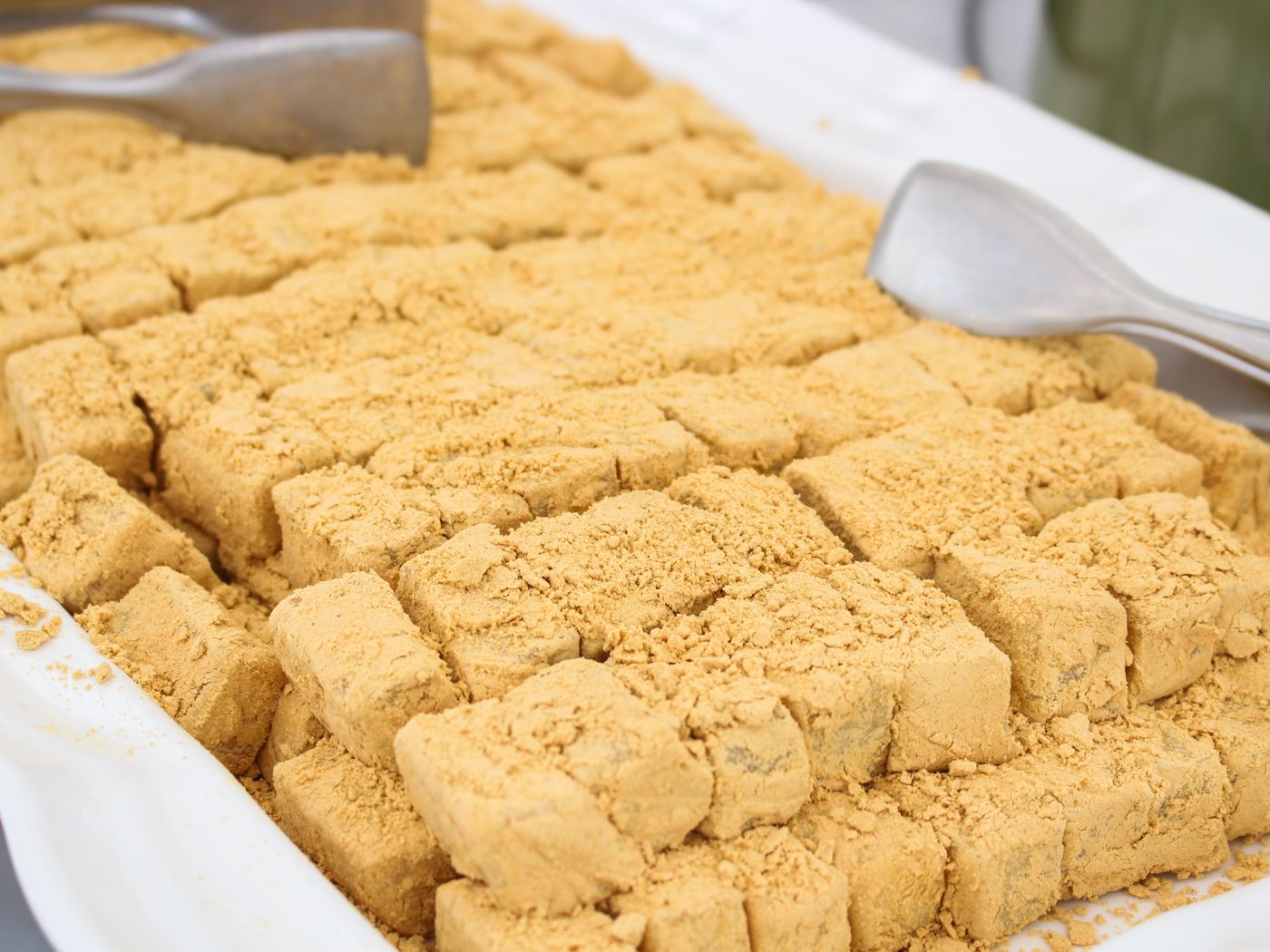 Injeolmi (Pounded Sticky Rice Cake with Bean Powder)인절미Steamed glutinous rice pounded until smooth and elastic, cut into pieces and rolled in roasted soybean powder — the chewy, nutty rice cake of markets, weddings and harvest time.
Sources
- 01수정과 (Sujeonggwa) — Encyclopedia of Korean Culture
- 02수정과 (Sujeonggwa) — Encyclopedia of Korean Folk Culture: Korean Food and Dwelling Life
- 03한식이야기: 수정과 (Korean Food Story: Sujeonggwa) — Korean Food Promotion Institute
- 04Sujung-gwa, Korean traditional beverage made with cinnamon, Canned (P014000000Qa) — Korean Food Composition Table
- 05식품 알레르기 유발물질 표시 강화된다 (Food allergen labeling to be strengthened, 2019) — Anti-Corruption and Civil Rights Commission of Korea
- 06FAQ on coumarin in cinnamon and other foods — German Federal Institute for Risk Assessment (BfR)
Last updated