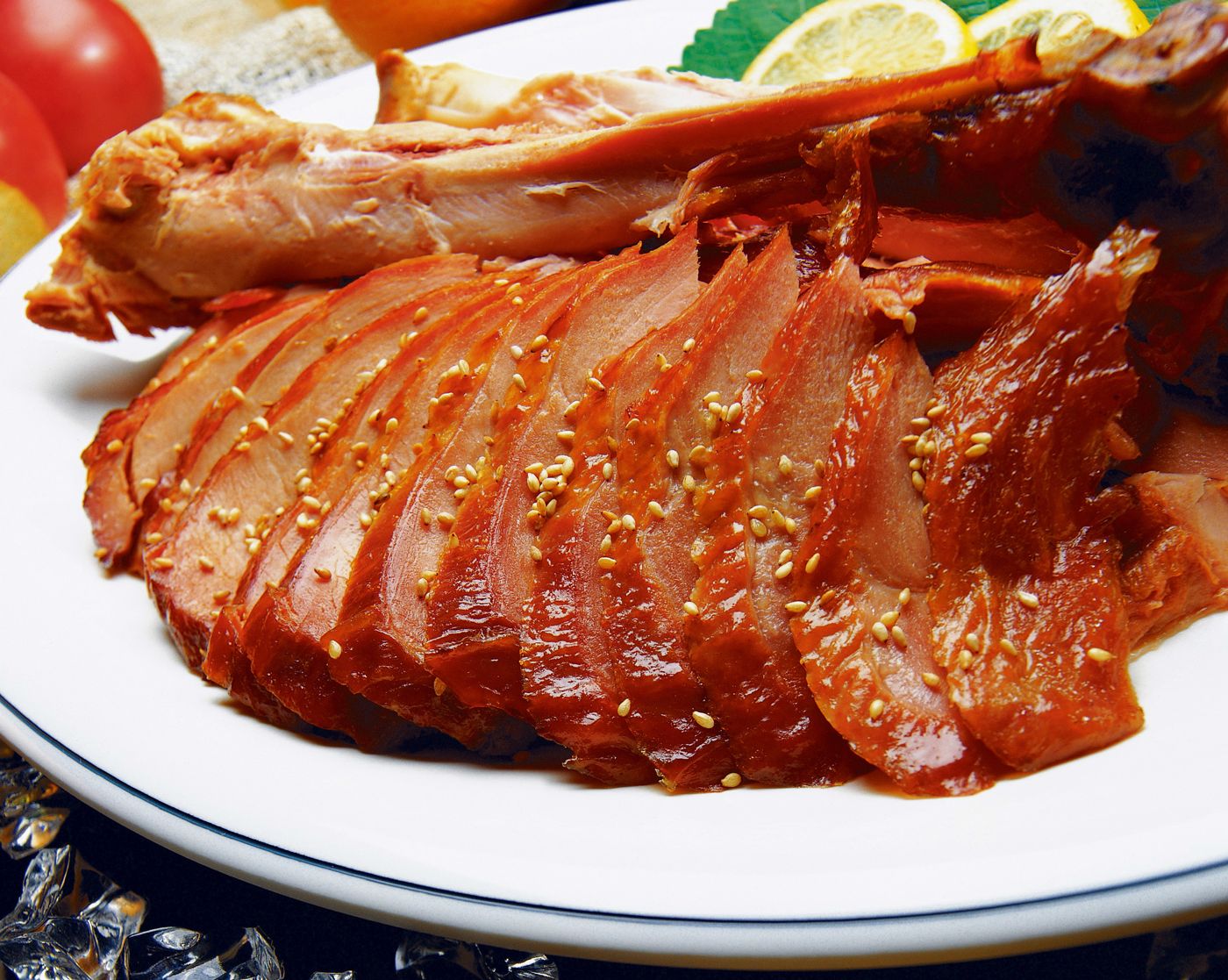
 Photo: wizdata, CC0, via Wikimedia Commons
More dishes 기타
Jokbal (Braised Pig's Trotters)
족발
Romanization: jokbal
Pig's trotters simmered until tender, then braised in soy sauce and spices until glossy and sliced — a postwar Seoul specialty of Jangchung-dong.
- Serves
- 4
- Prep
- 30 min
- Cook
- 180 min
RegionSeoul & Gyeonggi · Northern Provinces (Hwanghae, Pyeongan, Hamgyeong) · Jeju
Jump to recipeRecipe
Ingredients · Serves 4
- 2 kgPig's trotters (front feet preferred), cut in half lengthwise or in large piecessinged or shaved of any hair, soaked in cold water 2 hours
- 1 tbspDoenjangfor the first boil
- 100 mlSoju or rice winefor the first boil
- 150 mlSoy saucefor the braise
- 60 gSugar or dark taffy (gaengyeot)for the braise
- 1 Onionhalved
- 3 stalksGreen onions
- 10 clovesGarlic
- 30 gGingersliced
- 1 eachCinnamon stick, star anise, black peppercorns, bay leaves1 stick, 2 pods, 1 tsp, 2 leaves
- 3 LWaterabout; enough to cover
- Saeujeot, lettuce, garlic and green chiliesto serve
Method
Technique: Jorim: Braising in Seasoned Liquid
Step 1: Bring a large pot of water to a boil with the doenjang and soju. Add the trotters, boil 10 minutes, then drain and rinse well in cold water; scrape off any remaining hair.
Step 2: Return the trotters to a clean pot with the onion, green onions, garlic, ginger, spices and fresh water to cover. Bring to a boil, then simmer, partly covered, for 1½ hours, skimming fat and foam.
Step 3: Add the soy sauce and sugar and simmer another 60–80 minutes, turning the trotters every 20 minutes, until the skin is dark and glossy and a chopstick slides easily into the thickest part.
Step 4: Lift the trotters out and let them rest 20–30 minutes so the skin firms; brush with a little of the reduced braising liquid.
Step 5: Cut the meat and skin off the bone in large pieces and slice about 7 mm thick. Serve warm or at room temperature with salted shrimp, lettuce, raw garlic and chilies.
Origin & History
Jokbal doubles up on its meaning: the Sino-Korean jok (足, foot) plus the native Korean bal, also "foot." It refers specifically to pig's feet. The Encyclopedia of Korean Culture finds trotters in early texts as medicine and food: the 1460 dietary-therapy book Sikryo chanyo by the court physician Jeon Sun-ui prescribes trotter soup for boils, and trotter broth cooked with rice into porridge for new mothers short of milk, while the agricultural compendium Nongjeong hoeyo (c. 1830) praises trotters and womb boiled soft and eaten with vinegar soy sauce as a delicacy.
The glossy, soy-braised jokbal of today is usually traced to dwaeji-jok-jorim, a dish from Hwanghae province in which trotters are simmered and then slowly reduced with dark taffy (gaengyeot), soy sauce and spices until they shine. Both encyclopedias say refugees from the north who settled in Seoul's Jangchung-dong after the Korean War built the restaurant version by combining that northern braise with the Chinese five-spice pork ohyang jangyuk; trotters, as cheap by-products, suited people starting over with little.
Accounts of the first shop differ. The Encyclopedia of Korean Folk Culture and the Korean Food Promotion Institute date the start to 1959, when a shop called Pyeongando jokbal opened near Jangchung-dong (the institute names its founder as Lee Gyeong-sun). The Encyclopedia of Korean Culture, citing a 1992 Kyunghyang Shinmun report, credits two friends from the north, Jeon Seung-suk and Kim Jeong-yeon, who opened Pyeongando-jip in 1961, ran it together for six years and then each opened her own shop, each claiming to be the original. Customers from the nearby Jangchung Gymnasium, Dongguk University and the National Theater helped make the street famous. The folk encyclopedia notes franchises from the mid-1970s, and today jokbal is a leading late-night delivery and drinking food.
Key Ingredients
 Pork (dwaeji-gogi)돼지고기Korea's most widely eaten meat, prized cut by cut: fatty belly for samgyeopsal, neck for the grill, lean legs for boiled suyuk and stir-fried jeyuk. Pork also anchors Jeju Island's feast cooking.
 Soy sauce간장Korean soy sauce, in two main kitchen forms: pale, salty guk-ganjang (soup soy sauce) brewed the traditional way from meju, and darker, sweeter jin-ganjang for braises and marinades.
 Doenjang된장Fermented soybean paste — the savory foundation of doenjang-jjigae, many soups and dressings for namul. It is one of Korea's core jang, or fermented sauces.
 Garlic마늘Used raw, minced, pickled and roasted, garlic is one of the essential aromatics of Korean food — in seasonings, marinades, kimchi and namul.
 Ginger생강Fresh ginger root, used in small amounts to brighten kimchi paste and marinades and to tame the strong smells of fish and meat.
 Green onion파Korean green onion (pa), from thick-stemmed daepa to slender scallions — chopped into nearly every seasoning sauce, soup and kimchi, and the star of pa-kimchi.
 Salted fermented shrimp새우젓Tiny shrimp packed in salt and left to ferment — a jeotgal (salted seafood) that seasons kimchi and stews and accompanies boiled pork with briny, savory depth.
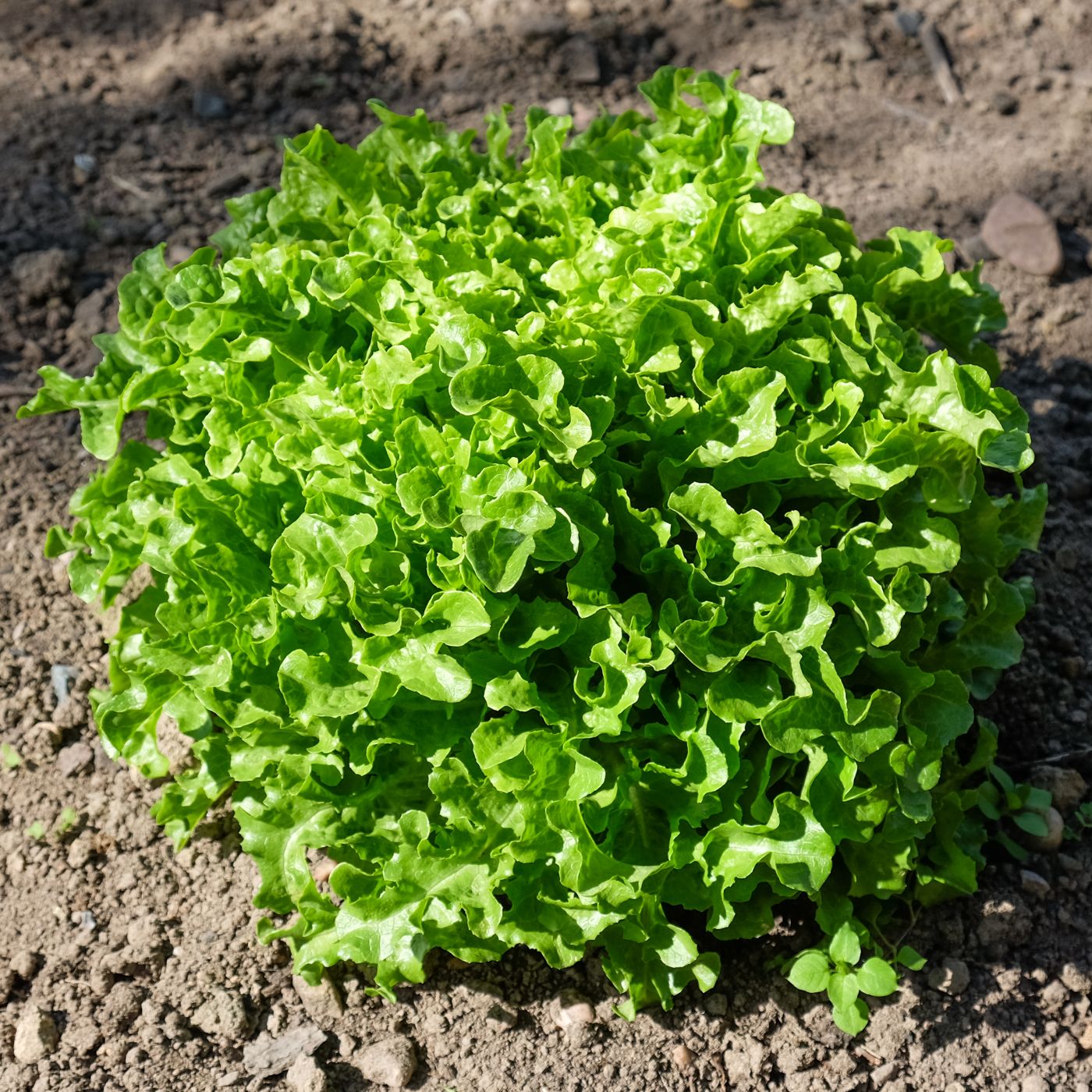 Sangchu (lettuce)상추Soft, loose-leaf lettuce, green or red-tinged, that anchors the Korean habit of ssam: wrapping rice, grilled meat and a dab of ssamjang in a fresh leaf. It is also dressed quickly as sangchu-geotjeori.
Nutrition
| Calories | ~440 kcal |
|---|---|
| Protein | ~58 g |
| Fat | ~23 g |
| Carbohydrates | ~0 g |
| Fiber | ~0 g |
| Sodium | ~665 mg |
Notable forProtein
Calculated from the Korean Food Composition Table entry for seasoned boiled pig's feet (I015000D51Db), multiplied by 2 for a 200 g portion (about a quarter of the edible yield of 2 kg of trotters). The database lists 0 g carbohydrate for this item; a sweet soy braise like the recipe here adds some sugar and usually more sodium, so treat sodium as a lower bound. Excludes salted shrimp and other condiments. Much of the protein is collagen, which is low in some essential amino acids. Actual values vary with ingredients, portion size and preparation.
Health Benefits
- Protein-rich: sliced jokbal is high in protein, much of it collagen and gelatin from the skin and tendons, which gives the chewy texture.
- Simmered, not fried: long boiling renders out some fat into the liquid, which is discarded or skimmed.
- Eaten with greens: lettuce, garlic and chilies alongside add vegetables to a meat-heavy dish.
- A traditional food for new mothers: both encyclopedias record the long-standing folk belief that trotter soup helps milk supply; this is tradition rather than established science. See postpartum food traditions.
Regional Variations
- Jangchung-dong jokbal (Seoul): trotters simmered with aromatics, then braised in a soy-sugar-spice liquid and sliced; served with salted shrimp, lettuce and garlic.
- Hwanghae dwaeji-jok-jorim (northern provinces): braised with dark taffy, ginger and soy sauce, boned and sliced thin, eaten with salted-shrimp liquid.
- Jeju dwaeji-joktang (Jeju): trotters (called agangbal when from piglets) simmered into a soup.
- Bul-jokbal and packaged jokbal: the folk encyclopedia notes newer spicy versions made with cheongyang chili or chili powder, and factory-made jokbal sold chilled or frozen in supermarkets and convenience stores.
Pairings
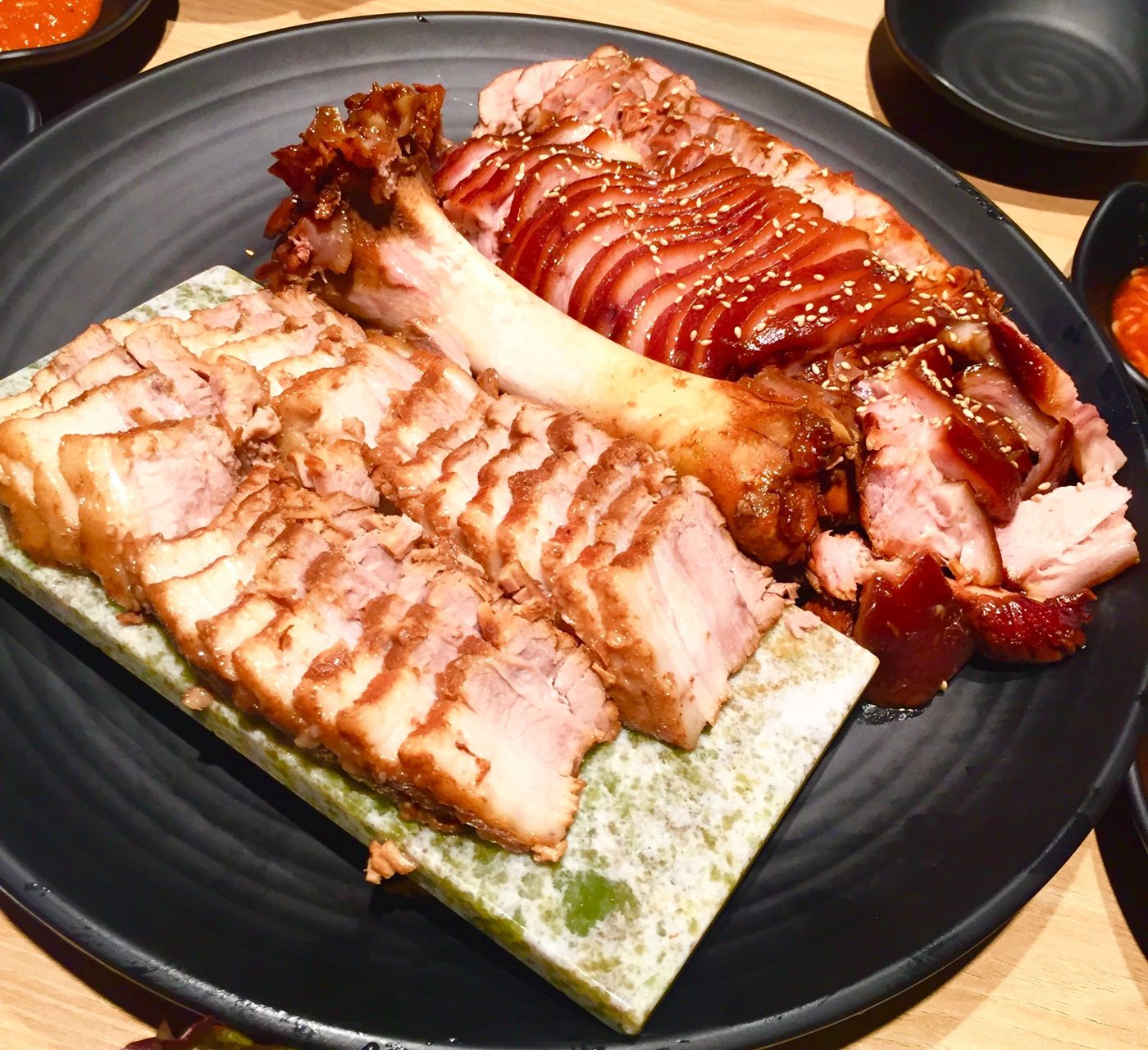 Bossam (Boiled Pork Wraps)보쌈Pork belly simmered with doenjang and aromatics, pressed and sliced, then wrapped in salted cabbage with spicy radish and salted shrimp — a feast dish built for sharing.
- Buchu Muchim부추무침Raw Korean chives tossed with soy sauce, chili flakes, vinegar and sesame — a pungent, garlicky salad that cuts through grilled meat and rich soups.
- Sangchu Geotjeori (Fresh Lettuce Salad, Kimchi-Style)상추겉절이Tender leaf lettuce dressed at the last minute with soy sauce, chili flakes, green onion and sesame — the crisp, spicy salad served beside grilled pork.
Sources
- 01족발 (Jokbal) — Encyclopedia of Korean Culture
- 02족발 (Jokbal) — Encyclopedia of Korean Folk Culture, National Folk Museum of Korea
- 03한식이야기: 족발 (Korean Food Story: Jokbal) — Korean Food Promotion Institute
- 04Pork edible offal, Feet, Seasoned, Boiled (I015000D51Db) — Korean Food Composition Table
- 05Safe Food Handling — U.S. Food and Drug Administration
Last updated