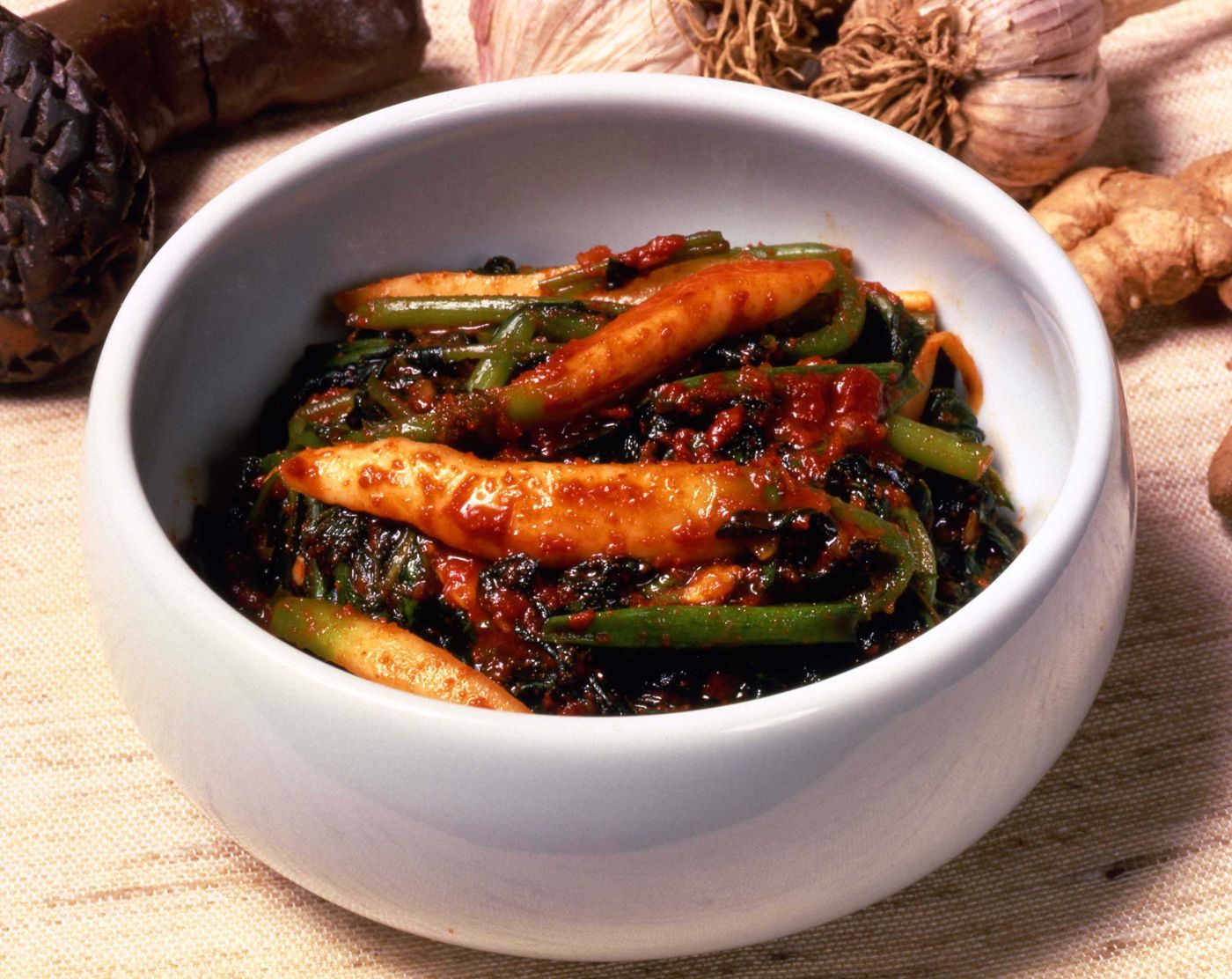
 Photo: Korea.net / Korean Culture and Information Service, CC BY-SA 2.0, via Wikimedia Commons
Kimchi 김치
Young Summer Radish Kimchi
열무김치
Romanization: yeolmu-kimchi
Tender young radish greens in a loose, lightly spicy brine thickened with flour or rice paste — the classic summer kimchi, served over noodles and barley rice.
- Serves
- 16
- Prep
- 40 min
- Cook
- 5 min
RegionNorthern Provinces (Hwanghae, Pyeongan, Hamgyeong) · Jeolla · Chungcheong · Jeonju · Jeju · Gangwon
Jump to recipeRecipe
Ingredients · Serves 16
- 1 kgYoung radish greens (yeolmu)about 2 bunches
- 60 gCoarse sea salt (cheonilyeom), non-iodizedabout ⅓ cup
- 2 tbspAll-purpose flourfor the paste
- 300 mlWaterfor the paste
- 4 Fresh red chiliesseeded and roughly chopped
- 2 tbspGochugaru (Korean chili flakes)
- 6 clovesGarlic
- 1 tspGingerchopped
- 2 tbspAnchovy fish sauce (myeolchi-aekjeot)
- 4 stalksGreen onionscut into 4 cm lengths
- 2 Fresh green chiliessliced on the diagonal
- 500 mlWaterfor the brine
- 1 tspFine sea saltfor the brine; adjust to taste
Method
Technique: Making Kimchi
Step 1: Trim the hairy root tips, scrape the small roots clean and cut the yeolmu into 4–5 cm lengths. Wash gently in several changes of water, swishing rather than rubbing: bruised yeolmu develops a grassy taste.
Step 2: Sprinkle the salt over the damp greens in layers and leave for 40–60 minutes, carefully turning once halfway, until the stems are limp. Rinse once and drain in a colander.
Step 3: Whisk the flour into 300 ml water and simmer, stirring, for 3–4 minutes into a thin, smooth paste. Cool completely.
Step 4: Blend the red chilies, gochugaru, garlic, ginger and fish sauce with a little of the cooled paste until coarsely ground. Stir this into the rest of the paste with the 500 ml water and the fine salt. The brine should taste slightly saltier than you would like the finished kimchi.
Step 5: Put the yeolmu, green onions and green chilies in a large bowl, pour over the brine and fold together lightly with your hands, without squeezing.
Step 6: Transfer to a clean jar with enough brine to just cover the greens. Leave at room temperature for 12–24 hours (less on a very hot day), until it smells pleasantly tangy, then refrigerate.
Step 7: It is best within 1–2 weeks. Serve chilled with some of its brine, over noodles or with barley rice and gochujang. Use clean utensils and discard if the greens turn slimy or mold appears.
Origin & History
Yeolmu means "young" or "tender" radish: plants pulled early for their leaves and slim stems rather than their roots. Grown quickly between rows of beans or peppers in summer, they were easy to come by, and yeolmu-kimchi became the everyday kimchi of the hot months, eaten in every region once the winter kimjang stores had run out.
Its defining trick is a starch paste. Summer radish greens are low in sugar and can taste grassy, so cooks stir in a thin paste of wheat flour or rice, or even the water left from boiling barley or noodles. The starch rounds out the flavor and feeds the lactic acid bacteria so the kimchi ripens fast — important in the days before refrigeration, when summer kimchi had to be eaten soon after it was made. A 1924 cookbook, Joseon mussang sinsik yori jebeop, already advises adding a thin flour paste so the kimchi tastes savory rather than raw.
Yeolmu-kimchi is also an ingredient as much as a side dish. Spooned over cold noodles or mixed into barley rice with gochujang, it was a favorite light meal for farmers during the busy rice season.
Key Ingredients
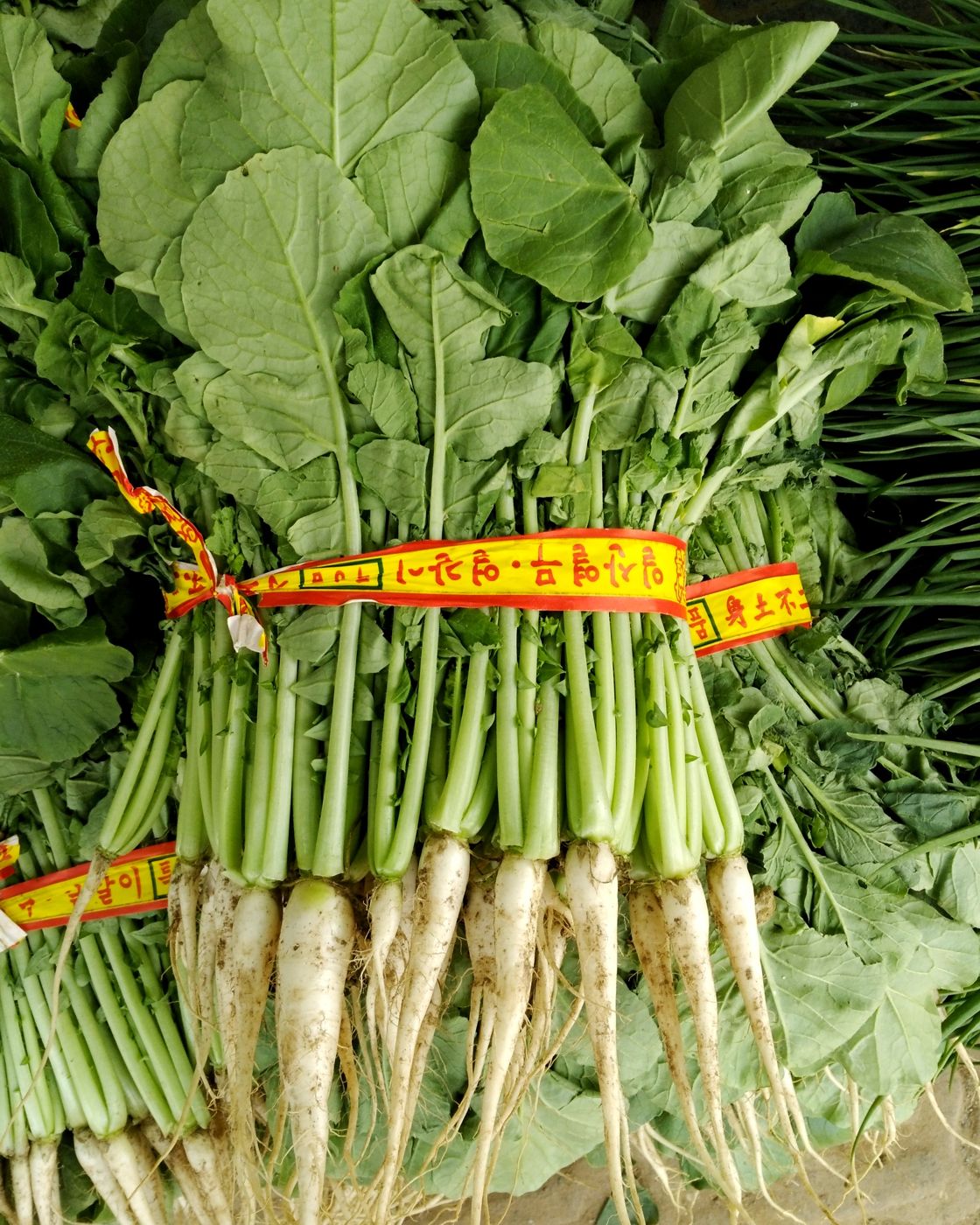 Yeolmu (young summer radish)열무Young radish plants pulled for their tender greens and thin roots. The essential summer kimchi vegetable, made into tangy yeolmu-kimchi that is spooned over cold noodles and barley rice.
 Sun-Dried Sea Salt천일염Coarse sea salt made by evaporating seawater with sun and wind in tidal-flat salt pans, most of it from Sinan County off Korea's southwest coast. It is the everyday salt for salting cabbage and making jang.
- Korean Chili Peppers (Fresh)고추Fresh Korean chili peppers, eaten green (putgochu) or red (hong-gochu): from the fiery cheongyang-gochu to the small, wrinkled, mild kkwari-gochu that is braised and stir-fried as banchan.
 Gochugaru고춧가루Korean red chili powder, made from dried red peppers ground coarse or fine. It gives kimchi, gochujang and countless banchan their color and warmth.
 Garlic마늘Used raw, minced, pickled and roasted, garlic is one of the essential aromatics of Korean food — in seasonings, marinades, kimchi and namul.
 Ginger생강Fresh ginger root, used in small amounts to brighten kimchi paste and marinades and to tame the strong smells of fish and meat.
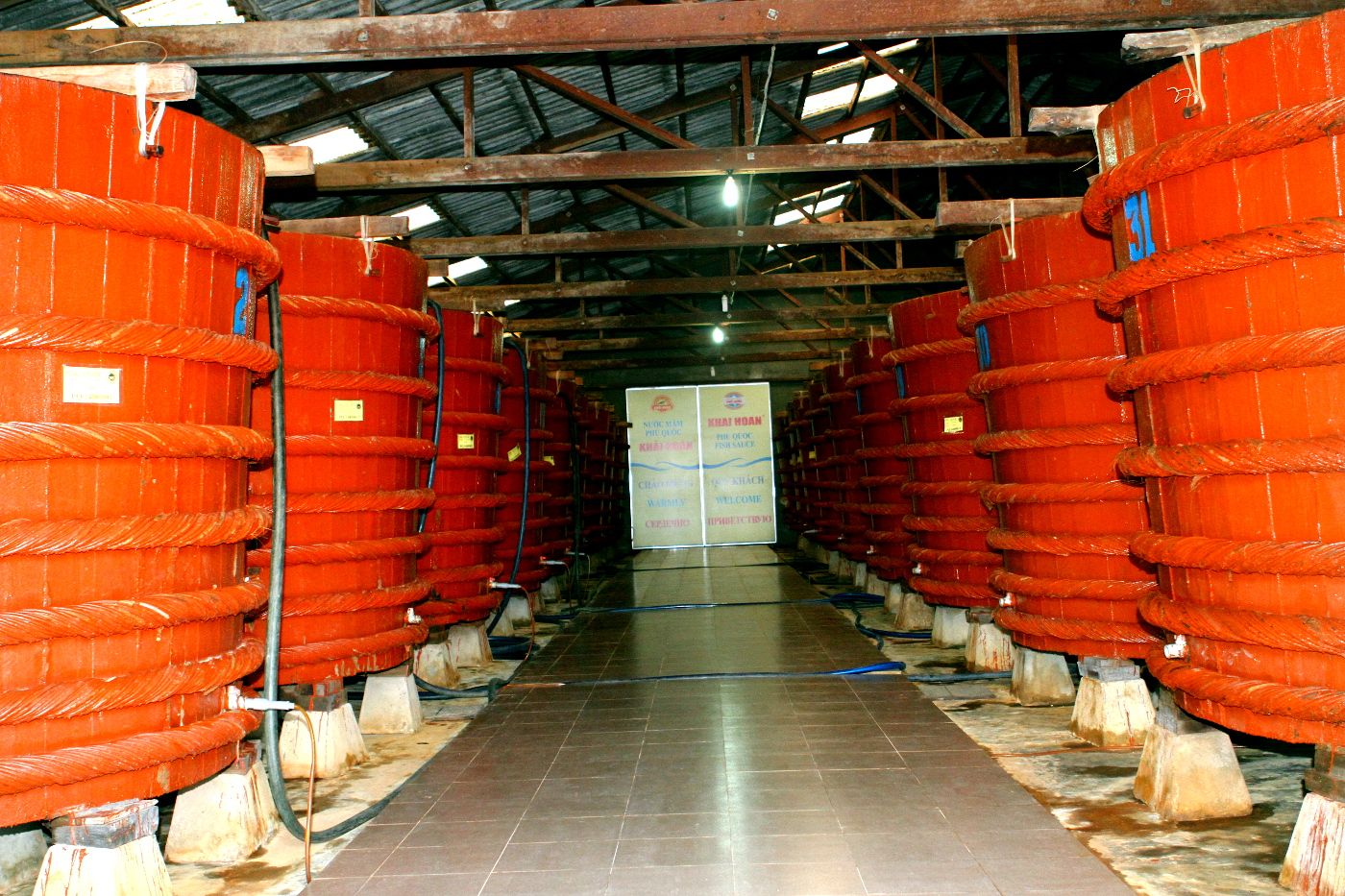 Anchovy fish sauce멸치액젓The clear amber liquid drawn from salted, fermented anchovies. A jeotgal in liquid form, it is the savory backbone of much southern-style kimchi and a quick seasoning for soups and namul.
 Green onion파Korean green onion (pa), from thick-stemmed daepa to slender scallions — chopped into nearly every seasoning sauce, soup and kimchi, and the star of pa-kimchi.
Nutrition
| Calories | 22 kcal |
|---|---|
| Protein | 1.4 g |
| Fat | 0.2 g |
| Carbohydrates | 3.5 g |
| Fiber | 1.6 g |
| Sodium | 350 mg |
Notable forVitamin K · Vitamin A (beta-carotene) · Calcium
From the Korean Food Composition Table entry “Kimchi, Yeolmukimchi, Prepared with young leafy radish” (per 100 g: 36 kcal, 583 mg sodium, 115 mg calcium, 146 µg vitamin A RAE, 152 µg vitamin K), scaled to the serving size. Homemade batches vary with salting and brine. Actual values vary with ingredients, portion size and preparation.
Health Benefits
- A leafy green kimchi: in the composition table, a serving supplies most of a day's vitamin K, along with beta-carotene (vitamin A) and calcium — nutrients that come from the radish leaves.
- Light summer eating: low in calories and served cold, it adds vegetables and brightness to simple noodle and grain meals.
- Fermented vegetables: the starch paste helps naturally occurring lactic acid bacteria get to work quickly; research on the health effects of live-culture vegetables is ongoing.
Regional Variations
- Northern provinces: made as a water kimchi (yeolmu-mul-kimchi) with plenty of brine.
- Southern regions: more chili and garlic; Jeolla cooks add a wider range of vegetables, and South Jeolla seasons with anchovy jeotgal while Chungcheong uses salted shrimp.
- Jeonju: a distinctive style grinds seeded fresh red chilies with ginger, garlic and cooked rice in a stone mortar into a thick, porridge-like seasoning, finished with chili threads and sesame seeds.
- Jeju: where young radish is called chomagi, the starch comes from ground barley rice or barley cooking water.
- Gangwon: boiled potato can stand in for the usual flour paste.
Pairings
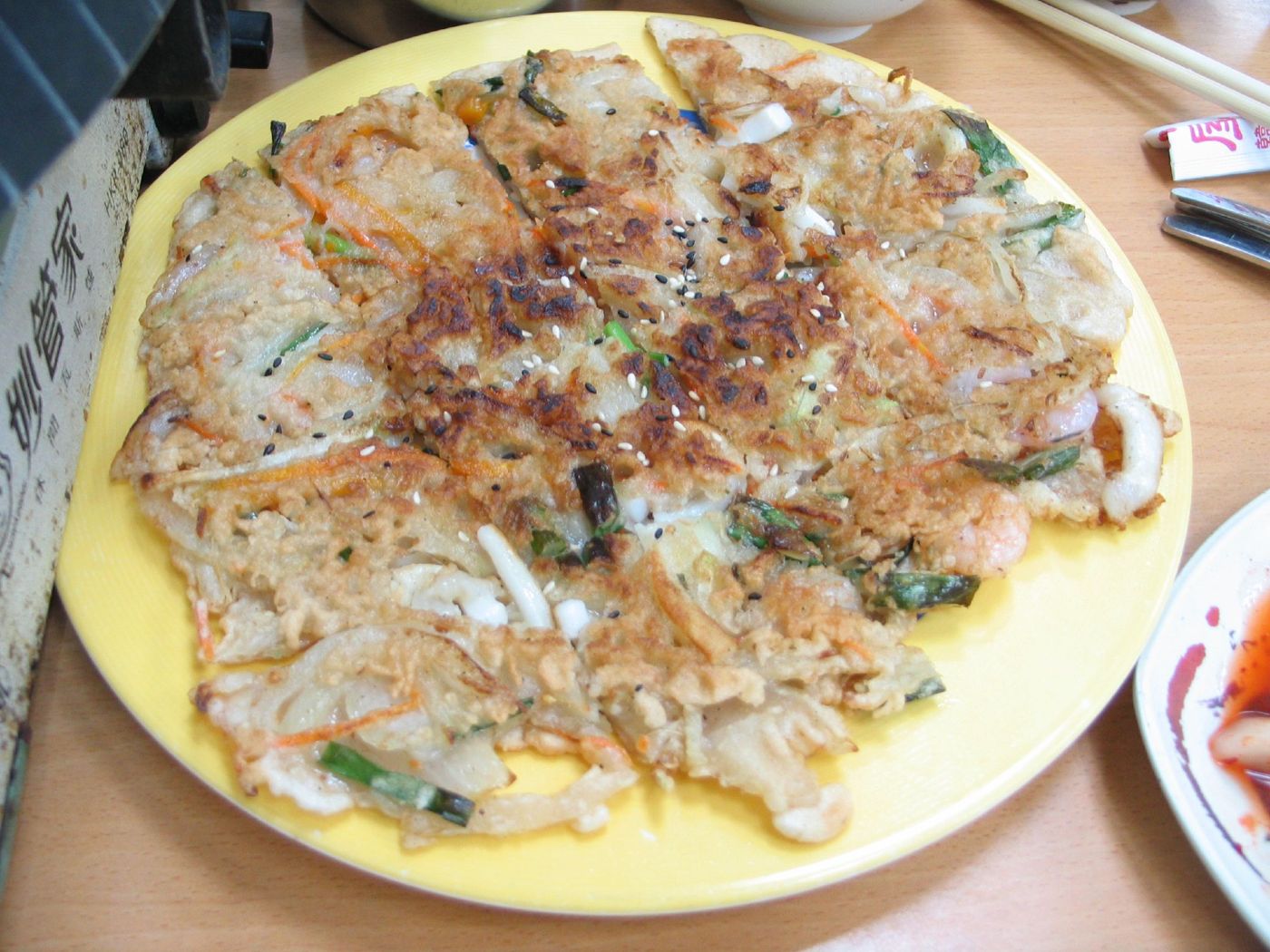 Haemul Pajeon (Seafood and Green Onion Pancake)해물파전Whole green onions bound in a light batter with squid, shrimp and clams, pan-fried until crisp — a generous jeon for sharing, closely tied to Busan's Dongnae.
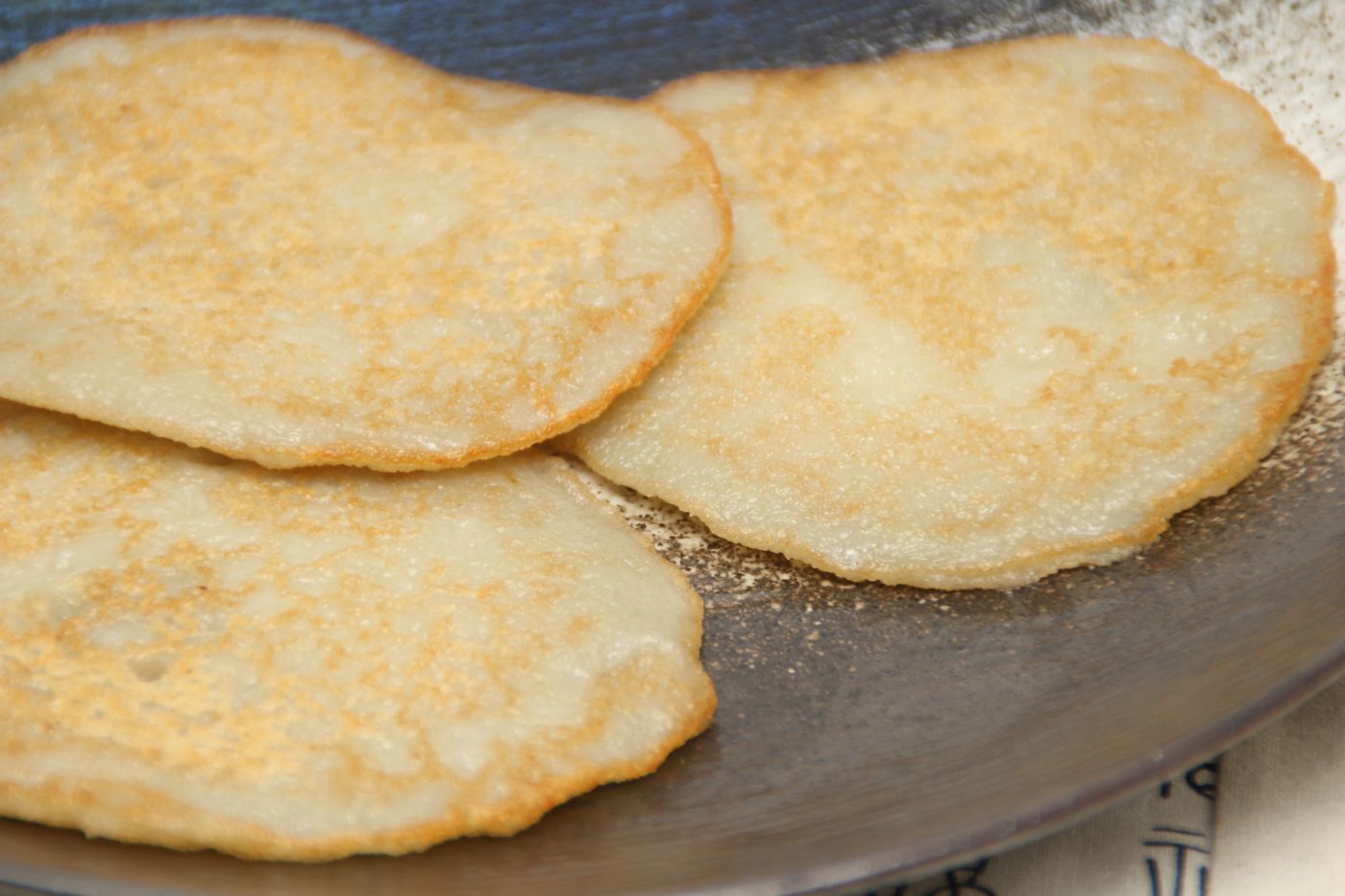 Gamja Jeon (Potato Pancake)감자전Finely grated potato, bound only by its own starch, pan-fried into crisp-edged, chewy rounds — a simple Gangwon-style jeon.
 Gyeran Jjim (Steamed Egg)계란찜Eggs whisked with water or broth and gently steamed into a silky, savory custard, often seasoned with salted shrimp and served bubbling hot.
 Kongnamul Muchim콩나물무침Soybean sprouts cooked under a lid until just tender, then tossed with garlic, green onion and sesame oil — crisp, nutty and on tables across Korea.
Sources
- 01Korean Food Composition Table: Kimchi, Yeolmukimchi, Prepared with young leafy radish — National Institute of Agricultural Sciences
- 02열무김치 - 한국민족문화대백과사전 (Encyclopedia of Korean Culture)
- 03열무김치 - 한국민속대백과사전 (Encyclopedia of Korean Folk Culture)
- 04Is my kimchi safe to eat? - Oregon State University Extension Service
Last updated