Gui · Grilled 구이
Hwangtae Gui (Grilled Seasoned Dried Pollock)
황태구이
Romanization: hwangtae-gui
Winter-cured dried pollock softened, opened flat and grilled with a glossy gochujang glaze — tender, savory and a specialty of Gangwon's mountain drying yards.
- Serves
- 4
- Prep
- 30 min
- Cook
- 12 min
RegionGangwon
Jump to recipeRecipe
Ingredients · Serves 4
- 2 Hwangtae (whole split dried pollock)about 120 g dried
- 1 tspSoy saucefor pre-seasoning
- 2 tspToasted sesame oilfor pre-seasoning
- 2 tbspGochujang
- 1 tspGochugaru
- 1 tspSoy saucefor the glaze
- 1 tbspMulyeot (rice or corn syrup)
- 1 tspSugar
- 2 tspGarlicminced
- ½ tspGingerminced
- 1 tbspGreen onionfinely chopped
- 1 tspToasted sesame oilfor the glaze
- 1 tbspWater
- 1 tspNeutral oilfor the pan
- 1 tspToasted sesame seeds
Method
Technique: Grilling Gui, Yangnyeom: Seasoning Basics
Step 1: Cut off the heads, tails and fins with kitchen scissors. Soak the hwangtae in cold water for 10–20 minutes, just until pliable, then press firmly between towels to remove the water.
Step 2: Pull out any remaining bones. Lay the fish skin side up and score the skin with shallow diagonal cuts every 2 cm so it doesn't curl; cut each fish into 2 or 3 pieces.
Step 3: Brush both sides with the pre-seasoning soy sauce and sesame oil and leave 10 minutes.
Step 4: Mix the gochujang, gochugaru, soy sauce, syrup, sugar, garlic, ginger, green onion, sesame oil and water into a smooth glaze.
Step 5: Heat a lightly oiled pan over medium-low heat and cook the fish flesh side down for 2 minutes, then skin side for 2 minutes, until warmed through.
Step 6: Brush the glaze generously over the flesh side and cook 2–3 minutes more on each side, watching closely, until the glaze bubbles and just begins to char. (Or grill on a rack over charcoal.)
Step 7: Sprinkle with sesame seeds and serve hot.
Origin & History
Hwangtae is Alaska pollock dried the slow, cold way. The Encyclopedia of Korean Folk Culture explains that gutted fish are hung on wooden racks (deokjang) in midwinter and left for 25 days or more, freezing at night and thawing by day more than twenty times. The process needs daytime highs of only 2–3 °C and nights around −20 °C; it leaves the flesh soft, spongy and yellow — hence hwang, "yellow" — rather than dark and rock-hard like ordinary bugeo, which dries in about ten days.
The folk-culture encyclopedia traces hwangtae drying to yards set up around Hamheung in Hamgyeong Province in the 1930s. After the Korean War, refugees from Hamgyeong who had run drying yards at home resettled near Sokcho and Gangneung and looked inland for the right climate: fish landed at Sokcho went to Yongdae-ri in Inje, and fish from Gangneung to Hoenggye-ri in Pyeongchang. More than 90% of Korea's domestic hwangtae still comes from those two counties, and the Encyclopedia of Korean Culture notes that Yongdae-ri hwangtae is famous nationwide and that Inje holds a hwangtae festival. Since pollock all but disappeared from Korean waters in the 2000s, the yards have used imported Russian fish, and much of the hwangtae on the market is now dried in China.
Hwangtae-gui is the signature dish of the drying-yard towns. The National Institute of Korean Language defines it as hwangtae with head and tail removed, scored and opened flat, seasoned and grilled on a gridiron; the dictionary records the parallel bugeo-gui, made from ordinary dried pollock. The folk-culture encyclopedia notes that dried pollock (bugeo) is a standard fish offering on ancestral-rite tables in many regions.
Key Ingredients
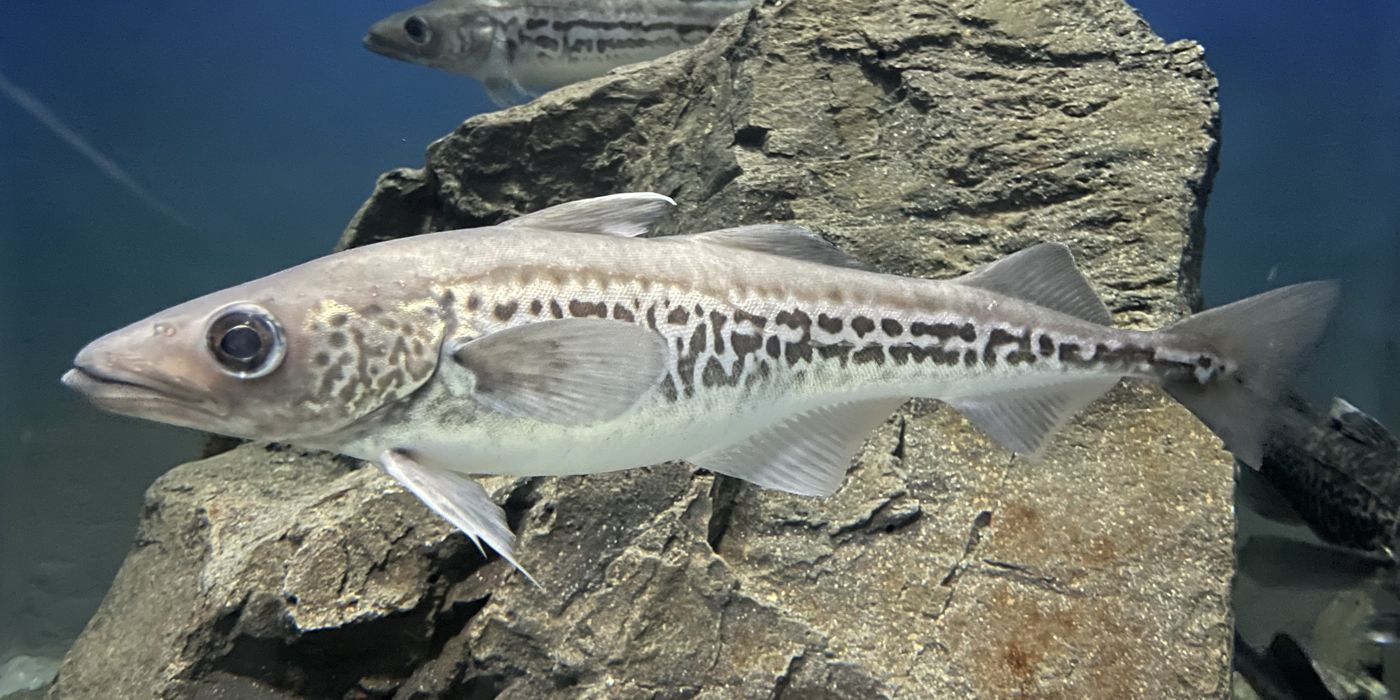 Alaska pollock (myeongtae)명태A lean, mild cold-water fish that Koreans know by a dozen names, depending on how it has been frozen, dried or salted. Dried bugeo simmers into a clear hangover soup, and its roe becomes myeongnan-jeot.
 Soy sauce간장Korean soy sauce, in two main kitchen forms: pale, salty guk-ganjang (soup soy sauce) brewed the traditional way from meju, and darker, sweeter jin-ganjang for braises and marinades.
- Gochujang고추장Fermented red chili paste — sweet, savory and hot. Made from meju powder, glutinous rice, malt and gochugaru, it is a later addition to Korea's family of jang.
 Gochugaru고춧가루Korean red chili powder, made from dried red peppers ground coarse or fine. It gives kimchi, gochujang and countless banchan their color and warmth.
 Korean grain syrup물엿A clear, glossy syrup used to sweeten and glaze braised and stir-fried banchan. Its traditional relative, jocheong, is a darker malt syrup made by slowly boiling down saccharified rice.
 Garlic마늘Used raw, minced, pickled and roasted, garlic is one of the essential aromatics of Korean food — in seasonings, marinades, kimchi and namul.
 Ginger생강Fresh ginger root, used in small amounts to brighten kimchi paste and marinades and to tame the strong smells of fish and meat.
 Green onion파Korean green onion (pa), from thick-stemmed daepa to slender scallions — chopped into nearly every seasoning sauce, soup and kimchi, and the star of pa-kimchi.
 Sesame참깨Toasted sesame seeds and sesame oil (chamgireum) finish countless Korean dishes, adding a nutty aroma and gloss.
Nutrition
| Calories | ~195 kcal |
|---|---|
| Protein | ~24.7 g |
| Fat | ~5.2 g |
| Carbohydrates | ~12.4 g |
| Fiber | ~0.9 g |
| Sodium | ~487 mg |
Notable forProtein · Potassium · Calcium
Hwangtae uses the Korean Food Composition Table entry “Alaska pollock, Frozen and dried, Strip” (명태, 황태, 포, 말린것 — hwangtae fillet; per 100 g: 349 kcal, 79 g protein, 438 mg sodium, 354 mg calcium, 1,068 mg potassium). That entry does not report fiber; fish has none, so fiber comes only from the seasonings. Gochujang, gochugaru, soy sauce and mulyeot use Korean table values; other seasonings use USDA FoodData Central. Totals divided by four. Pre-seasoned or salted hwangtae products would add more sodium. Actual values vary with ingredients, portion size and preparation.
Health Benefits
- Concentrated lean protein: dried pollock is close to 80% protein by weight with almost no fat, so a modest serving supplies around a quarter of daily protein needs.
- Minerals: the Korean Food Composition Table lists notable calcium and potassium in dried hwangtae.
- Soft texture: the freeze-thaw cure leaves hwangtae more tender than bugeo, which makes it easier to chew.
Regional Variations
- Gochujang glaze: the best-known style, brushed with sweet-spicy gochujang sauce and grilled until lightly charred.
- Soy glaze (ganjang-gui): a non-spicy version with soy sauce, syrup, garlic and sesame oil, popular for children and elders.
- Hwangtae-haejangguk: in the same drying-yard towns, hwangtae also goes into a restorative soup; see haejangguk.
- Bugeo-gui: the same treatment applied to harder, darker bugeo, which needs longer soaking.
Pairings
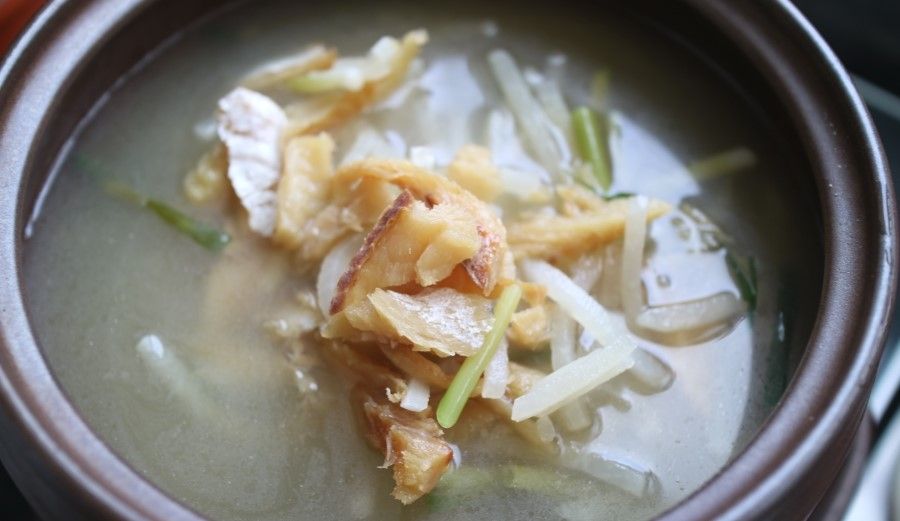 Bugeo Guk (Dried Pollock Soup)북엇국Shredded dried pollock sautéed in sesame oil and simmered into a milky, savory broth with radish, tofu and a ribbon of egg — Korea's favorite morning-after soup.
 Kongnamul Muchim콩나물무침Soybean sprouts cooked under a lid until just tender, then tossed with garlic, green onion and sesame oil — crisp, nutty and on tables across Korea.
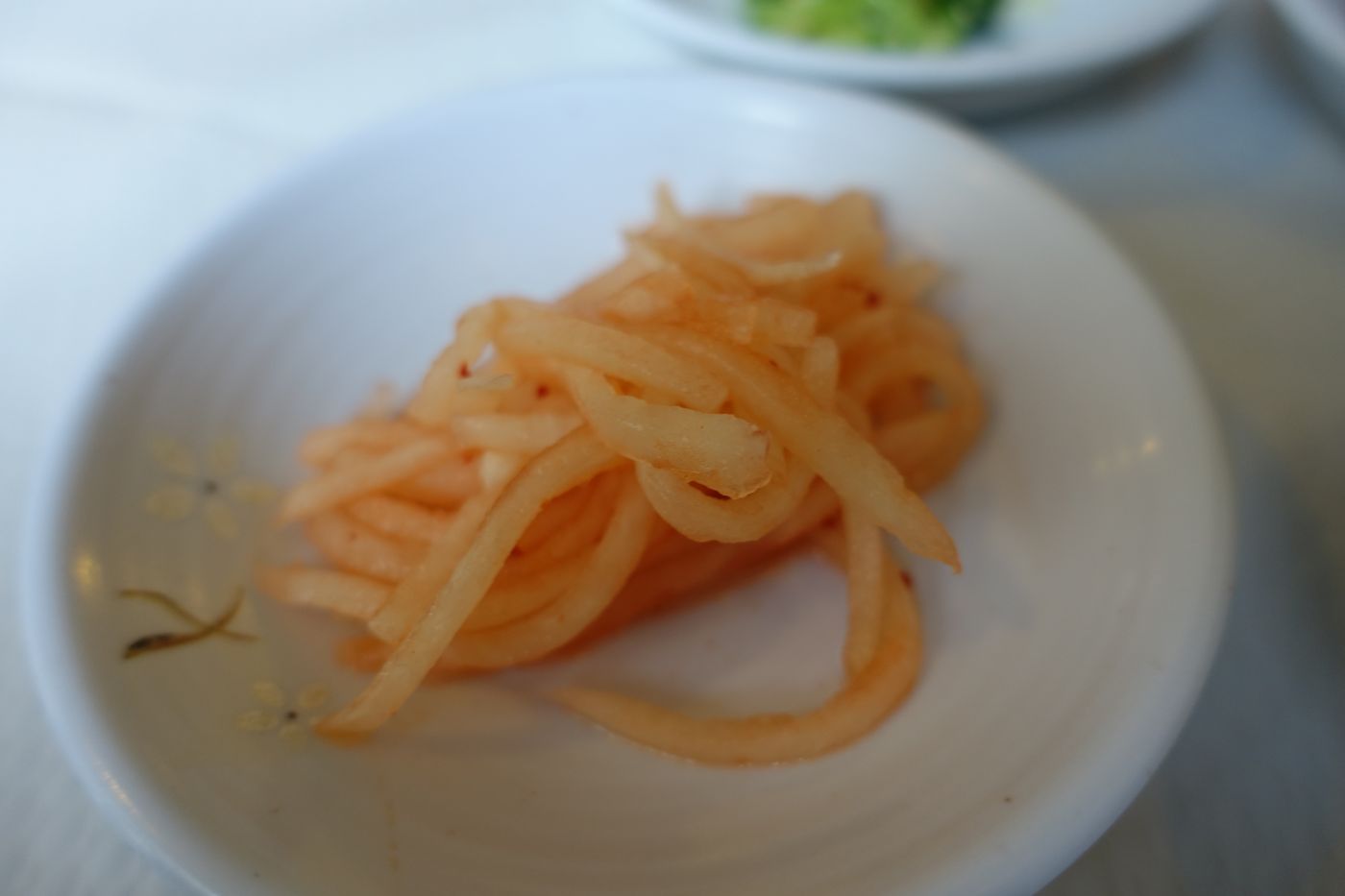 Musaengchae무생채Fine matchsticks of Korean radish dressed raw with chili flakes, a little vinegar and sugar — crisp, sweet-sharp and best made just before the meal.
Sources
- 01황태 (Hwangtae) — Encyclopedia of Korean Folk Culture (National Folk Museum of Korea)
- 02북어 (Bugeo, dried pollock) — Encyclopedia of Korean Folk Culture (National Folk Museum of Korea)
- 03인제군 (Inje County) — Encyclopedia of Korean Culture
- 04황태구이 (Hwangtae-gui) — Urimalsaem (National Institute of Korean Language)
- 05북어구이 (Bugeo-gui) — Urimalsaem (National Institute of Korean Language)
- 06Korean Food Composition Table: Alaska pollock, Frozen and dried, Strip — National Institute of Agricultural Sciences
Last updated