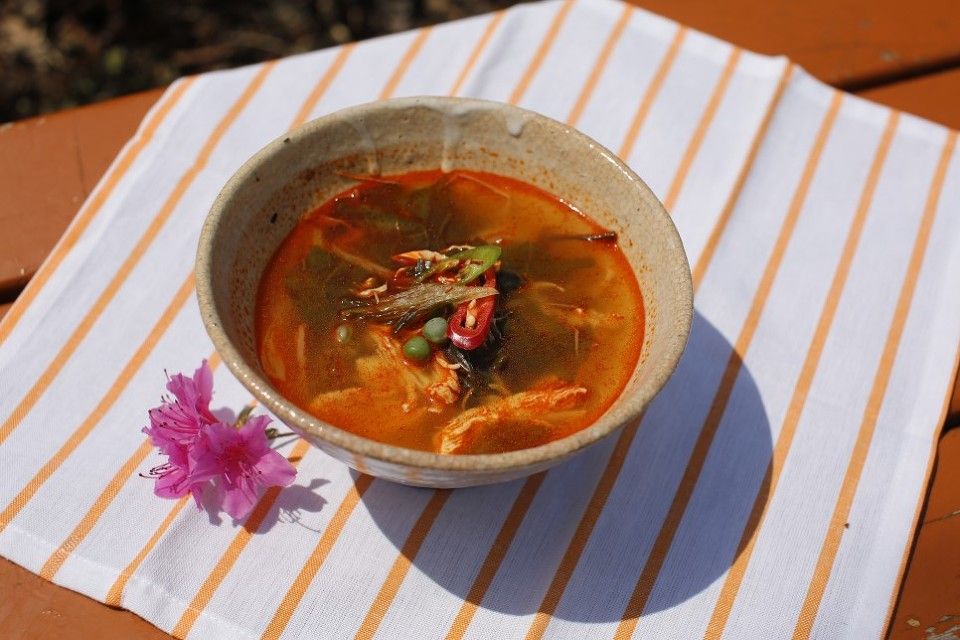
 Photo: Dr 방원장, CC BY 4.0, via Wikimedia Commons
Guk & Tang · Soups 국·탕
Dakgaejang (Spicy Chicken Soup)
닭개장
Romanization: dakgaejang
Shredded chicken simmered with bracken, taro stems and plenty of green onion in a fiery chili-oil broth — the chicken cousin of yukgaejang.
- Serves
- 4
- Prep
- 30 min
- Cook
- 70 min
RegionGyeongsang · Seoul & Gyeonggi
Jump to recipeRecipe
Ingredients · Serves 4
- 1 smallWhole chickenabout 1.1 kg, or 1 kg bone-in thighs and legs
- 2.5 lWater
- 1 Onionhalved, for the broth
- 6 clovesGarlic4 whole for the broth, 2 minced
- 1 thumbGingersliced, for the broth
- 2 tbspRice wine (cheongju) or mirim
- 3 stalksLarge green onions (daepa)cut into 8 cm lengths, thick parts halved
- 150 gRehydrated bracken (gosari)cut into 8 cm lengths
- 100 gRehydrated taro stems (torandae)optional, cut into 8 cm lengths
- 150 gMung bean sprouts (sukju)optional
- 3 tbspGochugaru
- 2 tbspNeutral oil
- 2 tbspSoup soy sauce (guk-ganjang)plus salt to taste
- 1 tspToasted sesame oil
- ¼ tspBlack pepper
Method
Technique: Making Guk and Jjigae, Making Yuksu: Anchovy-Kelp Stock, Drying and Rehydrating Vegetables
Step 1: Put the chicken, water, onion, whole garlic, ginger and rice wine in a large pot. Bring to a boil, skim, then simmer 45 minutes, until the meat comes easily off the bone.
Step 2: Lift out the chicken and let it cool slightly. Strain the broth and skim off some of the fat. Pull the meat into thick shreds, discarding skin and bones.
Step 3: Blanch the green onion pieces for 30 seconds and drain. If the bracken or taro stems are tough, simmer them in water for 10 minutes and drain.
Step 4: In the empty pot, warm the oil over low heat, add the gochugaru and stir for 30 seconds until fragrant and red — do not let it scorch. Add the chicken, bracken, taro stems, green onion, minced garlic, soup soy sauce, sesame oil and pepper, and stir-fry 2 minutes.
Step 5: Pour in about 2 liters of the broth and simmer 20 minutes, adding the bean sprouts for the last 5 minutes.
Step 6: Season with salt, and serve very hot with rice. Check that the chicken in step 1 reached 165 °F (74 °C).
Origin & History
Dakgaejang takes its name from the way it is cooked rather than from its meat. In an entry written by the food historian Joo Young-ha, the Encyclopedia of Korean Folk Culture explains that gaejang-guk was originally a dog-meat soup; people who would not eat dog made the same soup with beef and called it yukgaejang, which appears in late-nineteenth-century manuscripts such as Siui jeonseo and Eumsik bangmun as beef and offal torn or cut into pieces and simmered with lightly blanched green onion and water dropwort. Swap in chicken (dak) and the result is dakgaejang.
It is a modern dish. The folk encyclopedia dates written records to the 1960s onward and says the dish is thought to have come out of homes and restaurants in North Gyeongsang Province in that decade — fitting, since yukgaejang itself is believed to have developed in the northern part of the same province. As poultry farming grew, cheap chicken replaced dog or beef. From the 1980s, the encyclopedia adds, low-cost Korean restaurants in Seoul made it a menu staple.
A 1988 newspaper recipe quoted by the folk encyclopedia captures the standard method that most cooks still follow: boil a chicken with onion and rice wine, shred the meat and strain the broth; blanch long pieces of green onion and boil bracken and taro stems; fry gochugaru in oil with the chicken and vegetables; then simmer it all in the broth and season with salt.
Key Ingredients
- Chicken (dak)닭Chicken appears in Korea's founding legends and on its summer tables: young birds simmered whole with ginseng in samgyetang, chili-marinated pieces stir-fried as Chuncheon's dakgalbi, and the fried chicken of modern takeout culture.
- Bracken fern shoots고사리The young, tightly curled shoots of bracken fern, picked in spring and almost always sold blanched and dried. Once soaked and thoroughly cooked, gosari turns tender and earthy, and it is a fixture of ancestral-rite tables, bibimbap and yukgaejang.
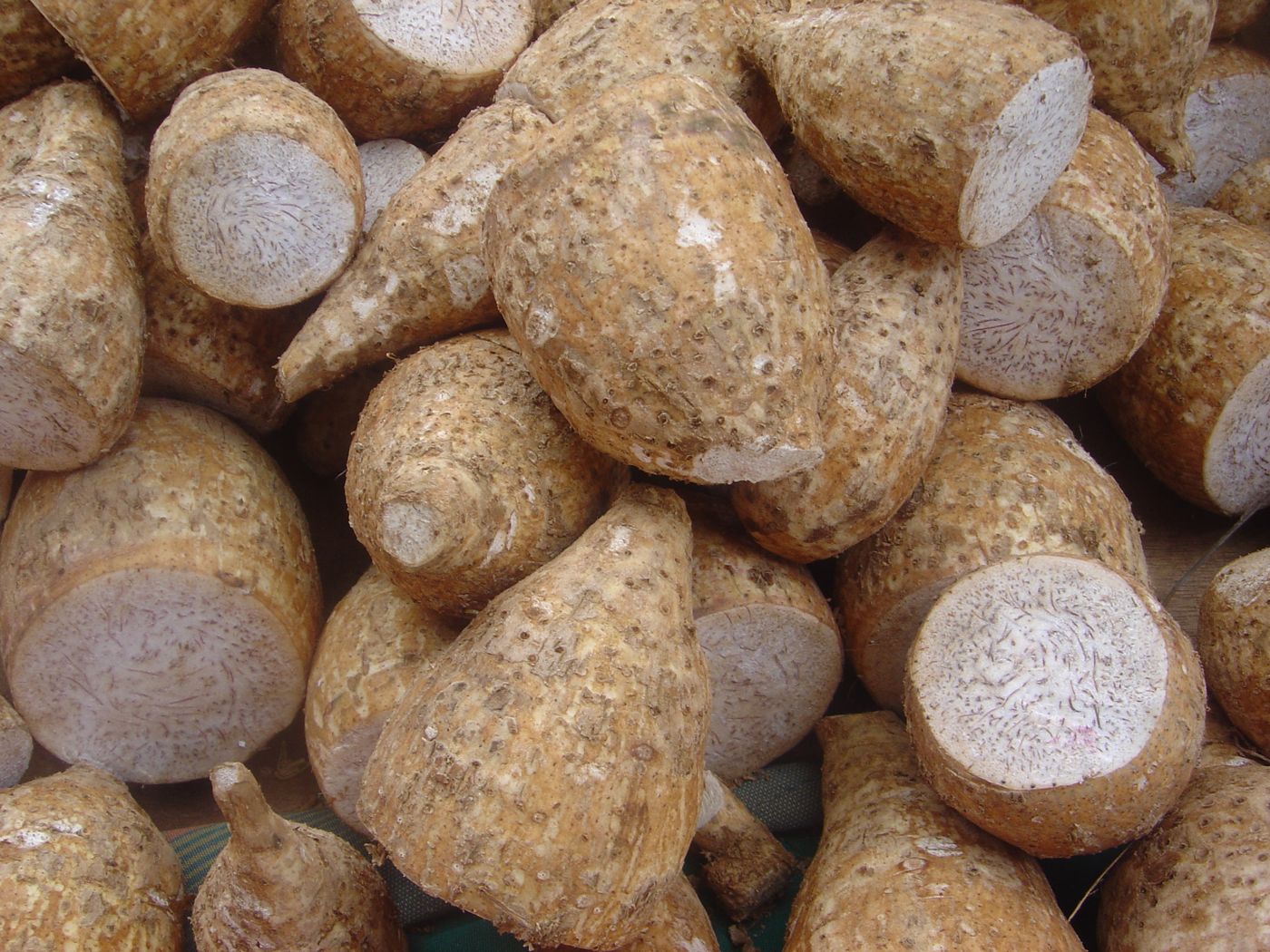 Toran (taro)토란Small, hairy brown corms with slippery white flesh, harvested just in time for Chuseok. Simmered in clear beef broth as toran-guk, they are a defining taste of the autumn harvest festival, especially in Seoul and Gyeonggi.
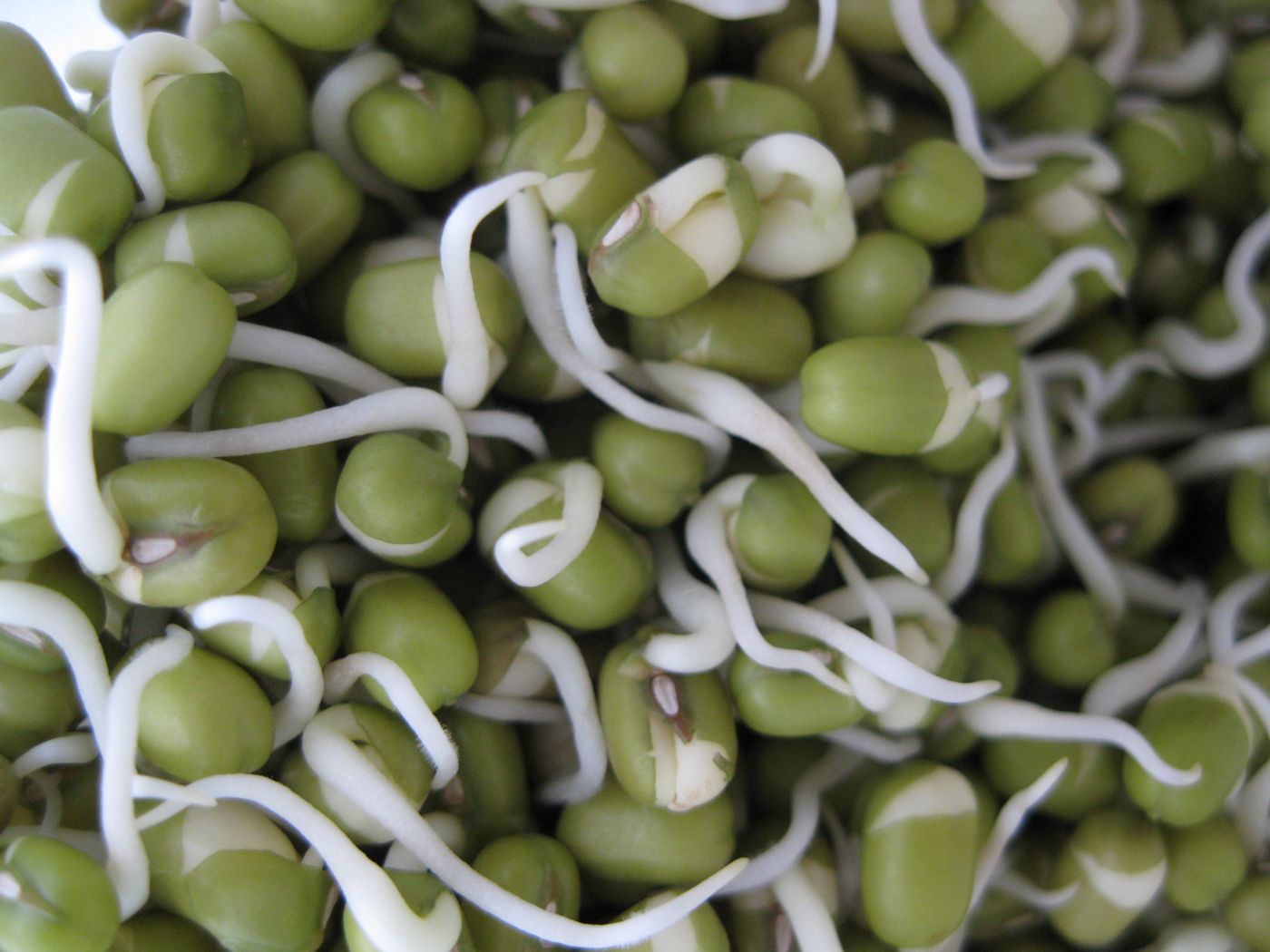 Mung bean sprouts숙주나물Short, plump, delicate sprouts grown from mung beans. Quickly blanched and seasoned as sukju-namul, they are milder and more tender than soybean sprouts.
 Green onion파Korean green onion (pa), from thick-stemmed daepa to slender scallions — chopped into nearly every seasoning sauce, soup and kimchi, and the star of pa-kimchi.
 Gochugaru고춧가루Korean red chili powder, made from dried red peppers ground coarse or fine. It gives kimchi, gochujang and countless banchan their color and warmth.
 Garlic마늘Used raw, minced, pickled and roasted, garlic is one of the essential aromatics of Korean food — in seasonings, marinades, kimchi and namul.
 Ginger생강Fresh ginger root, used in small amounts to brighten kimchi paste and marinades and to tame the strong smells of fish and meat.
 Yangpa (onion)양파The bulb onion, literally the "Western scallion." A latecomer to Korea, it is now everywhere: sweetening stir-fries and braises, pickled in soy sauce as yangpa-jangajji, and served raw beside grilled meat.
 Soy sauce간장Korean soy sauce, in two main kitchen forms: pale, salty guk-ganjang (soup soy sauce) brewed the traditional way from meju, and darker, sweeter jin-ganjang for braises and marinades.
 Sesame참깨Toasted sesame seeds and sesame oil (chamgireum) finish countless Korean dishes, adding a nutty aroma and gloss.
Nutrition
| Calories | ~140 kcal |
|---|---|
| Protein | ~19.2 g |
| Fat | ~2.9 g |
| Carbohydrates | ~9.9 g |
| Fiber | ~4.9 g |
| Sodium | ~1169 mg |
Notable forProtein · Folate · Potassium · Dietary fiber
Scaled from the MFDS analysis of home-style chicken yukgaejang (육개장_닭고기; per 100 g: 20 kcal, 2.74 g protein, 0.42 g fat, 1.41 g carbohydrate, 0.7 g fiber, 167 mg sodium, 106 mg potassium, 17.5 µg DFE folate) to the database's large 700 g serving, giving about 740 mg potassium and 120 µg folate. The fiber is plausible given the bracken, taro stems and green onion. MFDS's calculated value for a restaurant bowl (118 mg sodium per 100 ml, 420 ml serving) is lower, at about 500 mg sodium. Actual values vary with ingredients, portion size and preparation.
Health Benefits
- High in protein and low in fat by the MFDS analysis, since the chicken is shredded and the broth skimmed.
- Bracken, taro stems, sprouts and green onion make it a vegetable-rich soup, with a good share of fiber, folate and potassium.
- Its heat follows the summer custom of iyeol chiyeol, fighting heat with heat; see capsaicin and spicy food.
Regional Variations
- North Gyeongsang home style: the folk encyclopedia describes shredded chicken with seasoned dried napa-cabbage leaves (baechu-siraegi) and chopped green onion, salted and simmered.
- Chili-oil style: the method in the 1988 newspaper recipe — chicken, taro stems, bracken and blanched green onion fried with gochugaru before simmering in the strained broth.
- Relatives: beef yukgaejang, the model for the dish, and the clear samgyetang and baeksuk — all eaten in the summer dog days in the spirit of fighting heat with heat; see boknal and summer foods.
Pairings
 Cubed Radish Kimchi깍두기Korean radish cut into neat cubes and tossed with chili, garlic and salted shrimp — crunchy, juicy and a classic partner to rich soups.
 Kongnamul Muchim콩나물무침Soybean sprouts cooked under a lid until just tender, then tossed with garlic, green onion and sesame oil — crisp, nutty and on tables across Korea.
 Gyeran Mari (Rolled Omelet)계란말이Beaten egg cooked in thin layers and rolled into a soft, striped log, then sliced — a gentle, everyday banchan and a lunchbox classic.
Sources
- 01닭개장 (Dakgaejang) — Encyclopedia of Korean Folk Culture (한국의식주생활사전)
- 02육개장 (Yukgaejang) — Encyclopedia of Korean Culture
- 03육개장_닭고기 (Chicken yukgaejang, home-style, analyzed) — MFDS K-FIND food composition database
- 04Safe Food Handling — U.S. Food and Drug Administration
- 05Trends in sodium intake and major contributing food groups and dishes in Korea: KNHANES 2013–2017 (Jeong et al., Nutrition Research and Practice, 2021)
- 06Global Perspectives on Allergen Labeling: Harmonization of Regulations and Practices — Allergy, Asthma & Immunology Research, 2025
Last updated