 Photo: lazy fri13th, CC BY 2.0, via Wikimedia Commons
Jjim · Steamed 찜
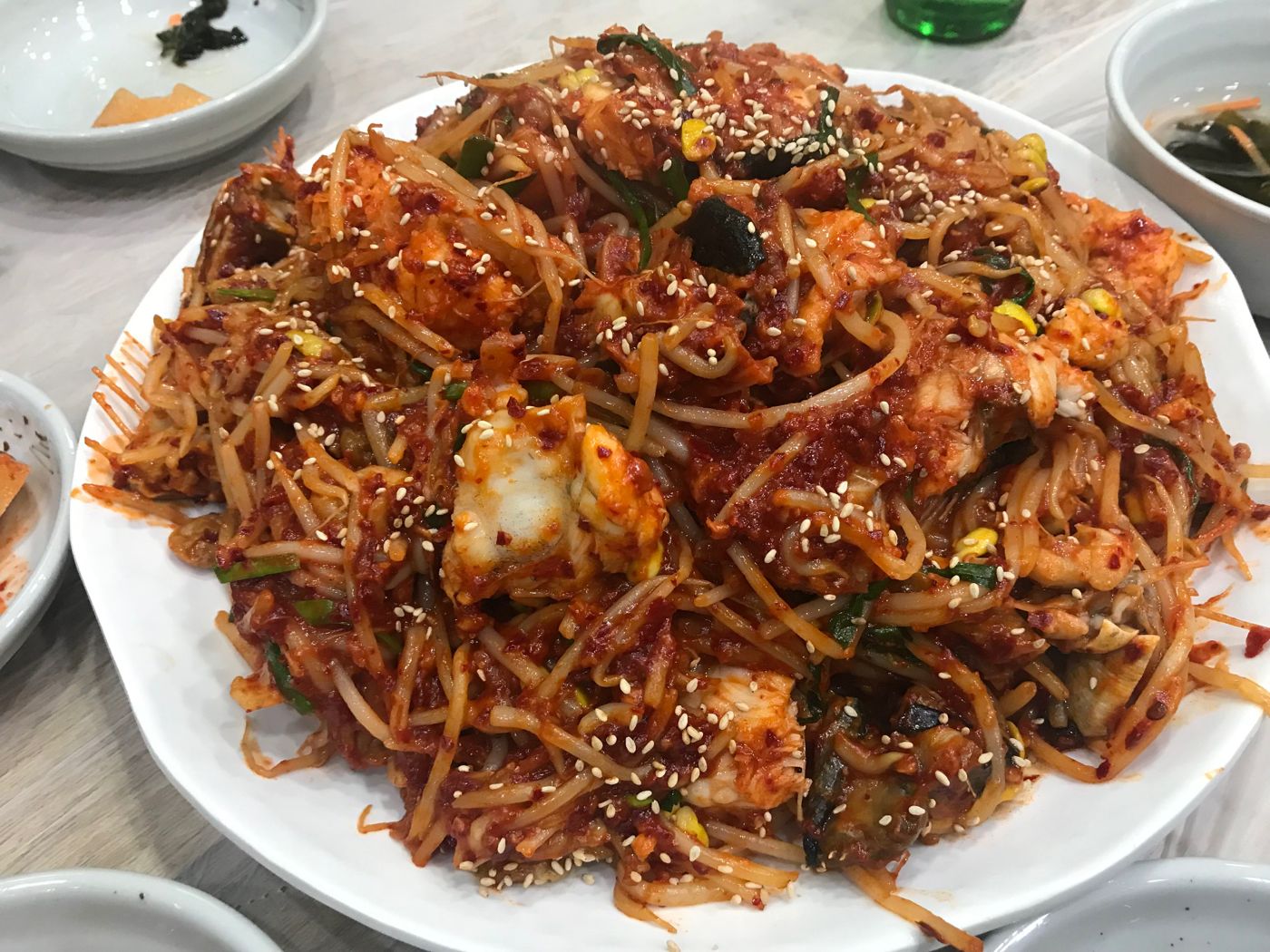
Agu-jjim (Spicy Braised Monkfish)
아귀찜
Romanization: agwi-jjim
Monkfish braised with a mountain of soybean sprouts and minari in a fiery chili sauce thickened with starch — a Masan specialty now eaten across Korea.
- Serves
- 4
- Prep
- 30 min
- Cook
- 25 min
RegionGyeongsang · Busan
Jump to recipeRecipe
Ingredients · Serves 4
- 800 gFresh monkfish, cleaned and cut into chunksbone-in, about 500 g edible flesh; liver optional
- 400 gSoybean sproutsrinsed, tails trimmed if you like
- 100 gMinari (water dropwort)cut into 5 cm lengths
- 2 stalksGreen onioncut into lengths
- 300 mlAnchovy-kelp stock or water
- 1 tbspDoenjangdissolved in the stock, Masan style
- 4 tbspGochugaru (fine)
- 2 tbspSoy sauce
- 6 clovesGarlicminced
- 1 tspGingerminced
- 1 tspSugar
- 2 tbspPotato starch or cornstarchmixed with 4 tbsp water
- 1 tbspToasted sesame oil
- 1 tbspToasted sesame seeds
- 1 tbspPerilla seed powderoptional
Method
Technique: Steaming and Jjim
Step 1: Rinse the monkfish pieces in salted water and drain. Mix the gochugaru, soy sauce, garlic, ginger and sugar with 3 tbsp of the stock to make a paste.
Step 2: Bring the remaining stock and the doenjang to a boil in a wide, shallow pan. Add the monkfish, cover and simmer 7–8 minutes, until the flesh turns opaque.
Step 3: Pile the soybean sprouts over the fish, cover and cook 5 minutes without lifting the lid (this keeps the sprouts from smelling raw).
Step 4: Add the chili paste and turn everything over with tongs until coated. Add the green onion and minari and toss 1 minute.
Step 5: Stir the starch slurry, drizzle it in while stirring, and cook 1 minute until the sauce clings and turns glossy. The fish should flake easily (145 °F / 63 °C).
Step 6: Finish with sesame oil, sesame seeds and perilla powder, and serve on a large platter with rice.
Origin & History
Agwi-jjim is better known by its Gyeongsang dialect name, agu-jjim. The Encyclopedia of Korean Culture defines it as a local dish of Masan in South Gyeongsang. Its recipe starts with dried monkfish cut into short pieces and soaked briefly, simmered in strained doenjang water; soybean sprouts are piled on top and steamed, then chili powder, minari, green onion, garlic and a starch slurry are added and everything is turned together. The encyclopedia warns against too much liquid and notes that the dish, hot and spicy enough to make diners sweat, was valued for warming the body in winter.
The Korean Food Promotion Institute and the Encyclopedia of Korean Folk Culture both tell the same origin story. Fishermen considered the big-mouthed monkfish unlucky and often threw it back — one nickname, multeombeong, imitates the splash. A Masan fisherman once brought one to an old woman who sold eel soup, who discarded it for its looks; after the fish had frozen and thawed through the winter until it dried, she cooked it the way she cooked dried pollack (bugeo-jjim), and the result became Masan agu-jjim. The institute places the story in Masan's Odong-dong, says the dish became widely known in the 1960s, and suggests soybean sprouts and minari were added from about the mid-1960s.
Monkfish itself was known much earlier: the institute notes that the Joseon-era fish survey Jasan eobo records it, with the popular name agueo. But it observes that the braise first appears in writing only in a 1984 government survey of local foods. Masan's version still uses fish dried in the cold winter wind, while Busan and most restaurants elsewhere use fresh monkfish. See steaming jjim and capsaicin and spicy food.
Key Ingredients
- Monkfish (agwi)아귀A wide-mouthed, scaleless anglerfish with firm, springy flesh and soft, gelatinous skin. It is the star of agu-jjim, the fiery braise with bean sprouts and minari from the port city of Masan.
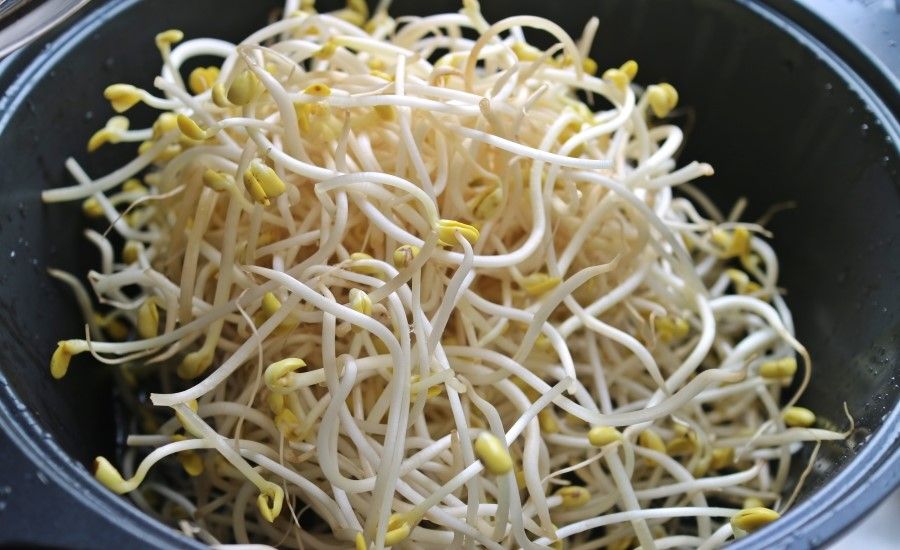 Soybean sprouts콩나물Soybeans sprouted in the dark until they grow long, pale stems topped with a yellow bean. A staple of everyday Korean cooking in kongnamul-muchim, clear sprout soup and sprout rice.
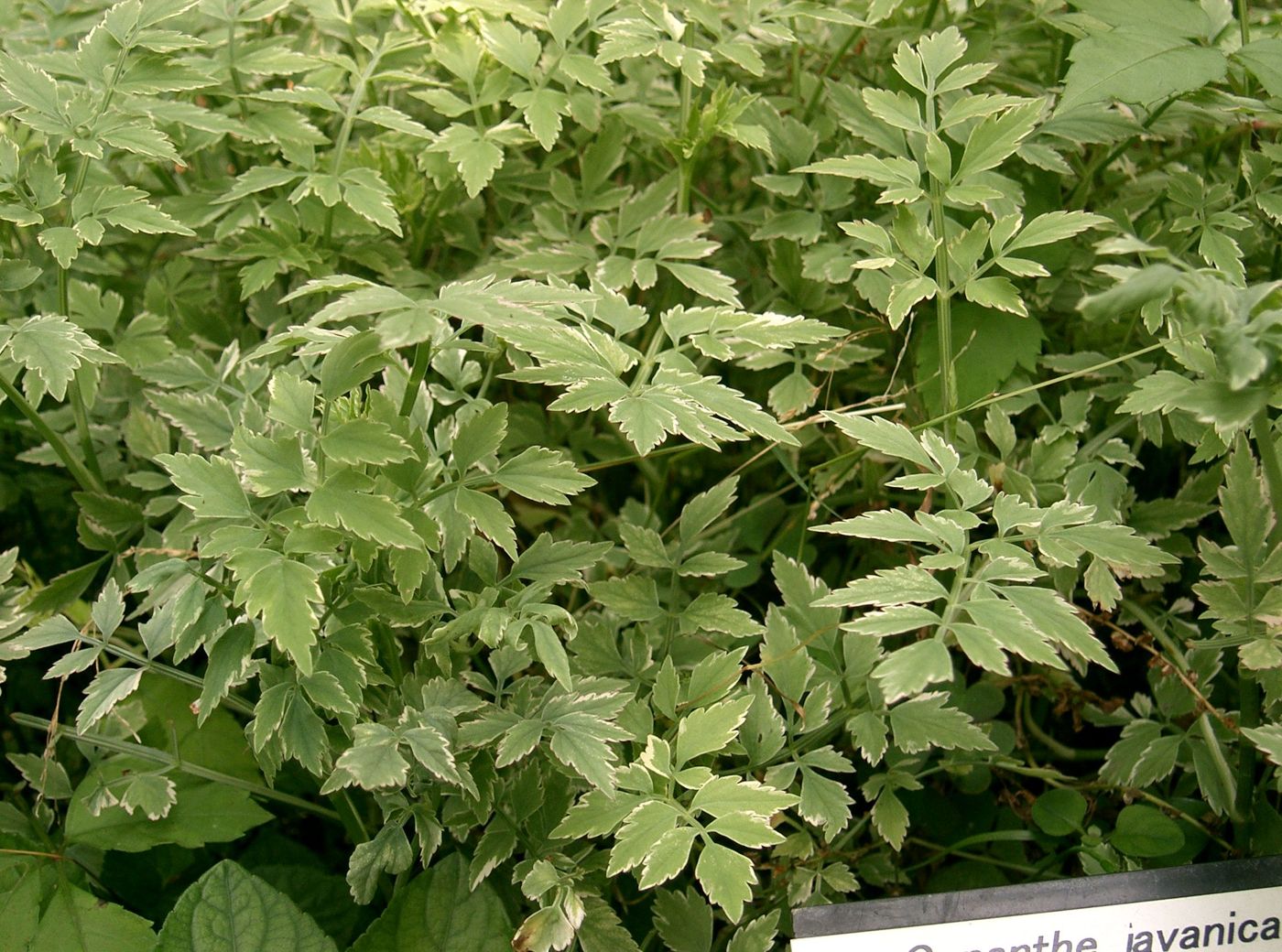 Minari (water dropwort)미나리A long-stemmed, aromatic water plant with a fresh, celery-like perfume. Blanched and dressed as minari-muchim, tucked into kimchi, wrapped into little bundles for minari-ganghoe and piled into fish stews and hot pots.
 Green onion파Korean green onion (pa), from thick-stemmed daepa to slender scallions — chopped into nearly every seasoning sauce, soup and kimchi, and the star of pa-kimchi.
 Doenjang된장Fermented soybean paste — the savory foundation of doenjang-jjigae, many soups and dressings for namul. It is one of Korea's core jang, or fermented sauces.
 Gochugaru고춧가루Korean red chili powder, made from dried red peppers ground coarse or fine. It gives kimchi, gochujang and countless banchan their color and warmth.
 Soy sauce간장Korean soy sauce, in two main kitchen forms: pale, salty guk-ganjang (soup soy sauce) brewed the traditional way from meju, and darker, sweeter jin-ganjang for braises and marinades.
 Garlic마늘Used raw, minced, pickled and roasted, garlic is one of the essential aromatics of Korean food — in seasonings, marinades, kimchi and namul.
 Ginger생강Fresh ginger root, used in small amounts to brighten kimchi paste and marinades and to tame the strong smells of fish and meat.
 Sesame참깨Toasted sesame seeds and sesame oil (chamgireum) finish countless Korean dishes, adding a nutty aroma and gloss.
- Perilla Seed Powder들깨가루Roasted perilla seeds ground to a coarse, oily powder, sold whole or hulled. Stirred into soups and stews it makes them creamy and nutty; tossed with namul it adds body and fragrance.
Nutrition
| Calories | ~330 kcal |
|---|---|
| Protein | ~35 g |
| Fat | ~15 g |
| Carbohydrates | ~24 g |
| Fiber | ~4.9 g |
| Sodium | ~685 mg |
Notable forProtein · Folate · Vitamin K · Vitamin A
Estimated by summing USDA FoodData Central (SR Legacy) values for raw monkfish (FDC 173676, Atlantic monkfish, assuming 500 g edible flesh), soybean sprouts (FDC 169284), soy sauce (FDC 174277), red pepper (FDC 170932, as a stand-in for gochugaru), cornstarch (FDC 169698), garlic, ginger, scallions, sugar, sesame oil and sesame seeds, with Korean Food Composition Table values for minari (F0770030000a) and doenjang (R0120020009a), divided by 4. Stock, liver and perilla powder are not counted. Much of the protein, fat and folate comes from the soybean sprouts. Actual values vary with ingredients, portion size and preparation.
Health Benefits
- Lean fish: monkfish flesh is low in fat and a good source of protein.
- More vegetable than fish: the large share of soybean sprouts and minari adds fiber, folate and vitamin K. See vegetables and namul.
- Warming: the Encyclopedia of Korean Culture describes it as a winter dish that makes you sweat — traditionally valued as warming food.
Regional Variations
- Masan agu-jjim (Gyeongsang): dried monkfish caught December to February, wind-dried about 15 days and soaked 2–3 days before cooking; simmered with doenjang, then finished with sprouts, minari, chili, garlic and a little perilla seed and glutinous rice flour. The folk encyclopedia notes it uses no innards and more sprouts than fish, often with sea squirt (mideodeok).
- Busan and fresh style (Busan): fresh monkfish, including liver and innards, with sprouts, minari, fine chili powder and starch; the folk encyclopedia records seafood seasonings made from mashed liver, shrimp and mussels, and a finish of perilla powder.
- Agwi-tang / agu-maeuntang: a soup of the same fish when a brothy dish is wanted.
Pairings
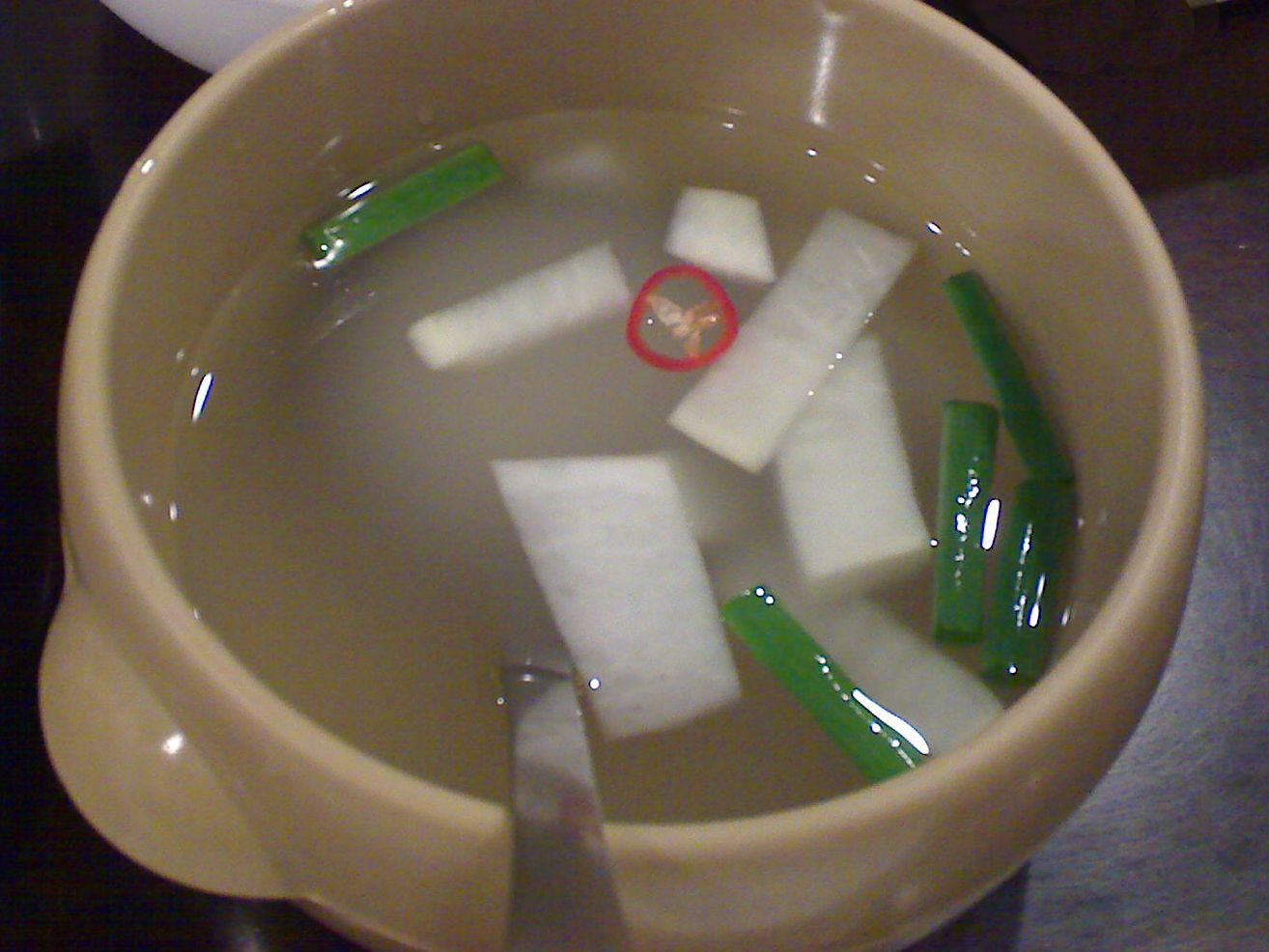 Radish Water Kimchi동치미Whole radishes steeped in a clear salt brine with pear, ginger and green chili — a winter water kimchi whose tangy broth is prized on its own.
 Gyeran Jjim (Steamed Egg)계란찜Eggs whisked with water or broth and gently steamed into a silky, savory custard, often seasoned with salted shrimp and served bubbling hot.
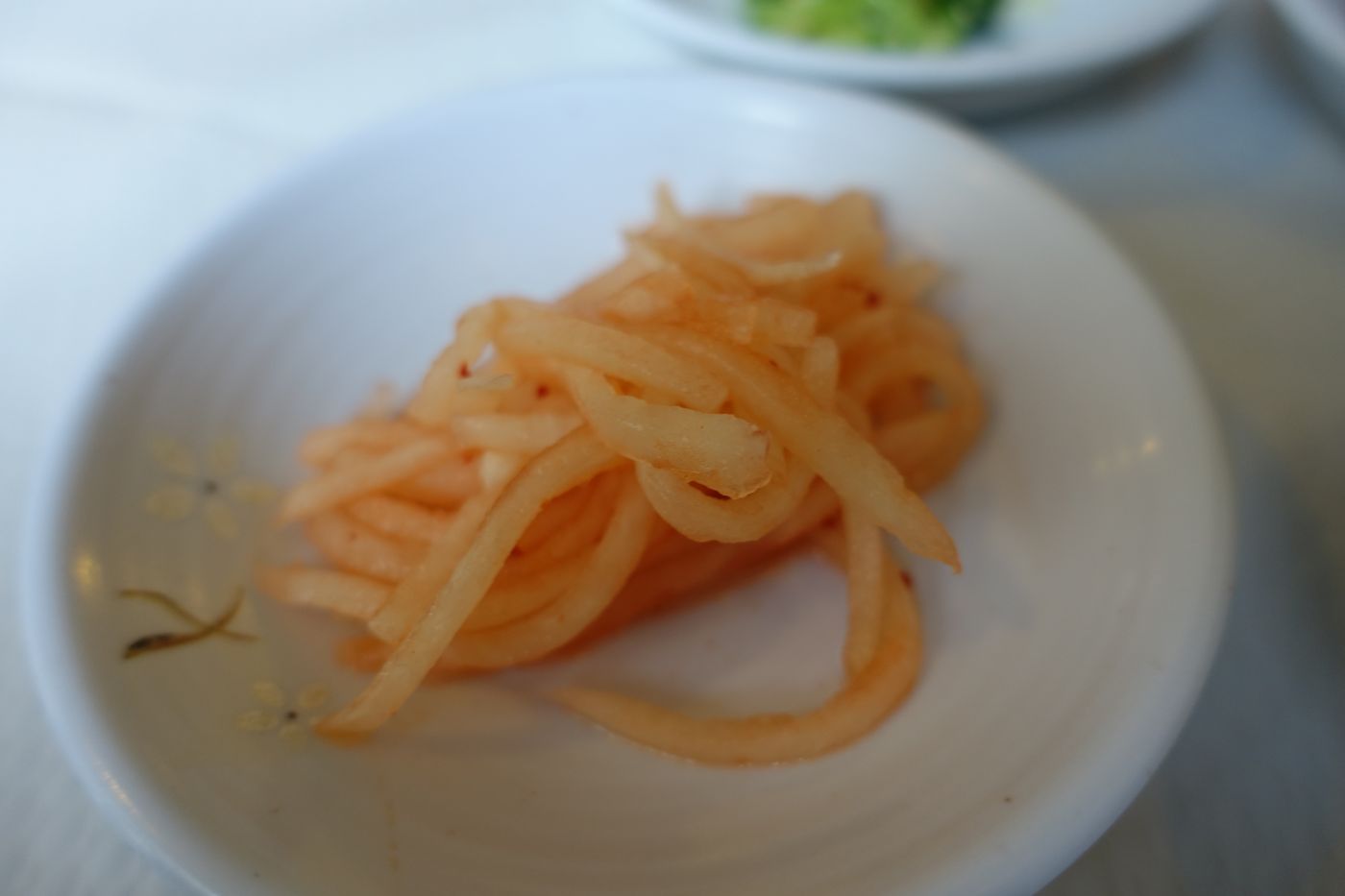 Musaengchae무생채Fine matchsticks of Korean radish dressed raw with chili flakes, a little vinegar and sugar — crisp, sweet-sharp and best made just before the meal.
Sources
- 01아귀찜 (Agwi-jjim) — Encyclopedia of Korean Culture
- 02한식이야기: 아귀찜 (Korean Food Story: Agwi-jjim) — Korean Food Promotion Institute
- 03마산아귀찜 (Masan Agwi-jjim) — Encyclopedia of Korean Folk Culture, National Folk Museum of Korea
- 04아귀찜 (Agwi-jjim) — Encyclopedia of Korean Folk Culture, National Folk Museum of Korea
- 05Fish, monkfish, raw (FDC 173676) — USDA FoodData Central
- 06Water dropwort (Minari), Whole, Raw (F0770030000a) — Korean Food Composition Table
Last updated