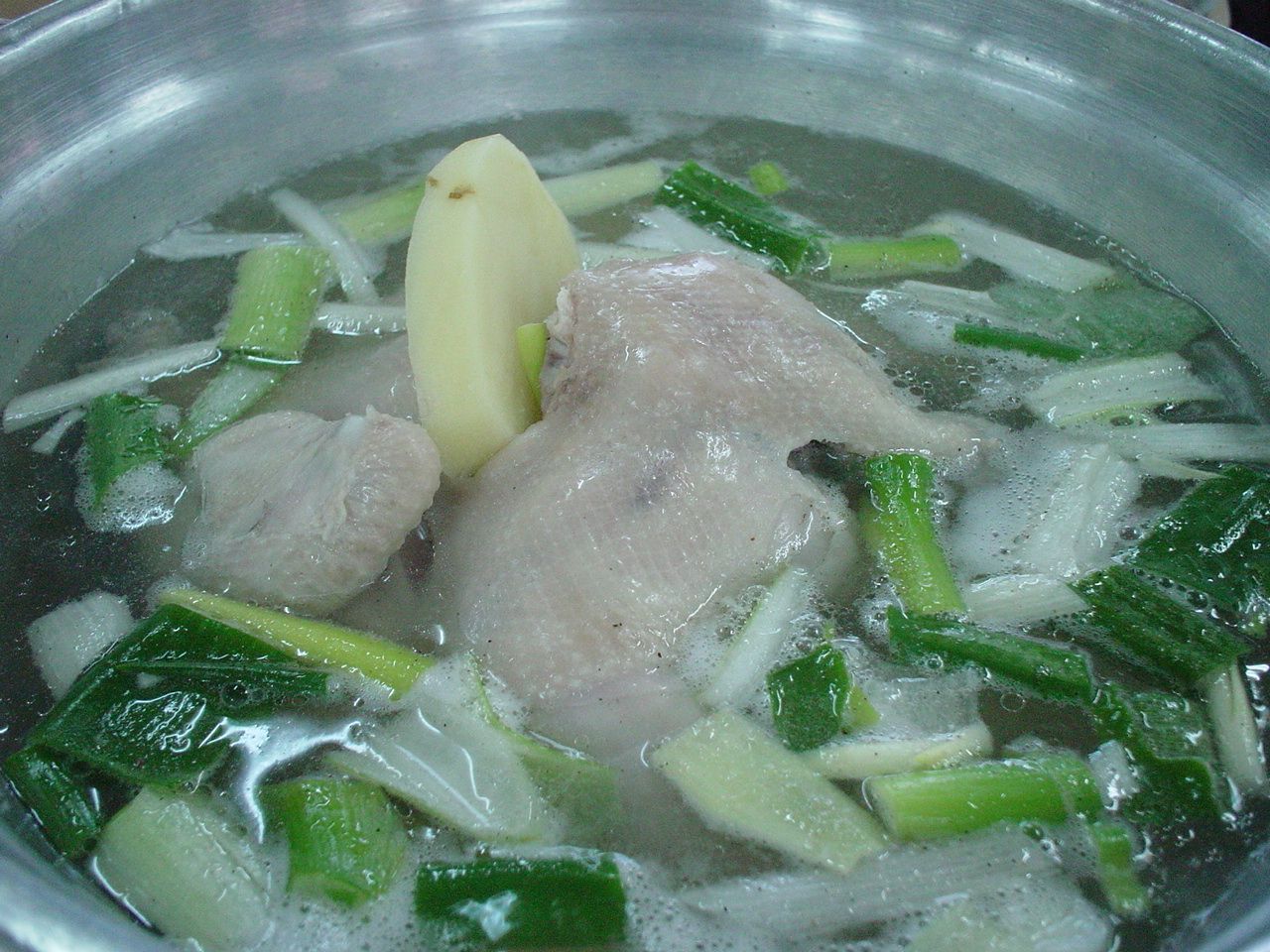
 Photo: shizu k (shezzz) at Flickr, CC BY-SA 2.0, via Wikimedia Commons
Guk & Tang · Soups 국·탕
Dak Hanmari ("One Whole Chicken" Hot Pot)
닭한마리
Romanization: dak-hanmari
A whole chicken simmered at the table with potatoes, rice cakes and green onion, dipped in a vinegar-mustard sauce, then finished with noodles in the broth — a Dongdaemun original.
- Serves
- 3
- Prep
- 20 min
- Cook
- 70 min
RegionSeoul & Gyeonggi
Jump to recipeRecipe
Ingredients · Serves 3
- 1 Whole young chickenabout 900 g–1 kg, cleaned, fat trimmed
- 2.5 lWater
- 3 stalksLarge green onions (daepa)1 in chunks for the broth, 2 cut into 5 cm lengths
- 10 clovesGarlicwhole, plus 1 tbsp minced for the sauce
- 1 thumbGingersliced
- 1 Onionhalved, for the broth
- 2 mediumPotatoespeeled and cut into thick slices
- 150 gRice cake sticks (garaetteok)
- 200 gFresh kalguksu noodlesfor the finish
- 3 tbspSoy saucefor the dipping sauce
- 2 tbspVinegarfor the dipping sauce
- 1 tspKorean mustard (gyeojja)for the dipping sauce
- 2 tbspGochugarufor the dadegi paste
- to tasteSalt
Method
Technique: Making Guk and Jjigae, Making Yuksu: Anchovy-Kelp Stock
Step 1: Put the chicken in a large pot with the water, onion, ginger, green-onion chunks and half the whole garlic. Bring to a boil, skim, and simmer 30 minutes so the chicken is part-cooked, as the Dongdaemun shops do. Strain the broth, discarding the aromatics.
Step 2: For the dadegi, mix the gochugaru and minced garlic with 2–3 tbsp of hot broth into a thick paste. Set out the soy sauce, vinegar and mustard so each diner can mix their own dipping sauce with a spoonful of dadegi.
Step 3: Transfer the chicken to a wide pot on a tabletop burner. Add the potatoes, the remaining whole garlic and enough broth to cover, and bring to a boil. Using kitchen scissors, cut the chicken into large pieces.
Step 4: Add the rice cakes and green onion and simmer 10–15 minutes more, until the potatoes are tender and the chicken reaches 165 °F (74 °C) at the thickest part. Season the broth lightly with salt.
Step 5: Eat the chicken, potatoes and rice cakes with the dipping sauce, topping up the pot with broth.
Step 6: When the meat is gone, add the noodles to the boiling broth with a spoonful of dadegi if you like, and cook 4–5 minutes until tender. Serve in bowls.
Origin & History
Dak-hanmari literally means "one chicken": a whole young chicken, cut up at the table, simmered in a wide pot of light broth with potatoes, rice cakes, garlic and a great deal of green onion. The chef and writer Park Chan-il, in a 2022 piece for the Seoul Metropolitan Government's magazine, calls it one of the few dishes that can truly be said to have been born in Seoul — chicken was eaten everywhere, but this way of eating it was invented in the alleys of the Dongdaemun market.
The alley grew up in the 1970s. An Bok-sun, owner of one of the founding restaurants, told Park that shops there began selling chicken kalguksu and a whole-chicken pot as a drinking snack in that decade; she started helping her mother run their small restaurant in the late 1970s. Customers were market traders, garment-factory sewing workers from Pyeonghwa Market and the Dongdaemun shopping complex, and travelers using the long-closed Dongdaemun express bus terminal nearby. One explanation for the name is that busy customers simply shouted for "one chicken, fast"; another is that the chicken is eaten completely, meat first and then noodles in the broth. Neither is documented.
Park argues that its real ancestor is chicken-broth kalguksu, not baeksuk: the chickens are partly cooked in advance for speed, finished in front of diners, eaten with a sharp dipping sauce rather than salt, and the noodles are all but obligatory. The alley boomed through the 1980s and 1990s and became famous abroad — first with Japanese visitors, then Chinese and Southeast Asian tourists — and the official Visit Seoul guide describes it as a Dongdaemun dish now loved internationally.
Key Ingredients
- Chicken (dak)닭Chicken appears in Korea's founding legends and on its summer tables: young birds simmered whole with ginseng in samgyetang, chili-marinated pieces stir-fried as Chuncheon's dakgalbi, and the fried chicken of modern takeout culture.
 Green onion파Korean green onion (pa), from thick-stemmed daepa to slender scallions — chopped into nearly every seasoning sauce, soup and kimchi, and the star of pa-kimchi.
 Garlic마늘Used raw, minced, pickled and roasted, garlic is one of the essential aromatics of Korean food — in seasonings, marinades, kimchi and namul.
 Ginger생강Fresh ginger root, used in small amounts to brighten kimchi paste and marinades and to tame the strong smells of fish and meat.
 Yangpa (onion)양파The bulb onion, literally the "Western scallion." A latecomer to Korea, it is now everywhere: sweetening stir-fries and braises, pickled in soy sauce as yangpa-jangajji, and served raw beside grilled meat.
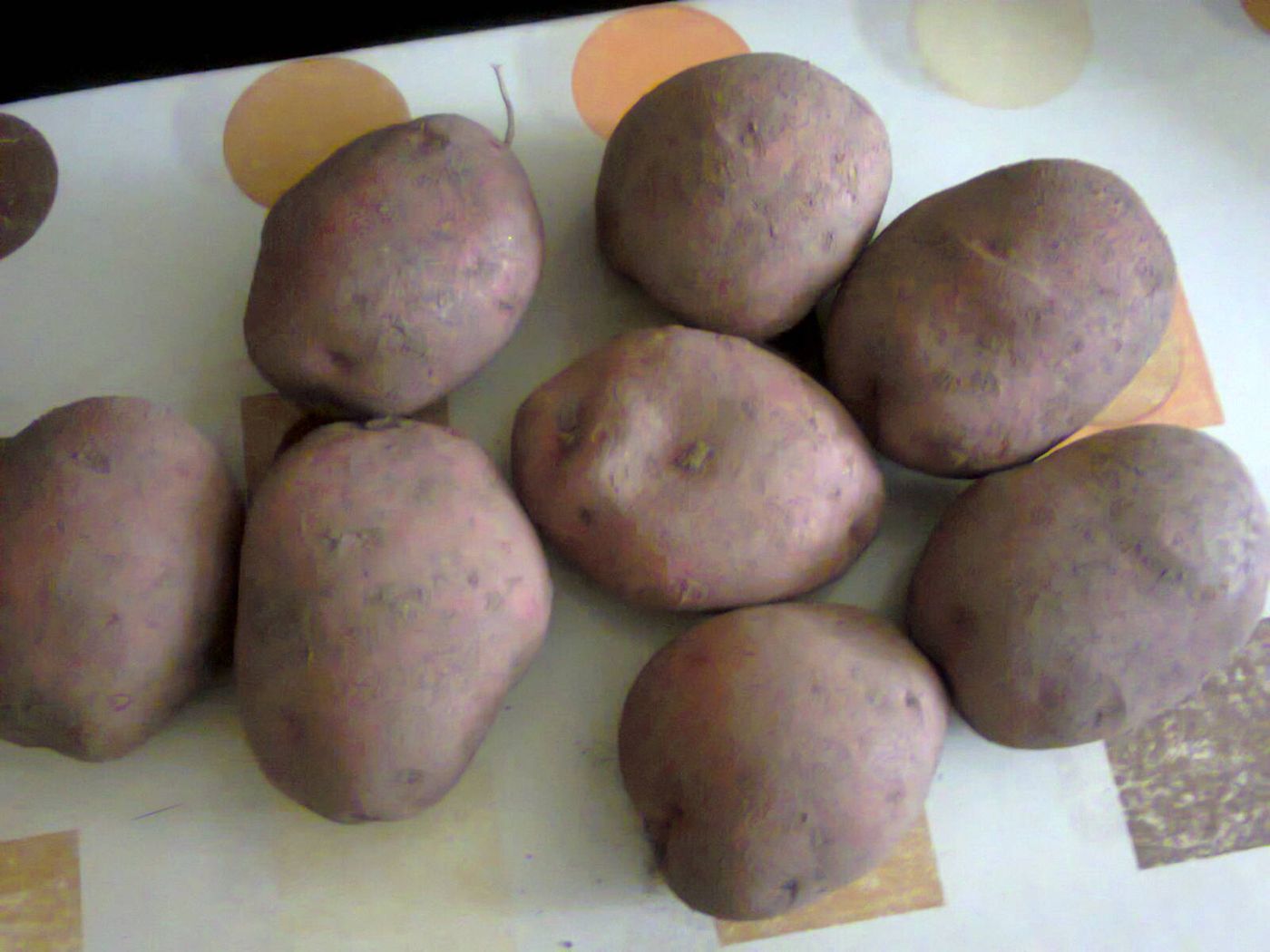 Potato감자A relatively recent arrival that became a mainstay of the mountain provinces. Braised in soy sauce as gamja-jorim, stir-fried in fine matchsticks, grated into crisp gamja-jeon and simmered in countless soups.
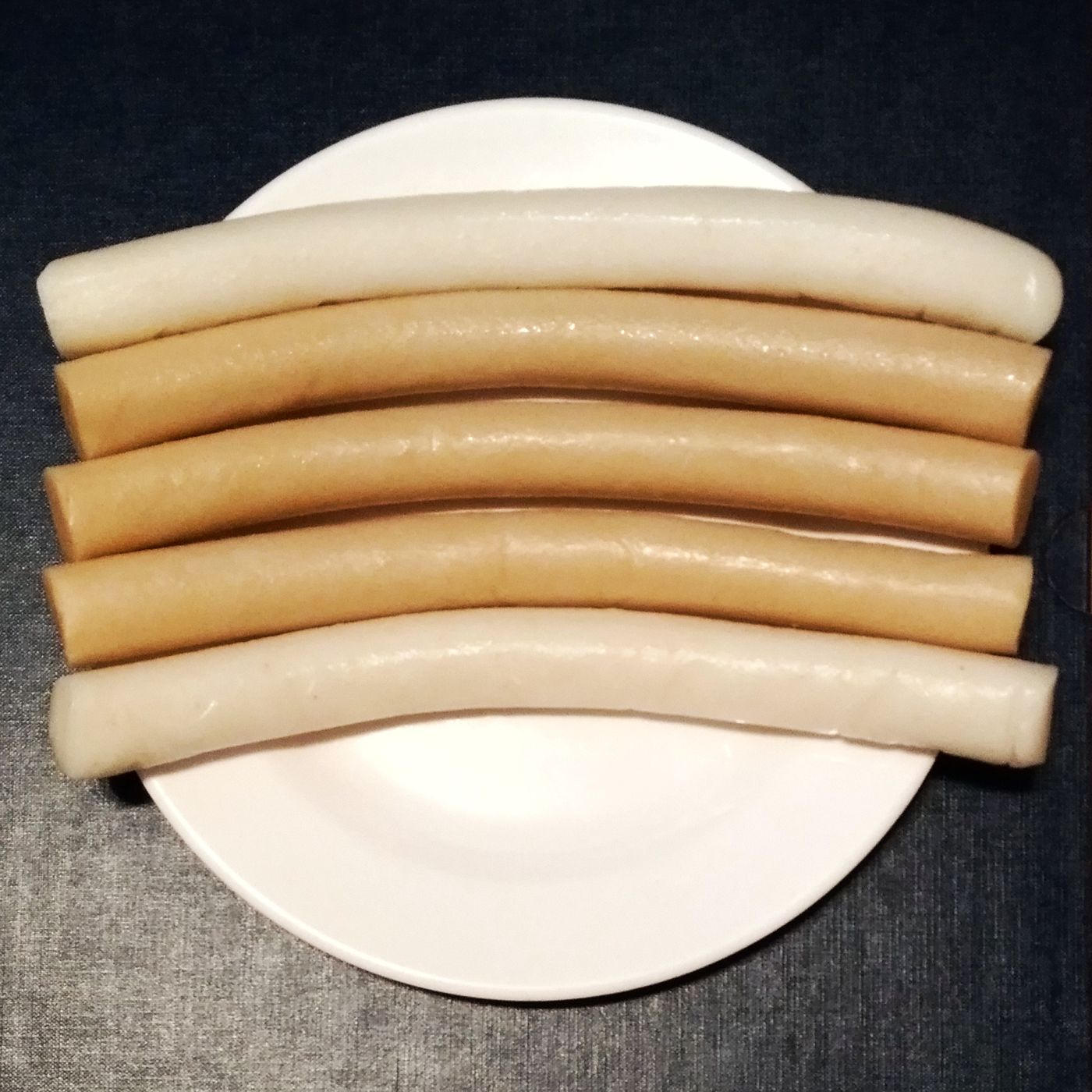 Garaetteok (Cylinder Rice Cake)가래떡Long, white cylinders of pounded non-glutinous rice, also called huin-tteok (white rice cake). Sliced into ovals it becomes tteokguk; cut into fingers it goes into tteokbokki and skewers.
 Soy sauce간장Korean soy sauce, in two main kitchen forms: pale, salty guk-ganjang (soup soy sauce) brewed the traditional way from meju, and darker, sweeter jin-ganjang for braises and marinades.
- Korean Vinegar식초Vinegar in the Korean kitchen, from naturally fermented grain and fruit vinegars, such as persimmon vinegar, to everyday brewed vinegar. It sharpens muchim, pickles and the dipping sauce chogochujang.
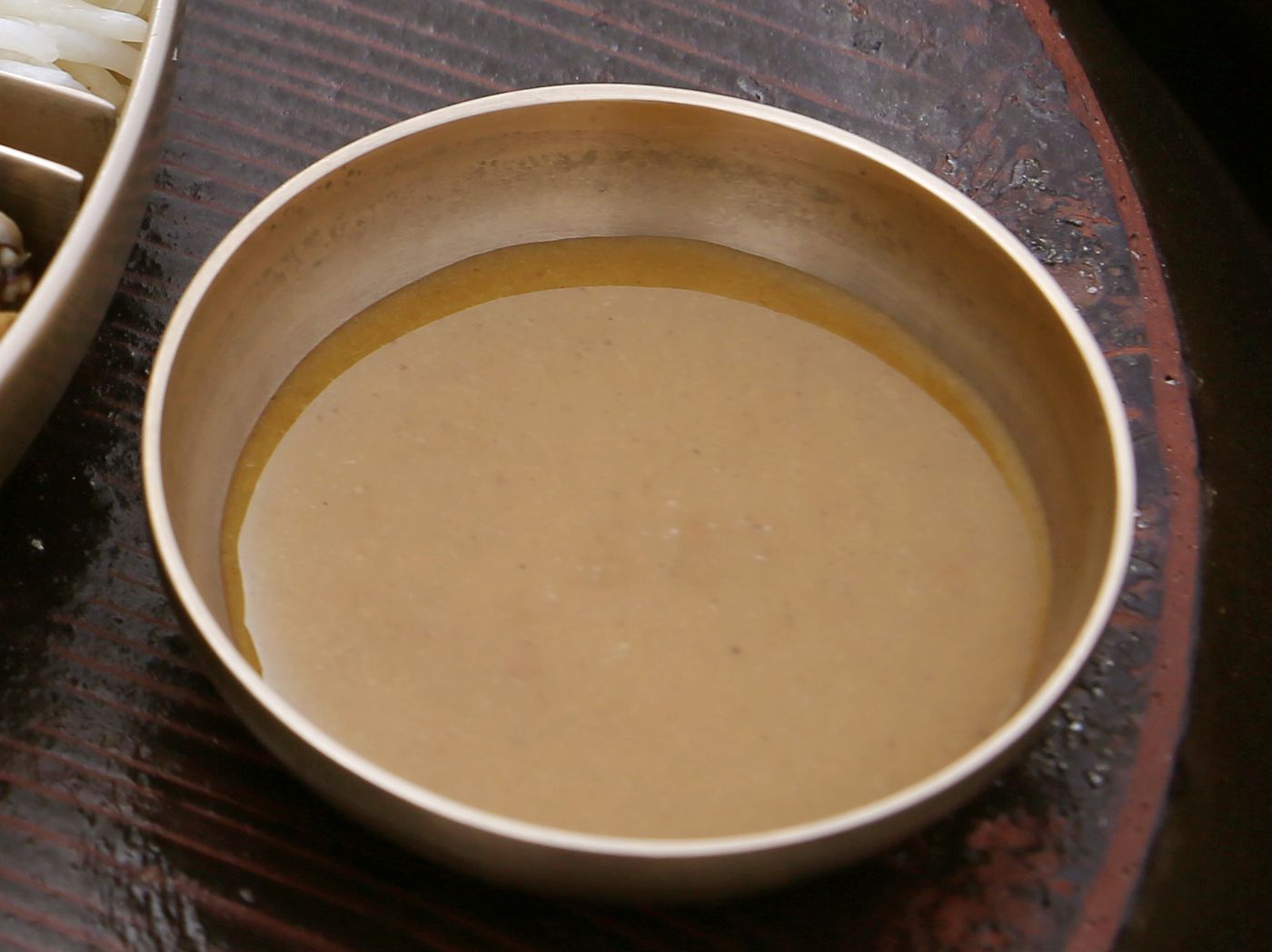 Gyeojja (Korean Mustard)겨자Korean mustard, ground from the seeds of mustard greens (gat) and mixed into a sharp, nose-tingling paste. It seasons cold noodles, dresses the mixed cold salad gyeoja-chae and sharpens dipping sauces for raw fish and boiled meat.
 Gochugaru고춧가루Korean red chili powder, made from dried red peppers ground coarse or fine. It gives kimchi, gochujang and countless banchan their color and warmth.
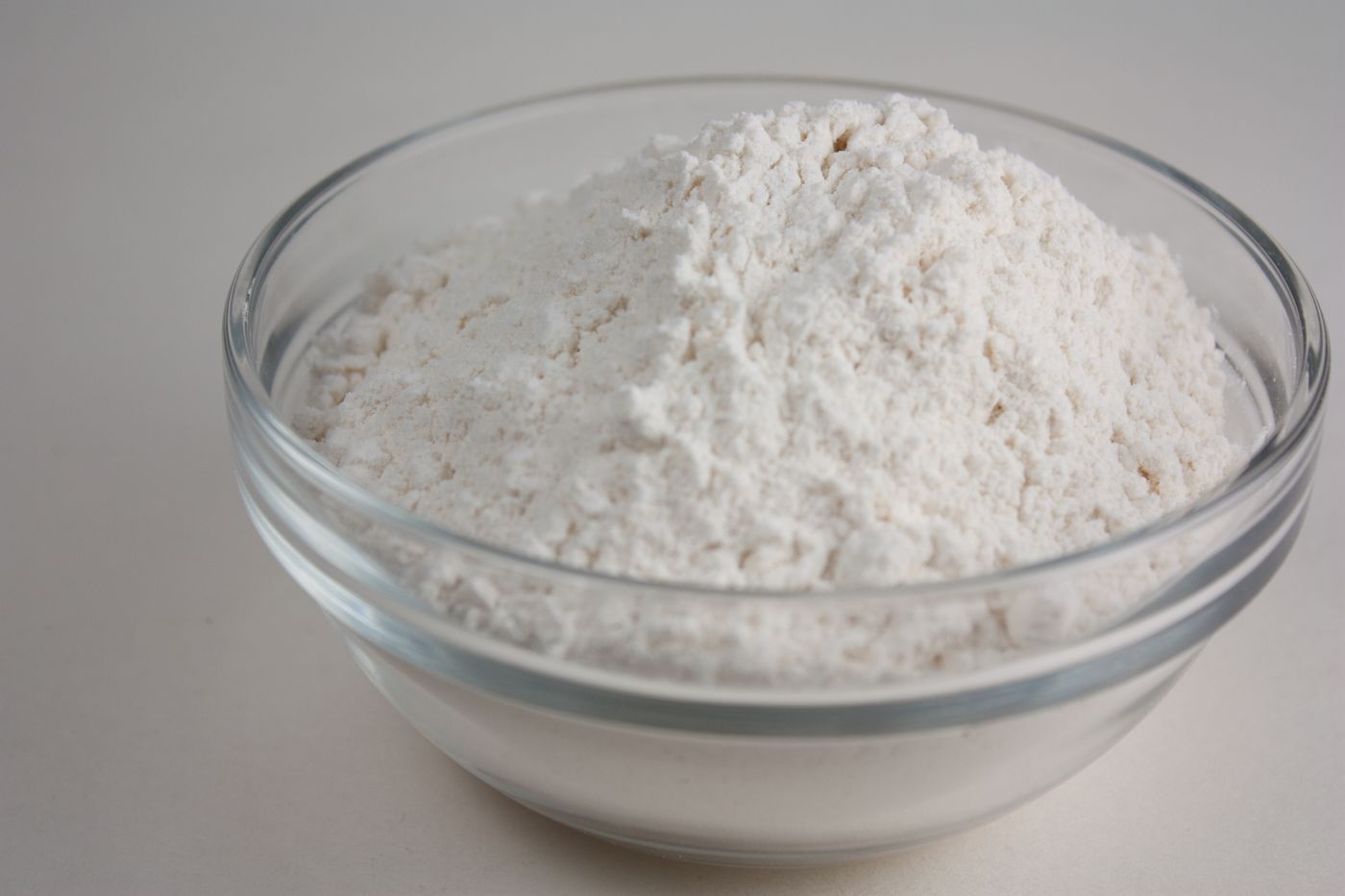 Wheat flour밀가루Finely milled wheat flour, the base of Korean noodles, dumpling wrappers, pancake batters and ramyeon. A luxury for most of Korean history, it became an everyday staple only after the Korean War, when American aid flour flooded the market.
Nutrition
| Calories | ~564 kcal |
|---|---|
| Protein | ~47.7 g |
| Fat | ~13.7 g |
| Carbohydrates | ~63.2 g |
| Fiber | ~5.4 g |
| Sodium | ~2004 mg |
Notable forProtein · Potassium
MFDS has no analysis of the restaurant dish, so these figures are scaled from its laboratory analysis of a commercial dak-hanmari and kalguksu meal kit (CJ Cookit, 2,292 g total; per 100 g: 94 kcal, 7.95 g protein, 2.28 g fat, 10.53 g carbohydrate, 0.9 g fiber, 334 mg sodium, 153 mg potassium) to a 600 g portion, about a quarter of the kit including noodles. The kit's broth and sauce were seasoned for convenience; a home pot salted lightly at the table will have much less sodium. Actual values vary with ingredients, portion size and preparation.
Health Benefits
- A protein-rich shared meal; the chicken is eaten with plenty of green onion, garlic and potatoes.
- The broth is light and unseasoned until the table, so diners control how much salt goes in — most of it comes from the dipping sauce.
- A social dish: Park describes the appeal as sitting around one pot and sharing it; see sharing banchan.
Regional Variations
- Dongdaemun alley style: an 8- or 9-size young chicken (Korean size grades), potatoes, plenty of green onion and garlic, with kalguksu noodles added last; many shops serve it with napa-cabbage water kimchi.
- The dipping sauce: soy sauce, vinegar and mustard mixed with a spicy chili paste (dadegi), stirred together by each diner; Park notes it thins as the meat juices drip in, which signals time for the noodles.
- Add-ins: rice cakes, mushrooms and extra noodles (sari); some diners finish with rice porridge in the last of the broth.
- Relatives: the plainer baeksuk, the ginseng-stuffed samgyetang, and kalguksu.
Pairings
 Napa Cabbage Kimchi배추김치Salted napa cabbage layered with a red paste of chili, garlic, ginger and fermented seafood, then left to ripen: the kimchi most people picture first.
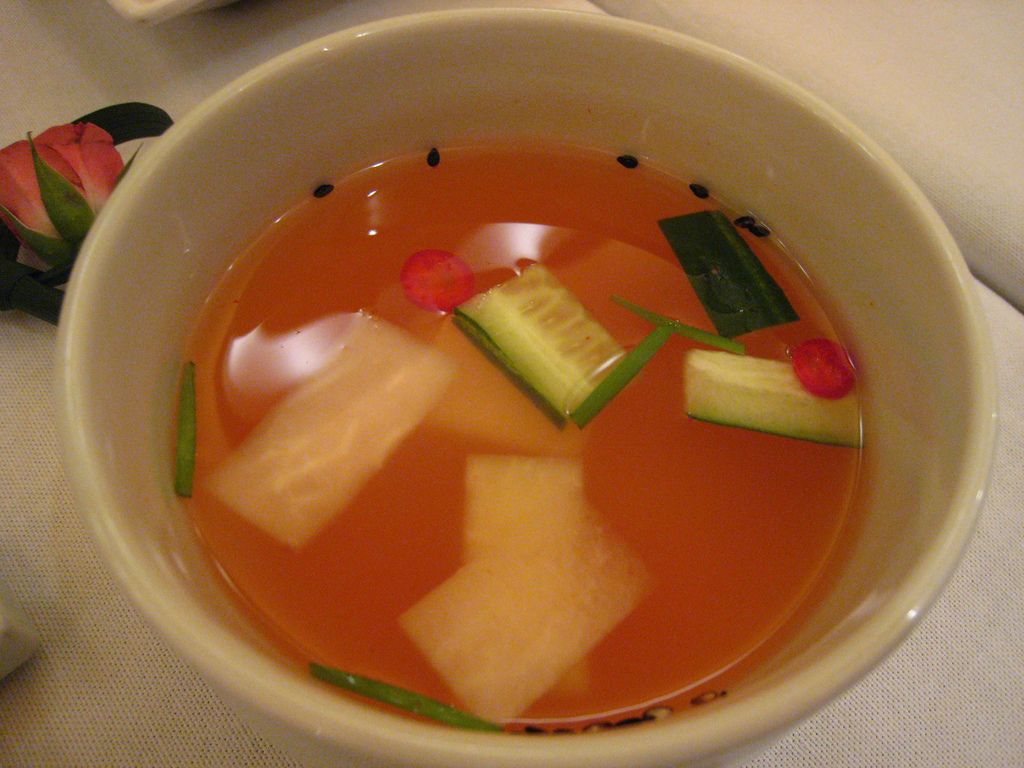 Radish and Cabbage Water Kimchi나박김치Thin squares of radish and napa cabbage in a lightly salted, pink-tinted broth — a mild, refreshing water kimchi eaten by the spoonful.
 Cubed Radish Kimchi깍두기Korean radish cut into neat cubes and tossed with chili, garlic and salted shrimp — crunchy, juicy and a classic partner to rich soups.
Sources
- 01서울의 역사가 담긴 닭한마리 냄비 (The dak-hanmari pot that holds Seoul's history) — Park Chan-il, Seoul Metropolitan Government magazine, February 2022
- 02Wonhalmae Wonjo Dakhanmari — Visit Seoul, the official travel guide to Seoul
- 03[입맛뒷맛] 미 국무부 2인자도 사랑한 닭한마리의 매력 (The appeal of dak-hanmari) — Yonhap News Agency, 14 May 2020
- 04칼국수_간편조리세트_닭한마리와 칼국수 (Dak-hanmari and kalguksu meal kit, analyzed) — MFDS K-FIND food composition database
- 05Safe Food Handling — U.S. Food and Drug Administration
- 06Global Perspectives on Allergen Labeling: Harmonization of Regulations and Practices — Allergy, Asthma & Immunology Research, 2025
Last updated