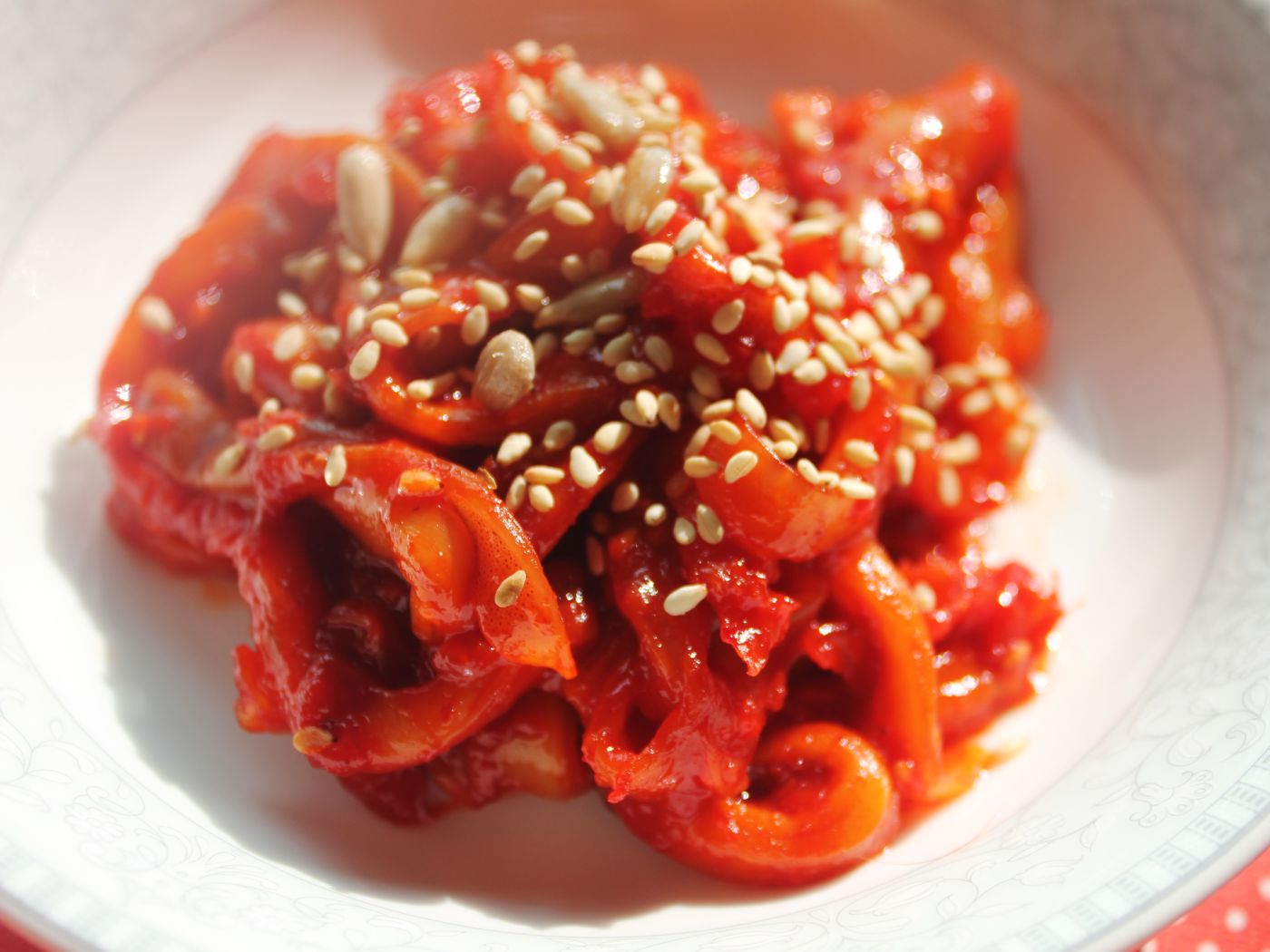
 Photo: Hyeon-Jeong Suk, CC BY 2.0, via Wikimedia Commons
Jeotgal · Salted seafood 젓갈
Salted Squid
오징어젓
Romanization: ojingeo-jeot
Squid cured in salt, then sliced and tossed with chili, garlic and a touch of syrup — chewy, sweet-savory jeotgal from the East Sea coast.
- Serves
- 30
- Prep
- 40 min
- Cook
- 0 min
RegionGangwon · Gyeongsang
Jump to recipeRecipe
Ingredients · Serves 30
- 2 mediumFresh or thawed whole squidabout 800 g; about 550 g once cleaned
- 55 gCoarse sea salt (cheonilyeom), non-iodizedabout 10% of the cleaned squid
- 150 gKorean radish (mu)julienned; optional
- ½ tspFine saltfor the radish
- 3 tbspGochugaru (Korean chili flakes)
- 1 tbspGarlicminced
- 1 tspGingerminced
- 2 tbspRice or corn syrup (mulyeot)
- 2 stalksGreen onionsfinely sliced
- 1 tspToasted sesame seeds
Method
Technique: Making Jeotgal
Step 1: Clean the squid: pull the head and tentacles from the body, remove the innards, ink sac, beak, eyes and the clear quill, and rinse the body and tentacles well in cold water. Pat dry.
Step 2: Rub the coarse salt all over the squid, inside and out, and pack it into a lidded glass or ceramic container. Cover and refrigerate (4°C or below) for 5–7 days, turning once or twice, until firm and translucent.
Step 3: Rinse off the salt and soak the squid in cold water for 30–60 minutes, changing the water once, to draw out some of the salt. Peel off any loose skin, then slice the body into thin strips about 5 cm long and cut the tentacles into short pieces. Squeeze dry in a clean cloth.
Step 4: If using radish, toss it with the fine salt for 15 minutes, then squeeze out as much liquid as you can.
Step 5: In a bowl, combine the squid and radish with the gochugaru first so the color takes evenly, then add the garlic, ginger, syrup, green onions and sesame seeds and mix well.
Step 6: Pack into a clean jar, press down, and refrigerate overnight before eating. Keep refrigerated, use clean utensils, and eat within about 2 weeks; discard if it smells sour or off or turns slimy.
Origin & History
Ojingeo-jeot is squid preserved in salt and then dressed with seasonings. The Encyclopedia of Korean Folk Culture describes two broad ways of making it. In the older, long-keeping method the squid is gutted, packed in a crock with plenty of salt and left to cure; when needed, a piece is soaked to draw out some of the salt, skinned and sliced, then mixed with salted radish, chili, garlic, ginger and syrup and left overnight before eating. In the quicker method, thick strips of squid are seasoned with salt and chili along with shredded radish, green onion, ginger and garlic, and are ready in about a week.
Squid jeotgal is made along Korea's coasts but is most closely associated with the Gangwon shoreline and North Gyeongsang. Heavily salted squid keeps for a long time; the lightly salted, already-seasoned versions made in parts of North Gyeongsang are meant for short keeping only.
The Encyclopedia of Korean Culture lists squid jeotgal among the regional jeotgal of both Seoul–Gyeonggi and Gangwon and places its making in the summer months, roughly June through August, when squid are plentiful. Today it is one of the most familiar everyday jeotgal, sold ready-seasoned in markets and supermarkets across the country.
Key Ingredients
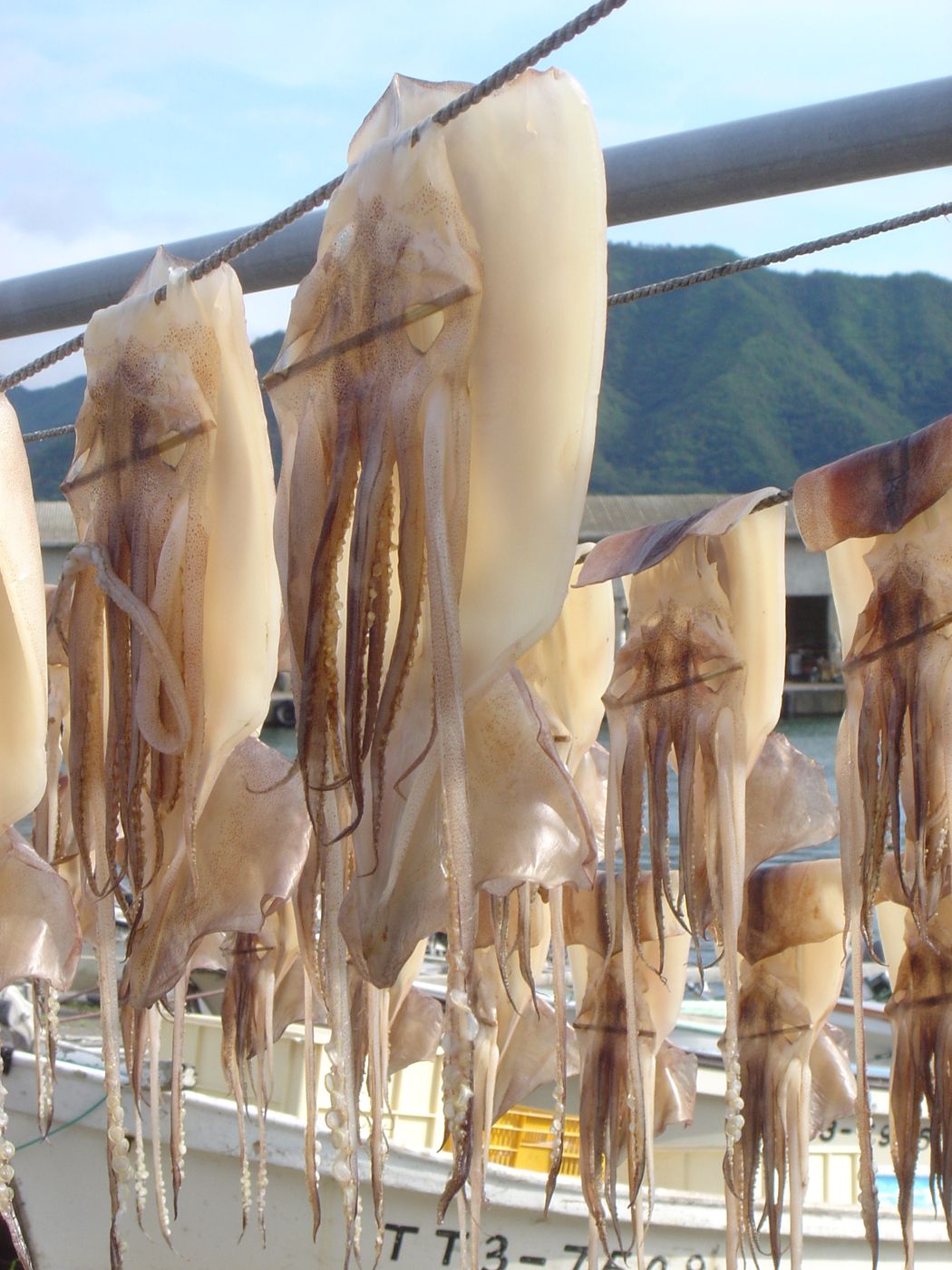 Squid오징어Fresh squid for stir-fries, pancakes and stuffed ojingeo-sundae, and dried squid — whole, sun-cured bodies or sweet-salty shredded jinmichae — that has become one of Korea's best-loved pantry foods.
 Sun-Dried Sea Salt천일염Coarse sea salt made by evaporating seawater with sun and wind in tidal-flat salt pans, most of it from Sinan County off Korea's southwest coast. It is the everyday salt for salting cabbage and making jang.
 Korean radish무A stout, heavy white radish, often tinged pale green near the top. It is cubed for kkakdugi, left whole in the clear brine of dongchimi, shredded into salads and simmered into broths.
 Gochugaru고춧가루Korean red chili powder, made from dried red peppers ground coarse or fine. It gives kimchi, gochujang and countless banchan their color and warmth.
 Garlic마늘Used raw, minced, pickled and roasted, garlic is one of the essential aromatics of Korean food — in seasonings, marinades, kimchi and namul.
 Ginger생강Fresh ginger root, used in small amounts to brighten kimchi paste and marinades and to tame the strong smells of fish and meat.
 Korean grain syrup물엿A clear, glossy syrup used to sweeten and glaze braised and stir-fried banchan. Its traditional relative, jocheong, is a darker malt syrup made by slowly boiling down saccharified rice.
 Green onion파Korean green onion (pa), from thick-stemmed daepa to slender scallions — chopped into nearly every seasoning sauce, soup and kimchi, and the star of pa-kimchi.
 Sesame참깨Toasted sesame seeds and sesame oil (chamgireum) finish countless Korean dishes, adding a nutty aroma and gloss.
Nutrition
| Calories | 33 kcal |
|---|---|
| Protein | 2 g |
| Fat | 0.4 g |
| Carbohydrates | 5.4 g |
| Fiber | 0 g |
| Sodium | 456 mg |
Notable forVitamin B12 · Selenium
From the Korean Food Composition Table entry “Japanese flying squid, Seasoned, Salt-fermented” (오징어, 양념젓갈; per 100 g: 166 kcal, 9.9 g protein, 27 g carbohydrate including 14.8 g sugars, 2,278 mg sodium, 3.4 µg vitamin B12), scaled to the serving size. The sample's sugar reflects commercial seasoning; homemade versions vary with how much syrup and radish are used. Actual values vary with ingredients, portion size and preparation.
Health Benefits
- Lean seafood protein: squid is low in fat, and the seasoned jeotgal still supplies a little protein in each small serving.
- B12 and selenium: in the composition table, a 20 g serving provides about 0.7 µg of vitamin B12 and 8 µg of selenium.
- A rice companion: Korean references describe it as a mild, not-too-fishy side dish that stimulates the appetite — it is meant to be eaten a few strips at a time with plain rice.
Regional Variations
- Gangwon coast: squid-fishing towns along the East Sea are known for squid jeotgal alongside pollock-based jeotgal and sikhae.
- North Gyeongsang: some areas season the squid with salt and spices at the outset for a short, fresh-tasting ferment rather than a long cure.
- With radish: many recipes mix in salted, squeezed julienned radish, which adds crunch and stretches the squid.
- Ojingeo-naejang-jeot: squid viscera are also salted into a separate, stronger-flavored jeotgal.
Pairings
 Doenjang Jjigae (Soybean Paste Stew)된장찌개A thick, savory stew of fermented soybean paste with tofu, zucchini and whatever the season offers — the everyday pot at the center of the Korean table.
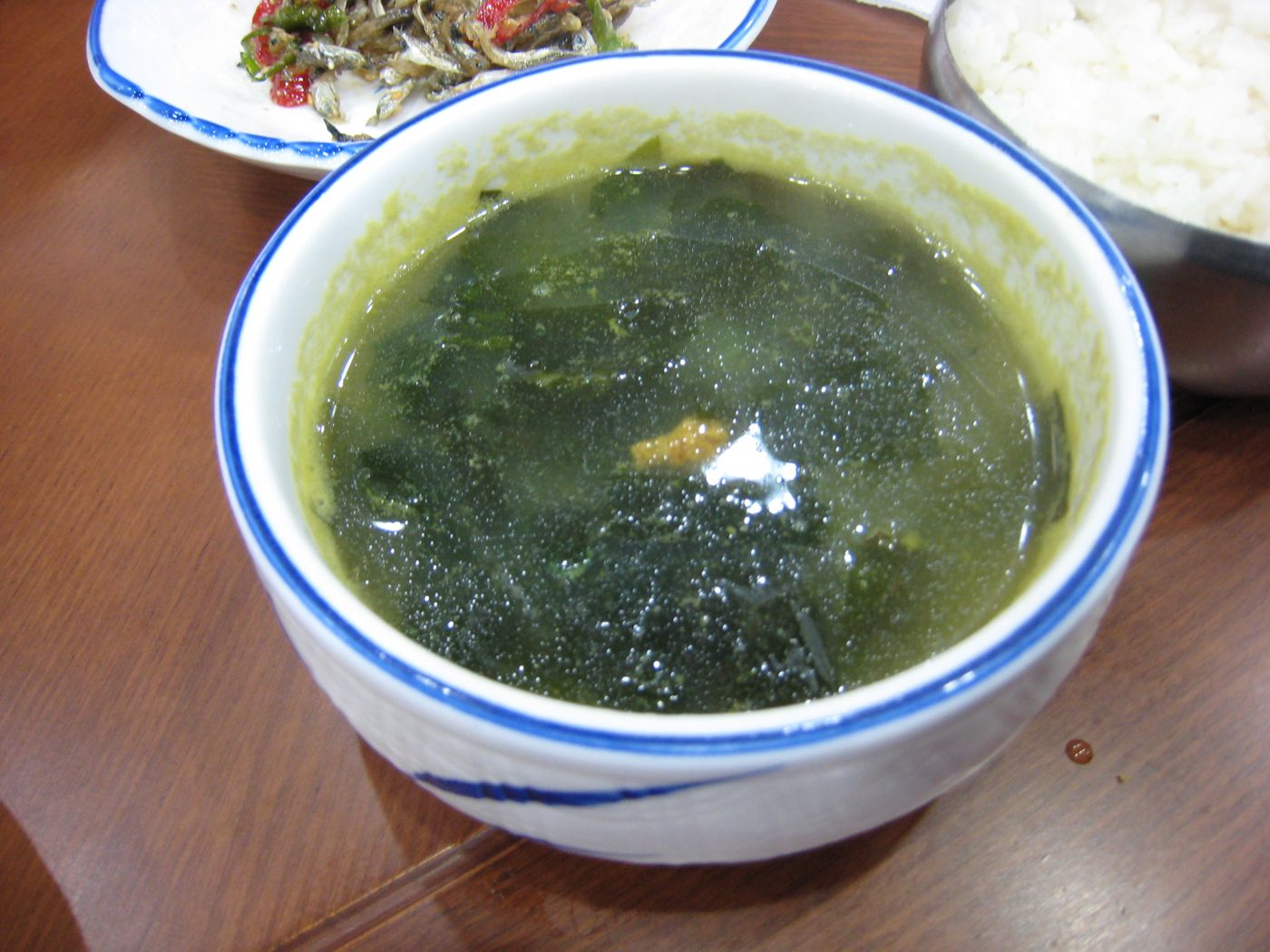 Miyeok Guk (Seaweed Soup)미역국A mild soup of sea mustard and beef seasoned with soup soy sauce and sesame oil — the first meal after childbirth and the soup of every Korean birthday.
 Gyeran Mari (Rolled Omelet)계란말이Beaten egg cooked in thin layers and rolled into a soft, striped log, then sliced — a gentle, everyday banchan and a lunchbox classic.
Sources
- 01Korean Food Composition Table: Japanese flying squid, Seasoned, Salt-fermented — National Institute of Agricultural Sciences
- 02오징어젓 - 한국민속대백과사전 (Encyclopedia of Korean Folk Culture)
- 03젓갈 - 한국민족문화대백과사전 (Encyclopedia of Korean Culture)
- 04Selecting and Serving Fresh and Frozen Seafood Safely - U.S. Food and Drug Administration
- 05Sodium in Your Diet - U.S. Food and Drug Administration
Last updated