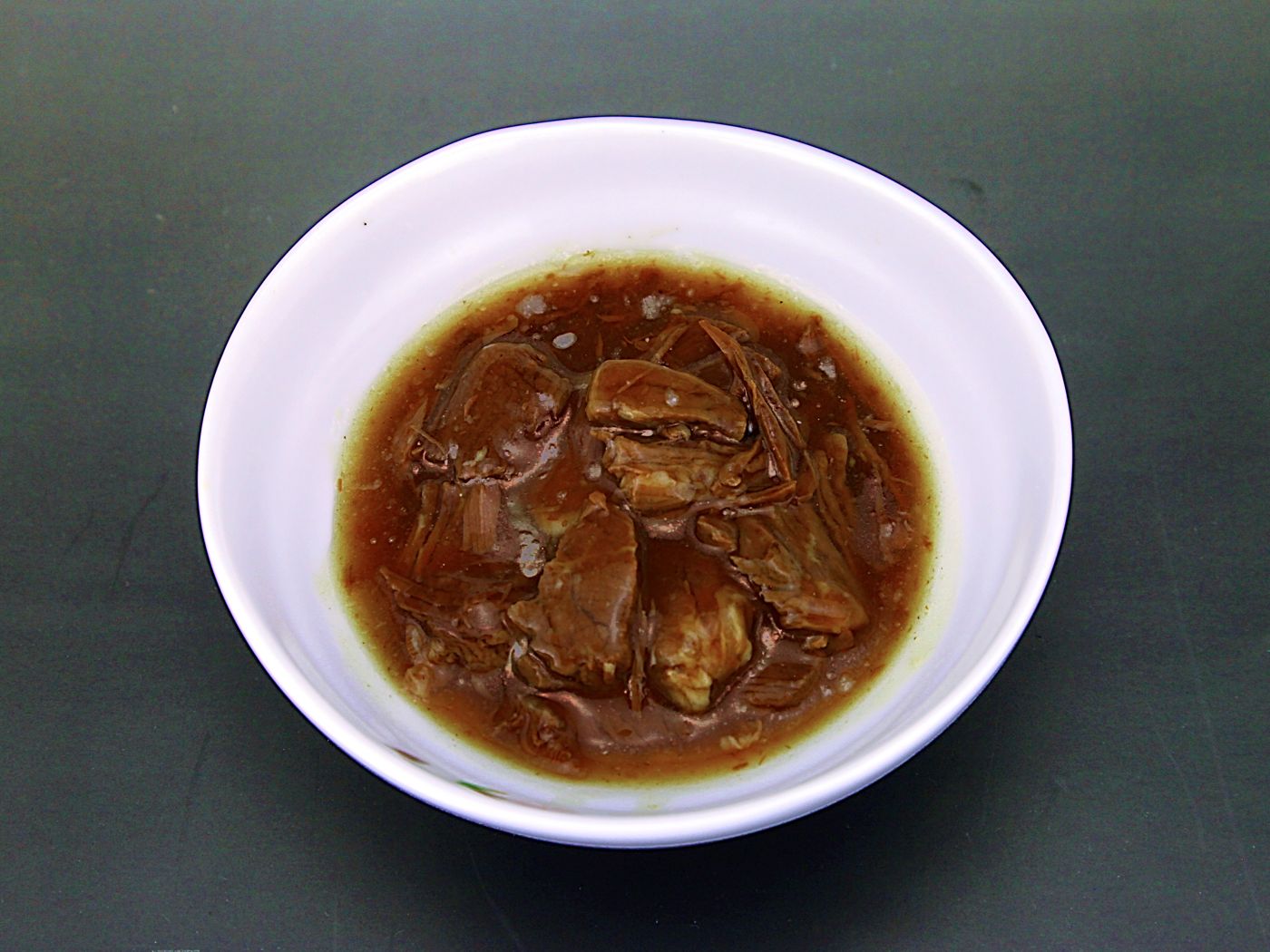
 Photo: Medalofdead, CC BY-SA 4.0, via Wikimedia Commons
Jorim · Braised 조림
Jangjorim
장조림
Romanization: jangjorim
Lean beef simmered in soy sauce until tender, then torn into strands and served in its savory broth, often with eggs, garlic and mild peppers.
- Serves
- 8
- Prep
- 25 min
- Cook
- 90 min
Recipe
Ingredients · Serves 8
- 500 gLean beef (eye of round, top round or shank)cut into 5 cm chunks
- 1.2 LWater
- 1 stalkGreen onionfor the cooking water
- 1 thin sliceGingerfor the cooking water
- 120 mlSoy sauce
- 2 tbspSugar
- 15 clovesGarlicpeeled, left whole
- 6 largeEggshard-boiled and peeled; or about 20 quail eggs
- 80 gKkwari-gochu (shishito) peppersstems trimmed, pierced once with a fork
Method
Technique: Jorim: Braising in Seasoned Liquid
Step 1: Soak the beef in cold water for 20–30 minutes to draw out blood, changing the water once. Drain.
Step 2: Put the beef, 1.2 L water, green onion and ginger in a pot. Bring to a boil, skim off the foam, then simmer over medium-low heat for about 40 minutes, until a chopstick slides in easily.
Step 3: Remove the green onion and ginger. Add the soy sauce and sugar and simmer uncovered for about 30 minutes, until the liquid has reduced by roughly half.
Step 4: Add the garlic and peeled eggs and simmer for 10 minutes, turning the eggs so they color evenly.
Step 5: Add the peppers and simmer for 3 minutes more, then turn off the heat.
Step 6: Let the beef cool slightly, then tear it into strands along the grain. Return it to the liquid so it stays moist.
Step 7: Cool quickly, transfer to shallow airtight containers with the liquid and refrigerate. Serve the beef, eggs and vegetables with a little of the broth spooned over.
Origin & History
Jangjorim is beef braised in soy sauce (jang), a dish built for keeping as much as for eating. The Encyclopedia of Korean Culture links it to old Chinese methods of preserving food in soy, and notes that the Annals of King Sejong in the fifteenth century mention damhae, finely cut beef prepared in soy sauce — a likely forerunner, though when it became the modern dish is not clear.
When the word jorim finally appears in a cookbook, it is attached to this dish: the late-Joseon Siuijeonseo describes large chunks of meat braised in soy sauce so that they would keep for a long time without spoiling, to be torn apart by hand when served.
The method has changed little. Lean beef — traditionally eye of round, today often shank or top round — is boiled until tender, then simmered in soy sauce until the liquid reduces. Eggs, whole garlic and mild peppers are popular additions, and jangjorim is now sold in cans and vacuum packs as well as made at home.
Key Ingredients
 Soy sauce간장Korean soy sauce, in two main kitchen forms: pale, salty guk-ganjang (soup soy sauce) brewed the traditional way from meju, and darker, sweeter jin-ganjang for braises and marinades.
 Garlic마늘Used raw, minced, pickled and roasted, garlic is one of the essential aromatics of Korean food — in seasonings, marinades, kimchi and namul.
 Green onion파Korean green onion (pa), from thick-stemmed daepa to slender scallions — chopped into nearly every seasoning sauce, soup and kimchi, and the star of pa-kimchi.
 Ginger생강Fresh ginger root, used in small amounts to brighten kimchi paste and marinades and to tame the strong smells of fish and meat.
Nutrition
| Calories | ~155 kcal |
|---|---|
| Protein | ~20.6 g |
| Fat | ~5.2 g |
| Carbohydrates | ~5.1 g |
| Fiber | ~0.3 g |
| Sodium | ~550 mg |
Notable forProtein · Iron · Vitamin C
Estimated by summing USDA FoodData Central values for the raw ingredients (beef, eye of round, lean, FDC 746760; egg, whole, raw, FDC 171287; soy sauce, FDC 174277; hot green chili, FDC 170497; garlic and sugar) and dividing by eight servings, assuming about half of the soy sauce and sugar in the braising liquid is eaten. Spooning on more broth raises the sodium considerably. Actual values vary with ingredients, portion size and preparation.
Health Benefits
- Lean beef is a source of high-quality protein and of iron in a readily absorbed form; it also supplies zinc and vitamin B12.
- Using a lean cut and skimming the cooking liquid keeps the fat moderate.
- The peppers add vitamin C, and eggs contribute additional protein.
Regional Variations
- With eggs: hard-boiled quail eggs or chicken eggs are simmered in the braising liquid and served alongside the beef.
- With garlic and peppers: whole garlic cloves and shishito-type kkwari-gochu peppers are common additions in home versions.
- Other proteins: cooks also make jangjorim with abalone, or with pork in place of beef.
Pairings
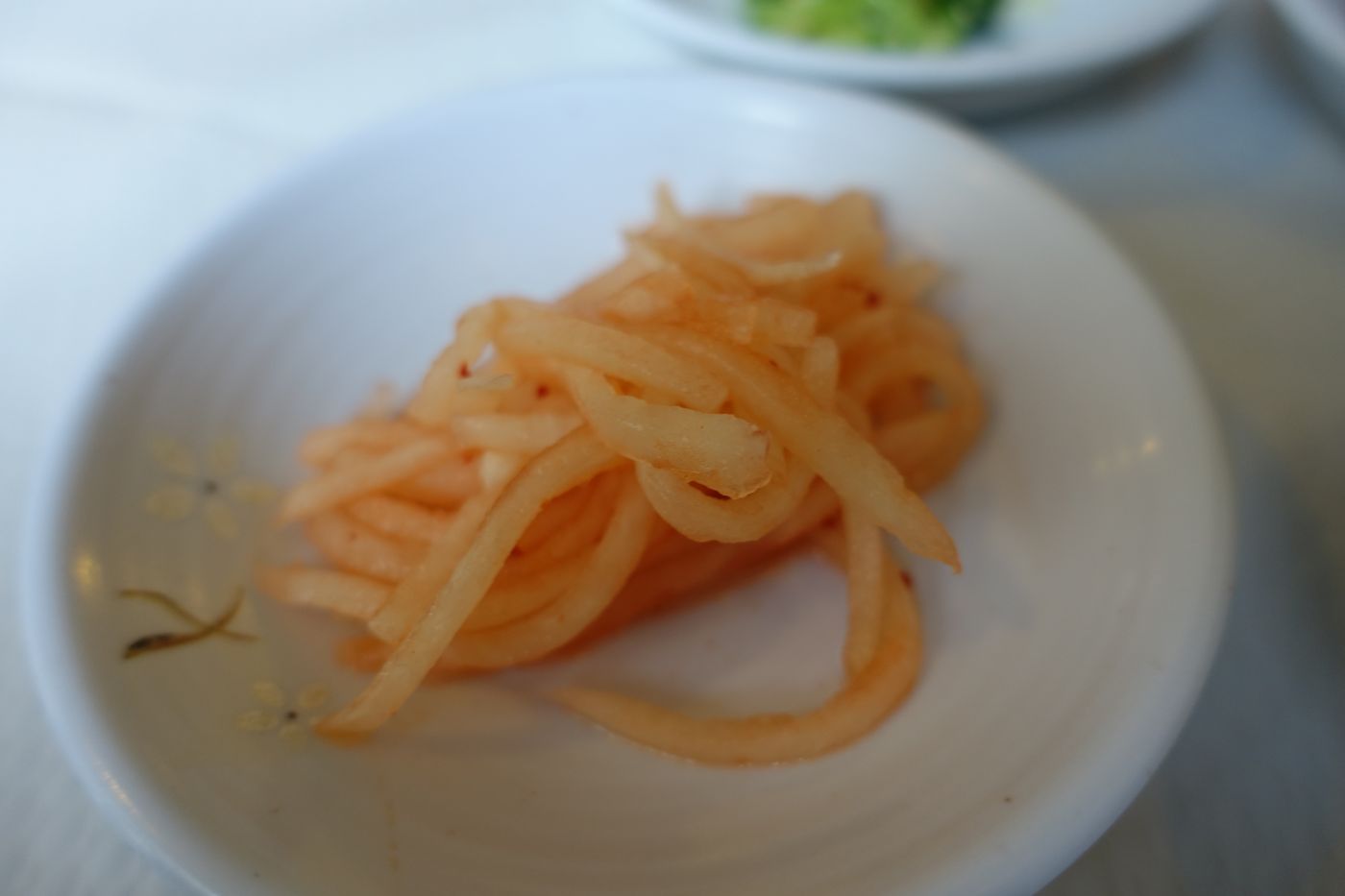 Musaengchae무생채Fine matchsticks of Korean radish dressed raw with chili flakes, a little vinegar and sugar — crisp, sweet-sharp and best made just before the meal.
 Sigeumchi Namul시금치나물Spinach blanched for a few seconds, squeezed dry and dressed with garlic, soy sauce and sesame — one of the simplest and most familiar namul.
 Cubed Radish Kimchi깍두기Korean radish cut into neat cubes and tossed with chili, garlic and salted shrimp — crunchy, juicy and a classic partner to rich soups.
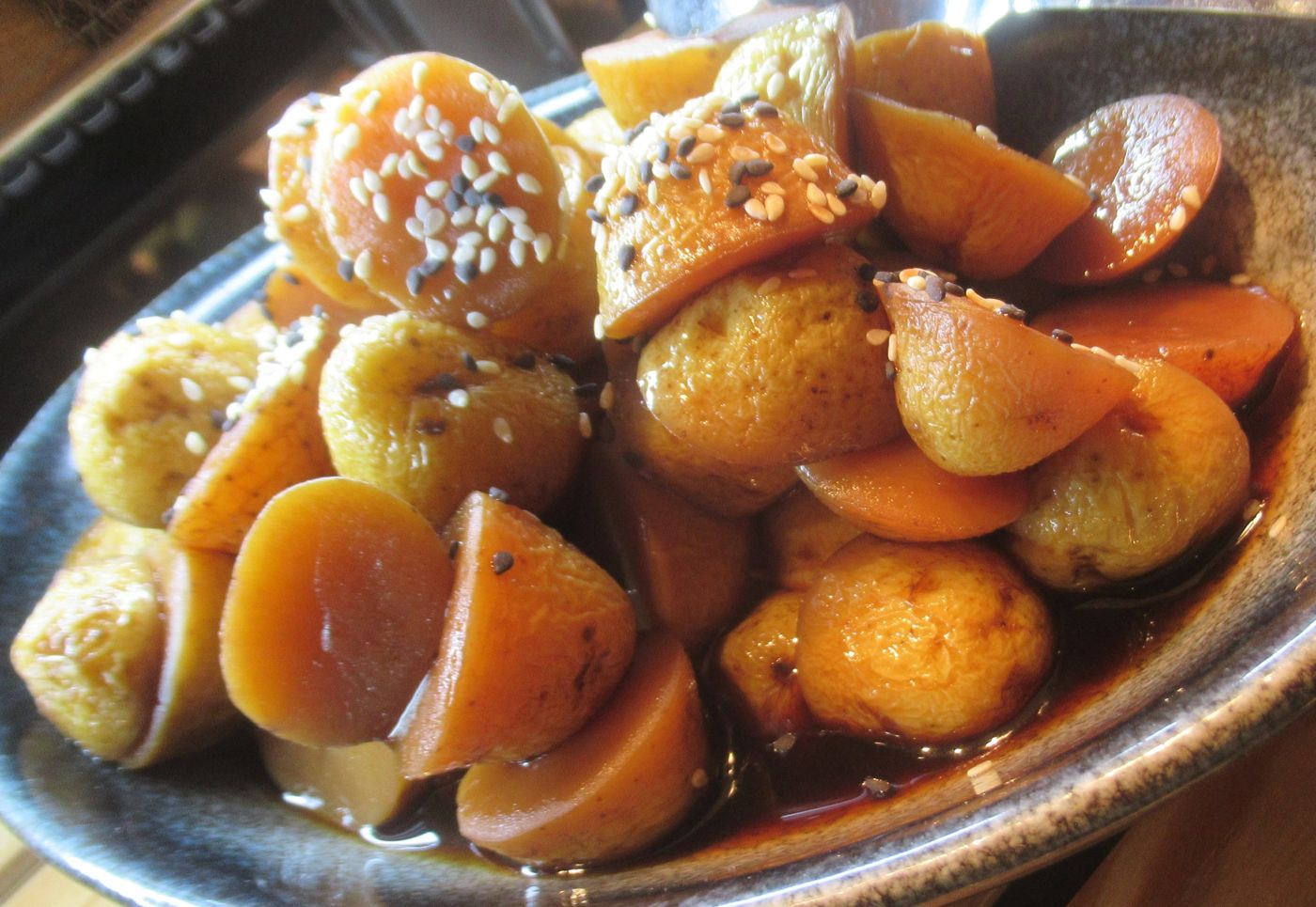 Gamja Jorim감자조림Cubed potatoes simmered in soy sauce, garlic and a touch of sweetness until tender and glossy — a comforting, child-friendly staple of the Korean home table.
Sources
- 01장조림 (Jangjorim) — Encyclopedia of Korean Culture
- 02조림 (Jorim) — Encyclopedia of Korean Culture
- 03Korean recipes: Braised beef in soy sauce (쇠고기장조림) — Korea.net
- 04Leftovers (HGIC 3606) — Clemson Cooperative Extension Home & Garden Information Center
- 05Beef, round, eye of round roast, lean only (FDC 746760) — USDA FoodData Central
- 06Sodium reduction — World Health Organization fact sheet
Last updated