Jorim · Braised 조림
Kodari Jorim (Braised Semi-Dried Pollock)
코다리조림
Romanization: kodari-jorim
Half-dried Alaska pollock braised with radish in a sweet, spicy soy-gochugaru sauce until the chewy flesh soaks up the glaze.
- Serves
- 4
- Prep
- 20 min
- Cook
- 30 min
RegionGangwon
Jump to recipeRecipe
Ingredients · Serves 4
- 2 fishKodari (semi-dried pollock)about 500 g; heads, fins and tails removed, cut into 5 cm pieces
- 200 gKorean radishcut into 1 cm slices
- 4 tbspSoy sauce
- 1½ tbspGochugaru
- 1 tbspGochujang
- 2 tbspMulyeot (rice or corn syrup)
- 1 tbspSugar
- 1 tbspGarlicminced
- 1 tspGingerminced
- 2 tbspCheongju (rice wine) or mirin
- 300 mlWater
- 1 Green chili peppersliced on the diagonal
- 1 stalkGreen onioncut into 4 cm lengths
- 1 tspToasted sesame oil
- 1 tspToasted sesame seeds
Method
Technique: Jorim: Braising in Seasoned Liquid
Step 1: Trim the kodari with kitchen scissors, removing heads, fins and tails, and cut into 5 cm pieces. Scrape away any dark membrane inside the belly, rinse in cold water and drain.
Step 2: Mix the soy sauce, gochugaru, gochujang, half the mulyeot, sugar, garlic, ginger, rice wine and water in a bowl.
Step 3: Line a wide, shallow pot with the radish slices. Pour in about a third of the sauce and simmer, covered, over medium heat for 5–7 minutes, until the radish begins to turn translucent.
Step 4: Lay the kodari on the radish, skin side up, and pour over the remaining sauce. Bring to a boil, then lower the heat to medium-low and simmer, partly covered, for 15–20 minutes, spooning the sauce over the fish now and then.
Step 5: When the sauce has reduced to a few spoonfuls, add the chili and green onion and drizzle the remaining mulyeot around the pot. Cook uncovered for 2–3 minutes more, basting, until the fish is glossy.
Step 6: Finish with the sesame oil and sesame seeds. Serve warm with rice; leftovers keep 2–3 days in the refrigerator.
Origin & History
Alaska pollock (myeongtae) has been called the fish Koreans eat most, and it goes by an unusual number of names depending on how it is handled. The Encyclopedia of Korean Folk Culture lists saengtae for fresh fish, dongtae for frozen, bugeo for fully dried, hwangtae for fish freeze-dried to a golden color over a winter, nogari for the young — and kodari for pollock dried only partway, until it is firm but still pliable. Its entry on bugeo describes kodari as bugeo with the drying cut short.
Drying pollock is an east-coast craft. Before the 2000s, gutted fish were hung on wooden racks along the Gangwon shore at places such as Goseong, Sokcho and Gangneung and dried in the sea wind from late November into February. Pollock has all but disappeared from South Korean waters over the past decades through warming seas and overfishing, and the folk-culture encyclopedia notes that most pollock eaten in Korea now comes from Russian waters, dried in coastal racks or, increasingly, indoor facilities.
Jorim — braising until the sauce is nearly gone — suits kodari well: the half-dried flesh holds its shape and turns pleasantly chewy rather than flaking apart. The Encyclopedia of Korean Culture notes that strong-flavored fish are often braised with gochujang mixed into the soy sauce, and that dried fish are soaked before braising; kodari needs only a quick rinse.
Key Ingredients
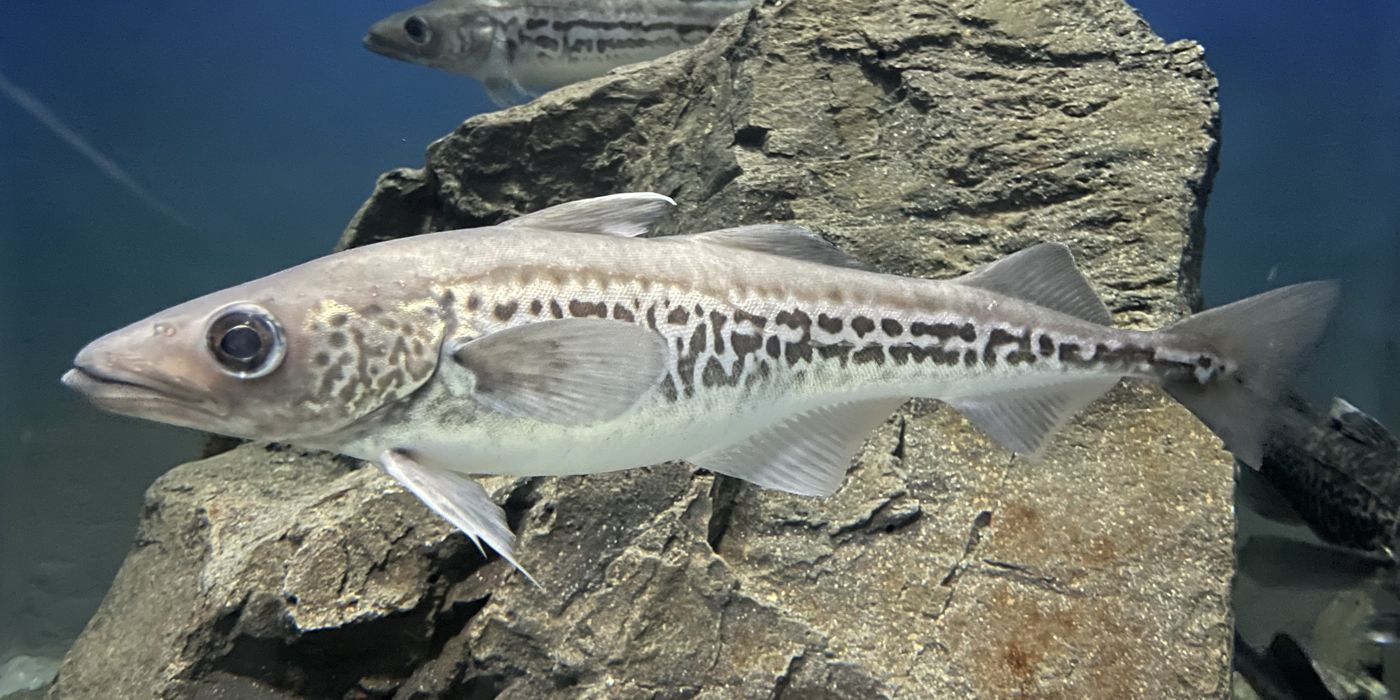 Alaska pollock (myeongtae)명태A lean, mild cold-water fish that Koreans know by a dozen names, depending on how it has been frozen, dried or salted. Dried bugeo simmers into a clear hangover soup, and its roe becomes myeongnan-jeot.
 Korean radish무A stout, heavy white radish, often tinged pale green near the top. It is cubed for kkakdugi, left whole in the clear brine of dongchimi, shredded into salads and simmered into broths.
 Soy sauce간장Korean soy sauce, in two main kitchen forms: pale, salty guk-ganjang (soup soy sauce) brewed the traditional way from meju, and darker, sweeter jin-ganjang for braises and marinades.
 Gochugaru고춧가루Korean red chili powder, made from dried red peppers ground coarse or fine. It gives kimchi, gochujang and countless banchan their color and warmth.
- Gochujang고추장Fermented red chili paste — sweet, savory and hot. Made from meju powder, glutinous rice, malt and gochugaru, it is a later addition to Korea's family of jang.
 Korean grain syrup물엿A clear, glossy syrup used to sweeten and glaze braised and stir-fried banchan. Its traditional relative, jocheong, is a darker malt syrup made by slowly boiling down saccharified rice.
 Garlic마늘Used raw, minced, pickled and roasted, garlic is one of the essential aromatics of Korean food — in seasonings, marinades, kimchi and namul.
 Ginger생강Fresh ginger root, used in small amounts to brighten kimchi paste and marinades and to tame the strong smells of fish and meat.
- Korean Chili Peppers (Fresh)고추Fresh Korean chili peppers, eaten green (putgochu) or red (hong-gochu): from the fiery cheongyang-gochu to the small, wrinkled, mild kkwari-gochu that is braised and stir-fried as banchan.
 Green onion파Korean green onion (pa), from thick-stemmed daepa to slender scallions — chopped into nearly every seasoning sauce, soup and kimchi, and the star of pa-kimchi.
 Sesame참깨Toasted sesame seeds and sesame oil (chamgireum) finish countless Korean dishes, adding a nutty aroma and gloss.
Nutrition
| Calories | ~330 kcal |
|---|---|
| Protein | ~49.4 g |
| Fat | ~4.4 g |
| Carbohydrates | ~22.3 g |
| Fiber | ~2.2 g |
| Sodium | ~1321 mg |
Notable forProtein · Niacin · Calcium
Kodari uses the Korean Food Composition Table entry “Alaska pollock, Semi-dried” (per 100 g: 290 kcal, 61.7 g protein, 3.1 g fat, 243 mg calcium, 8.3 mg niacin), applied to about 300 g of edible flesh from 500 g of whole fish. That entry does not report sodium, so a stand-in of about 460 mg per 100 g was used, derived by scaling the table's raw pollock sodium (132 mg at 80% water) to the semi-dried entry's 31% water; it agrees closely with the table's fully dried pollock (464 mg). Kodari sold in markets varies in dryness, so protein and energy per gram can be considerably lower for moister fish. Radish, soy sauce, gochujang, mulyeot and green chili use Korean table values; gochugaru uses the USDA cayenne entry as a stand-in; other seasonings use USDA FoodData Central; rice wine is omitted. The figure assumes all the sauce is eaten. Actual values vary with ingredients, portion size and preparation.
Health Benefits
- High in protein, low in fat: pollock is a lean white fish, and drying concentrates its protein; a serving of this braise supplies a substantial share of a day's protein with little fat.
- B vitamins and minerals: the Korean Food Composition Table lists semi-dried pollock as a source of niacin and calcium.
- Radish: the radish braised alongside adds fiber, potassium and bulk for few calories.
Regional Variations
- Radish-lined braise: the usual home version, with slices of Korean radish under the fish to absorb the sauce.
- Kodari-gangjeong: bite-size pieces fried until crisp, then tossed in a sticky gochujang-soy-sugar glaze.
- Kodari-muchim and kodari-bokkeum: the dictionary also records kodari dressed raw with gochujang, vinegar and sugar, and kodari stir-fried with seasonings.
- Kodari-naengmyeon: cold buckwheat noodles mixed with seasoned kodari instead of broth.
- Other pollock braises: fully dried bugeo and frozen dongtae are braised the same way, with longer soaking for bugeo.
Pairings
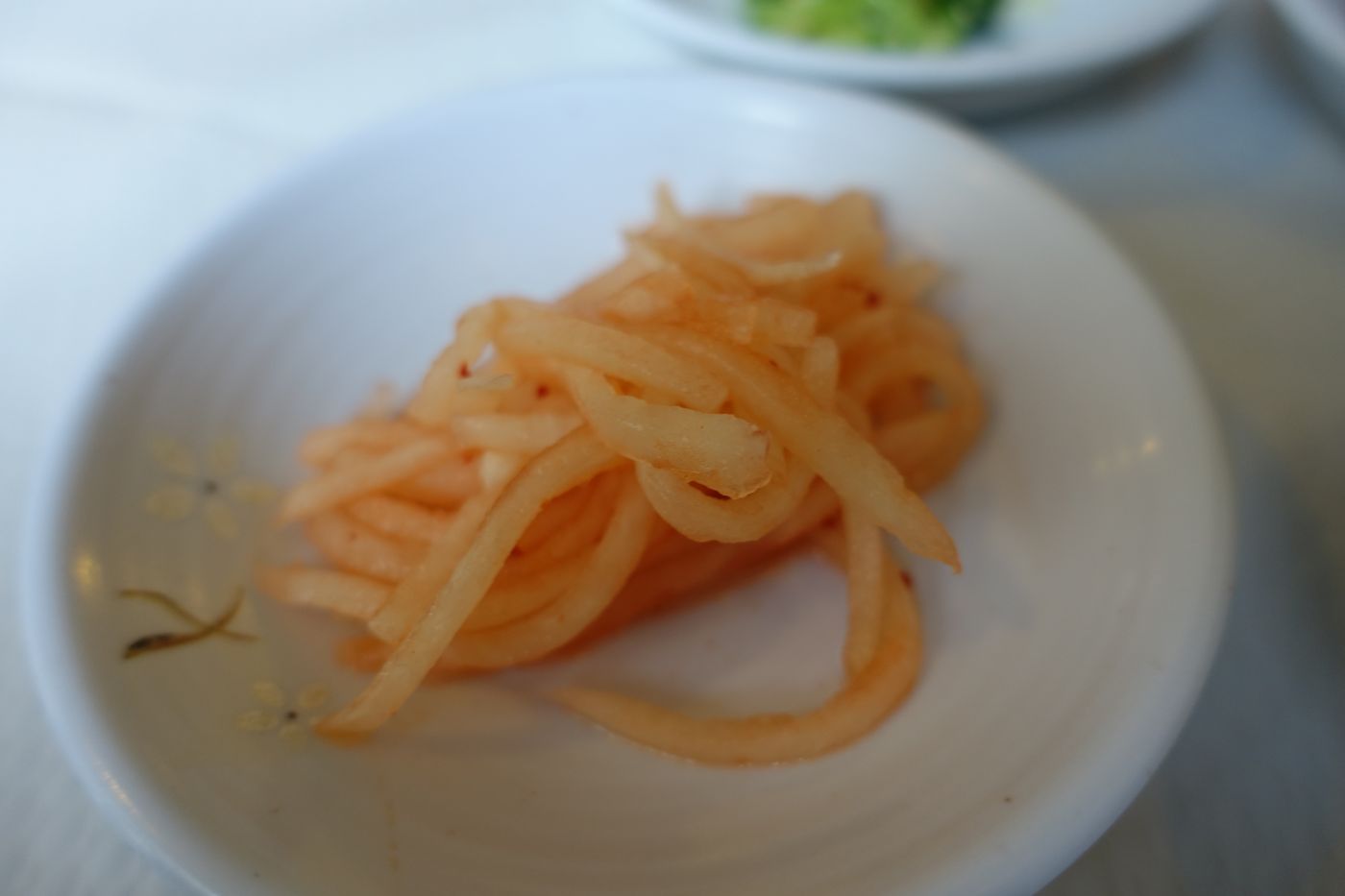 Musaengchae무생채Fine matchsticks of Korean radish dressed raw with chili flakes, a little vinegar and sugar — crisp, sweet-sharp and best made just before the meal.
 Gyeran Jjim (Steamed Egg)계란찜Eggs whisked with water or broth and gently steamed into a silky, savory custard, often seasoned with salted shrimp and served bubbling hot.
 Doenjang Jjigae (Soybean Paste Stew)된장찌개A thick, savory stew of fermented soybean paste with tofu, zucchini and whatever the season offers — the everyday pot at the center of the Korean table.
Sources
- 01명태 (Alaska pollock) — Encyclopedia of Korean Folk Culture (National Folk Museum of Korea)
- 02북어 (Bugeo, dried pollock) — Encyclopedia of Korean Folk Culture (National Folk Museum of Korea)
- 03코다리 / 코다리조림 — Urimalsaem (National Institute of Korean Language)
- 04조림 (Jorim) — Encyclopedia of Korean Culture
- 05Korean Food Composition Table: Alaska pollock, Semi-dried — National Institute of Agricultural Sciences
- 06Korean Food Composition Table: Alaska pollock, Raw — National Institute of Agricultural Sciences
Last updated