 Photo: Jungyeon Min, CC0, via Wikimedia Commons
More dishes 기타
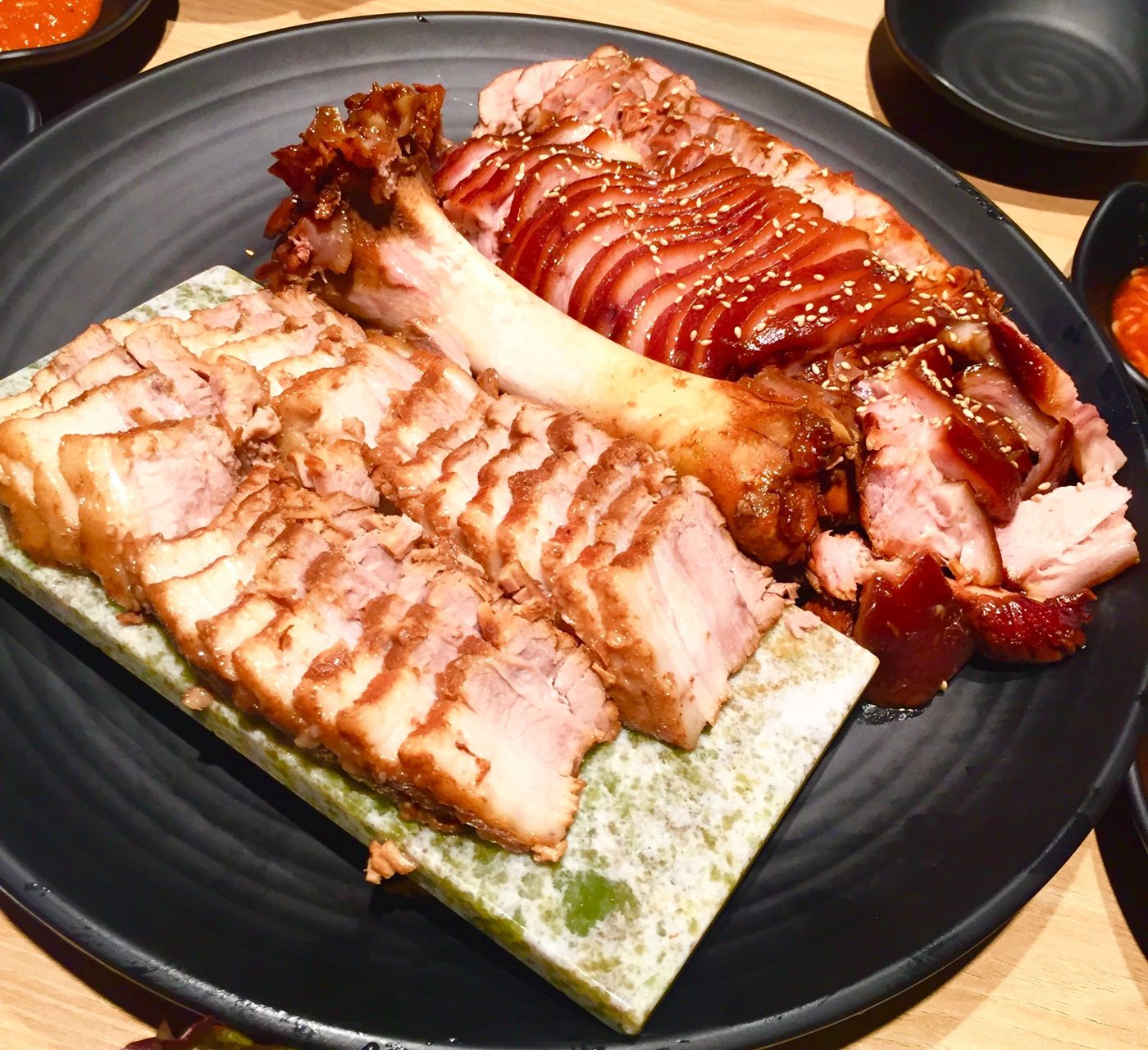
Bossam (Boiled Pork Wraps)
보쌈
Romanization: bossam
Pork belly simmered with doenjang and aromatics, pressed and sliced, then wrapped in salted cabbage with spicy radish and salted shrimp — a feast dish built for sharing.
- Serves
- 4
- Prep
- 40 min
- Cook
- 70 min
RegionGyeongsang · Jeolla · Jeju
Jump to recipeRecipe
Ingredients · Serves 4
- 800 gSkin-on or skinless pork belly or shoulder, in one or two thick pieces
- 2 tbspDoenjangfor the cooking water
- 1 Onionhalved, for the cooking water
- 6 clovesGarlicfor the cooking water
- 20 gGingersliced, for the cooking water
- 2 stalksGreen onionfor the cooking water
- 1 tspBlack peppercorns and bay leavesplus 2 bay leaves
- 300 gKorean radishjulienned, for the radish salad
- 1 tspSaltfor salting the radish; rinse off
- 2 tbspGochugarufor the radish salad
- 1 tbspSugarfor the radish salad
- 3 tbspSaeujeot (salted shrimp)1 tbsp chopped for the radish, 2 tbsp for dipping
- 2 clovesGarlicminced, for the radish salad
- 300 gSalted napa cabbage leavesinner leaves, salted 2–3 hours and rinsed, or fresh lettuce
- Lettuce, sliced garlic and green chiliesoptional, for wrapping
Method
Technique: Making Ssam and Wraps, Making Kimchi
Step 1: Bring about 2.5 liters of water to a boil with the doenjang, onion, garlic, ginger, green onion, peppercorns and bay leaves.
Step 2: Add the pork, return to a boil, then simmer, partly covered, for 50–60 minutes, until a chopstick slides in easily (at least 145 °F / 63 °C, though belly is cooked well beyond this to become tender).
Step 3: Meanwhile, toss the radish with the salt and leave 15 minutes; rinse, squeeze dry, and mix with the gochugaru, sugar, 1 tbsp chopped salted shrimp and minced garlic.
Step 4: Lift out the pork, wrap it in a clean cloth and set a heavy plate or pot on top for 10–15 minutes to firm it and press out fat.
Step 5: Slice the pork about 5 mm thick across the grain and arrange on a platter with the cabbage leaves, radish salad and a small dish of salted shrimp.
Step 6: To eat, lay a slice of pork on a cabbage leaf, add a little radish and a dab of salted shrimp, wrap and eat in one bite.
Origin & History
Bossam is a way of eating boiled pork: slices of tender meat wrapped at the table in salted napa cabbage or lettuce with a spicy radish salad, a little salted shrimp and other condiments. The Korean Food Promotion Institute describes the pork as simmered so that it has no gamey smell, then pressed under a heavy stone to squeeze out remaining fat, and ties the name to the long Korean habit of wrapping food (ssam) — above all to boksam, "wrapping good fortune," eaten at the first full moon. Pigs, too, have long symbolized wealth and luck in Korea, so the institute reads the dish as a doubled wish for fortune. See ssam culture.
The meat itself is suyuk, boiled meat. The Encyclopedia of Korean Folk Culture traces boiled meats back to the Joseon royal ancestral rites and to cookbooks such as Siui jeonseo, which recommends eating boiled pork with vinegar soy sauce, salted-shrimp liquid and chili powder. It notes that in South Gyeongsang pork boiled with doenjang, garlic, ginger, soju and medicinal herbs is eaten with napa cabbage kimchi and ssamjang — essentially today's bossam. The institute explains the old pairing of pork and salted shrimp (saeujeot) in terms of the enzymes in fermented shrimp; whatever the reason, the combination is a fixture. Pork was once mostly eaten when a village slaughtered a pig for a feast, which is part of why the dish still feels celebratory.
Kimchi is the other half of bossam. The institute calls kimchi indispensable to bossam, its cool, refreshing bite balancing the rich pork, and notes that the kimchi served with it is traditionally made without chili powder so as not to overwhelm the meat. A separate dish, bossam-kimchi, is a Kaesong-style kimchi wrapped in cabbage leaves; the Encyclopedia of Korean Culture notes that people in Kaesong called it ssam-kimchi because the word bossam also named an old abduction custom. See making ssam and wraps.
Key Ingredients
 Pork (dwaeji-gogi)돼지고기Korea's most widely eaten meat, prized cut by cut: fatty belly for samgyeopsal, neck for the grill, lean legs for boiled suyuk and stir-fried jeyuk. Pork also anchors Jeju Island's feast cooking.
 Doenjang된장Fermented soybean paste — the savory foundation of doenjang-jjigae, many soups and dressings for namul. It is one of Korea's core jang, or fermented sauces.
 Garlic마늘Used raw, minced, pickled and roasted, garlic is one of the essential aromatics of Korean food — in seasonings, marinades, kimchi and namul.
 Ginger생강Fresh ginger root, used in small amounts to brighten kimchi paste and marinades and to tame the strong smells of fish and meat.
 Green onion파Korean green onion (pa), from thick-stemmed daepa to slender scallions — chopped into nearly every seasoning sauce, soup and kimchi, and the star of pa-kimchi.
 Korean radish무A stout, heavy white radish, often tinged pale green near the top. It is cubed for kkakdugi, left whole in the clear brine of dongchimi, shredded into salads and simmered into broths.
 Gochugaru고춧가루Korean red chili powder, made from dried red peppers ground coarse or fine. It gives kimchi, gochujang and countless banchan their color and warmth.
 Salted fermented shrimp새우젓Tiny shrimp packed in salt and left to ferment — a jeotgal (salted seafood) that seasons kimchi and stews and accompanies boiled pork with briny, savory depth.
 Napa cabbage배추The tall, pale, tightly headed cabbage at the heart of Korea's best-known kimchi. Salted, layered with seasoning and left to ferment, it becomes baechu-kimchi; fresh, it goes into soups, wraps and quick salads.
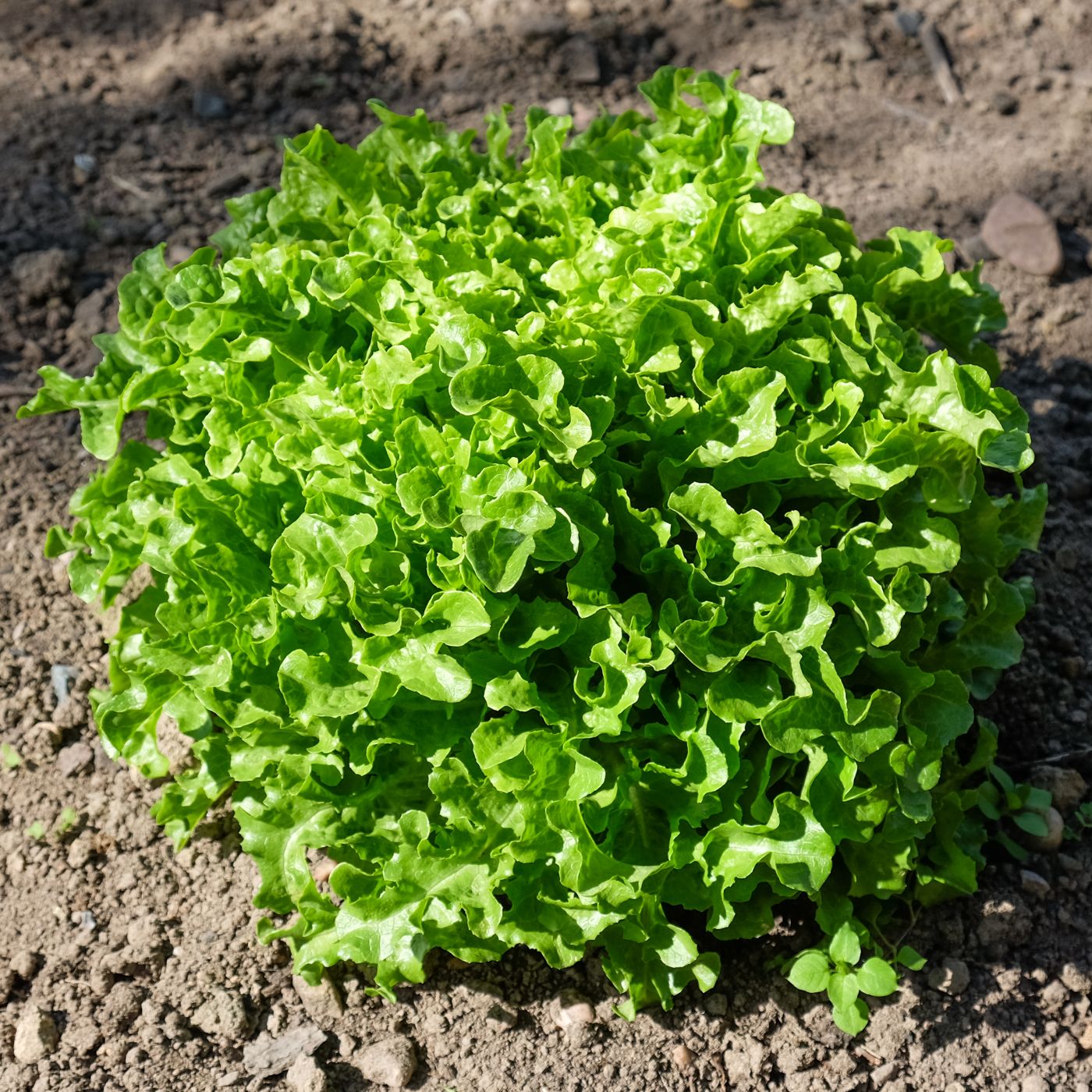 Sangchu (lettuce)상추Soft, loose-leaf lettuce, green or red-tinged, that anchors the Korean habit of ssam: wrapping rice, grilled meat and a dab of ssamjang in a fresh leaf. It is also dressed quickly as sangchu-geotjeori.
Nutrition
| Calories | ~615 kcal |
|---|---|
| Protein | ~28 g |
| Fat | ~48 g |
| Carbohydrates | ~12 g |
| Fiber | ~3.3 g |
| Sodium | ~1530 mg |
Notable forProtein · Thiamin (vitamin B1) · Vitamin K
Estimated from Korean Food Composition Table values for boiled pork belly (samgyeopsal, I014000D169b; assumes about 130 g cooked meat per person), salted napa cabbage (F087000000Ia) and salt-fermented shrimp (K617004000Ia), plus USDA FoodData Central (SR Legacy) values for Korean radish (FDC 168451), red pepper (FDC 170932, for gochugaru), sugar, garlic and ginger, divided by 4. Assumes all 3 tbsp of salted shrimp are eaten; the dip alone supplies about 600 mg sodium per serving. Using shoulder instead of belly roughly halves the fat. Actual values vary with ingredients, portion size and preparation.
Health Benefits
- Boiled, not fried: simmering and pressing render out some fat; the folk encyclopedia notes boiled meat has long been seen as a lighter way to eat pork.
- Vegetables in every bite: cabbage, radish, garlic and chilies wrap each slice, adding fiber, vitamin C and vitamin K.
- Pork nutrients: pork is a good source of protein and thiamin (vitamin B1).
Regional Variations
- With mild kimchi: the Korean Food Promotion Institute describes bossam served with a kimchi made without chili powder.
- South Gyeongsang suyuk (Gyeongsang): pork boiled with doenjang, garlic, ginger, soju, cinnamon and herbs such as hwanggi and danggwi, served with cabbage kimchi and ssamjang, as the folk encyclopedia records.
- Jeju dombae-gogi (Jeju): boiled pork sliced on a wooden board (dombae) and served at feasts with doenjang or soy sauce — a close cousin.
- Jeolla suyuk (Jeolla): pork soaked in doenjang water and boiled with green onion, garlic, ginger and rice wine, served with vinegared chili paste.
Pairings
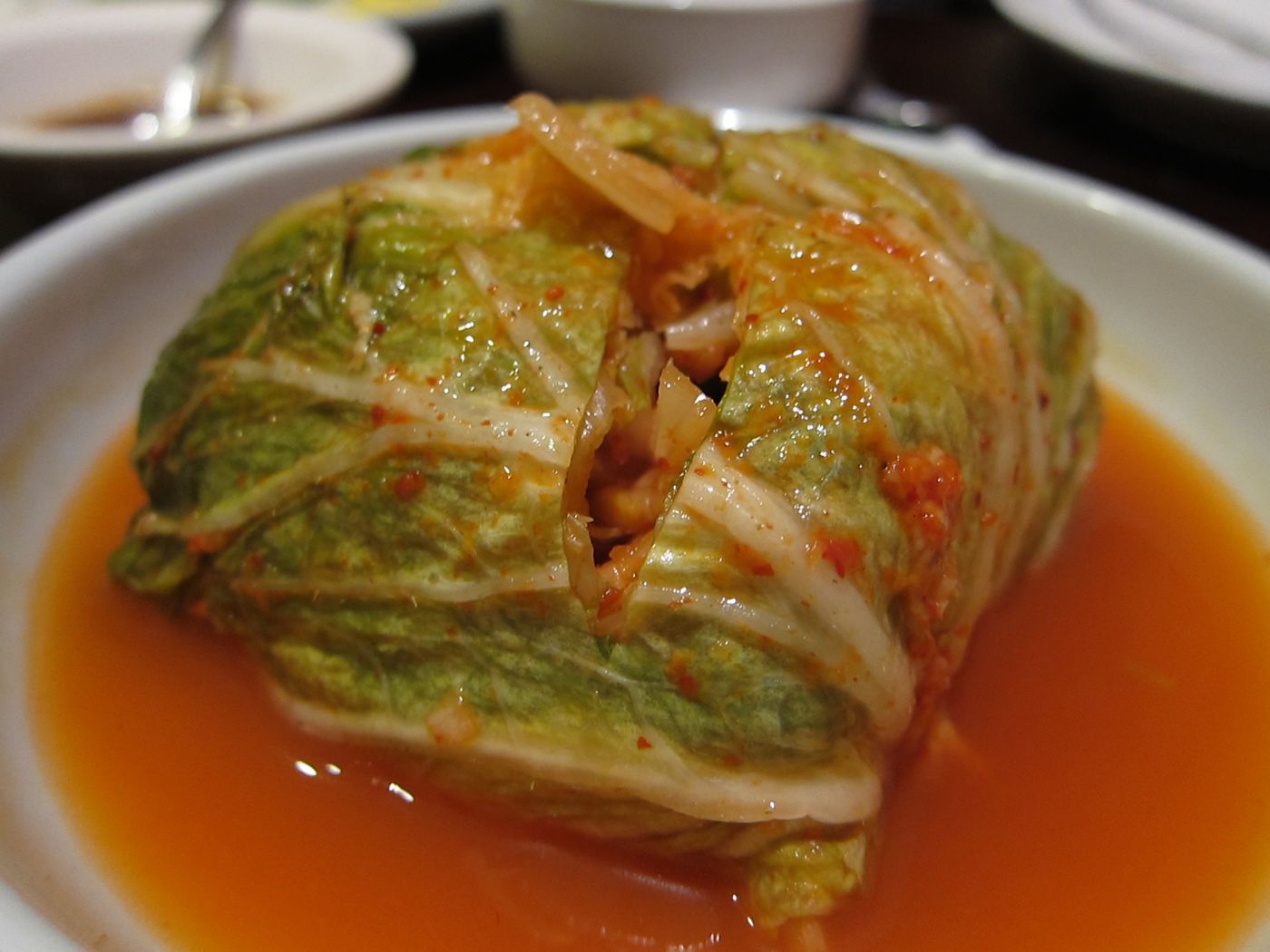 Wrapped Kimchi보쌈김치Cabbage, radish, fruit, nuts and seafood bundled inside whole cabbage leaves — the lavish wrapped kimchi of Gaeseong, made for honored guests.
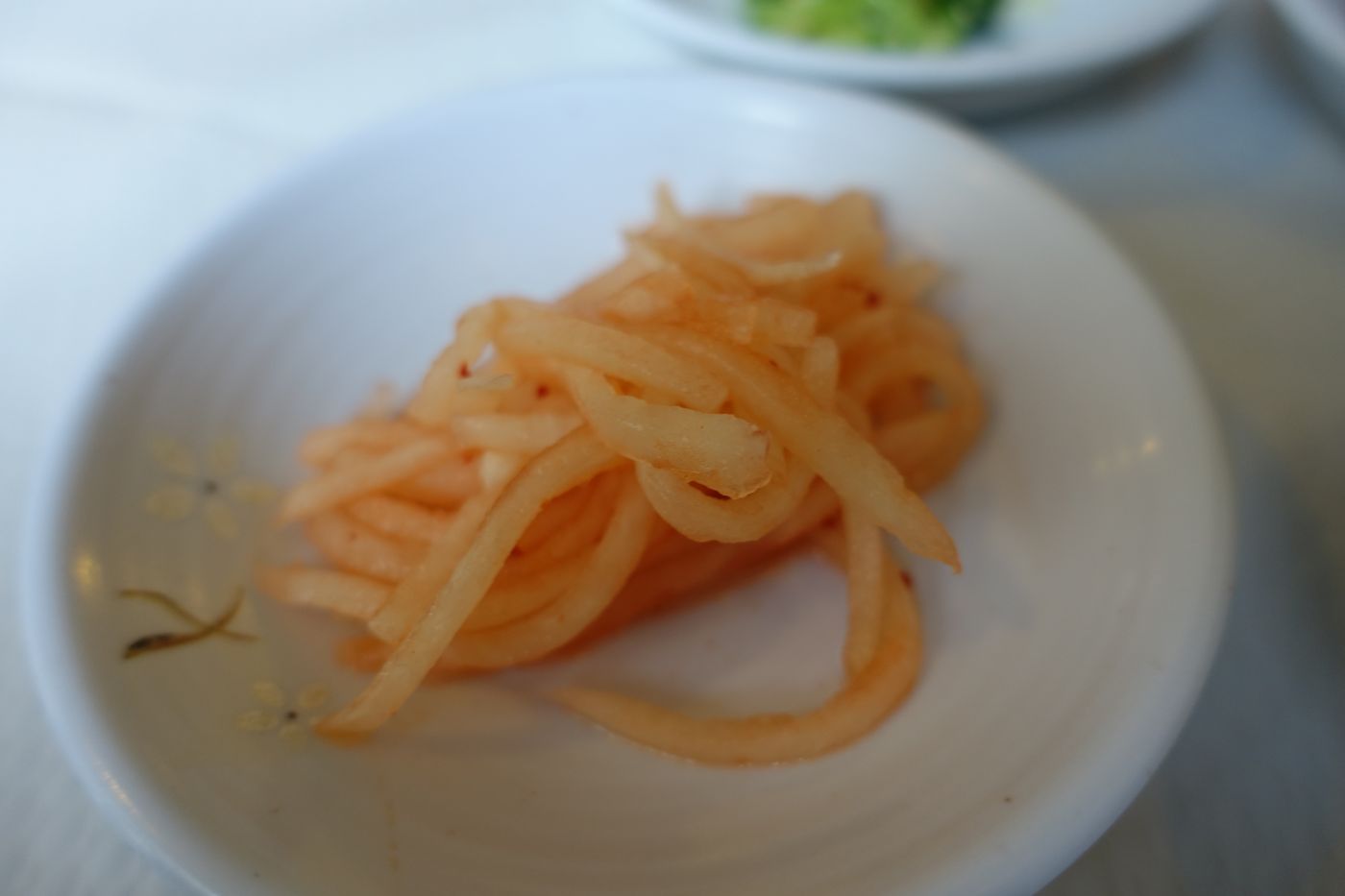 Musaengchae무생채Fine matchsticks of Korean radish dressed raw with chili flakes, a little vinegar and sugar — crisp, sweet-sharp and best made just before the meal.
- Sangchu Geotjeori (Fresh Lettuce Salad, Kimchi-Style)상추겉절이Tender leaf lettuce dressed at the last minute with soy sauce, chili flakes, green onion and sesame — the crisp, spicy salad served beside grilled pork.
 Doenjang Jjigae (Soybean Paste Stew)된장찌개A thick, savory stew of fermented soybean paste with tofu, zucchini and whatever the season offers — the everyday pot at the center of the Korean table.
Sources
- 01한식이야기: 보쌈(돼지제육) (Korean Food Story: Bossam) — Korean Food Promotion Institute
- 02수육 (Suyuk) — Encyclopedia of Korean Folk Culture, National Folk Museum of Korea
- 03한식이야기: 수육 (Korean Food Story: Suyuk) — Korean Food Promotion Institute
- 04보쌈김치 (Bossam-kimchi) — Encyclopedia of Korean Culture
- 05Pork meat, Belly side (Samgyeopsal), Boiled (I014000D169b) — Korean Food Composition Table
- 06Safe Food Handling — U.S. Food and Drug Administration
Last updated