 Photo: Chloe Lim, CC BY 2.0, via Wikimedia Commons
More dishes 기타
Mandu (Korean Dumplings)
만두
Romanization: mandu
Thin wrappers folded around pork, tofu, kimchi and sprouts, then steamed or boiled — a Goryeo-era arrival from China that became a winter staple of the North.
- Serves
- 6
- Prep
- 60 min
- Cook
- 25 min
RegionNorthern Provinces (Hwanghae, Pyeongan, Hamgyeong) · Gaeseong
Jump to recipeRecipe
Ingredients · Serves 6
- 300 gGround pork
- 200 gFirm tofuweighed after squeezing very dry in a cloth
- 200 gMung bean sproutsblanched 1 minute
- 150 gWell-fermented napa cabbage kimchifinely chopped and squeezed
- 30 gSweet potato glass noodles (dangmyeon)dry weight
- 30 gGreen onionfinely chopped
- 3 clovesGarlicminced (about 15 g)
- 1 tspGingerminced
- 1 tbspSoy sauce
- 1 tbspToasted sesame oil
- ½ tspSalt
- ¼ tspBlack pepper
- 1 largeEgg
- 40 Round dumpling wrappers (wheat)about 400 g; thaw if frozen
Method
Technique: Making Mandu, Steaming and Jjim
Step 1: Boil the glass noodles for 5 minutes, drain, rinse and chop finely. Chop the blanched sprouts, then squeeze them, the kimchi and the tofu as dry as you can — wet filling tears the wrappers.
Step 2: In a large bowl, combine the pork, tofu, sprouts, kimchi, noodles, green onion, garlic, ginger, soy sauce, sesame oil, salt, pepper and egg. Knead by hand for 2 minutes until the filling holds together.
Step 3: Set a small bowl of water beside you. Put a heaped tablespoon of filling in the center of a wrapper, wet the edge, fold into a half-moon and press out the air as you seal. Bring the two corners together and pinch them if you like.
Step 4: Steam the dumplings in batches on a lined steamer over boiling water for 10–12 minutes, or drop them into boiling water and cook 2–3 minutes after they float. The filling should be firm and reach 160 °F (71 °C).
Step 5: Serve hot with soy sauce mixed with a little vinegar and chili flakes. To freeze, lay uncooked dumplings apart on a tray until hard, then bag them; cook from frozen, adding a few minutes.
Origin & History
Mandu came to Korea from China, and both national encyclopedias agree it had arrived by the Goryeo dynasty. The Encyclopedia of Korean Culture points to the official history Goryeosa, which records that in the reign of King Chunghye people who slipped into the royal kitchen to steal mandu were punished — proof the food was known at court, though not of which kind it was. In China, the encyclopedia explains, a leavened bun with a filling is mantou or baozi, while a thin wrapper folded around a filling and boiled, fried or steamed is jiaozi.
The second clue is a song. Ssanghwajeom, a Goryeo song that records say was staged before King Chungnyeol in 1279, when the court was under heavy Yuan (Mongol) influence, is set in a shop selling ssanghwa — a sound-borrowed word for mandu — kept by a hoehoe, a Central Asian Muslim. In the folk encyclopedia, food historian Joo Young-ha calls ssanghwa-byeong a kind of mandu that entered the peninsula in the Yuan period and describes it as unfilled; the Encyclopedia of Korean Culture instead describes ssanghwa as leavened dough steamed around a filling. Either way, names shifted over the Joseon period: leavened buns came to be called sanghwa, and the thin-skinned dumpling took the name mandu, which it keeps today.
Wheat was scarce, so Joseon cooks often made wrappers from buckwheat bound with mung bean starch. The 17th-century cookbook Eumsik dimibang gives buckwheat mandu filled with pheasant (or beef) and soft-boiled radish, fish-skin eomandu, and seongnyutang, a soup of dumplings shaped like little pomegranates. The folk encyclopedia notes that mandu soup was a New Year dish in some 17th-century households until Seoul custom settled on rice-cake soup (tteokguk), while Pyeongan and Hwanghae families kept making mandu for Seollal. Because buckwheat and wheat grew best in the north, the Encyclopedia of Korean Culture says, mandu developed most in Pyeongan and Hamgyeong. After 1882, Chinese settlers in Incheon sold jiaozi, baozi and wonton, and Koreans called the boiled kinds mul-mandu. See making mandu, the history of mandu and Korean-Chinese food.
Key Ingredients
 Pork (dwaeji-gogi)돼지고기Korea's most widely eaten meat, prized cut by cut: fatty belly for samgyeopsal, neck for the grill, lean legs for boiled suyuk and stir-fried jeyuk. Pork also anchors Jeju Island's feast cooking.
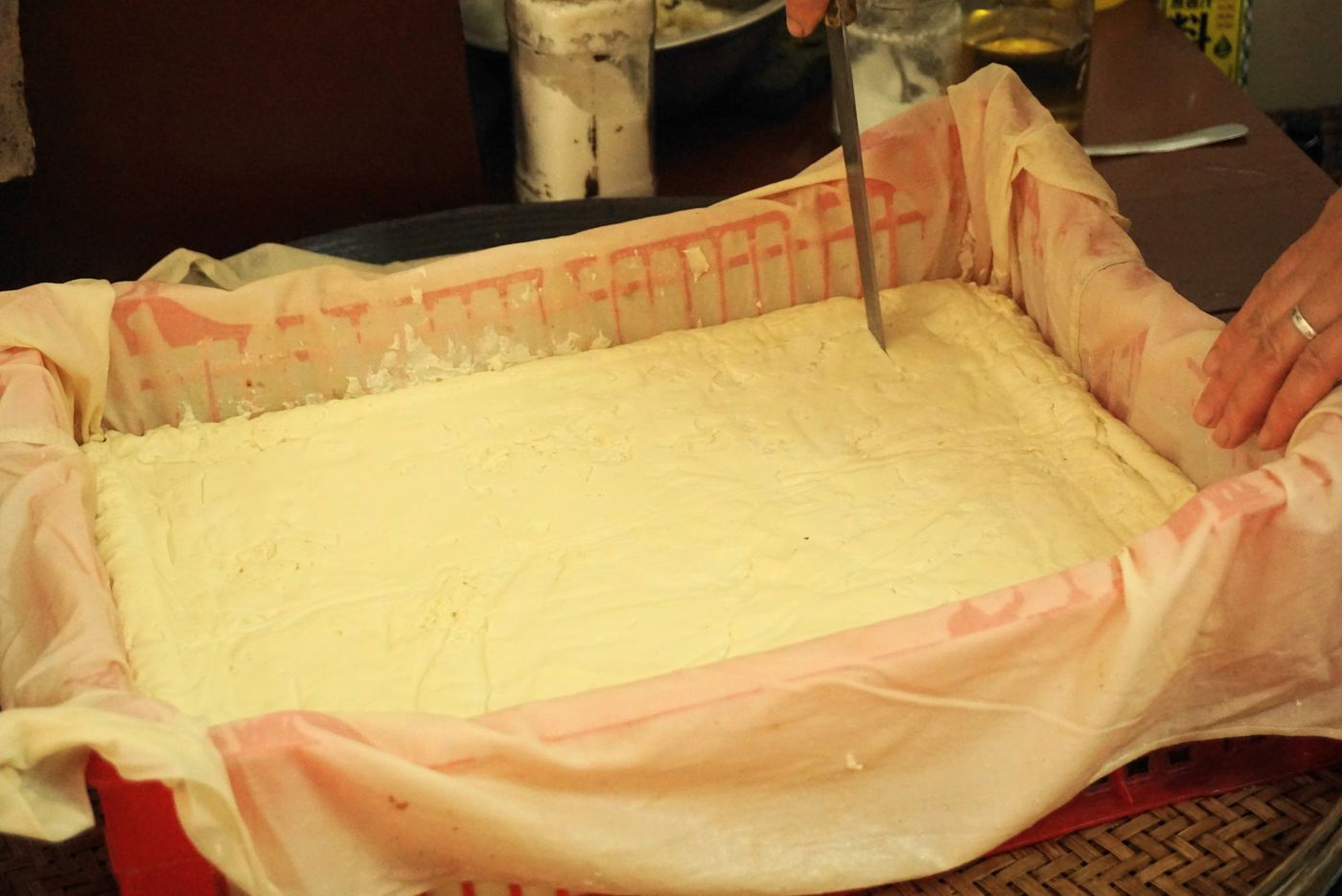 Tofu두부Fresh bean curd made by coagulating soy milk and pressing the curds. A quiet staple of Korean cooking since at least the late Goryeo period, it is pan-fried, braised in spicy soy glaze, or simmered in stews.
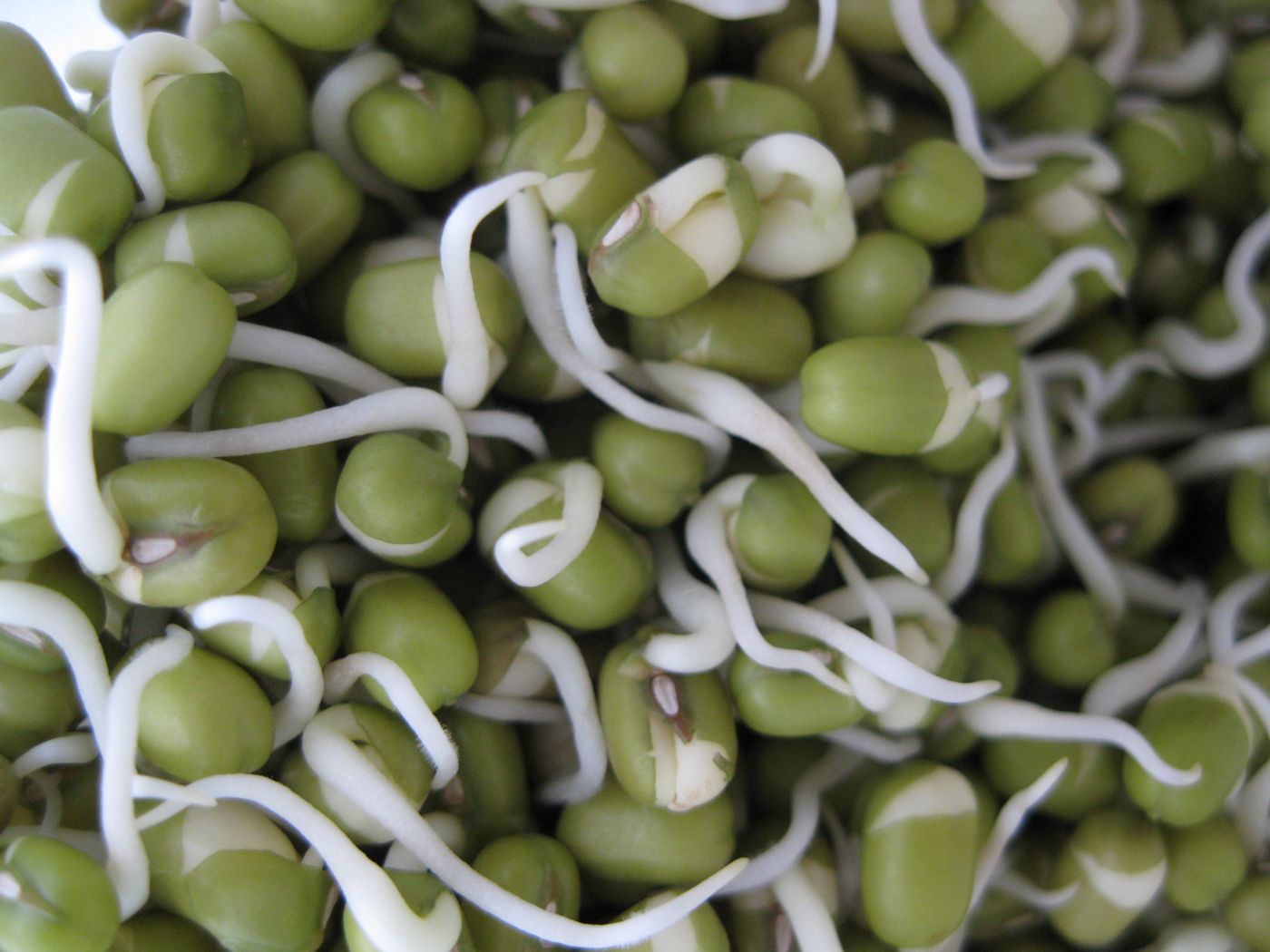 Mung bean sprouts숙주나물Short, plump, delicate sprouts grown from mung beans. Quickly blanched and seasoned as sukju-namul, they are milder and more tender than soybean sprouts.
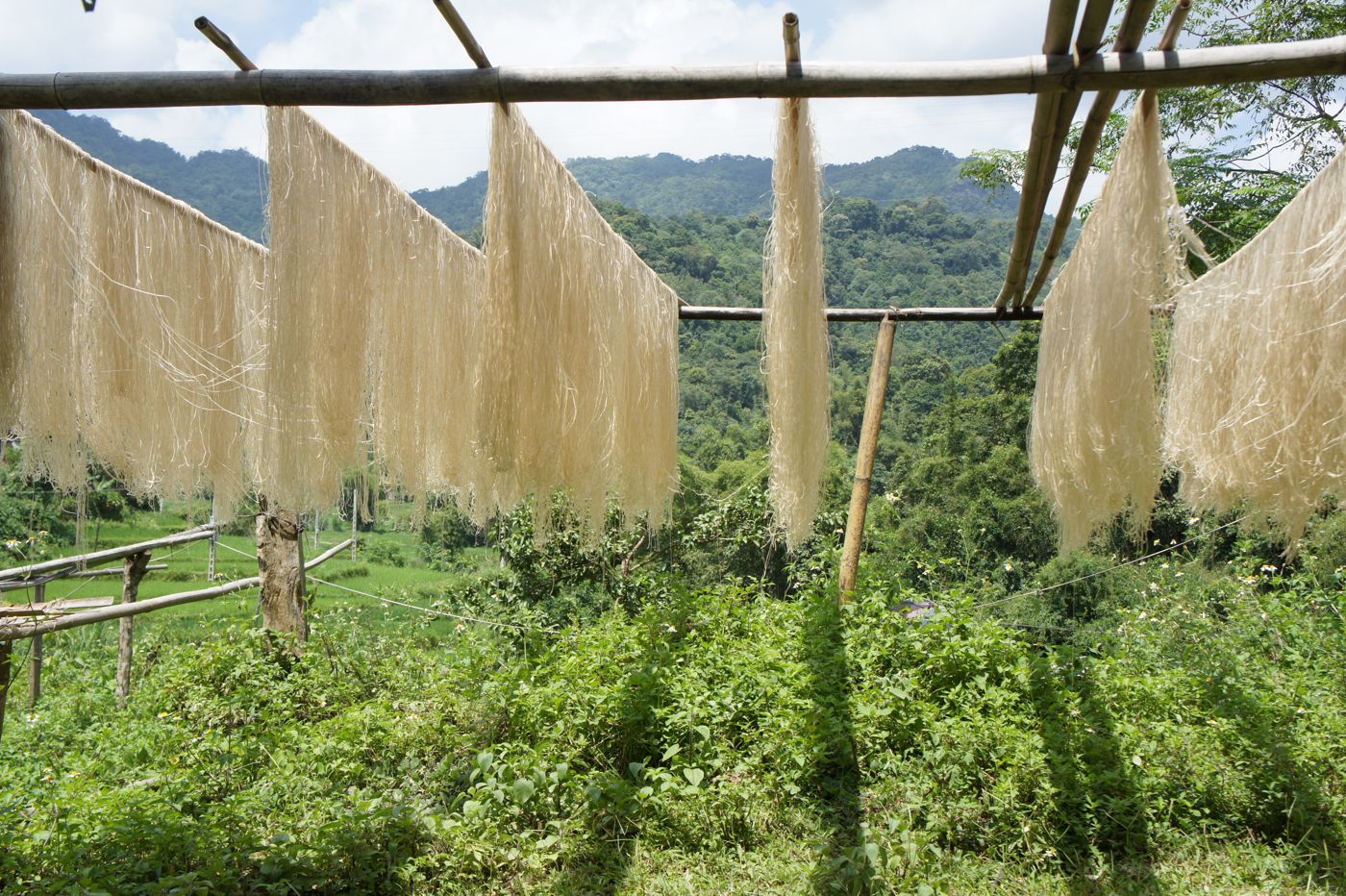 Sweet potato glass noodles당면Chewy, translucent noodles made from sweet potato starch. Introduced from China in the late Joseon period and mass-produced from 1919, they became the heart of modern japchae.
 Green onion파Korean green onion (pa), from thick-stemmed daepa to slender scallions — chopped into nearly every seasoning sauce, soup and kimchi, and the star of pa-kimchi.
 Garlic마늘Used raw, minced, pickled and roasted, garlic is one of the essential aromatics of Korean food — in seasonings, marinades, kimchi and namul.
 Ginger생강Fresh ginger root, used in small amounts to brighten kimchi paste and marinades and to tame the strong smells of fish and meat.
 Soy sauce간장Korean soy sauce, in two main kitchen forms: pale, salty guk-ganjang (soup soy sauce) brewed the traditional way from meju, and darker, sweeter jin-ganjang for braises and marinades.
 Sesame참깨Toasted sesame seeds and sesame oil (chamgireum) finish countless Korean dishes, adding a nutty aroma and gloss.
- Egg (gyeran)계란The everyday protein of the Korean table: rolled into gyeran-mari, steamed into puffy gyeran-jjim, simmered in soy for gyeran-jangjorim, and cut into thin yellow and white ribbons of jidan to garnish soups and noodles.
 Wheat flour밀가루Finely milled wheat flour, the base of Korean noodles, dumpling wrappers, pancake batters and ramyeon. A luxury for most of Korean history, it became an everyday staple only after the Korean War, when American aid flour flooded the market.
Nutrition
| Calories | ~450 kcal |
|---|---|
| Protein | ~24 g |
| Fat | ~18 g |
| Carbohydrates | ~49 g |
| Fiber | ~3.5 g |
| Sodium | ~910 mg |
Notable forProtein · Thiamin (vitamin B1) · Selenium · Folate
Estimated by summing USDA FoodData Central (SR Legacy) values for raw ground pork (FDC 167902), firm tofu (FDC 172475), raw mung bean sprouts (FDC 169957), wonton wrappers (FDC 172802, the nearest match for mandu wrappers), whole egg (FDC 171287), scallions, garlic, ginger, soy sauce (FDC 174277), sesame oil and table salt, with Korean Food Composition Table values for napa cabbage kimchi (F2050070009a) and dried sweet-potato glass noodles (B0070010001a), divided by 6. Excludes the dipping sauce. Much of the sodium comes from the kimchi and the wrappers. Actual values vary with ingredients, portion size and preparation.
Health Benefits
- Protein from several sources: pork, tofu and egg together make a serving a good source of protein; pork also supplies thiamin.
- Vegetables inside: sprouts, kimchi and green onion make up a large share of the filling, adding folate and some fiber.
- Gentle cooking: steamed or boiled mandu need no frying oil; pan-fried versions absorb noticeably more fat.
Regional Variations
- Pyeongan and Hwanghae (northern provinces): large dumplings made for Seollal; the writer Heo Gyun (1569–1618) noted that people of Uiju made big mandu as well as the Chinese did.
- Gaeseong pyeonsu (Gaeseong): the city's famous dumpling, sold in Gaeseong and Seoul noodle houses under Japanese rule. A 1929 magazine quoted by the folk encyclopedia lists a filling of beef, pork, chicken, fresh oysters, pine nuts, mushrooms, mung bean sprouts and tofu, with sprouts and tofu kept under a third of the mixture.
- Court and yangban mandu: eomandu, with thin slices of fish as the wrapper, and gyuasang, shaped like a sea cucumber — both made with costly ingredients.
- By filling and cooking: meat (gogi), kimchi, squash or mushroom fillings; simmered in broth as manduguk, steamed as jjin-mandu, or served in chilled broth.
- Mul-mandu: small boiled dumplings of Korea's ethnic Chinese; the folk encyclopedia notes several specialist shops around Seoul's Bukchang-dong before the 1980s.
Pairings
 Napa Cabbage Kimchi배추김치Salted napa cabbage layered with a red paste of chili, garlic, ginger and fermented seafood, then left to ripen: the kimchi most people picture first.
 Cubed Radish Kimchi깍두기Korean radish cut into neat cubes and tossed with chili, garlic and salted shrimp — crunchy, juicy and a classic partner to rich soups.
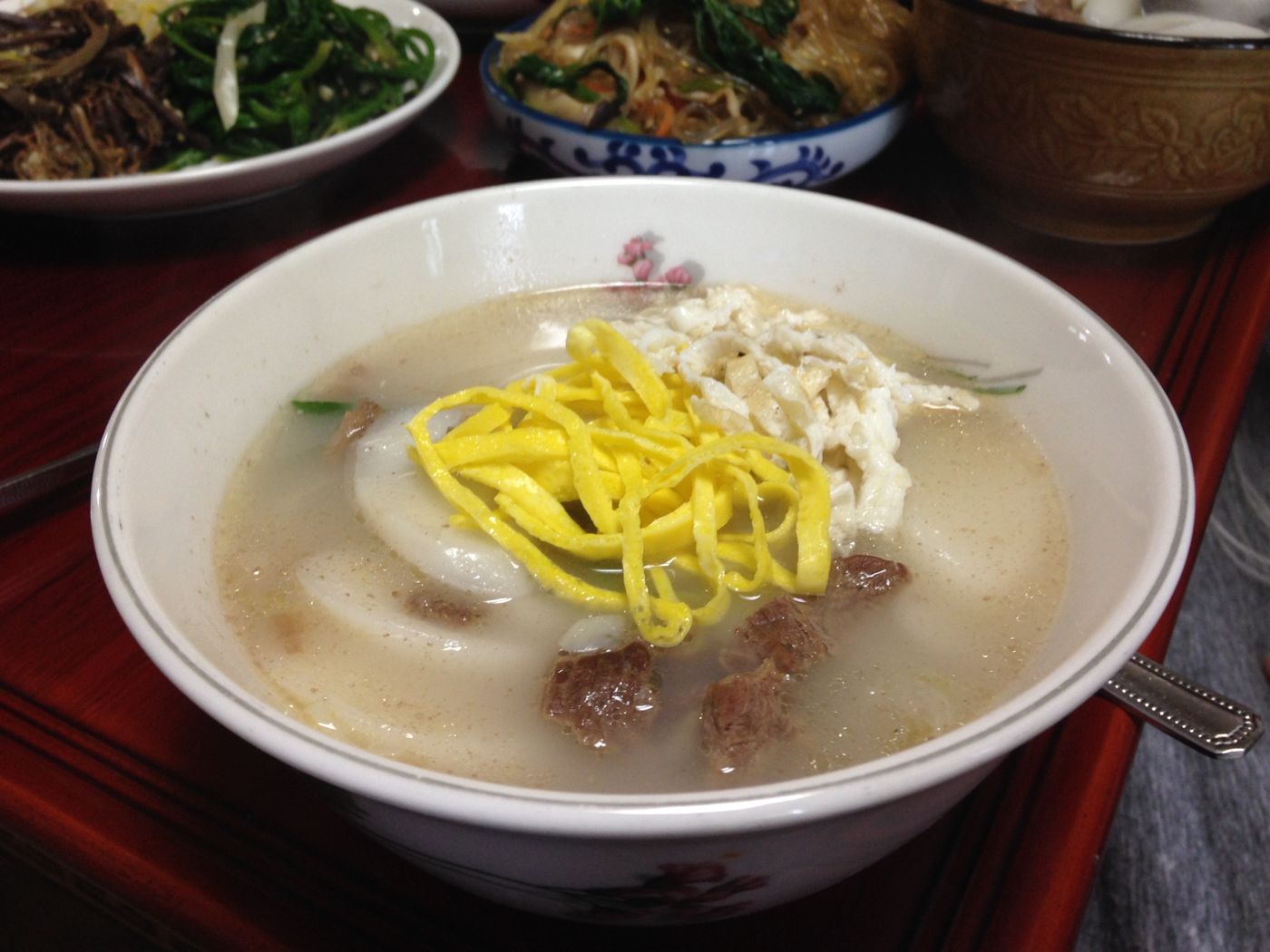 Tteokguk (Rice Cake Soup)떡국Thin ovals of white rice cake in clear beef broth, topped with egg ribbons and seaweed — the soup eaten on Seollal morning to greet the new year.
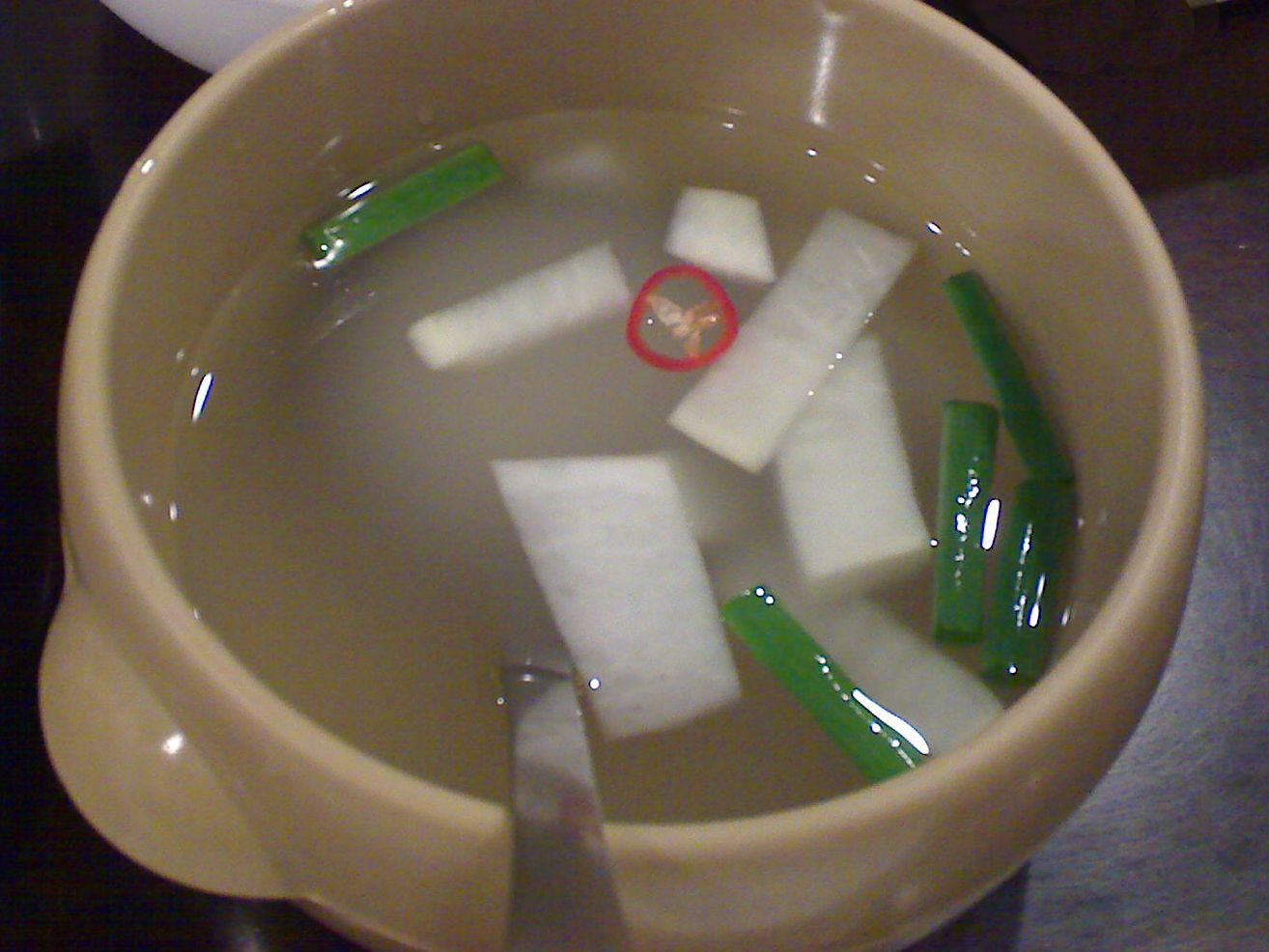 Radish Water Kimchi동치미Whole radishes steeped in a clear salt brine with pear, ginger and green chili — a winter water kimchi whose tangy broth is prized on its own.
Sources
- 01만두 (饅頭, Mandu) — Encyclopedia of Korean Culture
- 02만두 (Mandu) — Encyclopedia of Korean Folk Culture, National Folk Museum of Korea
- 03쌍화점 (雙花店, Ssanghwajeom) — Encyclopedia of Korean Culture
- 04Wonton wrappers (includes egg roll wrappers) (FDC 172802) — USDA FoodData Central
- 05Kimchi, Baechukimchi, Prepared with Kimchi cabbage (F2050070009a) — Korean Food Composition Table
- 06Safe Food Handling — U.S. Food and Drug Administration
Last updated