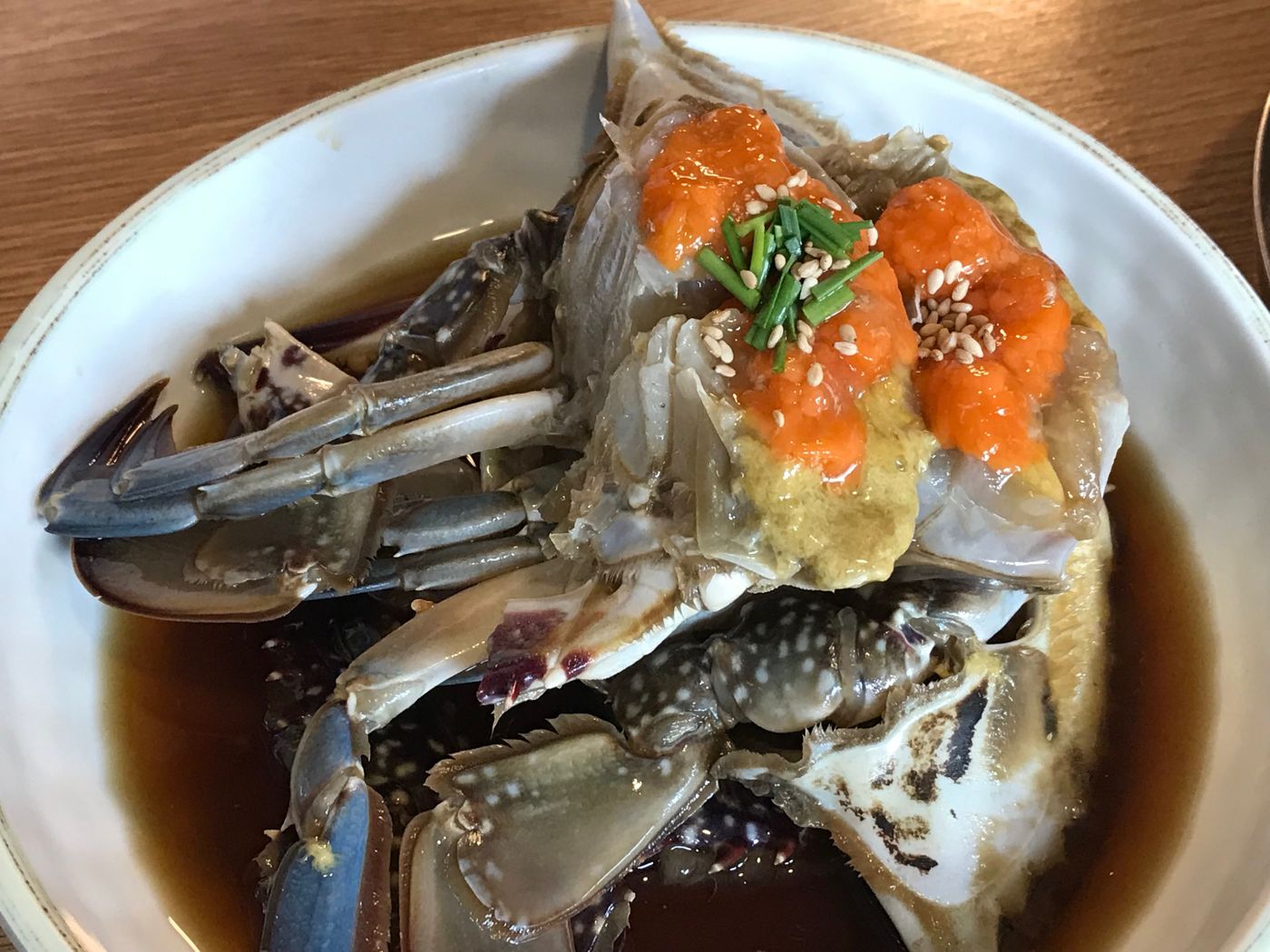
 Photo: lazy fri13th, CC BY 2.0, via Wikimedia Commons
Jeotgal · Salted seafood 젓갈
Soy-Marinated Raw Crab
간장게장
Romanization: ganjang-gejang
Raw crabs steeped in a boiled-and-cooled soy marinade until silky and savory — a centuries-old preserve, eaten by spooning rice into the shell.
- Serves
- 6
- Prep
- 40 min
- Cook
- 20 min
RegionChungcheong · Jeolla · Gyeongsang · Jeju
Jump to recipeRecipe
Ingredients · Serves 6
- 4 Live or very fresh blue crabs (kkotge), preferably femaleabout 1.2 kg; from a reputable seafood seller
- 500 mlSoy sauce (ganjang)
- 750 mlWater
- 60 gSugarabout ⅓ cup; adjust to taste
- 60 mlRice wine or soju
- 1 pieceDried kelp (dashima)about 10 × 10 cm
- 1 Onionquartered
- ½ Korean pear or applesliced
- 10 clovesGarliclightly crushed
- 20 gGingersliced
- 2 + 2 Dried red chilies and fresh green chiliesfresh chilies sliced
Method
Technique: Making Gejang: Marinated Raw Crab
Step 1: Simmer the soy sauce, water, sugar, rice wine, kelp, onion, pear, garlic, ginger and dried chilies for 15 minutes. Strain, then cool the marinade completely and chill it — it must be cold before it touches the crabs.
Step 2: Meanwhile, chill the crabs in the freezer for about 1 hour to sedate them (many cooks freeze them solid at this point and thaw in the refrigerator, which also makes them easier to handle). Scrub the shells and undersides thoroughly with a brush under cold running water, trim off the tips of the legs and the pointed ends of the claws, and pull off the triangular apron on the underside.
Step 3: Pack the crabs shell side down in a snug glass or food-grade container, tuck in the fresh chilies, and pour over the cold marinade until the crabs are fully covered. Weigh them down with a small plate, cover and refrigerate (4°C or below).
Step 4: After 2–3 days, pour the marinade into a pot, bring it to a boil, cool it completely and pour it back over the crabs. Repeat once more after another 2–3 days.
Step 5: The crabs are ready about 6–7 days after starting, when the flesh is translucent and silky. To serve, lift the top shell, scrape out the roe and tomalley, remove the gills, and cut the body into quarters. Squeeze the meat from the legs, and mix hot rice into the shell with a little of the marinade.
Step 6: Keep refrigerated and eat within about a week once ready, using clean utensils; for longer keeping, freeze individual crabs in a little marinade. Discard if the crabs smell off, the marinade turns cloudy and foul, or the flesh becomes mushy.
Origin & History
Gejang is crab preserved in boiled soy sauce, and both the Encyclopedia of Korean Culture and the Encyclopedia of Korean Folk Culture classify it as a kind of jeotgal — unusual in being cured with soy sauce rather than plain salt. Older texts call it gejeot. Ganjang-gejang (soy-sauce gejang) is the classic form; the chili-dressed version is yangnyeom-gejang.
Recipes appear in Sallim gyeongje, Jubangmun, Gyuhap chongseo and Siuijeonseo, which together show gejang on the Korean table by the 1600s. The expanded Jeungbo sallim gyeongje lists a whole family of methods: crabs packed in rice-wine lees with salt, vinegar and wine (said to keep until the following spring), steeped in wine, in soy sauce with vinegar, in plain soy sauce, or in boiled-down brine. Gyuhap chongseo adds two slices of beef and seeded Sichuan pepper to dark soy sauce; Siuijeonseo describes the method most households still use — pour soy sauce over the crabs, drain it off after three days, boil and cool it, pour it back, and repeat.
Marine crabs, especially roe-filled female blue crabs (kkotge) in spring, are now the usual choice. Freshwater mitten crabs (chamge), caught in rice paddies and rivers around harvest time, were traditionally made into chamge-jang, a Gyeongsang specialty laid down in autumn for the following summer. The Encyclopedia of Korean Culture names Gyeongsang, Jeolla and Jeju as the regions best known for gejang.
Key Ingredients
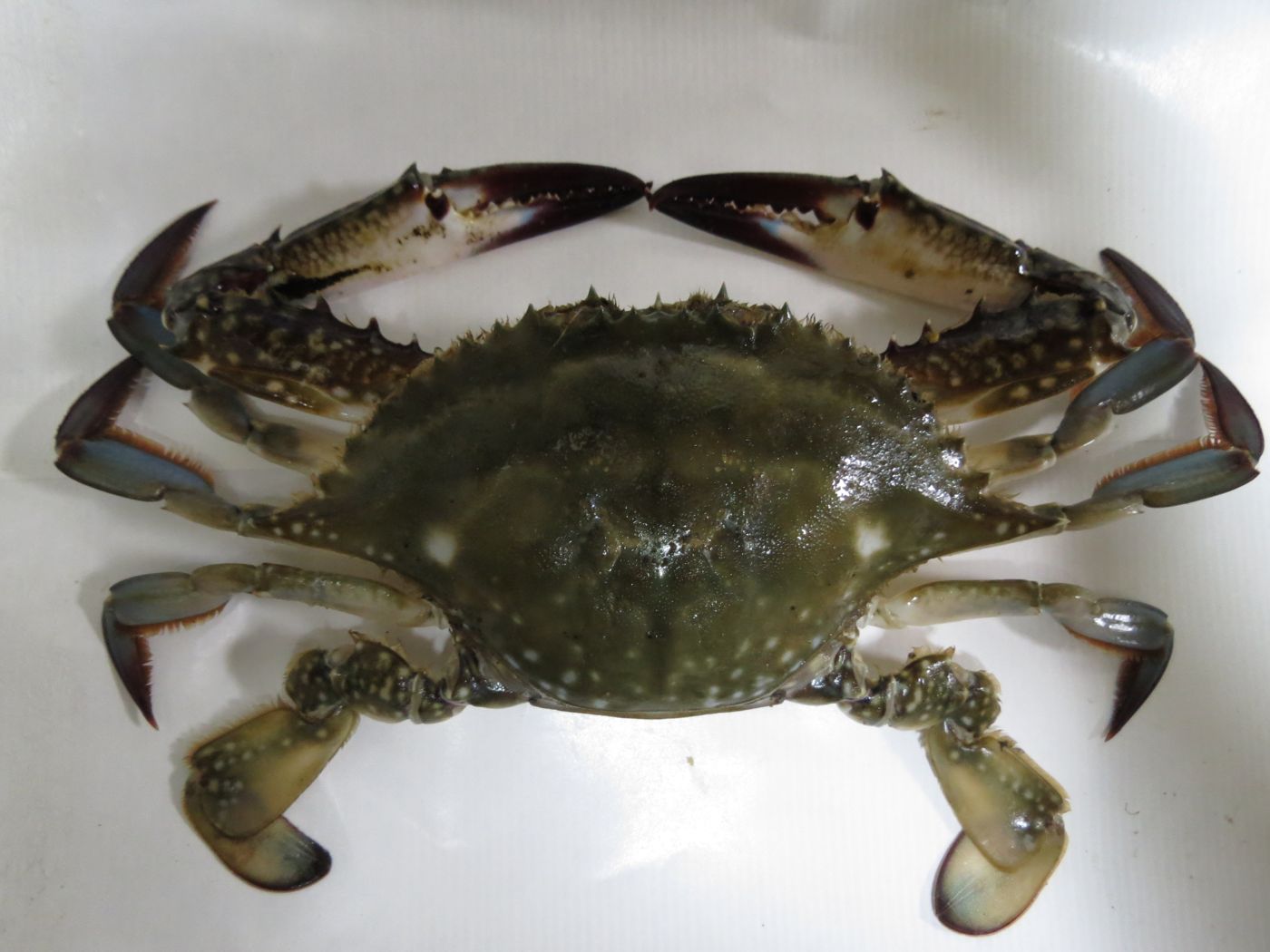 Swimming crab (kkotge)꽃게Korea's everyday crab: a blue-green swimming crab from the West Sea, sweet-fleshed and rich with roe in season. It is steamed, cooked into stews, and steeped raw in soy sauce as ganjang-gejang.
 Soy sauce간장Korean soy sauce, in two main kitchen forms: pale, salty guk-ganjang (soup soy sauce) brewed the traditional way from meju, and darker, sweeter jin-ganjang for braises and marinades.
 Dashima (dried kelp)다시마Thick, dried kelp that gives Korean broths their quiet savory depth. Beyond the stockpot it is fried into crisp twigak, simmered into soy-glazed side dishes and used as a wrap.
 Yangpa (onion)양파The bulb onion, literally the "Western scallion." A latecomer to Korea, it is now everywhere: sweetening stir-fries and braises, pickled in soy sauce as yangpa-jangajji, and served raw beside grilled meat.
- Korean Pear배The large, round, crisp and very juicy Korean pear (bae). Beyond eating fresh, it is grated into meat marinades and sliced into mild kimchi for natural sweetness.
 Garlic마늘Used raw, minced, pickled and roasted, garlic is one of the essential aromatics of Korean food — in seasonings, marinades, kimchi and namul.
 Ginger생강Fresh ginger root, used in small amounts to brighten kimchi paste and marinades and to tame the strong smells of fish and meat.
- Korean Chili Peppers (Fresh)고추Fresh Korean chili peppers, eaten green (putgochu) or red (hong-gochu): from the fiery cheongyang-gochu to the small, wrinkled, mild kkwari-gochu that is braised and stir-fried as banchan.
Nutrition
| Calories | 31 kcal |
|---|---|
| Protein | 3.5 g |
| Fat | 0.6 g |
| Carbohydrates | 3 g |
| Fiber | 0.6 g |
| Sodium | 545 mg |
Notable forVitamin B12 · Selenium · Protein
From the Korean MFDS food composition database (K-FIND) entry for home-style soy-sauce blue crab gejang (꽃게장_간장, analyzed; per 100 g: 62 kcal, 7.0 g protein, 6.0 g carbohydrate, 1,089 mg sodium, 3.18 µg vitamin B12, 57.5 µg selenium, 49 mg cholesterol), scaled to the serving size. How much marinade is eaten with rice changes the sodium considerably. Actual values vary with ingredients, portion size and preparation.
Health Benefits
- B12 and selenium: in the database figures, a 50 g serving supplies about 1.6 µg of vitamin B12 — two-thirds of the 2.4 µg adults need daily — and about 29 µg of selenium, roughly half the adult requirement.
- Lean protein: crab is low in fat; the main nutritional caution is salt rather than calories.
- A rice dish in itself: traditionally a little crab and its marinade season a whole bowl of rice, which is why it is served as a side dish rather than a main portion.
Regional Variations
- South Chungcheong: crabs set upside down in a crock with red chili, garlic and ginger under soy sauce; after a day the liquid is drained, boiled, cooled and poured back.
- North Jeolla: the soy sauce is first simmered with garlic, ginger, hot chili, angelica root and licorice, then boiled and returned two or three times.
- Gyeongsang (chamge-jang): freshwater mitten crabs in soup soy sauce and regular soy sauce, made in autumn.
- South Jeolla (beolddeok-gejang): small rock crabs (dolge) steeped briefly and eaten within a day or two — the name jokes that you must polish it off “in a flash.”
- Jeju (gingi-jeot): shore crabs caught at low tide in spring, traditionally believed to be good for every ailment.
Pairings
- Gim Gui (Seasoned Roasted Laver)김구이Sheets of laver brushed with sesame or perilla oil, sprinkled with salt and toasted until crisp — eaten wrapped around spoonfuls of rice.
 Doenjang Jjigae (Soybean Paste Stew)된장찌개A thick, savory stew of fermented soybean paste with tofu, zucchini and whatever the season offers — the everyday pot at the center of the Korean table.
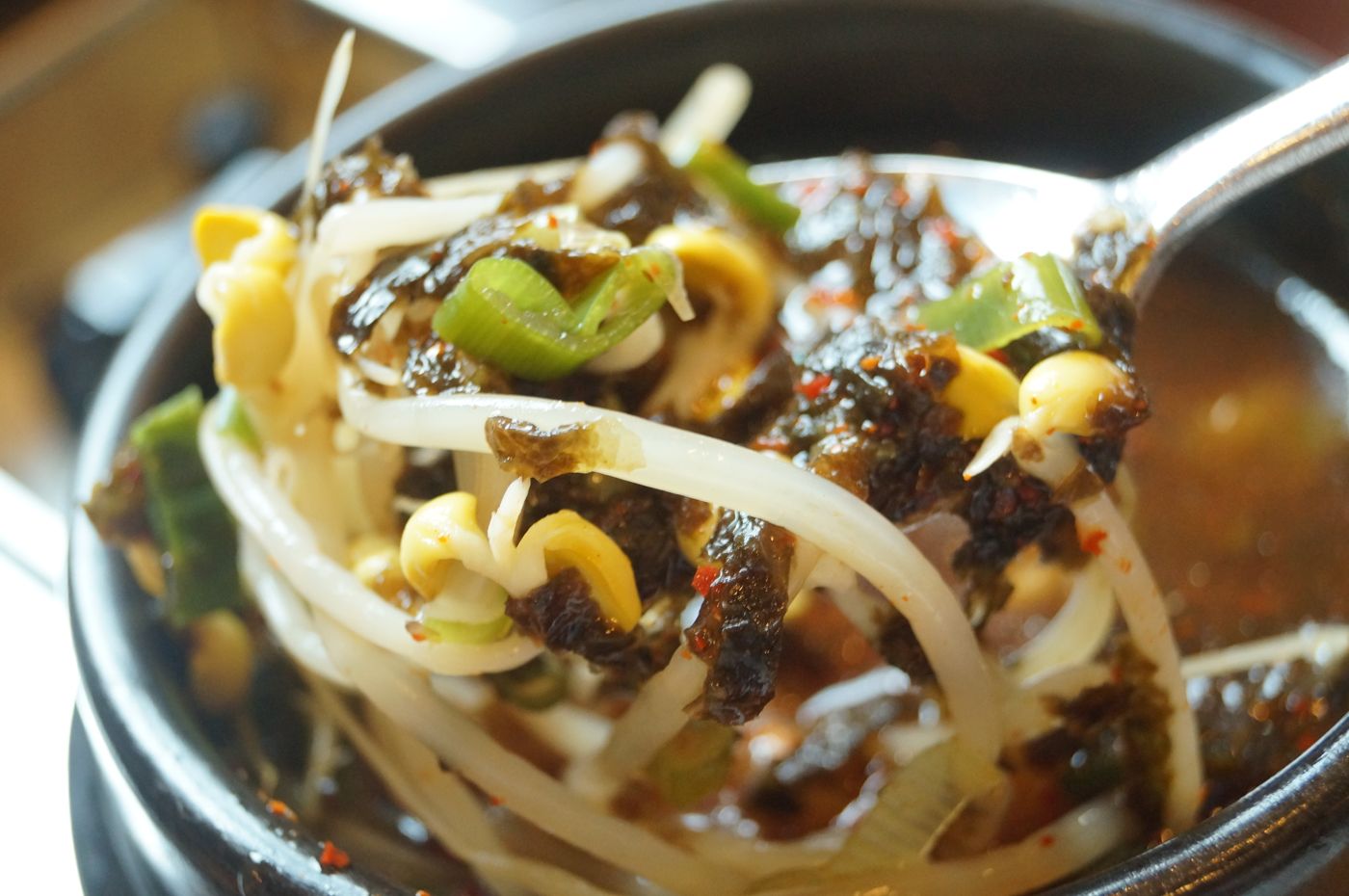 Kongnamul Guk (Soybean Sprout Soup)콩나물국A clear, light soup of soybean sprouts in anchovy-kelp stock, seasoned with salt or soup soy sauce — an everyday guk and a favorite morning-after cure.
Sources
- 01꽃게장_간장 (Soy-sauce blue crab gejang) — MFDS K-FIND food composition database
- 02게장(게醬) - 한국민족문화대백과사전 (Encyclopedia of Korean Culture)
- 03게장 - 한국민속대백과사전 (Encyclopedia of Korean Folk Culture)
- 04About Vibrio Infection - Centers for Disease Control and Prevention
- 05About Paragonimiasis - Centers for Disease Control and Prevention
- 06Inactivation of Paragonimus westermani metacercariae in soy sauce-marinated and frozen freshwater crabs — Parasitology Research (2017)
Last updated