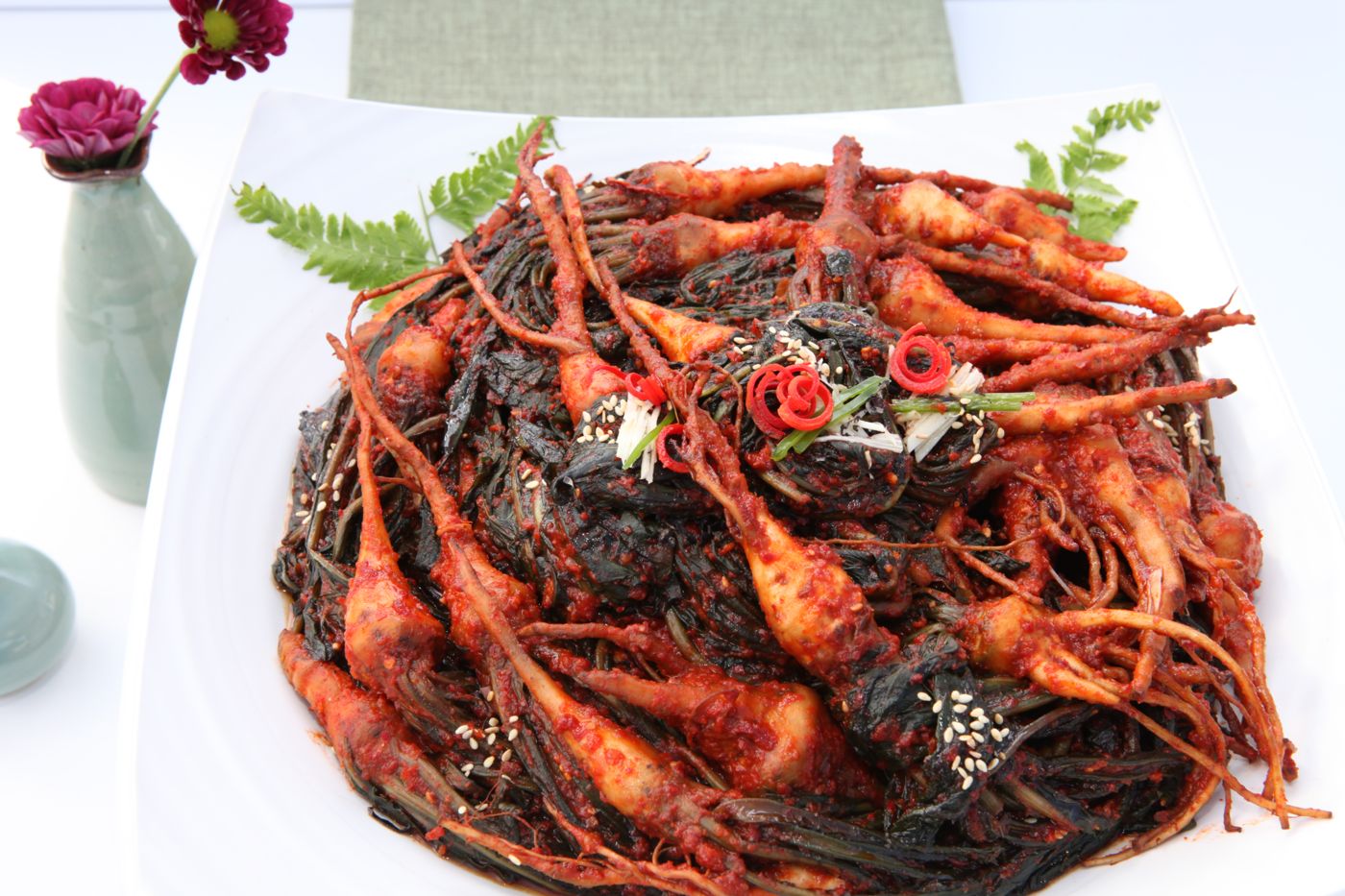
 Photo: gwangju kimchi, CC BY-SA 2.0, via Wikimedia Commons
Kimchi 김치
Bitter Godeulppaegi Kimchi
고들빼기김치
Romanization: godeulppaegi-kimchi
A bittersweet Jeolla kimchi of whole godeulppaegi greens and roots, soaked for days to tame the bitterness and dressed with anchovy jeotgal and chili.
- Serves
- 30
- Prep
- 90 min
- Cook
- 10 min
Recipe
Ingredients · Serves 30
- 1 kgGodeulppaegi, whole plants with rootsyoung plants with plump roots and tender leaves
- 80 gCoarse sea salt (cheonilyeom), non-iodizedfor the soaking brine
- 4 LWaterfor soaking, changed several times
- 150 gSalted anchovies (myeolchi-jeot), with their liquidor 100 ml anchovy fish sauce (myeolchi-aekjeot)
- 150 mlWaterfor boiling the anchovy jeotgal
- 60 gGochugaru (Korean chili flakes)about ¾ cup
- 3 tbspGarlicminced
- 1 tbspGingerminced
- 1 tbspSugar
- 3 tbspCooked ricemashed; optional, Yeosu style
- 150 gThin green onions (silpa)left whole or cut in half
- 6 Chestnutspeeled and thinly sliced
- 1 tbspToasted sesame seeds
Method
Technique: Making Kimchi
Step 1: Trim the plants, scrape any dirt from the roots and wash thoroughly. Dissolve the salt in the water, submerge the plants, and weigh them down with a plate and a heavy jar so none float to the surface.
Step 2: Leave in a cool place or the refrigerator for 5–7 days, draining and replacing the brine (or plain water) every 2 days as it turns dark. Taste a root: it should be pleasantly bitter rather than harsh. Rinse several times and drain well.
Step 3: Bring the anchovy jeotgal and 150 ml water to a boil, simmer for 5 minutes, then strain through a fine sieve and let the clear liquid cool.
Step 4: Stir the gochugaru into the anchovy liquid and leave 10 minutes to swell, then add the garlic, ginger, sugar, mashed rice (if using) and sesame seeds.
Step 5: Toss the drained godeulppaegi, green onions and chestnuts in the seasoning with gloved hands. Twist a few plants at a time into small bundles and pack them tightly into a clean jar or crock, pressing out air.
Step 6: Leave at cool room temperature for 1 day, then refrigerate. Because the plants were already soaked it can be eaten right away, but it rounds out after 1–2 weeks and keeps for 2–3 months refrigerated. Use clean utensils and discard any portion that turns slimy or moldy.
Origin & History
Godeulppaegi (Crepidiastrum sonchifolium) is a wild plant of the daisy family that grows on hillsides, field edges and roadsides across Korea, with a sharp, lingering bitterness in both leaf and root. The Encyclopedia of Korean Folk Culture notes that Donguibogam recorded it under the names gochae (“bitter greens”) and gobagi; that a 1796 court price list in the Annals of the Joseon Dynasty gives it as godolbak; and that the 19th-century farming verse Nongga wollyeongga lists it among the field greens to dig in the second lunar month. Nobody knows exactly when it was first made into kimchi, but the folk encyclopedia ties the dish to the spread of chili powder in Korean cooking.
Both national encyclopedias place it in the Jeolla provinces, as a winter kimjang kimchi traditionally made in early winter and eaten until the Lunar New Year. Its preparation is laborious: the plants are soaked under a stone for a week or so to leach out much of the bitterness before they are seasoned. The Encyclopedia of Korean Culture records a saying from North Jeolla that only the gentry (yangban) could eat it, a nod to the time and care it took.
Today it is closely linked with Yeosu. The Digital Yeosu Culture Encyclopedia describes how farmers on Dolsan Island, in a year when their usual medicinal crop failed, sowed godeulppaegi instead, earned more than their neighbors, and started a cultivation boom; Dolsan now supplies much of the national market. Cultivated plants mean the kimchi can be made in any season, and it is usually sold together with Yeosu's Dolsan mustard-leaf kimchi.
Key Ingredients
 Sun-Dried Sea Salt천일염Coarse sea salt made by evaporating seawater with sun and wind in tidal-flat salt pans, most of it from Sinan County off Korea's southwest coast. It is the everyday salt for salting cabbage and making jang.
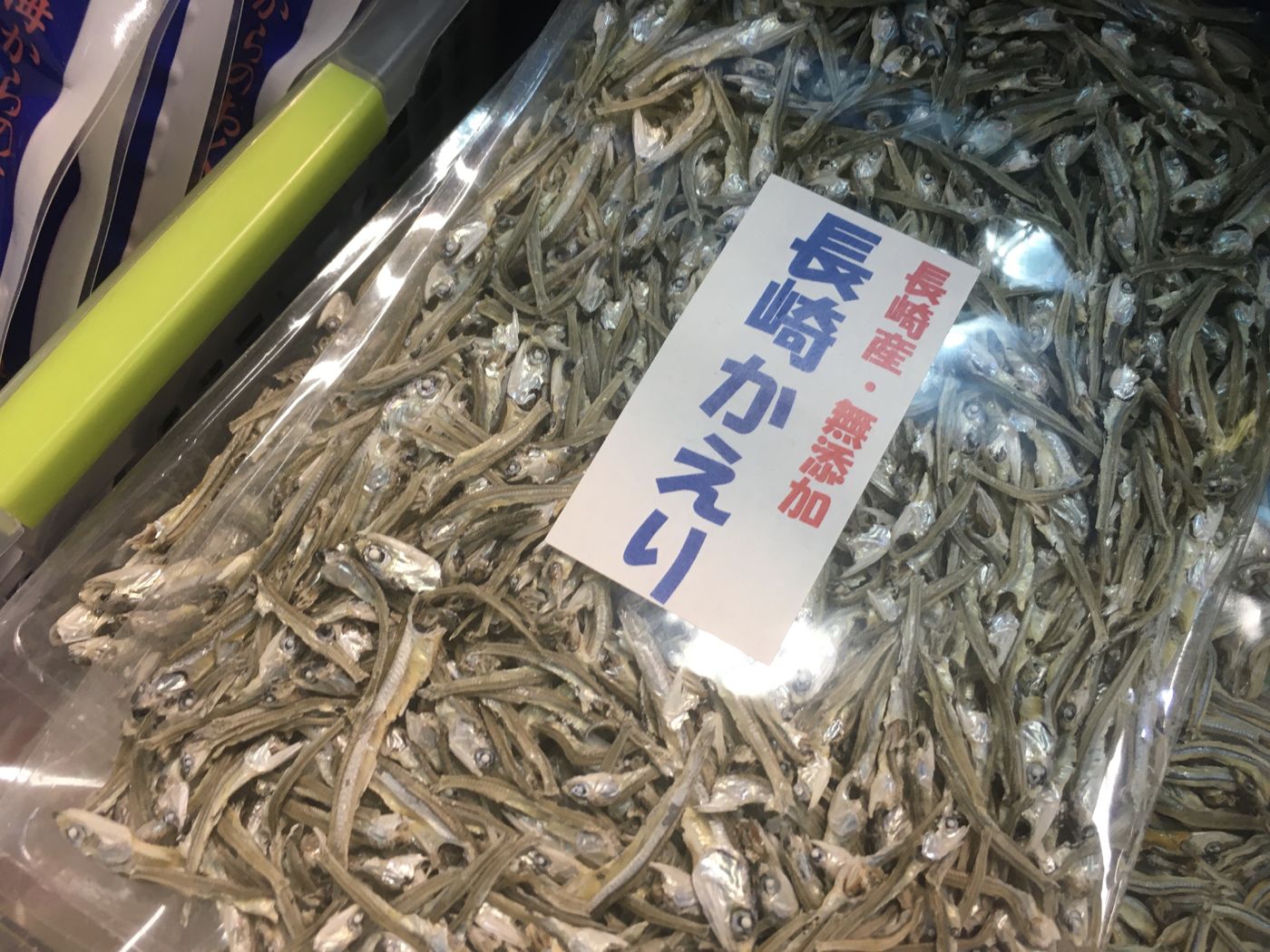 Dried anchovies멸치Small anchovies that are boiled and dried on the coast, then sorted by size. They flavor everyday broths and, stir-fried whole, become the sweet-salty side dish myeolchi-bokkeum.
 Gochugaru고춧가루Korean red chili powder, made from dried red peppers ground coarse or fine. It gives kimchi, gochujang and countless banchan their color and warmth.
 Garlic마늘Used raw, minced, pickled and roasted, garlic is one of the essential aromatics of Korean food — in seasonings, marinades, kimchi and namul.
 Ginger생강Fresh ginger root, used in small amounts to brighten kimchi paste and marinades and to tame the strong smells of fish and meat.
 Green onion파Korean green onion (pa), from thick-stemmed daepa to slender scallions — chopped into nearly every seasoning sauce, soup and kimchi, and the star of pa-kimchi.
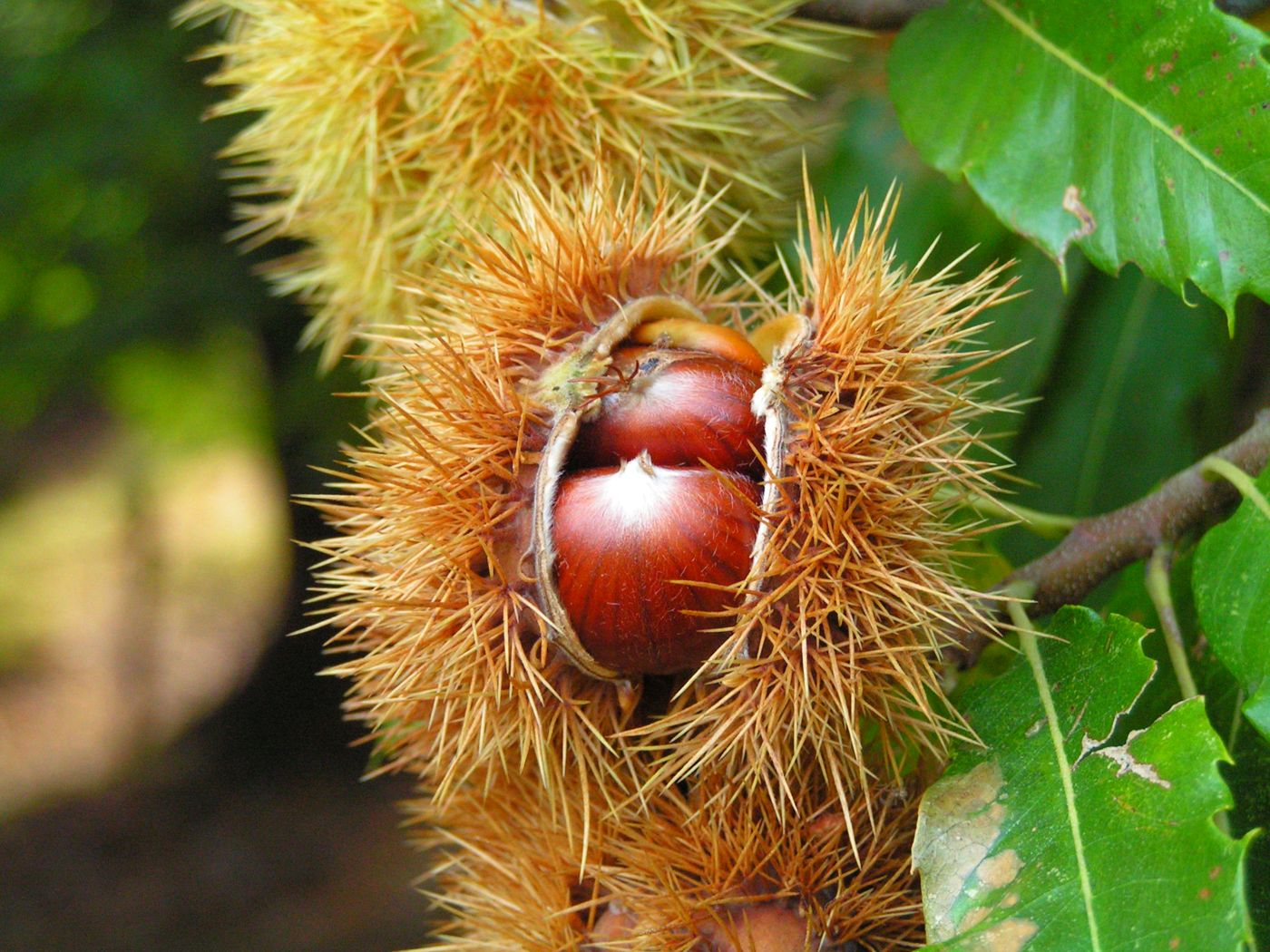 Chestnuts밤Glossy brown nuts with a pale, starchy kernel, roasted on winter street corners, cooked into rice and yaksik, and stacked on the ancestral-rite table. Gongju in South Chungcheong is the best-known growing region.
 Sesame참깨Toasted sesame seeds and sesame oil (chamgireum) finish countless Korean dishes, adding a nutty aroma and gloss.
Nutrition
| Calories | 27 kcal |
|---|---|
| Protein | 1.1 g |
| Fat | 0.3 g |
| Carbohydrates | 5 g |
| Fiber | 1.6 g |
| Sodium | 358 mg |
Notable forVitamin K · Vitamin A · Iodine · Iron
From the Korean Food Composition Table entry “Kimchi, Godeulppaegi” (per 100 g: 68 kcal, 2.84 g protein, 12.6 g carbohydrate, 3.9 g fiber, 894 mg sodium, 258 µg vitamin K, 182 µg RAE vitamin A, 2.78 mg iron, 173 µg iodine), scaled to the serving size. An analyzed home-style sample in Korea's MFDS database (K-FIND) had less sodium, 605 mg per 100 g. Actual values vary with ingredients, portion size and preparation.
Health Benefits
- Vitamin K and vitamin A: in the composition table a 40 g serving supplies about 100 µg of vitamin K and about 70 µg RAE of vitamin A, the latter from beta-carotene in the greens and chili.
- Iron and iodine: the same serving provides about 1.1 mg of iron and roughly 70 µg of iodine.
- Fiber from leaf and root: about 1.6 g per serving. Korean herbal tradition has long credited the bitter plant with cooling and cleansing properties, but these are traditional beliefs rather than proven effects.
Regional Variations
- Yeosu (Dolsan): Dolsan-grown godeulppaegi, sold alongside gat-kimchi; the local recipe adds a little cooked rice to the seasoning, and some cooks mix in pickled green chilies.
- South Jeolla: some households add live octopus (nakji), according to the Yeosu encyclopedia.
- North Jeolla: the classic kimjang version, prized as a refined, labor-intensive kimchi.
- Bundled: the seasoned plants are twisted into small skeins before packing so they don't tangle and are easy to serve.
Pairings
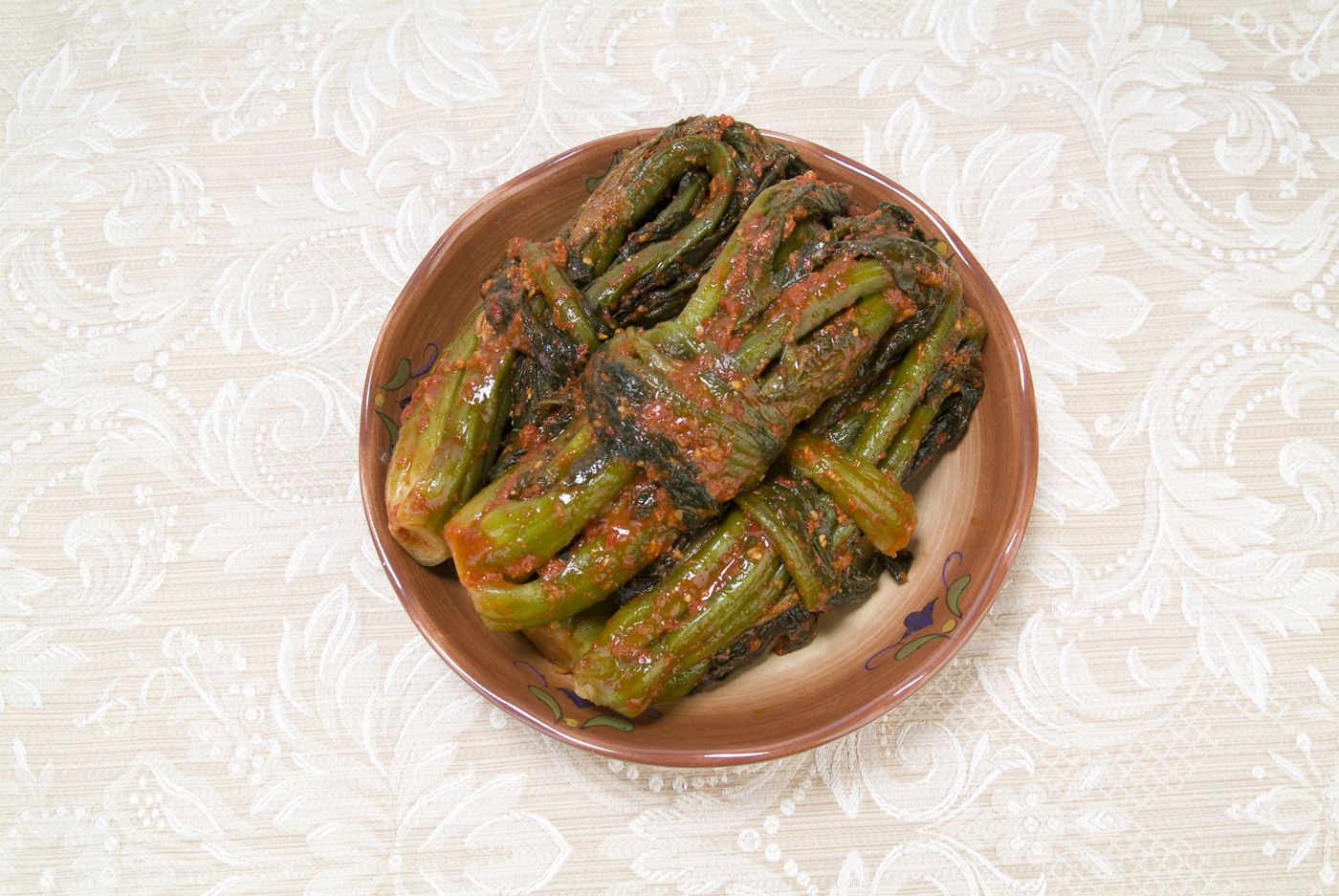 Mustard Leaf Kimchi갓김치Leaf mustard rolled in a chili and anchovy paste and fermented until its nose-tingling bite mellows — a Jeolla specialty, famously from Dolsan in Yeosu.
 Doenjang Jjigae (Soybean Paste Stew)된장찌개A thick, savory stew of fermented soybean paste with tofu, zucchini and whatever the season offers — the everyday pot at the center of the Korean table.
- Kongnamul-bap (Soybean Sprout Rice)콩나물밥Rice steamed over a bed of soybean sprouts, often with a little beef, and eaten with a spoonful of soy-and-scallion sauce — a thrifty one-pot meal from Chungcheong.
Sources
- 01Korean Food Composition Table: Kimchi, Godeulppaegi — National Institute of Agricultural Sciences
- 02고들빼기김치 - 한국민속대백과사전 (Encyclopedia of Korean Folk Culture)
- 03고들빼기김치 - 한국민족문화대백과사전 (Encyclopedia of Korean Culture)
- 04고들빼기 김치 - 디지털여수문화대전 (Digital Yeosu Culture Encyclopedia)
- 05섣달 노루고기와도 바꾸지 않는다는 군내리의 고들빼기 - 디지털여수문화대전 (Digital Yeosu Culture Encyclopedia)
- 06Warfarin - MedlinePlus Drug Information
Last updated