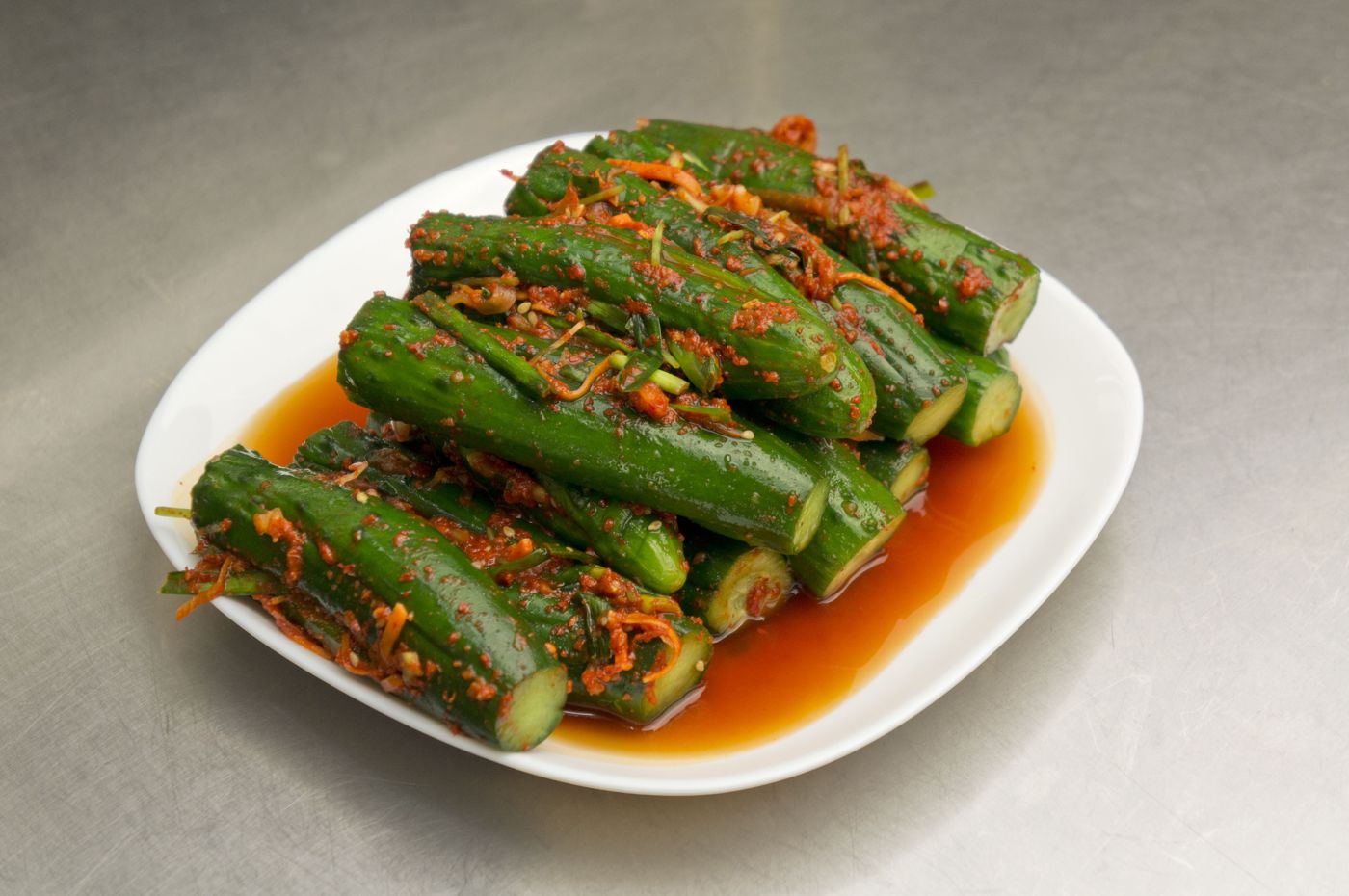
 Photo: Katsumi funami, CC BY-SA 3.0, via Wikimedia Commons
Kimchi 김치
Stuffed Cucumber Kimchi
오이소박이
Romanization: oi-sobagi
Cucumbers slit and stuffed with garlic chives, chili and garlic — a crisp, refreshing summer kimchi meant to be eaten young.
- Serves
- 12
- Prep
- 30 min
- Cook
- 5 min
RegionSeoul & Gyeonggi
Jump to recipeRecipe
Ingredients · Serves 12
- 6 Korean or Kirby cucumbersabout 900 g
- 3 tbspCoarse sea salt (non-iodized)for the brine
- 1 LWaterfor the brine
- 100 gGarlic chives (buchu)cut into 1 cm pieces
- 2 stalksGreen onionsfinely chopped
- 3 tbspGochugaru (Korean chili flakes)
- 2 tbspAnchovy fish sauce (myeolchi-aekjeot)
- 1 tbspSalted fermented shrimp (saeujeot)finely chopped
- 4 clovesGarlicminced
- 1 tspGingerminced
- 1 tspSugar
Method
Technique: Making Kimchi
Step 1: Scrub the cucumbers, trim the ends and cut each into 2 or 3 pieces about 7–8 cm long.
Step 2: Stand each piece on end and cut a cross down through it, stopping about 1 cm from the bottom so the four quarters stay joined.
Step 3: Bring the water and salt to a boil and pour it over the cucumbers in a heatproof bowl. Let them sit for about 1 hour, turning once, until the slits open easily without breaking. Drain well; a quick rinse is optional.
Step 4: Mix the gochugaru with the fish sauce, saeujeot, garlic, ginger and sugar, then gently fold in the chives and green onions.
Step 5: Holding each cucumber piece open, push a generous pinch of filling into the cuts. Wipe the outside with any remaining seasoning.
Step 6: Pack the pieces upright into a clean container. Rinse the mixing bowl with a few tablespoons of water and pour it over the top.
Step 7: Leave at room temperature for half a day to a day, until faintly sour, then refrigerate. Oi-sobagi is best within about 1–2 weeks, before the cucumbers soften; discard if slimy or moldy.
Origin & History
The name describes the method: oi is cucumber, and the dish is made by pressing a filling (so) into cuts in the cucumber. It is considered a summer kimchi, made when cucumbers are plentiful, and is often set out for guests or alongside drinks.
The Jeungbo sallim gyeongje (1766) contains the first documented version, a cucumber pickle stuffed with chili and garlic. It is one of the earliest written kimchi recipes to use chili at all. Later texts, including Imwon gyeongjeji and the late-19th-century Siuijeonseo, describe the modern approach of filling the cucumbers with green onion, garlic and chili flakes.
Key Ingredients
- Cucumber오이Slender, thin-skinned Korean cucumbers, prized for their crunch. Stuffed and fermented as oi-sobagi, dressed quickly as oi-muchim, salted into oiji or floated in chilled summer soup.
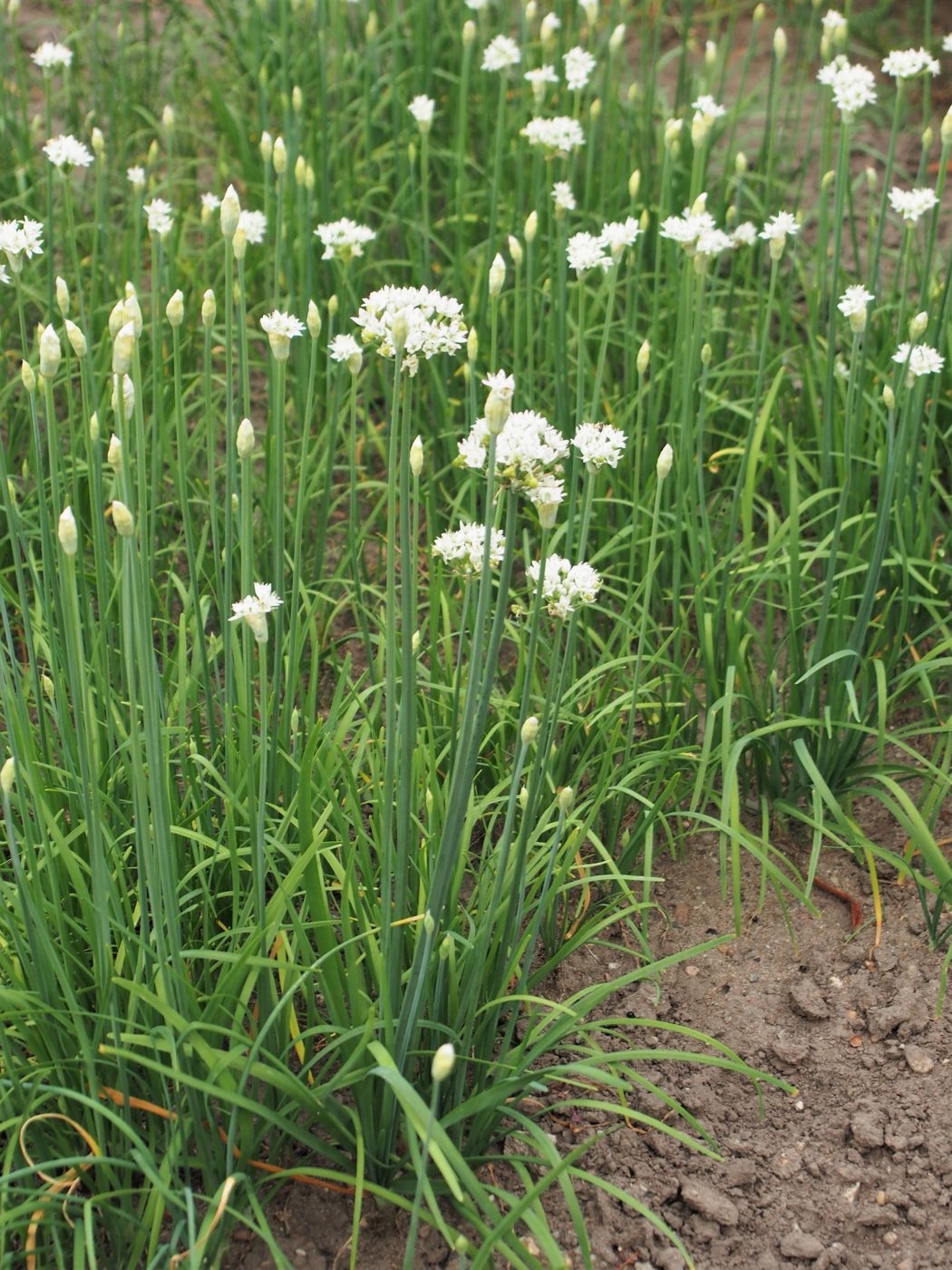 Garlic chives (buchu)부추Flat-leaved garlic chives with a bright, garlicky perfume. Tossed raw into buchu-muchim, folded into savory pancakes and tucked into cucumber kimchi.
 Green onion파Korean green onion (pa), from thick-stemmed daepa to slender scallions — chopped into nearly every seasoning sauce, soup and kimchi, and the star of pa-kimchi.
 Gochugaru고춧가루Korean red chili powder, made from dried red peppers ground coarse or fine. It gives kimchi, gochujang and countless banchan their color and warmth.
 Anchovy fish sauce멸치액젓The clear amber liquid drawn from salted, fermented anchovies. A jeotgal in liquid form, it is the savory backbone of much southern-style kimchi and a quick seasoning for soups and namul.
 Salted fermented shrimp새우젓Tiny shrimp packed in salt and left to ferment — a jeotgal (salted seafood) that seasons kimchi and stews and accompanies boiled pork with briny, savory depth.
 Garlic마늘Used raw, minced, pickled and roasted, garlic is one of the essential aromatics of Korean food — in seasonings, marinades, kimchi and namul.
 Ginger생강Fresh ginger root, used in small amounts to brighten kimchi paste and marinades and to tame the strong smells of fish and meat.
Nutrition
| Calories | 28 kcal |
|---|---|
| Protein | 1.3 g |
| Fat | 0.3 g |
| Carbohydrates | 5 g |
| Fiber | 2.3 g |
| Sodium | 226 mg |
Notable forDietary fiber
From the Korean Food Composition Table entry “Kimchi, Oi-Sobagi, Prepared with cucumber” (per 100 g: 37 kcal, 302 mg sodium), scaled to the serving size. Homemade batches vary with salting and seasoning. Actual values vary with ingredients, portion size and preparation.
Health Benefits
- Hydrating vegetables: cucumbers are mostly water and very low in calories, making this a light side dish.
- Garlic chives: the chive-and-chili filling adds color and carotenoids (vitamin A precursors).
- Fresh ferment: usually eaten lightly fermented, it carries lactic acid bacteria from the vegetables; research on the health effects of fermented vegetables is ongoing.
Regional Variations
- Seoul court style: oi-sobagi is named among the distinctive kimchi of the old Seoul and royal-court repertoire.
- Garlic chives: many cooks add buchu to the filling, now a near-standard addition.
- Mixed versions: some cooks combine the cucumbers with napa cabbage or young summer radish (yeolmu).
Pairings
 Japchae (Glass Noodles with Vegetables)잡채Chewy sweet potato glass noodles tossed with stir-fried vegetables, mushrooms and beef in soy sauce and sesame oil — Korea's essential celebration dish.
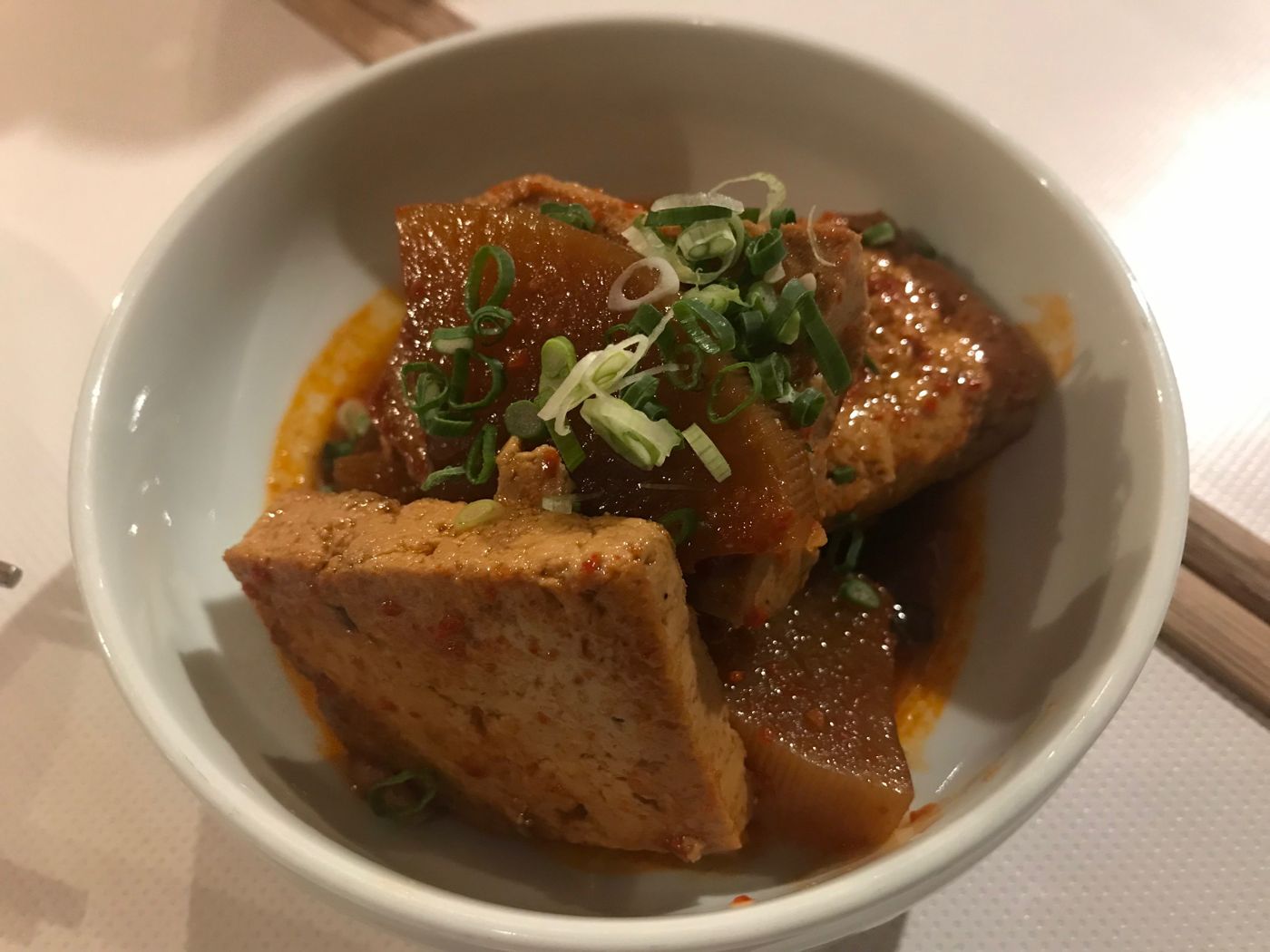 Dubu Jorim두부조림Slices of firm tofu pan-fried until golden, then simmered in a garlicky soy and chili sauce — an inexpensive, protein-rich staple of Korean home cooking.
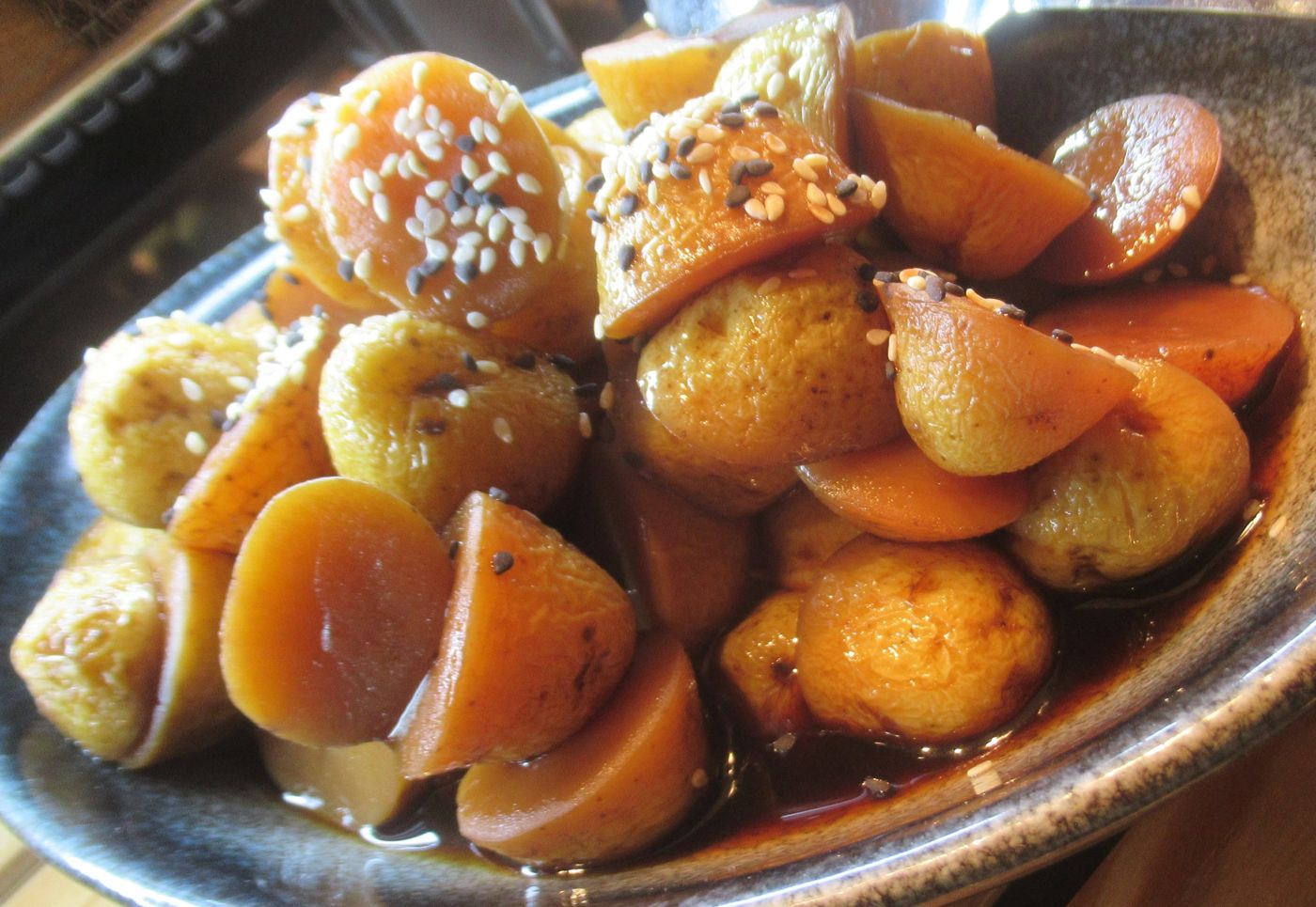 Gamja Jorim감자조림Cubed potatoes simmered in soy sauce, garlic and a touch of sweetness until tender and glossy — a comforting, child-friendly staple of the Korean home table.
Sources
- 01Korean Food Composition Table: Kimchi, Oi-Sobagi, Prepared with cucumber — National Institute of Agricultural Sciences
- 02오이소박이 - 한국민족문화대백과사전 (Encyclopedia of Korean Culture)
- 03김치 - 한국민족문화대백과사전 (Encyclopedia of Korean Culture)
- 04Understanding and Making Kimchi - Colorado State University Extension (Food Smart Colorado)
Last updated