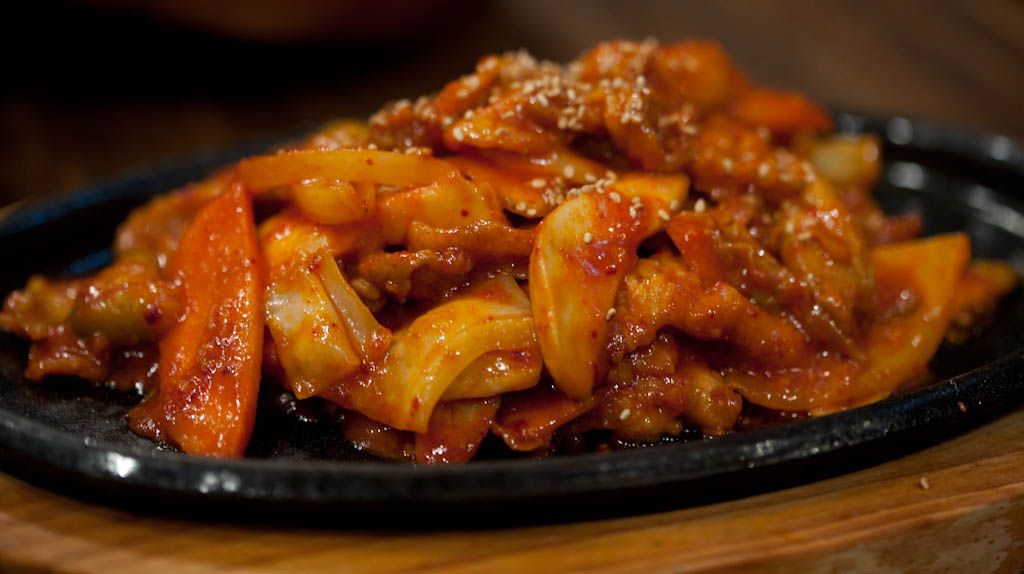
 Photo: Charles Haynes, CC BY-SA 2.0, via Wikimedia Commons
Bokkeum · Stir-fried 볶음
Jeyuk Bokkeum (Spicy Stir-Fried Pork)
제육볶음
Romanization: jeyuk-bokkeum
Thin slices of pork marinated in gochujang, garlic and ginger, then stir-fried with onion and green onion — a hearty, spicy staple of home and diner tables.
- Serves
- 4
- Prep
- 40 min
- Cook
- 15 min
Recipe
Ingredients · Serves 4
- 600 gPork shoulder (apdari) or neck, thinly sliced
- 1 mediumOnionabout 150 g, sliced
- 3 stalksGreen onioncut into 4 cm lengths
- 1 Green chili peppersliced
- 3 tbspGochujang
- 1 tbspGochugaru
- 2 tbspSoy sauce
- 1 tbspSugar
- 1 tbspGarlicminced
- 1 tspGingerminced
- 1 tbspCheongju (rice wine) or mirin
- 1 pinchGround black pepper
- 1 tbspNeutral cooking oil
- 1 tspToasted sesame oil
- 1 tspToasted sesame seeds
Method
Technique: Bokkeum: Korean Stir-Frying, Yangnyeom: Seasoning Basics
Step 1: Cut the pork into bite-size pieces about 3–4 mm thick if it is not already sliced.
Step 2: Mix the gochujang, gochugaru, soy sauce, sugar, garlic, ginger, rice wine and black pepper in a large bowl. Add the pork and massage the marinade in. Cover and refrigerate for at least 30 minutes, or up to overnight.
Step 3: Heat the oil in a wok or large skillet over medium-high heat. Add the pork in an even layer and let it sear for a minute before stirring.
Step 4: Stir-fry for 5–7 minutes, until the pork is cooked through and the marinade has reduced to a thick glaze. Lower the heat if the sauce begins to scorch.
Step 5: Add the onion and stir-fry for 2 minutes, until it softens but keeps some bite, then add the green onion and chili and toss for 30 seconds.
Step 6: Turn off the heat, drizzle with sesame oil and sprinkle with sesame seeds. Serve hot with rice and lettuce or perilla leaves for wrapping.
Origin & History
Jeyuk comes from jeoyuk (猪肉), an older word for pork. According to the Encyclopedia of Korean Folk Culture, the dish has changed a good deal in the last century. Bang Sin-yeong's Joseon yori jebeop (1934) gives two versions in which the pork is cut into fine shreds and stir-fried with shiitake, green onion and ginger, seasoned with soy sauce — or, she says, better still with salted-shrimp liquid. A 1946 cookbook gives much the same recipe.
Chili paste arrives after the war. Bang's 1954 book has the pork sliced thin and flat and seasoned with soy sauce into which gochujang has been dissolved, along with green onion, garlic and ginger; a recipe printed in the Kyunghyang Shinmun newspaper in 1961 is nearly identical, and a 1976 cookbook adds a garnish of shredded egg. From these sources the encyclopedia concludes that something like today's gochujang-based jeyuk-bokkeum settled into place in the 1960s and 1970s.
Since then it has become one of the most common dishes in Korean diners and cafeterias: affordable, filling, quick to cook in quantity, and good with drinks as well as rice. The folk-culture encyclopedia notes that restaurants often marinate and pre-cook the pork, then stir-fry it to order with vegetables over high heat. At home it is usually eaten with rice, lettuce and other greens for wrapping, and a bowl of soup.
Key Ingredients
 Pork (dwaeji-gogi)돼지고기Korea's most widely eaten meat, prized cut by cut: fatty belly for samgyeopsal, neck for the grill, lean legs for boiled suyuk and stir-fried jeyuk. Pork also anchors Jeju Island's feast cooking.
 Green onion파Korean green onion (pa), from thick-stemmed daepa to slender scallions — chopped into nearly every seasoning sauce, soup and kimchi, and the star of pa-kimchi.
- Korean Chili Peppers (Fresh)고추Fresh Korean chili peppers, eaten green (putgochu) or red (hong-gochu): from the fiery cheongyang-gochu to the small, wrinkled, mild kkwari-gochu that is braised and stir-fried as banchan.
- Gochujang고추장Fermented red chili paste — sweet, savory and hot. Made from meju powder, glutinous rice, malt and gochugaru, it is a later addition to Korea's family of jang.
 Gochugaru고춧가루Korean red chili powder, made from dried red peppers ground coarse or fine. It gives kimchi, gochujang and countless banchan their color and warmth.
 Soy sauce간장Korean soy sauce, in two main kitchen forms: pale, salty guk-ganjang (soup soy sauce) brewed the traditional way from meju, and darker, sweeter jin-ganjang for braises and marinades.
 Garlic마늘Used raw, minced, pickled and roasted, garlic is one of the essential aromatics of Korean food — in seasonings, marinades, kimchi and namul.
 Ginger생강Fresh ginger root, used in small amounts to brighten kimchi paste and marinades and to tame the strong smells of fish and meat.
 Sesame참깨Toasted sesame seeds and sesame oil (chamgireum) finish countless Korean dishes, adding a nutty aroma and gloss.
Nutrition
| Calories | ~361 kcal |
|---|---|
| Protein | ~32.9 g |
| Fat | ~17.1 g |
| Carbohydrates | ~18.4 g |
| Fiber | ~2.5 g |
| Sodium | ~829 mg |
Notable forThiamin (vitamin B1) · Protein · Selenium · Niacin
Pork uses the Korean Food Composition Table entry “Pork meat, Picnic (Apdari), Raw” (per 100 g: 159 kcal, 20.2 g protein, 7.9 g fat, 0.556 mg thiamin, 20.9 µg selenium, 5.1 mg niacin). Using neck or belly would raise the fat and energy considerably. Gochujang, soy sauce and green chili use Korean table values; gochugaru uses the USDA red pepper (cayenne) entry as a stand-in; onion, green onion, sugar, garlic, ginger, oils and sesame seeds use USDA FoodData Central; rice wine and pepper are omitted. Totals divided by four. Actual values vary with ingredients, portion size and preparation.
Health Benefits
- Thiamin: pork is one of the richest food sources of thiamin (vitamin B1); the folk-culture encyclopedia notes that it carries many times more than beef. A serving of this dish supplies more than half a day's needs.
- Protein and minerals: a serving provides over 30 g of protein, along with selenium, niacin and potassium.
- Balanced with vegetables: the folk-culture encyclopedia points out that the vegetables cooked with the pork help round out the meal; eating it wrapped in lettuce or perilla adds more.
Regional Variations
- Gochujang jeyuk: the familiar red version, sweet, spicy and garlicky.
- Soy-sauce jeyuk: a milder, brown version seasoned with soy sauce or salted-shrimp liquid, close to the prewar recipes.
- Kimchi-jeyuk-bokkeum: pork stir-fried with sour kimchi and finished with garlic chives, which the dictionary records as a named dish of its own.
- Choice of cut: leaner shoulder (apdari) or the fattier neck (moksal) and belly (samgyeopsal) are all used; fattier cuts give a richer, glossier sauce.
- Wrapped: served with lettuce, perilla leaves and ssamjang as a ssam meal.
Pairings
- Sangchu Geotjeori (Fresh Lettuce Salad, Kimchi-Style)상추겉절이Tender leaf lettuce dressed at the last minute with soy sauce, chili flakes, green onion and sesame — the crisp, spicy salad served beside grilled pork.
 Doenjang Jjigae (Soybean Paste Stew)된장찌개A thick, savory stew of fermented soybean paste with tofu, zucchini and whatever the season offers — the everyday pot at the center of the Korean table.
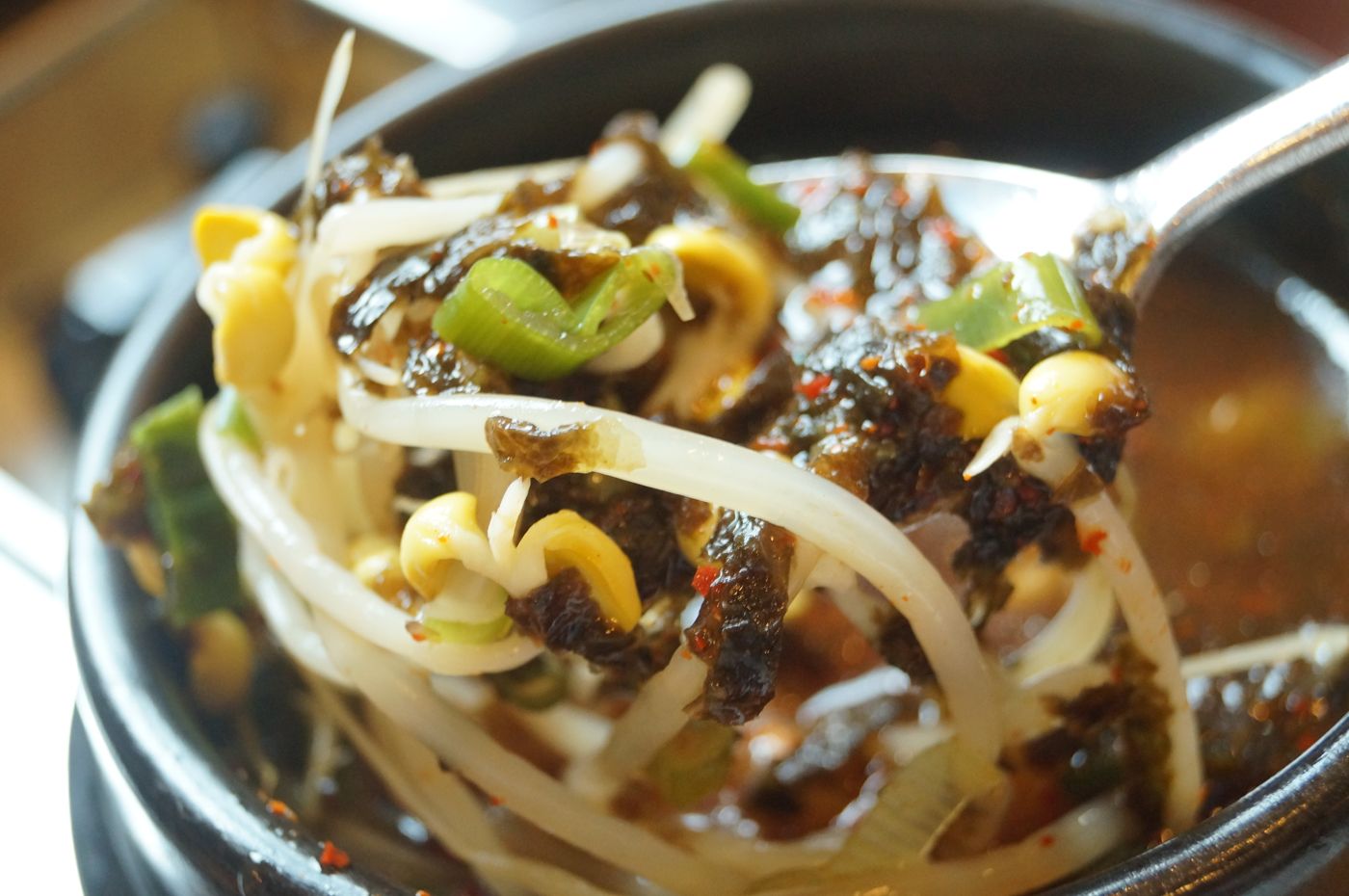 Kongnamul Guk (Soybean Sprout Soup)콩나물국A clear, light soup of soybean sprouts in anchovy-kelp stock, seasoned with salt or soup soy sauce — an everyday guk and a favorite morning-after cure.
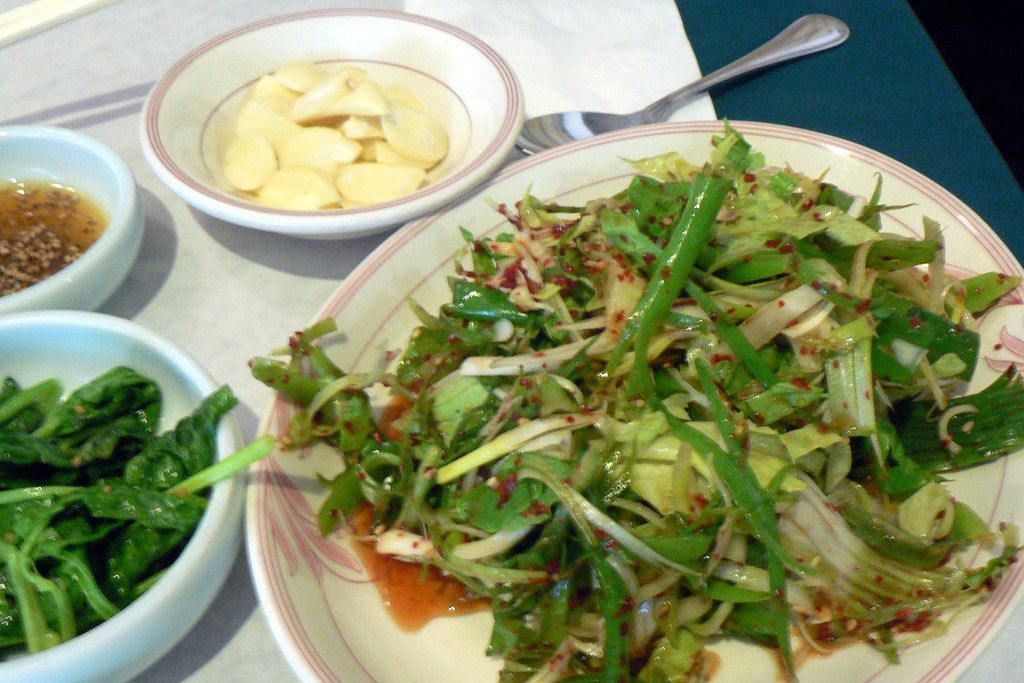 Pajeori (Green Onion Salad)파절이Fine shreds of Korean green onion tossed with chili flakes, soy sauce, vinegar and sesame oil — the sharp, bright salad that cuts the richness of grilled pork.
Sources
- 01제육볶음 (Jeyuk-bokkeum) — Encyclopedia of Korean Folk Culture (National Folk Museum of Korea)
- 02돼지고기 (Pork) — Encyclopedia of Korean Folk Culture (National Folk Museum of Korea)
- 03볶음 (Bokkeum) — Encyclopedia of Korean Culture
- 04제육볶음 / 김치제육볶음 — Urimalsaem (National Institute of Korean Language)
- 05Korean Food Composition Table: Pork meat, Picnic (Apdari), Raw — National Institute of Agricultural Sciences
- 06Preventing Food Poisoning — U.S. Centers for Disease Control and Prevention
Last updated