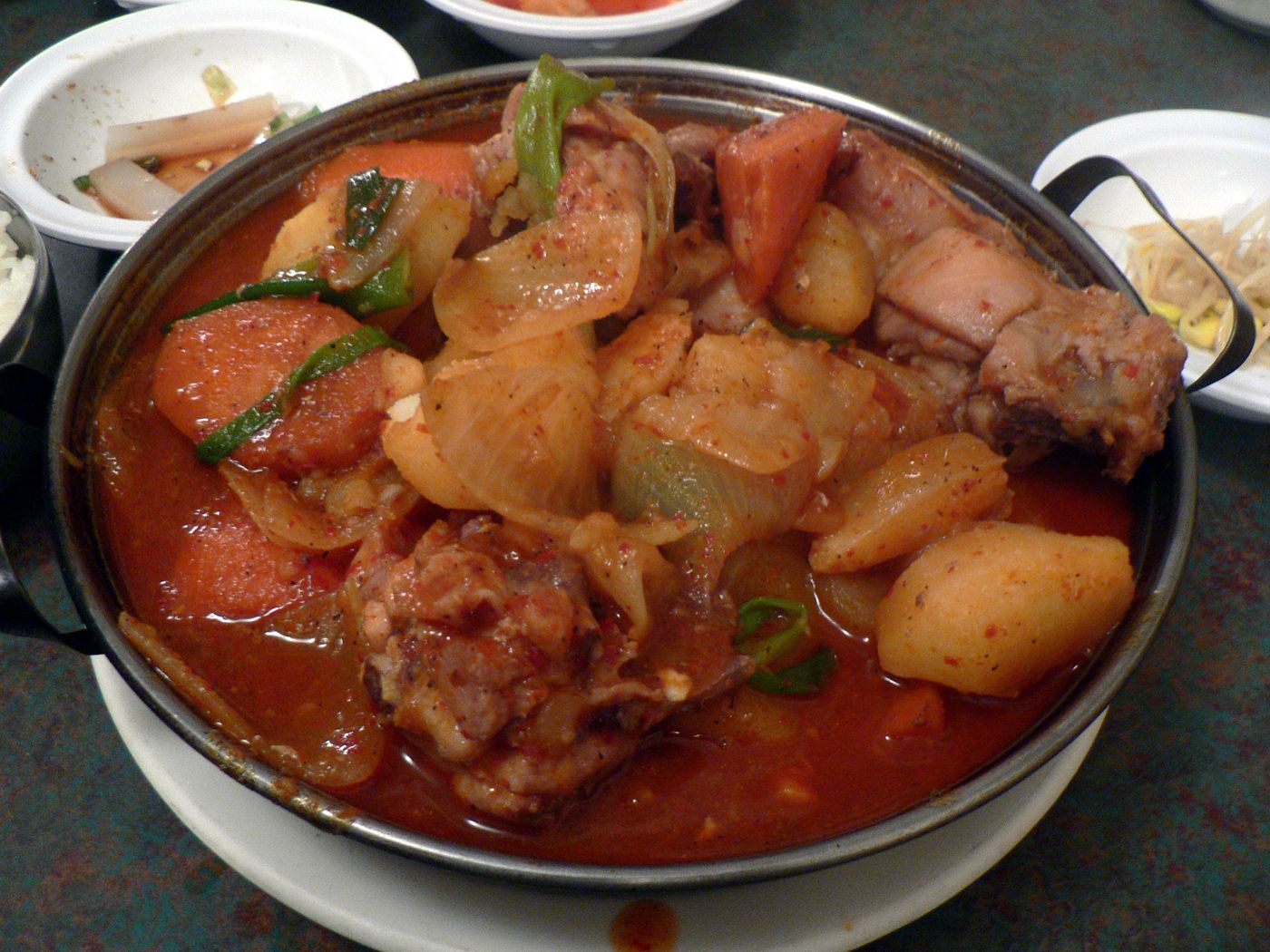
 Photo: stuart_spivack (a flickr user), CC BY-SA 2.0, via Wikimedia Commons
Jjim · Steamed 찜
Dak-bokkeumtang (Spicy Braised Chicken)
닭볶음탕
Romanization: dak-bokkeumtang
Bone-in chicken and potatoes braised in a red chili sauce until it thickens and clings — long known as dakdoritang, a name whose origin is still debated.
- Serves
- 4
- Prep
- 20 min
- Cook
- 40 min
RegionGaeseong · Northern Provinces (Hwanghae, Pyeongan, Hamgyeong)
Jump to recipeRecipe
Ingredients · Serves 4
- 1.2 kgWhole chicken, cut into 12–14 pieces, or bone-in thighs and drumsticks
- 400 gPotatoescut into large chunks
- 100 gCarrotcut into chunks
- 150 gOnioncut into wedges
- 2 stalksGreen onionscut into lengths
- 2 Green and red chiliessliced on the diagonal
- 2 tbspGochujang
- 3 tbspGochugaru
- 4 tbspSoy sauce
- 1½ tbspSugar
- 6 clovesGarlicminced
- 2 tspGingerminced
- ⅛ tspBlack pepper
- 600 mlWater
- 1 tspToasted sesame oil
Method
Technique: Jorim: Braising in Seasoned Liquid, Yangnyeom: Seasoning Basics
Step 1: Blanch the chicken in boiling water for 2–3 minutes, drain and rinse.
Step 2: Mix the gochujang, gochugaru, soy sauce, sugar, garlic, ginger and pepper into a sauce.
Step 3: Put the chicken, sauce and water in a heavy pot, bring to a boil, then cover and simmer 15 minutes.
Step 4: Add the potatoes and carrot and simmer, partly covered, 15 minutes more, stirring occasionally, until the potatoes are tender and their starch begins to thicken the sauce.
Step 5: Add the onion and chilies and cook uncovered 5 minutes, spooning the sauce over, until it is thick and glossy. The chicken should reach 165 °F (74 °C).
Step 6: Add the green onions and sesame oil, and serve with rice.
Origin & History
Dak-bokkeumtang is chicken cut through the bone, cooked with large chunks of potato, carrot and onion in a spicy sauce of chili paste and chili powder. Both the Korean Food Promotion Institute and the Encyclopedia of Korean Folk Culture point out that despite the name — literally "stir-fried soup" — it sits between a soupy tang and a nearly dry jjim, and is closest of all to a jorim, a braise. It is also called dak-maeunjjim, "spicy braised chicken."
Older chicken dishes in the same vein were not spicy. The folk encyclopedia cites a stir-fried chicken (chogye) in the Joseon household manual Sallim gyeongje, and colonial-era cookbooks with dak-bokkeum seasoned with soy sauce and black pepper; the institute notes that the 1924 Joseon musang sinsik yori jebeop version was seasoned with salted-shrimp liquid instead. The same 1924 book says that in Songdo (Kaesong) the dish was called doritang, and a 1925 collection, Haedong jukji, praises a doritang of Pyongyang, chicken simmered half a day with mushrooms and seasoning. Red chili enters the recipe in print in a 1946 cookbook, and today a chili-paste sauce is standard.
The name is the subject of a long debate. For decades the dish was simply dakdoritang. The National Institute of Korean Language treated dori as the Japanese word tori, "bird" — which would make the name a redundant "chicken-bird soup" — and recommended dak-bokkeumtang instead. Others argue that dori comes from the verb dorida, "to cut out," or from an old form of jori (調理, cooking). The Korean Food Promotion Institute concludes that the Japanese theory never had solid evidence and that the word's origin remains unknown; the folk encyclopedia agrees that nothing is settled. See making guk and jjigae and capsaicin and spicy food.
Key Ingredients
- Chicken (dak)닭Chicken appears in Korea's founding legends and on its summer tables: young birds simmered whole with ginseng in samgyetang, chili-marinated pieces stir-fried as Chuncheon's dakgalbi, and the fried chicken of modern takeout culture.
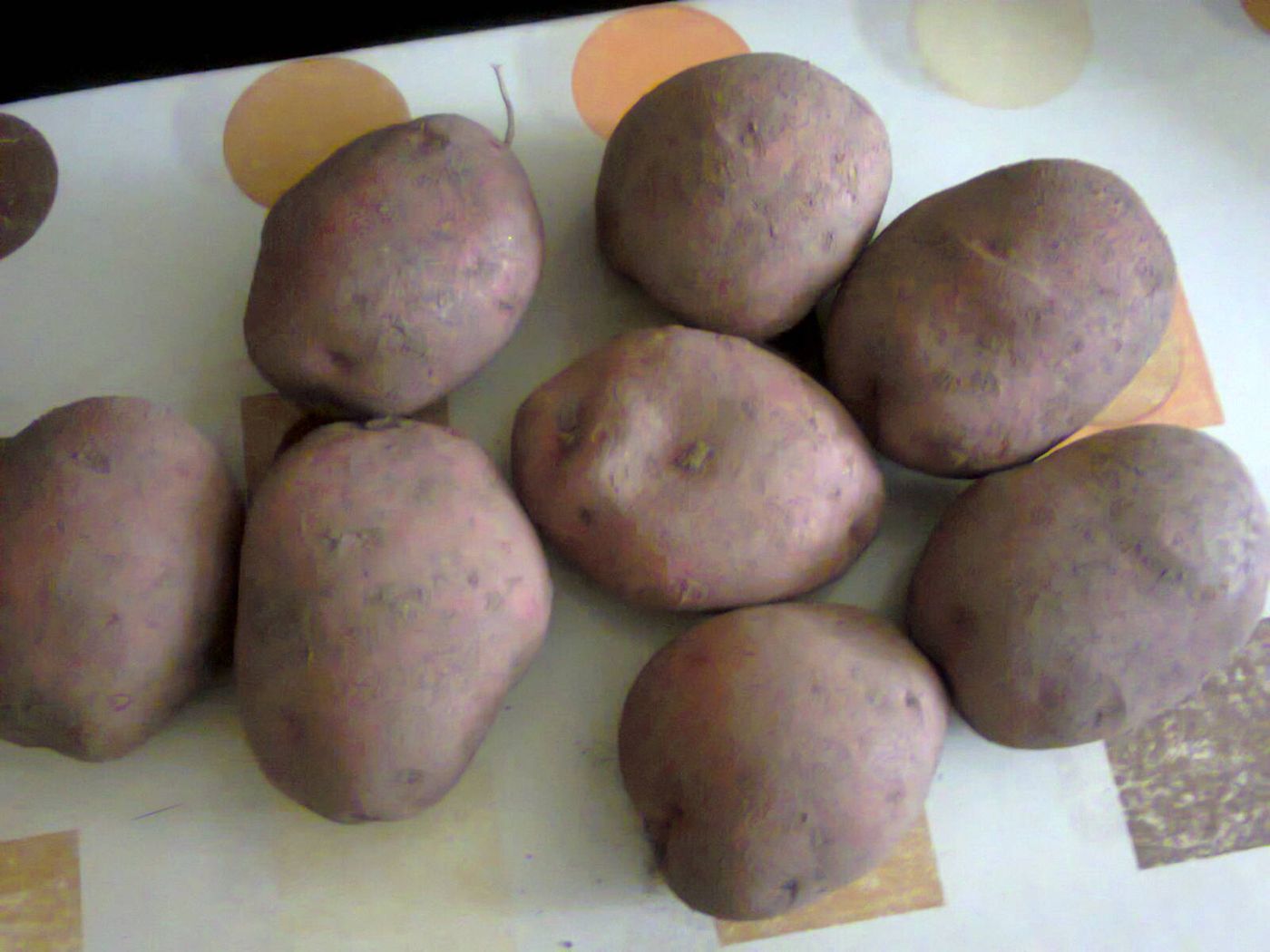 Potato감자A relatively recent arrival that became a mainstay of the mountain provinces. Braised in soy sauce as gamja-jorim, stir-fried in fine matchsticks, grated into crisp gamja-jeon and simmered in countless soups.
- Korean Chili Peppers (Fresh)고추Fresh Korean chili peppers, eaten green (putgochu) or red (hong-gochu): from the fiery cheongyang-gochu to the small, wrinkled, mild kkwari-gochu that is braised and stir-fried as banchan.
- Gochujang고추장Fermented red chili paste — sweet, savory and hot. Made from meju powder, glutinous rice, malt and gochugaru, it is a later addition to Korea's family of jang.
 Gochugaru고춧가루Korean red chili powder, made from dried red peppers ground coarse or fine. It gives kimchi, gochujang and countless banchan their color and warmth.
 Soy sauce간장Korean soy sauce, in two main kitchen forms: pale, salty guk-ganjang (soup soy sauce) brewed the traditional way from meju, and darker, sweeter jin-ganjang for braises and marinades.
 Garlic마늘Used raw, minced, pickled and roasted, garlic is one of the essential aromatics of Korean food — in seasonings, marinades, kimchi and namul.
 Ginger생강Fresh ginger root, used in small amounts to brighten kimchi paste and marinades and to tame the strong smells of fish and meat.
 Green onion파Korean green onion (pa), from thick-stemmed daepa to slender scallions — chopped into nearly every seasoning sauce, soup and kimchi, and the star of pa-kimchi.
 Sesame참깨Toasted sesame seeds and sesame oil (chamgireum) finish countless Korean dishes, adding a nutty aroma and gloss.
Nutrition
| Calories | ~590 kcal |
|---|---|
| Protein | ~40 g |
| Fat | ~30 g |
| Carbohydrates | ~41 g |
| Fiber | ~6.1 g |
| Sodium | ~1270 mg |
Notable forProtein · Niacin · Vitamin A · Vitamin C
Estimated by summing USDA FoodData Central (SR Legacy) values for raw chicken meat and skin (FDC 171447; about 730 g edible from 1.2 kg using USDA's yield of 276 g per 454 g ready-to-cook chicken), potatoes (FDC 170026), carrot, onion, scallions, green chili, soy sauce (FDC 174277), red pepper (FDC 170932, as a stand-in for gochugaru), sugar, garlic, ginger and sesame oil, with gochujang from the Korean Food Composition Table (R0050010009a), divided by 4. Assumes all the sauce is eaten. Vitamin A comes mainly from the chili powder and carrot. Actual values vary with ingredients, portion size and preparation.
Health Benefits
- Protein with vegetables: chicken supplies protein and niacin; potatoes, carrot and chili add vitamin C, vitamin A and potassium.
- Chili: gochugaru and gochujang provide the capsaicin and carotenoid pigments of red pepper. See capsaicin and spicy food.
- Lighter with less skin: removing skin before cooking, or skimming fat from the sauce, lowers the fat considerably.
Regional Variations
- Everyday home style: chicken, potato, carrot and onion in a gochujang-gochugaru sauce, cooked until the sauce is thick enough to spoon over rice.
- Kaesong and Pyongyang doritang (northern provinces): early 20th-century versions seasoned without chili; the Pyongyang dish was simmered half a day with mushrooms.
- Andong jjimdak (Andong): the folk encyclopedia counts Andong jjimdak, braised in soy sauce, as a relative.
- Old non-spicy dak-bokkeum: colonial-era recipes seasoned with soy sauce and pepper, or with salted-shrimp liquid, are the ancestors the folk encyclopedia and the Korean Food Promotion Institute describe.
Pairings
 Cubed Radish Kimchi깍두기Korean radish cut into neat cubes and tossed with chili, garlic and salted shrimp — crunchy, juicy and a classic partner to rich soups.
 Kongnamul Muchim콩나물무침Soybean sprouts cooked under a lid until just tender, then tossed with garlic, green onion and sesame oil — crisp, nutty and on tables across Korea.
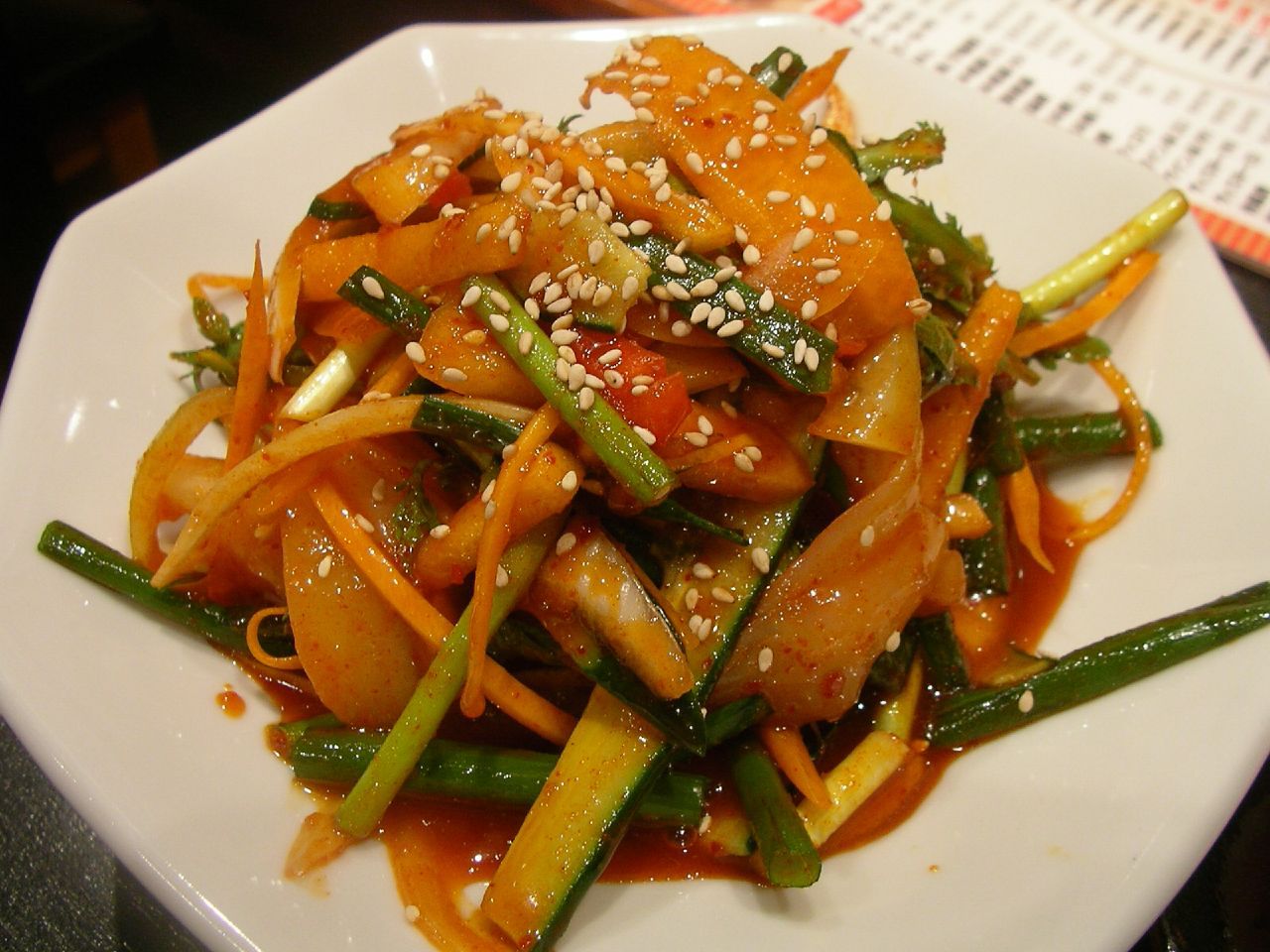 Oi Muchim오이무침Thin-sliced cucumber, briefly salted and tossed with chili flakes, vinegar and garlic — a cool, crunchy quick salad made in minutes, especially in summer.
Sources
- 01닭볶음탕 (Dak-bokkeumtang) — Encyclopedia of Korean Folk Culture, National Folk Museum of Korea
- 02한식이야기: 닭볶음탕 (Korean Food Story: Dak-bokkeumtang) — Korean Food Promotion Institute
- 03Chicken, broilers or fryers, meat and skin, raw (FDC 171447) — USDA FoodData Central
- 04Gochujang (R0050010009a) — Korean Food Composition Table, National Institute of Agricultural Sciences
- 05Safe Food Handling — U.S. Food and Drug Administration
Last updated