Kimchi 김치
Green Cabbage Kimchi
양배추김치
Romanization: yangbaechu-kimchi
Crisp, quick kimchi of round green cabbage — once South Korea's stand-in when napa ran short, and still an everyday summer kimchi in North Korea.
- Serves
- 20
- Prep
- 45 min
- Cook
- 3 min
RegionNorthern Provinces (Hwanghae, Pyeongan, Hamgyeong)
Jump to recipeRecipe
Ingredients · Serves 20
- 1.2 kgGreen cabbage (yangbaechu)1 medium head, cored and cut into 4 cm squares
- 40 gCoarse sea salt (cheonilyeom), non-iodizedabout 3 tbsp
- 500 mlWaterfor salting
- 1 tbspGlutinous rice flourfor the paste
- 120 mlWaterfor the paste
- 30 gGochugaru (Korean chili flakes)about ⅓ cup
- 2 tbspAnchovy fish sauce (myeolchi-aekjeot)
- 1 tbspSalted shrimp (saeujeot)chopped
- 2 tbspGarlicminced
- 1 tspGingerminced
- 1 tspSugar
- ½ Carrotjulienned
- ½ Onionthinly sliced
- 3 stalksGreen onionscut in 4 cm lengths
Method
Technique: Making Kimchi
Step 1: Dissolve half the salt in the 500 ml water, pour it over the cabbage, sprinkle on the rest of the salt and toss. Leave for about 1 hour, turning every 20 minutes, until the thick ribs bend without snapping.
Step 2: Rinse the cabbage twice in cold water and drain in a colander for 20 minutes. Taste a piece: it should be lightly salty.
Step 3: Whisk the rice flour into the 120 ml water and cook over low heat, stirring, for 2–3 minutes until glossy. Cool completely.
Step 4: Mix the cooled paste with the gochugaru, fish sauce, salted shrimp, garlic, ginger and sugar and leave 10 minutes so the chili swells.
Step 5: Toss the cabbage, carrot, onion and green onions in the seasoning with gloved hands until evenly coated. Pack into a clean container, pressing out air.
Step 6: Leave at room temperature for half a day to 1 day, until it just begins to smell tangy, then refrigerate. It is good after 1–2 days and best within about 2 weeks, while still crisp. Use clean utensils and discard if slimy or moldy.
Origin & History
Round cabbage (yangbaechu, literally “Western cabbage”) is a newcomer to Korea. The Encyclopedia of Korean Folk Culture traces the first trial planting to the agricultural experiment station set up after the 1883 diplomatic mission to the United States; a Japanese survey of 1906 found it grown mainly by Chinese farmers, and through the 1930s and 1940s it was used chiefly in Chinese, Western and Japanese-style cooking. Demand grew after the Korean War to supply United Nations troops stationed in the South.
The same years left Korean households short of the napa cabbage they needed for kimchi. Before refrigerators were common, the winter kimjang kimchi often ran out by about February, and families made do with whatever vegetables they could find until summer. Green cabbage, closest in form to napa, was the obvious substitute. The folk encyclopedia cites newspaper pieces from 1955 to the early 1970s urging readers to make “improved” kimchi from it, and a 1973 shopping column pricing the anchovy and shrimp jeotgal used to season it. Many older Koreans remember making it in summer when napa was unaffordable. As highland napa cabbage became available year round and kimchi production industrialized, it largely faded from South Korean tables.
North of the border it remained a staple. The folk encyclopedia notes that in North Korea, where land for kimchi vegetables is limited, green cabbage — called gadubaechu there — is a common summer kimchi from spring to autumn, and that restaurants run by people from the North often serve it. In the South, it is now a handy summer kimchi when napa prices spike, quick to make and easy to like; the encyclopedia compares its tang to sauerkraut.
Key Ingredients
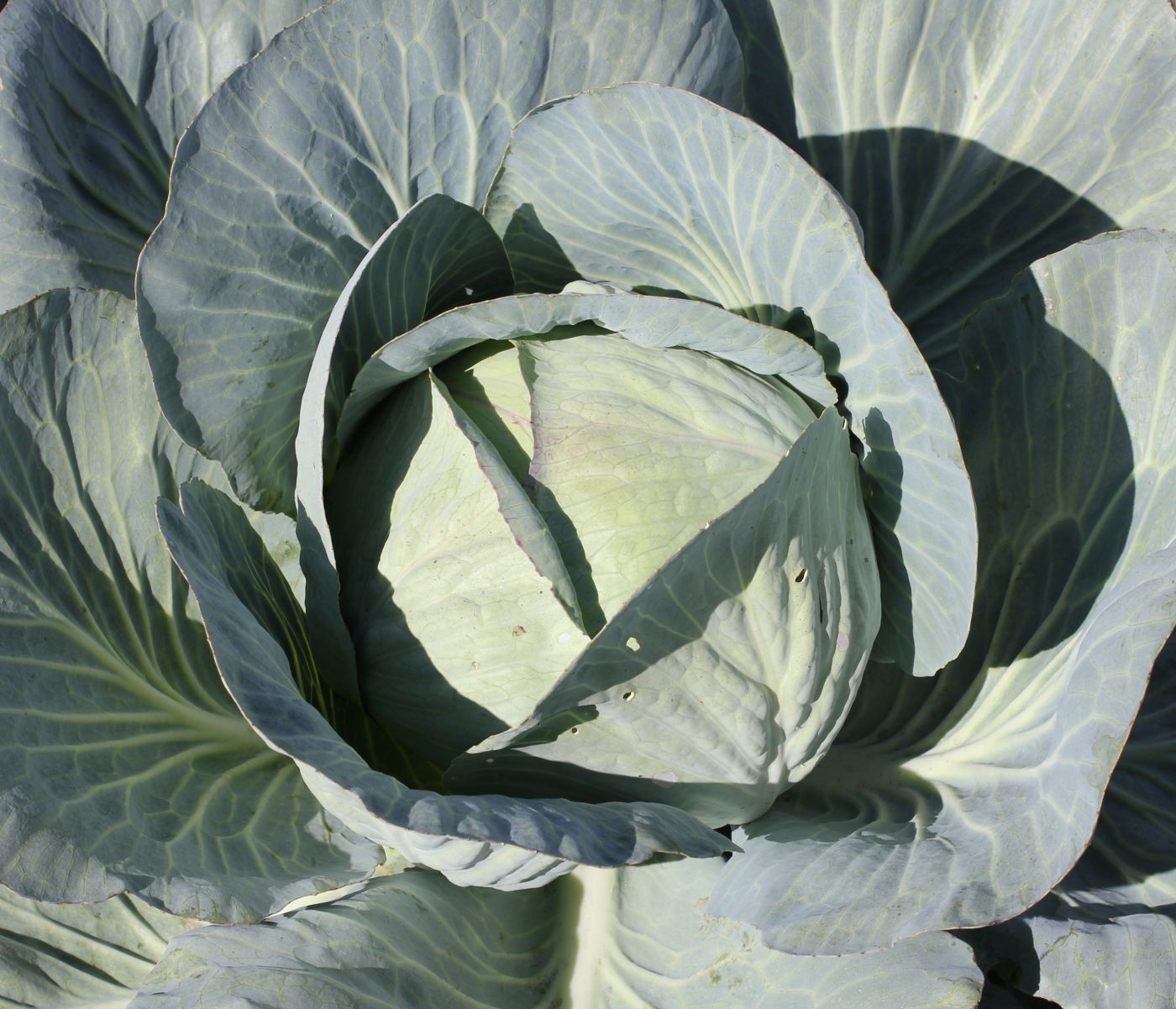 Yangbaechu (cabbage)양배추The round, tightly headed European cabbage — the "Western baechu." Crunchy and sweet, it is shredded raw, made into quick kimchi, steamed as a wrap and stir-fried into dakgalbi and tteokbokki.
 Sun-Dried Sea Salt천일염Coarse sea salt made by evaporating seawater with sun and wind in tidal-flat salt pans, most of it from Sinan County off Korea's southwest coast. It is the everyday salt for salting cabbage and making jang.
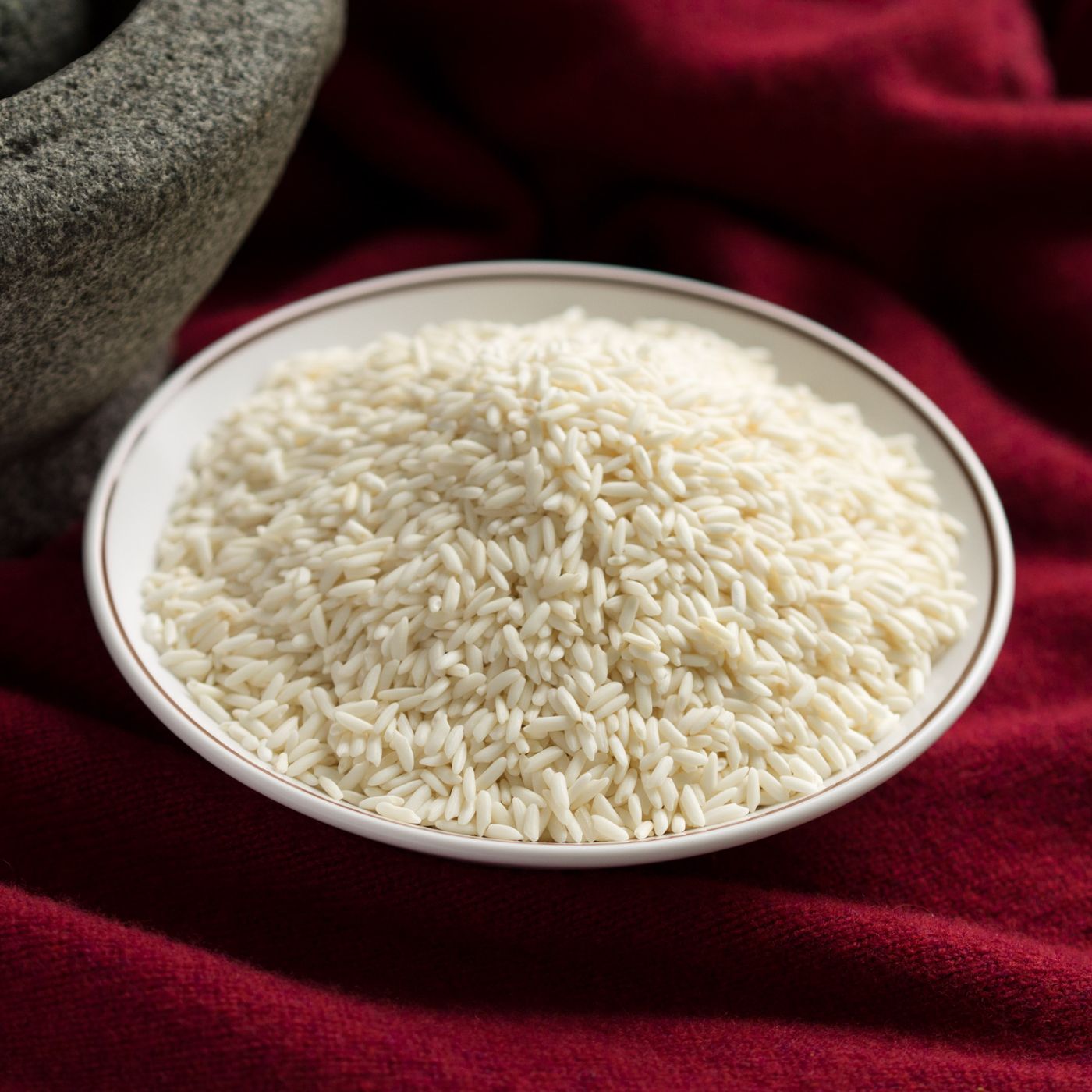 Glutinous rice (sweet rice)찹쌀Opaque, chalk-white grains of glutinous rice that steam into a chewy, elastic mass. Chapssal is the rice of festivals and comfort food: pounded into rice cakes, sweetened into yaksik, and tucked inside the chicken of samgyetang.
 Gochugaru고춧가루Korean red chili powder, made from dried red peppers ground coarse or fine. It gives kimchi, gochujang and countless banchan their color and warmth.
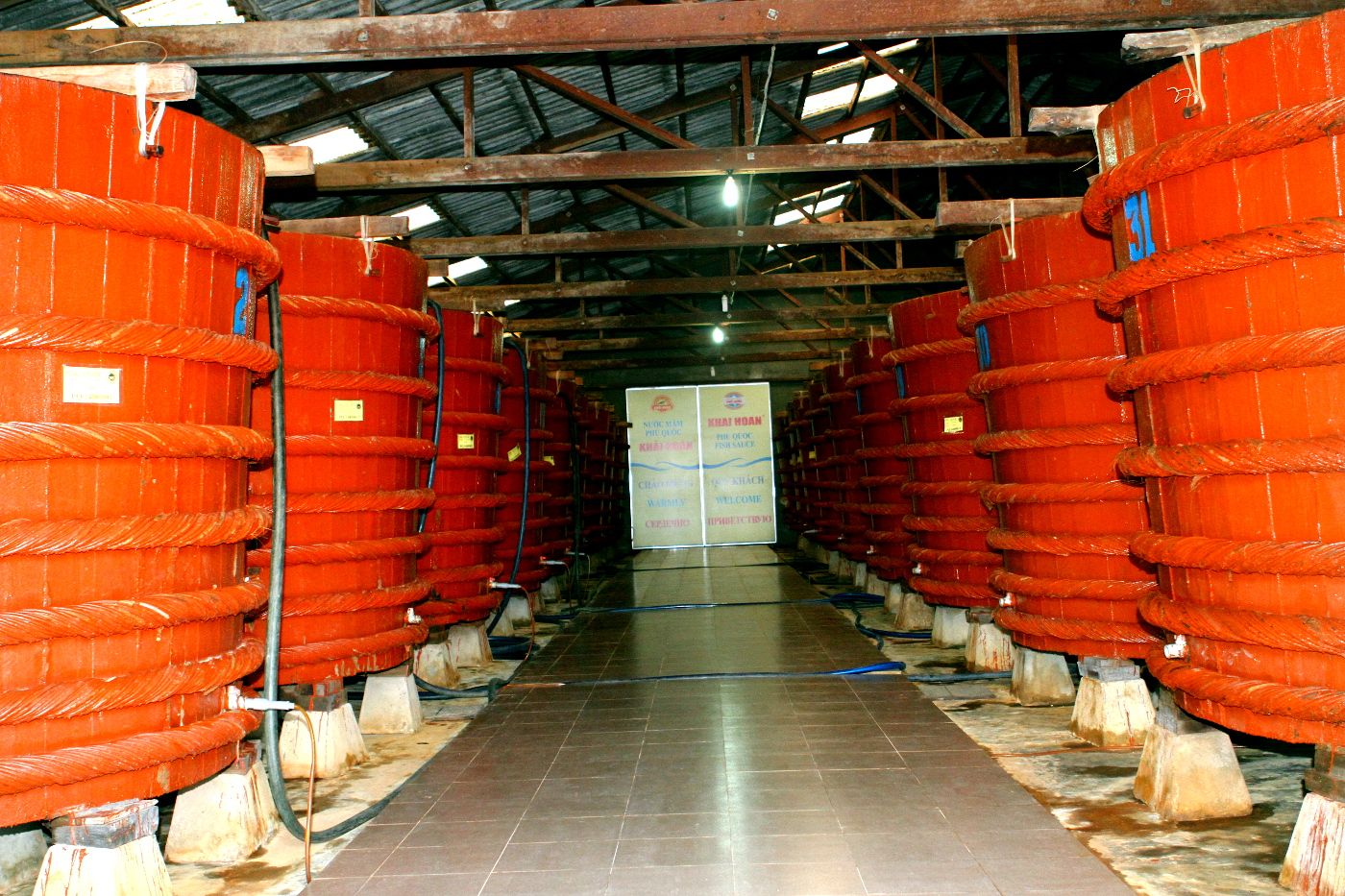 Anchovy fish sauce멸치액젓The clear amber liquid drawn from salted, fermented anchovies. A jeotgal in liquid form, it is the savory backbone of much southern-style kimchi and a quick seasoning for soups and namul.
 Salted fermented shrimp새우젓Tiny shrimp packed in salt and left to ferment — a jeotgal (salted seafood) that seasons kimchi and stews and accompanies boiled pork with briny, savory depth.
 Garlic마늘Used raw, minced, pickled and roasted, garlic is one of the essential aromatics of Korean food — in seasonings, marinades, kimchi and namul.
 Ginger생강Fresh ginger root, used in small amounts to brighten kimchi paste and marinades and to tame the strong smells of fish and meat.
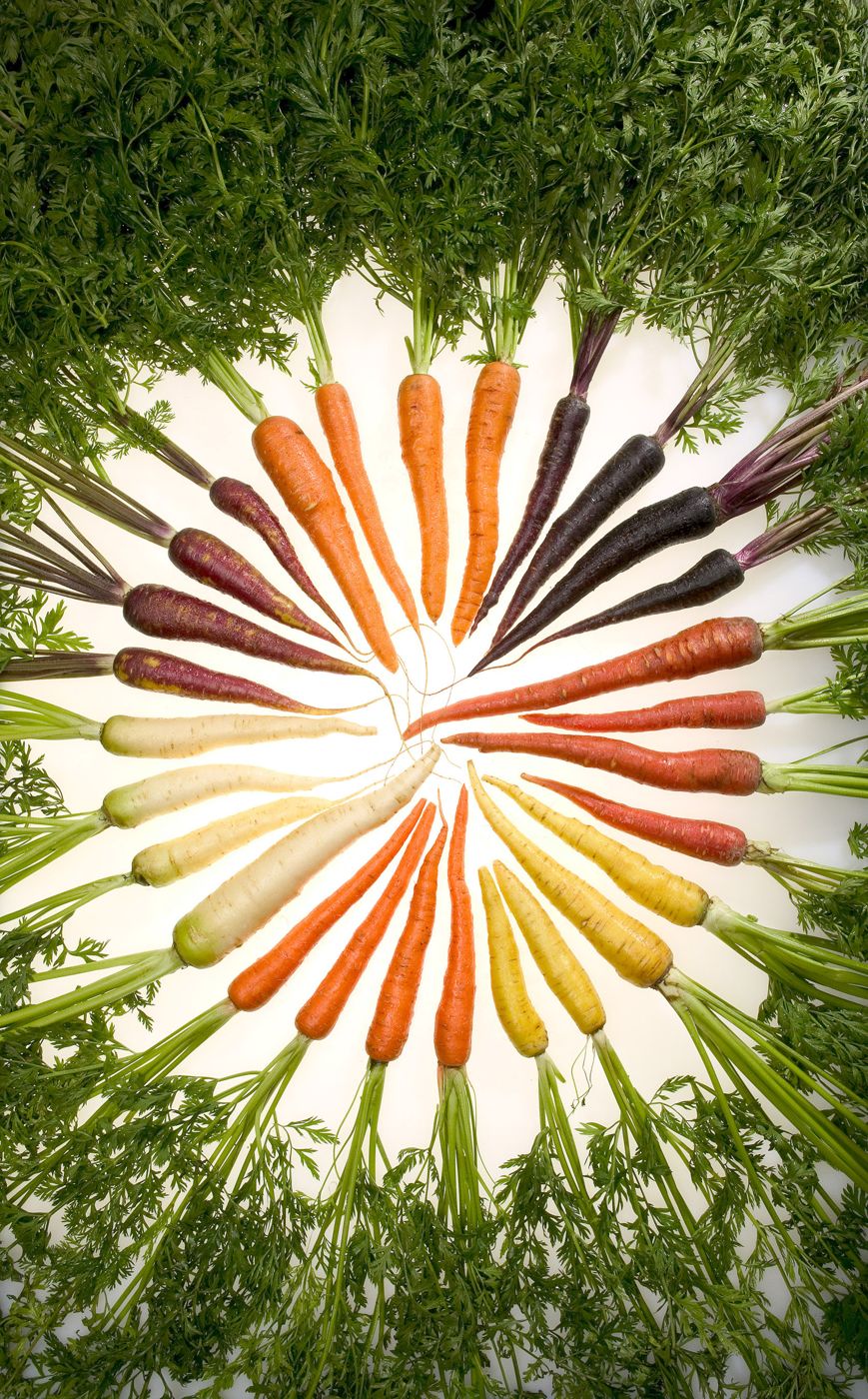 Danggeun (carrot)당근The orange root that brings color to the Korean table: julienned into japchae and gimbap, shredded into jeon batters, stir-fried with dakgalbi. Korea's sweetest winter carrots come from the volcanic fields of eastern Jeju.
 Yangpa (onion)양파The bulb onion, literally the "Western scallion." A latecomer to Korea, it is now everywhere: sweetening stir-fries and braises, pickled in soy sauce as yangpa-jangajji, and served raw beside grilled meat.
 Green onion파Korean green onion (pa), from thick-stemmed daepa to slender scallions — chopped into nearly every seasoning sauce, soup and kimchi, and the star of pa-kimchi.
Nutrition
| Calories | 23 kcal |
|---|---|
| Protein | 1.3 g |
| Fat | 0.2 g |
| Carbohydrates | 5 g |
| Fiber | 2 g |
| Sodium | Not reported |
Notable forVitamin C · Dietary fiber
From the Korean MFDS food composition database (K-FIND) entry for green cabbage kimchi (양배추김치), a value calculated from school-meal recipes rather than laboratory-analyzed (per 100: 39 kcal, 2.2 g protein, 8.3 g carbohydrate, 3.4 g fiber, 14.7 mg vitamin C), scaled to the serving size. Sodium is left as not reported: the entry's 2,099 mg per 100 is roughly four times the Korean Food Composition Table value for napa-cabbage kimchi (551 mg per 100 g) and is implausible for a home recipe like this one. The Korean Food Composition Table has no green cabbage kimchi entry. Actual values vary with ingredients, portion size and preparation.
Health Benefits
- Vitamin C: cabbage keeps a fair amount through light fermentation; the database figure gives about 9 mg per serving.
- Fiber for few calories: about 2 g per serving at roughly 23 kcal.
- Fermented vegetables: like other kimchi it ripens with naturally occurring lactic acid bacteria; research on the health effects of fermented vegetables is ongoing.
Regional Variations
- North Korea (gadubaechu-kimchi): an everyday kimchi from spring to autumn, when napa cabbage is scarce.
- South Korea, mid-20th century: “improved” kimchi promoted in newspapers as a bridge between the end of the winter kimchi and the summer.
- Seasoning: usually lightly salted, then dressed with chili, garlic, ginger and fish sauce; carrot and onion are common additions.
Pairings
 Mandu (Korean Dumplings)만두Thin wrappers folded around pork, tofu, kimchi and sprouts, then steamed or boiled — a Goryeo-era arrival from China that became a winter staple of the North.
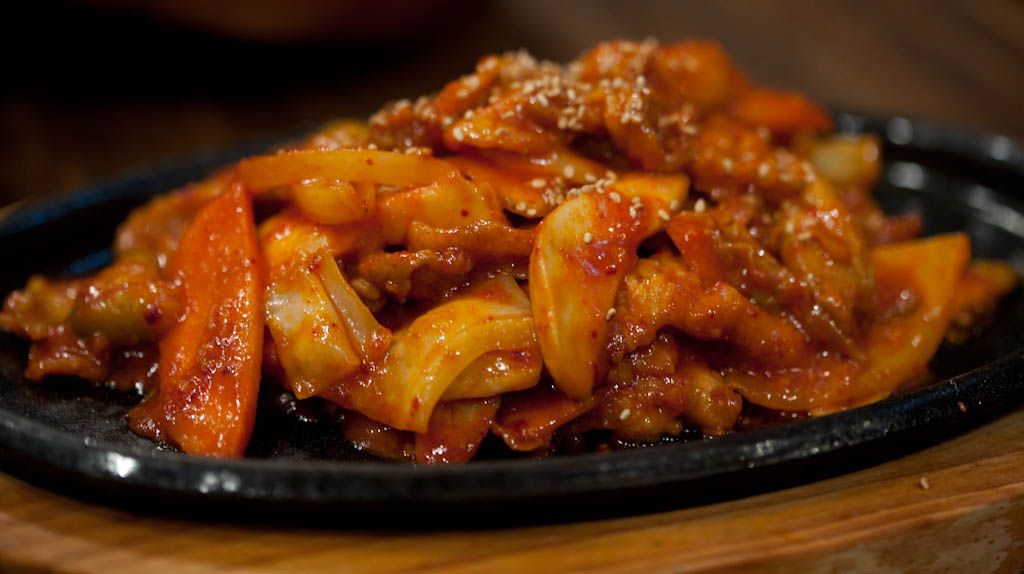 Jeyuk Bokkeum (Spicy Stir-Fried Pork)제육볶음Thin slices of pork marinated in gochujang, garlic and ginger, then stir-fried with onion and green onion — a hearty, spicy staple of home and diner tables.
 Doenjang Jjigae (Soybean Paste Stew)된장찌개A thick, savory stew of fermented soybean paste with tofu, zucchini and whatever the season offers — the everyday pot at the center of the Korean table.
Sources
- 01양배추김치 - 한국민속대백과사전 (Encyclopedia of Korean Folk Culture)
- 02양배추 - 한국민속대백과사전 (Encyclopedia of Korean Folk Culture)
- 03양배추김치 — MFDS K-FIND food composition database
- 04Korean Food Composition Table: Cabbage (Yangbaechu), Raw — National Institute of Agricultural Sciences
- 05A large-scale norovirus outbreak associated with kimchi consumption across multiple schools in a Korean city in 2024 — Epidemiology and Health (2025)
Last updated