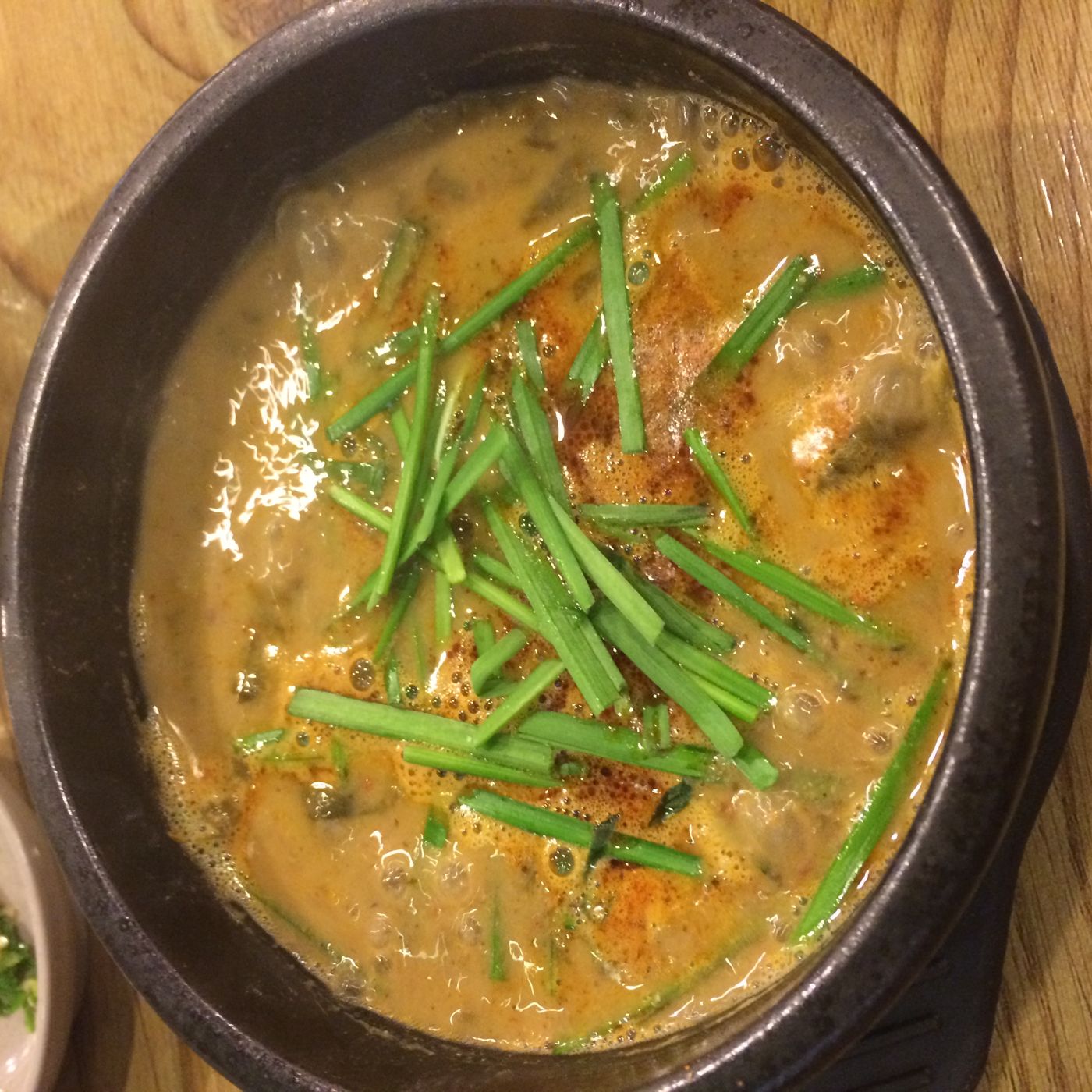
 Photo: chomjong, CC BY 2.0, via Wikimedia Commons
Jjigae · Stews 찌개
Chueotang (Loach Soup)
추어탕
Romanization: chueotang
Pond loaches simmered and ground into a thick, earthy soup with dried greens, doenjang and perilla, sharpened with chopi pepper — an autumn harvest dish turned year-round restorative.
- Serves
- 4
- Prep
- 40 min
- Cook
- 70 min
RegionJeolla · Gangwon · Seoul & Gyeonggi · Gyeongsang
Jump to recipeRecipe
Ingredients · Serves 4
- 500 gLive or very fresh pond loaches (mikkuraji)
- 3 tbspCoarse saltfor cleaning
- 2 lWater
- 200 gRehydrated siraegi or blanched radish greens (ugeoji)cut into 3 cm lengths
- 80 gRehydrated taro stems (torandae)optional, cut into 5 cm lengths
- 3 tbspDoenjang
- 1 tbspGochujangoptional
- 5 tbspGround perilla seed (deulkkae-garu)
- 1 tbspGarlicminced
- 1 tspGingerminced
- 2 Green and red chili pepperssliced
- 2 stalksGreen onionsliced
- 50 gGarlic chives (buchu)optional, cut short
- to tasteChopi (sancho) powderKorean prickly ash, for the table
Method
Technique: Making Guk and Jjigae, Drying and Rehydrating Vegetables
Step 1: Put the loaches in a bowl with a lid, sprinkle with the coarse salt and cover quickly; leave 5–10 minutes. Rub them, then rinse in several changes of water until the slime is gone and the water runs clear.
Step 2: Bring the 2 liters of water to a boil, add the loaches and simmer, covered, for 30 minutes, until they are completely soft.
Step 3: Purée the loaches with some of their cooking liquid in a blender, then press through a coarse sieve back into the pot to remove the larger bones. (Some cooks keep everything for a thicker soup.)
Step 4: Toss the greens and taro stems with the doenjang, gochujang (if using), garlic and ginger. Add to the pot and simmer gently for 30 minutes, stirring now and then so it doesn't catch.
Step 5: Stir in the ground perilla seed and simmer 5 minutes more. Taste and adjust with salt.
Step 6: Add the chilies, green onion and chives. Serve with rice and set out chopi powder so each diner can add a pinch.
Origin & History
Chueotang is a soup of pond loach (mikkuraji, also chueo, "autumn fish"), a small fish of rice paddies and ditches. The Encyclopedia of Korean Folk Culture describes it as a long-simmered soup seasoned with doenjang and gochujang and counted among Korea's restorative foods (boyang eumsik). Once a seasonal treat — loaches are fattest from about July to November — it is now eaten year-round because the fish are farmed. Although the name ends in -tang, the MFDS food database files it with stews and hot pots, which is why it is grouped with jjigae here.
It was a dish of the farming calendar. After the autumn equinox, villagers drained their paddies and dug ditches around them, catching the fat loaches that had burrowed into the mud to overwinter; the folk encyclopedia describes the soup made from them being served at a village feast to thank the elders at the end of the farming year. Loaches appear in the twelfth-century Chinese envoy's account Gaoli tujing, and the Encyclopedia of Korean Culture finds the soup itself in Yi Gyu-gyeong's mid-nineteenth-century Oju yeonmun jangjeon sango as chudubu-tang: live loaches dropped into a pot with cold fresh tofu, burrowing into it as the water heated. Lee Yong-gi's 1924 cookbook, the folk encyclopedia adds, tried this and reported that the fish died in the hot water before they could burrow.
Cooks clean the slippery live fish by salting them under a lid, then rinsing them several times. The fish are either simmered and ground, or added whole, and every regional style relies on a pinch of chopi (Korean prickly ash, often called sancho) at the table to tame the muddy smell.
Key Ingredients
- Loach (chueo)추어A small, whiskered freshwater fish of rice paddies and muddy ditches, eaten in autumn as chueotang, a thick, peppery soup made from loaches simmered and ground with greens and doenjang.
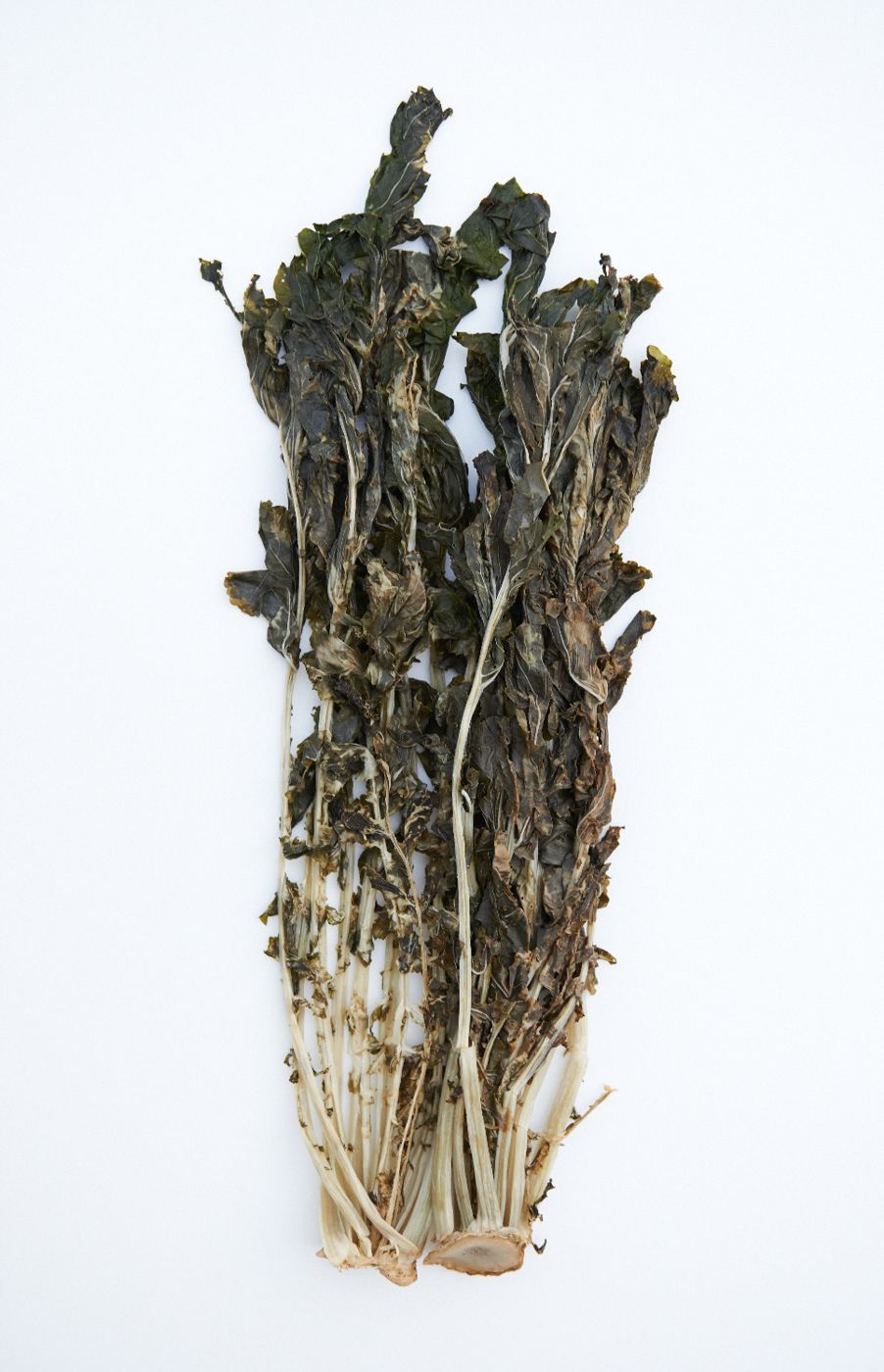 Siraegi (dried radish greens)시래기Radish tops dried in the shade until dark and brittle, then soaked and simmered back to tenderness. A winter staple for earthy namul, doenjang soups and rice cooked with greens.
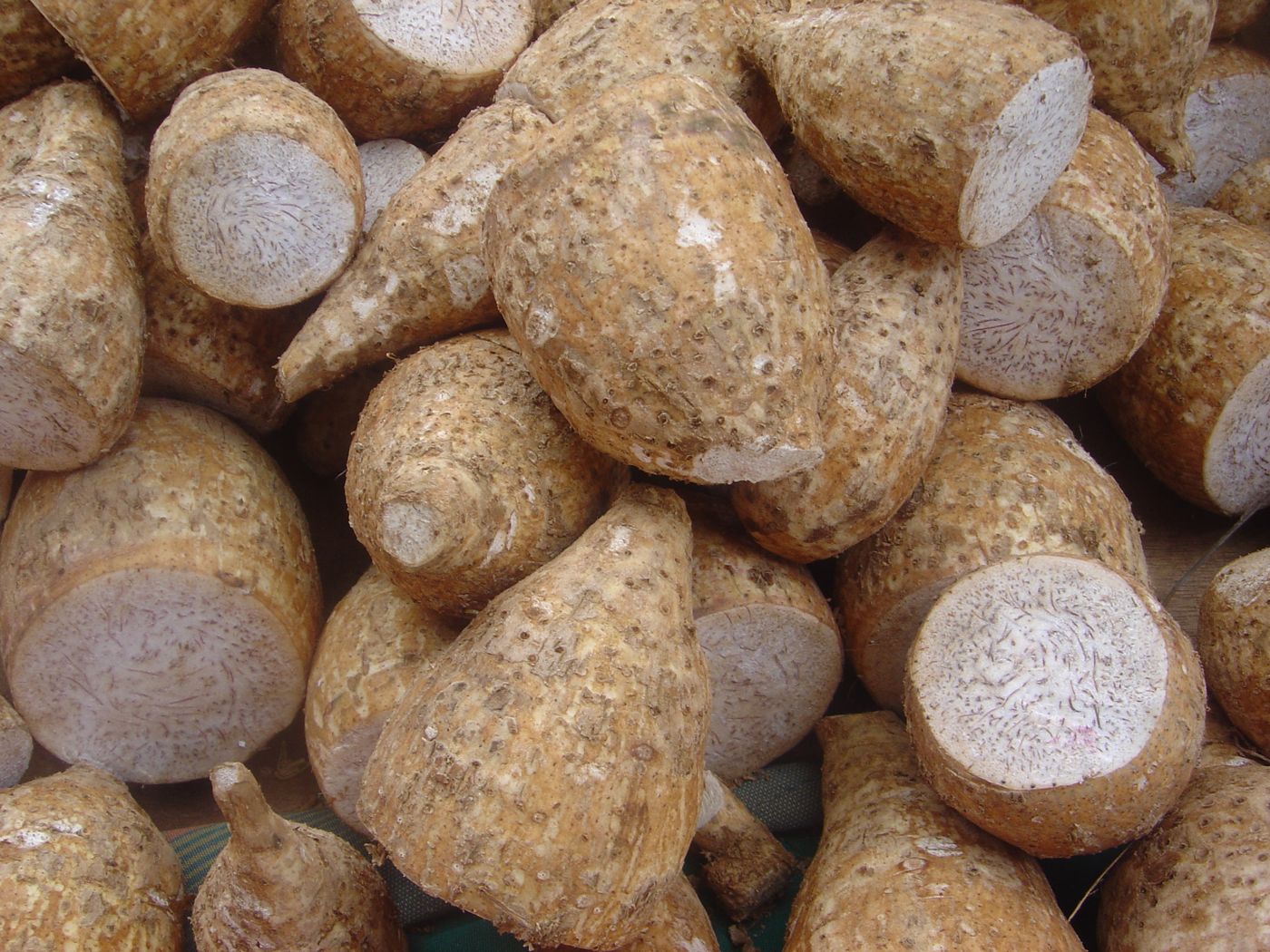 Toran (taro)토란Small, hairy brown corms with slippery white flesh, harvested just in time for Chuseok. Simmered in clear beef broth as toran-guk, they are a defining taste of the autumn harvest festival, especially in Seoul and Gyeonggi.
 Doenjang된장Fermented soybean paste — the savory foundation of doenjang-jjigae, many soups and dressings for namul. It is one of Korea's core jang, or fermented sauces.
- Gochujang고추장Fermented red chili paste — sweet, savory and hot. Made from meju powder, glutinous rice, malt and gochugaru, it is a later addition to Korea's family of jang.
- Perilla Seed Powder들깨가루Roasted perilla seeds ground to a coarse, oily powder, sold whole or hulled. Stirred into soups and stews it makes them creamy and nutty; tossed with namul it adds body and fragrance.
 Perilla깻잎Perilla leaves have a bold, minty-herbal scent. They are eaten fresh as a wrap, pickled in soy sauce, or layered with seasoning as kkaennip-jangajji.
 Garlic마늘Used raw, minced, pickled and roasted, garlic is one of the essential aromatics of Korean food — in seasonings, marinades, kimchi and namul.
 Ginger생강Fresh ginger root, used in small amounts to brighten kimchi paste and marinades and to tame the strong smells of fish and meat.
- Korean Chili Peppers (Fresh)고추Fresh Korean chili peppers, eaten green (putgochu) or red (hong-gochu): from the fiery cheongyang-gochu to the small, wrinkled, mild kkwari-gochu that is braised and stir-fried as banchan.
 Green onion파Korean green onion (pa), from thick-stemmed daepa to slender scallions — chopped into nearly every seasoning sauce, soup and kimchi, and the star of pa-kimchi.
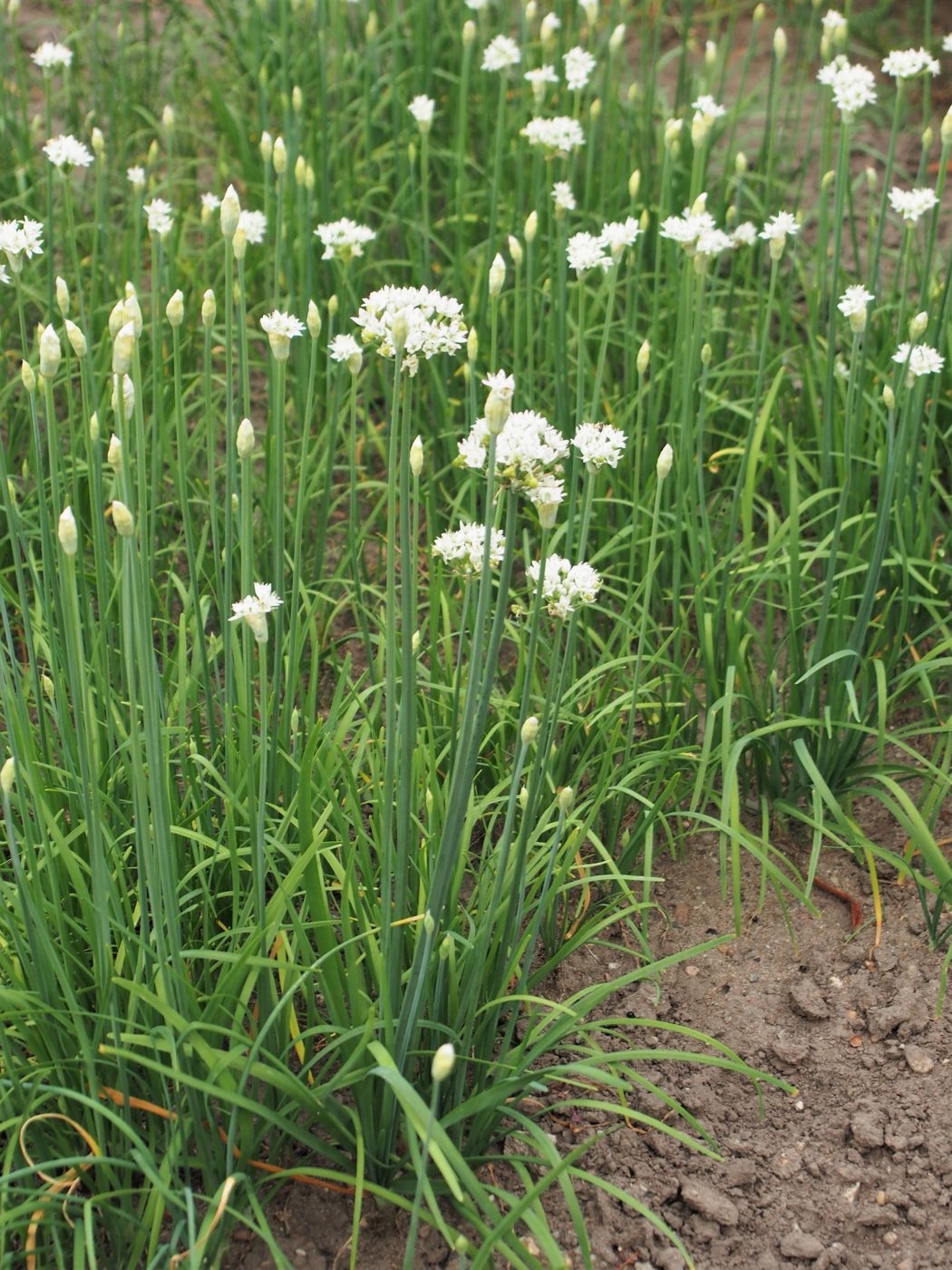 Garlic chives (buchu)부추Flat-leaved garlic chives with a bright, garlicky perfume. Tossed raw into buchu-muchim, folded into savory pancakes and tucked into cucumber kimchi.
Nutrition
| Calories | ~189 kcal |
|---|---|
| Protein | ~11.3 g |
| Fat | ~11.1 g |
| Carbohydrates | ~10.7 g |
| Fiber | ~7.7 g |
| Sodium | ~861 mg |
Notable forCalcium · Protein · Selenium · Vitamin B12
Scaled from the MFDS analysis of home-style chueotang (per 100 g: 54 kcal, 3.24 g protein, 3.18 g fat, 3.07 g carbohydrate, 2.2 g fiber, 246 mg sodium, 135 mg calcium, 7.43 µg selenium, 0.53 µg vitamin B12) to the database's 350 g serving. The high calcium, about 470 mg per serving, reflects the ground whole fish; the fiber is plausible given the dried greens and perilla seed but should be read with caution. A restaurant version analyzed by MFDS (264 mg sodium per 100 g in a 1 kg serving) comes to about 2,640 mg sodium. Actual values vary with ingredients, portion size and preparation.
Health Benefits
- Because the whole fish is ground into the soup, a bowl is an unusually good source of calcium, by the MFDS analysis, along with protein, selenium and vitamin B12.
- Dried radish greens and perilla seed bring fiber into the bowl.
- It is traditionally regarded as a restorative food; the Donguibogam describes the loach as warming and good for the stomach. That is a traditional view, not a proven effect; see yaksik-dongwon.
Regional Variations
- Namwon (Jeolla) style: the Digital Namwon Culture Encyclopedia describes loaches cooked, ground whole and sieved, then simmered with blanched radish greens (mu-ugeoji), taro stems and sweet potato stems in a paste of perilla seed, red chili, doenjang and ginger; Namwon's Cheongeo-dong has a street of chueotang restaurants.
- Other Jeolla style: the folk encyclopedia describes rubbing the loaches with salt and pumpkin leaves to scour them before cooking, mashing them and thickening the soup with doenjang and perilla.
- Wonju (Gangwon) style: live loaches go into a boiling gochujang broth whole, with potatoes, mushrooms, taro stems, garlic chives, green onion and water dropwort; the folk encyclopedia calls it sharp and spicy yet refreshing.
- Seoul style (chutang): a broth of beef tripe or bones with tofu, mushrooms and squash, reddened with chili flakes, with whole boiled loaches added.
- Gyeongsang style: ground loaches with napa cabbage, bracken, taro stems and mung bean sprouts, finished with chilies and bangaip (Korean mint), with chopi at the table.
Pairings
- Buchu Muchim부추무침Raw Korean chives tossed with soy sauce, chili flakes, vinegar and sesame — a pungent, garlicky salad that cuts through grilled meat and rich soups.
 Cubed Radish Kimchi깍두기Korean radish cut into neat cubes and tossed with chili, garlic and salted shrimp — crunchy, juicy and a classic partner to rich soups.
 Napa Cabbage Kimchi배추김치Salted napa cabbage layered with a red paste of chili, garlic, ginger and fermented seafood, then left to ripen: the kimchi most people picture first.
Sources
- 01추어탕 (Chueotang) — Encyclopedia of Korean Folk Culture (한국의식주생활사전)
- 02추어탕 (Chueotang) — Encyclopedia of Korean Culture
- 03추어탕 (Chueotang) — Digital Namwon Culture Encyclopedia (한국향토문화전자대전)
- 04추어탕 (Chueotang, home-style and restaurant, analyzed) — MFDS K-FIND food composition database
- 05Sodium reduction — World Health Organization fact sheet
Last updated