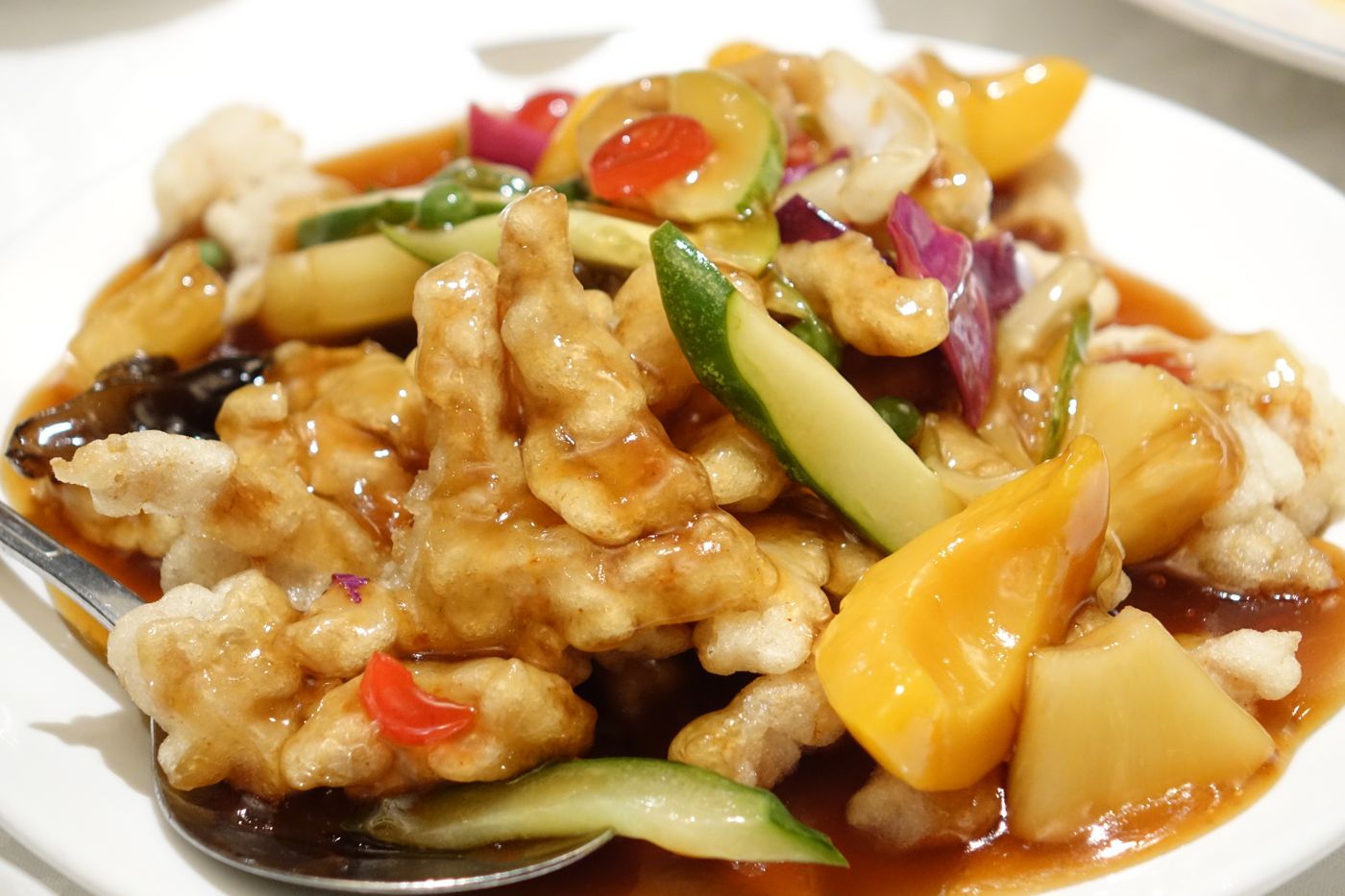
 Photo: 최광모, CC0, via Wikimedia Commons
More dishes 기타
Tangsuyuk (Sweet and Sour Pork)
탕수육
Romanization: tangsuyuk
Strips of pork in a crisp starch batter, fried twice and dressed with a glossy sweet-and-sour vegetable sauce — the shared platter of the Korean-Chinese restaurant.
- Serves
- 4
- Prep
- 30 min
- Cook
- 25 min
RegionIncheon
Jump to recipeRecipe
Ingredients · Serves 4
- 400 gPork loin or tenderloincut into 1 × 1 × 5 cm strips
- 1 tbspCheongju or dry rice winefor marinating
- ¼ tsp eachSalt and black pepper
- 1 tspGinger juice
- 120 gPotato starchabout 1 cup, soaked in 1 cup water for at least 2 hours
- 1 largeEgg white
- 1 LNeutral oil for deep-fryingplus 1 tbsp for the batter
- 300 mlWaterfor the sauce
- 60 gSugarabout ⅓ cup
- 60 mlVinegar
- 1 tbspSoy sauce
- 50 gCarrotthin slices
- 80 gOnionbite-size pieces
- 60 gCucumberhalved and sliced
- 80 gPineapple chunksoptional
- 1½ tbspPotato starch for the saucemixed with 3 tbsp water
Method
Technique: Twigim: Korean Deep-Frying
Step 1: Toss the pork with the rice wine, salt, pepper and ginger juice and leave 15 minutes. Pour off the clear water from the soaked starch; the dense starch at the bottom is the batter base.
Step 2: Add the egg white and 1 tbsp oil to the wet starch and mix into a thick, sticky paste. Pat the pork dry and coat it well in the batter.
Step 3: Heat the frying oil to 170 °C (340 °F). Fry the pork in batches, dropping pieces in one at a time so they don't stick together, for 3–4 minutes until pale golden and cooked through. Drain on a rack.
Step 4: Raise the oil to 180–190 °C (360–375 °F) and fry everything again for 1–2 minutes until deep golden and very crisp. Drain well.
Step 5: For the sauce, bring the water, sugar, vinegar and soy sauce to a boil. Add the carrot and onion and simmer 1 minute, then add the cucumber and pineapple. Stir the starch slurry and drizzle it in, stirring, until the sauce is glossy and thick.
Step 6: Serve the pork on a platter with the hot sauce poured over, or in a bowl alongside for dipping. Eat right away, while the coating still crackles.
Origin & History
Tangsuyuk is the Korean name for a Chinese sweet-and-sour meat dish. Writing in Pressian in 2016, Chinese-studies professor Im Dae-geun explains it as the Korean reading of tangcu rou (糖醋肉): tang, sugar, came to mean sweet, and cu, vinegar, came to mean sour. He adds that in Chinese dish names an unqualified rou, meat, means pork, since other meats have to be named outright. The National Institute of Korean Language's standard dictionary writes the word with the characters 糖水肉, marking the middle syllable as an irregular reading, and defines the dish as beef or pork coated in starch and fried, then covered with a thickened sauce of vinegar, soy sauce, sugar and vegetables.
Like jajangmyeon and jjamppong, it reached Korea with the Chinese, mostly from Shandong, who settled around Incheon after the 1880s and opened restaurants. A 2016 Seoul Shinmun feature by Kim Kyung-woon places it on the menus of upscale Chinese restaurants during the colonial period, well before the noodle shop became an everyday neighborhood fixture. Today it is the standard dish to order alongside noodles when a group shares a table or a delivery order. The history of this cuisine, including the good-natured argument over whether to pour the sauce on or dip into it, is covered in Korean-Chinese food.
The Korean restaurant style has a few signatures. The batter is usually made from potato or corn starch that has been soaked in water until it settles, so the drained wet starch clings to the meat and fries up hard and glassy rather than bready, and the pieces are fried twice for extra crunch. The sauce is clear and glossy, thickened with starch and full of carrot, onion, cucumber or green pepper and often fruit such as pineapple. See twigim deep-frying.
Key Ingredients
 Pork (dwaeji-gogi)돼지고기Korea's most widely eaten meat, prized cut by cut: fatty belly for samgyeopsal, neck for the grill, lean legs for boiled suyuk and stir-fried jeyuk. Pork also anchors Jeju Island's feast cooking.
- Cheongju (Clear Rice Wine) and Matsul (Cooking Wine)청주Clear, refined rice wine. It is drunk at rites and holidays and used in cooking to soften meat and fish odors. Sweetened cooking wine sold as matsul (맛술) is a related but different seasoning product.
 Ginger생강Fresh ginger root, used in small amounts to brighten kimchi paste and marinades and to tame the strong smells of fish and meat.
- Egg (gyeran)계란The everyday protein of the Korean table: rolled into gyeran-mari, steamed into puffy gyeran-jjim, simmered in soy for gyeran-jangjorim, and cut into thin yellow and white ribbons of jidan to garnish soups and noodles.
- Korean Vinegar식초Vinegar in the Korean kitchen, from naturally fermented grain and fruit vinegars, such as persimmon vinegar, to everyday brewed vinegar. It sharpens muchim, pickles and the dipping sauce chogochujang.
 Soy sauce간장Korean soy sauce, in two main kitchen forms: pale, salty guk-ganjang (soup soy sauce) brewed the traditional way from meju, and darker, sweeter jin-ganjang for braises and marinades.
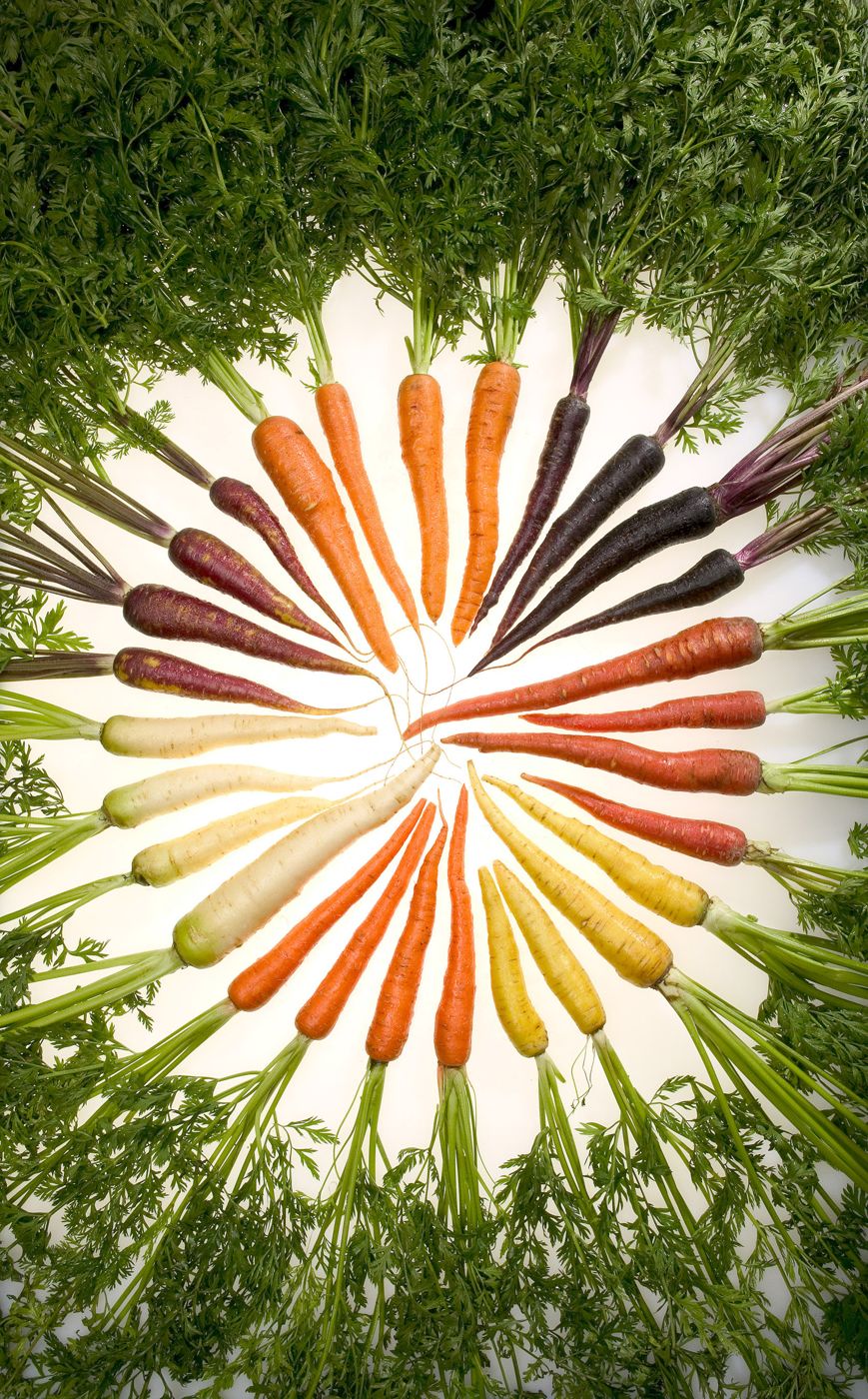 Danggeun (carrot)당근The orange root that brings color to the Korean table: julienned into japchae and gimbap, shredded into jeon batters, stir-fried with dakgalbi. Korea's sweetest winter carrots come from the volcanic fields of eastern Jeju.
 Yangpa (onion)양파The bulb onion, literally the "Western scallion." A latecomer to Korea, it is now everywhere: sweetening stir-fries and braises, pickled in soy sauce as yangpa-jangajji, and served raw beside grilled meat.
- Cucumber오이Slender, thin-skinned Korean cucumbers, prized for their crunch. Stuffed and fermented as oi-sobagi, dressed quickly as oi-muchim, salted into oiji or floated in chilled summer soup.
Nutrition
| Calories | ~675 kcal |
|---|---|
| Protein | ~22 g |
| Fat | ~39 g |
| Carbohydrates | ~58 g |
| Fiber | ~2.5 g |
| Sodium | ~760 mg |
Notable forProtein · Thiamin (vitamin B1) · Vitamin K
Taken from the USDA FoodData Central (SR Legacy) prepared-food entry for American Chinese-restaurant sweet and sour pork (FDC 168082), scaled to 250 g. That dish is close to tangsuyuk in method but not identical. Summing USDA and Korean Food Composition Table values for this home recipe (lean pork loin FDC 168315, potato starch B0140010005a, egg white, sugar, vinegar, soy sauce, vegetables and an assumed 45 g of absorbed frying oil) gives a lighter result of roughly 430 kcal, 24 g protein, 16 g fat and 480 mg sodium per quarter; actual oil absorption varies widely. Actual values vary with ingredients, portion size and preparation.
Health Benefits
- Protein and thiamin: lean pork loin is a good source of protein and of thiamin (vitamin B1).
- Some vegetables: carrot, onion and cucumber in the sauce add color and a little vitamin A, though not enough to count as a vegetable side. Pair it with namul or kimchi.
- Best shared: it is traditionally ordered as one platter for the table, which keeps an individual portion modest.
Regional Variations
- Bu-meok or jjik-meok: sauce poured over the pork (bu-meok) or served on the side for dipping (jjik-meok).
- Beef tangsuyuk: the standard dictionary and recipe writers alike note that beef can stand in for pork, using sirloin or rib eye.
- Sauce garnishes: the dictionary definition names only vinegar, soy sauce, sugar and vegetables; restaurant and home cooks commonly add pineapple and green pepper, as in The Korea Herald's recipe.
Pairings
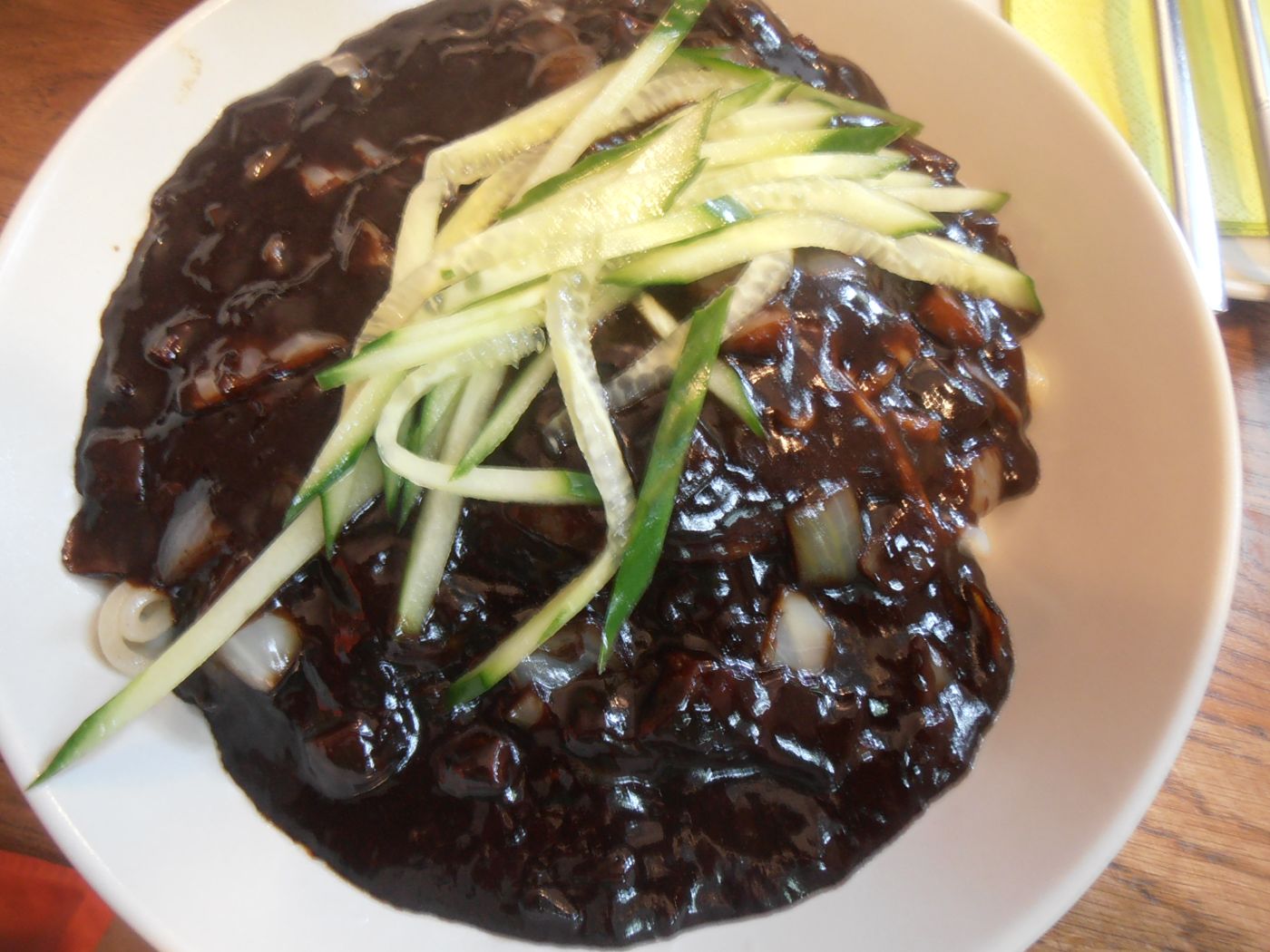 Jajangmyeon (Noodles in Black Bean Sauce)자장면Wheat noodles under a glossy sauce of chunjang fried with pork, onion and potato — the Korean-Chinese dish born among Shandong migrants in Incheon, contested origin claims and all.
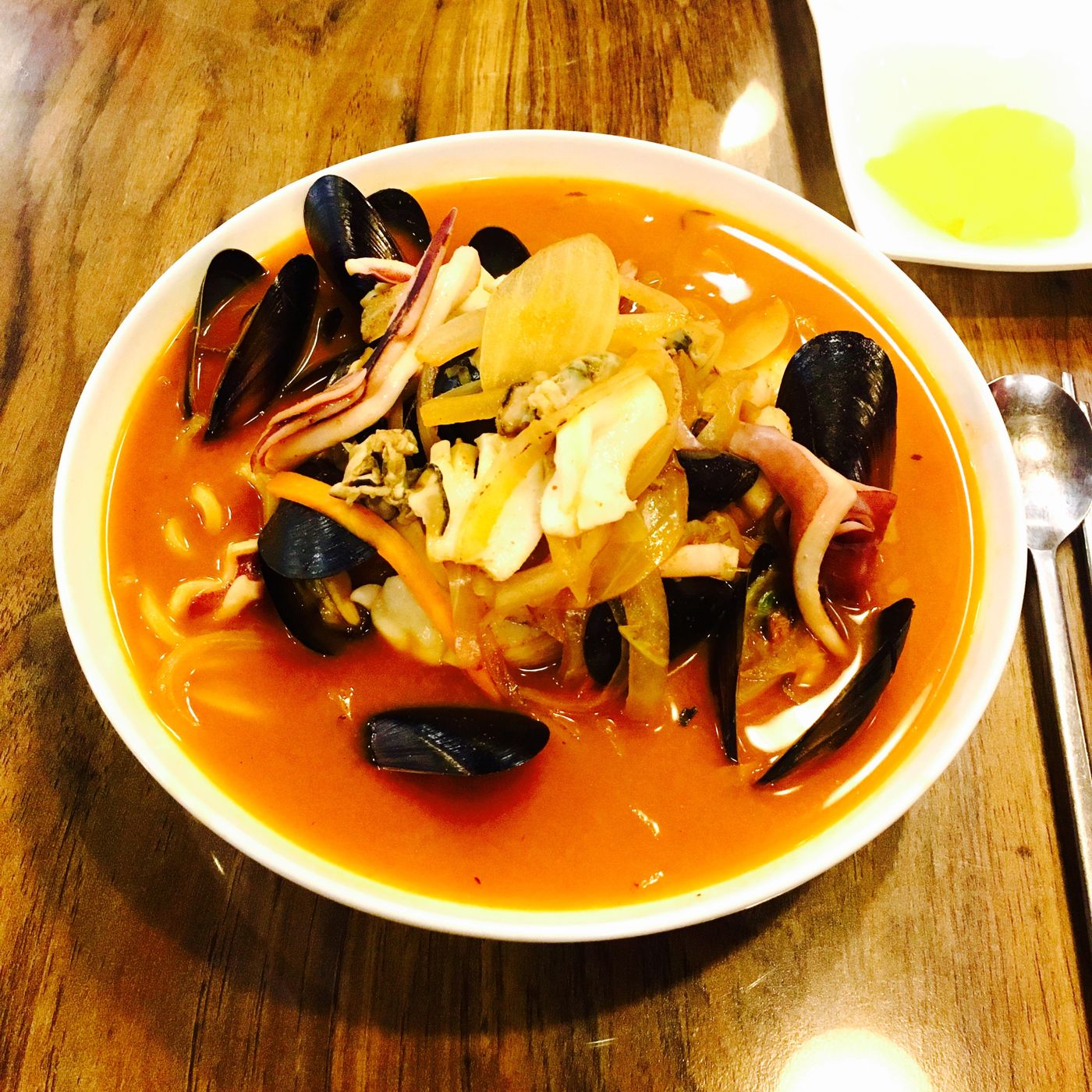 Jjamppong (Spicy Seafood Noodle Soup)짬뽕Thick wheat noodles in a fiery red broth of stir-fried pork, squid, shellfish and vegetables — the Korean-Chinese restaurant's spicy counterpart to jajangmyeon.
 Mandu (Korean Dumplings)만두Thin wrappers folded around pork, tofu, kimchi and sprouts, then steamed or boiled — a Goryeo-era arrival from China that became a winter staple of the North.
Sources
- 01탕수육은 왜 탕수육일까? (Im Dae-geun) — Pressian (2016)
- 02탕수-육 (糖水肉) — Standard Korean Language Dictionary, National Institute of Korean Language
- 03짜장면과 탕수육 (Kim Kyung-woon) — Seoul Shinmun (2016)
- 04Tangsuyuk (sweet and sour pork) — The Korea Herald (2014)
- 05Restaurant, Chinese, sweet and sour pork (FDC 168082) — USDA FoodData Central
Last updated