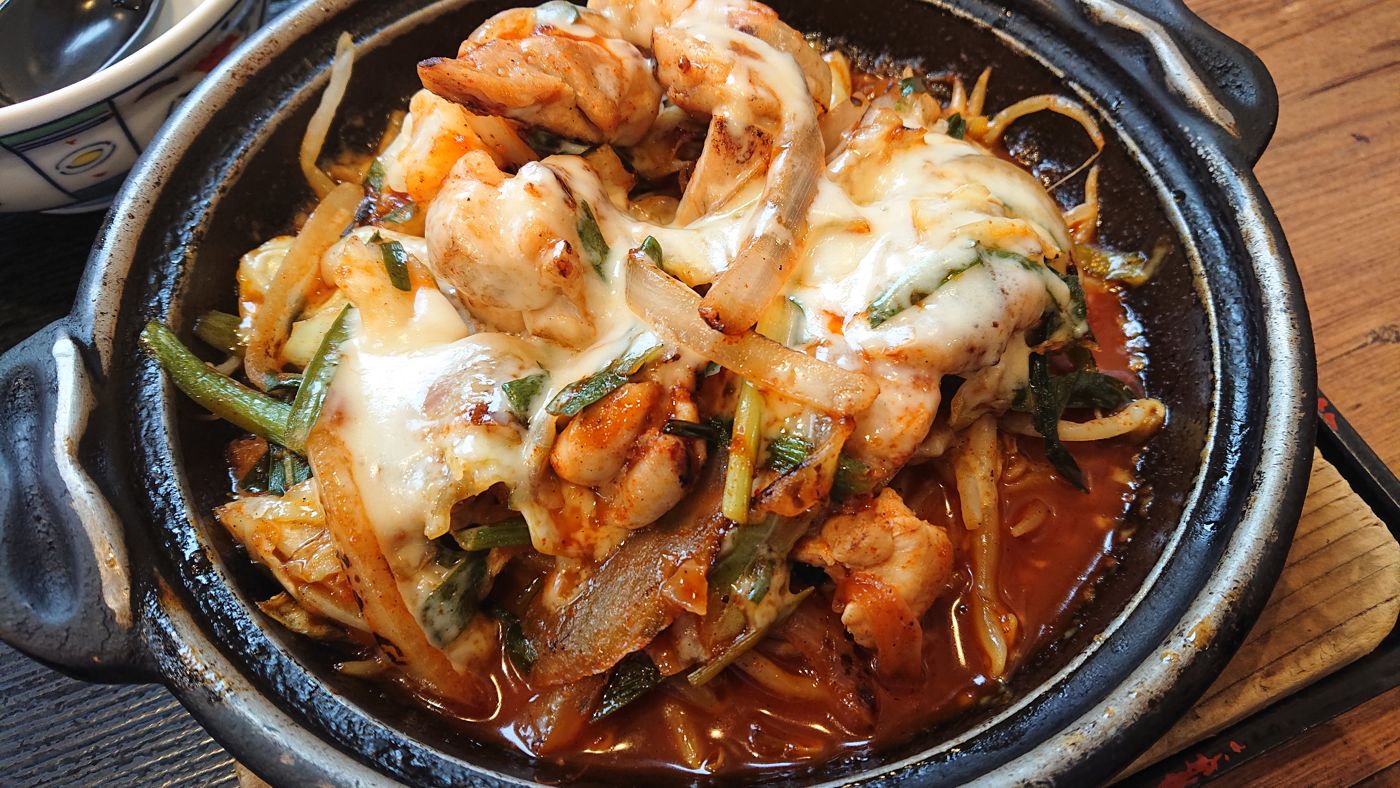
 Photo: 円周率3パーセント, CC BY-SA 4.0, via Wikimedia Commons
Gui · Grilled 구이
Dakgalbi (Spicy Stir-Fried Chicken)
닭갈비
Romanization: dakgalbi
Chicken marinated in a fiery gochujang sauce and cooked on a big iron pan with cabbage, sweet potato and rice cakes — Chuncheon's signature dish, finished with fried rice.
- Serves
- 4
- Prep
- 40 min
- Cook
- 20 min
Recipe
Ingredients · Serves 4
- 800 gBoneless, skinless chicken thighscut into 4 cm pieces
- 4 tbspGochujang
- 3 tbspGochugaru
- 3 tbspSoy sauce
- 2 tbspSugar
- 2 tbspGarlicminced (about 30 g)
- 2 tspGingerminced
- ¼ tspBlack pepper
- 400 gGreen cabbagecut into large pieces
- 200 gSweet potatohalved and sliced 5 mm thick
- 200 gCylinder rice cakes (tteokbokki tteok)soaked in warm water if hard
- 150 gOnionthickly sliced
- 60 gGreen onionscut into 5 cm lengths
- 10 Perilla leavessliced (about 20 g)
- 2 tbspNeutral cooking oil
- 1 tbspToasted sesame oil
Method
Technique: Bokkeum: Korean Stir-Frying, Yangnyeom: Seasoning Basics
Step 1: Mix the gochujang, gochugaru, soy sauce, sugar, garlic, ginger and pepper. Toss the chicken in the paste and marinate in the refrigerator for at least 30 minutes, or up to overnight.
Step 2: Heat the oil in a large, wide pan or electric griddle over medium-high heat. Spread the cabbage, sweet potato and onion over the pan and put the chicken and all its marinade on top.
Step 3: Cook for 5 minutes without stirring, then begin turning everything with two spatulas every minute or so, keeping it moving so the sauce doesn't scorch. Add a splash of water if it sticks.
Step 4: After about 10 minutes, add the rice cakes and green onion and keep stir-frying for 4–5 minutes, until the sweet potato is tender and the chicken is cooked through (165 °F / 74 °C).
Step 5: Add the perilla leaves and sesame oil, toss once and eat straight from the pan.
Step 6: Optional finish: when only a little sauce is left, add a bowl of rice, chopped kimchi and crumbled gim and press it into the pan until it crisps.
Origin & History
Dakgalbi means "chicken ribs," but it isn't ribs. The folk encyclopedia explains that various parts of the bird are used, cut thin and flat like rib meat, and points to the old idiom gyereuk (鷄肋), "chicken rib," for something with too little on it to enjoy but too good to throw away. The Encyclopedia of Korean Culture defines the dish as chicken marinated in a seasoned gochujang paste and stir-fried with cabbage, sweet potato, carrot and green onion, and notes it is also simply called Chuncheon dakgalbi.
There are two origin accounts. The Encyclopedia of Korean Culture, citing a 1982 Chuncheon city publication, says that in the late 1960s a man named Kim Yeong-seok, who sold grilled pork on Jungang-ro, marinated two chickens the way he did pork ribs and grilled them over charcoal as a drinking snack called dak-bulgogi. The folk encyclopedia, citing anthropologist Hwang Ik-ju's 1994 study, tells it differently: around 1960 a couple running a tavern, suddenly cut off from their pork supply, sliced chicken flat, marinated it in gochujang or soy sauce and grilled it on a wire rack over charcoal. In both versions the charcoal-grilled chicken was first known as dak-bulgogi. The folk encyclopedia adds that cooking it on a round iron pan with cabbage and sweet potato came in the late 1970s, and that the name dakgalbi distinguished the new style.
Cheap and generous, it won over students and soldiers on leave: the Encyclopedia of Korean Culture puts the 1970s price near 100 won a portion and records the nicknames "college student galbi" and "common people's galbi," explaining Chuncheon's role by the many poultry farms and slaughterhouses around the city. The folk encyclopedia links its rise to the dams of the 1960s and 70s, which made lakeside Chuncheon a popular weekend trip from Seoul; specialist shops gathered in Joyang-dong's Myeongdong dakgalbi alley by the late 1970s. In the 1980s and 90s, udon noodles and rice cakes were added and fried rice at the end turned a drinking snack into a family meal, and the 2002 drama Winter Sonata carried its fame to Japan. See Chuncheon, Gangwon and anju and drinking culture.
Key Ingredients
- Chicken (dak)닭Chicken appears in Korea's founding legends and on its summer tables: young birds simmered whole with ginseng in samgyetang, chili-marinated pieces stir-fried as Chuncheon's dakgalbi, and the fried chicken of modern takeout culture.
- Gochujang고추장Fermented red chili paste — sweet, savory and hot. Made from meju powder, glutinous rice, malt and gochugaru, it is a later addition to Korea's family of jang.
 Gochugaru고춧가루Korean red chili powder, made from dried red peppers ground coarse or fine. It gives kimchi, gochujang and countless banchan their color and warmth.
 Soy sauce간장Korean soy sauce, in two main kitchen forms: pale, salty guk-ganjang (soup soy sauce) brewed the traditional way from meju, and darker, sweeter jin-ganjang for braises and marinades.
 Garlic마늘Used raw, minced, pickled and roasted, garlic is one of the essential aromatics of Korean food — in seasonings, marinades, kimchi and namul.
 Ginger생강Fresh ginger root, used in small amounts to brighten kimchi paste and marinades and to tame the strong smells of fish and meat.
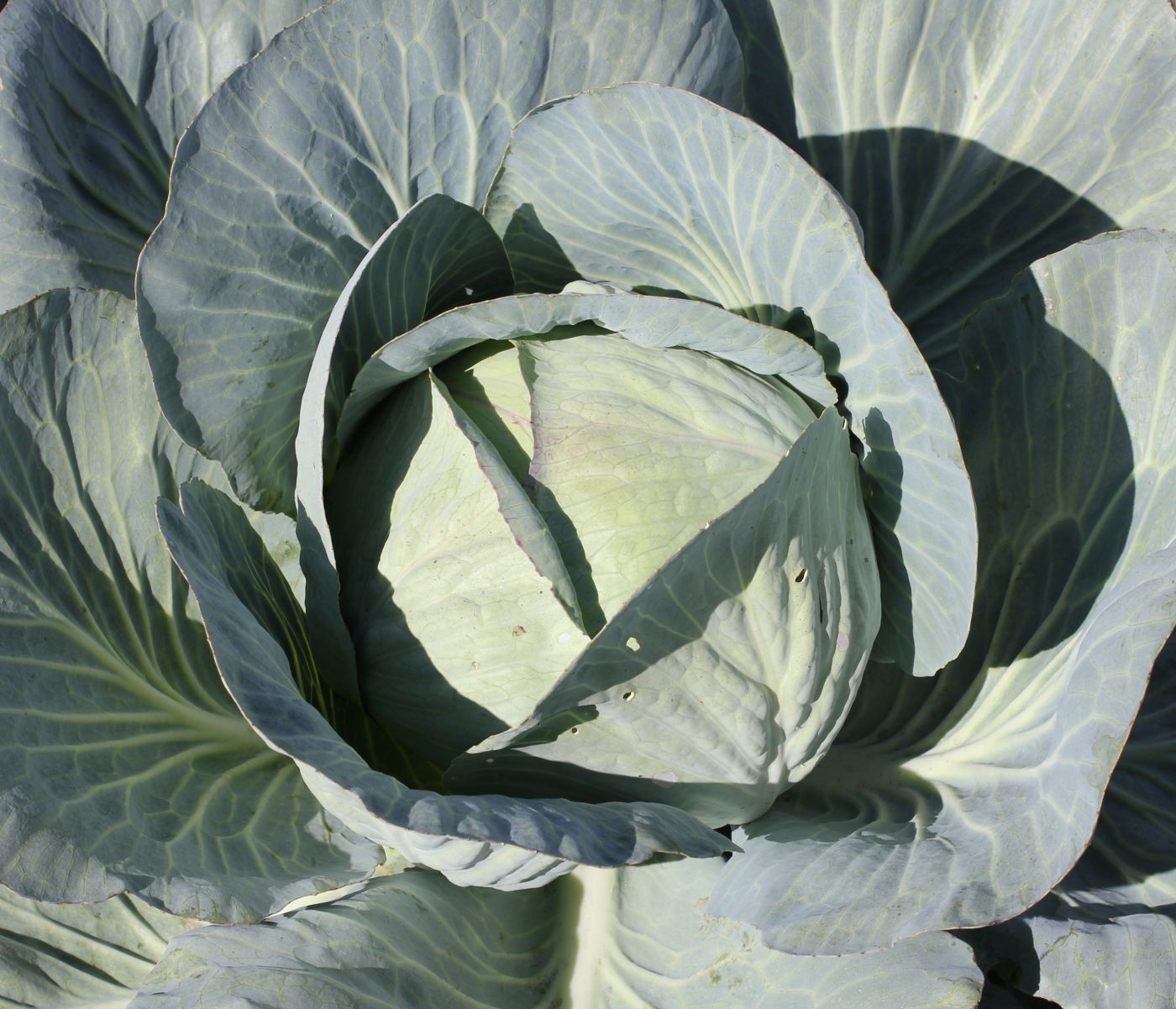 Yangbaechu (cabbage)양배추The round, tightly headed European cabbage — the "Western baechu." Crunchy and sweet, it is shredded raw, made into quick kimchi, steamed as a wrap and stir-fried into dakgalbi and tteokbokki.
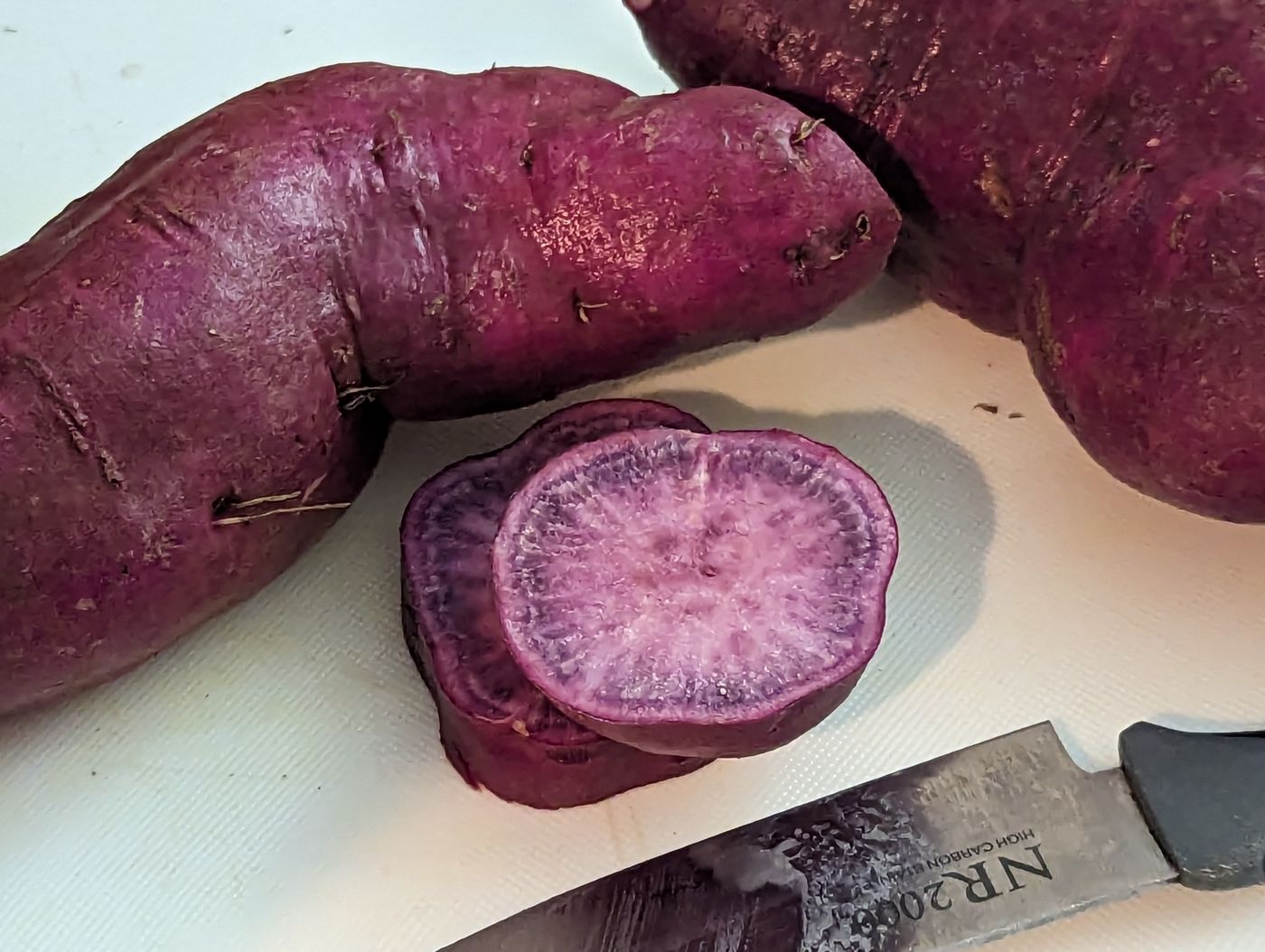 Sweet potato고구마Red-skinned, pale- or golden-fleshed Korean sweet potatoes, steamed or roasted whole as a snack, braised and candied as banchan, and milled into the starch that becomes dangmyeon. The tender stems are blanched and stir-fried as goguma-julgi namul.
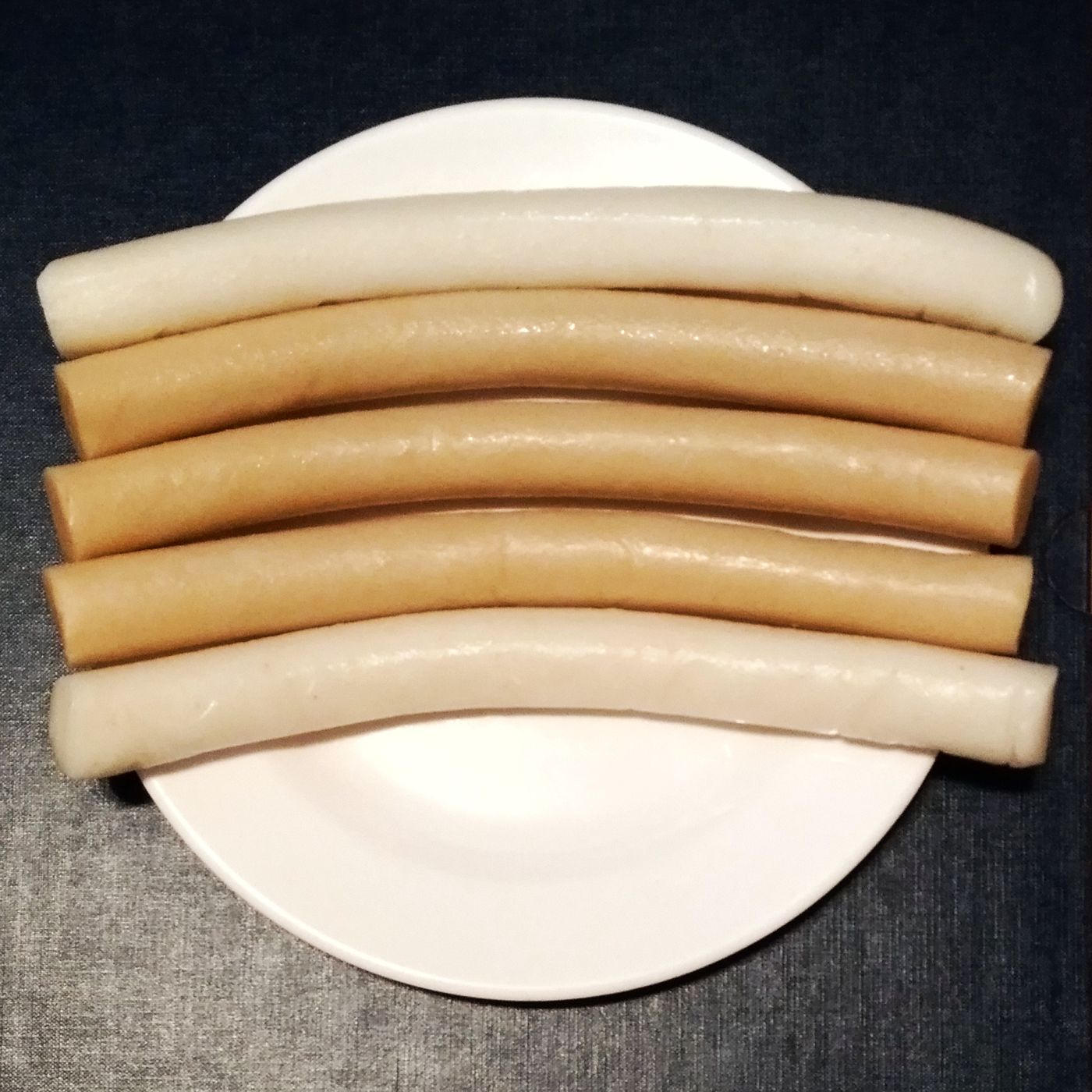 Garaetteok (Cylinder Rice Cake)가래떡Long, white cylinders of pounded non-glutinous rice, also called huin-tteok (white rice cake). Sliced into ovals it becomes tteokguk; cut into fingers it goes into tteokbokki and skewers.
 Yangpa (onion)양파The bulb onion, literally the "Western scallion." A latecomer to Korea, it is now everywhere: sweetening stir-fries and braises, pickled in soy sauce as yangpa-jangajji, and served raw beside grilled meat.
 Green onion파Korean green onion (pa), from thick-stemmed daepa to slender scallions — chopped into nearly every seasoning sauce, soup and kimchi, and the star of pa-kimchi.
 Perilla깻잎Perilla leaves have a bold, minty-herbal scent. They are eaten fresh as a wrap, pickled in soy sauce, or layered with seasoning as kkaennip-jangajji.
 Sesame참깨Toasted sesame seeds and sesame oil (chamgireum) finish countless Korean dishes, adding a nutty aroma and gloss.
Nutrition
| Calories | ~625 kcal |
|---|---|
| Protein | ~47 g |
| Fat | ~20 g |
| Carbohydrates | ~67 g |
| Fiber | ~8.3 g |
| Sodium | ~1455 mg |
Notable forProtein · Vitamin A · Vitamin K · Vitamin C
Estimated by summing USDA FoodData Central (SR Legacy) values for raw chicken thigh meat (FDC 173627), green cabbage (FDC 169975), sweet potato (FDC 168482), onion, scallions, red pepper (FDC 170932, as a stand-in for gochugaru), soy sauce (FDC 174277), sugar, garlic, ginger, soybean oil and sesame oil, with Korean Food Composition Table values for garaetteok rice cake (A0110010009a), gochujang (R0050010009a) and perilla leaf (F049000B140a), divided by 4. Assumes all the sauce is eaten. The optional fried rice and noodles are not included. Actual values vary with ingredients, portion size and preparation.
Health Benefits
- Lean protein: skinless chicken thigh provides plenty of protein for modest fat.
- A pan full of vegetables: cabbage, sweet potato, onion and perilla make up much of the dish; sweet potato and chili supply vitamin A activity and cabbage adds vitamin K and C. See vegetables and namul.
- Shared cooking: eaten from one pan at the table, portions are easy to pace.
Regional Variations
- Iron-pan dakgalbi (Chuncheon): the standard today — chicken, cabbage, sweet potato, onion, green onion and rice cakes cooked together on a wide, round griddle at the table.
- Charcoal dak-bulgogi (Chuncheon): the older method, with marinated chicken grilled on a rack over coals.
- Soy-sauce marinade: the folk encyclopedia notes soy-based marinades alongside the more common gochujang version.
- Add-ons and fried rice: udon or rice-cake sari added partway, then rice, chopped kimchi and gim fried in the leftover sauce (see kimchi-bokkeumbap); in Chuncheon it is often paired with makguksu.
Pairings
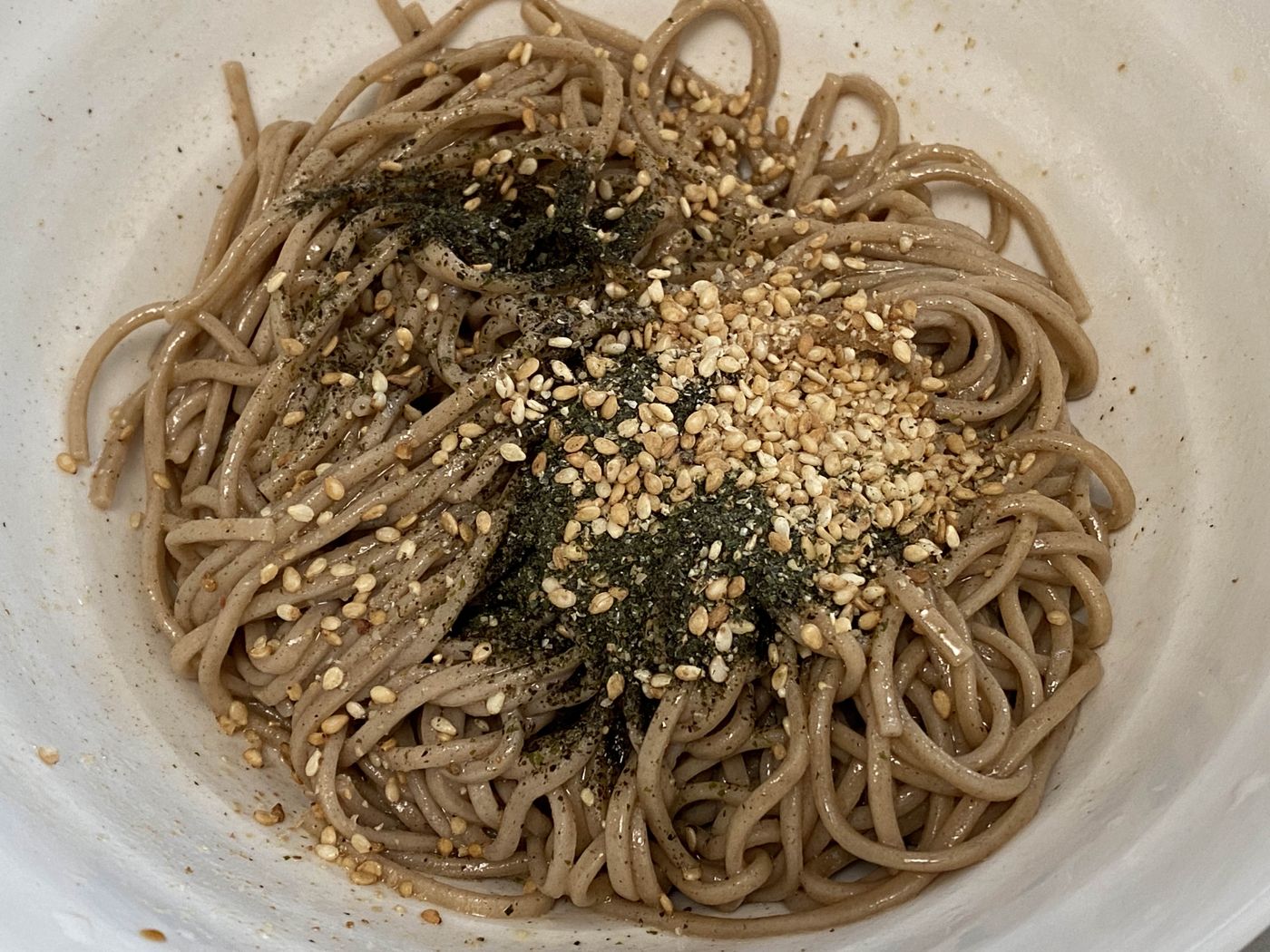 Makguksu (Gangwon Buckwheat Noodles)막국수Coarse, grayish buckwheat noodles served in cold dongchimi broth or tossed with spicy sauce — a Gangwon mountain dish most famously eaten in Chuncheon.
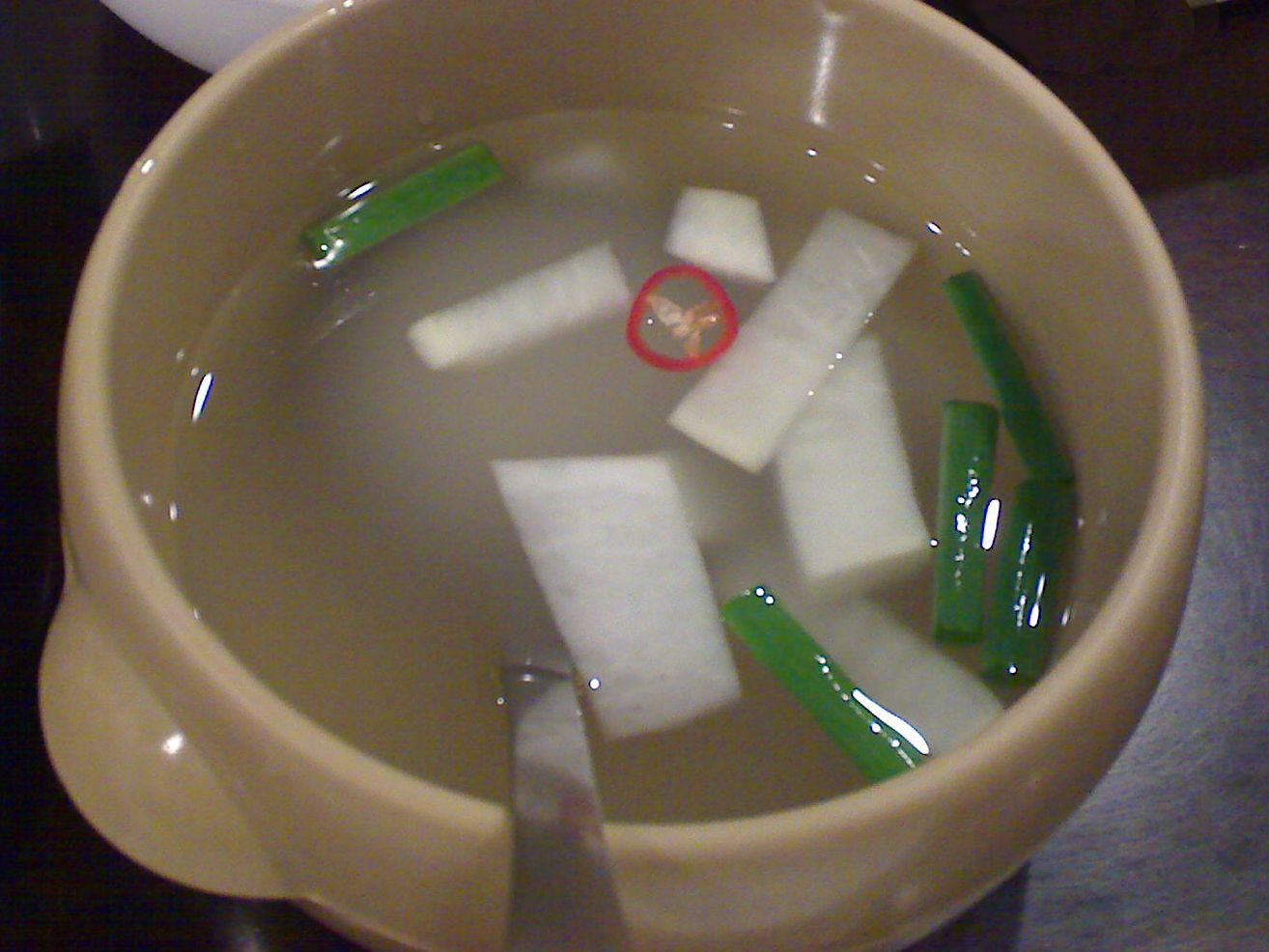 Radish Water Kimchi동치미Whole radishes steeped in a clear salt brine with pear, ginger and green chili — a winter water kimchi whose tangy broth is prized on its own.
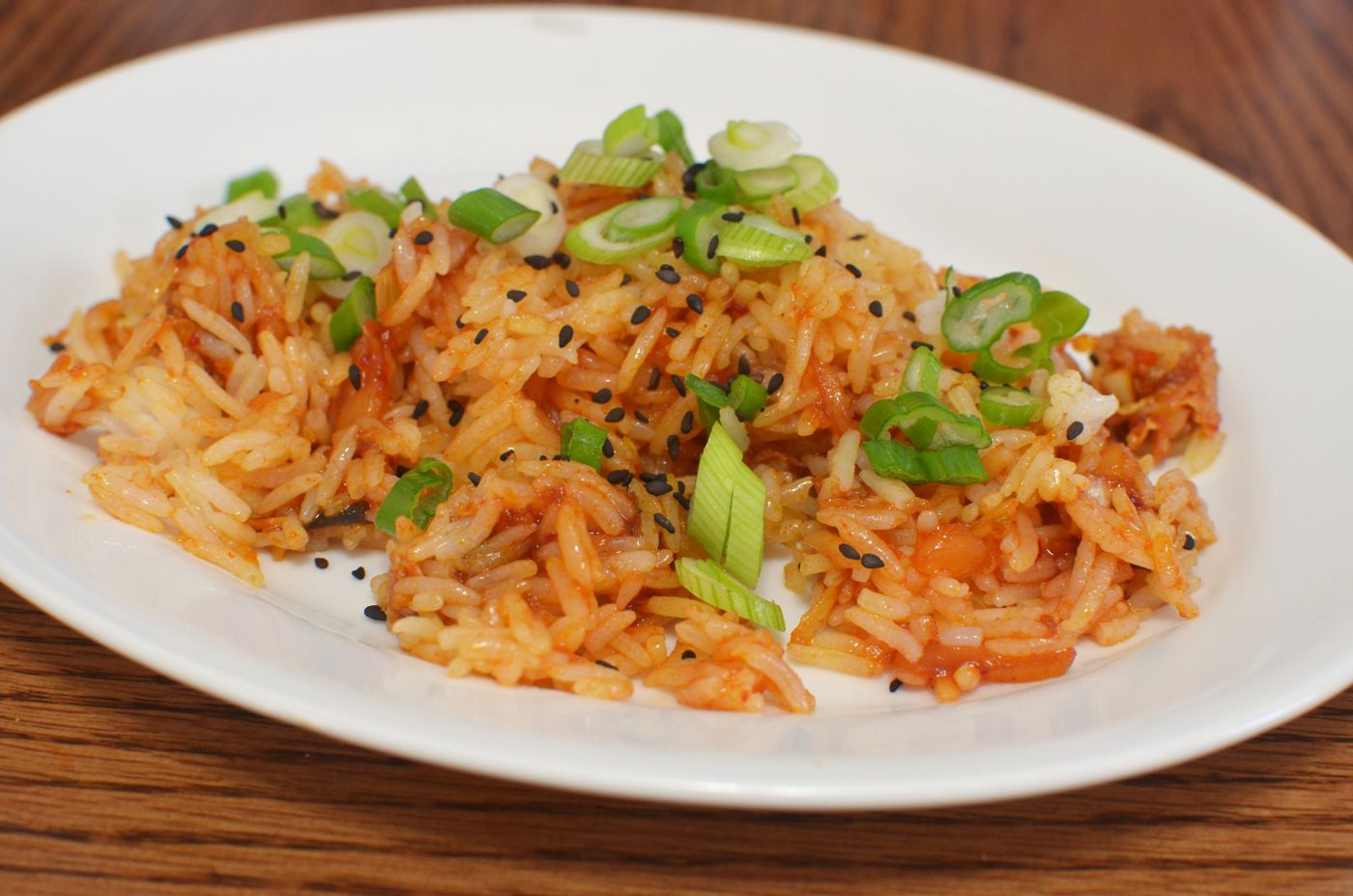 Kimchi-bokkeumbap (Kimchi Fried Rice)김치볶음밥Leftover rice stir-fried with sour, well-fermented kimchi and a little pork, usually topped with a fried egg — a home staple that spread with frying pans and cooking oil.
Sources
- 01닭갈비 (Dakgalbi) — Encyclopedia of Korean Culture
- 02닭갈비 (Dakgalbi) — Encyclopedia of Korean Folk Culture (Korean Wave Culture Dictionary), National Folk Museum of Korea
- 03Chicken, broilers or fryers, dark meat, thigh, meat only, raw (FDC 173627) — USDA FoodData Central
- 04Safe Food Handling — U.S. Food and Drug Administration
- 05Chemicals in Meat Cooked at High Temperatures and Cancer Risk — National Cancer Institute
Last updated