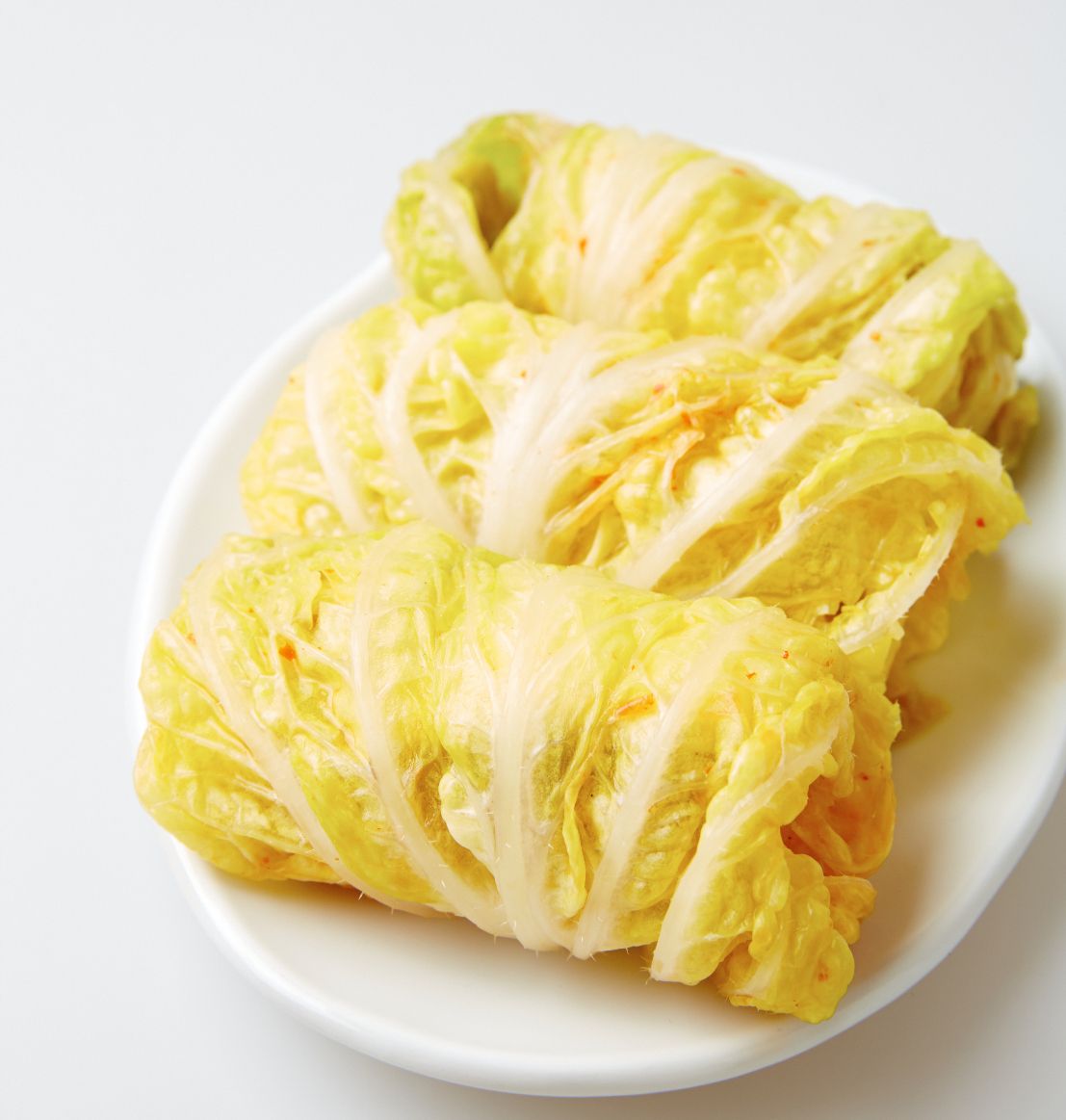
 Photo: 국립국어원, CC BY-SA 2.0 kr, via Wikimedia Commons
Kimchi 김치
White Kimchi
백김치
Romanization: baek-kimchi
Napa cabbage stuffed with radish, pear, chestnut and jujube and ripened in a clear, cool brine — kimchi with no chili flakes, mild and refreshing.
- Serves
- 30
- Prep
- 60 min
- Cook
- 0 min
RegionNorthern Provinces (Hwanghae, Pyeongan, Hamgyeong) · Seoul & Gyeonggi · Jeolla
Jump to recipeRecipe
Ingredients · Serves 30
- 1 headNapa cabbageabout 2 kg
- 120 gCoarse sea salt (cheonilyeom), non-iodizedfor salting
- 1 LWaterfor dissolving part of the salt
- 300 gKorean radish (mu)julienned
- ½ Korean pearabout 250 g; half julienned, half grated for the brine
- 4 Chestnutspeeled and thinly sliced
- 4 Jujubes (daechu)pitted and thinly sliced
- 6 clovesGarlichalf julienned, half crushed for the brine
- 1 thumbGingerabout 10 g; half julienned, half crushed for the brine
- 4 stalksGreen onionscut into 3 cm lengths
- 50 gWater dropwort (minari)optional, cut into 3 cm lengths
- 1 pinchDried chili threads (silgochu)optional
- 1 tbspPine nutsoptional
- 1.5 LWaterfor the brine
- 1½ tbspFine sea saltfor the brine; adjust to taste
- 1 tbspSalted fermented shrimp (saeujeot)optional; omit for a vegetarian version
Method
Technique: Making Kimchi
Step 1: Halve the cabbage lengthwise by cutting a short slit in the base and pulling it apart. Dissolve about one-third of the coarse salt in 1 L water, dip each half, then sprinkle the remaining salt between the leaves, mostly on the thick white stems.
Step 2: Salt for 6–8 hours, turning every 2 hours, until a thick stem bends without snapping. Rinse three times in cold water and drain cut side down for at least 1 hour.
Step 3: Make the stuffing: toss the julienned radish with a pinch of salt for 10 minutes, then mix with the julienned pear, chestnuts, jujubes, julienned garlic and ginger, green onions, minari, chili threads and pine nuts.
Step 4: Tuck a small handful of stuffing between the leaves of each cabbage half, working from the outside in. Fold each half over, wrap it with an outer leaf, and pack snugly into a clean jar or food-grade container.
Step 5: Make the brine: wrap the grated pear and crushed garlic and ginger in a piece of cheesecloth and squeeze their juices into 1.5 L water. Stir in the fine salt (and the saeujeot, finely chopped, if using). It should taste pleasantly salty, like a light soup. Pour over the cabbage until it is just covered, and weigh it down with a plate so it stays submerged.
Step 6: Leave at cool room temperature (about 18–20°C) for 1–2 days, until small bubbles appear and the brine tastes lightly tangy, then refrigerate. It is at its best after about a week in the refrigerator and keeps for 3–4 weeks.
Step 7: To serve, cut a portion into bite-size pieces and ladle over some of the chilled brine. Use clean utensils every time, keep the cabbage submerged, and discard the batch if it turns slimy or develops mold.
Origin & History
Baek-kimchi means "white kimchi": napa cabbage filled with a light stuffing and ripened in a pale brine, with no ground chili. At most, a few threads of dried chili (silgochu) are scattered through it for color. The Encyclopedia of Korean Culture associates it above all with Pyeongan Province in the north, a cold region known for its good water, and notes that families with small children who cannot yet eat spicy food often make it.
The Encyclopedia of Korean Folk Culture argues that white kimchi is less a separate invention than an older form of whole-cabbage kimchi that stayed put while the rest changed. Until the first half of the 20th century, whole-cabbage kimchi in Seoul and Gyeonggi was made in much the same way — stuffing tucked between the leaves, brine or beef broth poured over a few days later, chili used only as threads. The name baek-kimchi first turns up in a 1924 newspaper article about kimjang, and detailed recipes appear only from the 1960s.
After the Korean War, southern cabbage kimchi grew steadily redder and drier as cooks used more chili powder, and the brothy, chili-free style came to be seen as a distinct, northern dish, carried south by families displaced from Pyeongan. Because a brothy, low-chili kimchi sours quickly in warm weather, it historically thrived in the cooler north.
Key Ingredients
 Napa cabbage배추The tall, pale, tightly headed cabbage at the heart of Korea's best-known kimchi. Salted, layered with seasoning and left to ferment, it becomes baechu-kimchi; fresh, it goes into soups, wraps and quick salads.
 Sun-Dried Sea Salt천일염Coarse sea salt made by evaporating seawater with sun and wind in tidal-flat salt pans, most of it from Sinan County off Korea's southwest coast. It is the everyday salt for salting cabbage and making jang.
 Korean radish무A stout, heavy white radish, often tinged pale green near the top. It is cubed for kkakdugi, left whole in the clear brine of dongchimi, shredded into salads and simmered into broths.
- Korean Pear배The large, round, crisp and very juicy Korean pear (bae). Beyond eating fresh, it is grated into meat marinades and sliced into mild kimchi for natural sweetness.
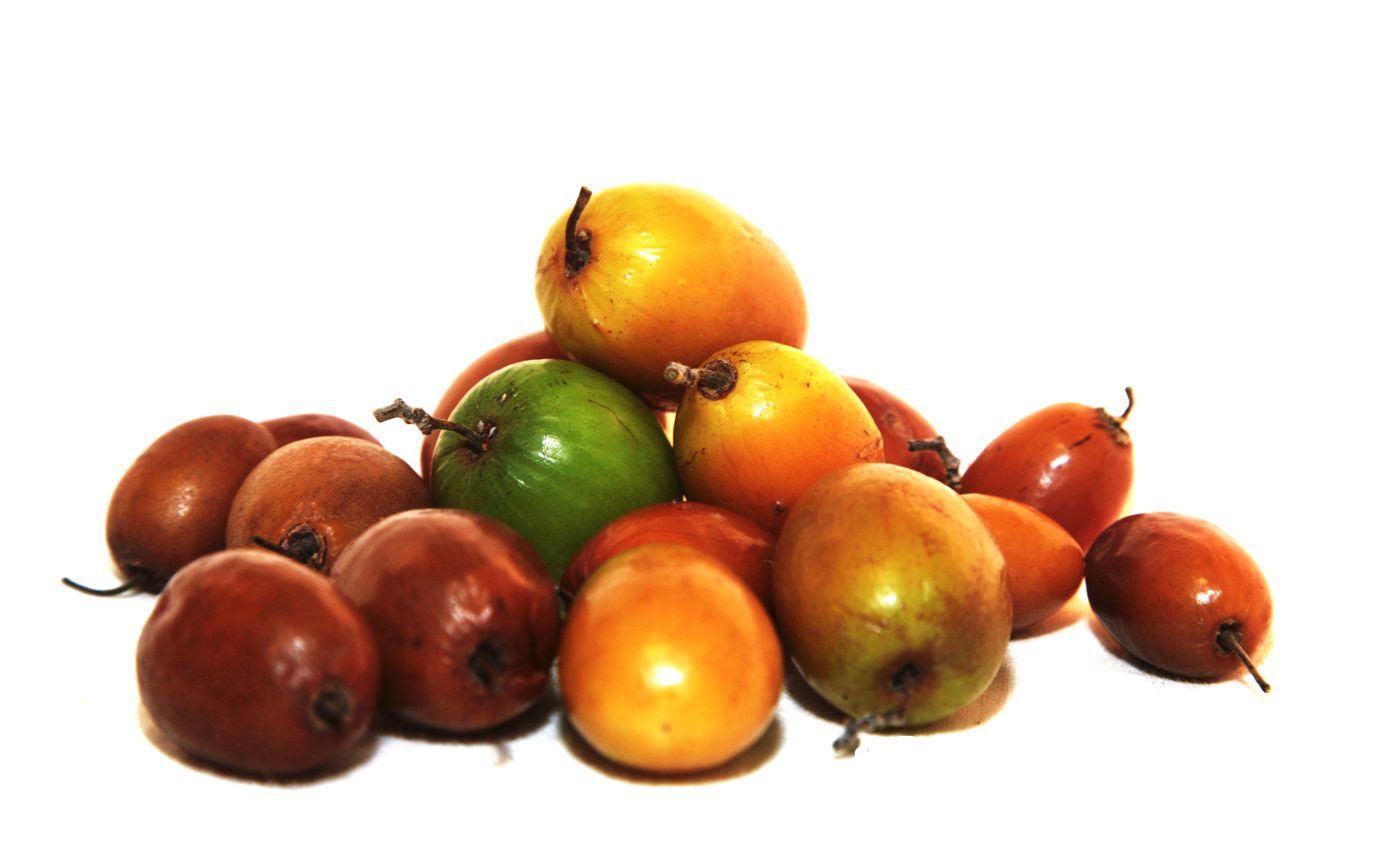 Jujube (red date)대추The small, wrinkled red fruit of the jujube tree, dried until sweet and chewy. An essential of ancestral-rite and wedding tables, it sweetens teas and herbal soups and garnishes rice cakes and festive dishes.
 Garlic마늘Used raw, minced, pickled and roasted, garlic is one of the essential aromatics of Korean food — in seasonings, marinades, kimchi and namul.
 Ginger생강Fresh ginger root, used in small amounts to brighten kimchi paste and marinades and to tame the strong smells of fish and meat.
 Green onion파Korean green onion (pa), from thick-stemmed daepa to slender scallions — chopped into nearly every seasoning sauce, soup and kimchi, and the star of pa-kimchi.
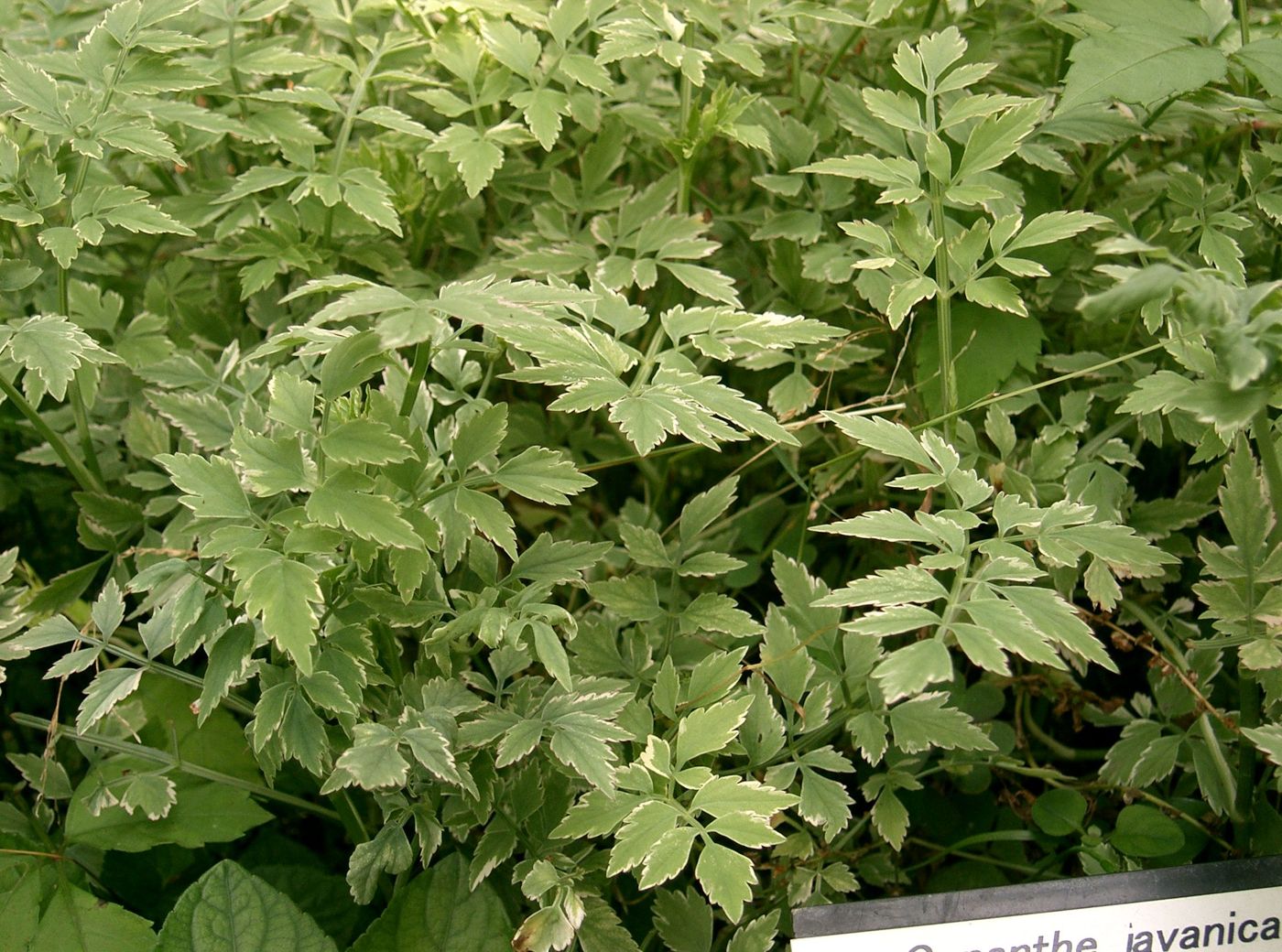 Minari (water dropwort)미나리A long-stemmed, aromatic water plant with a fresh, celery-like perfume. Blanched and dressed as minari-muchim, tucked into kimchi, wrapped into little bundles for minari-ganghoe and piled into fish stews and hot pots.
 Salted fermented shrimp새우젓Tiny shrimp packed in salt and left to ferment — a jeotgal (salted seafood) that seasons kimchi and stews and accompanies boiled pork with briny, savory depth.
Nutrition
| Calories | 11 kcal |
|---|---|
| Protein | 0.7 g |
| Fat | 0 g |
| Carbohydrates | 2.1 g |
| Fiber | 1.3 g |
| Sodium | 277 mg |
Notable forVitamin C
From the Korean Food Composition Table entry “Kimchi, Baekkimchi, Prepared with Kimchi cabbage, Without red pepper powder” (per 100 g: 16 kcal, 395 mg sodium, 16 mg vitamin C), scaled to the serving size. Homemade batches vary with salting and how much brine is eaten. Actual values vary with ingredients, portion size and preparation.
Health Benefits
- Gentle kimchi: without chili powder, white kimchi suits children and people who find spicy food hard to tolerate, which is why Korean families have traditionally made it for young children.
- Light and hydrating: it is very low in calories, and in the Korean Food Composition Table it supplies a modest amount of vitamin C — about 11 mg in a typical serving.
- Lactic acid fermentation: like other kimchi, it ripens through lactic acid bacteria naturally present on the vegetables; brothy, low-chili kimchi tends to ferment quickly. Research on the health effects of eating fermented vegetables is ongoing.
Regional Variations
- Pyeongan (northern provinces): the best-known style, with plenty of cold brine; the stuffing is julienned radish with pear, chestnut, garlic, green onion and ginger, sometimes with stone-ear mushroom (seogi).
- Seoul and Gyeonggi: older whole-cabbage kimchi here was close to white kimchi, and festive versions could add octopus, abalone, jujubes, pine nuts and mushrooms to the stuffing.
- Jeolla: because ordinary Jeolla kimchi is made without added brine, a brothy white cabbage kimchi was distinguished as baechu-dongchimi (cabbage dongchimi).
- Seasoning: many modern recipes use salt alone, but historically salted fish (for example boiled yellow-croaker jeotgal or salted shrimp) was often used to season the brine.
Pairings
 Nokdu Bindaetteok (Mung Bean Pancake)녹두빈대떡Soaked mung beans ground into a thick batter with kimchi, sprouts and pork, then fried crisp in generous oil — a northern specialty and a Seoul market favorite.
 Japchae (Glass Noodles with Vegetables)잡채Chewy sweet potato glass noodles tossed with stir-fried vegetables, mushrooms and beef in soy sauce and sesame oil — Korea's essential celebration dish.
 Gyeran Jjim (Steamed Egg)계란찜Eggs whisked with water or broth and gently steamed into a silky, savory custard, often seasoned with salted shrimp and served bubbling hot.
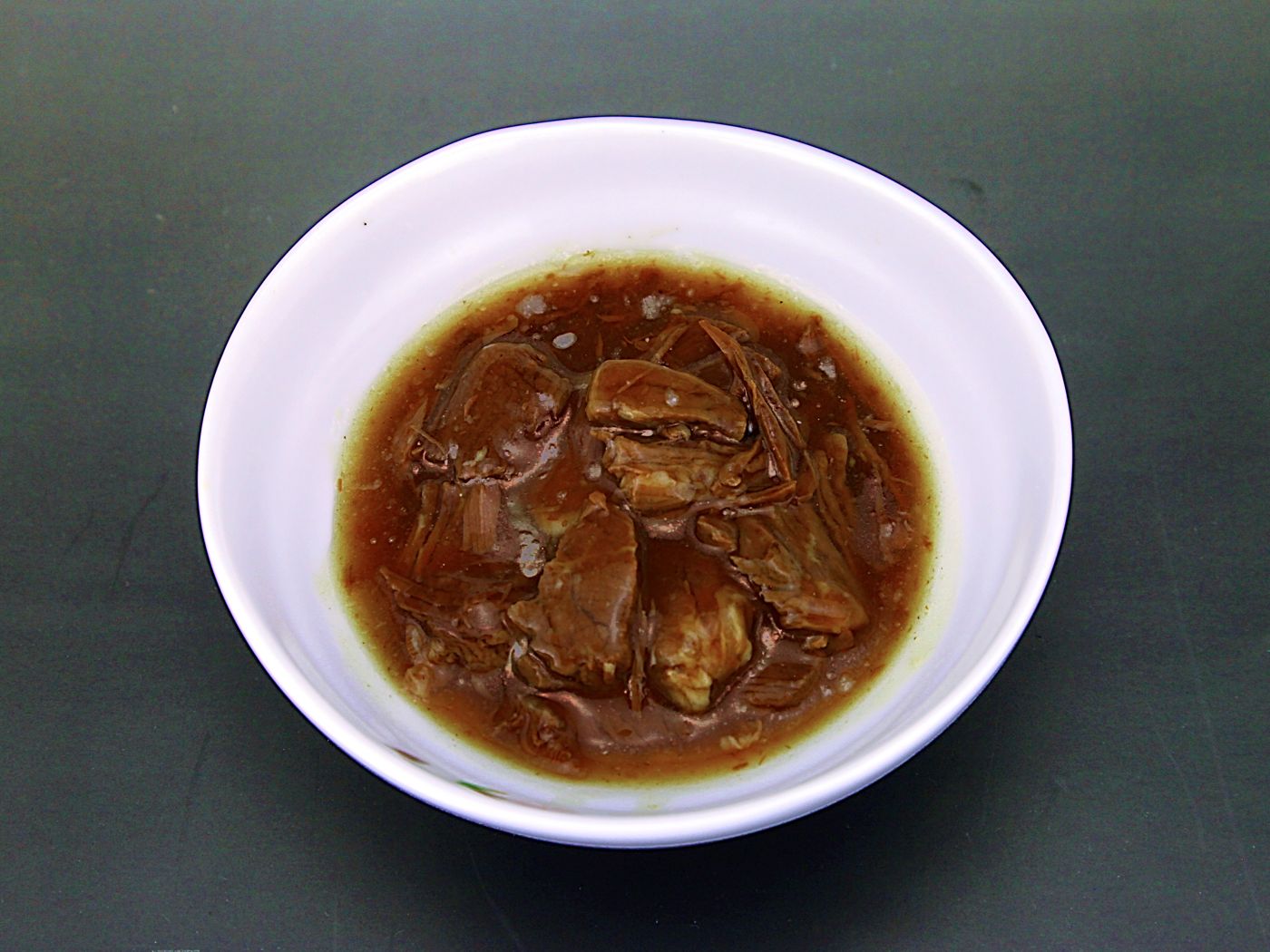 Jangjorim장조림Lean beef simmered in soy sauce until tender, then torn into strands and served in its savory broth, often with eggs, garlic and mild peppers.
Sources
- 01Korean Food Composition Table: Kimchi, Baekkimchi, Prepared with Kimchi cabbage, Without red pepper powder — National Institute of Agricultural Sciences
- 02백김치 - 한국민족문화대백과사전 (Encyclopedia of Korean Culture)
- 03백김치 - 한국민속대백과사전 (Encyclopedia of Korean Folk Culture)
- 04Is my kimchi safe to eat? - Oregon State University Extension Service
Last updated