 Photo: Korea.net / Korean Culture and Information Service, CC BY-SA 2.0, via Wikimedia Commons
Jjigae · Stews 찌개
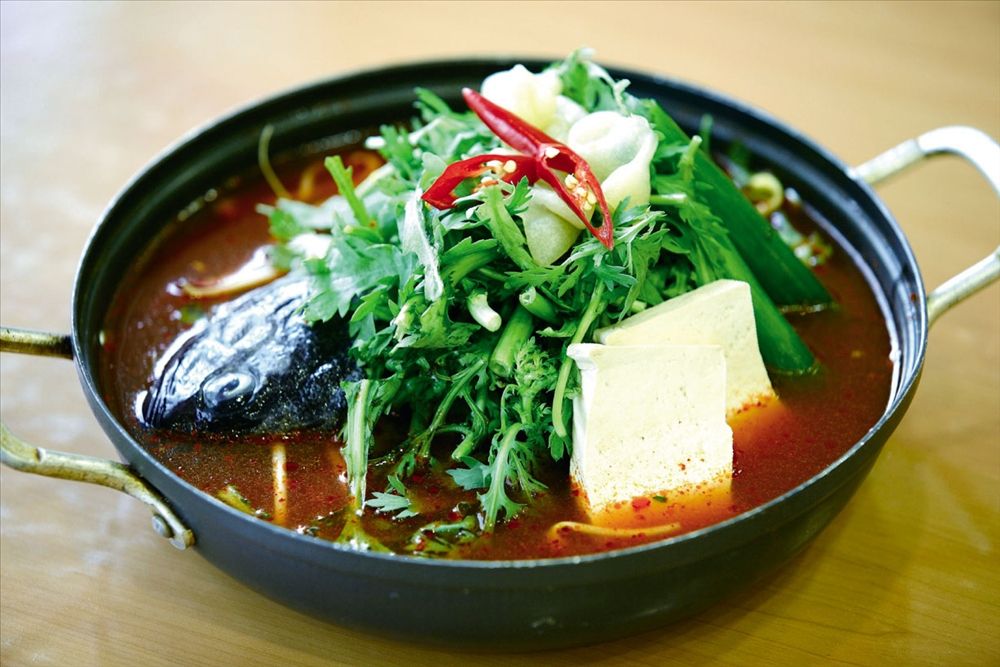
Maeuntang (Spicy Fish Stew)
매운탕
Romanization: maeuntang
Fish — freshwater or sea — simmered with radish, tofu and fragrant greens in a fiery gochugaru and gochujang broth; the stew that follows sashimi and fills riverside restaurants.
- Serves
- 4
- Prep
- 20 min
- Cook
- 30 min
RegionChuncheon · Chungcheong
Jump to recipeRecipe
Ingredients · Serves 4
- 800 gWhite-fleshed fish (cod, rockfish or similar)cleaned and cut into large pieces, with head and frame if available
- 250 gKorean radish (mu)cut into thin 3 cm squares
- 200 gFirm tofusliced
- 100 gKorean zucchini (aehobak)half-moons
- ½ mediumOnionsliced
- 50 gWater dropwort (minari)cut into 5 cm lengths
- 50 gCrown daisy (ssukgat)
- 1 stalkLarge green onion (daepa)sliced on the diagonal
- 2 Green and red chili pepperssliced
- 1.2 lRice-rinsing water or anchovy-kelp stock
- 3 tbspGochugaru
- 1 tbspGochujang
- 1 tbspGarlicminced
- 1 tspGingerminced
- 1 tbspSoup soy sauce (guk-ganjang)plus salt to taste
- ¼ tspBlack pepper
Method
Technique: Making Guk and Jjigae, Making Yuksu: Anchovy-Kelp Stock
Step 1: Rinse the fish pieces in cold salted water and scrape out any blood along the spine. Mix the gochugaru, gochujang, garlic, ginger, soup soy sauce and pepper into a paste.
Step 2: Bring the rice water or stock to a boil with the radish and simmer 10 minutes.
Step 3: Stir in the seasoning paste and return to a rolling boil.
Step 4: Add the fish (heads and frames first, fillet pieces on top), then the tofu, zucchini and onion. Simmer 8–10 minutes without stirring, just until the fish is cooked through — sea fish turns crumbly if overcooked. (For freshwater fish, simmer much longer, as the encyclopedias advise, and use more ginger and pepper against the muddy smell.)
Step 5: Taste and adjust with salt; the folk encyclopedia recommends salt rather than soy sauce for a cleaner taste.
Step 6: Add the chilies and green onion, lay the water dropwort and crown daisy on top and serve immediately at the table, with rice.
Origin & History
Maeuntang simply means "spicy soup": fish cut into pieces, with the edible innards and head, simmered with radish, tofu, mushrooms and seasonal vegetables and seasoned with chili flakes and gochujang. Both the Encyclopedia of Korean Culture and the Encyclopedia of Korean Folk Culture classify it as a stew. The proportion of chili to paste is not fixed, and almost any fish can be used; the encyclopedias rate catfish and mandarin fish (ssogari) highest among freshwater fish, and list pollock, croaker, cod, sea bream, rockfish and mineo among sea fish.
Freshwater versions grew out of summer river outings (cheollyeop), when friends netted fish from clean streams and cooked them on the bank. The nineteenth-century household manual Gyuhap chongseo, as quoted in the folk encyclopedia, calls the mandarin fish a fish fit for an emperor and advises dipping catfish in hot water to remove its slime and cooking it with good gochujang and a little honey. Today riverside towns such as Paldang, Cheongpyeong and the Hantan River area are lined with specialist restaurants.
Sea-fish versions follow the seasons: pollock stews in winter, cod with big chunks of winter radish in the south, and mineo (brown croaker) in early summer, using the head and bones left after slicing the fish raw. That last habit — a spicy stew made from the frame of a fish eaten as sashimi — is how many diners meet maeuntang today. See hoe culture.
Key Ingredients
 Korean radish무A stout, heavy white radish, often tinged pale green near the top. It is cubed for kkakdugi, left whole in the clear brine of dongchimi, shredded into salads and simmered into broths.
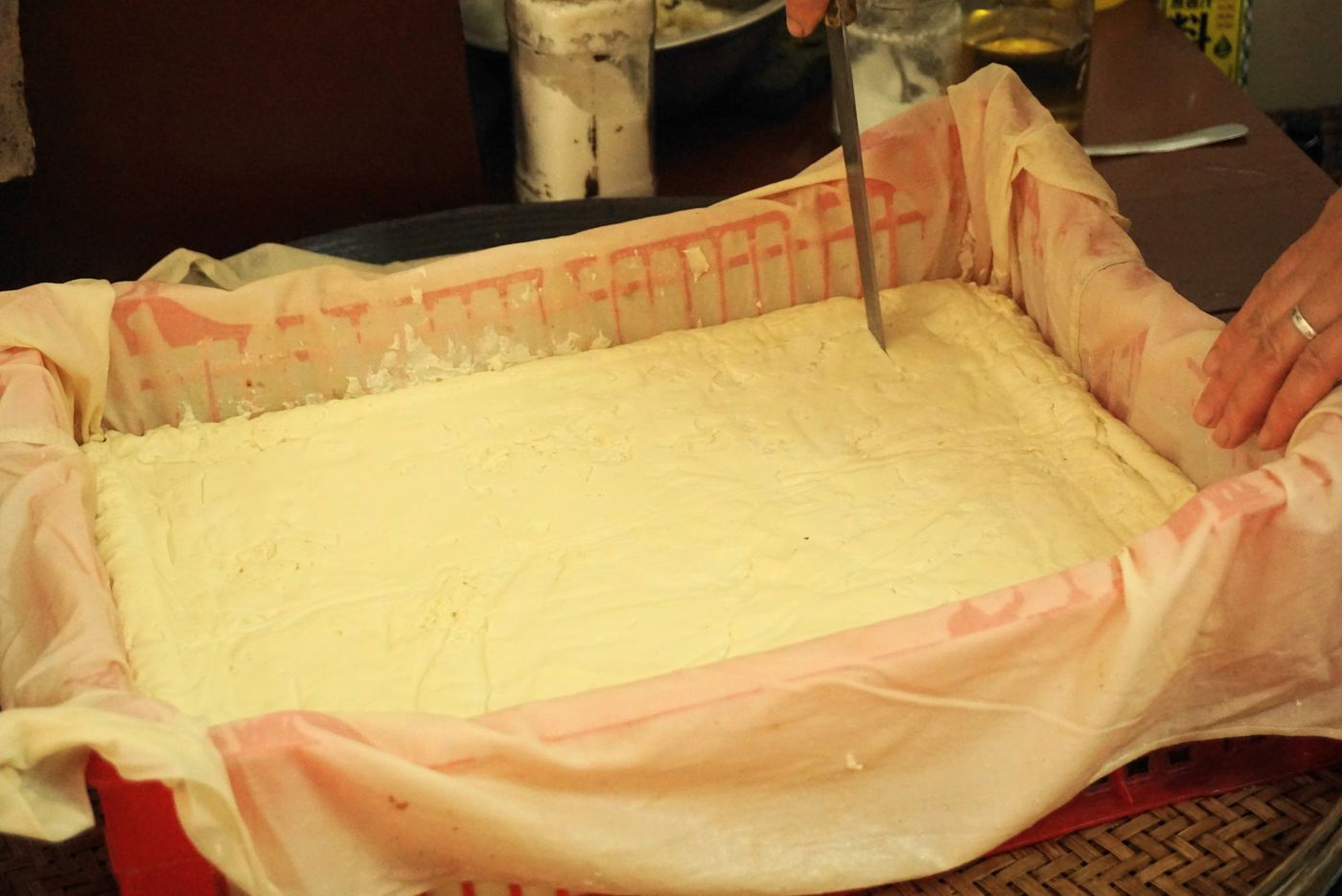 Tofu두부Fresh bean curd made by coagulating soy milk and pressing the curds. A quiet staple of Korean cooking since at least the late Goryeo period, it is pan-fried, braised in spicy soy glaze, or simmered in stews.
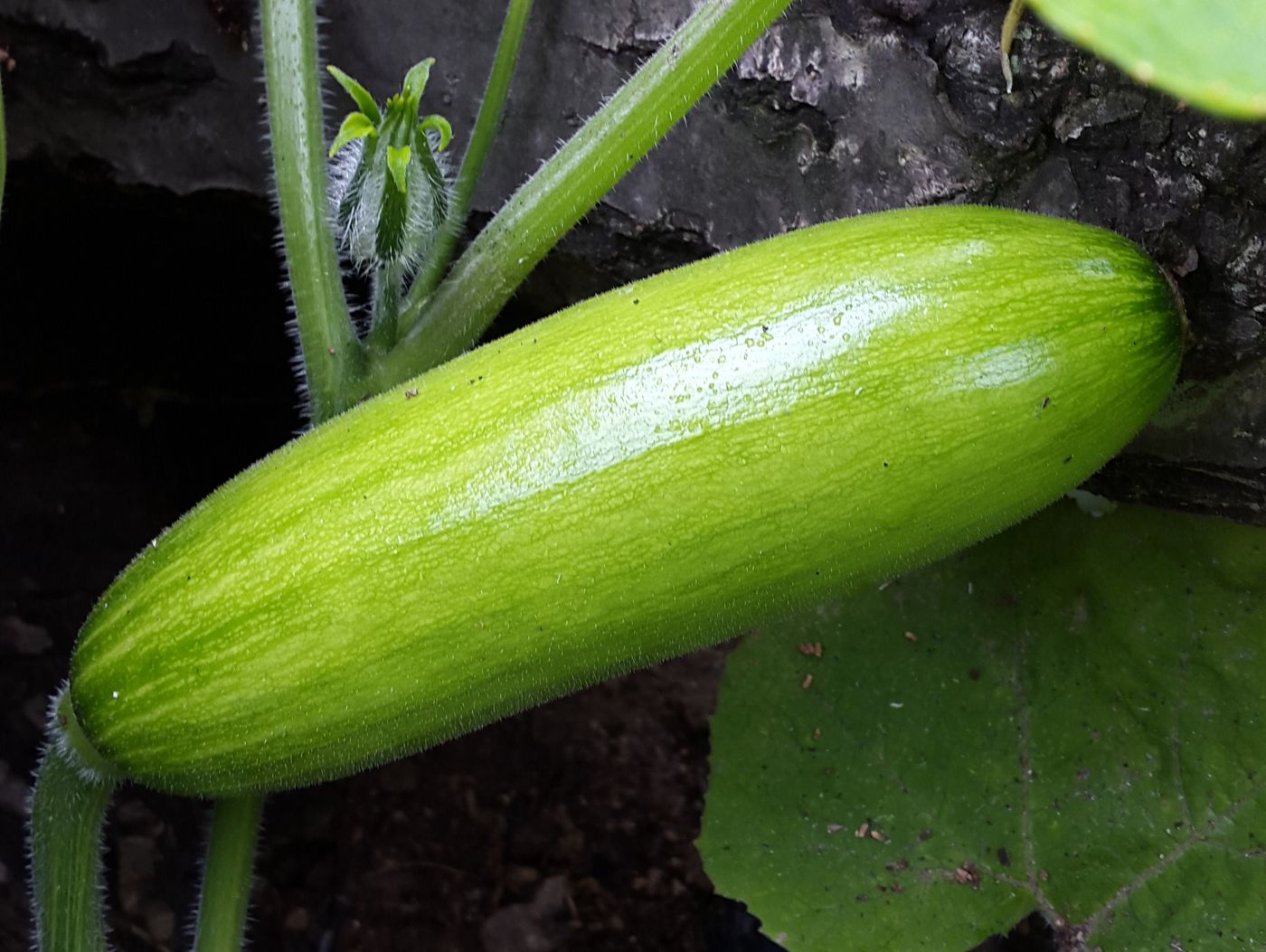 Korean zucchini애호박A pale-green young squash with thin, smooth skin and tender flesh. Sliced into rounds for hobak-jeon, sautéed as namul and added to doenjang stews.
 Yangpa (onion)양파The bulb onion, literally the "Western scallion." A latecomer to Korea, it is now everywhere: sweetening stir-fries and braises, pickled in soy sauce as yangpa-jangajji, and served raw beside grilled meat.
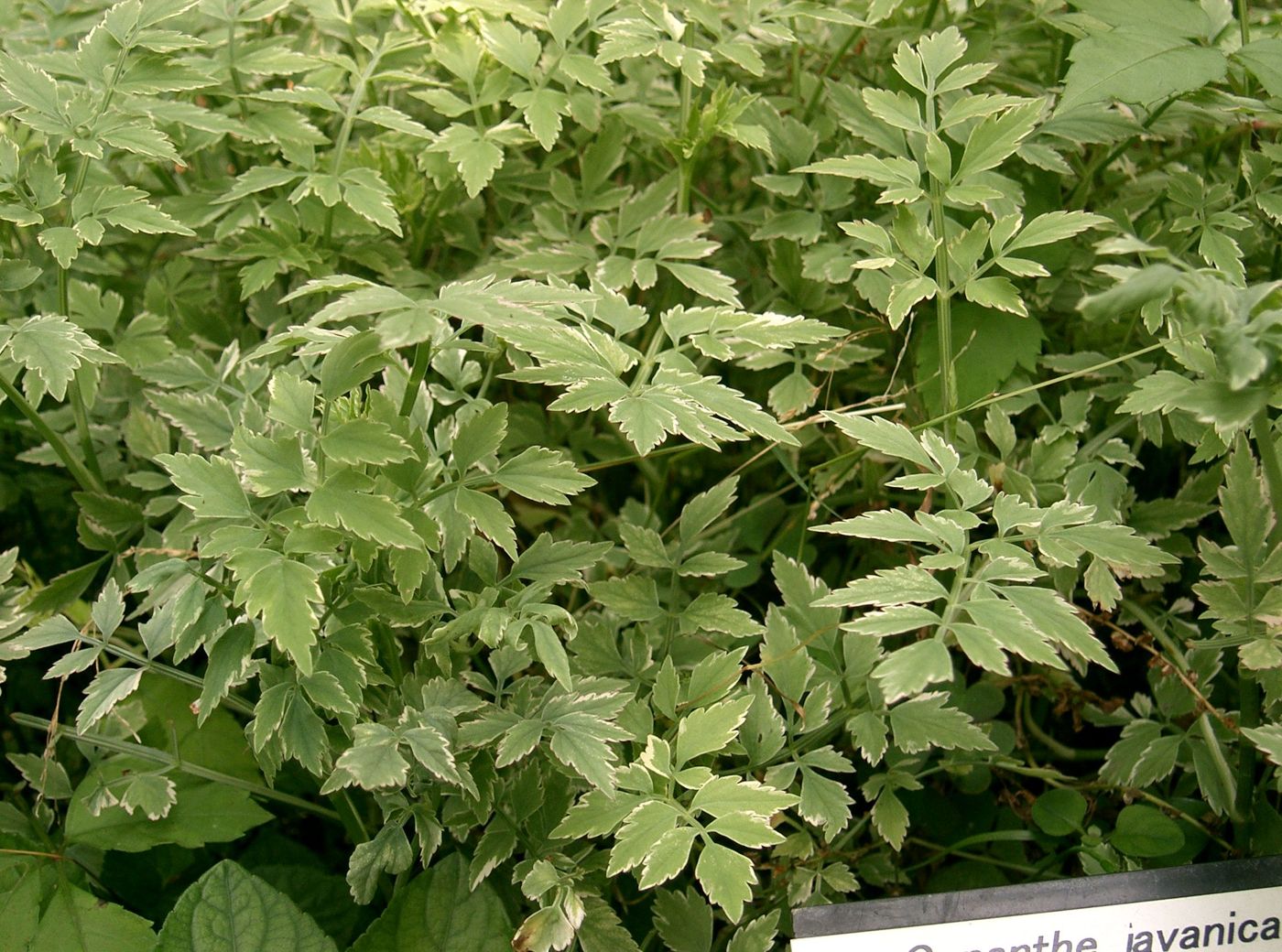 Minari (water dropwort)미나리A long-stemmed, aromatic water plant with a fresh, celery-like perfume. Blanched and dressed as minari-muchim, tucked into kimchi, wrapped into little bundles for minari-ganghoe and piled into fish stews and hot pots.
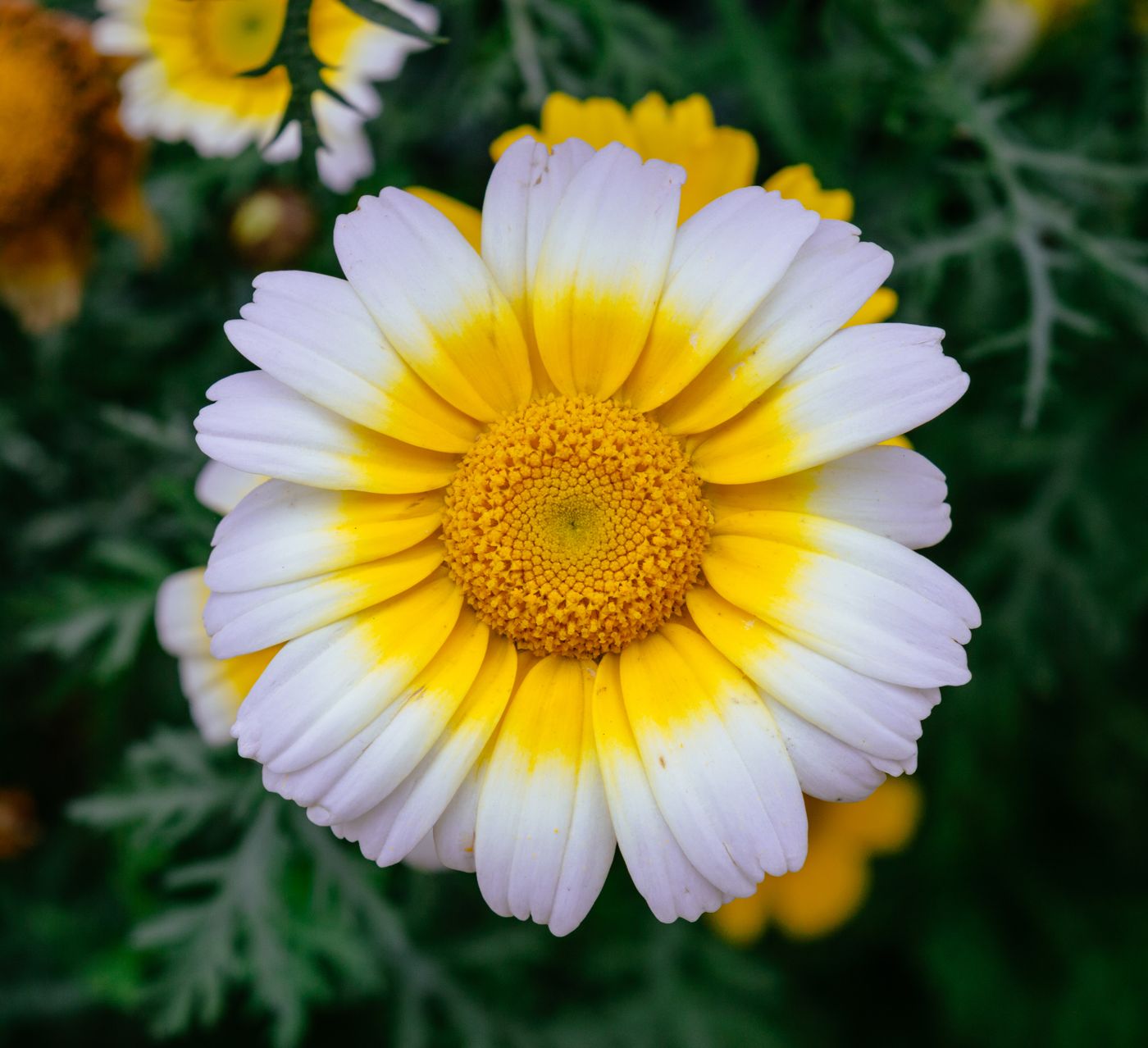 Ssukgat (crown daisy)쑥갓An edible chrysanthemum grown for its feathery, deeply lobed leaves and tender stems. Its bold, resinous perfume finishes spicy fish stews and hot pots, and it is a classic leaf for the ssam basket and quick namul.
 Green onion파Korean green onion (pa), from thick-stemmed daepa to slender scallions — chopped into nearly every seasoning sauce, soup and kimchi, and the star of pa-kimchi.
- Korean Chili Peppers (Fresh)고추Fresh Korean chili peppers, eaten green (putgochu) or red (hong-gochu): from the fiery cheongyang-gochu to the small, wrinkled, mild kkwari-gochu that is braised and stir-fried as banchan.
 Gochugaru고춧가루Korean red chili powder, made from dried red peppers ground coarse or fine. It gives kimchi, gochujang and countless banchan their color and warmth.
- Gochujang고추장Fermented red chili paste — sweet, savory and hot. Made from meju powder, glutinous rice, malt and gochugaru, it is a later addition to Korea's family of jang.
 Garlic마늘Used raw, minced, pickled and roasted, garlic is one of the essential aromatics of Korean food — in seasonings, marinades, kimchi and namul.
 Ginger생강Fresh ginger root, used in small amounts to brighten kimchi paste and marinades and to tame the strong smells of fish and meat.
 Soy sauce간장Korean soy sauce, in two main kitchen forms: pale, salty guk-ganjang (soup soy sauce) brewed the traditional way from meju, and darker, sweeter jin-ganjang for braises and marinades.
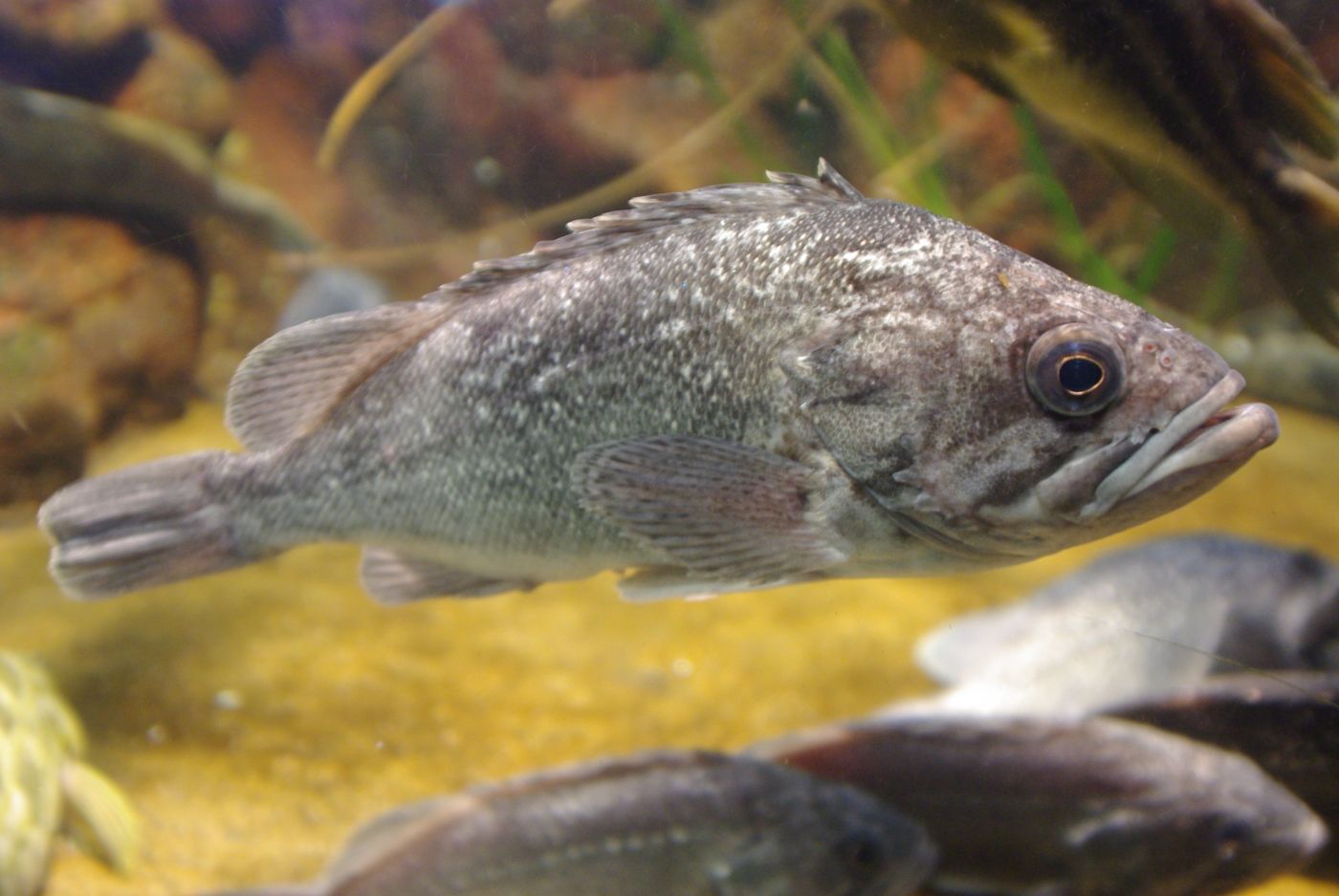 Korean rockfish (ureok)우럭A dark, big-headed rockfish and one of Korea's most farmed fish. Its firm white flesh is a favorite for raw hoe, and its bones make a rich, spicy maeun-tang.
Nutrition
| Calories | ~132 kcal |
|---|---|
| Protein | ~26.9 g |
| Fat | ~2.4 g |
| Carbohydrates | ~1.1 g |
| Fiber | Not reported |
| Sodium | ~1500 mg |
Notable forProtein · Selenium · Vitamin B12 · Calcium
Scaled from the MFDS analysis of home-style cod maeuntang (매운탕_대구; per 100 g: 22 kcal, 4.49 g protein, 0.40 g fat, 0.19 g carbohydrate, 250 mg sodium, 51 mg calcium, 9.04 µg selenium, 0.60 µg vitamin B12) to the database's 600 g serving. The source reports 0.9 g fiber per 100 g (about 5 g per serving), which seems high for a fish broth and is shown as not reported. MFDS lists more than thirty other maeuntang analyses by fish; values differ with the fish and the amount of broth. Actual values vary with ingredients, portion size and preparation.
Health Benefits
- A high-protein, very low-fat stew by the MFDS analysis, and a good source of selenium and vitamin B12.
- Using the head and frame left after filleting makes good use of the whole fish.
- Cod, pollock and catfish are on the US FDA's "best choices" list of fish lowest in mercury; see seafood, omega-3s and mercury.
Regional Variations
- Freshwater (minmulgogi) maeuntang: catfish, crucian carp, mandarin fish or mixed small fish, simmered long until the broth thickens; the folk encyclopedia names the South Han River, Hantan River, Yeongdong, Hwasun and the lakes around Chuncheon as known places for ssogari-maeuntang.
- Sea-fish maeuntang: pollock, cod, rockfish (ureok), sea bream or flounder, added to an already boiling broth and cooked only until just done.
- Seodeori-tang: made from the heads and frames left after slicing sashimi; the MFDS food database analyzes it as a separate dish.
- Eojuk: after a freshwater stew, noodles or hand-torn dough (sujebi) are often cooked in the leftover broth.
Pairings
 Gyeran Jjim (Steamed Egg)계란찜Eggs whisked with water or broth and gently steamed into a silky, savory custard, often seasoned with salted shrimp and served bubbling hot.
 Kongnamul Muchim콩나물무침Soybean sprouts cooked under a lid until just tender, then tossed with garlic, green onion and sesame oil — crisp, nutty and on tables across Korea.
 Napa Cabbage Kimchi배추김치Salted napa cabbage layered with a red paste of chili, garlic, ginger and fermented seafood, then left to ripen: the kimchi most people picture first.
Sources
- 01매운탕 (Maeuntang) — Encyclopedia of Korean Folk Culture (한국의식주생활사전)
- 02매운탕 (Maeuntang) — Encyclopedia of Korean Culture
- 03매운탕_대구 (Cod maeuntang, home-style, analyzed) — MFDS K-FIND food composition database
- 04Advice about Eating Fish — U.S. Food and Drug Administration
- 05Sodium reduction — World Health Organization fact sheet
Last updated