Regions
Gyeongsang
경상
The southeast, where fish is king: anchovy-based broths and salted anchovies, robustly salty and spicy seasoning, and cooking that favors substance over show.
Gyeongsang covers the southeastern part of the peninsula, from the Nakdong River basin to a long coastline on both the East Sea and the South Sea. Its cooking is known for strong seasoning, a deep attachment to seafood and an unpretentious style.
Geography and climate
The Encyclopedia of Korean Culture describes Gyeongsang as having a climate similar to Jeolla's, but with different seafood thanks to its two seas, and with grains grown evenly across its plains. Port cities and fishing towns line the coast, while inland areas such as Andong and Sangju have their own farming and household traditions.
Character of the cuisine
Fish sits at the center. The encyclopedia notes that in Gyeongsang fish is valued so highly it is simply called gogi (meat), and that eating seafood raw as hoe is considered the best way to enjoy it. Fresh fish is also added to soups seasoned only with salt — a method the source points out would be unthinkable in inland or mountain regions.
The same entry describes Gyeongsang seasoning as strongly salted and even spicier than Jeolla's, while the overall style is plain rather than decorative. This characterization comes from a single authority and generalizes across a large region; home cooking varies widely.
Noodles are a favorite grain dish. The encyclopedia singles out soft, hand-rolled, knife-cut noodles made with raw soybean flour mixed into the dough, served in broths built from anchovies or clams rather than beef — a reflection of how central myeolchi are to the regional kitchen.
Signature dishes and banchan
- Regional bibimbap: Jinju and Tongyeong both have their own styles of bibimbap.
- Jinju naengmyeon: the Encyclopedia of Korean Culture describes this cold noodle style as made with buckwheat and beef broth.
- Soups: jaecheop-guk (small freshwater clam soup), loach soup and many seaweed soups enriched with perilla, sesame or dried mussels.
- Seafood dishes: braised monkfish (agu-jjim), steamed sea squirt (mideodeok-jjim), grilled hairtail and herring, and many kinds of raw fish and shellfish.
- Shark (dombaegi): salted shark meat, grilled or pan-fried, appears on the encyclopedia's list of Gyeongsang dishes.
- Banchan: chive and bean-leaf kimchi, seasoned radish with small squid, crisp chili and potato bugak, and haemul-japchae (seafood glass noodles; compare japchae).
Kimchi styles
According to the Encyclopedia of Korean Culture, salted anchovies are the most commonly made jeotgal in Gyeongsang, and the range of salted seafood served at the table is second only to Jeolla's. Regional kimchi named in the same entry includes abalone kimchi, kimchi made from soybean leaves (kongnip-kimchi), burdock kimchi and chive kimchi (buchu-kimchi; see buchu and buchu-muchim for a fresh version). The Korea Herald also mentions tongdaegu-sobagi, a whole salted cod stuffed with radish seasoning, and kimchi made with bellflower root (doraji).
Local specialties
- Andong sikhye: a local version of fermented rice drink from Andong, listed by the encyclopedia among Gyeongsang's distinctive foods and drinks; it differs markedly from the sweet sikhye found elsewhere.
- Rice cakes: the encyclopedia notes that Sangju and Mungyeong add chestnuts, jujubes, persimmons and omija to rice cakes, that Sangju mixes persimmon into the dough, and that Miryang is known for mugwort ssukgullae.
- Sweets and drinks: yugwa, candied burdock and kelp, and citron tea.
Dishes from this region
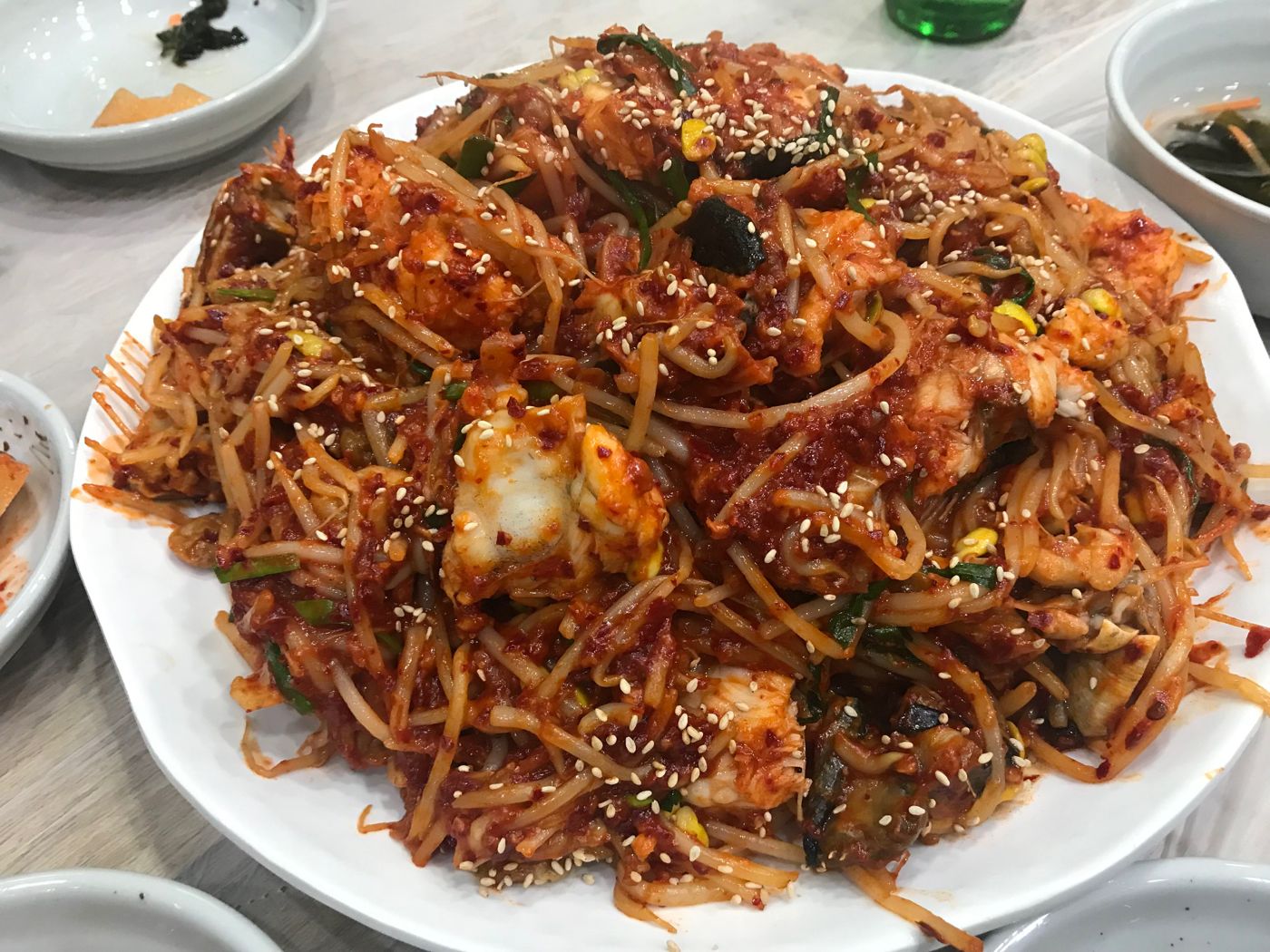 Agu-jjim (Spicy Braised Monkfish)아귀찜Monkfish braised with a mountain of soybean sprouts and minari in a fiery chili sauce thickened with starch — a Masan specialty now eaten across Korea.
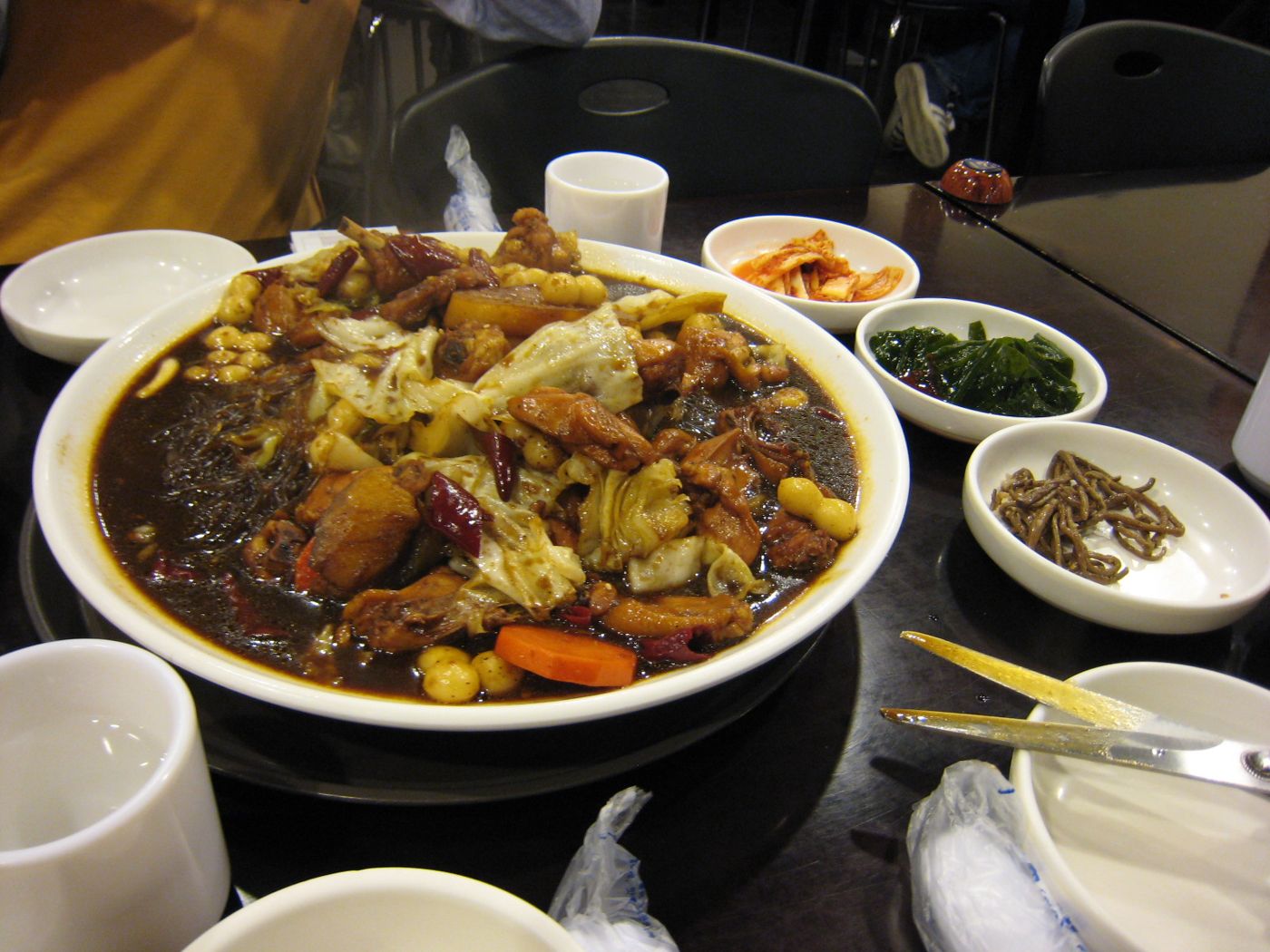 Andong Jjimdak (Soy-Braised Chicken with Glass Noodles)안동찜닭Chicken braised hard in a sweet soy sauce with potatoes, vegetables, dried chilies and glass noodles — a 1980s invention of Andong's old market, not a yangban heirloom.
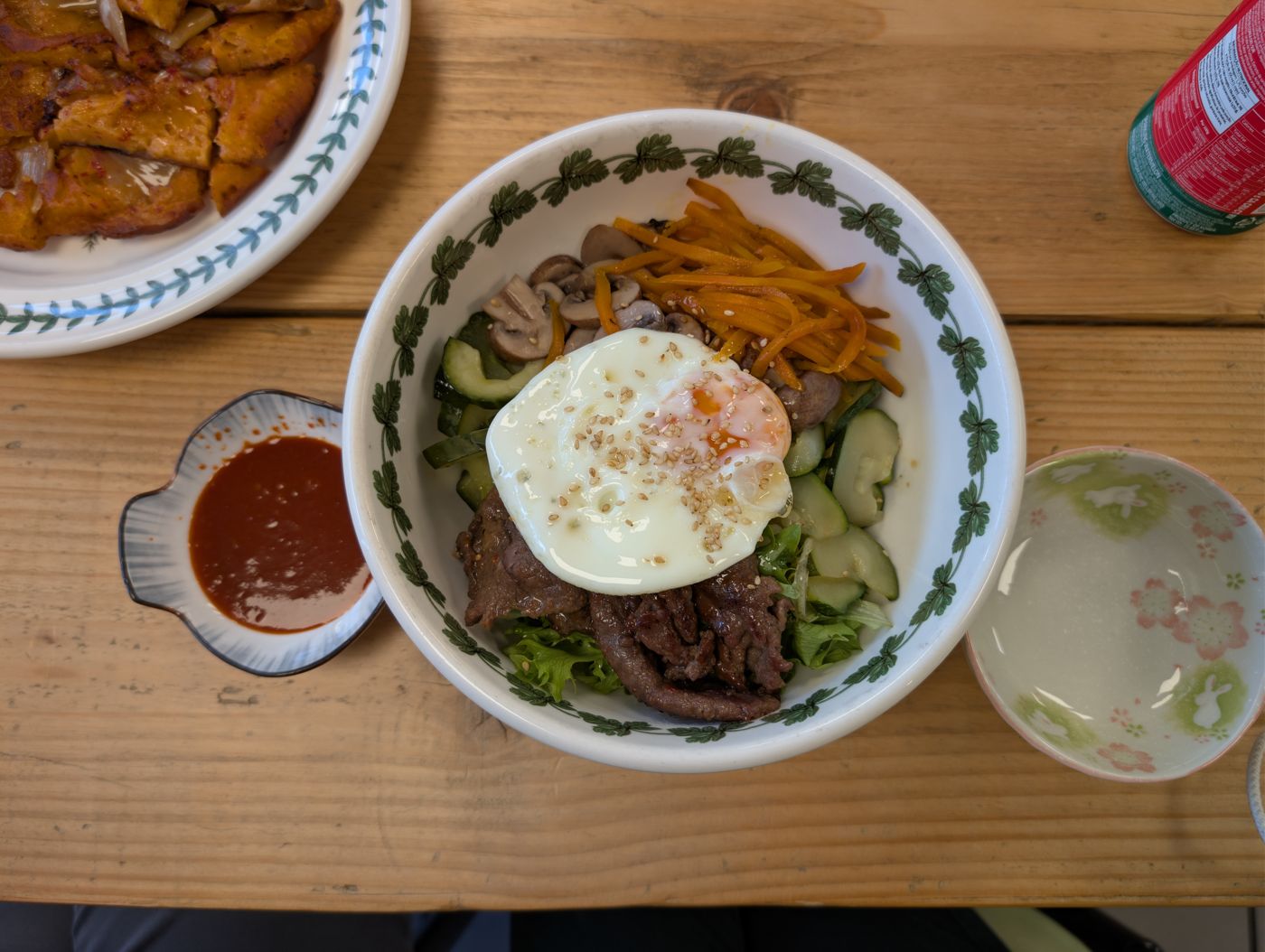 Bibimbap (Mixed Rice with Namul)비빔밥A bowl of rice topped with seasoned namul, beef and egg, mixed at the table with chili paste and sesame oil — banchan gathered into a single meal.
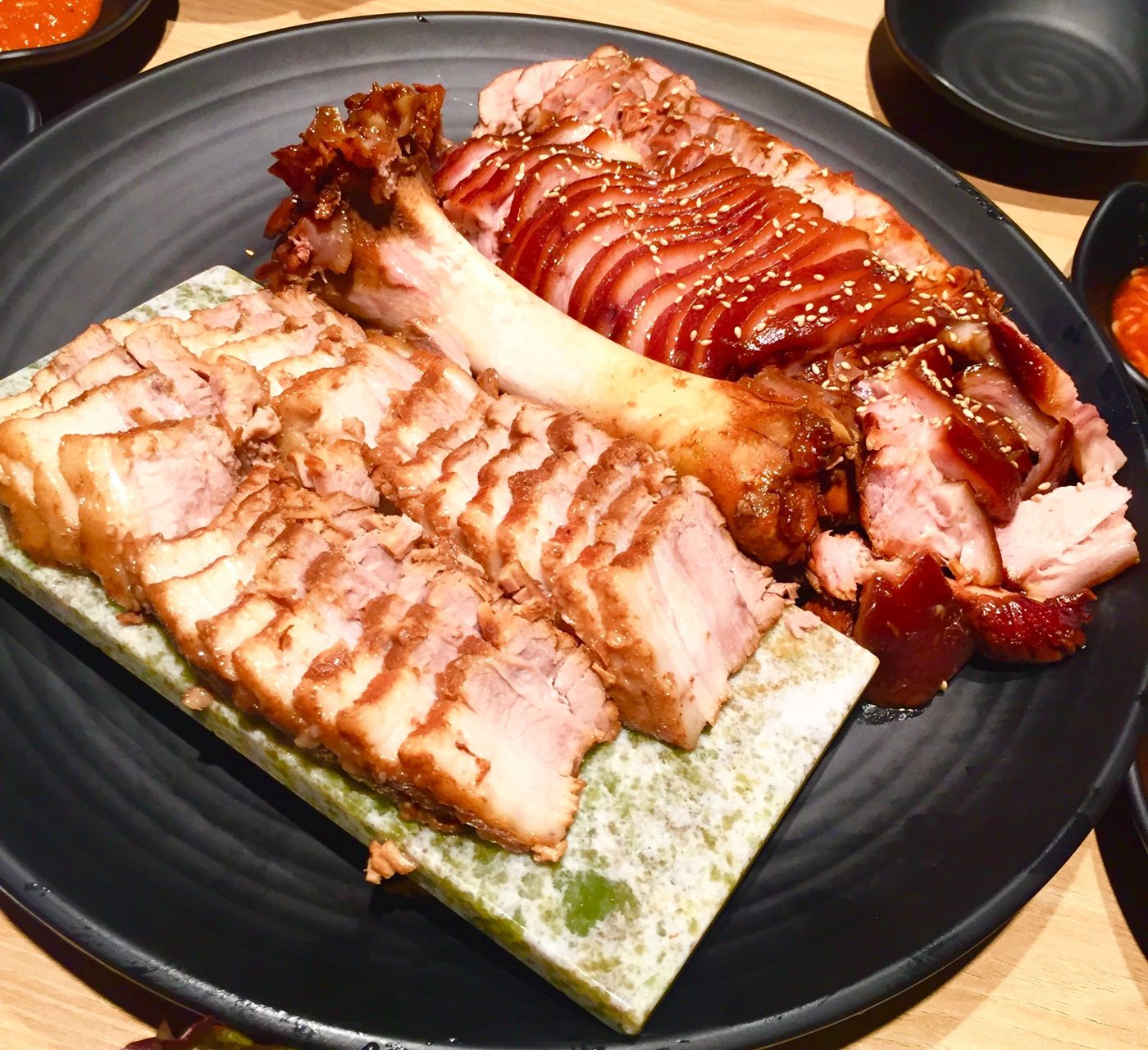 Bossam (Boiled Pork Wraps)보쌈Pork belly simmered with doenjang and aromatics, pressed and sliced, then wrapped in salted cabbage with spicy radish and salted shrimp — a feast dish built for sharing.
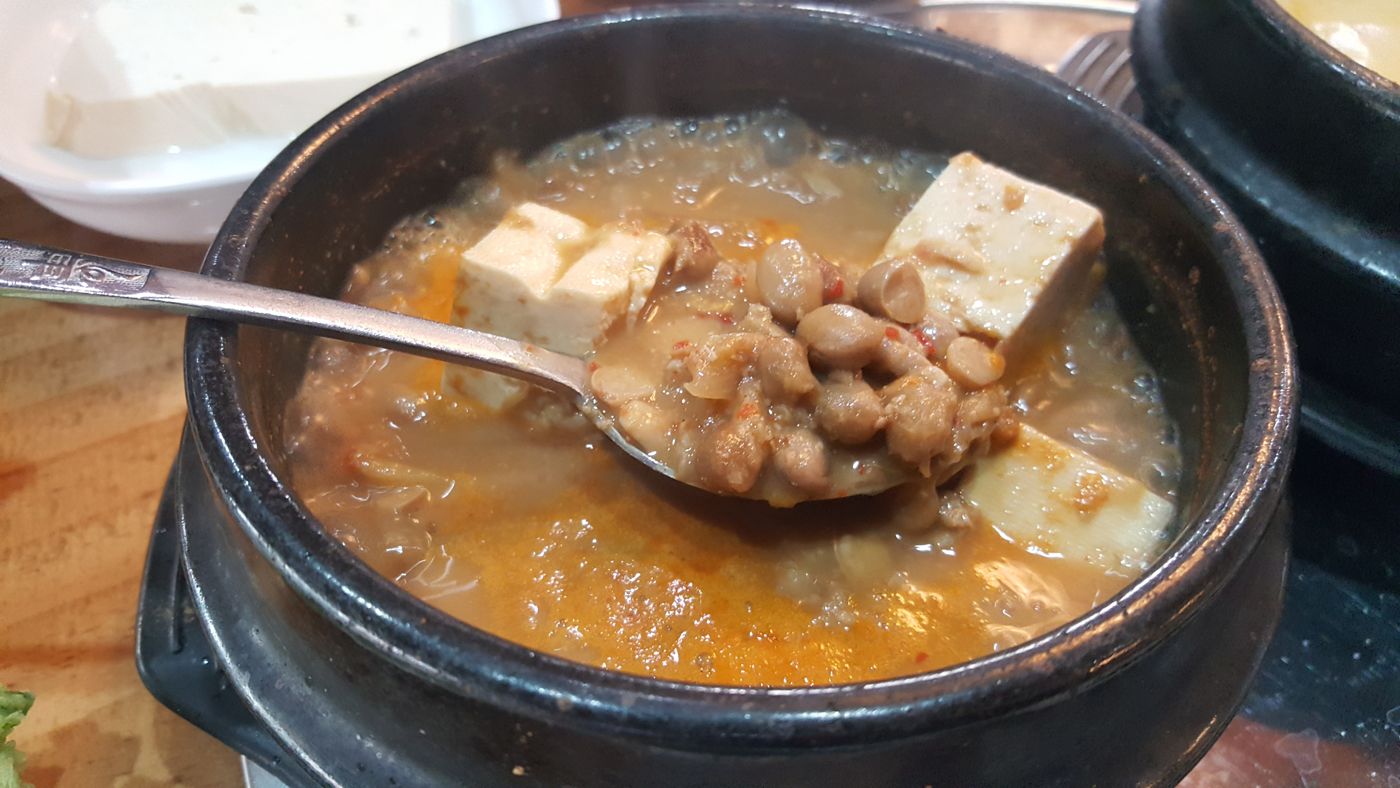 Cheonggukjang Jjigae (Quick-Fermented Soybean Stew)청국장찌개A thick, pungent winter stew of quick-fermented whole soybeans simmered with sour kimchi, tofu and a little pork or beef — loved for its earthy depth, notorious for its smell.
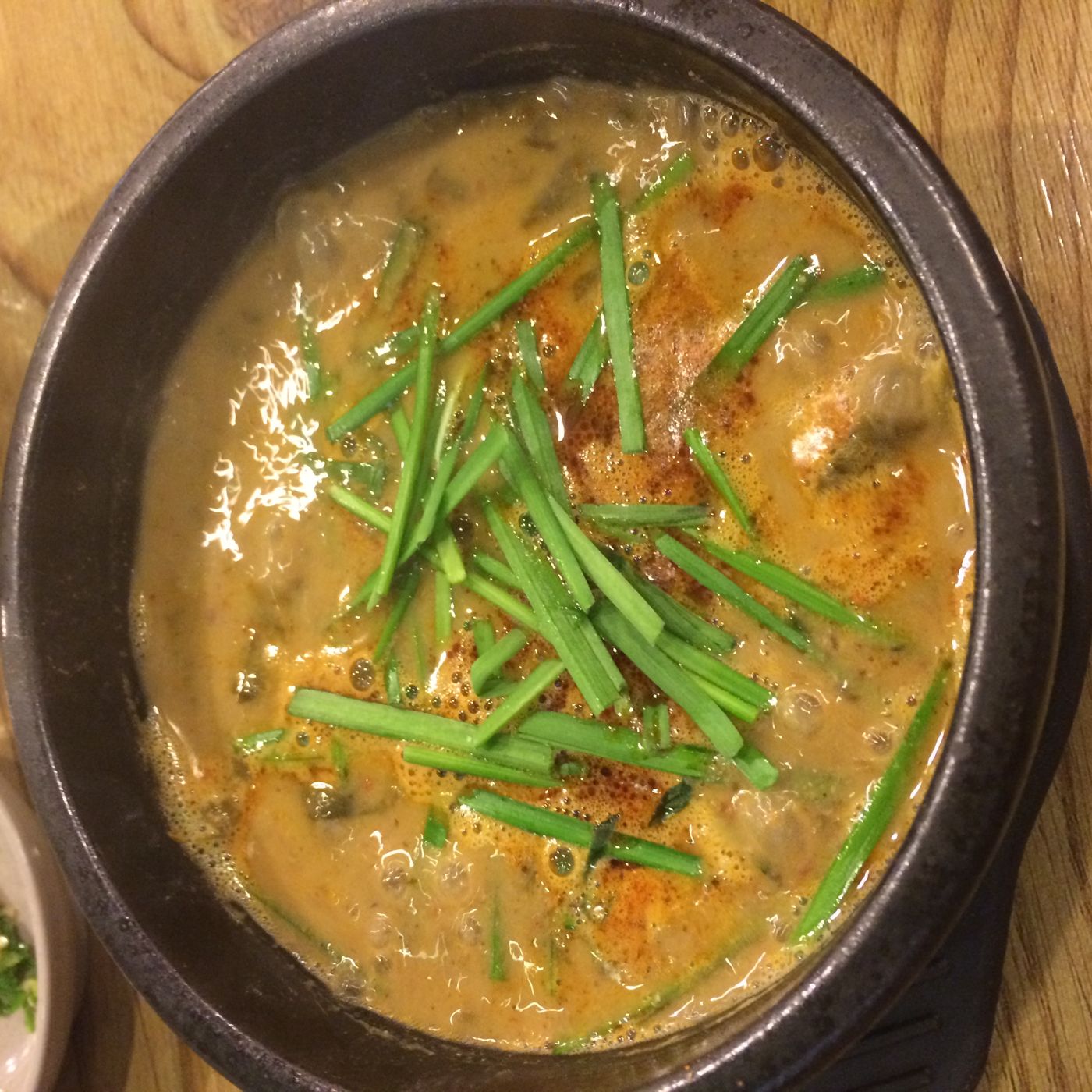 Chueotang (Loach Soup)추어탕Pond loaches simmered and ground into a thick, earthy soup with dried greens, doenjang and perilla, sharpened with chopi pepper — an autumn harvest dish turned year-round restorative.
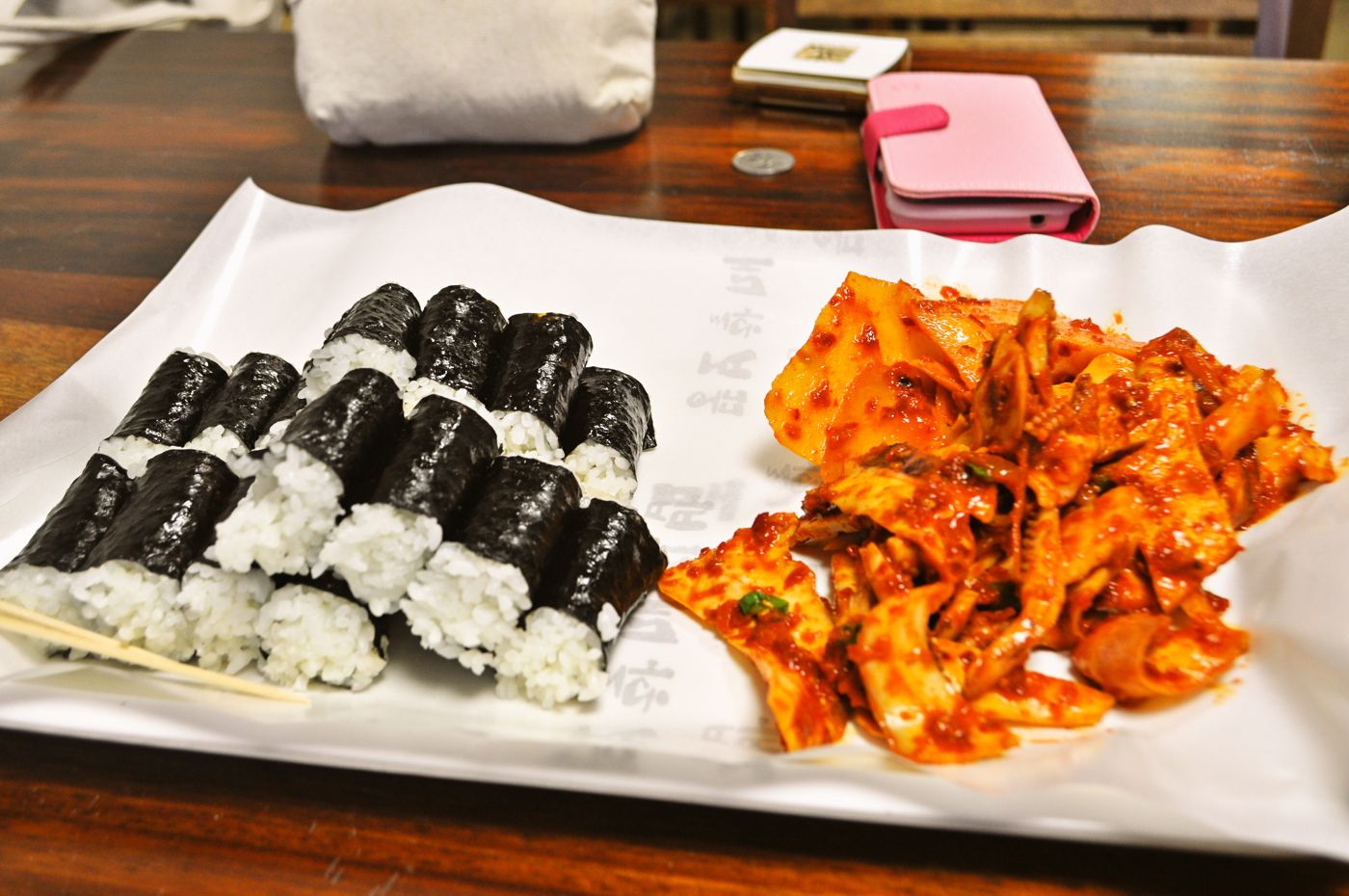 Chungmu Gimbap (Tongyeong Rice Rolls)충무김밥Finger-sized rolls of plain rice in laver, eaten with spicy squid and chunky radish kimchi on the side — Tongyeong's harbor food, built to survive summer heat.
- Chunky Radish and Cabbage Kimchi섞박지Big, flat-cut pieces of radish and cabbage mixed in one chili and jeotgal seasoning — a late-autumn “mixed” kimchi, and the name for big radish kimchi today.
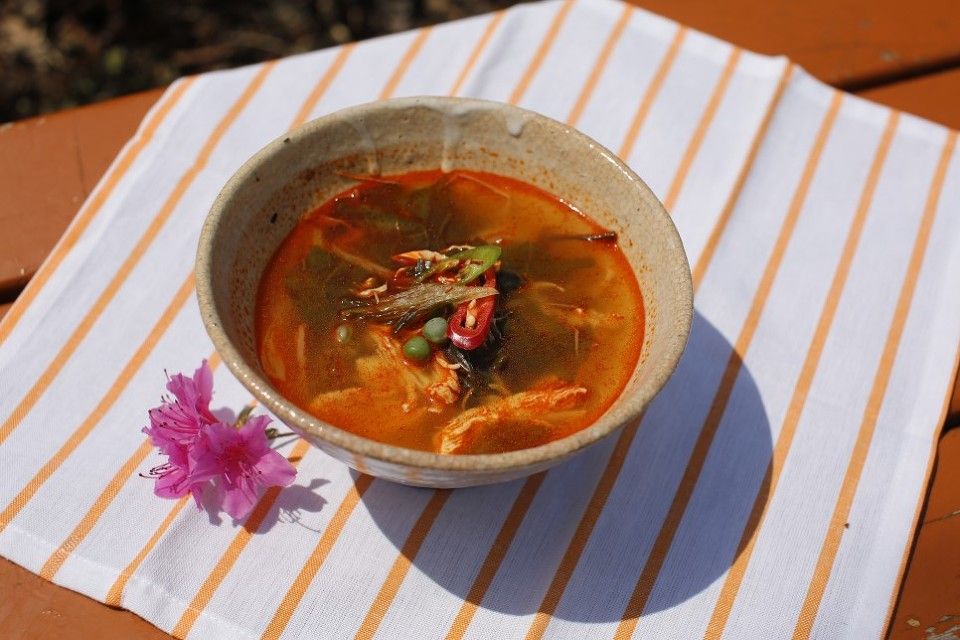 Dakgaejang (Spicy Chicken Soup)닭개장Shredded chicken simmered with bracken, taro stems and plenty of green onion in a fiery chili-oil broth — the chicken cousin of yukgaejang.
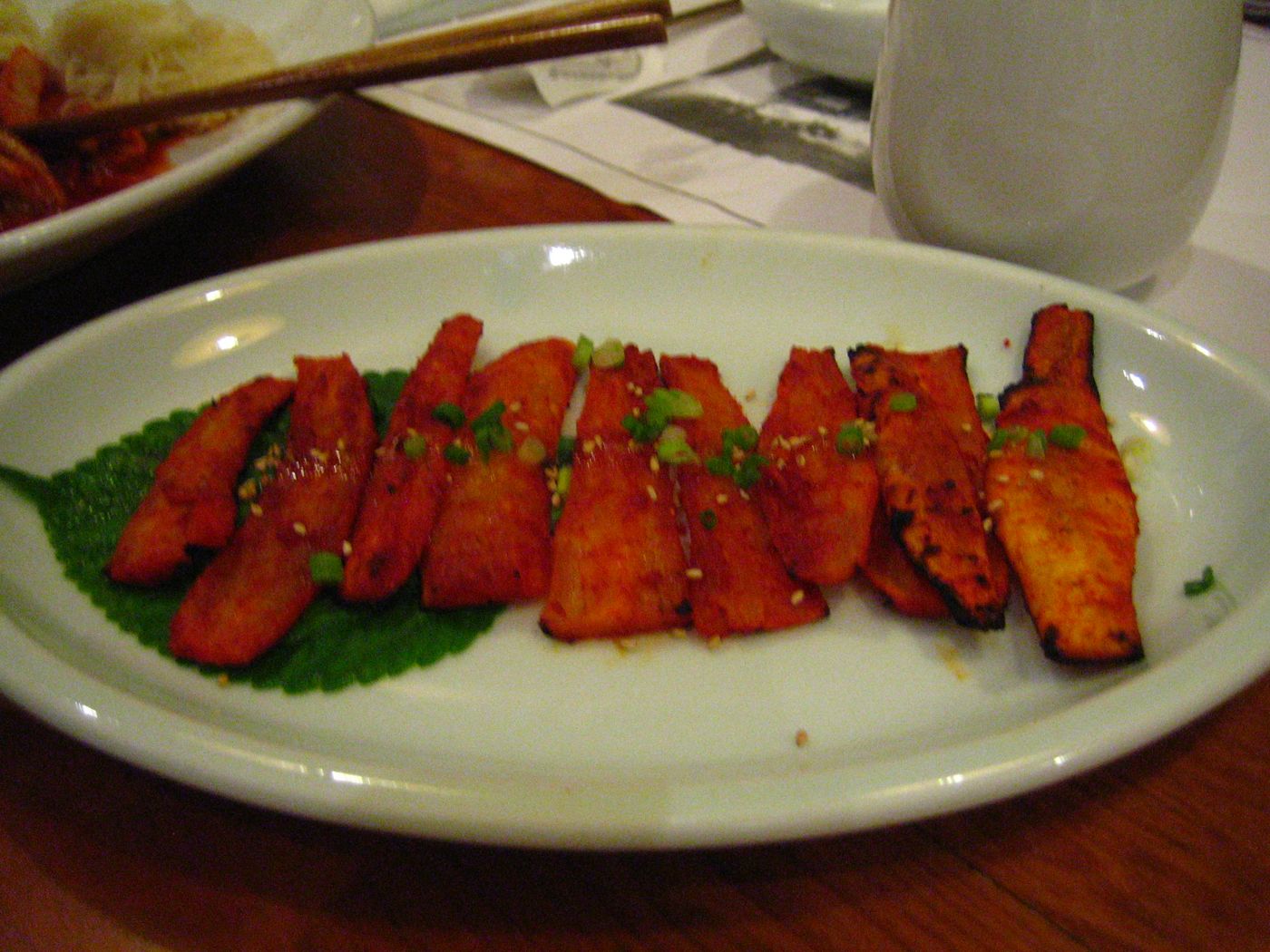 Deodeok Gui (Grilled Seasoned Deodeok)더덕구이Deodeok root pounded flat, brushed with sesame oil and soy, then grilled under a sweet gochujang glaze — chewy, fragrant and slightly bitter, often called meat from the mountains.
- Dongtae-jjigae (Frozen Pollack Stew)동태찌개A spicy, clean-tasting stew of frozen Alaska pollack with radish, tofu and fresh greens in a gochugaru-and-jang broth — a winter staple at the Korean table.
- Dotori Muk Muchim도토리묵무침Slices of soft, faintly bitter acorn jelly tossed with crisp vegetables and a soy–chili–sesame dressing — a cool, light side dish and a favorite with drinks.
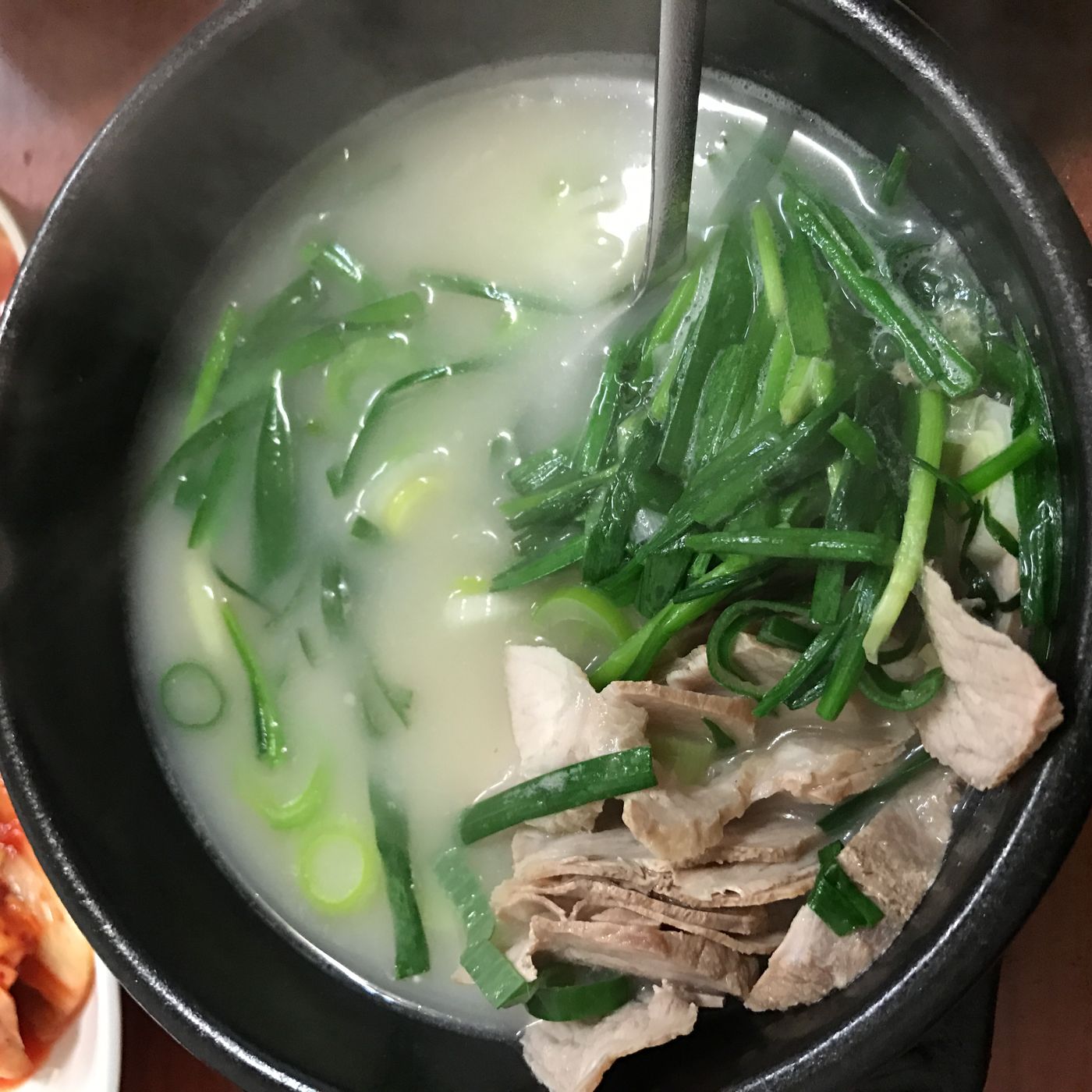 Dwaeji Gukbap (Busan Pork and Rice Soup)돼지국밥Slices of boiled pork in a milky pork-bone broth over rice, seasoned at the table with salted shrimp and garlic chives — Busan's signature everyday bowl.
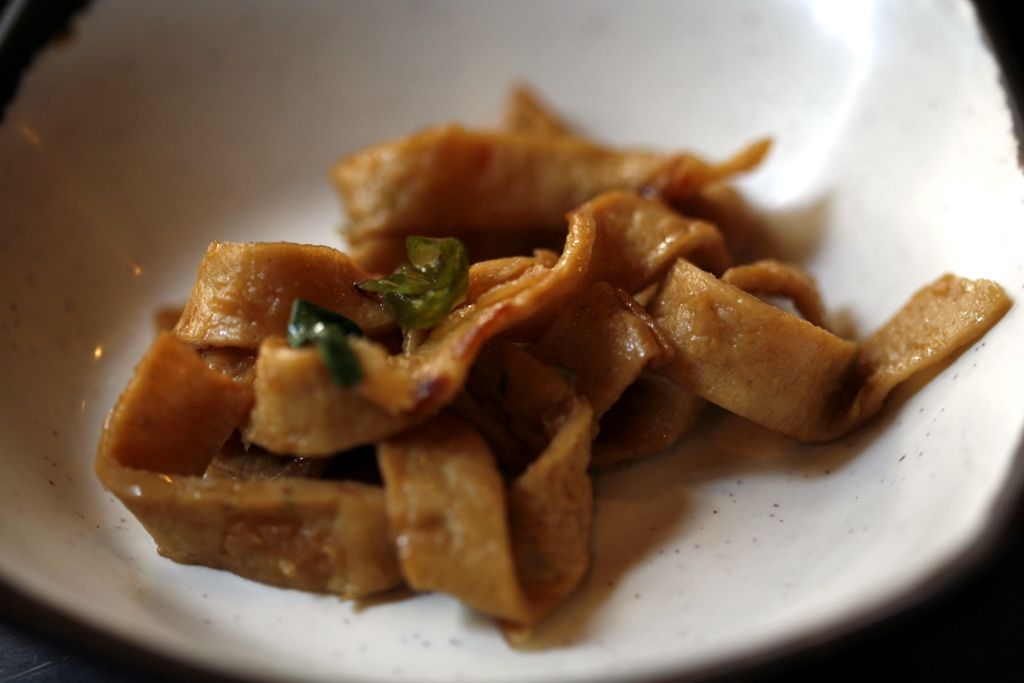 Eomuk Bokkeum어묵볶음Strips of Korean fish cake stir-fried with onion and carrot in a light soy glaze — quick, savory-sweet and one of the most familiar everyday banchan.
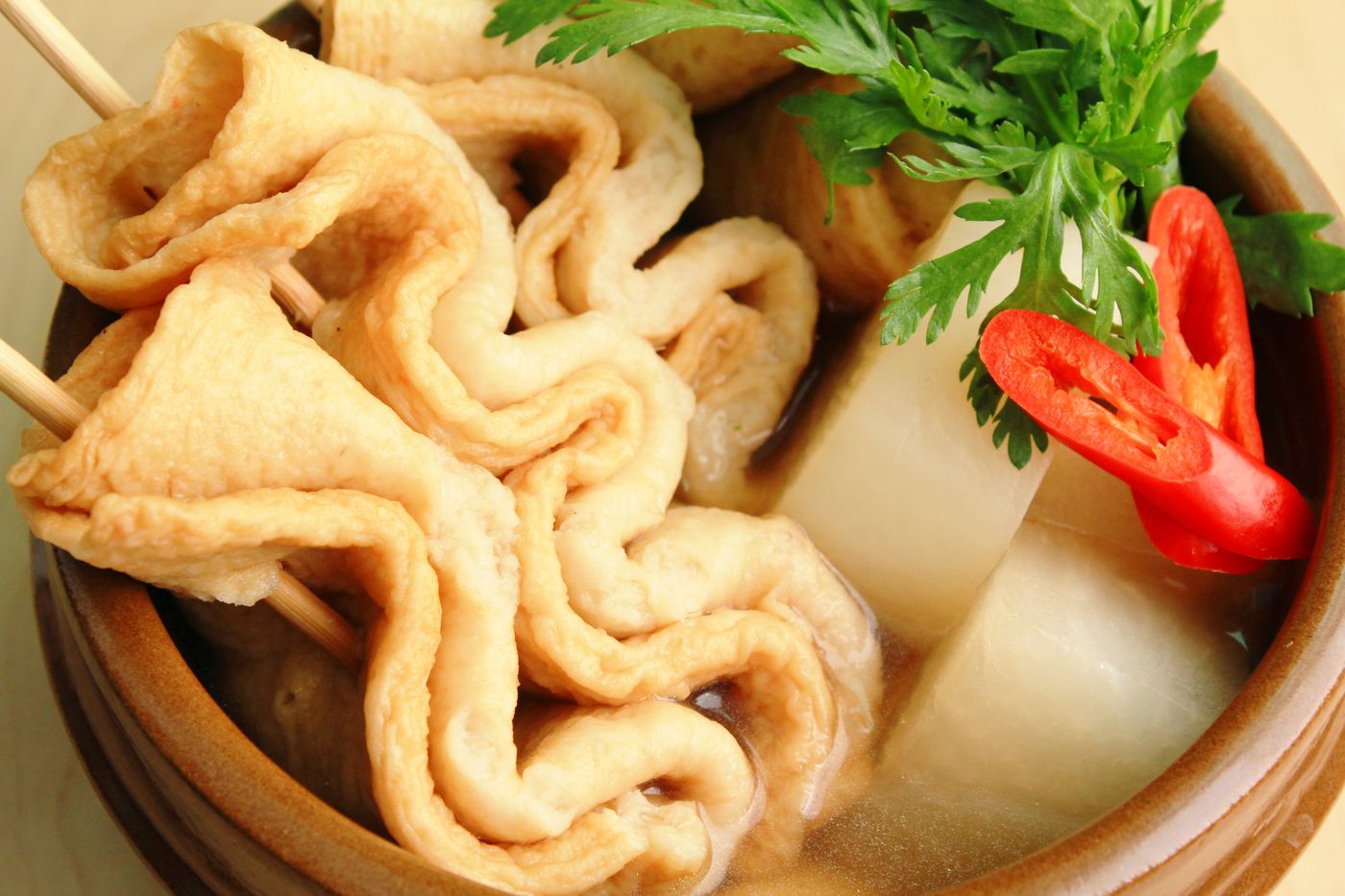 Eomuk Tang (Fish Cake Soup)어묵탕Fish cakes, often threaded on skewers, simmered in a clear anchovy, kelp and radish broth — Busan's winter street-stall soup and a quick home dish.
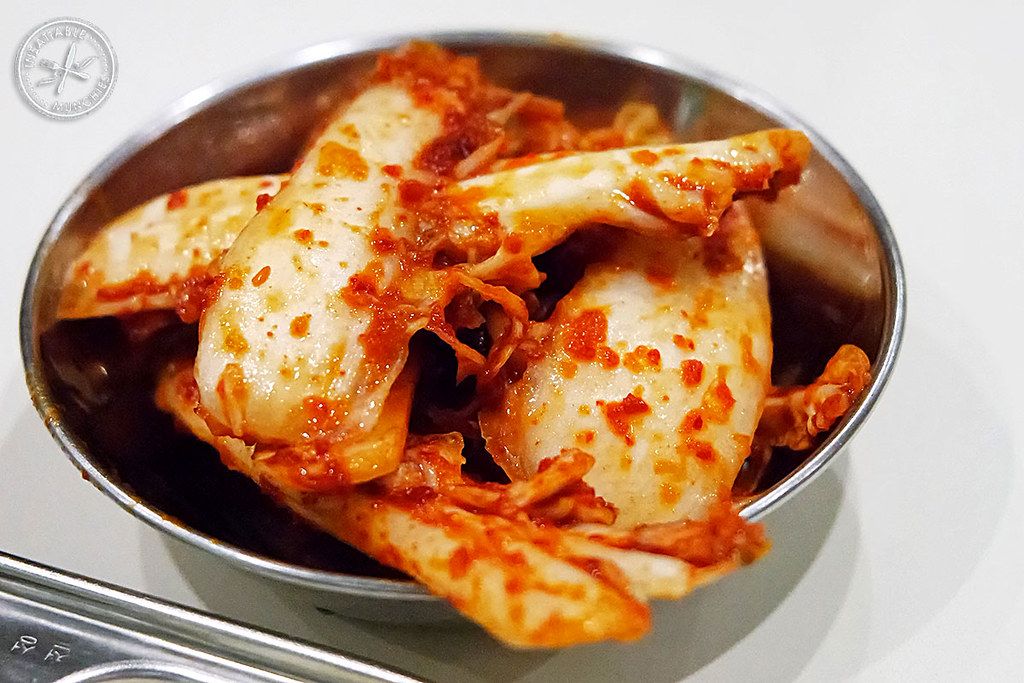 Fresh Cabbage Kimchi겉절이Napa cabbage salted only briefly, then tossed with chili, garlic and fish sauce and eaten the same day — kimchi at its freshest, crisp and bright.
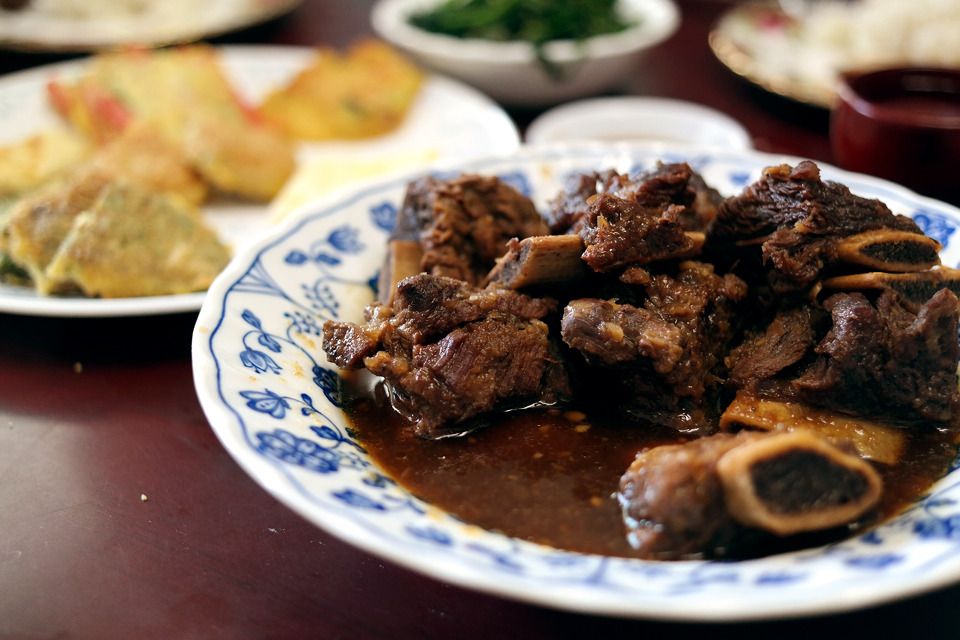 Galbi-jjim (Braised Beef Short Ribs)갈비찜Beef short ribs simmered slowly in soy sauce, pear and garlic with radish, carrot, chestnuts and jujubes until glossy and tender — a dish for holidays and honored guests.
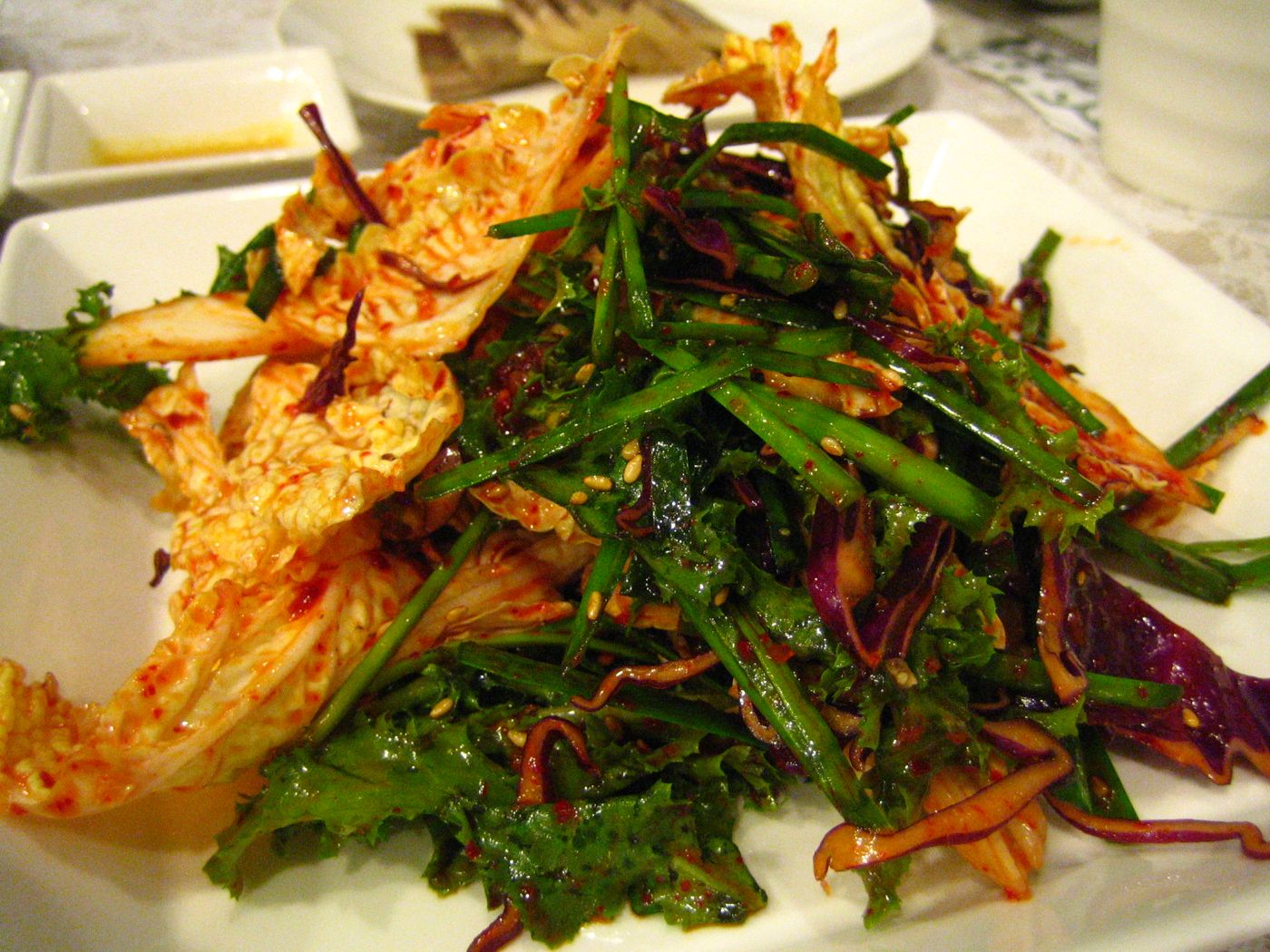 Garlic Chive Kimchi부추김치Whole garlic chives tossed with anchovy fish sauce and plenty of chili — a quick kimchi eaten fresh or ripe, known by a different name in nearly every province.
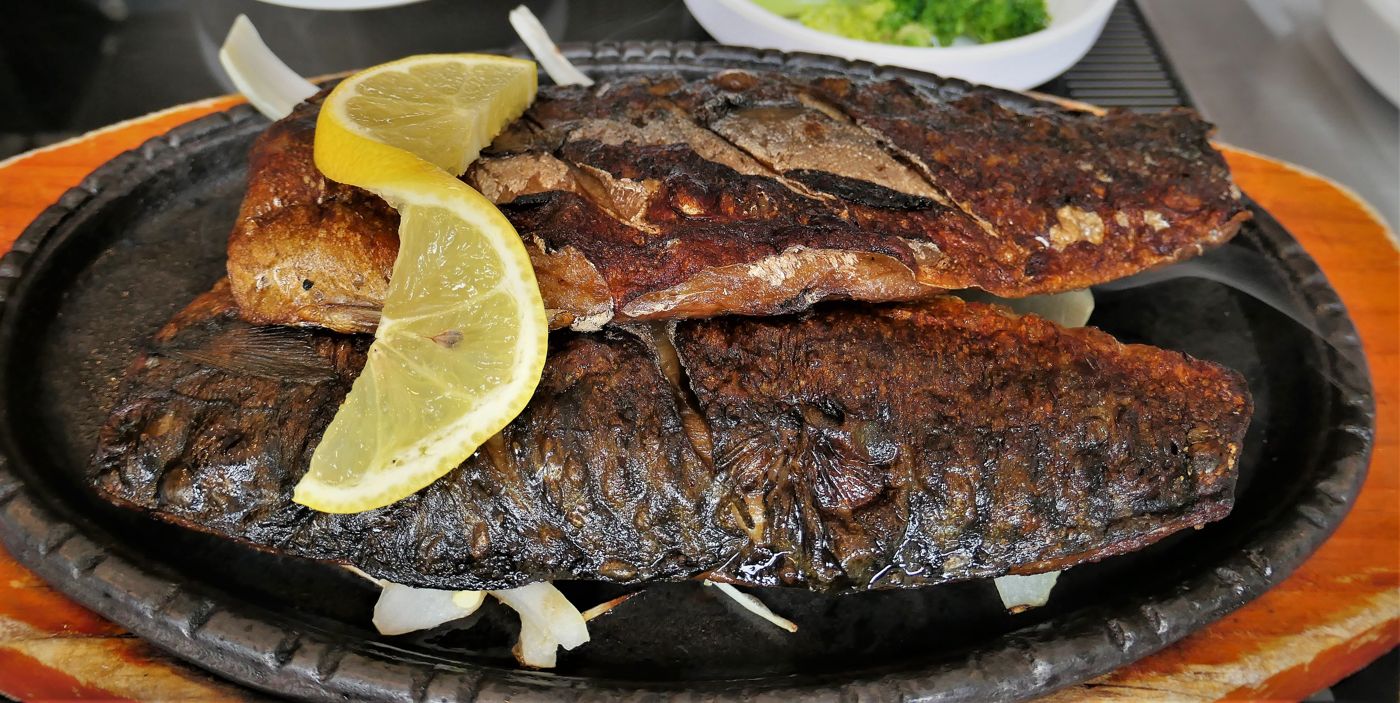 Godeungeo-gui (Grilled Mackerel)고등어구이Salted mackerel grilled or pan-fried until the skin crackles and the rich flesh flakes — one of the most common fish dishes on the Korean home table.
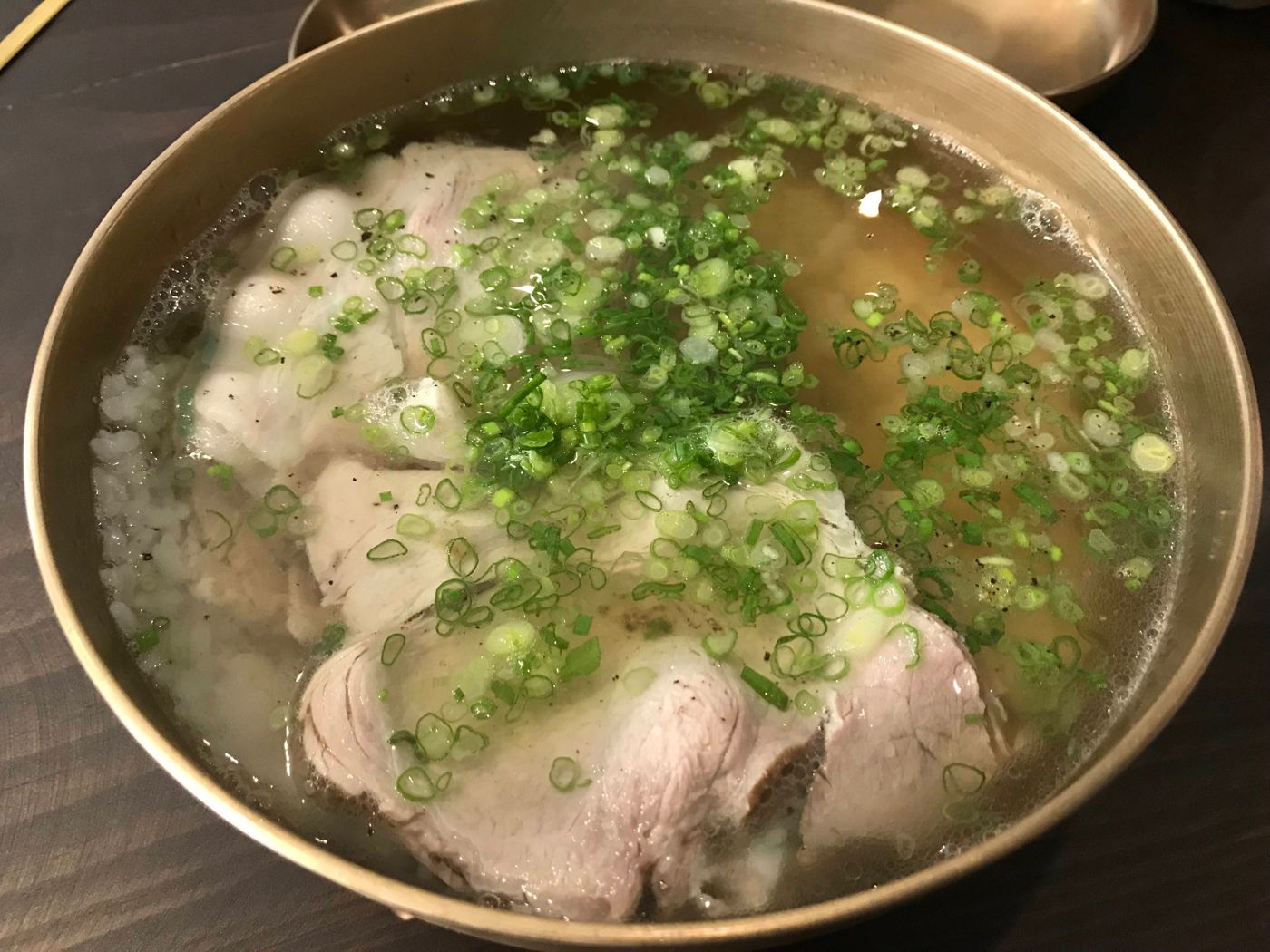 Gomtang (Beef Bone and Brisket Soup)곰탕A long-simmered beef soup, usually built on brisket, shank and offal and served over rice, with a broth that is lightly salted at the table. A pillar of the Korean gukbap tradition.
- Gul Guk (Oyster Soup)굴국Fresh oysters dropped into a clear radish broth with tofu and green onion and cooked for barely a minute — a delicate cold-season soup of the south and west coasts.
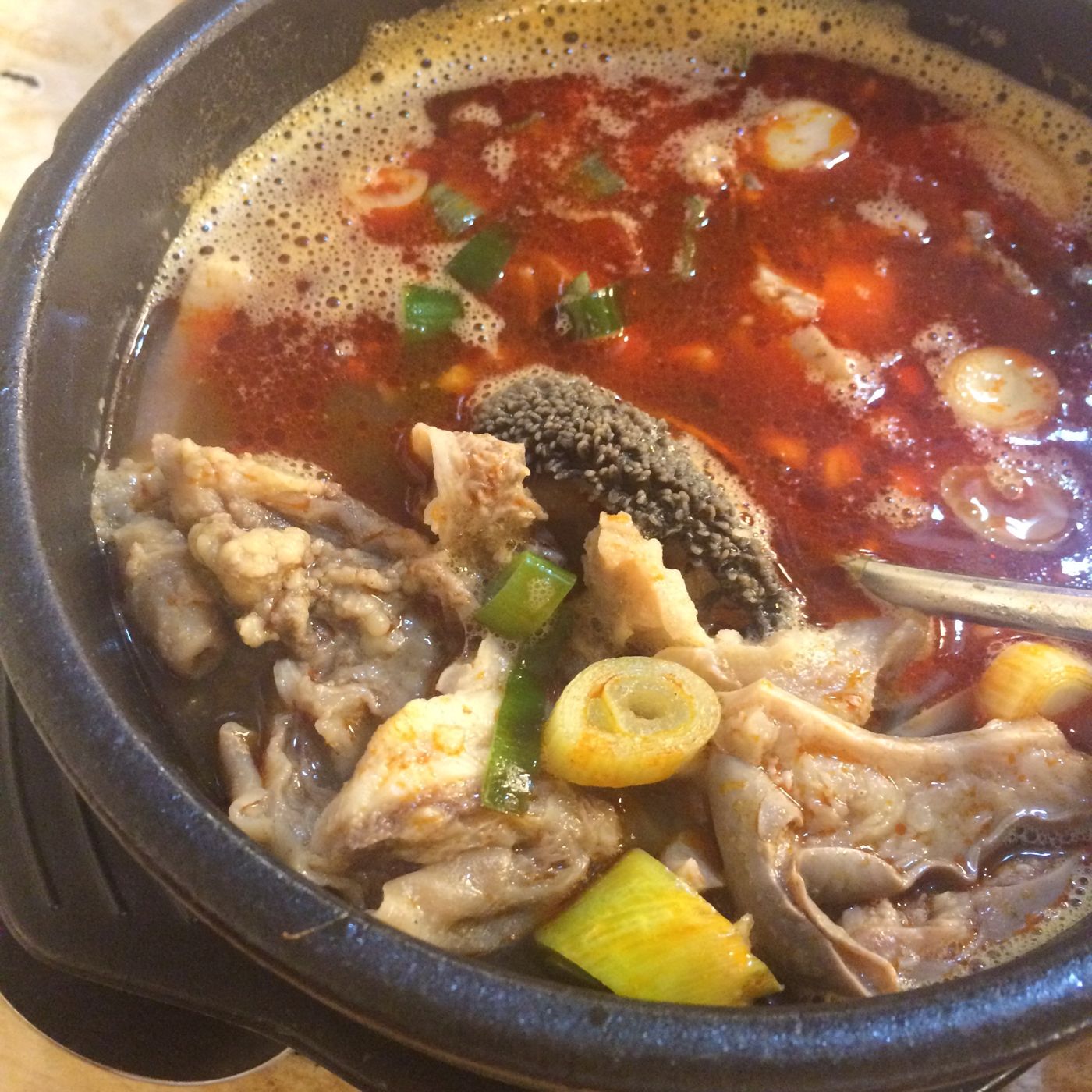 Haejangguk (Hangover Soup)해장국A hot, hearty morning soup — classically beef-bone broth with cabbage greens, bean sprouts and seonji (beef blood curd) — eaten over rice after a night of drinking.
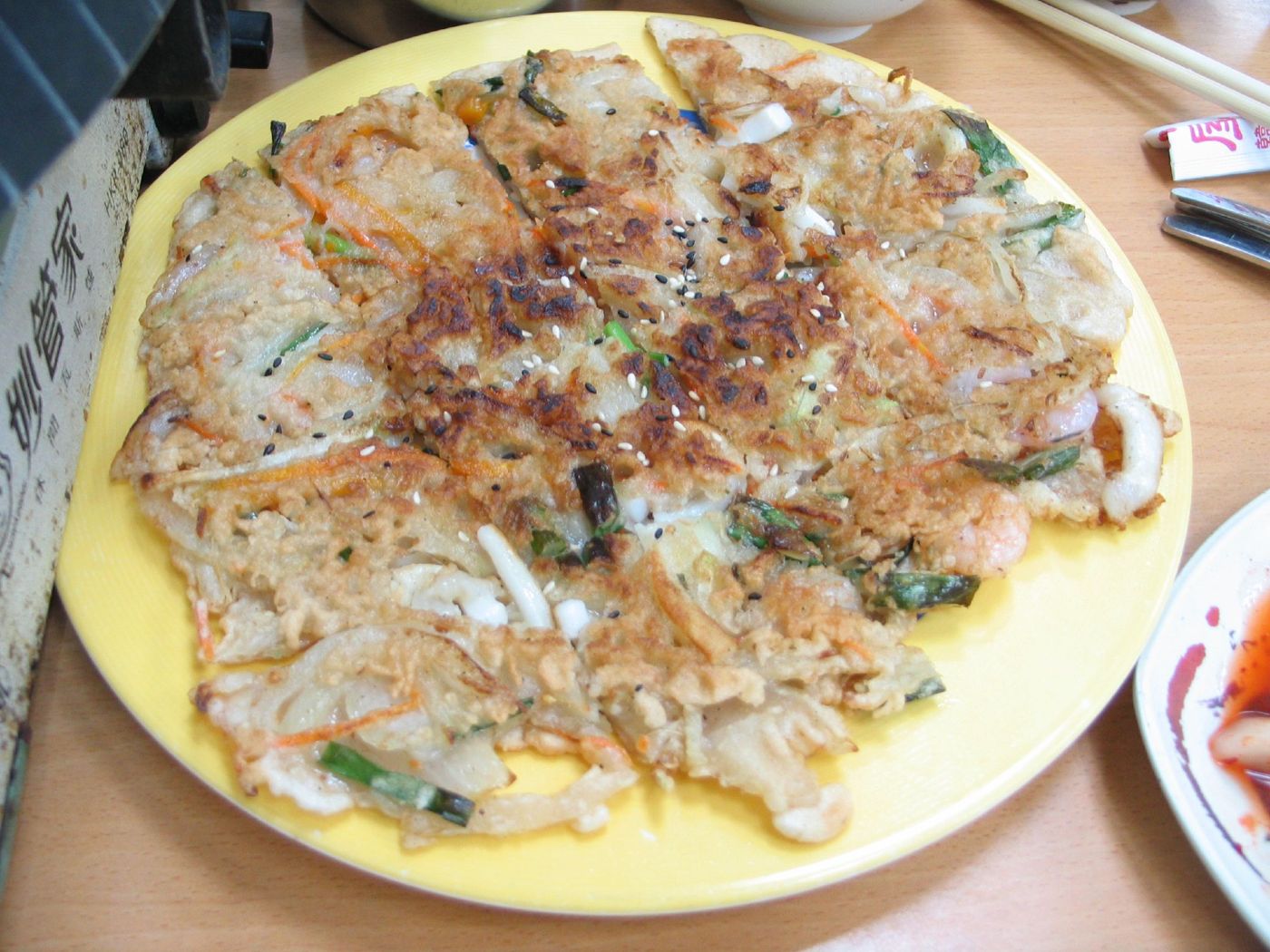 Haemul Pajeon (Seafood and Green Onion Pancake)해물파전Whole green onions bound in a light batter with squid, shrimp and clams, pan-fried until crisp — a generous jeon for sharing, closely tied to Busan's Dongnae.
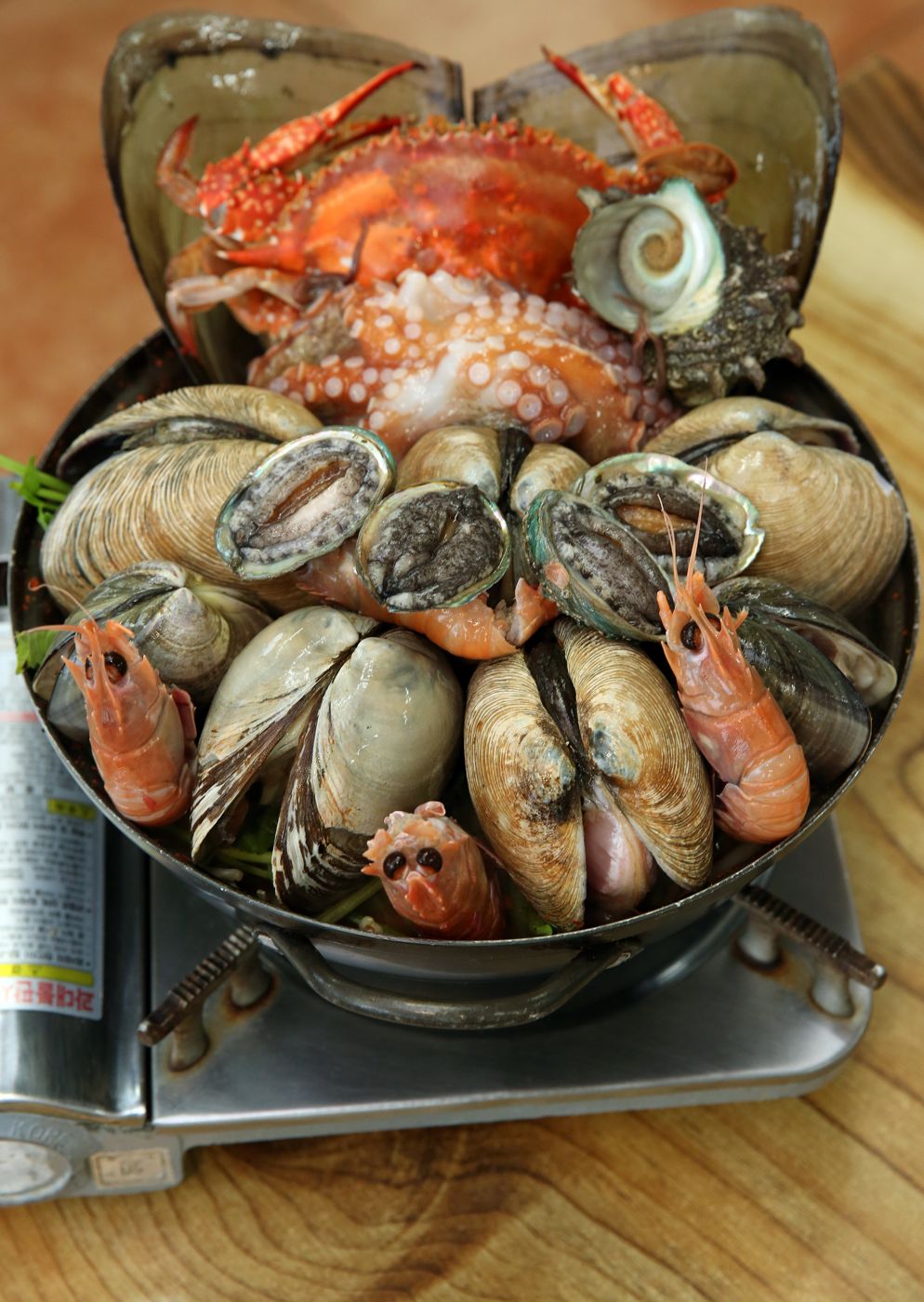 Haemul Tang (Spicy Seafood Hot Pot)해물탕Blue crab, octopus, shrimp, clams and sea squirt simmered with radish and water dropwort in a bright, spicy gochujang broth — a seafood feast in one pot.
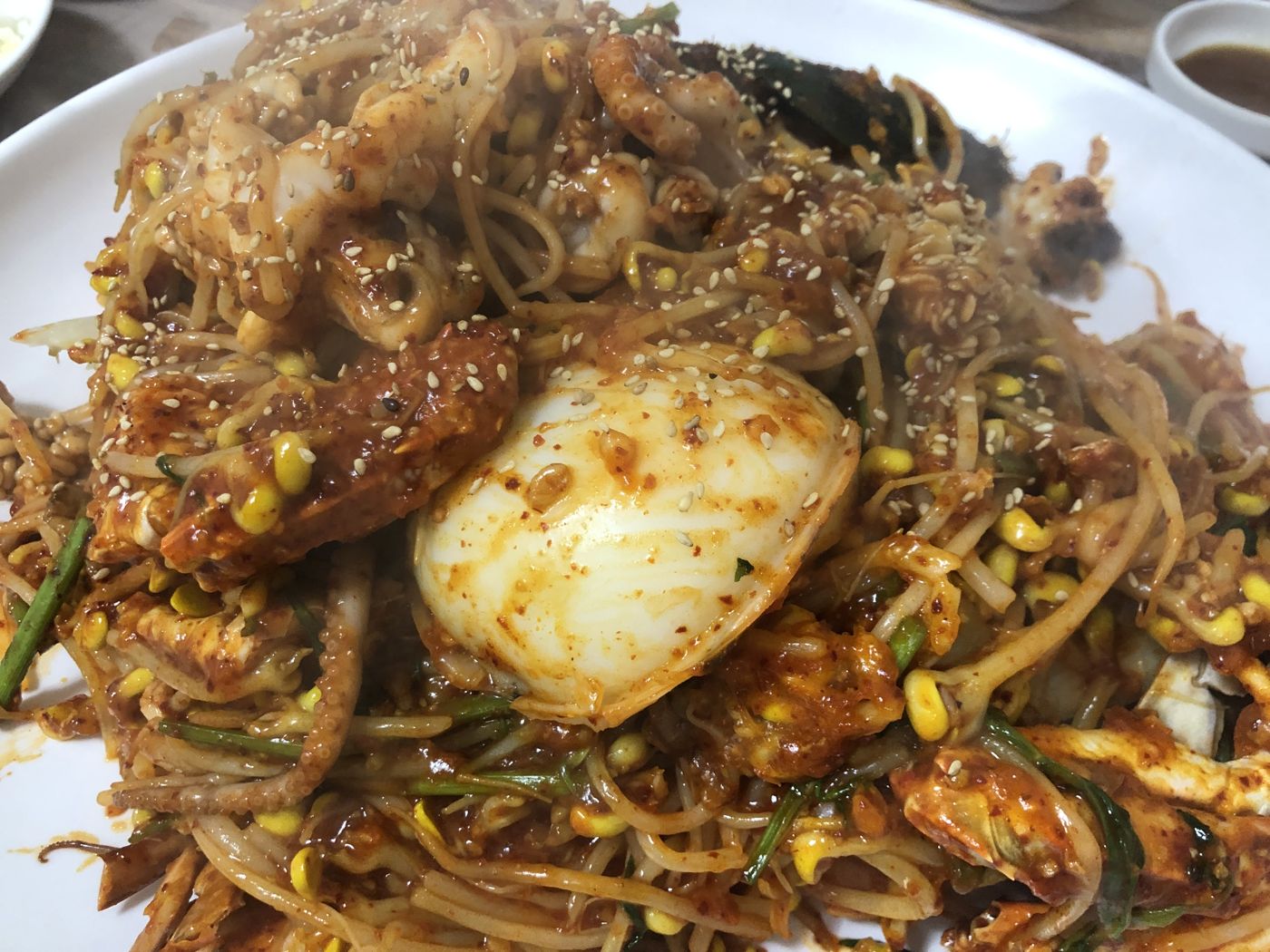 Haemul-jjim (Spicy Braised Seafood with Bean Sprouts)해물찜Squid, shrimp and shellfish piled over crisp bean sprouts and simmered in a thick, fiery red sauce — a modern Gyeongsang coastal dish now served at restaurants nationwide.
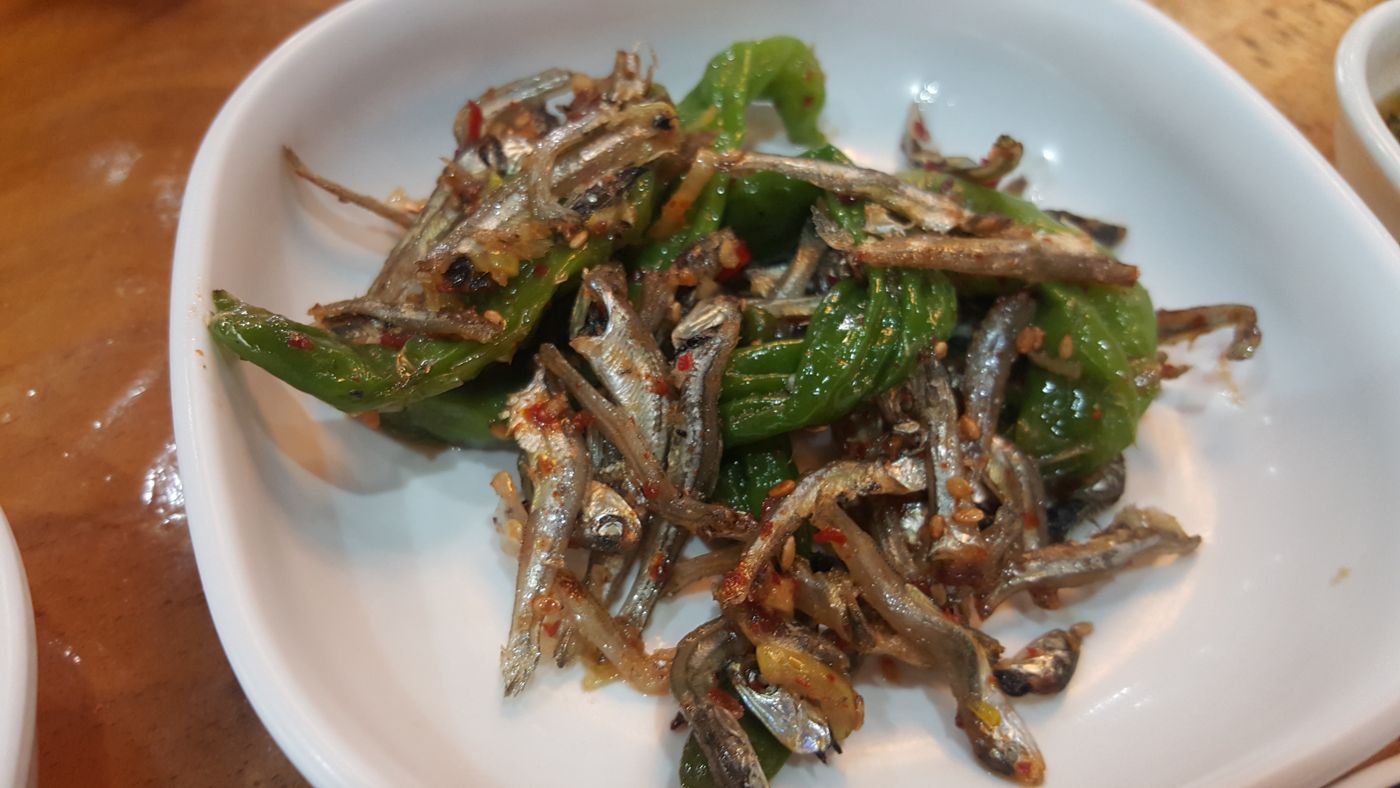 Kkwarigochu Myeolchi Bokkeum (Shishito Peppers with Anchovies)꽈리고추멸치볶음Small dried anchovies and wrinkled shishito-type peppers glazed in soy sauce and rice syrup — a sweet, salty, gently grassy lunchbox staple.
- Kongbiji Jjigae (Okara Stew)콩비지찌개Soybean pulp left from tofu-making — or freshly ground soaked soybeans — simmered thick with pork and sour kimchi and seasoned with salted shrimp; a nutty, homely winter stew.
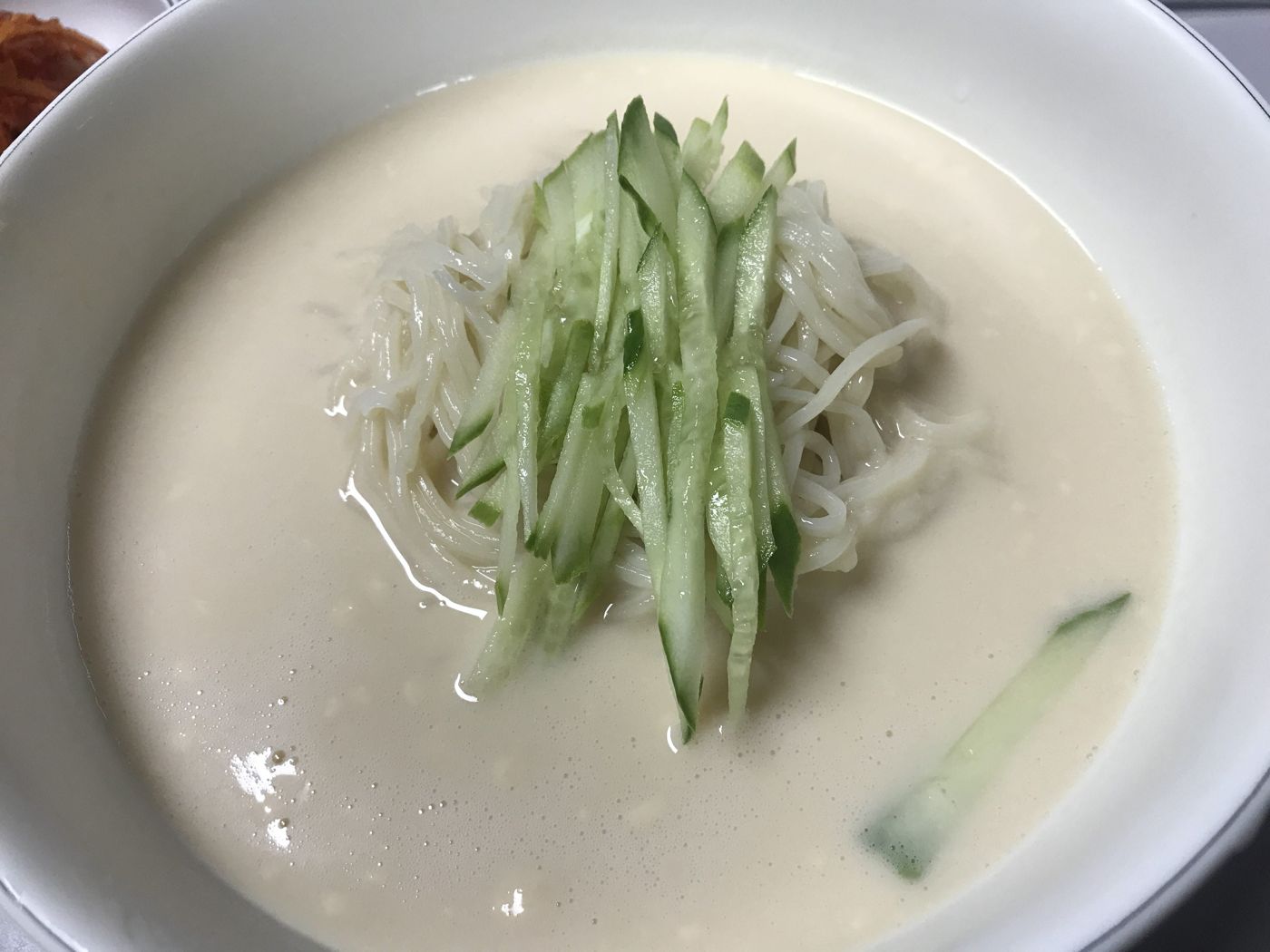 Kongguksu (Cold Soybean-Milk Noodles)콩국수Thin wheat noodles in a chilled, nutty broth of freshly ground soybeans, topped with cucumber — a protein-rich summer noodle traditionally eaten with yeolmu kimchi.
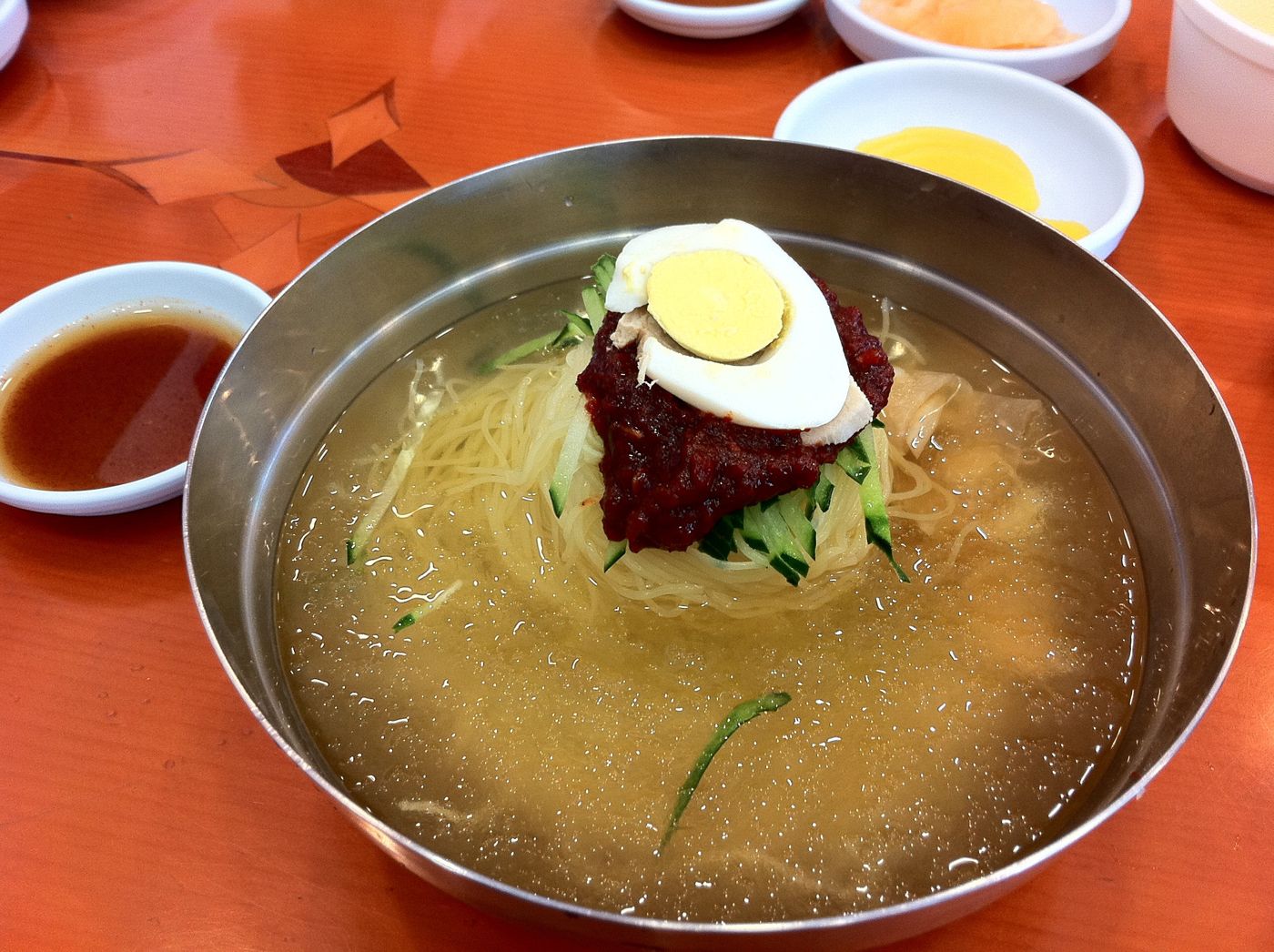 Milmyeon (Busan Wheat Cold Noodles)밀면Chewy wheat-and-starch noodles in an icy, sweet-sour beef broth or tossed in chili paste — Busan's refugee-era answer to northern naengmyeon.
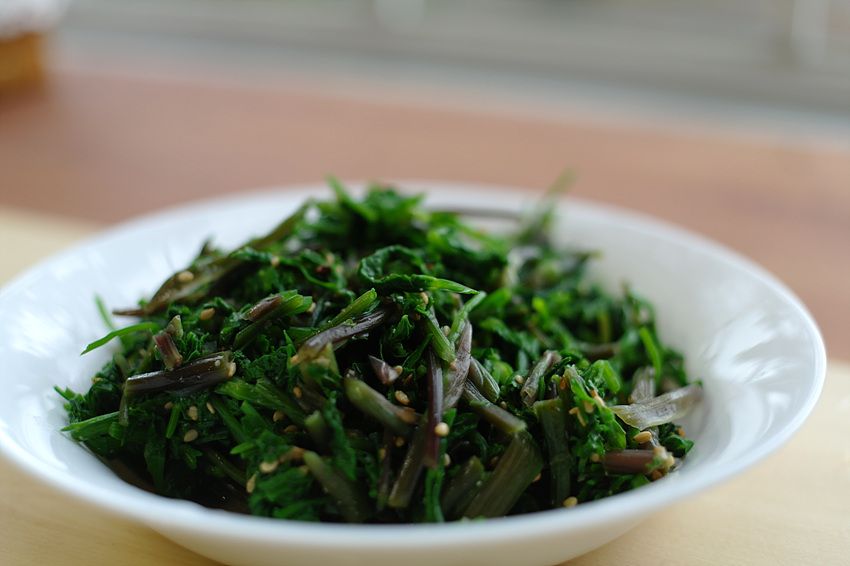 Minari Muchim미나리무침Korean water dropwort blanched for a few seconds and dressed with tangy gochujang and vinegar — fresh, herbal and very much a taste of spring.
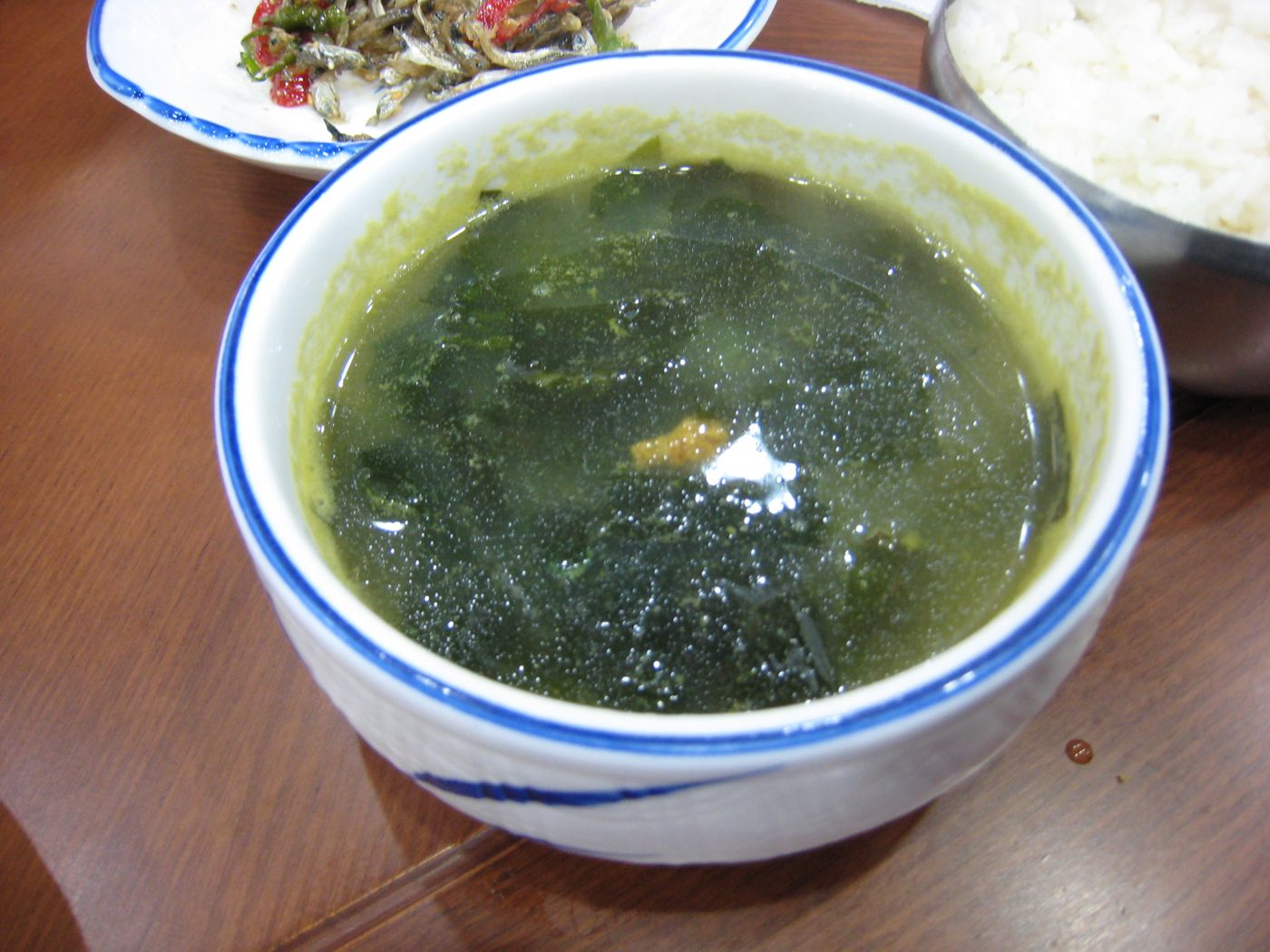 Miyeok Guk (Seaweed Soup)미역국A mild soup of sea mustard and beef seasoned with soup soy sauce and sesame oil — the first meal after childbirth and the soup of every Korean birthday.
- Miyeok Muchim미역무침Rehydrated wakame seaweed and cucumber in a light sweet-and-sour soy dressing — cool, slippery and refreshing, especially in summer.
- Mu Guk (Beef and Radish Soup)뭇국Thin squares of Korean radish and beef stir-fried in sesame oil, then simmered into a clear, gently sweet broth seasoned with soup soy sauce — a year-round everyday guk.
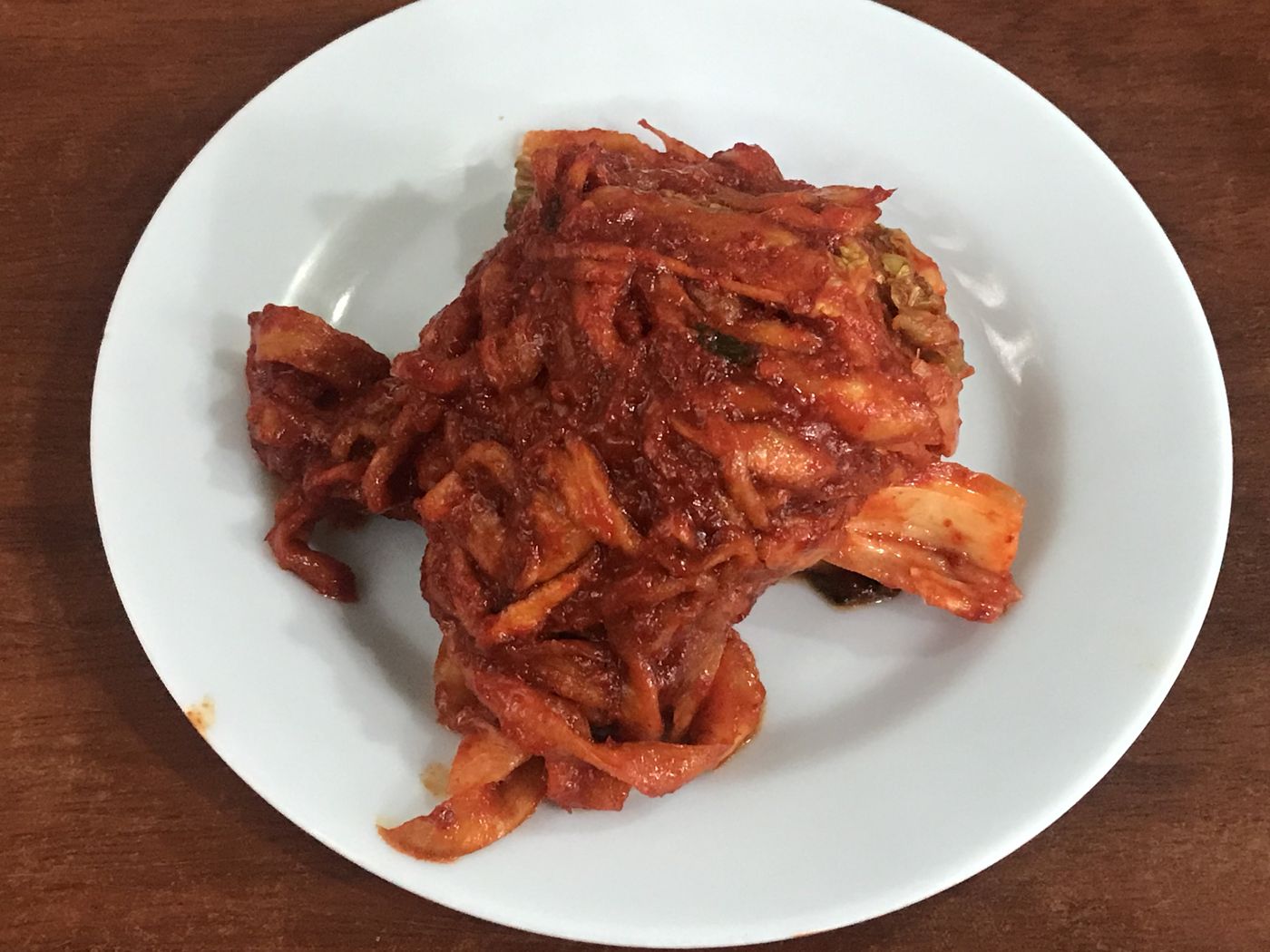 Mu Mallaengi Muchim무말랭이무침Sun-dried radish strips soaked until springy and tossed in a sweet, spicy chili dressing — crunchy, chewy and a long-keeping winter staple.
 Myeolchi Bokkeum멸치볶음Small dried anchovies stir-fried until crisp, then glazed in a sweet soy and garlic syrup — a keeping banchan found in refrigerators across Korea.
 Napa Cabbage Kimchi배추김치Salted napa cabbage layered with a red paste of chili, garlic, ginger and fermented seafood, then left to ripen: the kimchi most people picture first.
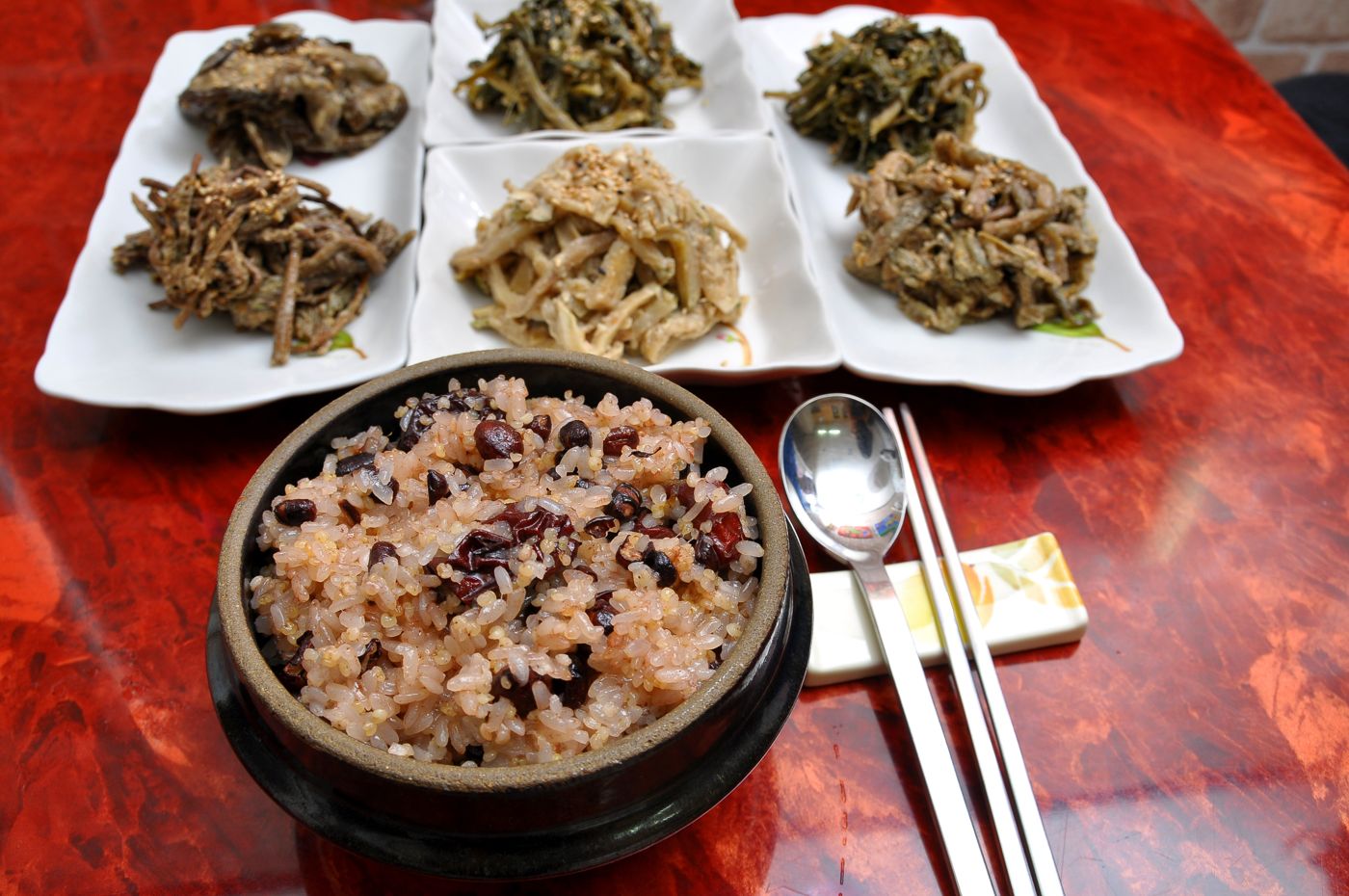 Ogokbap (Five-Grain Rice)오곡밥Glutinous rice cooked with sorghum, millet, red beans and black soybeans for Daeboreum, the first full moon of the lunar year, and shared among neighbors for a good harvest.
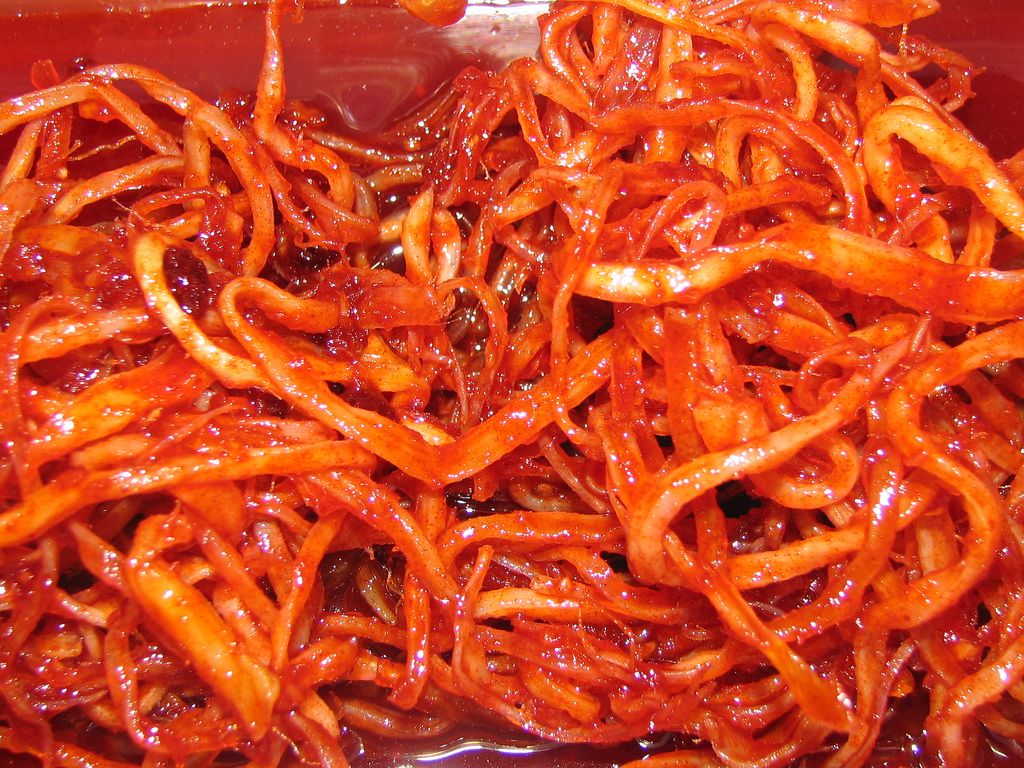 Ojingeochae Muchim오징어채무침Chewy shredded dried squid tossed raw in a glossy gochujang and syrup sauce — sweet, spicy and savory, and one of the best-keeping banchan.
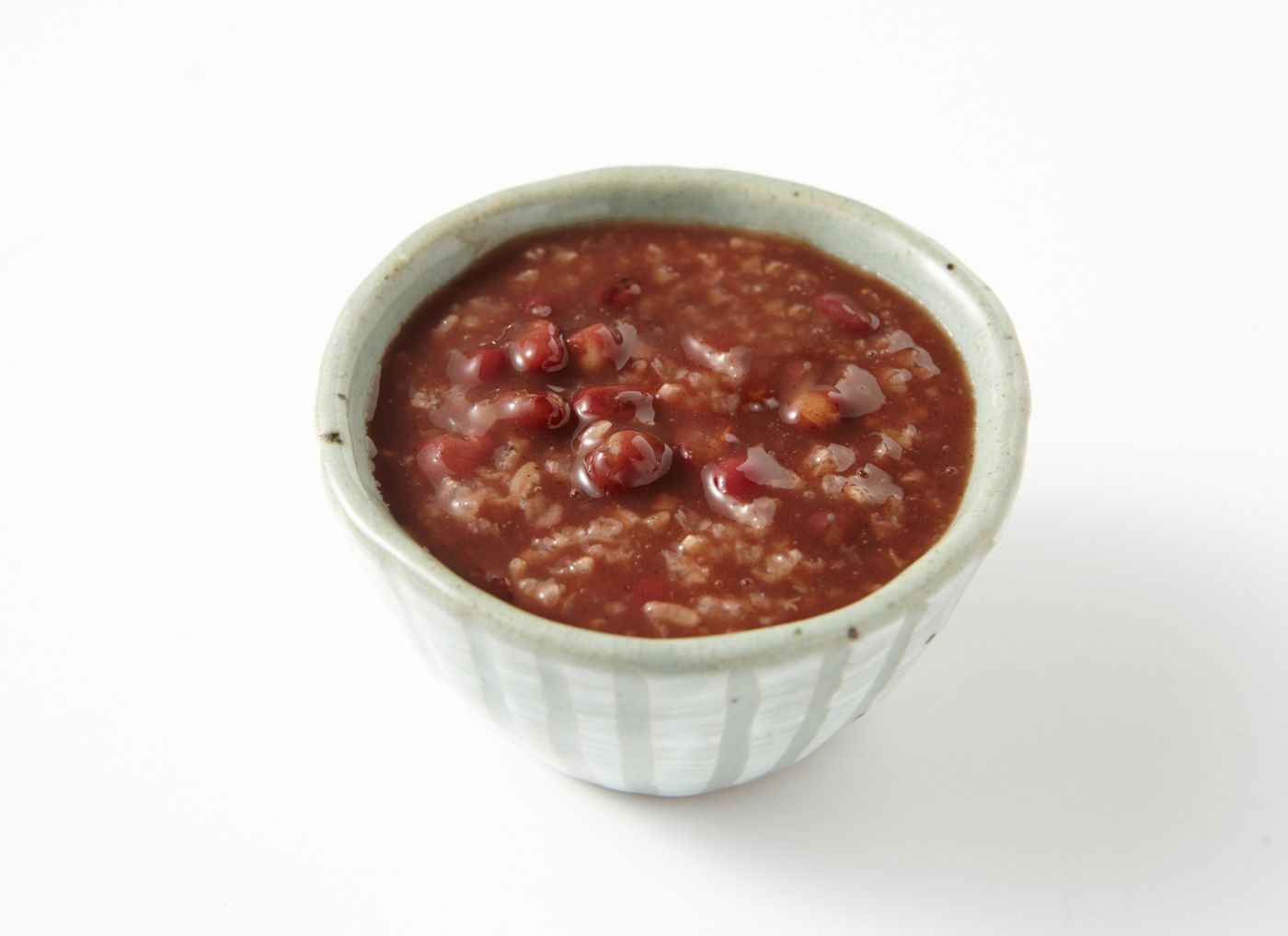 Patjuk (Red Bean Porridge)팥죽Porridge of puréed red adzuki beans and rice with chewy glutinous rice balls, eaten at the winter solstice to ward off misfortune and shared with neighbors.
- Perilla Leaf Kimchi깻잎김치Stacks of perilla leaves layered with a soy, fish-sauce and chili seasoning — fragrant, slightly bitter summer kimchi peeled off one leaf at a time over rice.
- Saengtae Jjigae (Fresh Pollock Stew)생태찌개Chunks of fresh, never-frozen pollock simmered with radish, tofu and a red chili broth, finished with water dropwort and crown daisy — a winter stew prized for its clean, bracing taste.
- Salted Anchovies멸치젓Whole anchovies packed in heavy salt and aged for months — the south coast's kimchi jeotgal, also boned, dressed with chili and eaten with rice or in ssam.
- Salted Clams조개젓Small shucked clams salted in their own boiled juices for a few weeks, then dressed with chili and green onion — an early-summer rice companion.
- Salted Radish Pickle짠지Whole radishes packed in heavy salt over winter and opened in spring — soaked, sliced thin and served in vinegared cold water or dressed with chili.
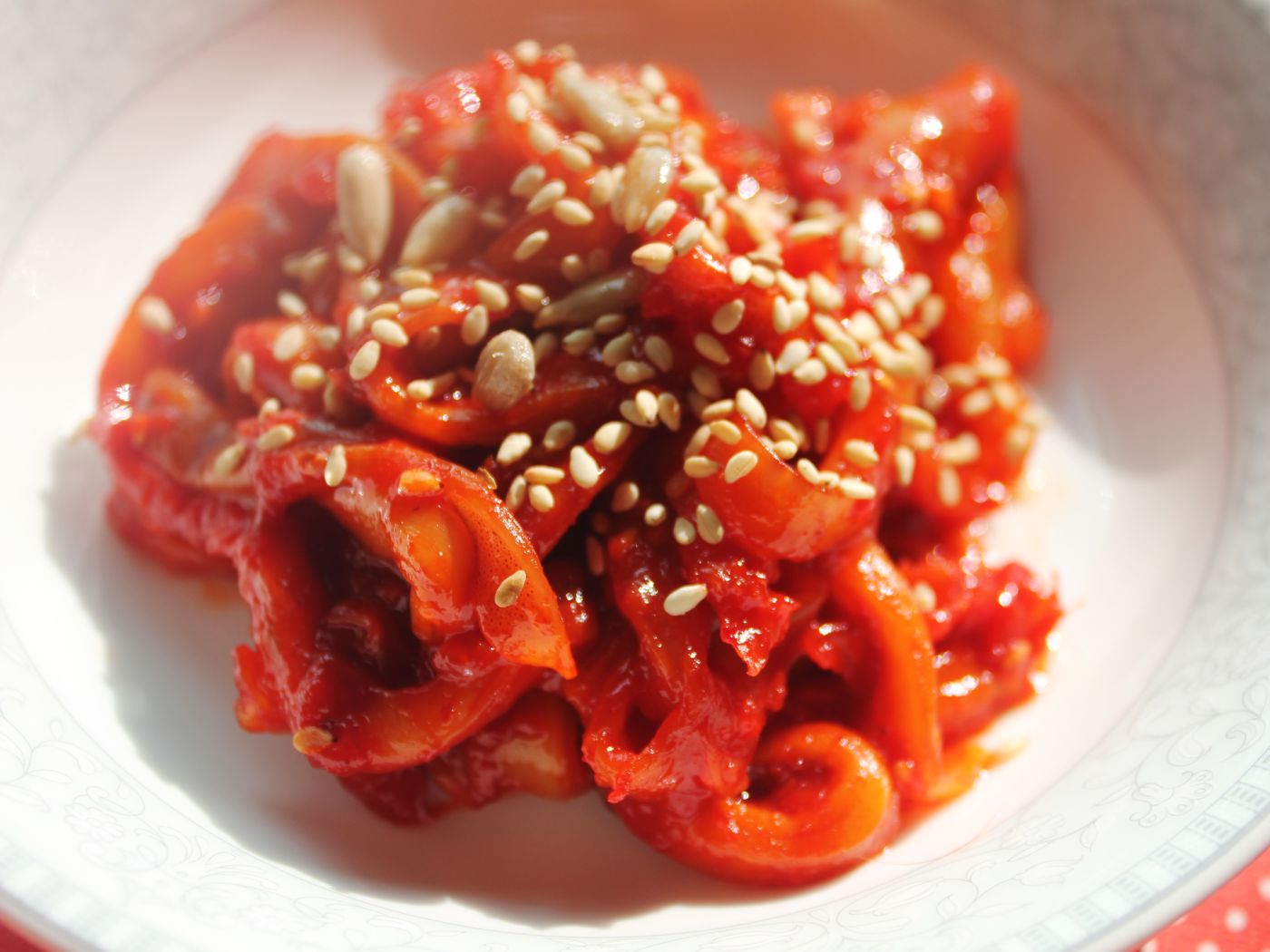 Salted Squid오징어젓Squid cured in salt, then sliced and tossed with chili, garlic and a touch of syrup — chewy, sweet-savory jeotgal from the East Sea coast.
 Sigeumchi Namul시금치나물Spinach blanched for a few seconds, squeezed dry and dressed with garlic, soy sauce and sesame — one of the simplest and most familiar namul.
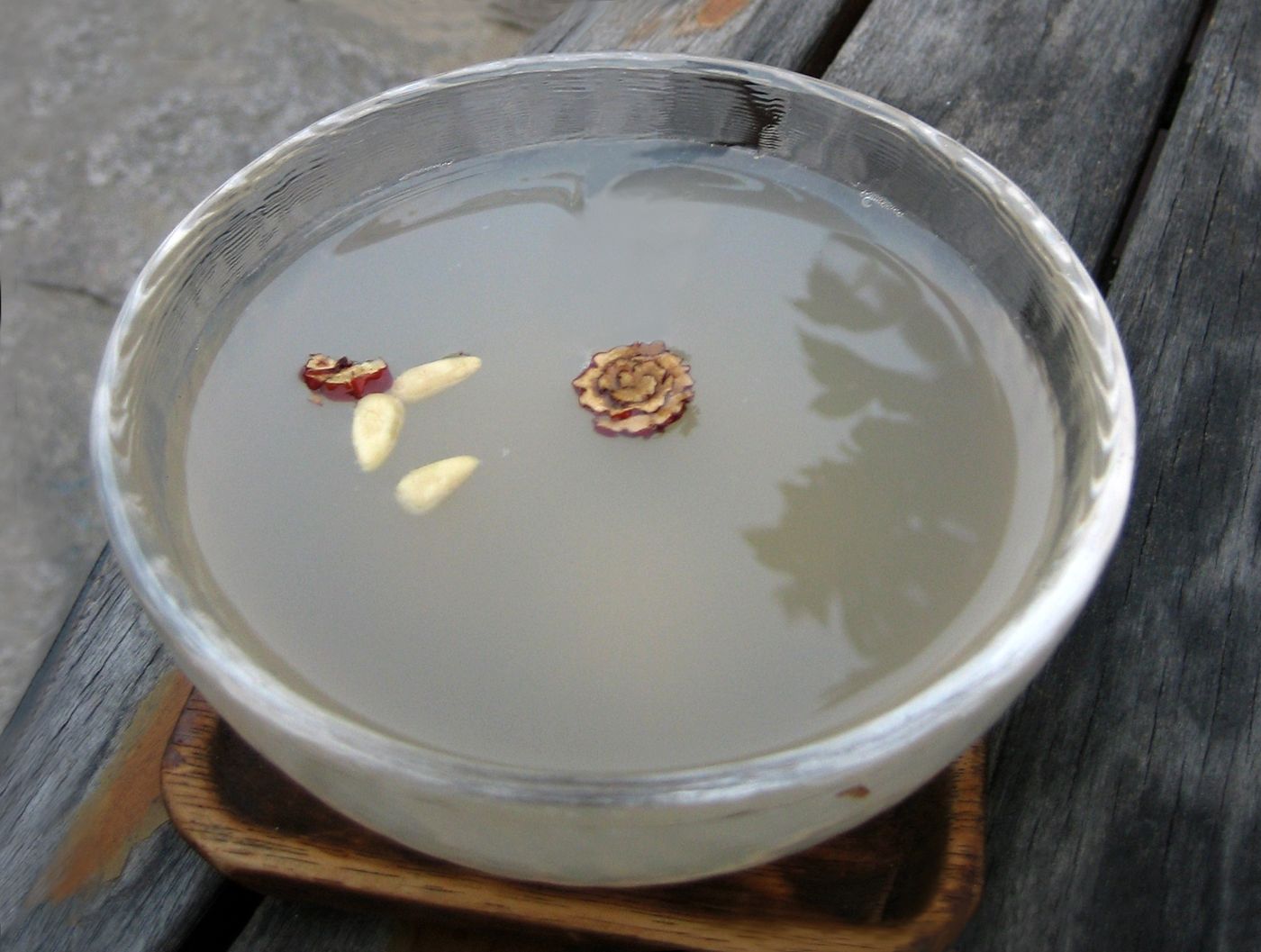 Sikhye (Sweet Malted Rice Drink)식혜Cooked rice steeped in barley-malt water until it sweetens and the grains float, then chilled — the traditional after-feast drink of Korean holidays.
- Siraegi Namul시래기나물Dried radish greens soaked, simmered until tender and seasoned with doenjang and perilla or sesame oil — a deep, earthy winter namul.
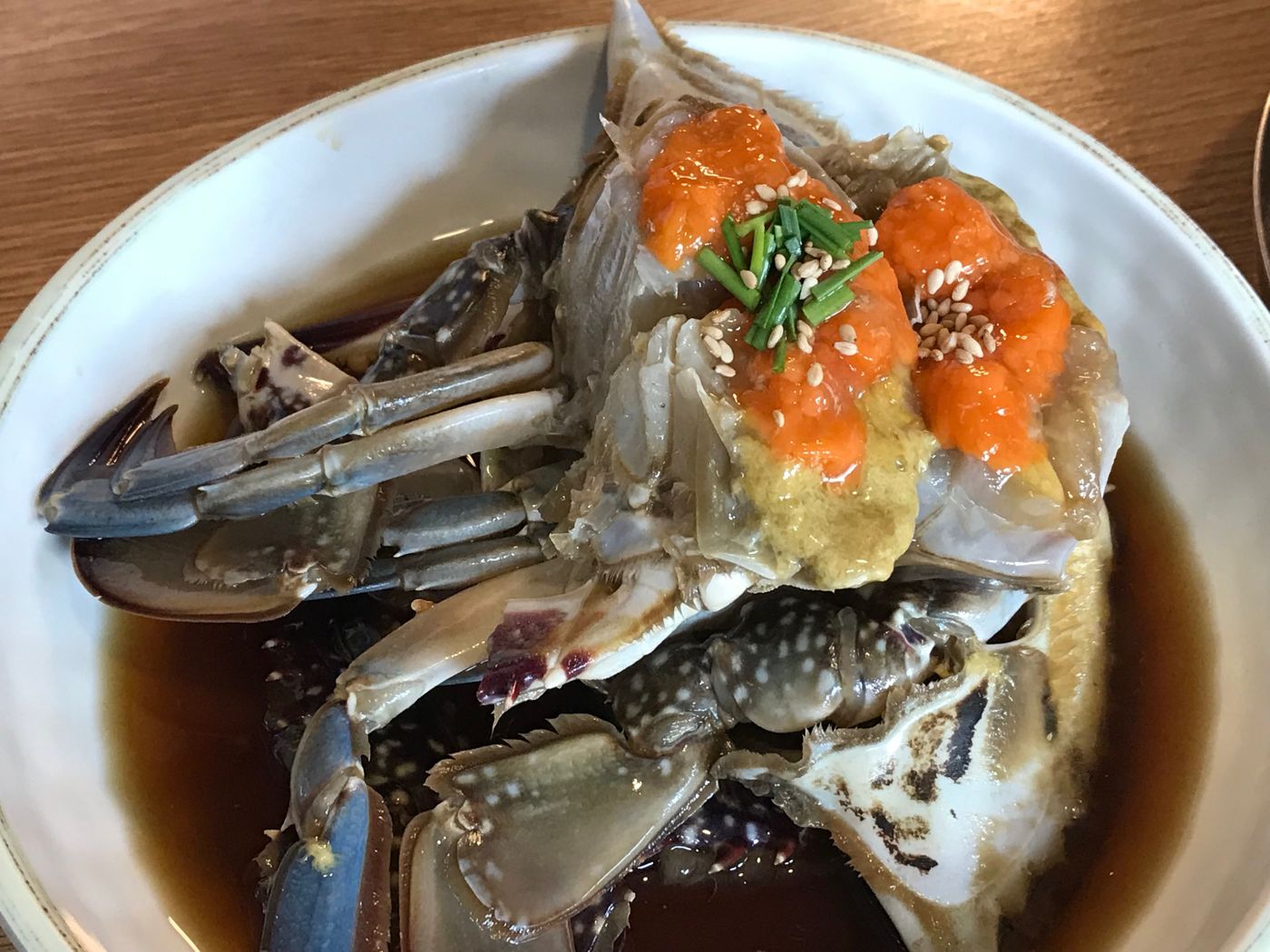 Soy-Marinated Raw Crab간장게장Raw crabs steeped in a boiled-and-cooled soy marinade until silky and savory — a centuries-old preserve, eaten by spooning rice into the shell.
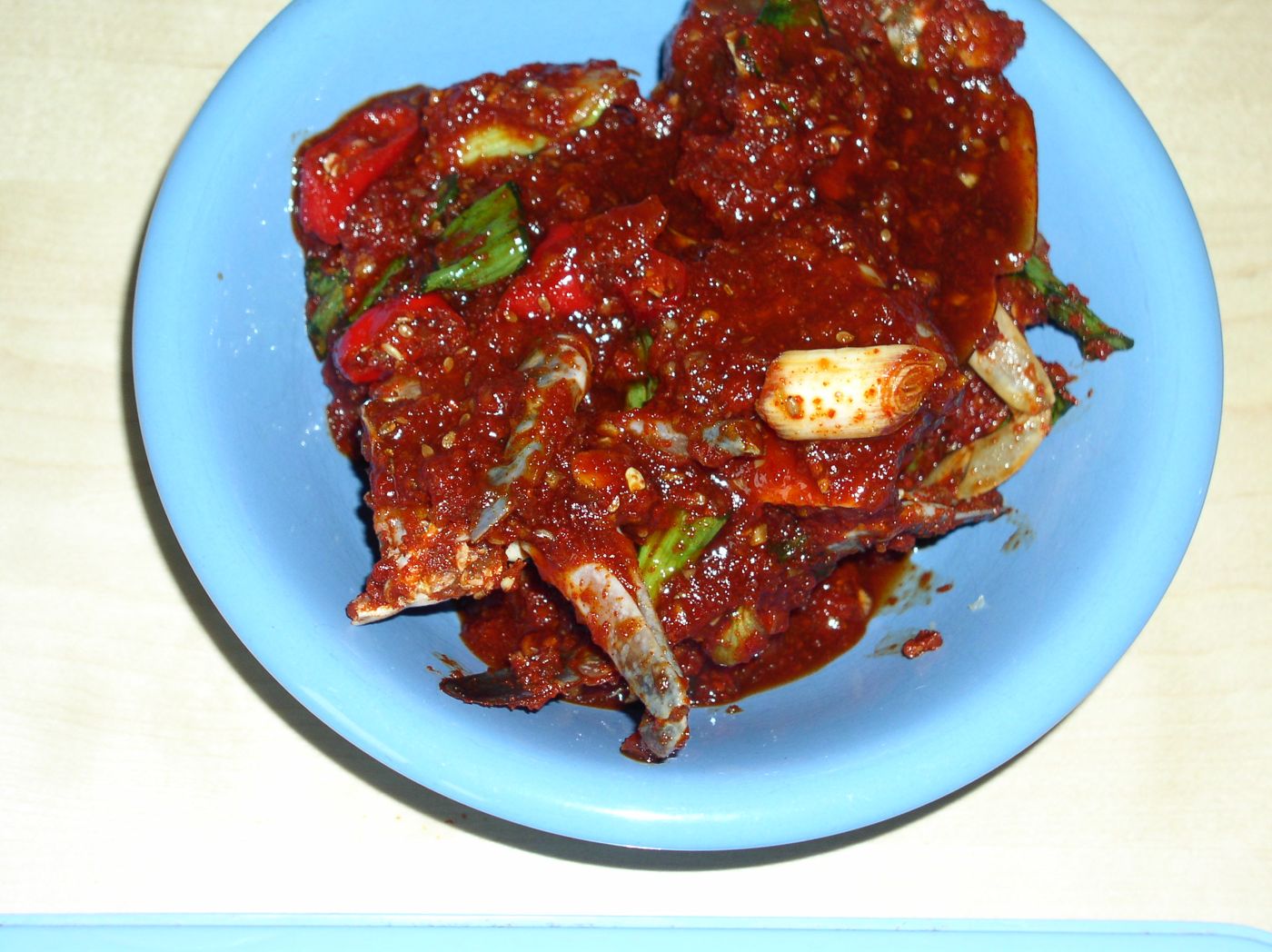 Spicy Marinated Raw Crab양념게장Raw crab pieces tossed in a glossy chili, garlic and soy dressing and eaten within days — sweet, fiery and a specialty of Yeosu's gejang restaurants.
- Toran Guk (Taro Soup)토란국Parboiled taro simmered in a clear beef-and-kelp broth seasoned with soup soy sauce — a soft, gently slippery soup made for the Chuseok harvest table.
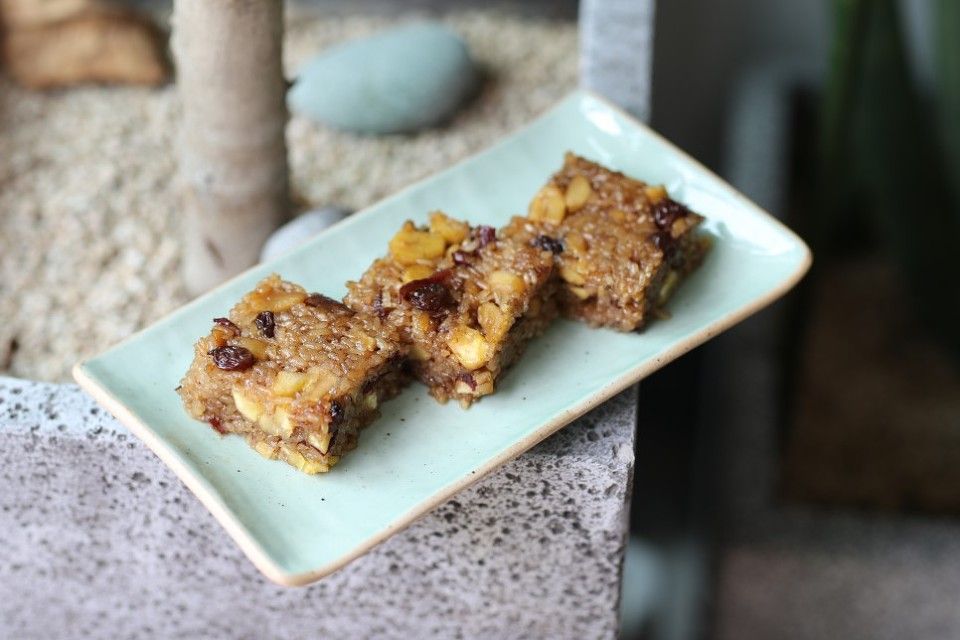 Yaksik (Sweet Rice with Chestnuts, Jujubes and Pine Nuts)약식Steamed glutinous rice darkened with soy sauce, brown sugar and honey and studded with chestnuts, jujubes and pine nuts — a full-moon festival food also called yakbap.
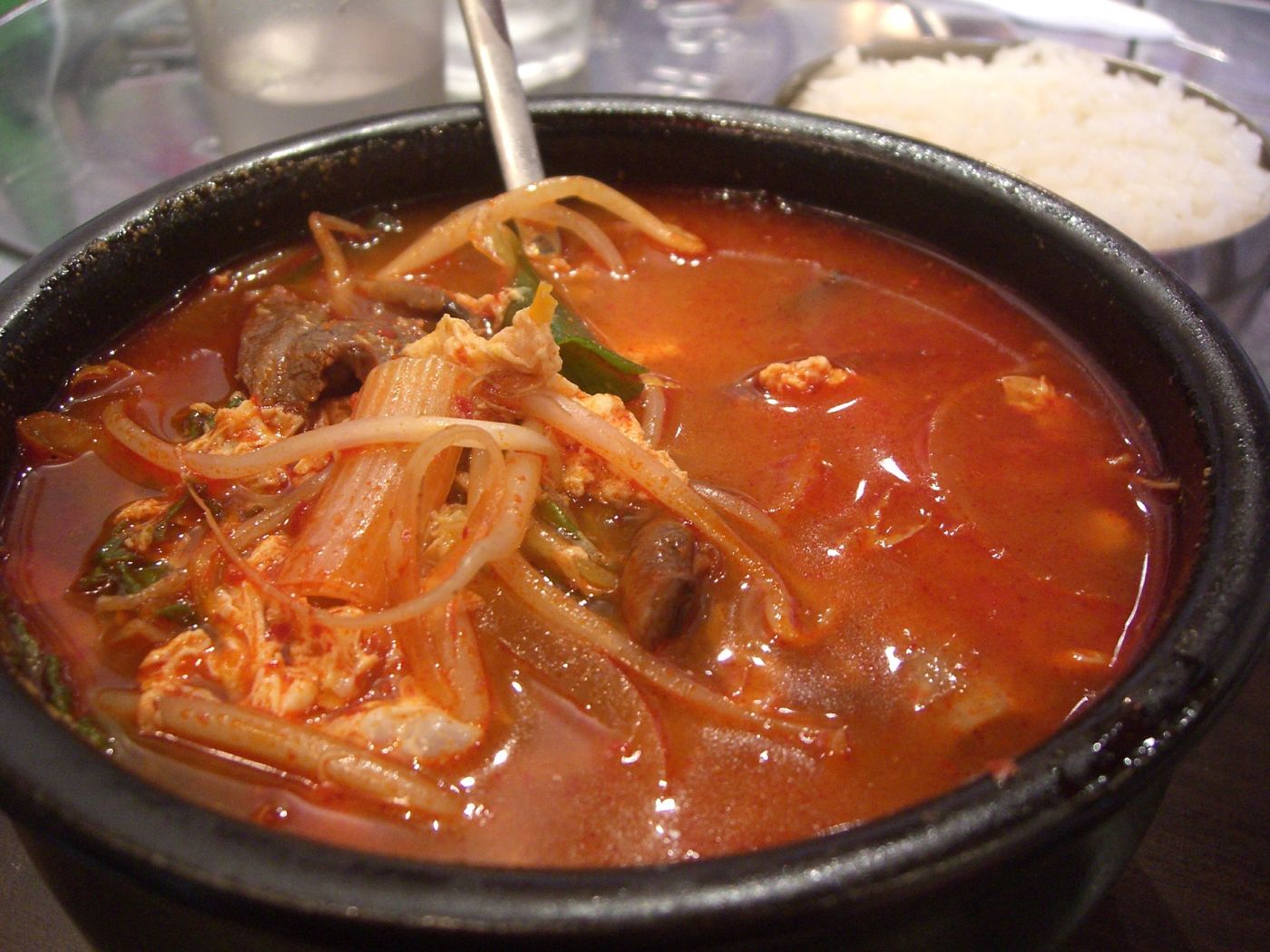 Yukgaejang (Spicy Beef Soup)육개장Shredded beef simmered with bracken, bean sprouts and plenty of green onion in a red, chili-spiked broth — a fiery summer restorative and a gathering-day soup.
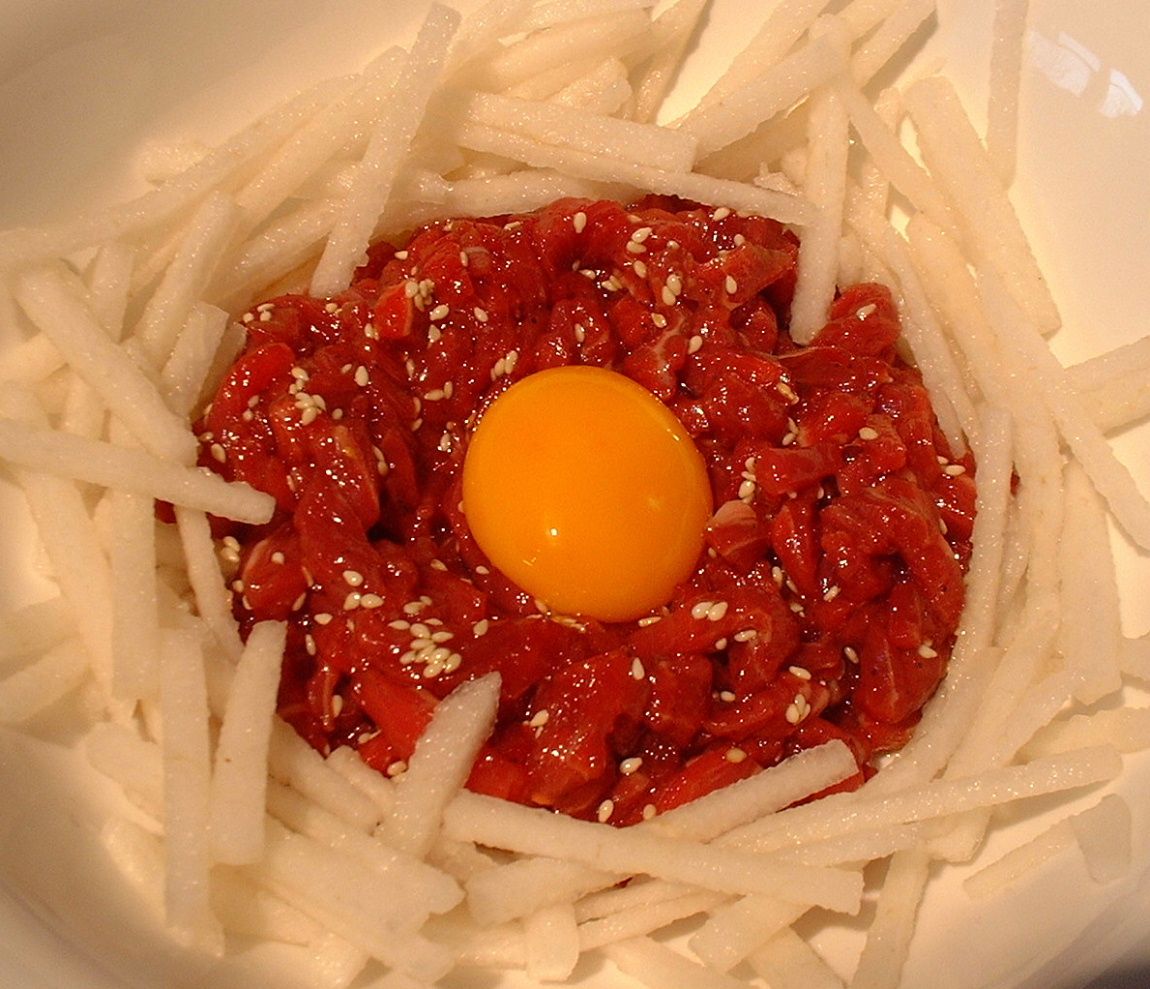 Yukhoe (Korean Seasoned Raw Beef)육회Thinly cut raw lean beef dressed with soy, sesame oil and garlic, served over Korean pear with an egg yolk. A festive, long-standing dish that needs the freshest meat and careful handling.
- Yukjeon (Beef Jeon)육전Thin slices of lean beef, lightly marinated, dipped in flour and egg and pan-fried — an ancestral-rite jeon that Gwangju has made into a specialty.