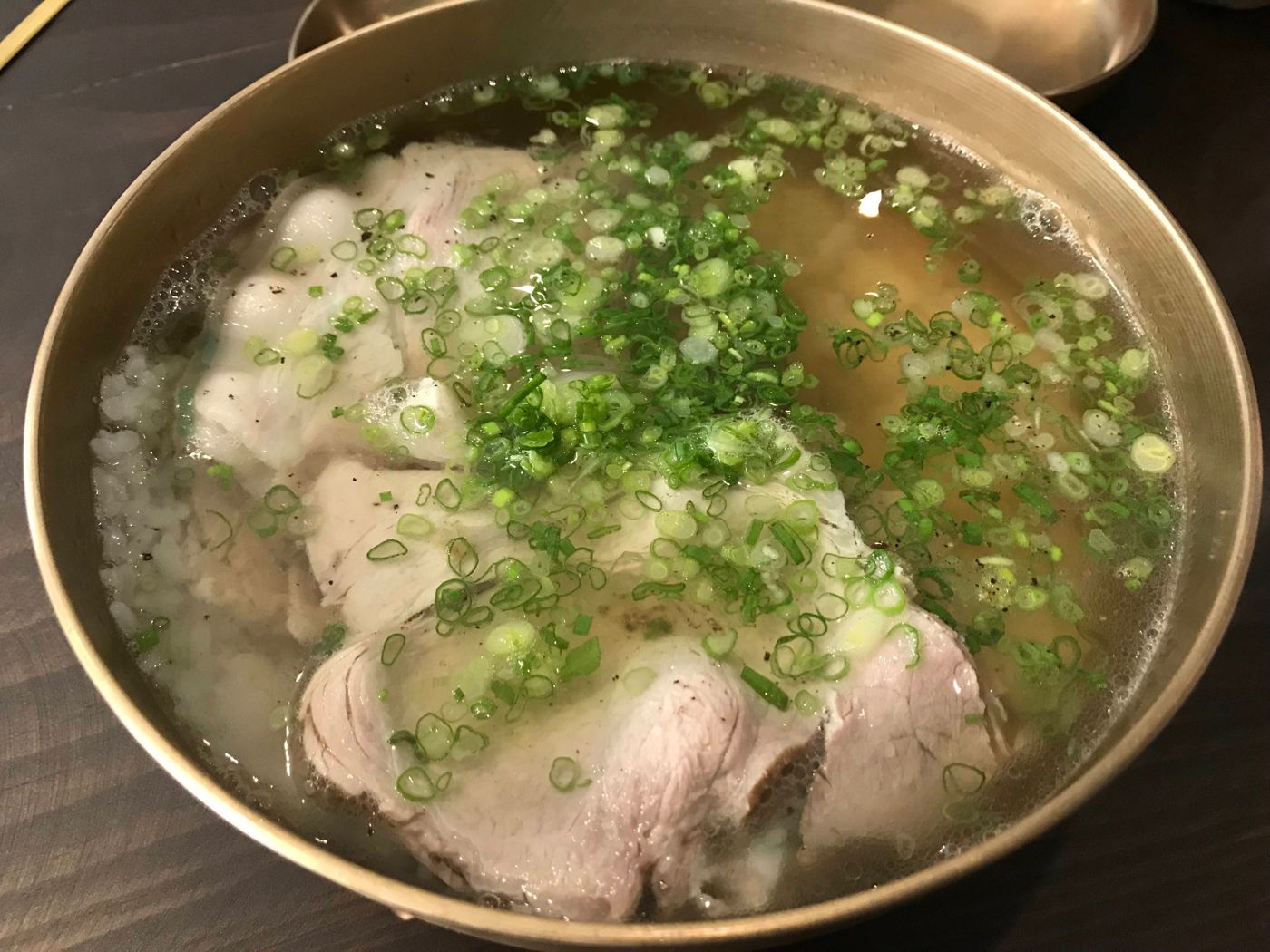
 Photo: lazy fri13th, CC BY 2.0, via Wikimedia Commons
Guk & Tang · Soups 국·탕
Gomtang (Beef Bone and Brisket Soup)
곰탕
Romanization: gomtang
A long-simmered beef soup, usually built on brisket, shank and offal and served over rice, with a broth that is lightly salted at the table. A pillar of the Korean gukbap tradition.
- Serves
- 6
- Prep
- 60 min
- Cook
- 240 min
RegionNaju · Gyeongsang · Seoul & Gyeonggi
Jump to recipeRecipe
Ingredients · Serves 6
- 700 gBeef brisket (yangji)
- 500 gBeef shank (satae)
- 1 kgBeef leg or knuckle bonesoptional, for a richer, whiter broth
- 300 gKorean radishone chunk
- 1 largeOnionhalved
- 8 clovesGarlic
- 3 stalksGreen onion1 for the pot, 2 chopped for serving
- 5 lWater
- to taste, at the tableSea salt
- to tasteGround black pepper
- 6 bowlsCooked short-grain rice
Method
Technique: Making Yuksu: Anchovy-Kelp Stock, Making Guk and Jjigae
Step 1: Soak the meat, and the bones if using, in cold water for an hour, changing the water once, to draw out blood. Blanch the bones for 10 minutes in boiling water, drain and rinse.
Step 2: Put the bones on the bottom of a large pot, lay the meat on top, add the 5 liters of water and bring to a boil. Skim thoroughly, then reduce to a gentle simmer for about an hour.
Step 3: Add the radish, onion, garlic and the whole green onion. Simmer another 1½ hours until the brisket and shank are tender when pierced; lift them out with the radish. Keep simmering the bones, if using, topping up the water, for another 1–2 hours.
Step 4: Strain the broth. Chill it if you can and lift off the solid fat. Slice the meat thinly against the grain and cut the radish into squares.
Step 5: Reheat the broth. Put warm rice into each bowl, add meat and radish, ladle in the boiling broth and finish with green onion and pepper. Season only lightly in the pot and let each diner add salt at the table.
Origin & History
The name comes from the verb goda, to boil meat or bones down until they give up their essence. The noun form is goeum or gom, and the soup was called goeum-guk or gomguk before gomtang became the common word. Two entries in the Encyclopedia of Korean Folk Culture trace this lineage. The 1795 royal procession record Wonhaeng eulmyo jeongni uigwe describes goeum broths of tripe, abalone, mussels or old hen served beside thin rice gruels for Lady Hyegyeong, King Jeongjo's mother. The late-nineteenth-century cookbook Siuijeonseo lists leg bones, shank, knuckle, tail, tripe, abalone and sea cucumber simmered together with plenty of water in a large cauldron to make a thick, white soup.
By the end of the 1800s, the entry says, gomtang had come to mean gomguk served over rice in restaurants, and eateries specializing in rice in soup were called gukbap houses. The usual raw material was ox head, offal and bones. A 1909 illustration, Joseon manhwa, shows an ox head on display outside such a shop. In English, the Korea Tourism Organization considers "beef bone soup" the correct translation, and a Korea Times report on English-menu errors judged the common label "oxtail soup" not entirely wrong, since tail bones are often used, but inaccurate for the dish in general.
Sources disagree about where gomtang ends and seolleongtang begins. A Michelin Guide feature describes gomtang as cooked from lean cuts such as brisket (yangji) and shank (satae) without bones, in contrast to the bone-built, milky seolleongtang. A folk-encyclopedia entry on the dish says it is made mostly from lean meat and offal but that leg, knuckle and tail bones are often added. The Michelin piece also notes that gomtang appears in Joseon-era cookbooks as a noble dish served at the royal table, and that it spread nationwide after the Korean War.
Key Ingredients
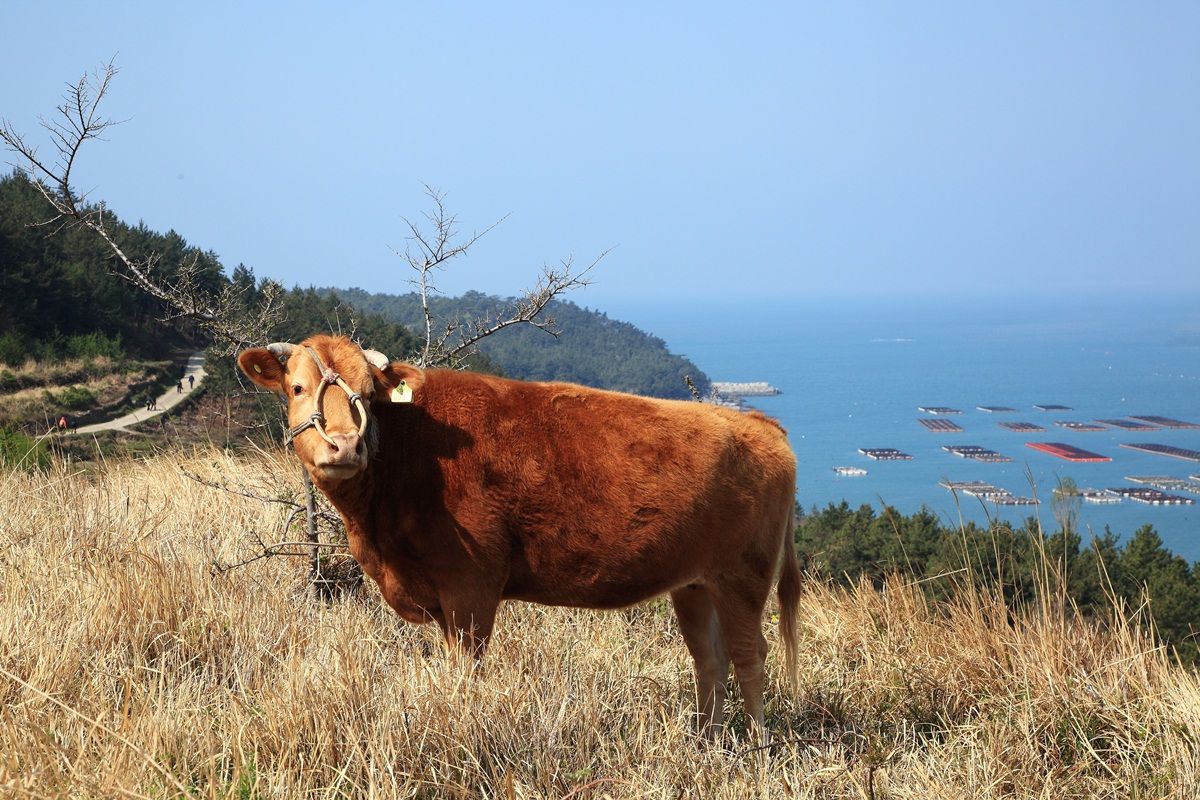 Hanu (Korean native beef)한우Beef from Korea's native cattle, most of them a warm yellow-brown, prized for rich marbling and a deep, beefy flavor. Hanu is the premium beef for grilling, braised galbi-jjim, holiday gift sets and ancestral-rite dishes.
 Korean radish무A stout, heavy white radish, often tinged pale green near the top. It is cubed for kkakdugi, left whole in the clear brine of dongchimi, shredded into salads and simmered into broths.
 Garlic마늘Used raw, minced, pickled and roasted, garlic is one of the essential aromatics of Korean food — in seasonings, marinades, kimchi and namul.
 Green onion파Korean green onion (pa), from thick-stemmed daepa to slender scallions — chopped into nearly every seasoning sauce, soup and kimchi, and the star of pa-kimchi.
 Yangpa (onion)양파The bulb onion, literally the "Western scallion." A latecomer to Korea, it is now everywhere: sweetening stir-fries and braises, pickled in soy sauce as yangpa-jangajji, and served raw beside grilled meat.
 Rice쌀Short, round grains of japonica rice that cook up glossy, soft and gently clinging. Steamed white rice, bap, is the center of the Korean table: every banchan, soup and stew is planned to be eaten with it.
Nutrition
| Calories | ~144 kcal |
|---|---|
| Protein | ~20.6 g |
| Fat | ~6.7 g |
| Carbohydrates | ~0.7 g |
| Fiber | Not reported |
| Sodium | ~744 mg |
Notable forProtein · Selenium · Zinc · Vitamin B12
From the Korean Ministry of Food and Drug Safety's analysis of home-style gomtang (per 100 g: 24 kcal, 3.43 g protein, 1.12 g fat, 0.11 g carbohydrate, 124 mg sodium, 0.43 mg zinc, 8.22 µg selenium, 0.31 µg vitamin B12), multiplied to the database's 600 g serving; your pot will differ with the cuts and how much fat is skimmed. The database reports 1.1 g of fiber per 100 g, which is implausible for a meat broth, so fiber is shown as not reported. A bowl of cooked rice adds roughly 300 kcal. Actual values vary with ingredients, portion size and preparation.
Health Benefits
- Protein, zinc and B12: by the MFDS analysis a 600 g bowl provides about 21 g of protein, plus selenium, zinc and vitamin B12 from the beef.
- Modest calories before rice: the analyzed bowl has about 145 kcal without rice, so the dish can anchor a balanced meal; see the balanced Korean meal.
- Traditional reputation: the folk encyclopedia describes gomtang as a restorative (boyang) food, eaten for energy in winter and to get through hot summer nights. That is cultural belief rather than a clinical claim.
Regional Variations
- Naju (South Jeolla): a clear, light broth built mainly on beef; see Naju gomtang.
- Hyeonpung (Daegu) and Masan: the Michelin feature describes these as milky, richer styles that add bones, including oxtail and shank bones, to the pot.
- Seoul and the capital region: older Seoul soups, per the folk encyclopedia, drew on ox head, bones, hide and feet; the modern milky version overlaps with seolleongtang.
- Spin-offs: the folk encyclopedia notes that sagol-gomtang (leg bone), kkori-gomtang (oxtail) and yang-gomtang (first stomach) derive from the same idea of adding particular cuts.
- Cuts used: lean cuts are mainly brisket and shank; offal can include first stomach (yang), small intestine (gopchang), lung and gonjasoni, a fatty part near the end of the intestine.
Pairings
 Cubed Radish Kimchi깍두기Korean radish cut into neat cubes and tossed with chili, garlic and salted shrimp — crunchy, juicy and a classic partner to rich soups.
 Napa Cabbage Kimchi배추김치Salted napa cabbage layered with a red paste of chili, garlic, ginger and fermented seafood, then left to ripen: the kimchi most people picture first.
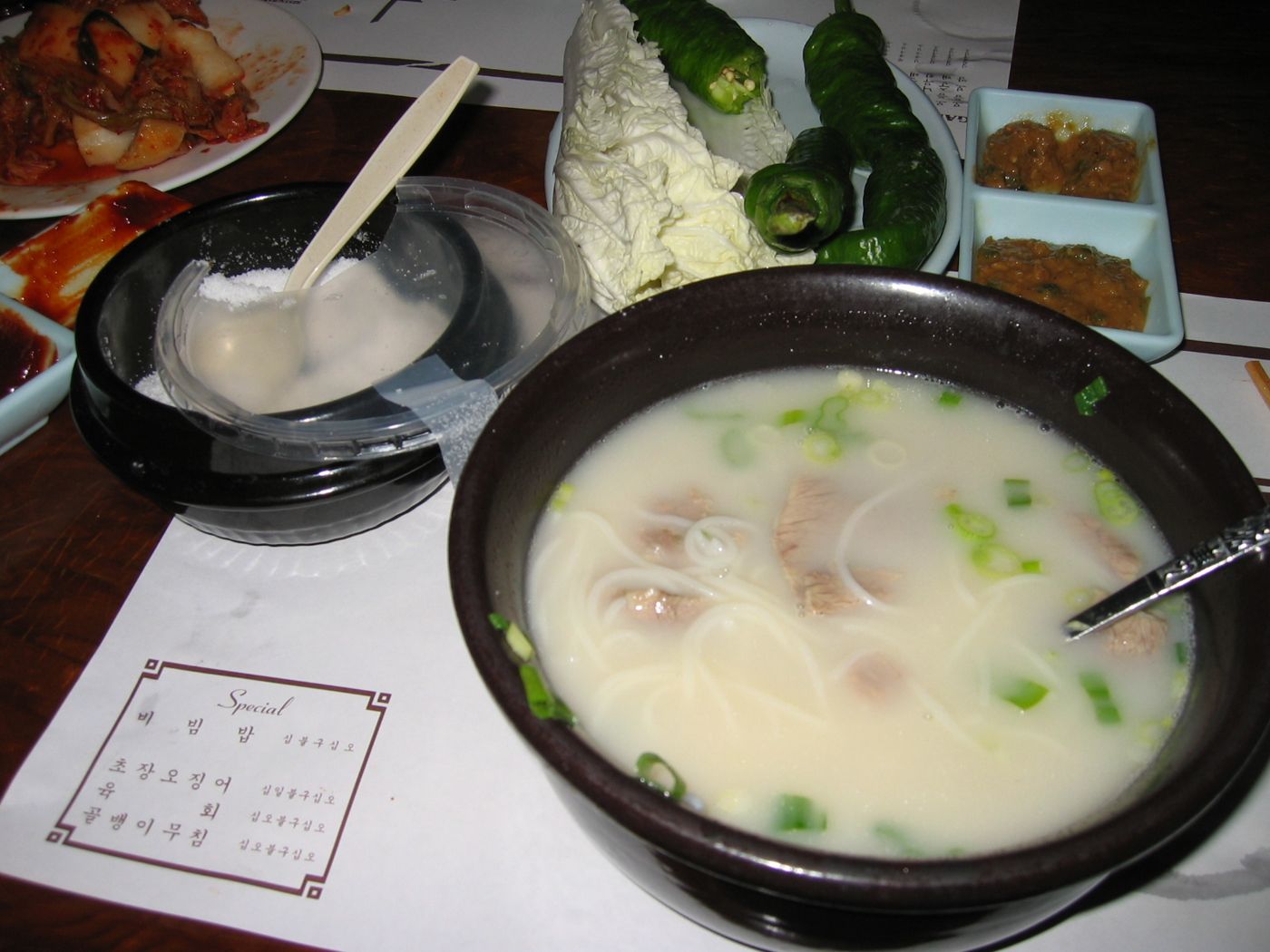 Seolleongtang (Ox Bone Soup)설렁탕Ox bones and beef simmered for hours into a milky-white broth, served unsalted over rice with sliced meat — each diner seasons it at the table.
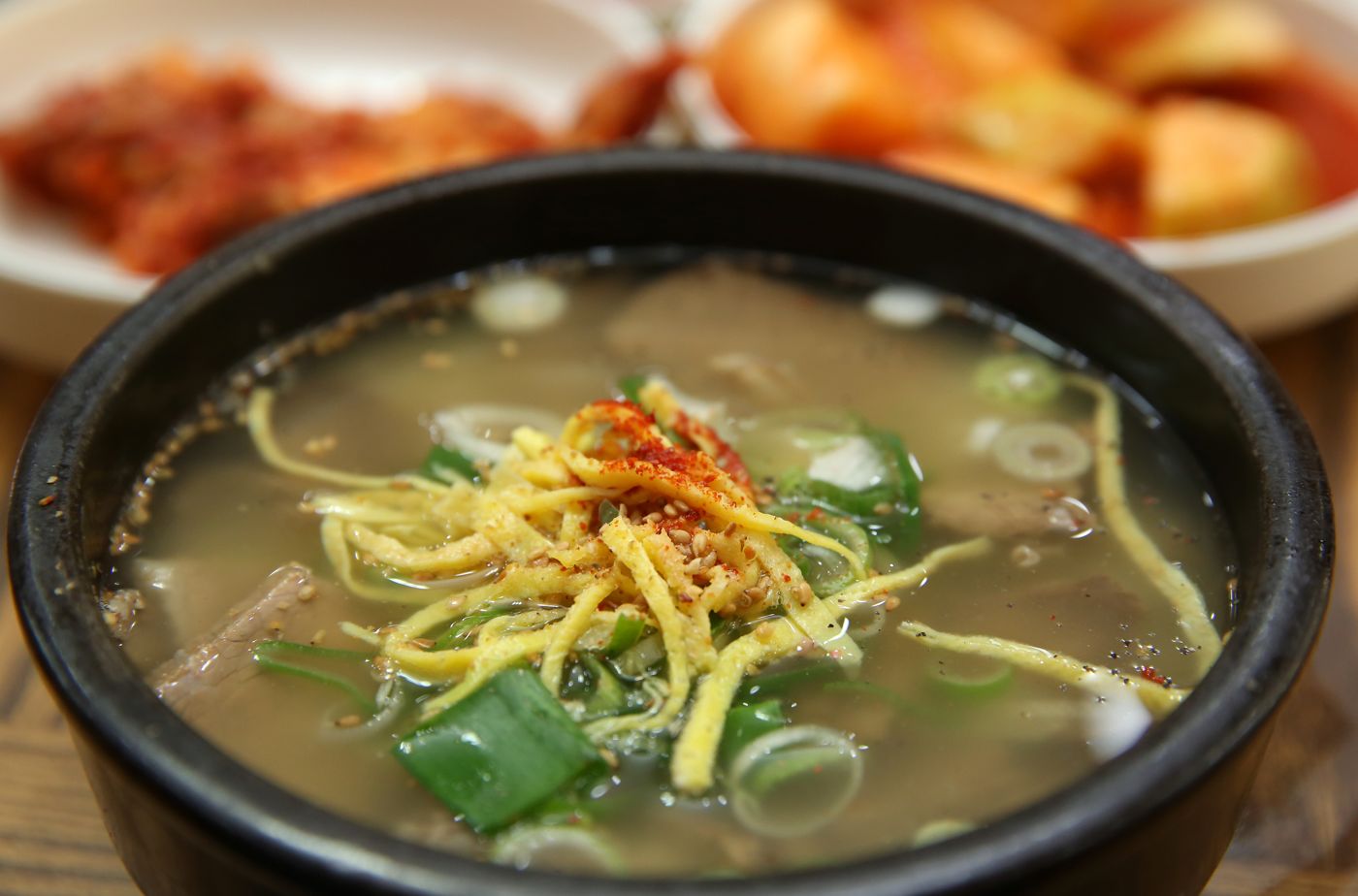 Naju Gomtang (Naju Clear Beef Soup)나주곰탕Brisket, shank and other beef cuts simmered into a clear, gently rich broth, poured over rice and topped with green onion — the market-day soup of Naju in South Jeolla.
Sources
- 01곰탕 (Gomtang) — Encyclopedia of Korean Folk Culture (한국민속대백과사전)
- 02곰탕 (Gomtang), Korean food cultural dictionary entry — Encyclopedia of Korean Folk Culture (한국민속대백과사전)
- 03한국의 솔 푸드, 곰탕 vs 설렁탕 — MICHELIN Guide Korea
- 04Korea to fix mistranslations on English menu — The Korea Times
- 05곰탕 (home-style, analyzed) — MFDS K-FIND food composition database
Last updated