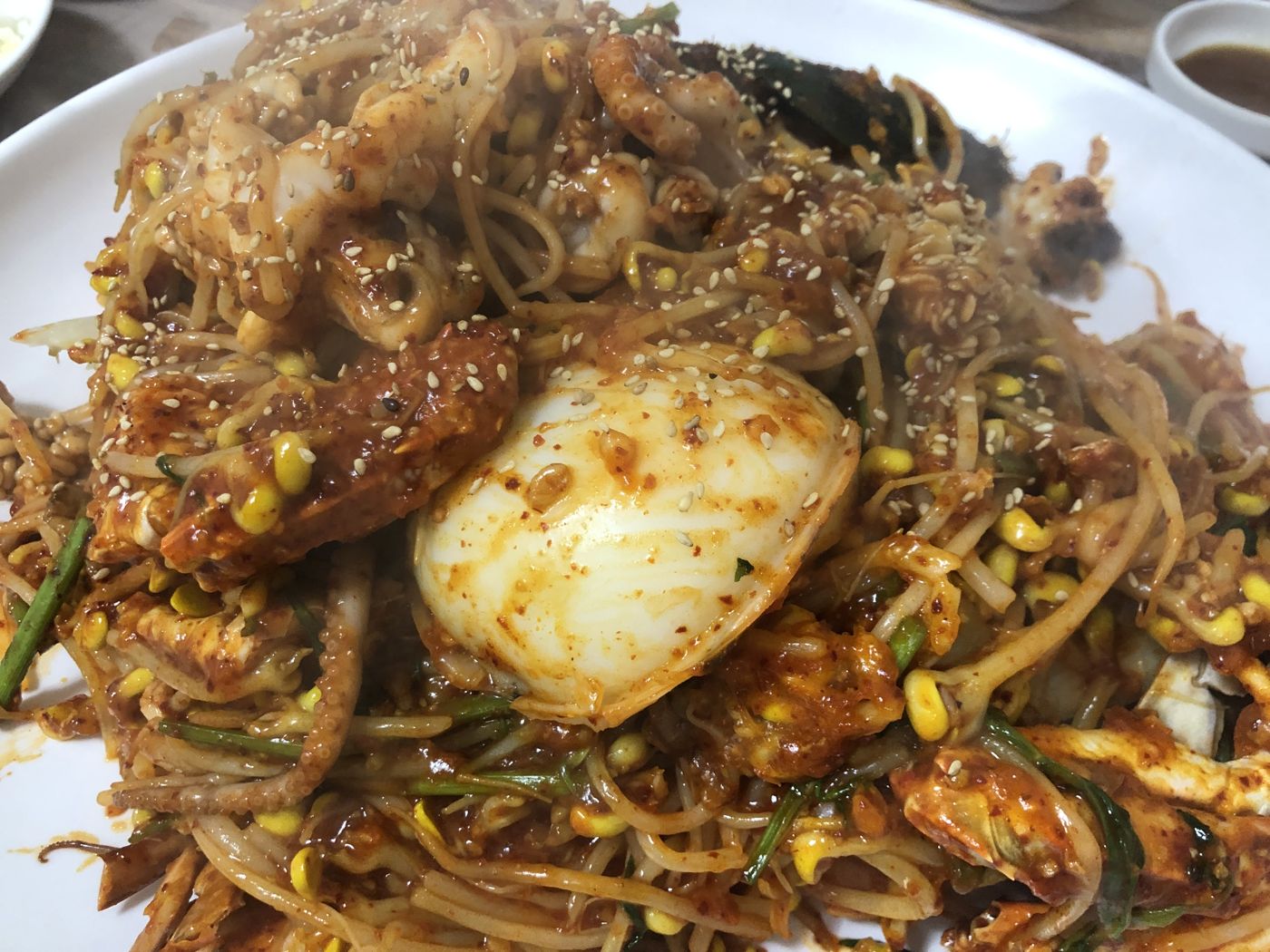
 Photo: Choi Kwang-mo, CC0, via Wikimedia Commons
Jjim · Steamed 찜
Haemul-jjim (Spicy Braised Seafood with Bean Sprouts)
해물찜
Romanization: haemul-jjim
Squid, shrimp and shellfish piled over crisp bean sprouts and simmered in a thick, fiery red sauce — a modern Gyeongsang coastal dish now served at restaurants nationwide.
- Serves
- 4
- Prep
- 30 min
- Cook
- 20 min
RegionGyeongsang · Jinju
Jump to recipeRecipe
Ingredients · Serves 4
- 300 gSquidcleaned, body cut into rings or pieces
- 200 gShrimpshell-on; about 130 g edible, rinsed, legs trimmed
- 400 gClamsin shell; about 100 g meat, scrubbed and purged in salted water for 30 minutes
- 250 gSoybean sproutsrinsed and trimmed
- 80 gOnionthickly sliced
- 50 gMinaricut into 5 cm lengths; optional, not counted in the estimate
- 2 stalksGreen onionsliced diagonally
- 3 tbspGochugaruabout 18 g; use less for a milder sauce
- 30 gSoy sauceabout 2 tbsp
- 5 clovesGarlicminced, about 25 g
- 1 tbspSugar
- 1 tspGingergrated
- 2 tspSesame oil
- 1 tbspPotato starch or cornstarchmixed with 2 tbsp water
- 150 mlWater
Method
Technique: Steaming and Jjim
Step 1: Mix the gochugaru, soy sauce, garlic, sugar and ginger into a paste with the water. Let it sit for 10 minutes so the chili powder softens.
Step 2: Spread the soybean sprouts and onion in a wide, heavy pot or deep pan. Layer the squid, shrimp and clams on top.
Step 3: Pour the sauce over the seafood, cover and bring to a boil over medium-high heat. Cook for about 8–10 minutes, until the squid is opaque and the clams have opened; discard any clam that stays shut.
Step 4: Uncover, turn the seafood gently so it is coated, then add the minari and green onion.
Step 5: Stir in the starch slurry and cook for 1 minute until the sauce thickens and turns glossy.
Step 6: Finish with the sesame oil and serve straight from the pot with plenty of rice.
Origin & History
Haemul-jjim belongs to the broader family of jjim (steamed or braised) seafood dishes, an old tradition in Korea. The Encyclopedia of Korean Folk Culture traces jjim in writing back to the fifteenth century and to the seventeenth-century Korean-language cookbook Eumsik dimibang, and lists dozens of historic seafood jjim such as abalone, sea cucumber, mullet, sea bream and crab. Traditional versions were steamed, valued as ceremonial food, and showed off a single fresh seafood.
The spicy dish most people know today is a newer creation. The encyclopedia notes that the term haemul-jjim appears in neither Joseon-era nor early modern Korean cookbooks, and that monkfish, shark, small abalone and mideodeok jjim first show up in a 1984 folk survey, so the dish seems to have emerged after that date. It describes haemul-jjim as a regional food rediscovered after industrialization on the southern coast, in the Gyeongsangnam-do area (Geoje, Changwon, Masan, Jinju and Samcheonpo/Sacheon), and later spread to the big cities.
The same account suggests that cooks first prepared a single seafood, such as sea squirts or monkfish, with vegetables, and gradually added squid, octopus and shellfish until the dish became the abundant platter it is now. The best-known single-ingredient ancestor is agu-jjim. The widely sold form is seafood and vegetables dressed with a spicy sauce and starch, then cooked until glossy.
Key Ingredients
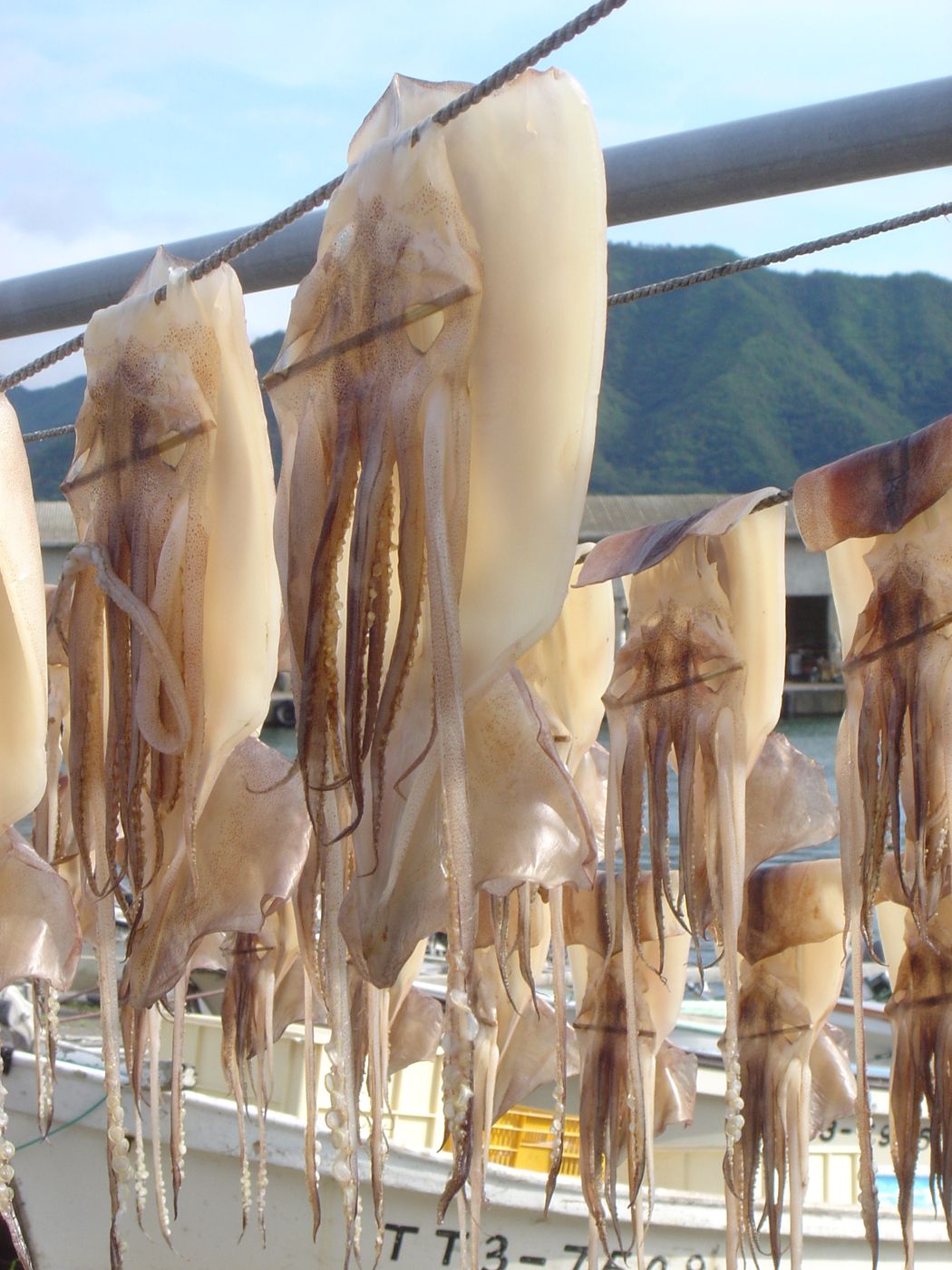 Squid오징어Fresh squid for stir-fries, pancakes and stuffed ojingeo-sundae, and dried squid — whole, sun-cured bodies or sweet-salty shredded jinmichae — that has become one of Korea's best-loved pantry foods.
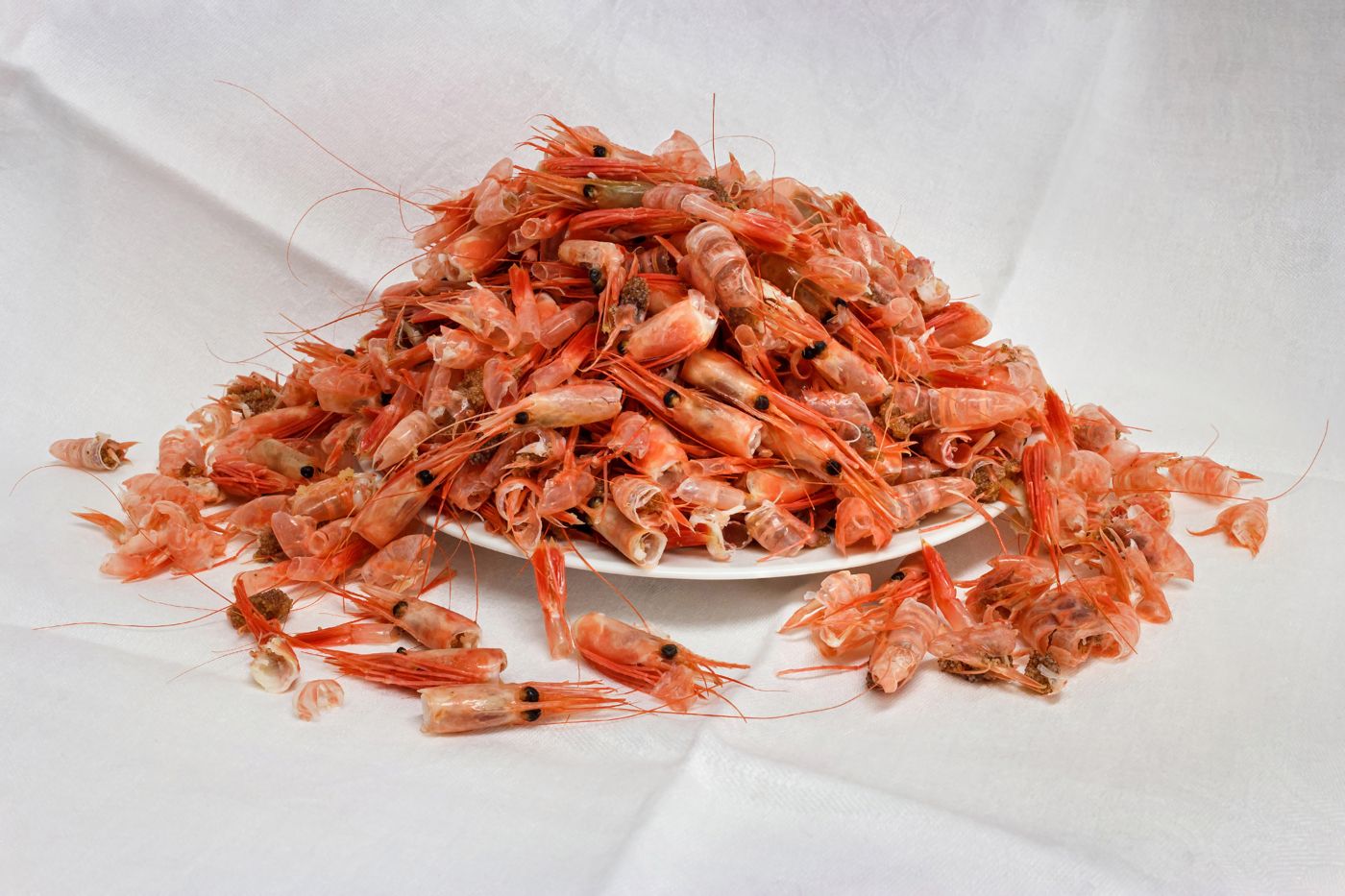 Shrimp (saeu)새우Shrimp in every size, from the tiny jeotsaeu salted to season kimchi to the large daeha. Mostly a West Sea catch, shrimp turn up across the Korean table, fresh, fried, braised and dried.
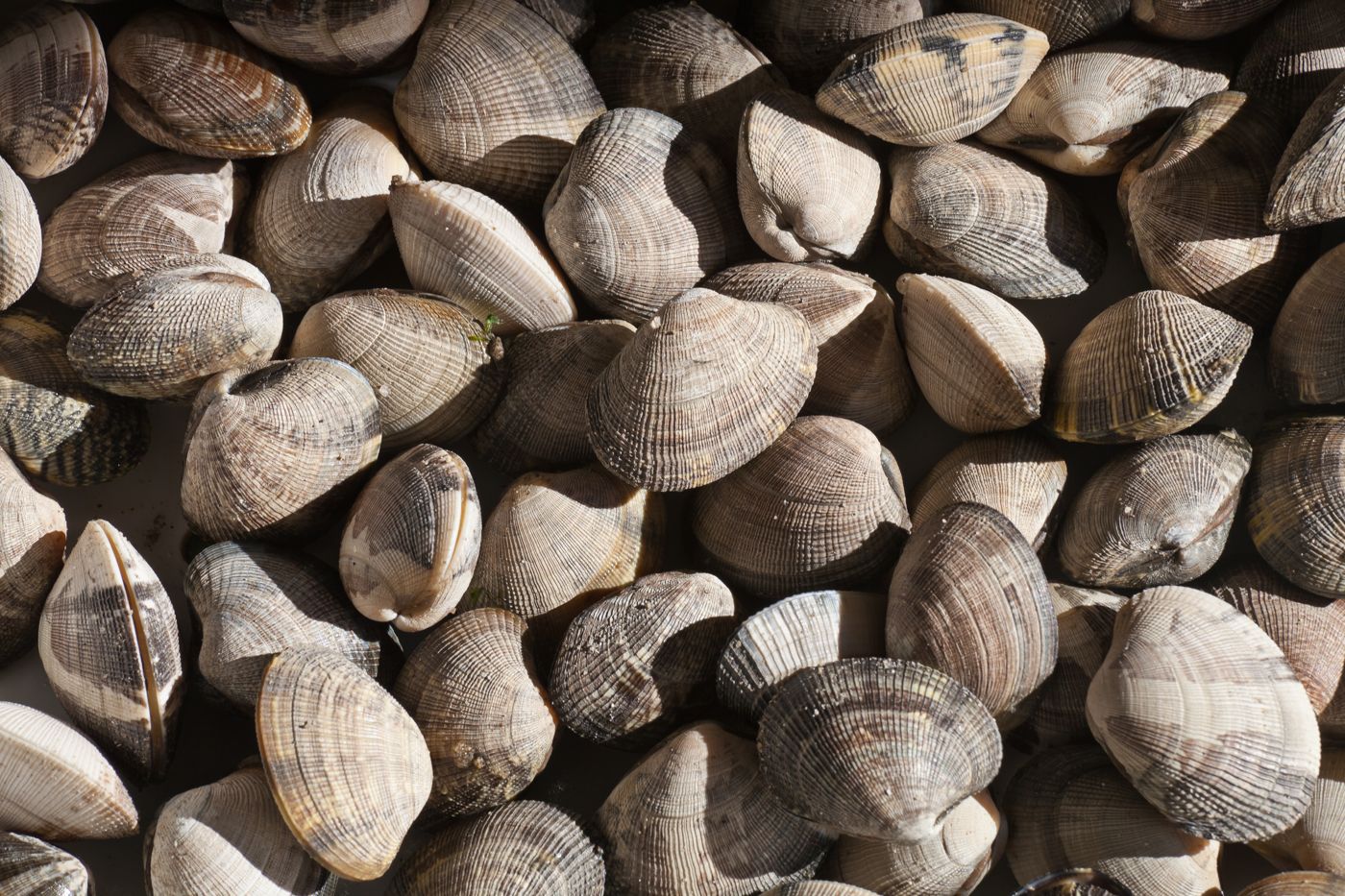 Manila clam (bajirak)바지락Small, ridged tidal-flat clams that give Korean soups and noodle broths their clean, sweet depth. Bajirak are the clams of bajirak-kalguksu, the west coast's clam noodle soup.
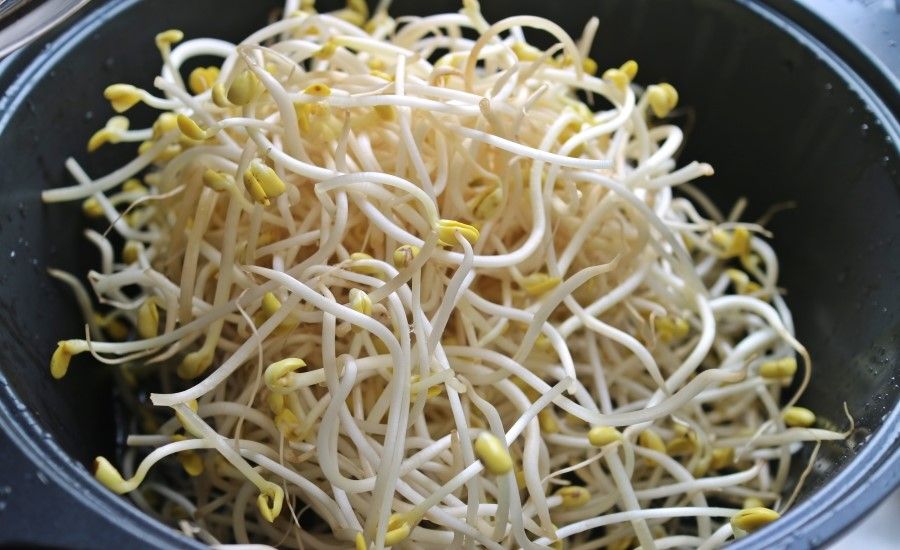 Soybean sprouts콩나물Soybeans sprouted in the dark until they grow long, pale stems topped with a yellow bean. A staple of everyday Korean cooking in kongnamul-muchim, clear sprout soup and sprout rice.
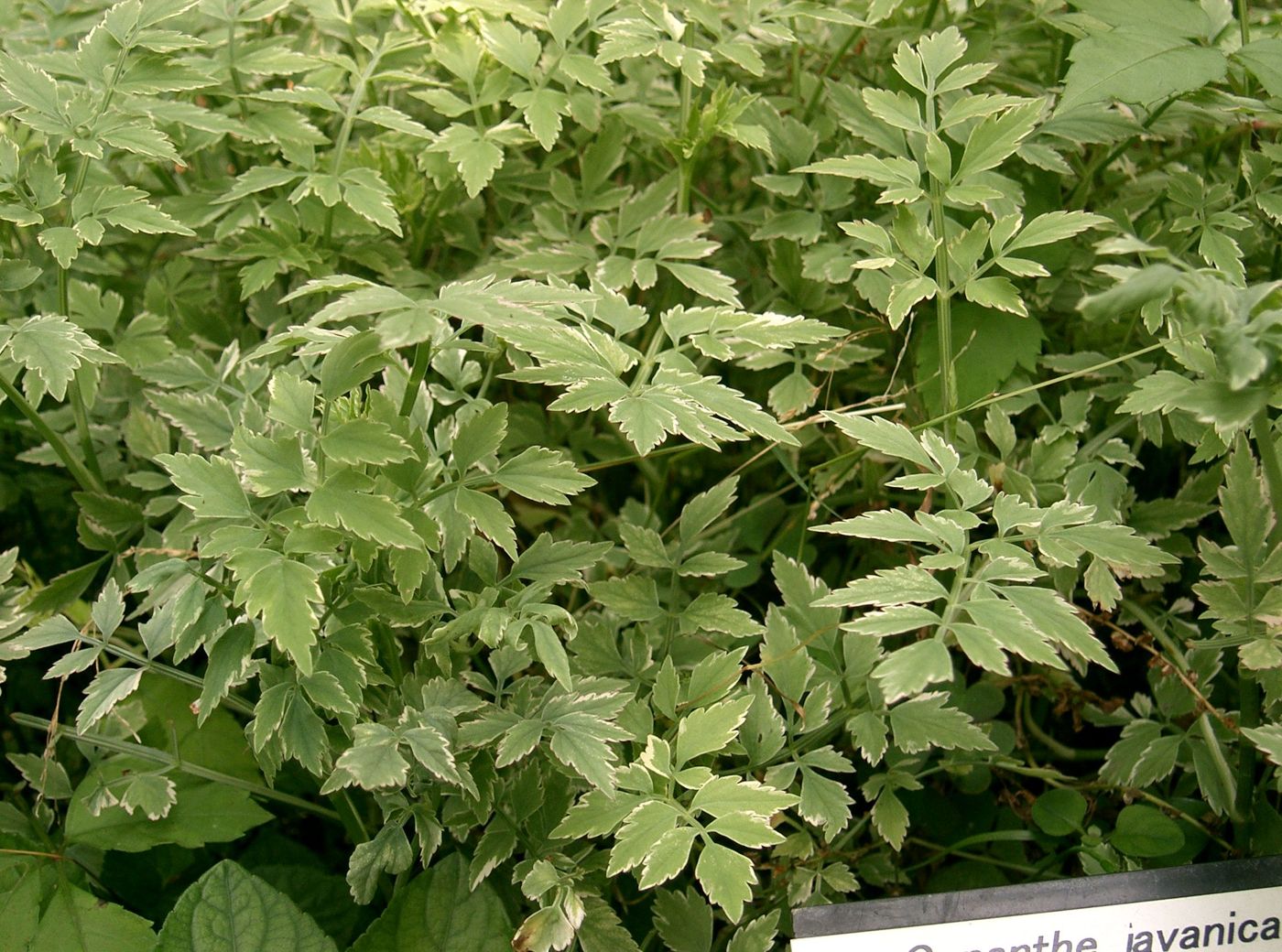 Minari (water dropwort)미나리A long-stemmed, aromatic water plant with a fresh, celery-like perfume. Blanched and dressed as minari-muchim, tucked into kimchi, wrapped into little bundles for minari-ganghoe and piled into fish stews and hot pots.
 Gochugaru고춧가루Korean red chili powder, made from dried red peppers ground coarse or fine. It gives kimchi, gochujang and countless banchan their color and warmth.
 Garlic마늘Used raw, minced, pickled and roasted, garlic is one of the essential aromatics of Korean food — in seasonings, marinades, kimchi and namul.
 Soy sauce간장Korean soy sauce, in two main kitchen forms: pale, salty guk-ganjang (soup soy sauce) brewed the traditional way from meju, and darker, sweeter jin-ganjang for braises and marinades.
 Green onion파Korean green onion (pa), from thick-stemmed daepa to slender scallions — chopped into nearly every seasoning sauce, soup and kimchi, and the star of pa-kimchi.
Nutrition
| Calories | ~285 kcal |
|---|---|
| Protein | ~32.1 g |
| Fat | ~9 g |
| Carbohydrates | ~24.2 g |
| Fiber | ~2.8 g |
| Sodium | ~745 mg |
Notable forProtein · Dietary fiber
Sums USDA FoodData Central values for the raw ingredients (squid, shrimp, clam meat, sprouted soybeans, onion, scallion, garlic, ginger, soy sauce, sugar, sesame oil, cornstarch and cayenne as a gochugaru stand-in) divided by four. Shellfish weights are edible meat only; the minari is omitted, which slightly understates fiber and minerals. USDA's clam entry is naturally high in sodium, so the total is sensitive to the clam amount. Actual values vary with ingredients, portion size and preparation.
Health Benefits
- Protein-rich, low in fat: the Encyclopedia of Korean Folk Culture describes haemul-jjim as high in protein and taurine, with minerals such as calcium and zinc, and, thanks to the vegetables, high in fiber and low in fat.
- Vegetables underneath: bean sprouts and onion add volume and fiber to what is otherwise a seafood-forward dish.
- Capsaicin: the heat comes from chili powder; see capsaicin and spicy food.
Regional Variations
- Agu-jjim: the single-seafood relative built around monkfish (agwi) and soybean sprouts. The folk encyclopedia notes it is finished with perilla or peanut powder and a starch thickener; see agu-jjim.
- Mixed haemul-jjim: squid, crab, shrimp, hard clams and mussels with soybean sprouts, minari and a red sauce, as in the folk encyclopedia's description of the most widely commercialized version.
- Traditional steamed haemul-jjim: octopus, conch, dried pollack, prawn or sea cucumber steamed with little seasoning, as in older dishes; see steaming jjim.
- Heat level: the sauce ranges from mild to very spicy; many cooks fold in a spoonful of starch at the end so the sauce clings to the seafood.
Pairings
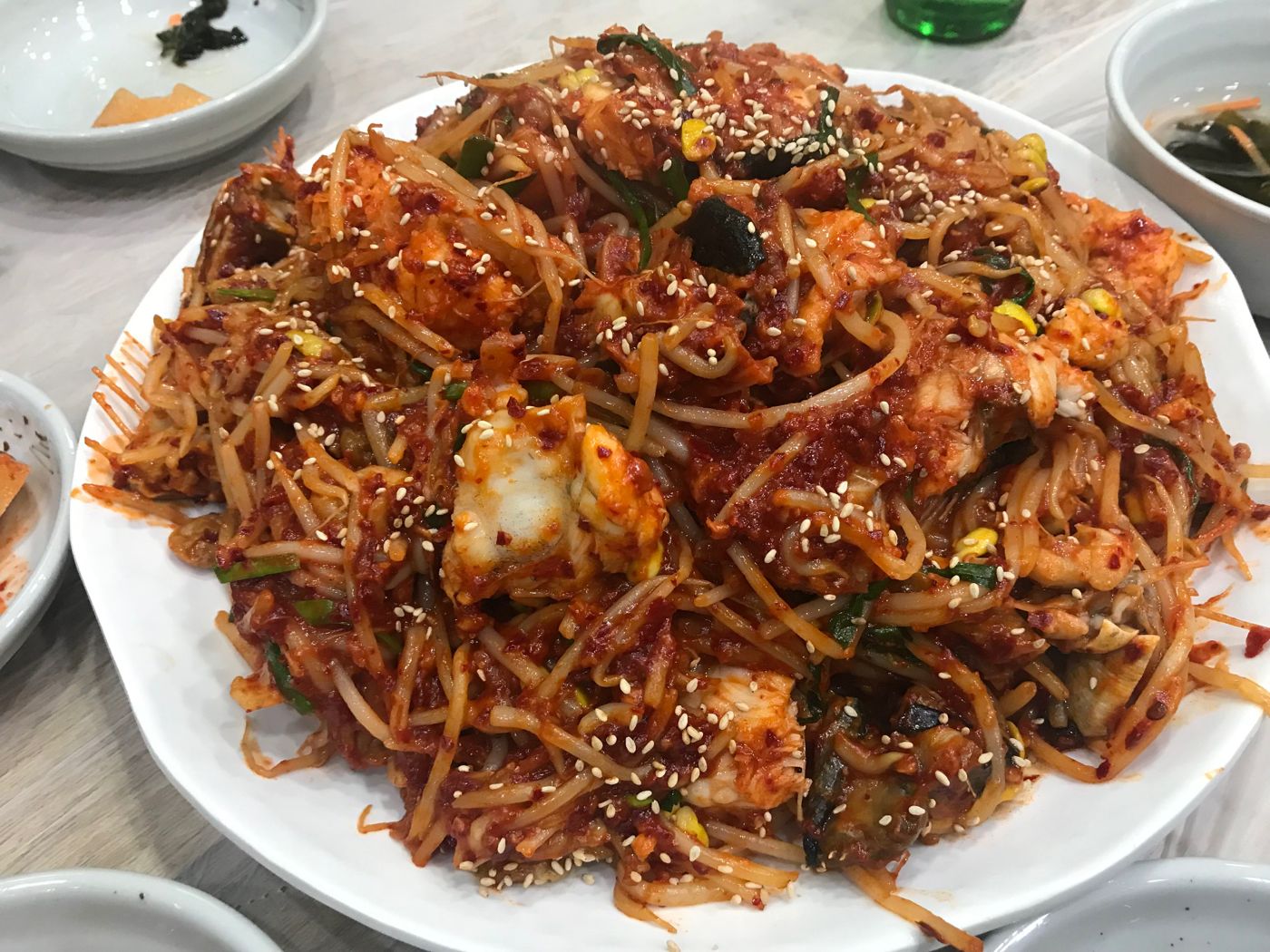 Agu-jjim (Spicy Braised Monkfish)아귀찜Monkfish braised with a mountain of soybean sprouts and minari in a fiery chili sauce thickened with starch — a Masan specialty now eaten across Korea.
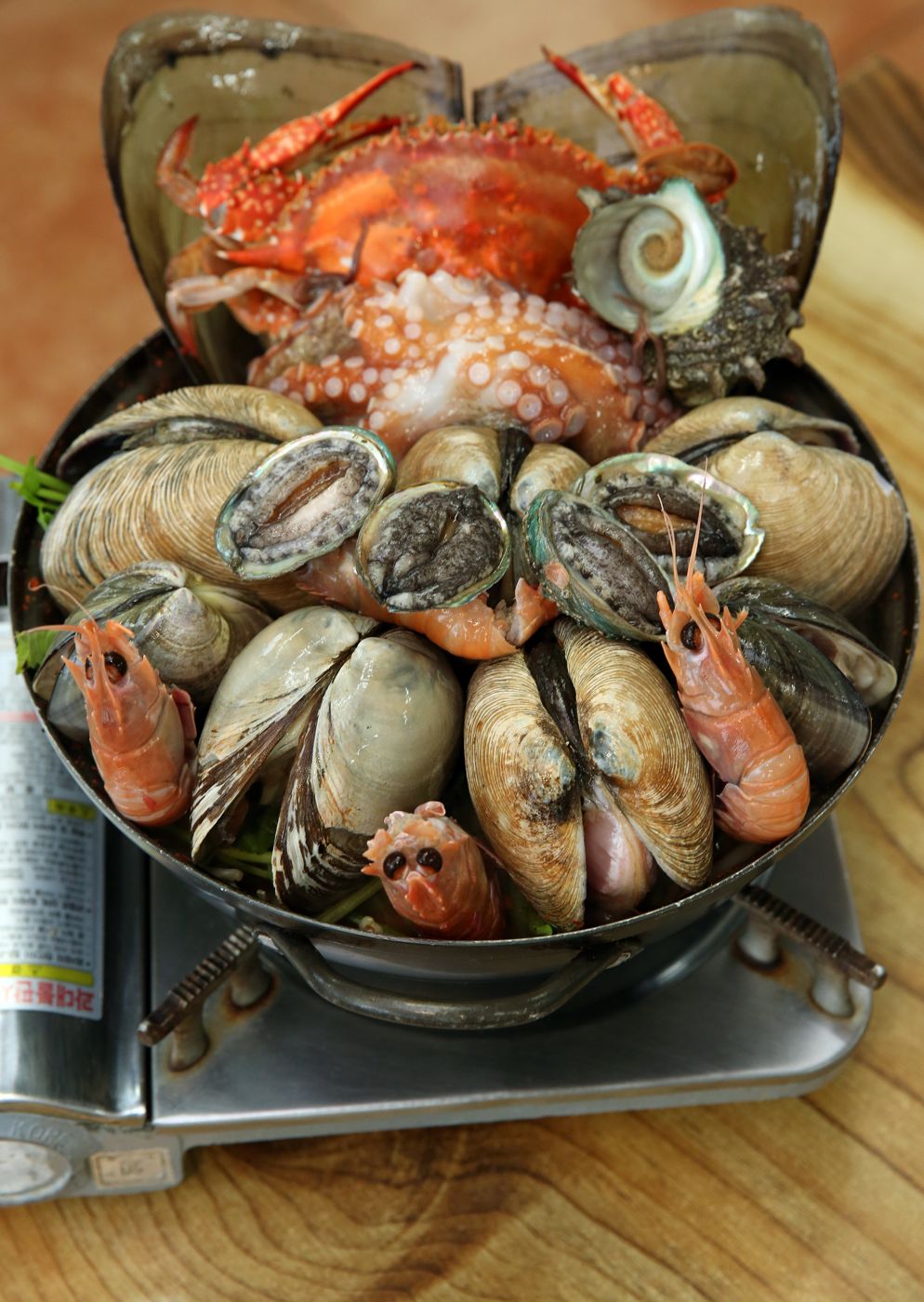 Haemul Tang (Spicy Seafood Hot Pot)해물탕Blue crab, octopus, shrimp, clams and sea squirt simmered with radish and water dropwort in a bright, spicy gochujang broth — a seafood feast in one pot.
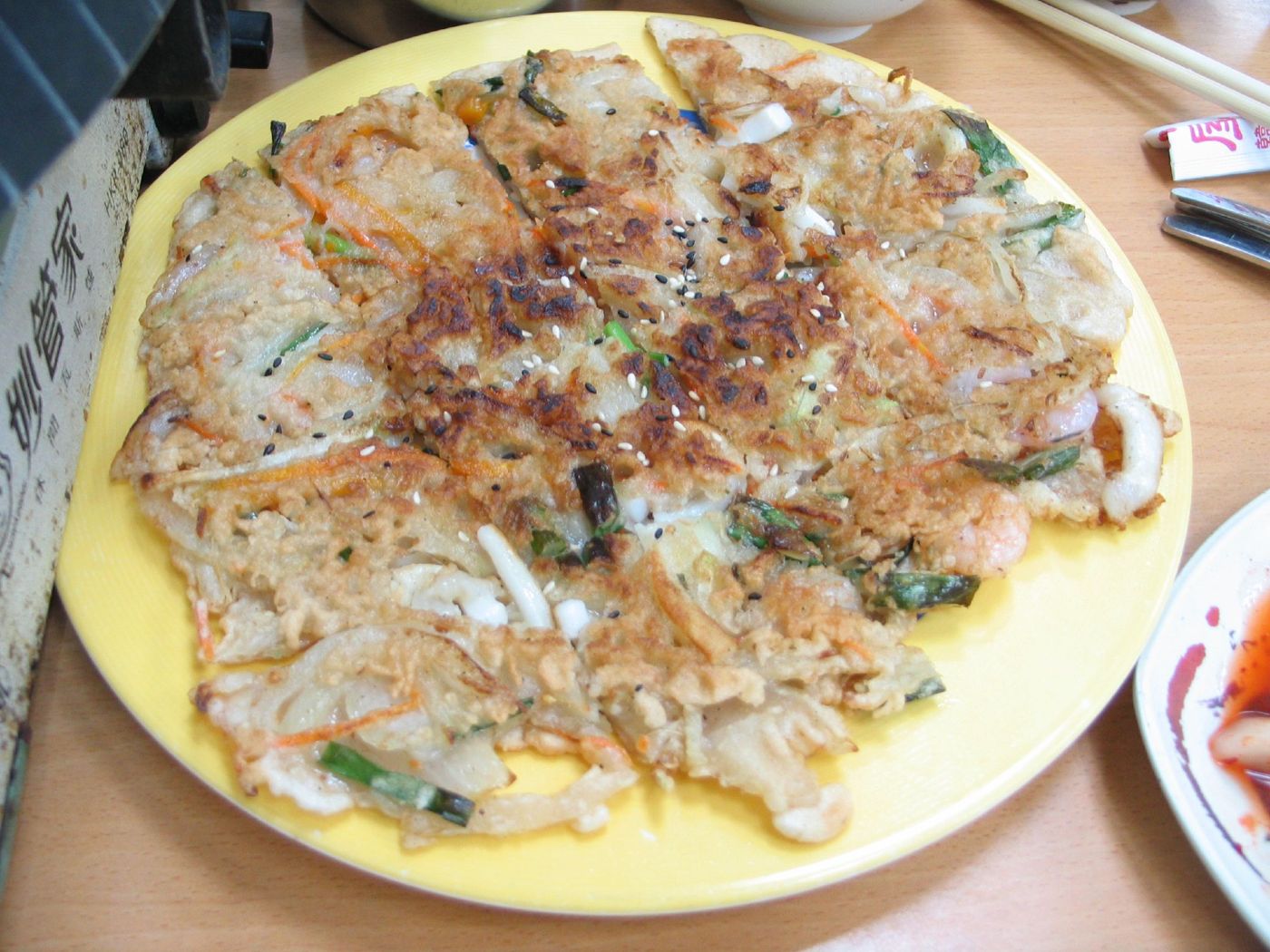 Haemul Pajeon (Seafood and Green Onion Pancake)해물파전Whole green onions bound in a light batter with squid, shrimp and clams, pan-fried until crisp — a generous jeon for sharing, closely tied to Busan's Dongnae.
Sources
- 01해물찜 (Haemul-jjim) — Encyclopedia of Korean Folk Culture (한국의식주생활사전), National Folk Museum of Korea
- 02아귀찜 (Agwi-jjim) — Encyclopedia of Korean Folk Culture (한국의식주생활사전), National Folk Museum of Korea
- 03Mollusks, squid, mixed species, raw — USDA FoodData Central
- 04Crustaceans, shrimp, raw — USDA FoodData Central
- 05Food Allergies — U.S. Food and Drug Administration
- 06Safe Food Handling — U.S. Food and Drug Administration
Last updated