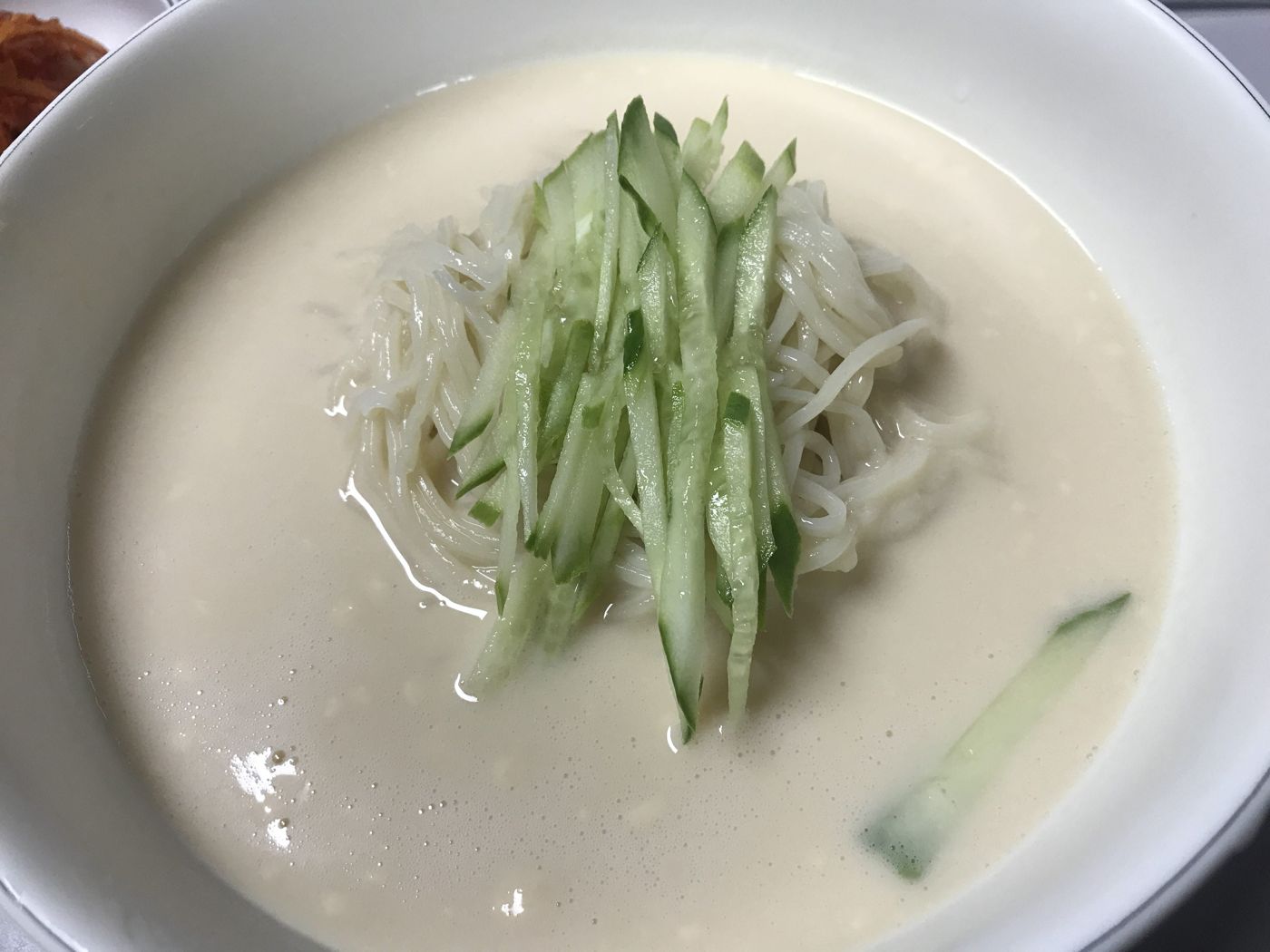
 Photo: lazy fri13th, CC BY 2.0, via Wikimedia Commons
Myeon · Noodles 면
Kongguksu (Cold Soybean-Milk Noodles)
콩국수
Romanization: kongguksu
Thin wheat noodles in a chilled, nutty broth of freshly ground soybeans, topped with cucumber — a protein-rich summer noodle traditionally eaten with yeolmu kimchi.
- Serves
- 2
- Prep
- 30 min
- Cook
- 20 min
RegionGyeongsang · Gangwon
Jump to recipeRecipe
Ingredients · Serves 2
- 120 gDried yellow soybeanssoaked in cold water 8–12 hours ahead
- 700 mlCold waterfor blending
- 1 tbspToasted sesame seeds
- 1 tbspPine nuts (jat)optional
- ½ tspSaltplus more at the table
- 200 gSomyeon (thin dried wheat noodles)
- 80 gCucumberjulienned
- to serveIce cubes
Method
Step 1: Drain the soaked soybeans. Put them in a pot with fresh water to cover, bring to a boil and cook 8–10 minutes, just until the raw, beany smell is gone but before they smell cooked and nutty-sweet; overcooked beans make a heavy broth.
Step 2: Drain and cool in cold water. For a smoother broth, rub the beans between your hands to slip off the skins and float them away.
Step 3: Blend the beans with the 700 ml cold water, the sesame seeds and pine nuts (if using) until very smooth. Strain through a fine sieve if you want a silky broth. Season lightly with salt and chill thoroughly.
Step 4: Boil the noodles 3–4 minutes, drain and rinse well under cold running water. Twist into nests in two wide bowls.
Step 5: Pour the cold soybean broth over, top with cucumber and a few ice cubes, and serve with salt at the table and kimchi on the side.
Origin & History
Kongguksu is noodles served in kongguk, a cold broth made by grinding soaked, lightly boiled soybeans. There is no record of when it was first eaten. Both the Encyclopedia of Korean Culture and the Encyclopedia of Korean Folk Culture begin with the scholar Yi Ik's eighteenth-century Seongho saseol, which laments that the fine grains went to the rich and powerful while the poor survived on beans, and notes that when soybeans are ground for tofu, the leftovers simmered into soup are savory and good.
The first clear recipe is in the late-nineteenth-century cookbook Siuijeonseo, under the name kongguk: soak the beans, blanch them briefly, press them through a fine sieve, season with salt and add wheat noodles with the same garnishes as other noodle dishes. An earlier family recipe collection attributed to the household of Kim Chang-eop mixes raw soybean flour into wheat noodle dough instead, to be eaten in clear broth or sesame broth.
The folk encyclopedias describe it as the summer noodle of ordinary people, while the yangban preferred kkaetguksu, noodles in sesame broth (today's imjasutang is its descendant). Monks at Jingwansa temple near Seoul are said to eat a soybean-and-perilla version on jungbok, the middle of the dog days, and in North Gyeongsang it is eaten as a seasonal food of the sambok days.
Key Ingredients
 Sesame참깨Toasted sesame seeds and sesame oil (chamgireum) finish countless Korean dishes, adding a nutty aroma and gloss.
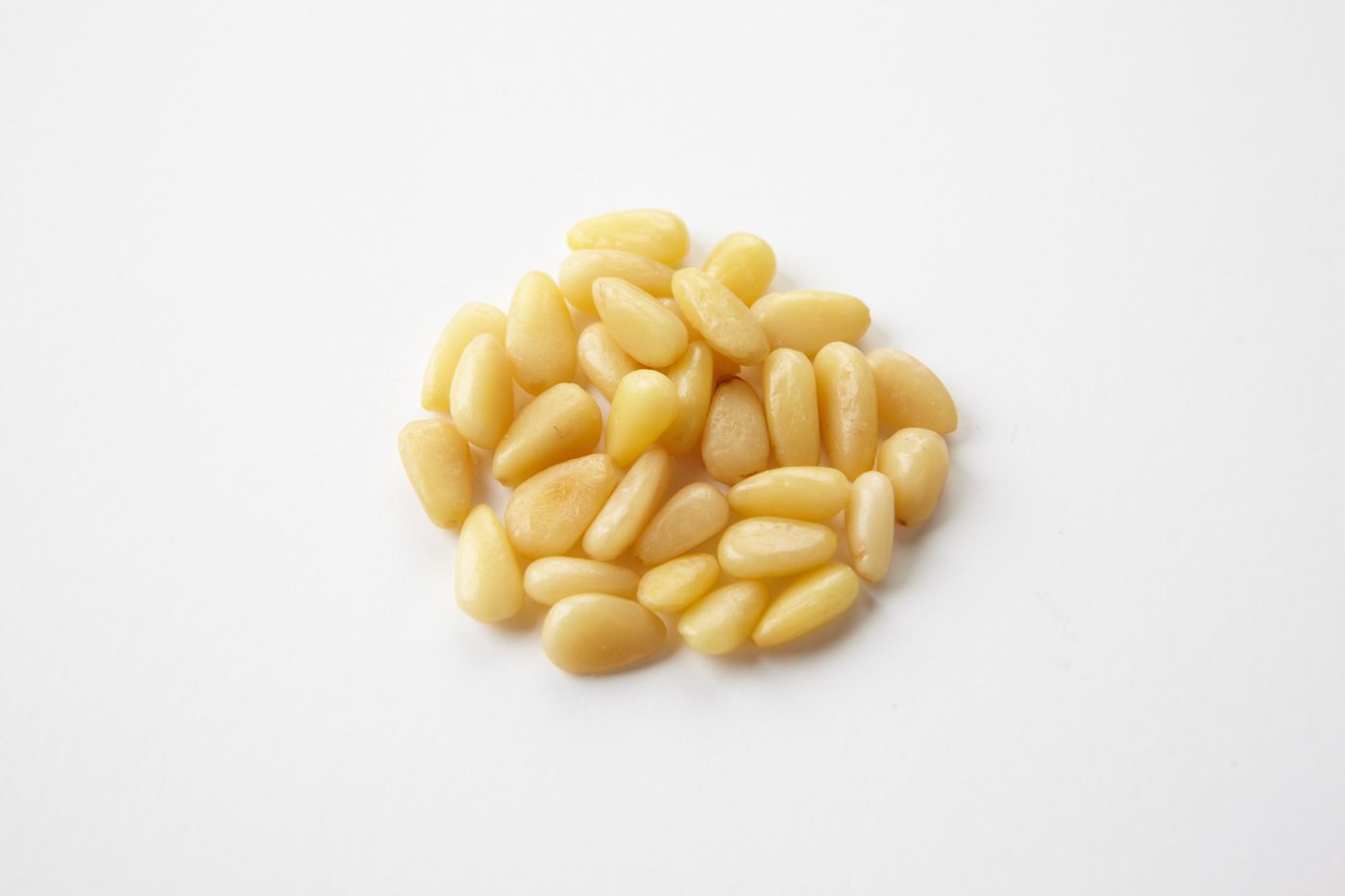 Pine nuts잣Creamy, ivory seeds of the Korean pine, scattered as a finishing garnish on punches, porridges and braises, or ground into the delicate porridge jatjuk. Gapyeong in Gyeonggi-do is the country's pine-nut capital.
- Cucumber오이Slender, thin-skinned Korean cucumbers, prized for their crunch. Stuffed and fermented as oi-sobagi, dressed quickly as oi-muchim, salted into oiji or floated in chilled summer soup.
Nutrition
| Calories | ~649 kcal |
|---|---|
| Protein | ~33.3 g |
| Fat | ~12.5 g |
| Carbohydrates | ~97.1 g |
| Fiber | ~17.9 g |
| Sodium | ~785 mg |
Notable forPlant protein · Fiber · Potassium · Iron
Estimated by summing ingredient values and dividing by two, for unstrained broth and without the optional pine nuts or salt added at the table. Dried yellow soybeans: Korean Food Composition Table (D0120020001a); somyeon counted as boiled noodles (200 g dry ≈ 590 g cooked; A0180010001b); sesame seeds (FDC 170150), salt (173468) and cucumber (168409) from USDA. Straining removes some fiber. The MFDS analysis of an 800 g home-style bowl (81 kcal per 100 g) gives about 650 kcal, 31 g protein, 27 g fat and 540 mg sodium. Actual values vary with ingredients, portion size and preparation.
Health Benefits
- Soybeans make this one of the most protein-rich noodle dishes in Korean cooking; the Encyclopedia of Korean Culture notes that the broth keeps the beans' protein and fat, which suited sweaty summer days.
- Unstrained, the broth is high in fiber, and soybeans contribute potassium and iron, by the Korean food composition table.
- Because the broth is mostly unseasoned, it is far lower in sodium than most Korean noodle soups.
Regional Variations
- Smooth or rustic: the classic method sieves the ground beans for a silky broth; many home cooks now blend without straining for a thicker, more filling one.
- Nutty additions: toasted sesame or pine nuts ground with the beans, as the folk encyclopedia suggests.
- Temple style: soybeans and perilla seeds ground together.
- Gangwon oksusu-kongguksu: corn noodles in soybean broth, from the corn-growing province.
Pairings
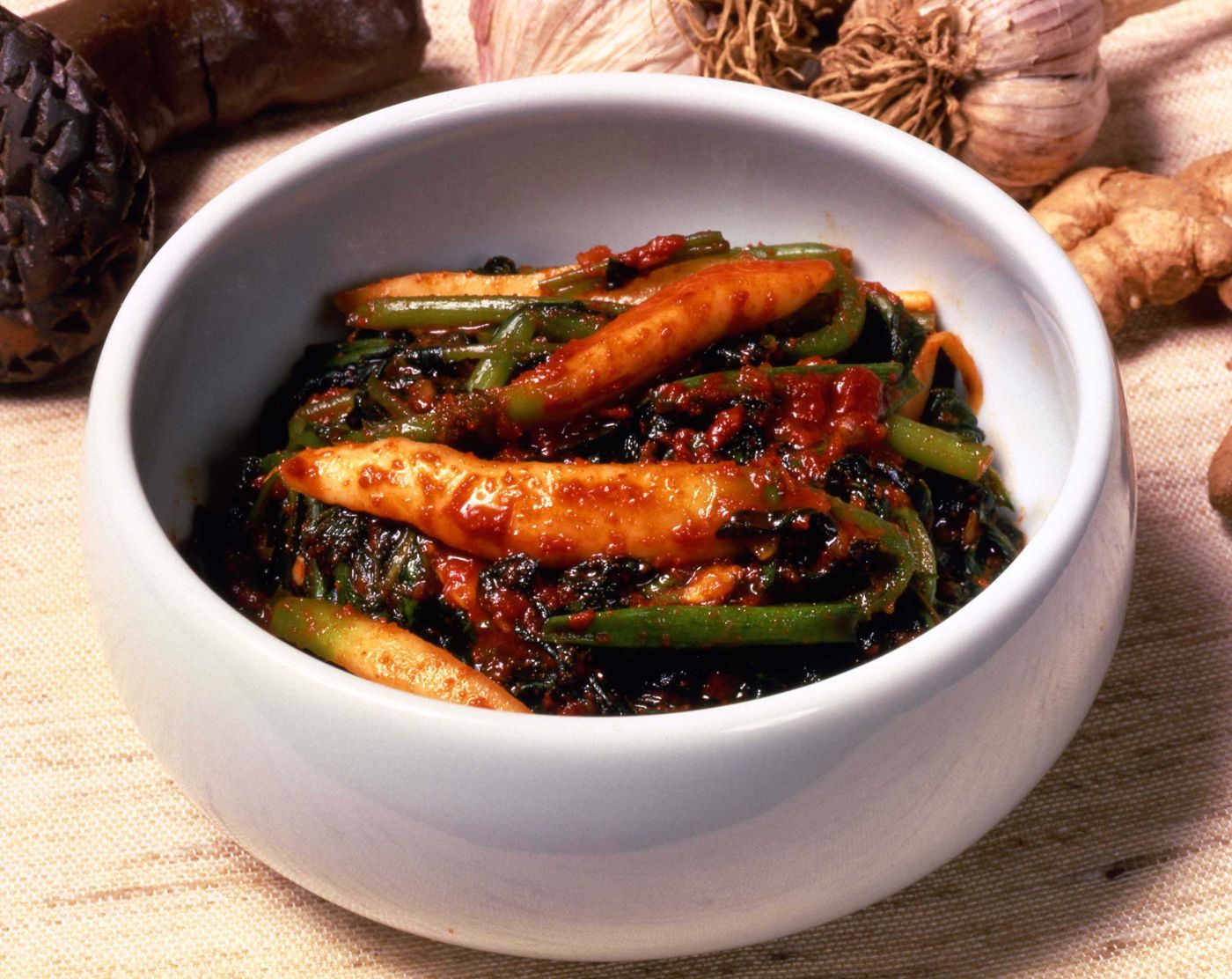 Young Summer Radish Kimchi열무김치Tender young radish greens in a loose, lightly spicy brine thickened with flour or rice paste — the classic summer kimchi, served over noodles and barley rice.
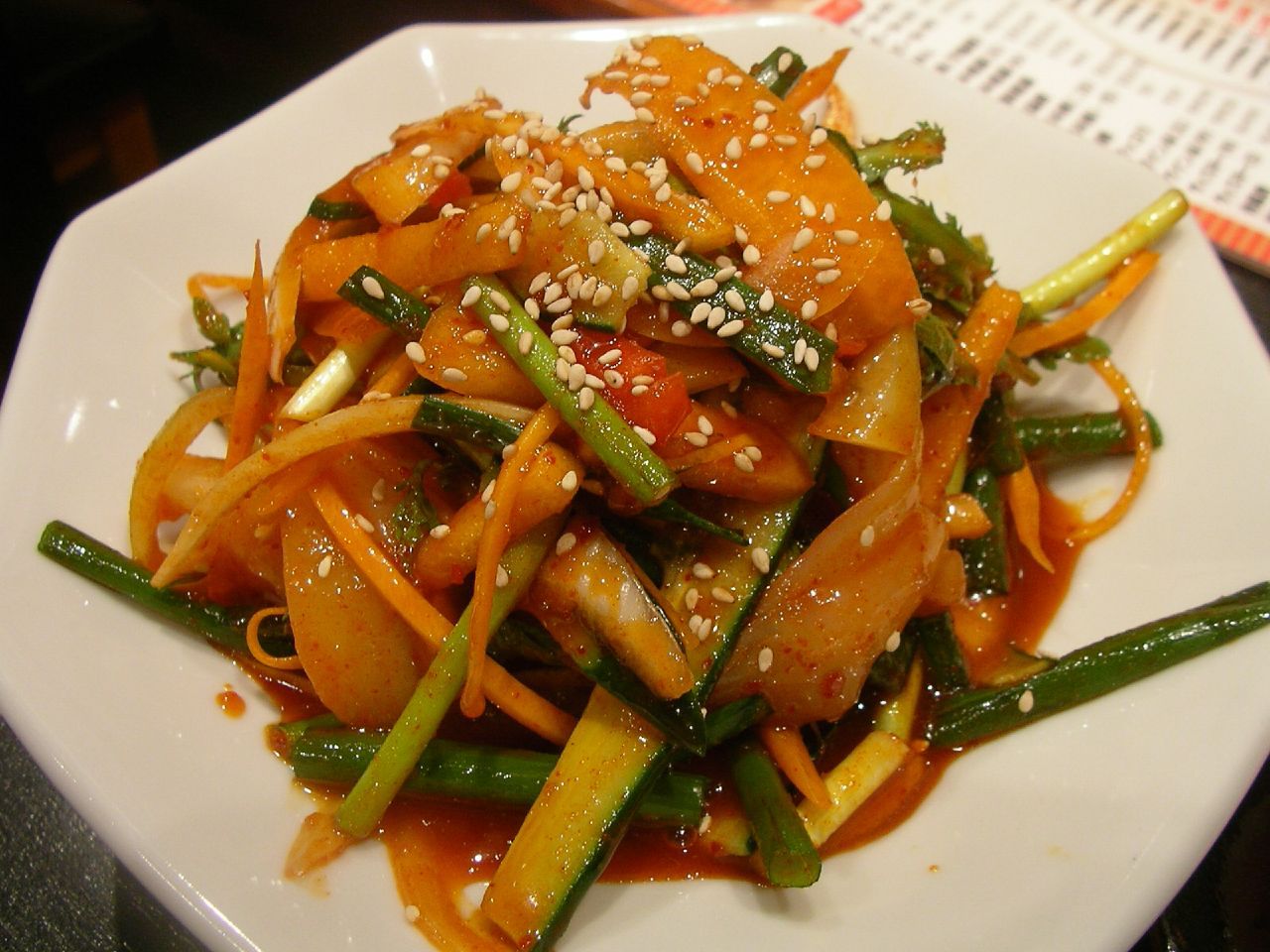 Oi Muchim오이무침Thin-sliced cucumber, briefly salted and tossed with chili flakes, vinegar and garlic — a cool, crunchy quick salad made in minutes, especially in summer.
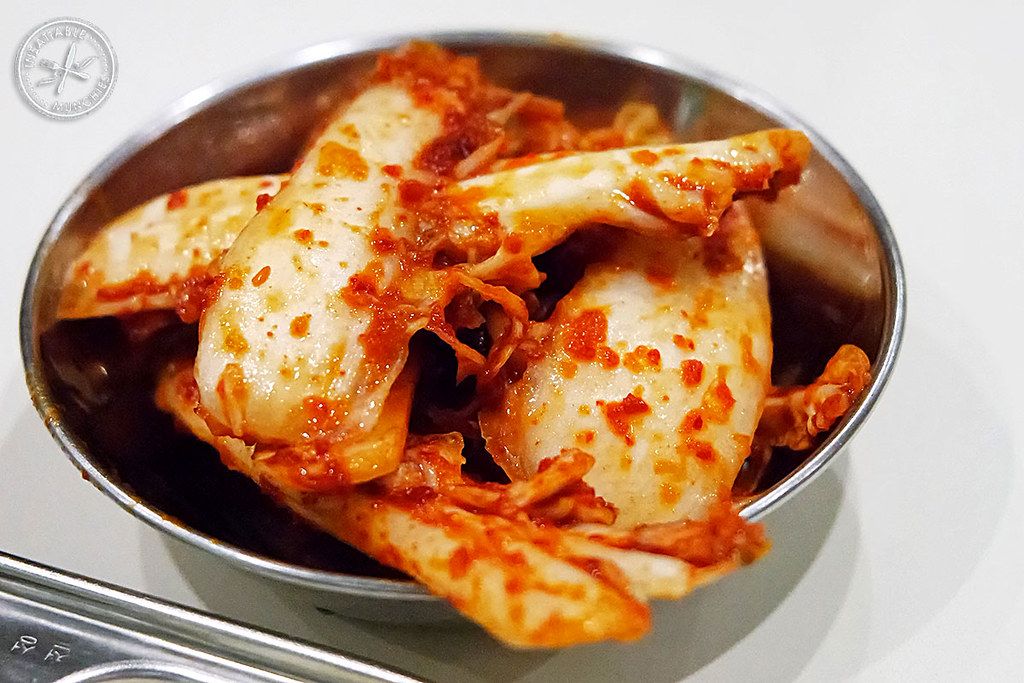 Fresh Cabbage Kimchi겉절이Napa cabbage salted only briefly, then tossed with chili, garlic and fish sauce and eaten the same day — kimchi at its freshest, crisp and bright.
Sources
- 01콩국수 (Kongguksu) — Encyclopedia of Korean Culture
- 02콩국수 (Kongguksu) — Encyclopedia of Korean Folk Culture (한국의식주생활사전)
- 03콩국수 (Kongguksu) — Encyclopedia of Korean Folk Culture (한국세시풍속사전)
- 04콩국수 (Kongguksu, home-style, analyzed) — MFDS K-FIND food composition database
- 05Soybean, Yellow, Dried — Korean Food Composition Table
- 06Global Perspectives on Allergen Labeling: Harmonization of Regulations and Practices — Allergy, Asthma & Immunology Research, 2025
Last updated