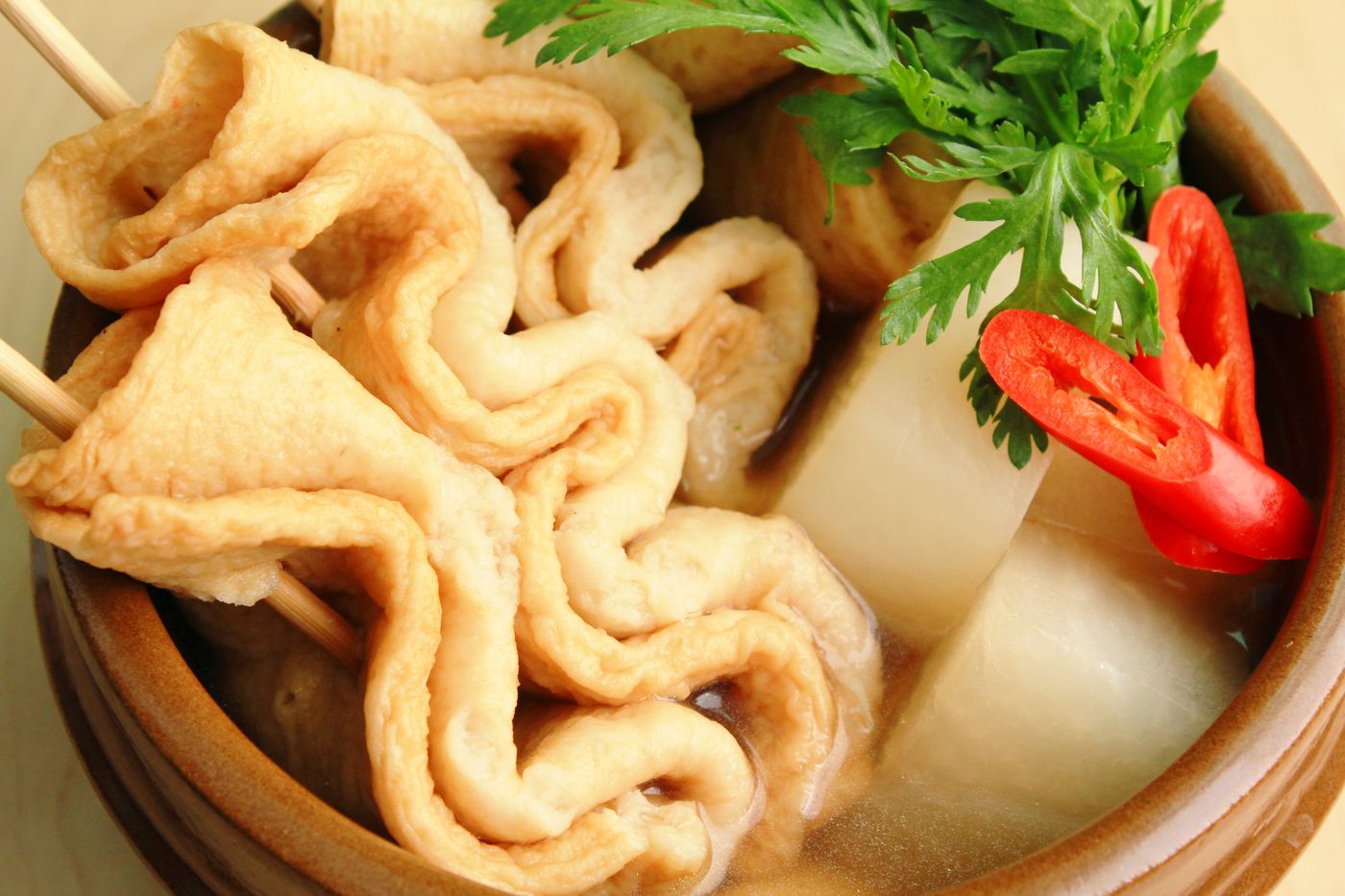
 Photo: Chloe Lim, CC BY 2.0, via Wikimedia Commons
Guk & Tang · Soups 국·탕
Eomuk Tang (Fish Cake Soup)
어묵탕
Romanization: eomuk-tang
Fish cakes, often threaded on skewers, simmered in a clear anchovy, kelp and radish broth — Busan's winter street-stall soup and a quick home dish.
- Serves
- 4
- Prep
- 15 min
- Cook
- 30 min
RegionBusan · Gyeongsang
Jump to recipeRecipe
Ingredients · Serves 4
- 400 gAssorted fish cakes (eomuk)sheets folded onto skewers, or cut into bite-size pieces
- 200 gKorean radish (mu)cut into 1 cm-thick squares
- 15 gLarge dried anchovies (myeolchi)about 10, heads and guts removed
- 10 gDried kelp (dashima)a 10 cm square
- 1.5 lWater
- 1 stalkLarge green onion (daepa)half in chunks for the broth, half sliced
- 2 clovesGarlicminced
- 1 tbspSoup soy sauce (guk-ganjang)plus salt to taste
- 40 gCrown daisy (ssukgat)optional
- 1 Green or red chili pepperoptional, sliced
- to tasteDipping sauce: soy sauce with a little vinegar and mustard or chili
Method
Technique: Making Guk and Jjigae, Making Yuksu: Anchovy-Kelp Stock
Step 1: Put the water, anchovies, kelp, radish and green-onion chunks in a pot. Bring to a boil, remove the kelp after 5 minutes, and simmer 15 minutes more, until the radish is translucent. Lift out the anchovies and green onion.
Step 2: Meanwhile, pour boiling water over the fish cakes in a colander to rinse off excess frying oil, then thread them onto skewers or cut them up.
Step 3: Season the broth with the garlic and soup soy sauce, then add the fish cakes and simmer 5–7 minutes, until they puff and soften.
Step 4: Taste and add salt only if needed — fish cakes release salt into the broth as they cook.
Step 5: Add the sliced green onion, chili and crown daisy, and serve hot with the dipping sauce, ladling extra broth into cups.
Origin & History
Eomuk-tang is a simple soup of fish cakes simmered in a light broth, usually made from dried anchovy, kelp and radish. Many Koreans still call it odeng-tang. The Encyclopedia of Korean Folk Culture explains the tangle of names: the fish cake itself came from Japanese kamaboko, while oden is properly the Japanese dish of many ingredients stewed in a dashi broth — but in Korea the fish cake, the main thing in the pot, took over the word odeng. In 1949 the Korean Language Society proposed saengseon-muk to replace kamaboko, without much success, and in 1992 the National Institute of the Korean Language settled on eomuk.
Ground fish had a long but separate Korean history. Around 1740 the Somun saseol described a rolled, layered fish dish its author called kamabokot after the Japanese word, though made quite differently. Japanese-style fish cakes arrived with the colonial period: the folk encyclopedia notes they were made from about 1910 in port towns with Japanese settlements, including Incheon, Mokpo and Busan, and the Encyclopedia of Korean Culture records Japanese-run fish-cake shops in Busan's Bupyeong market. See the colonial era.
After liberation, Busan became the fish-cake capital. The Encyclopedia of Korean Culture names Donggwang Sikpum as the first Korean-run factory, and both encyclopedias describe how wartime refugees crowding into the city made cheap fried fish cake a staple; Samjin Sikpum, founded on Yeongdo in 1950, is one of the oldest firms still operating. In the city's cheap drinking houses, a pot of odeng-tang served as a meeting place. Today skewered fish cakes in broth are a fixture of street stalls and snack shops nationwide, usually beside tteokbokki, with cups of the broth handed out to anyone who asks. See Korean street food.
Key Ingredients
- Fish cake어묵A processed food of ground white fish, salt and starch, shaped into sheets, tubes or balls and then fried, steamed or grilled. Busan made it famous, and stir-fried eomuk is a common banchan.
 Korean radish무A stout, heavy white radish, often tinged pale green near the top. It is cubed for kkakdugi, left whole in the clear brine of dongchimi, shredded into salads and simmered into broths.
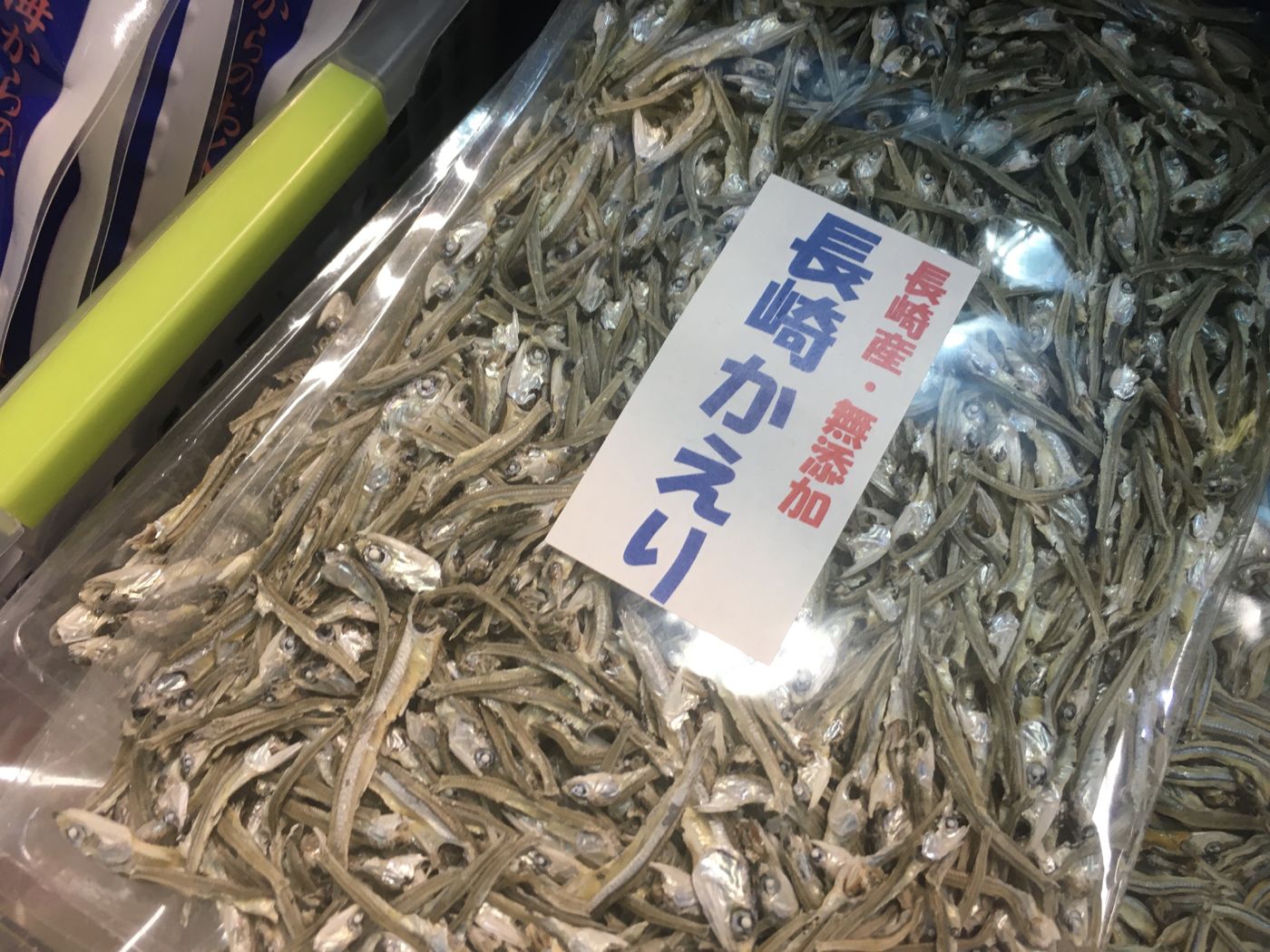 Dried anchovies멸치Small anchovies that are boiled and dried on the coast, then sorted by size. They flavor everyday broths and, stir-fried whole, become the sweet-salty side dish myeolchi-bokkeum.
 Dashima (dried kelp)다시마Thick, dried kelp that gives Korean broths their quiet savory depth. Beyond the stockpot it is fried into crisp twigak, simmered into soy-glazed side dishes and used as a wrap.
 Green onion파Korean green onion (pa), from thick-stemmed daepa to slender scallions — chopped into nearly every seasoning sauce, soup and kimchi, and the star of pa-kimchi.
 Garlic마늘Used raw, minced, pickled and roasted, garlic is one of the essential aromatics of Korean food — in seasonings, marinades, kimchi and namul.
 Soy sauce간장Korean soy sauce, in two main kitchen forms: pale, salty guk-ganjang (soup soy sauce) brewed the traditional way from meju, and darker, sweeter jin-ganjang for braises and marinades.
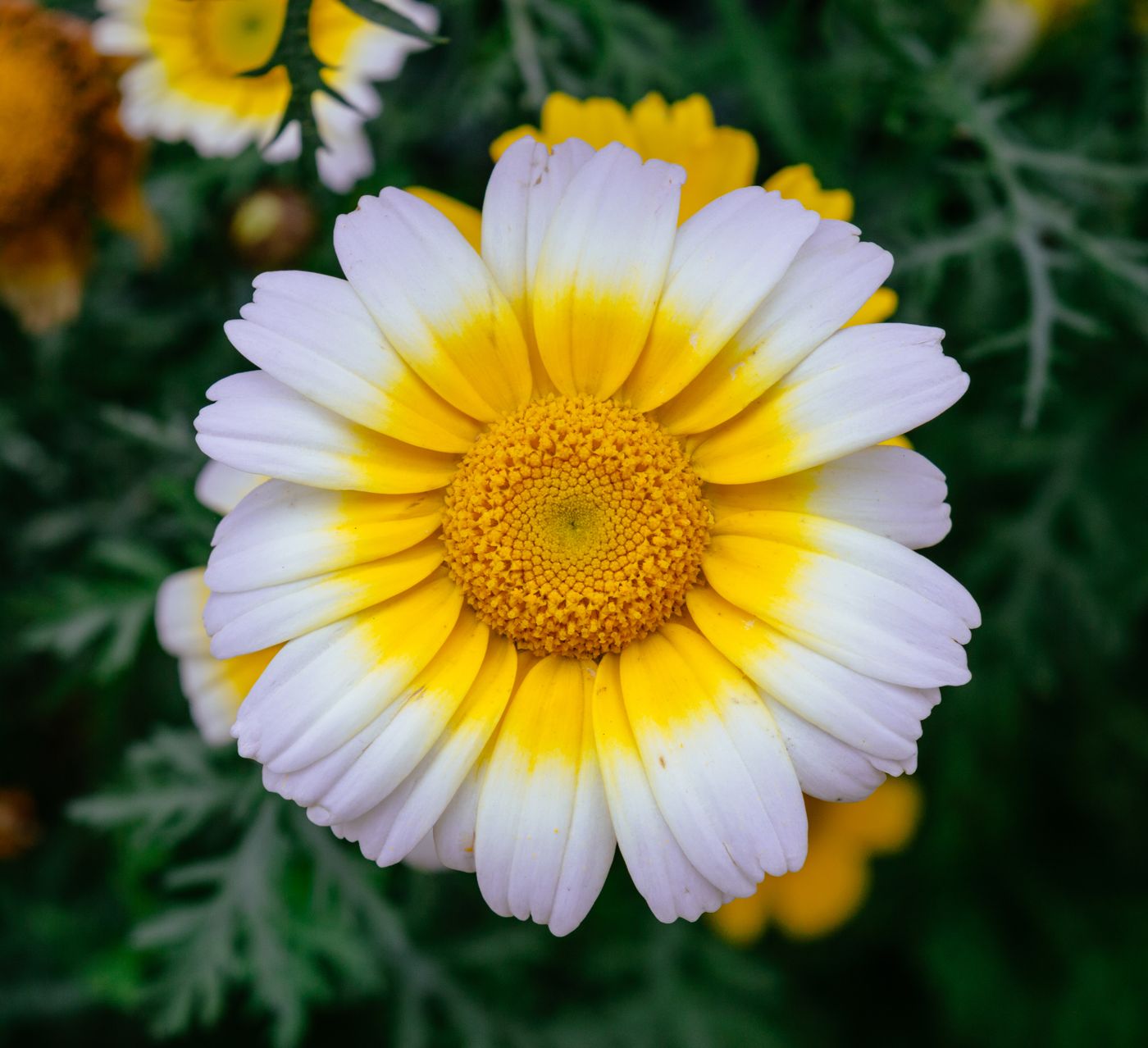 Ssukgat (crown daisy)쑥갓An edible chrysanthemum grown for its feathery, deeply lobed leaves and tender stems. Its bold, resinous perfume finishes spicy fish stews and hot pots, and it is a classic leaf for the ssam basket and quick namul.
- Korean Chili Peppers (Fresh)고추Fresh Korean chili peppers, eaten green (putgochu) or red (hong-gochu): from the fiery cheongyang-gochu to the small, wrinkled, mild kkwari-gochu that is braised and stir-fried as banchan.
Nutrition
| Calories | ~109 kcal |
|---|---|
| Protein | ~5.2 g |
| Fat | ~3.6 g |
| Carbohydrates | ~13.4 g |
| Fiber | ~1.4 g |
| Sodium | ~791 mg |
Notable forSelenium · Protein
Scaled from the MFDS analysis of home-style eomuk-guk (어묵국(어묵탕); per 100 g: 31 kcal, 1.49 g protein, 1.03 g fat, 3.83 g carbohydrate, 0.4 g fiber, 226 mg sodium, 16.6 µg selenium) to the database's 350 g serving. The carbohydrate comes largely from the starch and flour mixed into fish cakes. MFDS's calculated value for a restaurant bowl (255 mg sodium per 100 ml, 600 ml serving) comes to about 1,530 mg sodium. Actual values vary with ingredients, portion size and preparation.
Health Benefits
- A light, low-fat soup by the MFDS analysis, with modest protein from the fish and a useful amount of selenium.
- Radish and greens add vegetables; adding tofu, egg or more radish makes a more balanced bowl.
- The broth draws on two pantry staples, dried anchovies and kelp; see making yuksu broth.
Regional Variations
- Busan: the city's makers hold to a standard of at least 70% fish in their fish cakes, which both encyclopedias credit for their firm, springy texture; the city added fish cake to its premium seafood brand program in 2007.
- Skewered street style (kkochi-eomuk): folded sheets or long tubes of fried fish cake on skewers, kept hot in broth at stalls and snack bars; the folk encyclopedia notes that in some places the broth is spicy.
- Home style: sliced or mixed fish cakes, radish, tofu or boiled egg in a clear broth seasoned with soup soy sauce; a spoonful of gochugaru turns it red.
- Drinking-house pot: the Encyclopedia of Korean Culture recalls odeng-tang as the shared pot of Busan's cheap drinking houses; see anju and drinking culture.
Pairings
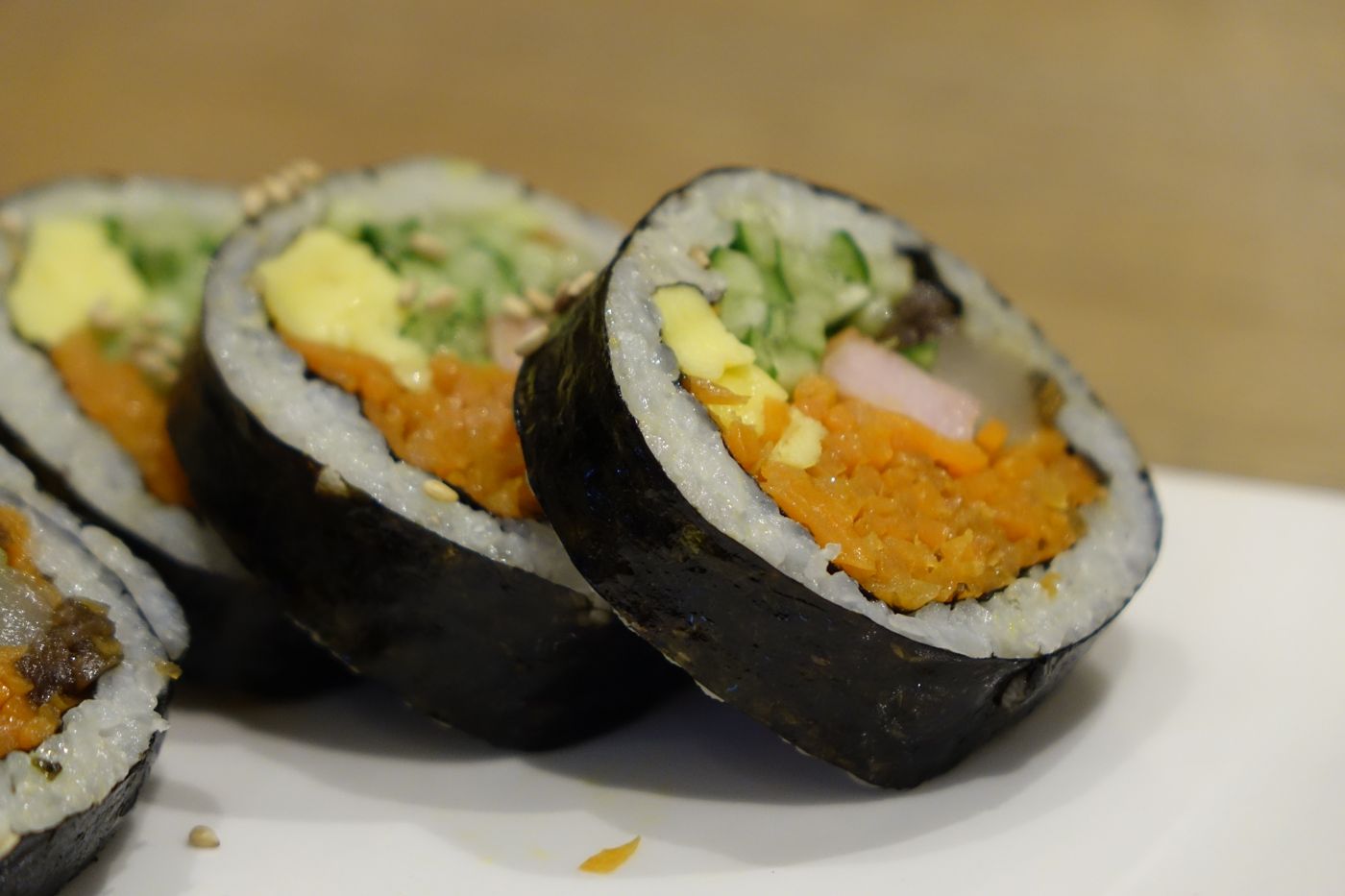 Gimbap (Seaweed Rice Rolls)김밥Rice seasoned with sesame oil and salt, rolled in laver around strips of spinach, egg, carrot and pickled radish, then sliced — Korea's classic picnic and lunchbox food.
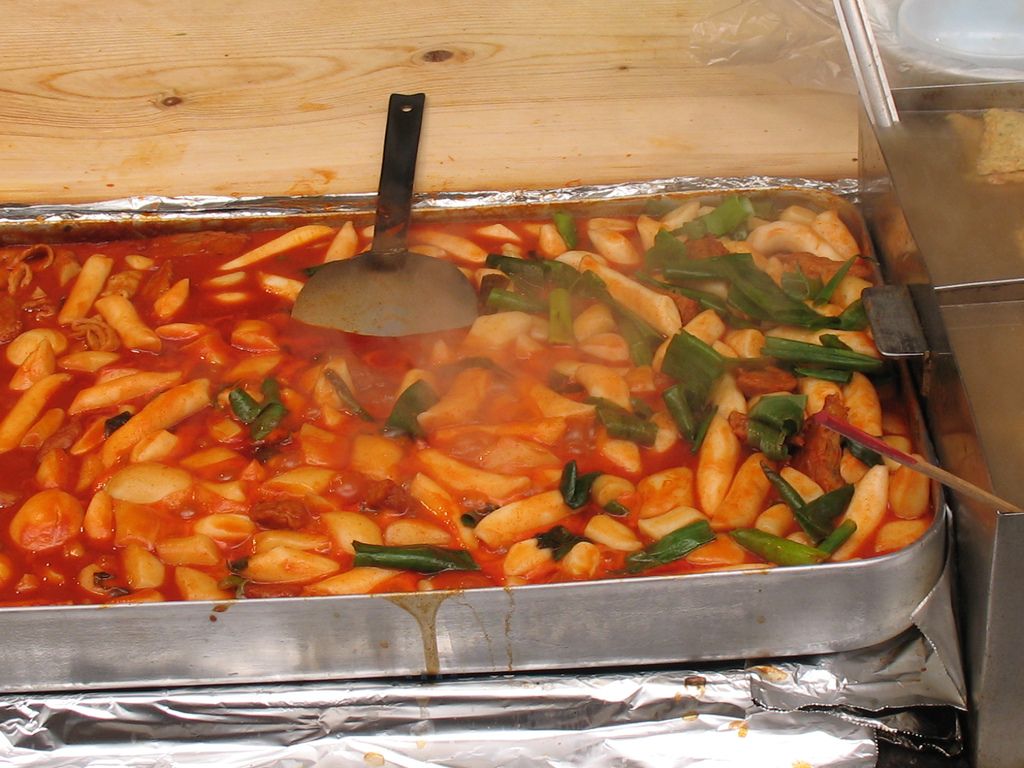 Tteokbokki (Spicy Stir-fried Rice Cakes)떡볶이Chewy rice cakes simmered in a sweet, fiery gochujang sauce with fish cake and green onion — a postwar street snack with roots in a refined soy-sauce court dish.
 Cubed Radish Kimchi깍두기Korean radish cut into neat cubes and tossed with chili, garlic and salted shrimp — crunchy, juicy and a classic partner to rich soups.
Sources
- 01어묵 (Eomuk) — Encyclopedia of Korean Folk Culture (한국의식주생활사전)
- 02꼬치어묵 (Skewered fish cake) — Encyclopedia of Korean Folk Culture (한류문화사전)
- 03부산어묵 (Busan eomuk) — Encyclopedia of Korean Culture
- 04어묵국(어묵탕) (Fish cake soup, home-style, analyzed) — MFDS K-FIND food composition database
- 05Trends in sodium intake and major contributing food groups and dishes in Korea: KNHANES 2013–2017 (Jeong et al., Nutrition Research and Practice, 2021)
- 06Global Perspectives on Allergen Labeling: Harmonization of Regulations and Practices — Allergy, Asthma & Immunology Research, 2025
Last updated