Guk & Tang · Soups 국·탕
Gul Guk (Oyster Soup)
굴국
Romanization: gul-guk
Fresh oysters dropped into a clear radish broth with tofu and green onion and cooked for barely a minute — a delicate cold-season soup of the south and west coasts.
- Serves
- 4
- Prep
- 15 min
- Cook
- 20 min
RegionTongyeong · Gyeongsang
Jump to recipeRecipe
Ingredients · Serves 4
- 300 gFresh shucked oysters (gul)
- 1 tbspCoarse saltfor rinsing the oysters
- 150 gKorean radish (mu)cut into thin 3 cm squares
- 150 gSoft or firm tofucubed
- 10 gDried anchovies (myeolchi)heads and guts removed
- 5 gDried kelp (dashima)
- 1.2 lWater
- 1 tspGarlicminced
- 1 tspSoup soy sauce (guk-ganjang)plus salt to taste
- 1 stalkGreen onionsliced
- ½ Red chili pepperoptional, sliced
Method
Technique: Making Guk and Jjigae, Making Yuksu: Anchovy-Kelp Stock
Step 1: Put the oysters in a bowl of cold water with the coarse salt and swish them gently with your fingers; pick off any shell fragments, then rinse twice in clean cold water and drain.
Step 2: Simmer the anchovies and kelp in the water for 10 minutes, removing the kelp after 5, then strain.
Step 3: Add the radish to the broth and simmer 8–10 minutes, until translucent. Add the tofu and garlic and season with soup soy sauce and salt.
Step 4: Bring the broth to a full boil and add the oysters. Cook 1–2 minutes, just until they plump and their edges curl and the soup returns to a boil; longer makes them shrink and toughen.
Step 5: Add the green onion and chili, turn off the heat and serve immediately.
Origin & History
Gul-guk is a clear soup of fresh oysters, usually with radish, tofu and green onion, seasoned lightly with salt or soup soy sauce. It belongs to the oyster season: the Joseon-era household manual Sallim gyeongje, as summarized by the Encyclopedia of Korean Folk Culture, recommends eating oysters from autumn through early spring — raw with vinegared chili sauce, steamed over rice, grilled on skewers, and at their very best simmered in a tofu stew — before salting them into jeotgal when the peonies bloom in April.
Koreans have eaten oysters since prehistory; both encyclopedias note that oyster shells are the most common remains in the country's shell middens. The sixteenth-century gazetteer Sinjeung dongguk yeoji seungnam records oysters as a product of seventy towns in every province but Gangwon, and the writer Heo Gyun, in his Domun daejak, judged the small oysters of the west coast tastier than the big ones of the northeast.
Modern supply comes from farming. The Encyclopedia of Korean Culture describes hanging-rope oyster culture developing from the 1930s and taking off in the 1950s, with the 1970s as its mature phase, centered on the south coast around Chungmu — today's Tongyeong. Fresh shucked oysters lose quality quickly once out of the shell, the folk encyclopedia notes, which is one reason the soup is cooked so briefly and eaten at once.
Key Ingredients
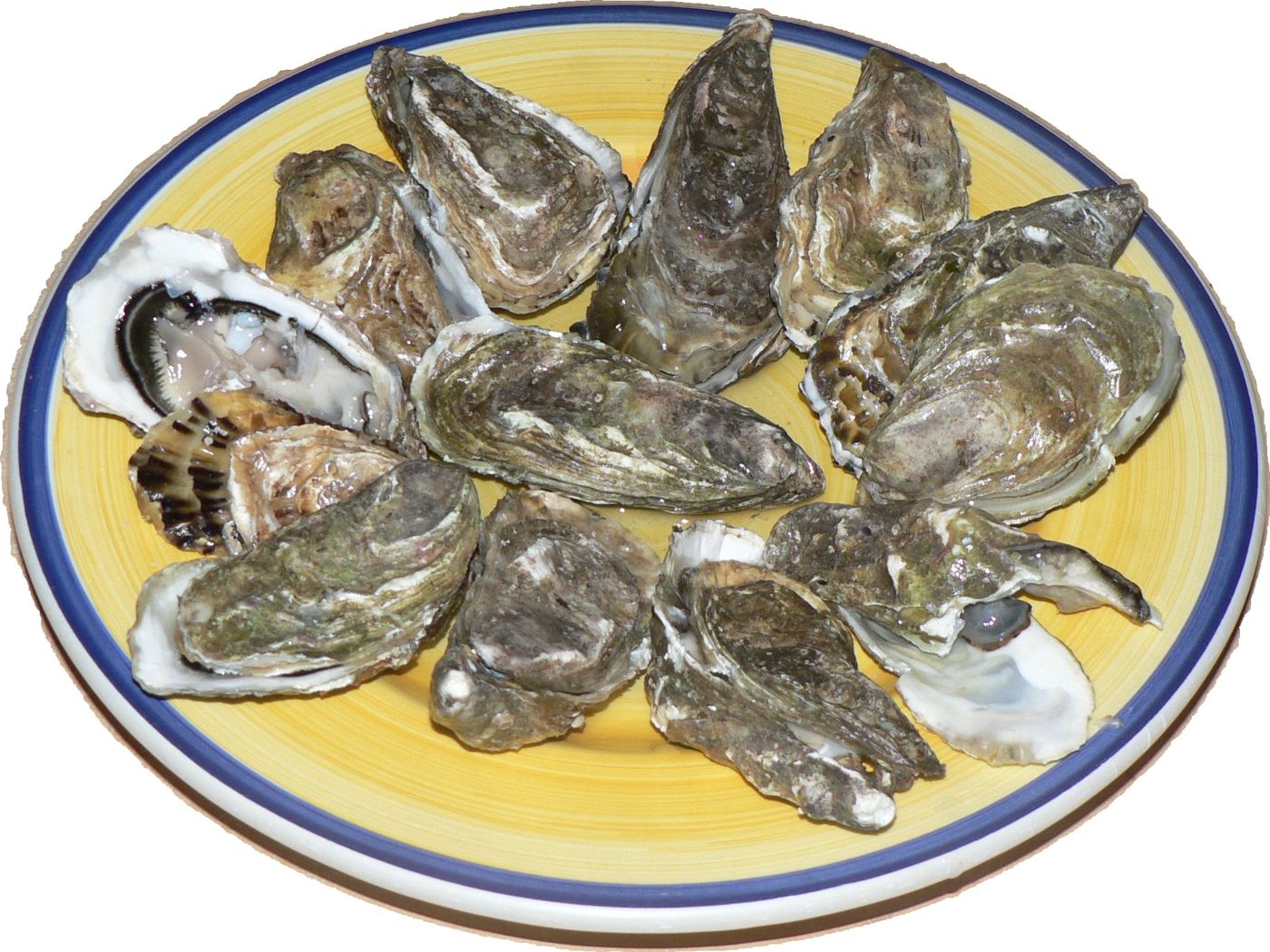 Oyster (gul)굴Plump, briny oysters, many of them grown on hanging lines in the bays around Tongyeong. Koreans eat them raw, cooked into rice, porridge, soup and pan-fried jeon, or salted with chili as eoriguljeot.
 Korean radish무A stout, heavy white radish, often tinged pale green near the top. It is cubed for kkakdugi, left whole in the clear brine of dongchimi, shredded into salads and simmered into broths.
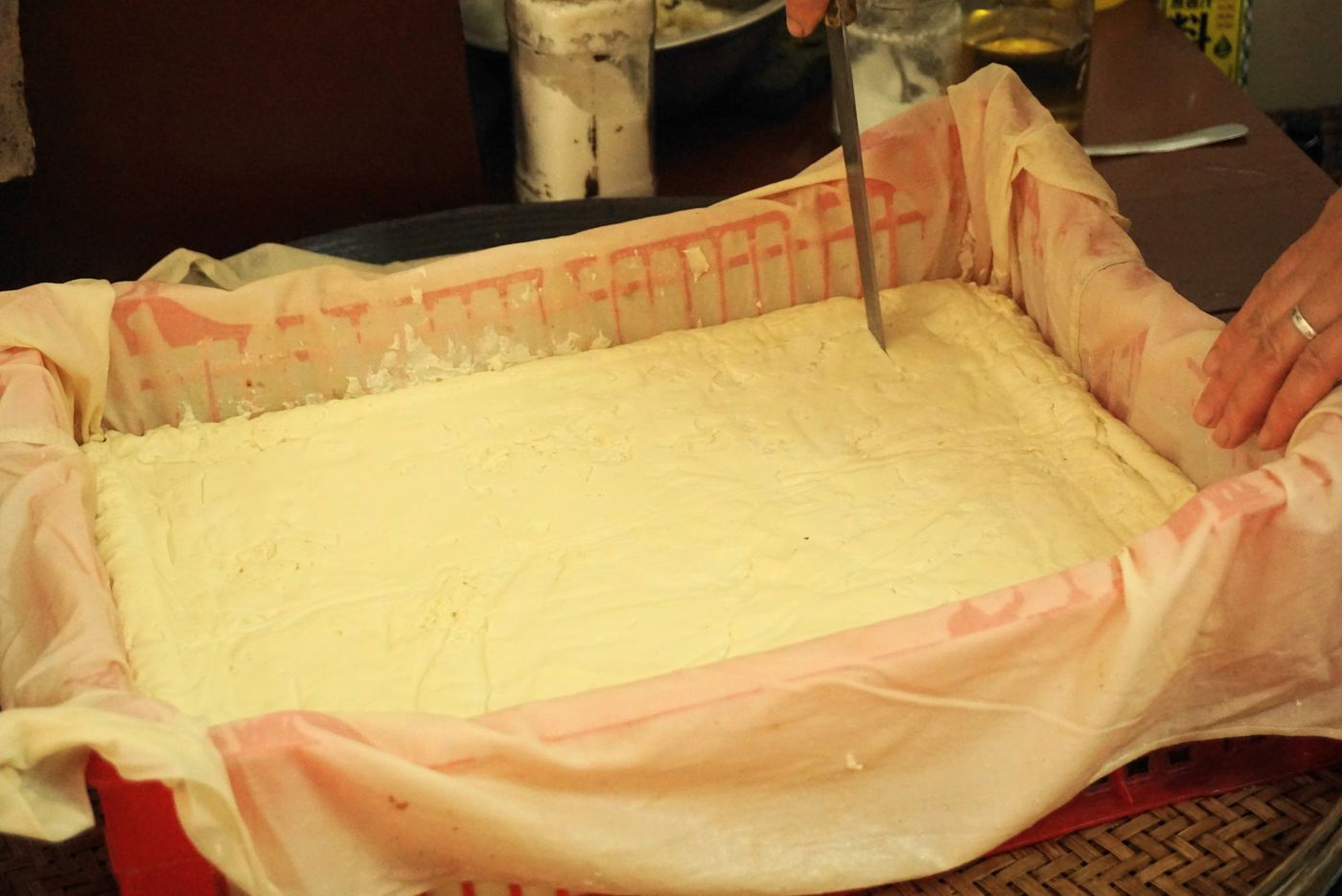 Tofu두부Fresh bean curd made by coagulating soy milk and pressing the curds. A quiet staple of Korean cooking since at least the late Goryeo period, it is pan-fried, braised in spicy soy glaze, or simmered in stews.
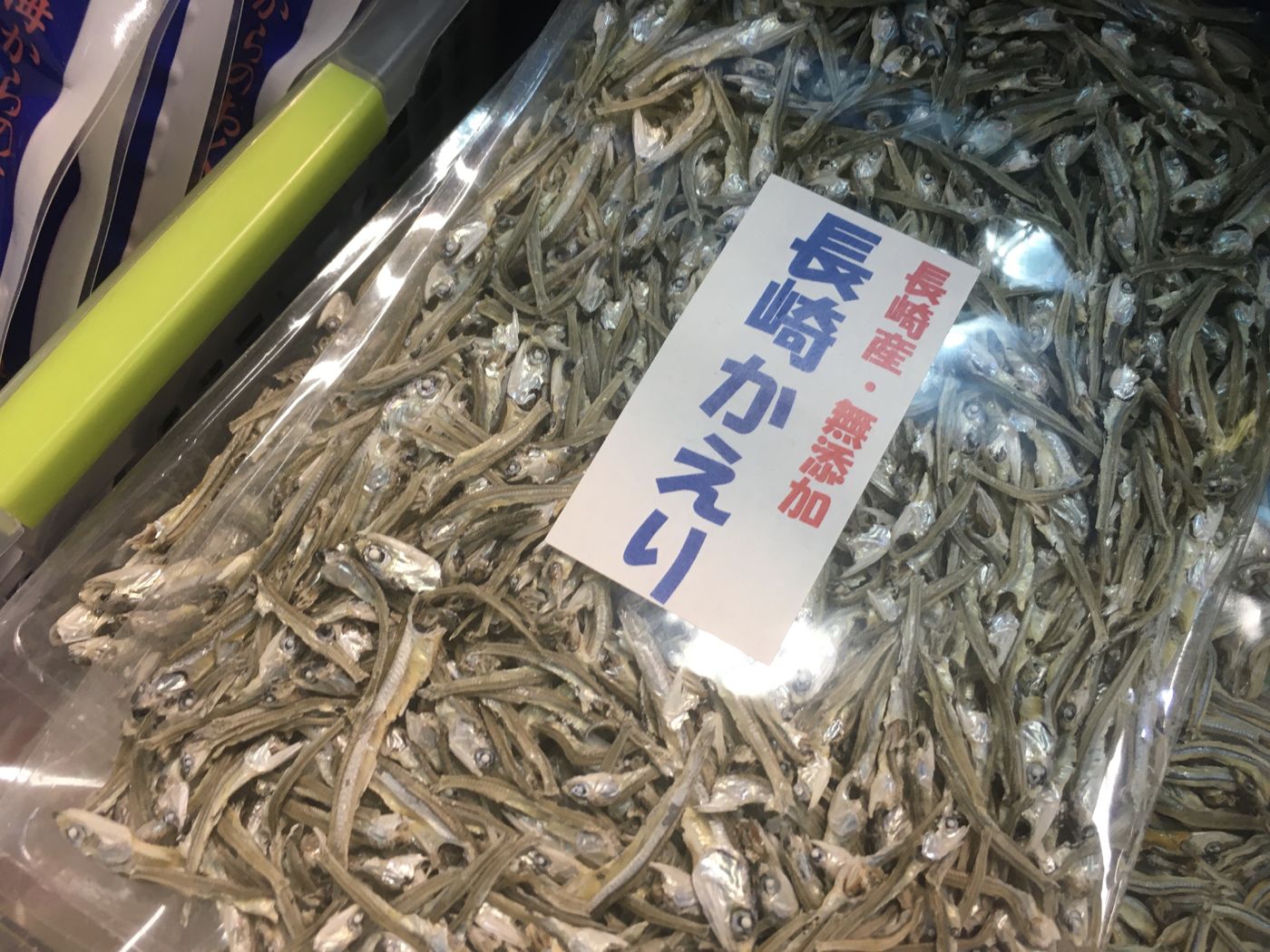 Dried anchovies멸치Small anchovies that are boiled and dried on the coast, then sorted by size. They flavor everyday broths and, stir-fried whole, become the sweet-salty side dish myeolchi-bokkeum.
 Dashima (dried kelp)다시마Thick, dried kelp that gives Korean broths their quiet savory depth. Beyond the stockpot it is fried into crisp twigak, simmered into soy-glazed side dishes and used as a wrap.
 Garlic마늘Used raw, minced, pickled and roasted, garlic is one of the essential aromatics of Korean food — in seasonings, marinades, kimchi and namul.
 Soy sauce간장Korean soy sauce, in two main kitchen forms: pale, salty guk-ganjang (soup soy sauce) brewed the traditional way from meju, and darker, sweeter jin-ganjang for braises and marinades.
 Green onion파Korean green onion (pa), from thick-stemmed daepa to slender scallions — chopped into nearly every seasoning sauce, soup and kimchi, and the star of pa-kimchi.
- Korean Chili Peppers (Fresh)고추Fresh Korean chili peppers, eaten green (putgochu) or red (hong-gochu): from the fiery cheongyang-gochu to the small, wrinkled, mild kkwari-gochu that is braised and stir-fried as banchan.
Nutrition
| Calories | ~125 kcal |
|---|---|
| Protein | ~12.1 g |
| Fat | ~1.8 g |
| Carbohydrates | ~14.7 g |
| Fiber | ~3.5 g |
| Sodium | ~1255 mg |
Notable forZinc · Vitamin B12 · Selenium · Iron
Scaled from the MFDS analysis of home-style gul-guk with radish (굴국_무; per 100 g: 25 kcal, 2.41 g protein, 0.36 g fat, 2.93 g carbohydrate, 0.7 g fiber, 251 mg sodium, 2.34 mg zinc, 21.5 µg selenium, 7.04 µg vitamin B12, 0.75 mg iron) to the database's 500 g serving: about 12 mg zinc, 110 µg selenium, 3.8 mg iron and a very large 35 µg of vitamin B12, which depends on how many oysters go into the bowl. The source's vitamin C value (32 mg per 100 g) looks high for a cooked soup and is not used. MFDS's calculated value for a restaurant oyster-tofu soup (233 mg sodium per 100 ml, 320 ml serving) gives about 750 mg sodium. Actual values vary with ingredients, portion size and preparation.
Health Benefits
- By the MFDS analysis, a bowl supplies a large amount of zinc and vitamin B12, plus selenium and iron, almost all from the oysters.
- A low-fat, low-calorie soup; the Encyclopedia of Korean Culture notes that fresh oysters are about 10% protein.
- The folk encyclopedia describes oysters as one of the few fresh foods of the winter months, valued for their zinc and amino acids.
Regional Variations
- With radish (mu): the most common home version, and the one MFDS analyzed; the radish sweetens the broth before the oysters go in.
- With tofu: the old pairing praised in Sallim gyeongje; the MFDS database lists a restaurant oyster-and-tofu soup separately.
- Gul-gukbap: oyster soup served with rice, which MFDS also lists as its own dish.
- In other stews: the folk encyclopedia lists oysters in steamed, grilled and stewed dishes as well as soups, and in winter kimchi such as gul-kkakdugi.
Pairings
- Oyster Radish Kimchi굴깍두기Cubed radish kimchi folded through with fresh raw oysters — a short-lived winter kimchi, eaten within days while the oysters are still sweet.
- Gim Gui (Seasoned Roasted Laver)김구이Sheets of laver brushed with sesame or perilla oil, sprinkled with salt and toasted until crisp — eaten wrapped around spoonfuls of rice.
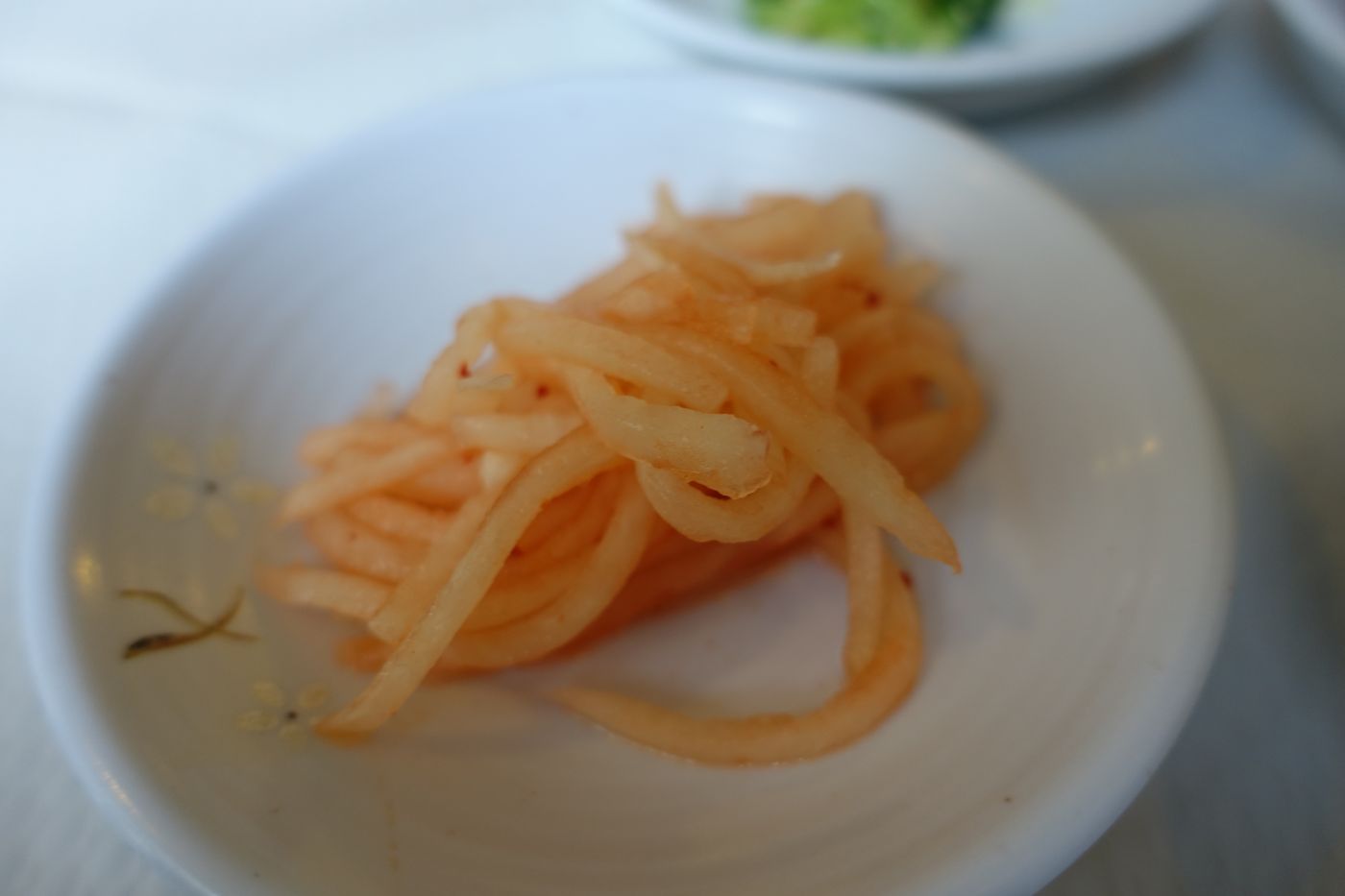 Musaengchae무생채Fine matchsticks of Korean radish dressed raw with chili flakes, a little vinegar and sugar — crisp, sweet-sharp and best made just before the meal.
Sources
- 01굴 (Oyster) — Encyclopedia of Korean Folk Culture (한국의식주생활사전)
- 02굴 (Oyster) — Encyclopedia of Korean Culture
- 03굴국_무 (Oyster soup with radish, home-style, analyzed) — MFDS K-FIND food composition database
- 04Selecting and Serving Fresh and Frozen Seafood Safely — U.S. Food and Drug Administration
- 05Global Perspectives on Allergen Labeling: Harmonization of Regulations and Practices — Allergy, Asthma & Immunology Research, 2025
- 06Sodium reduction — World Health Organization fact sheet
Last updated