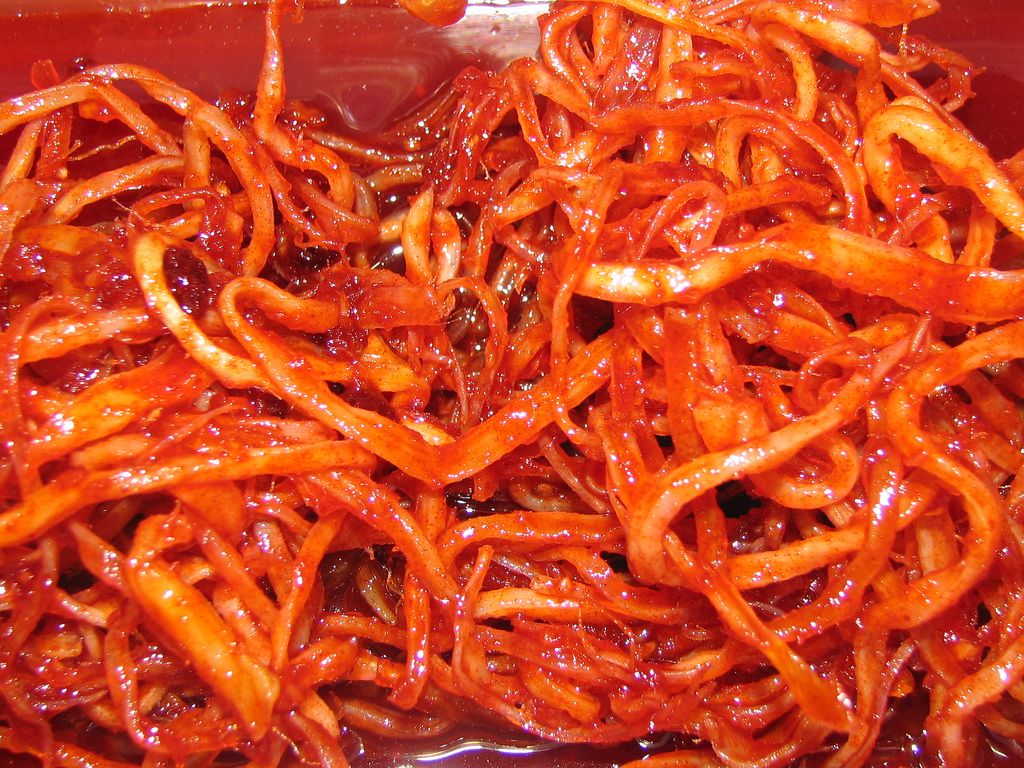
 Photo: Joseph Steinberg (Baltimoron in Korea) at Flickr, CC BY-SA 2.0, via Wikimedia Commons
Muchim · Dressed side dish 무침
Ojingeochae Muchim
오징어채무침
Romanization: ojingeochae-muchim
Chewy shredded dried squid tossed raw in a glossy gochujang and syrup sauce — sweet, spicy and savory, and one of the best-keeping banchan.
- Serves
- 6
- Prep
- 15 min
- Cook
- 0 min
RegionGyeongsang
Jump to recipeRecipe
Ingredients · Serves 6
- 150 gShredded dried squid (jinmichae)
- 2 tbspGochujang
- 2 tbspMulyeot (rice or corn syrup)
- 1 tspSoy sauce
- 1 cloveGarlicfinely minced
- 1 tbspToasted sesame oil
- 1 tspToasted sesame seeds
- 1 tbspMayonnaiseoptional; some cooks toss the strips with it to keep them tender — not included in the nutrition estimate
Method
Step 1: Cut the squid strips into 5–6 cm lengths. Rinse briefly in cold water (or soak for 1–2 minutes if very dry), then drain and squeeze out excess water. This softens the strips and washes off some surface salt.
Step 2: If using mayonnaise, toss it through the strips first and let them sit for 5 minutes.
Step 3: In a large bowl, mix the gochujang, syrup, soy sauce, garlic and sesame oil into a smooth, glossy sauce.
Step 4: Add the squid and toss thoroughly with your hands (wear gloves) or chopsticks until every strand is coated.
Step 5: Sprinkle with sesame seeds. Serve right away or refrigerate in an airtight container; it keeps for about a week and is good straight from the fridge.
Origin & History
Squid has been eaten in Korea for centuries. The National Folk Museum's food encyclopedia notes that it was considered delicious enough to appear in Heo Gyun's early-seventeenth-century food catalog Domun daejak, and that Jeong Yak-jeon's Jasan eobo (1814) recommends it raw or dried. Joseon cookbooks describe soaking dried squid to add to chilled sesame soups and braised chicken, or slicing the flesh and stir-frying it lightly in oil.
Dried squid became an East Sea industry. Ulleungdo has long been famous for squid dried quickly after the catch, and from the 1960s to the early 1980s the port of Jukbyeon in Uljin was lined with drying racks set up in yards, fields and even on the beach. Drying took more than a dozen hand steps, from gutting and skewering to stretching the body and sorting by weight.
Ojingeochae — dried squid that has been seasoned and shredded into strips, sold as jinmichae — is a modern processed food. Most of what is sold in Korea today is made from inexpensive Humboldt squid imported from Peru and Chile; when a La Niña event cut the Peruvian catch in 2024, the price of jinmichae in Korean supermarkets roughly doubled within a year. The strips are eaten as a drinking snack or turned into banchan, either stir-fried (jinmichae-bokkeum) or, as here, dressed without cooking.
Key Ingredients
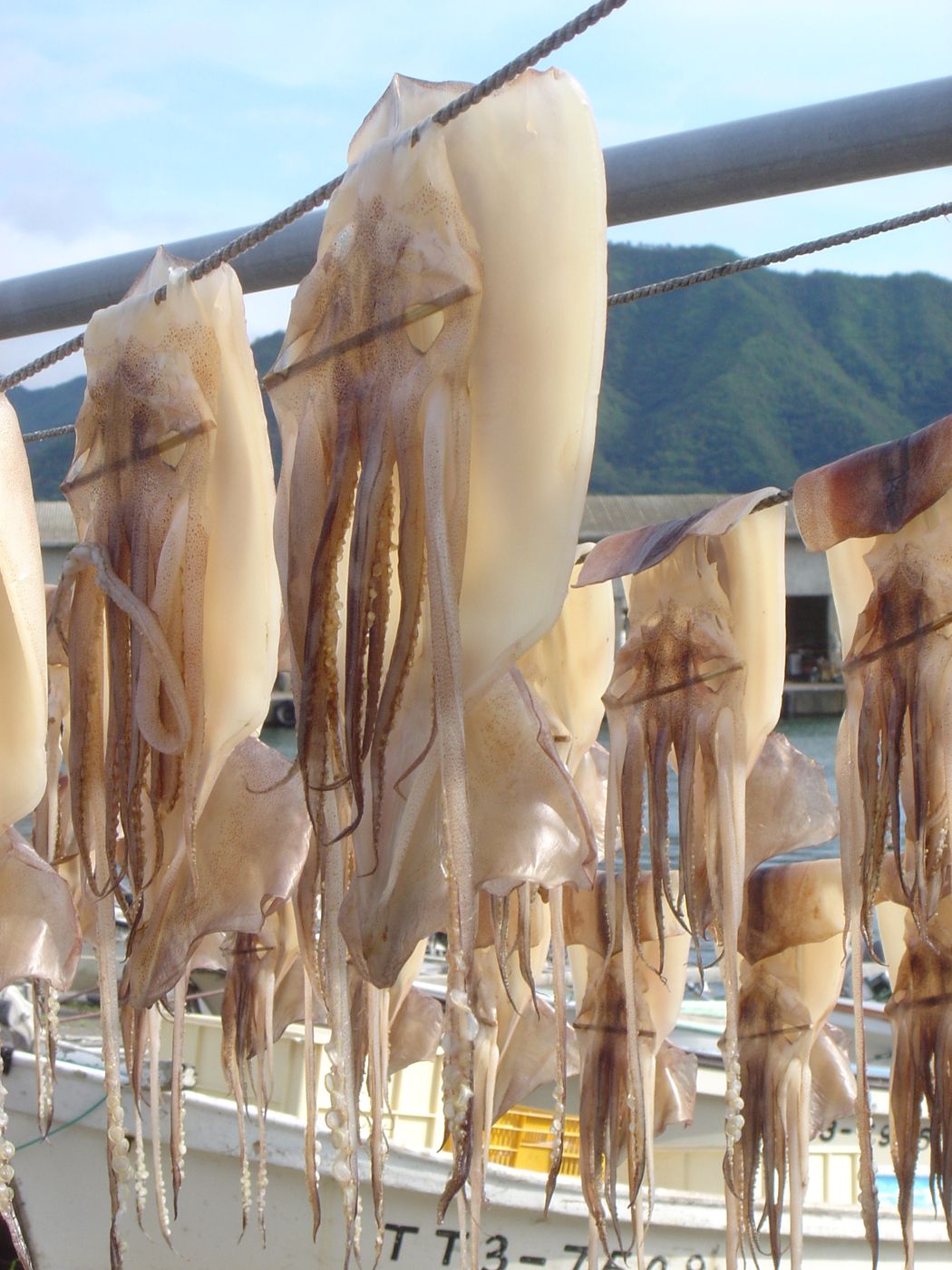 Squid오징어Fresh squid for stir-fries, pancakes and stuffed ojingeo-sundae, and dried squid — whole, sun-cured bodies or sweet-salty shredded jinmichae — that has become one of Korea's best-loved pantry foods.
- Gochujang고추장Fermented red chili paste — sweet, savory and hot. Made from meju powder, glutinous rice, malt and gochugaru, it is a later addition to Korea's family of jang.
 Korean grain syrup물엿A clear, glossy syrup used to sweeten and glaze braised and stir-fried banchan. Its traditional relative, jocheong, is a darker malt syrup made by slowly boiling down saccharified rice.
 Soy sauce간장Korean soy sauce, in two main kitchen forms: pale, salty guk-ganjang (soup soy sauce) brewed the traditional way from meju, and darker, sweeter jin-ganjang for braises and marinades.
 Garlic마늘Used raw, minced, pickled and roasted, garlic is one of the essential aromatics of Korean food — in seasonings, marinades, kimchi and namul.
 Sesame참깨Toasted sesame seeds and sesame oil (chamgireum) finish countless Korean dishes, adding a nutty aroma and gloss.
Nutrition
| Calories | ~132 kcal |
|---|---|
| Protein | ~8.7 g |
| Fat | ~2.6 g |
| Carbohydrates | ~17.8 g |
| Fiber | ~0.4 g |
| Sodium | ~640 mg |
Notable forProtein · Selenium
USDA FoodData Central has no generic entry for Korean jinmichae, so a branded sweetened shredded squid (FDC 2029677: 300 kcal, 33 g protein, 37 g carbohydrate and 1,800 mg sodium per 100 g) was used; seasoned squid products vary a great deal in sugar and salt. Gochujang and mulyeot use Korean Food Composition Table values; soy sauce, garlic, sesame oil and seeds use USDA values. Divided by six. Selenium is inferred from USDA's raw squid entry (FDC 174223, about 45 µg per 100 g), which drying concentrates; the branded product does not report it. Rinsing removes some sodium. Actual values vary with ingredients, portion size and preparation.
Health Benefits
- Protein in a small portion: drying concentrates squid's protein, so even a modest serving supplies a meaningful amount.
- Low in fat: squid itself is lean; most of the fat here comes from the sesame oil.
- Keeps well: a dry, well-seasoned banchan that holds for days in the refrigerator, which made seasoned dried seafood a practical staple.
Regional Variations
- Raw-dressed (muchim): the strips are softened briefly and tossed in an uncooked gochujang sauce, keeping a chewier, brighter texture.
- Stir-fried (bokkeum): the sauce is warmed in a pan and the strips are tossed through it off the heat, for a softer, glossier result.
- Soy-sauce version: a non-spicy dressing of soy sauce, syrup and sesame oil for children or those who avoid chili.
- White or red strips: baek-jinmichae is made from squid skinned before drying, while hong-jinmichae keeps the reddish skin on.
Pairings
 Myeolchi Bokkeum멸치볶음Small dried anchovies stir-fried until crisp, then glazed in a sweet soy and garlic syrup — a keeping banchan found in refrigerators across Korea.
 Gyeran Mari (Rolled Omelet)계란말이Beaten egg cooked in thin layers and rolled into a soft, striped log, then sliced — a gentle, everyday banchan and a lunchbox classic.
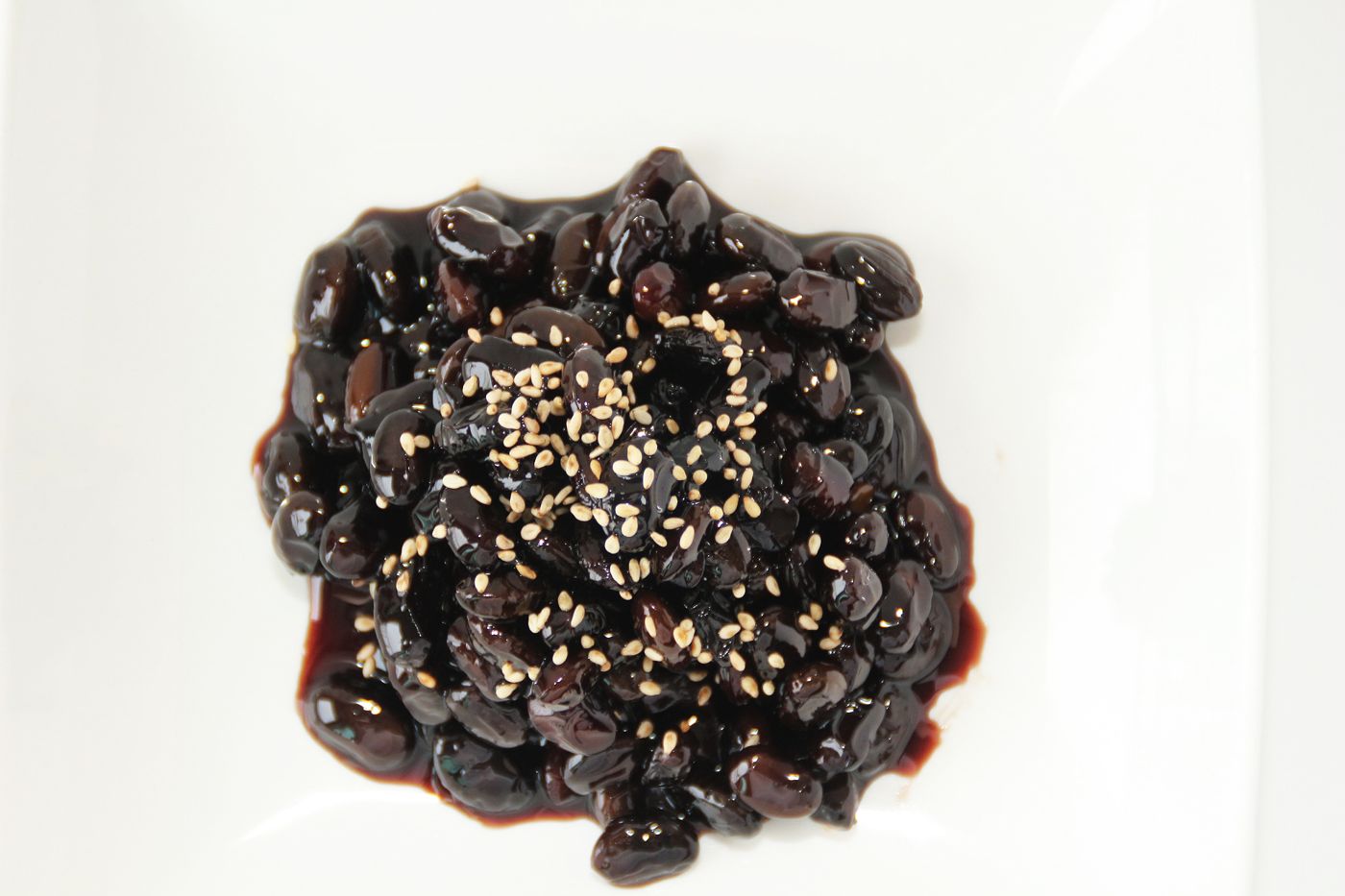 Kongjaban콩자반Black soybeans simmered in soy sauce until wrinkled and glossy, then finished with syrup and sesame — a sweet-salty, chewy keeping banchan.
Sources
- 01오징어 (Squid) — Encyclopedia of Korean Folk Culture (National Folk Museum of Korea)
- 02건오징어 (Dried squid) — Encyclopedia of Korean Folk Culture (National Folk Museum of Korea)
- 03'국민 반찬' 진미채 가격 2배 폭등 이유가 페루 날씨 탓이라니 — Hankyung (Korea Economic Daily), June 2025
- 04Prepared shredded squid (branded food, FDC 2029677) — USDA FoodData Central
- 05Mollusks, squid, mixed species, raw (FDC 174223) — USDA FoodData Central
- 06Food Allergies — U.S. Food and Drug Administration
Last updated