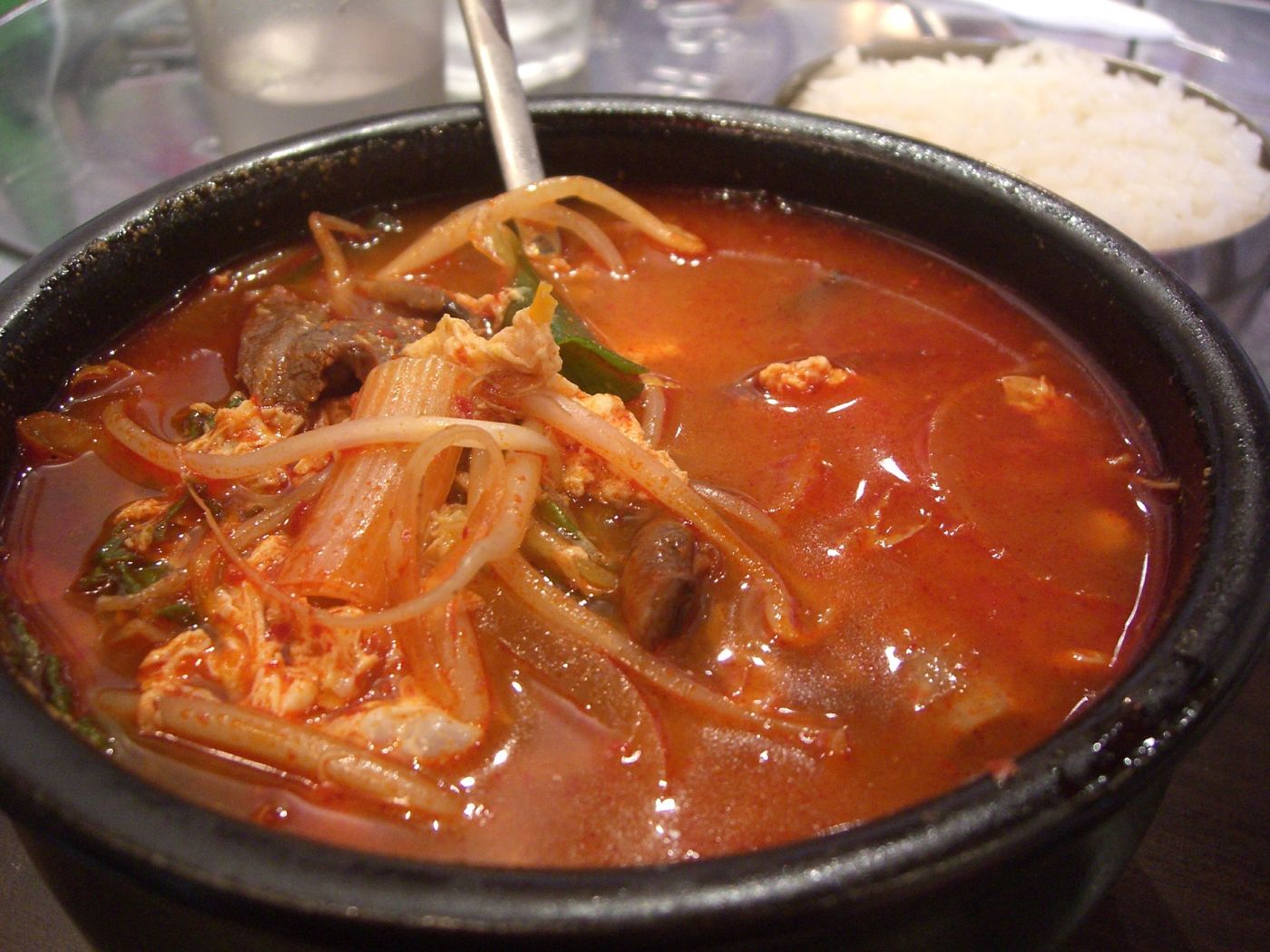
 Photo: avlxyz, CC BY-SA 2.0, via Wikimedia Commons
Guk & Tang · Soups 국·탕
Yukgaejang (Spicy Beef Soup)
육개장
Romanization: yukgaejang
Shredded beef simmered with bracken, bean sprouts and plenty of green onion in a red, chili-spiked broth — a fiery summer restorative and a gathering-day soup.
- Serves
- 6
- Prep
- 30 min
- Cook
- 120 min
RegionSeoul & Gyeonggi · Gyeongsang · Jeju
Jump to recipeRecipe
Ingredients · Serves 6
- 500 gBeef brisket or shank
- 3 lWater
- 150 gRehydrated gosari (bracken)boiled and soaked; cut into 6 cm lengths
- 200 gMung bean sprouts
- 250 gLarge green onions (daepa)halved lengthwise and cut into 6 cm lengths
- 3 tbspGochugaru
- 3 tbspSoup soy sauce (guk-ganjang)plus salt to taste
- 4 clovesGarlicminced
- 1 tbspToasted sesame oil
- 1 tbspNeutral cooking oil
- ¼ tspBlack pepper
Method
Technique: Making Guk and Jjigae, Making Yuksu: Anchovy-Kelp Stock
Step 1: Soak the beef in cold water for 20 minutes, then put it in a large pot with the 3 liters of water. Bring to a boil, skim, and simmer partly covered for about 1½ hours, until the beef is tender enough to shred.
Step 2: Lift out the beef and let it cool slightly; skim the fat from the broth. Tear the beef into thick shreds along the grain.
Step 3: In a bowl, mix the gochugaru, sesame oil, neutral oil, garlic, black pepper and 2 tbsp of the soup soy sauce into a paste. Toss the shredded beef, gosari and green onions in the paste. Rinsing the green onion briefly in water first takes off its raw sliminess, as the old recipes advise.
Step 4: Return everything to the simmering broth, add the mung bean sprouts and bring back to a boil.
Step 5: Simmer for 20–30 minutes, until the green onion is soft and sweet and the broth is deep red. Season with the remaining soup soy sauce and salt to taste.
Step 6: Serve very hot with rice. Some cooks stir in a beaten egg at the very end.
Origin & History
Yukgaejang is beef simmered until tender, torn into thick shreds along the grain, seasoned with garlic, chili flakes, sesame oil and soy sauce and returned to the pot with long pieces of green onion. It is one of the traditional dishes of boknal, the hottest days of summer. The Encyclopedia of Korean Culture explains the reasoning as iyeol-chiyeol — answering heat with heat, eating something hot enough to make you sweat — and adds that well-simmered meat is easy to digest while the spice wakes up a heat-dulled appetite.
The soup is a beef stand-in for gaejang-guk, the dog-meat soup that late-eighteenth-century almanacs such as Gyeongdo japji and Dongguk sesigi record as the boknal food of Seoul: dog meat and green onion simmered together, sprinkled with chili and eaten with rice to work up a sweat. Both encyclopedias describe yukgaejang as the version made for people who did not care for dog meat, and its name, "meat gaejang," preserves the link.
Though it began as a Seoul dish, the Encyclopedia of Korean Folk Culture notes it became especially popular in sweltering Daegu, and Choe Nam-seon listed Daegu's yukgaejang among regional specialties. Beyond summer, it is a soup for large gatherings — feasts and, especially, funerals, where a big pot feeds many mourners.
Key Ingredients
- Bracken fern shoots고사리The young, tightly curled shoots of bracken fern, picked in spring and almost always sold blanched and dried. Once soaked and thoroughly cooked, gosari turns tender and earthy, and it is a fixture of ancestral-rite tables, bibimbap and yukgaejang.
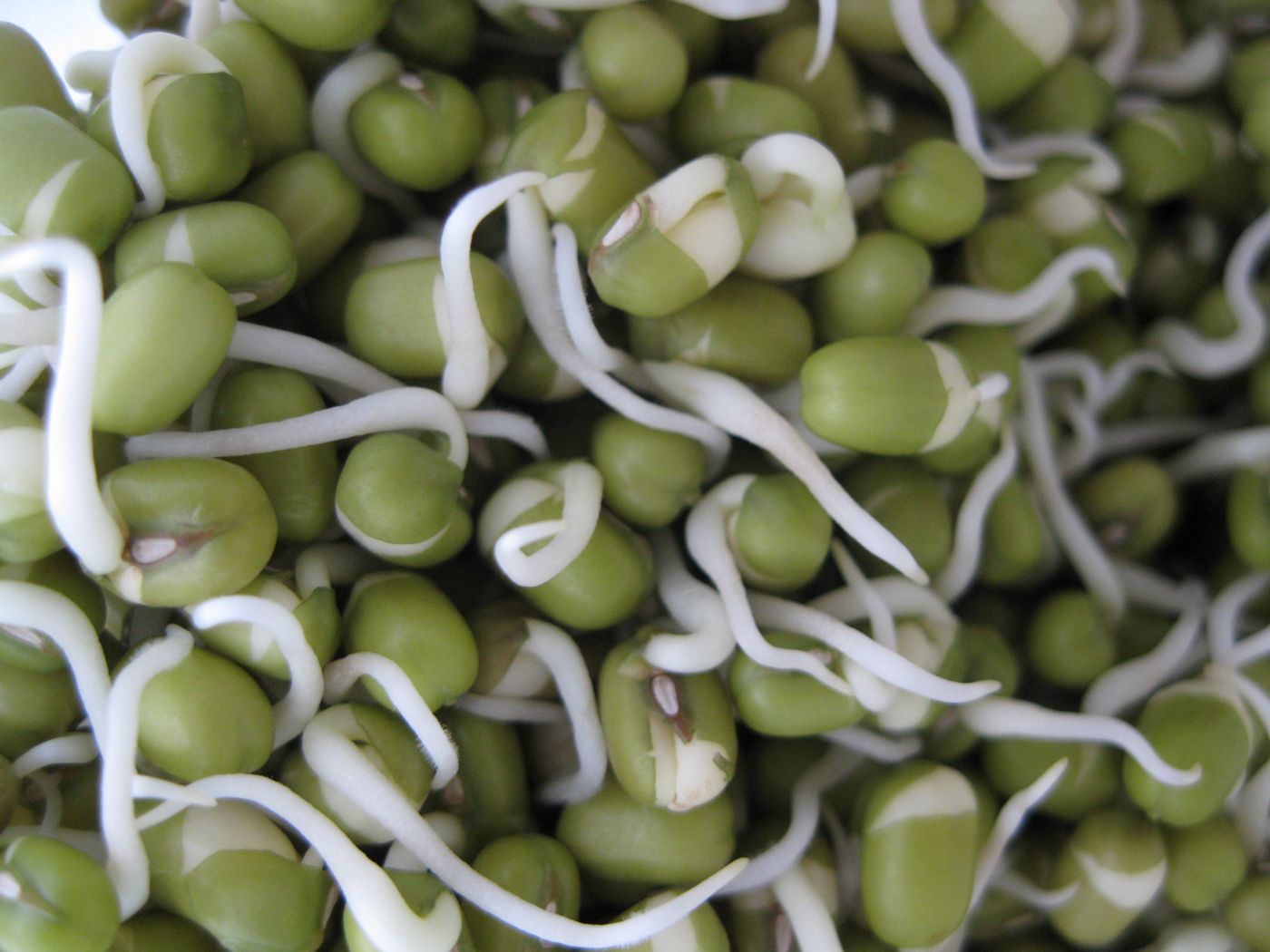 Mung bean sprouts숙주나물Short, plump, delicate sprouts grown from mung beans. Quickly blanched and seasoned as sukju-namul, they are milder and more tender than soybean sprouts.
 Green onion파Korean green onion (pa), from thick-stemmed daepa to slender scallions — chopped into nearly every seasoning sauce, soup and kimchi, and the star of pa-kimchi.
 Gochugaru고춧가루Korean red chili powder, made from dried red peppers ground coarse or fine. It gives kimchi, gochujang and countless banchan their color and warmth.
 Soy sauce간장Korean soy sauce, in two main kitchen forms: pale, salty guk-ganjang (soup soy sauce) brewed the traditional way from meju, and darker, sweeter jin-ganjang for braises and marinades.
 Garlic마늘Used raw, minced, pickled and roasted, garlic is one of the essential aromatics of Korean food — in seasonings, marinades, kimchi and namul.
 Sesame참깨Toasted sesame seeds and sesame oil (chamgireum) finish countless Korean dishes, adding a nutty aroma and gloss.
Nutrition
| Calories | ~228 kcal |
|---|---|
| Protein | ~20.5 g |
| Fat | ~13.5 g |
| Carbohydrates | ~8.9 g |
| Fiber | ~3.3 g |
| Sodium | ~800 mg |
Notable forProtein · Fiber · Vitamin B12
Estimated by summing ingredient values and dividing by six, before any salt added to taste. Beef brisket: USDA FDC 168743; mung bean sprouts: FDC 169957; large green onion: FDC 170007 (welsh onion); gochugaru approximated with red pepper, FDC 170932; oils and garlic from USDA; blanched bracken and soup soy sauce: Korean Food Composition Table (F0160000009c; 국간장, R0010030009a). Skimming the broth lowers the fat. The MFDS analysis of a 440 g home-style serving (30 kcal and 201 mg sodium per 100 g) gives about 880 mg sodium and 1.9 µg vitamin B12 per bowl. Actual values vary with ingredients, portion size and preparation.
Health Benefits
- Lean beef makes it a protein-rich soup; by USDA figures a serving's beef supplies over half the daily vitamin B12 and a good share of zinc, plus some iron.
- Bracken, bean sprouts and green onion add fiber and vegetables to the bowl.
- Its role as a summer restorative rests on the traditional idea of fighting heat with heat; the spice and warm broth are a pleasure rather than a proven remedy.
Regional Variations
- Seoul: beef shredded into thick strands, with green onion as the main vegetable.
- Daegu (daegu-tang): chunks of beef cooked until they fall apart rather than shredded, with very large amounts of green onion, garlic chives and garlic for a sweetness under the heat.
- Jeju: a pork-based version thick with Jeju bracken, sometimes called gosari-guk.
- Dakgaejang: made with chicken instead of beef; the folk encyclopedia relates it to a young-chicken soup in the nineteenth-century Siuijeonseo.
- Vegetables: depending on the region, mung bean sprouts, garlic chives, taro stems and bracken are added generously.
Pairings
 Napa Cabbage Kimchi배추김치Salted napa cabbage layered with a red paste of chili, garlic, ginger and fermented seafood, then left to ripen: the kimchi most people picture first.
 Cubed Radish Kimchi깍두기Korean radish cut into neat cubes and tossed with chili, garlic and salted shrimp — crunchy, juicy and a classic partner to rich soups.
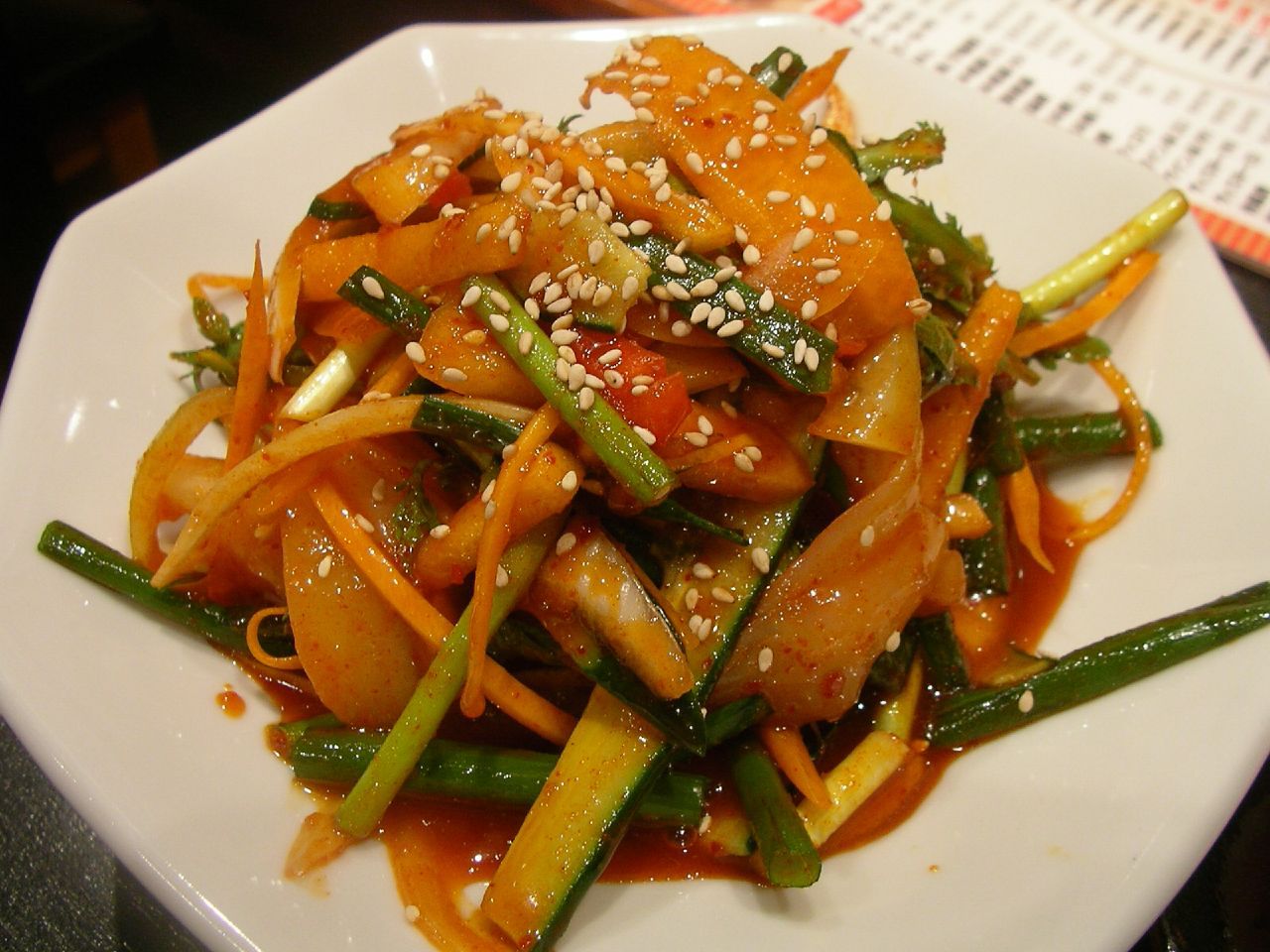 Oi Muchim오이무침Thin-sliced cucumber, briefly salted and tossed with chili flakes, vinegar and garlic — a cool, crunchy quick salad made in minutes, especially in summer.
Sources
- 01육개장 (Yukgaejang) — Encyclopedia of Korean Culture
- 02육개장 (Yukgaejang) — Encyclopedia of Korean Folk Culture (한국의식주생활사전)
- 03육개장 (Yukgaejang) — Encyclopedia of Korean Folk Culture (한국세시풍속사전)
- 04육개장 (Yukgaejang, home-style, analyzed) — MFDS K-FIND food composition database
- 05Risk Assessment and Risk Reduction of Ptaquiloside in Bracken Fern — Toxics, 2023 (PMC9959108)
- 06Sodium reduction — World Health Organization fact sheet
Last updated