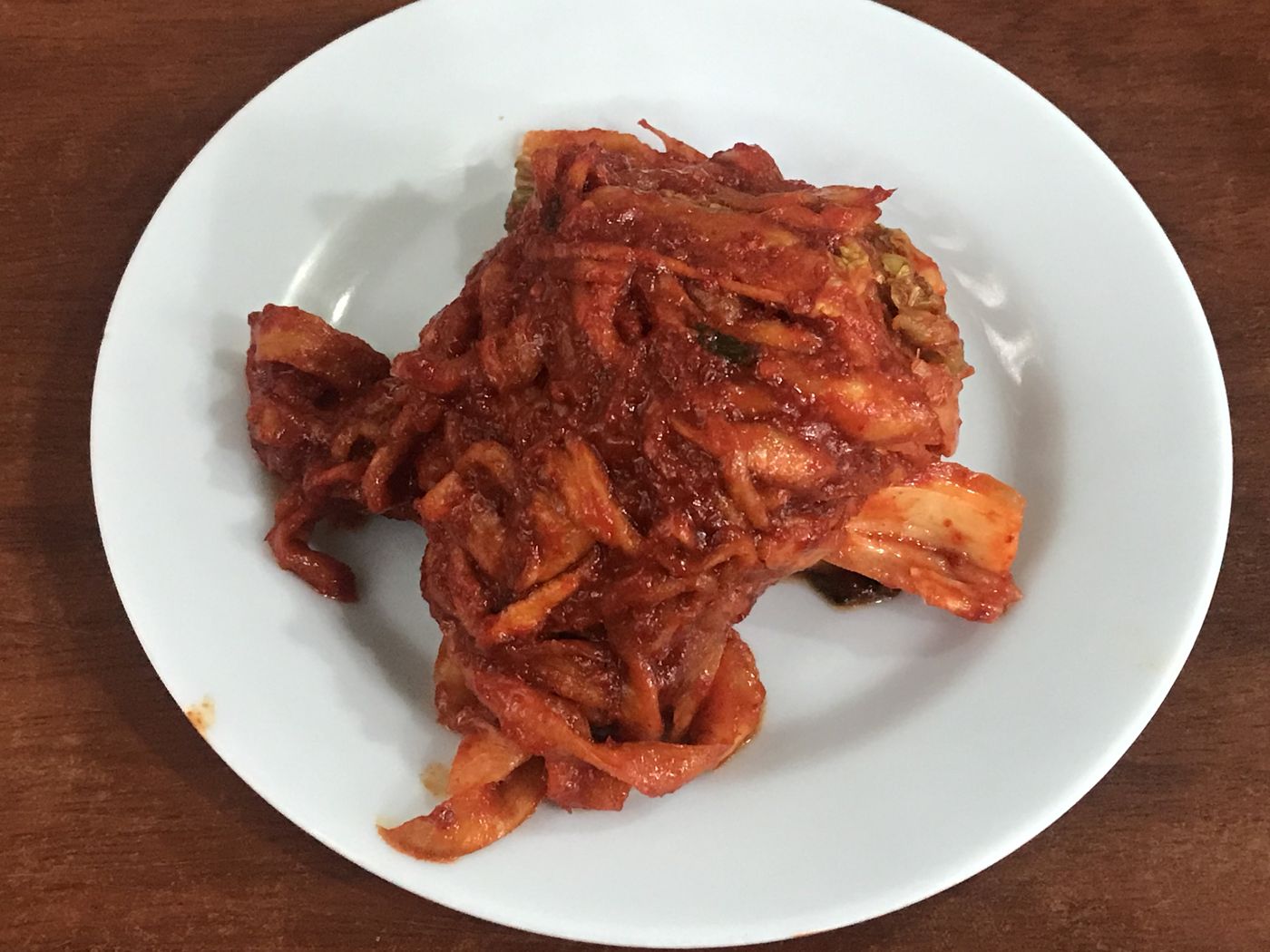
 Photo: lazy fri13th, CC BY 2.0, via Wikimedia Commons
Muchim · Dressed side dish 무침
Mu Mallaengi Muchim
무말랭이무침
Romanization: mu-mallaengi-muchim
Sun-dried radish strips soaked until springy and tossed in a sweet, spicy chili dressing — crunchy, chewy and a long-keeping winter staple.
- Serves
- 6
- Prep
- 40 min
- Cook
- 0 min
RegionGyeongsang
Jump to recipeRecipe
Ingredients · Serves 6
- 60 gDried radish strips (mu-mallaengi)
- 2 tbspGochugaru
- 1 tbspSoy sauce
- 1 tbspAnchovy fish sauce (myeolchi-aekjeot)or another tbsp soy sauce
- 2 tbspMulyeot (rice or corn syrup)
- 2 clovesGarlicminced
- 2 tbspGreen onionchopped
- 2 tspToasted sesame seeds
- 1 tspToasted sesame oil
Method
Technique: Drying and Rehydrating Vegetables
Step 1: Rinse the dried radish two or three times in cold water, rubbing it between your hands to remove dust.
Step 2: Soak in cold water for 20–30 minutes, until it softens but still has some bite. Don't over-soak, or it loses its crunch and sweetness.
Step 3: Drain and squeeze out as much water as possible, a handful at a time. Toss with the gochugaru first and leave for 10 minutes so the radish takes on a deep red color.
Step 4: Mix the soy sauce, fish sauce, syrup and garlic, add to the radish and work the seasoning in well with gloved hands.
Step 5: Add the green onion, sesame seeds and sesame oil and toss again. Taste and adjust the sweetness or saltiness.
Step 6: Serve right away, or pack into a container and refrigerate; the flavor improves after a day and it keeps for 1–2 weeks.
Origin & History
Mu-mallaengi is Korean radish cut into strips or flat pieces and dried until leathery. Radish has been grown in Korea since the Three Kingdoms period and was already a major vegetable by Goryeo, and drying both the root (as mu-mallaengi) and the greens (as siraegi) was a way to stretch the autumn harvest through the winter. The National Folk Museum's food encyclopedia notes that Seo Yu-gu's Imwon gyeongje ji (c. 1835), quoting a Chinese household manual, describes radish cut into domino-shaped pieces, salted overnight and sun-dried, then preserved with ginger, citrus peel and fennel in boiled vinegar.
Most older Korean records treat dried radish as a soy-sauce pickle. The late-nineteenth-century Siuijeonseo has dried radish steeped in soy sauce that is poured off and boiled three or four times — good for spring and summer meals, served with sesame and chili powder — and the early-twentieth-century Banchan deungsok gives a similar mu-mallaengi jjanji sweetened with a little honey. 1920s–40s cookbooks add shredded dried cabbage hearts, ginger, chili, green onion and garlic.
As chili powder became commonplace, the dish turned into the deep-red, sweet-spicy version familiar today, made both as a kimchi that ferments in a jar over the winter and as this quicker muchim, eaten within a week or two.
Key Ingredients
 Korean radish무A stout, heavy white radish, often tinged pale green near the top. It is cubed for kkakdugi, left whole in the clear brine of dongchimi, shredded into salads and simmered into broths.
 Gochugaru고춧가루Korean red chili powder, made from dried red peppers ground coarse or fine. It gives kimchi, gochujang and countless banchan their color and warmth.
 Soy sauce간장Korean soy sauce, in two main kitchen forms: pale, salty guk-ganjang (soup soy sauce) brewed the traditional way from meju, and darker, sweeter jin-ganjang for braises and marinades.
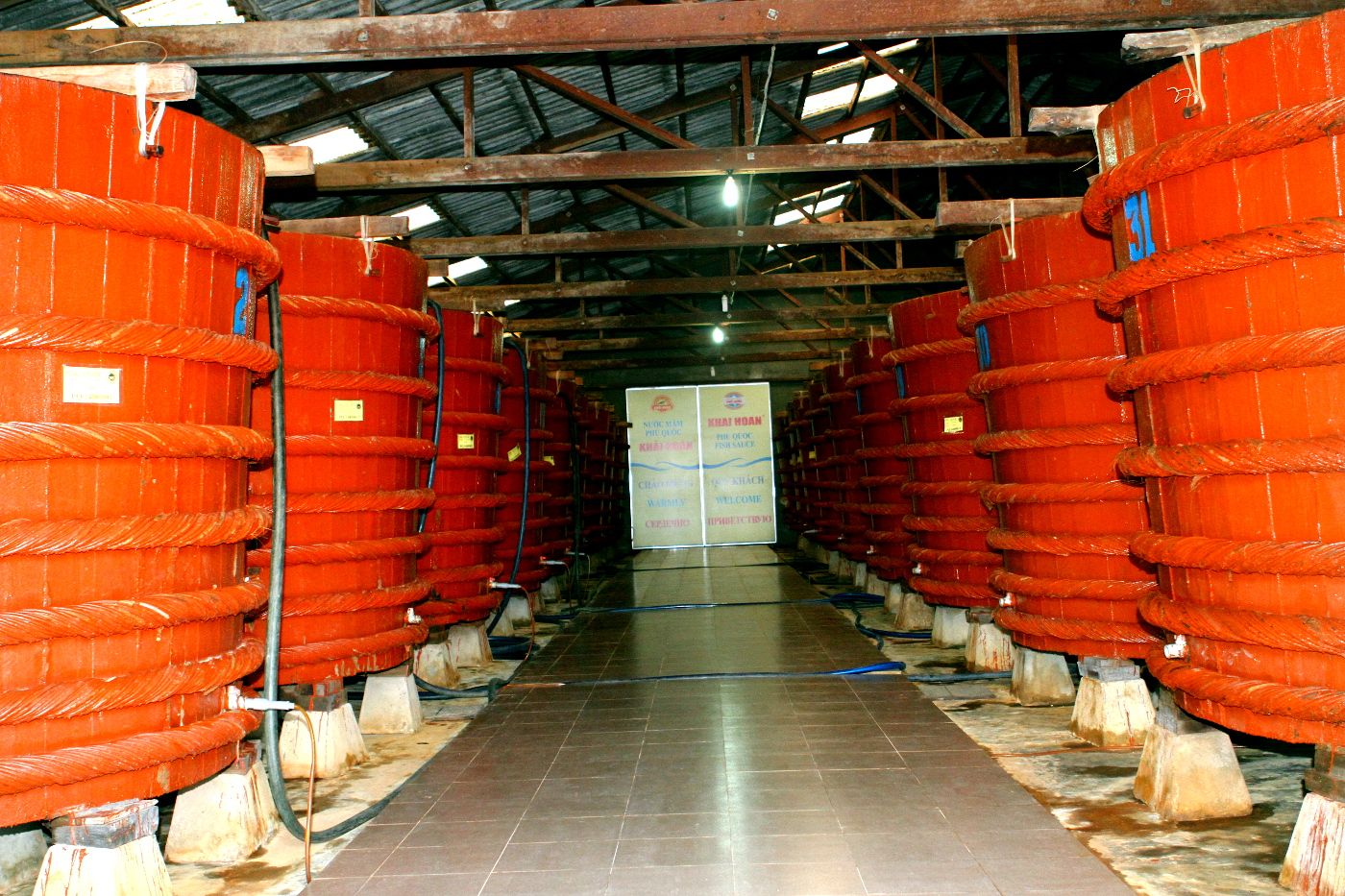 Anchovy fish sauce멸치액젓The clear amber liquid drawn from salted, fermented anchovies. A jeotgal in liquid form, it is the savory backbone of much southern-style kimchi and a quick seasoning for soups and namul.
 Korean grain syrup물엿A clear, glossy syrup used to sweeten and glaze braised and stir-fried banchan. Its traditional relative, jocheong, is a darker malt syrup made by slowly boiling down saccharified rice.
 Garlic마늘Used raw, minced, pickled and roasted, garlic is one of the essential aromatics of Korean food — in seasonings, marinades, kimchi and namul.
 Green onion파Korean green onion (pa), from thick-stemmed daepa to slender scallions — chopped into nearly every seasoning sauce, soup and kimchi, and the star of pa-kimchi.
 Sesame참깨Toasted sesame seeds and sesame oil (chamgireum) finish countless Korean dishes, adding a nutty aroma and gloss.
Nutrition
| Calories | ~72 kcal |
|---|---|
| Protein | ~1.8 g |
| Fat | ~1.5 g |
| Carbohydrates | ~13.9 g |
| Fiber | ~3.4 g |
| Sodium | ~405 mg |
Notable forDietary fiber · Potassium · Calcium
Estimated from the USDA FoodData Central value for dried oriental radish (FDC 168453), plus Korean Food Composition Table values for gochugaru, anchovy fish sauce and mulyeot and USDA values for soy sauce, garlic, green onion, sesame seeds and sesame oil, divided by six. Soaking leaches some potassium and sugars from the radish, so actual amounts are probably somewhat lower. Actual values vary with ingredients, portion size and preparation.
Health Benefits
- Concentrated fiber: drying removes most of the water from radish, so a small serving of mu-mallaengi delivers far more fiber than the same weight of fresh radish.
- Minerals: USDA data for dried radish show notable potassium and calcium per 100 g; per serving the amounts are modest.
- A winter vegetable: like siraegi, dried radish was a way to keep vegetables on the table through the months when fresh produce was scarce.
Regional Variations
- Gyeongsang golgom-jjanji: in the Gyeongsang provinces, dried radish kimchi is made at kimjang time alongside napa cabbage kimchi. The name refers to radish cut in domino (golpae) shapes; dried chili leaves, cabbage hearts or dried squid may be added, bound with glutinous rice paste, anchovy sauce and plenty of grain syrup.
- Soy-sauce style: the older pickle, with the radish soaked in soy sauce rather than chili, survives as mu-mallaengi jangajji.
- With chili leaves: dried pepper leaves (gochu-ip) are a classic addition, soaked along with the radish.
Pairings
 Napa Cabbage Kimchi배추김치Salted napa cabbage layered with a red paste of chili, garlic, ginger and fermented seafood, then left to ripen: the kimchi most people picture first.
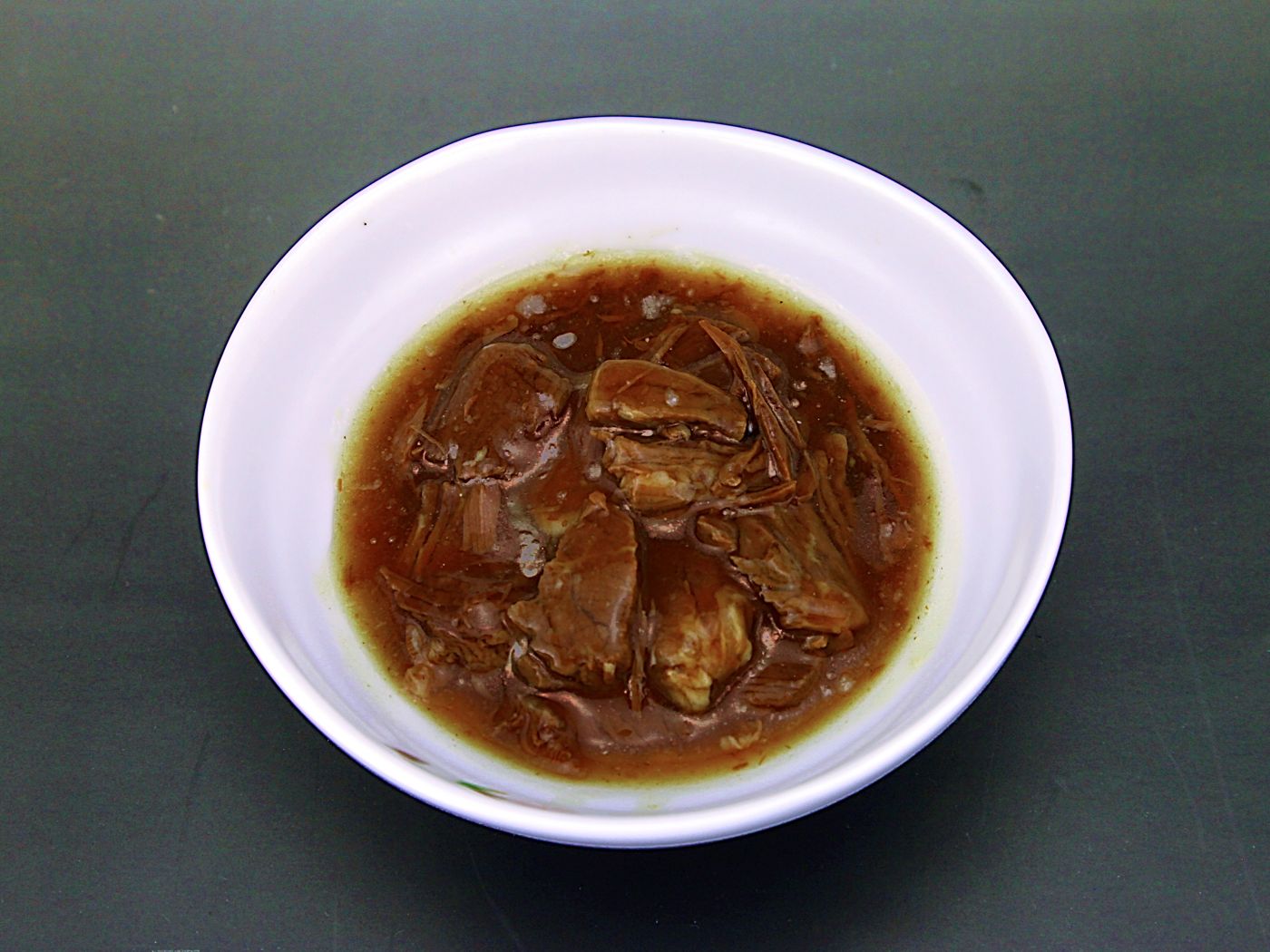 Jangjorim장조림Lean beef simmered in soy sauce until tender, then torn into strands and served in its savory broth, often with eggs, garlic and mild peppers.
 Kongnamul Muchim콩나물무침Soybean sprouts cooked under a lid until just tender, then tossed with garlic, green onion and sesame oil — crisp, nutty and on tables across Korea.
Sources
- 01무말랭이김치 (Mu-mallaengi kimchi) — Encyclopedia of Korean Folk Culture (National Folk Museum of Korea)
- 02시래기 (Siraegi) — Encyclopedia of Korean Folk Culture (National Folk Museum of Korea)
- 03무 (Korean radish) — Encyclopedia of Korean Culture
- 04Radishes, oriental, dried (FDC 168453) — USDA FoodData Central
Last updated