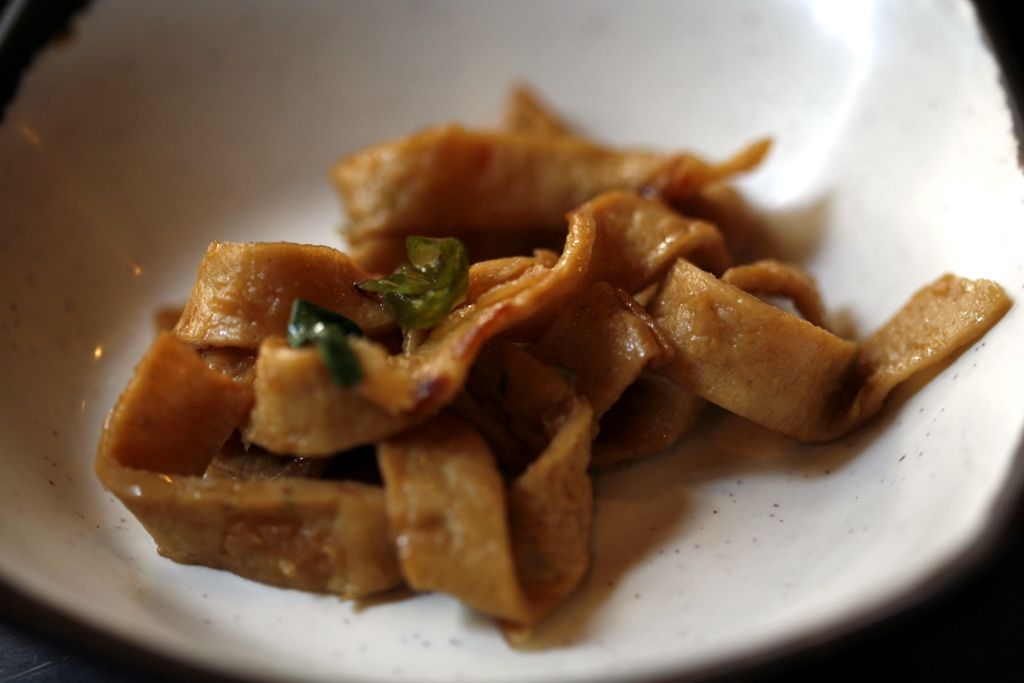
 Photo: Charles Haynes, CC BY-SA 2.0, via Wikimedia Commons
Bokkeum · Stir-fried 볶음
Eomuk Bokkeum
어묵볶음
Romanization: eomuk-bokkeum
Strips of Korean fish cake stir-fried with onion and carrot in a light soy glaze — quick, savory-sweet and one of the most familiar everyday banchan.
- Serves
- 4
- Prep
- 10 min
- Cook
- 7 min
RegionGyeongsang
Jump to recipeRecipe
Ingredients · Serves 4
- 250 gKorean fried fish cake sheets (eomuk)about 4–5 sheets, cut into 1 × 5 cm strips
- ½ mediumOnionabout 100 g, sliced
- 40 gCarrotcut into thin matchsticks
- 40 gGreen bell pepper or mild green chilisliced
- 1 tbspNeutral cooking oil
- 1 cloveGarlicminced
- 1 tbspSoy sauce
- 1 tspSugar
- 1 tbspMulyeot (rice or corn syrup)
- 3 tbspWater
- 1 tspToasted sesame oil
- 1 tspToasted sesame seeds
- 1 tspGochugaruoptional, for a spicy version
Method
Technique: Bokkeum: Korean Stir-Frying
Step 1: Put the fish cake strips in a sieve and pour boiling water over them (or dip them in boiling water for 20–30 seconds). This rinses off surface oil and softens the texture. Drain well.
Step 2: Mix the soy sauce, sugar, syrup, water and garlic (and gochugaru, if using) in a small bowl.
Step 3: Heat the oil in a wide pan over medium heat. Stir-fry the onion and carrot for 1–2 minutes, until the onion turns translucent at the edges.
Step 4: Add the fish cake and stir-fry for 1 minute, then pour in the sauce. Toss for 2–3 minutes, until the sauce is absorbed and the fish cake looks glossy.
Step 5: Add the pepper and cook for 30 seconds more so it stays bright and crisp.
Step 6: Turn off the heat, stir in the sesame oil and sesame seeds, and serve warm or at room temperature.
Origin & History
Eomuk is fish paste that has been ground, kneaded and then fried, steamed or grilled into sheets, rods and other shapes. The Korean industry grew out of Japanese kamaboko during the colonial period, and the port city of Busan became its center; the first Korean-owned factory opened there after liberation in 1945.
During the Korean War, refugees crowded into Busan, and cheap, protein-rich fish cake became an important food. Producers multiplied in the following decades, and as people returned home and the industry grew, Busan-style eomuk became a national food rather than a regional one. Many Koreans still also call it odeng, a word borrowed from a Japanese simmered dish.
Fried sheet fish cake is used in soups, tteokbokki, gimbap and stews, and stir-frying it with vegetables is one of the simplest ways to turn it into a side dish. Eomuk-bokkeum takes minutes to make, keeps for a few days and is a regular in home kitchens.
Key Ingredients
- Fish cake어묵A processed food of ground white fish, salt and starch, shaped into sheets, tubes or balls and then fried, steamed or grilled. Busan made it famous, and stir-fried eomuk is a common banchan.
 Garlic마늘Used raw, minced, pickled and roasted, garlic is one of the essential aromatics of Korean food — in seasonings, marinades, kimchi and namul.
 Soy sauce간장Korean soy sauce, in two main kitchen forms: pale, salty guk-ganjang (soup soy sauce) brewed the traditional way from meju, and darker, sweeter jin-ganjang for braises and marinades.
 Korean grain syrup물엿A clear, glossy syrup used to sweeten and glaze braised and stir-fried banchan. Its traditional relative, jocheong, is a darker malt syrup made by slowly boiling down saccharified rice.
 Sesame참깨Toasted sesame seeds and sesame oil (chamgireum) finish countless Korean dishes, adding a nutty aroma and gloss.
 Gochugaru고춧가루Korean red chili powder, made from dried red peppers ground coarse or fine. It gives kimchi, gochujang and countless banchan their color and warmth.
Nutrition
| Calories | ~185 kcal |
|---|---|
| Protein | ~7.1 g |
| Fat | ~9.1 g |
| Carbohydrates | ~20.1 g |
| Fiber | ~1 g |
| Sodium | ~1400 mg |
Notable forProtein · Vitamin C
Estimated by summing USDA FoodData Central values for the raw ingredients and dividing by four servings. USDA has no generic entry for Korean fried fish cake, so a branded Korean fish cake label entry (FDC 2678045) was used; label sodium for fish cakes varies widely by brand, so actual sodium may be considerably lower. Blanching removes some surface oil, which is not accounted for here. Actual values vary with ingredients, portion size and preparation.
Health Benefits
- Fish cake is made mostly from fish, so the dish is a source of protein.
- The onion, carrot and pepper add some vitamin C and color, and the vegetable share can easily be increased.
- It is quick to prepare from refrigerator staples, which makes it a practical protein-containing banchan for weeknight meals.
Regional Variations
- Busan eomuk: fish cake from Busan, traditionally made with a high proportion of fresh fish, much of it small local catch, is considered the benchmark and is sold by name across the country.
- Mild or spicy: the mild version uses soy sauce and a little syrup; a spicy version adds gochugaru or gochujang.
- Shapes and add-ins: cooks use flat sheets cut into strips, round rods or bite-size pieces, sometimes with green chili, bell pepper or kkwari-gochu peppers.
Pairings
 Myeolchi Bokkeum멸치볶음Small dried anchovies stir-fried until crisp, then glazed in a sweet soy and garlic syrup — a keeping banchan found in refrigerators across Korea.
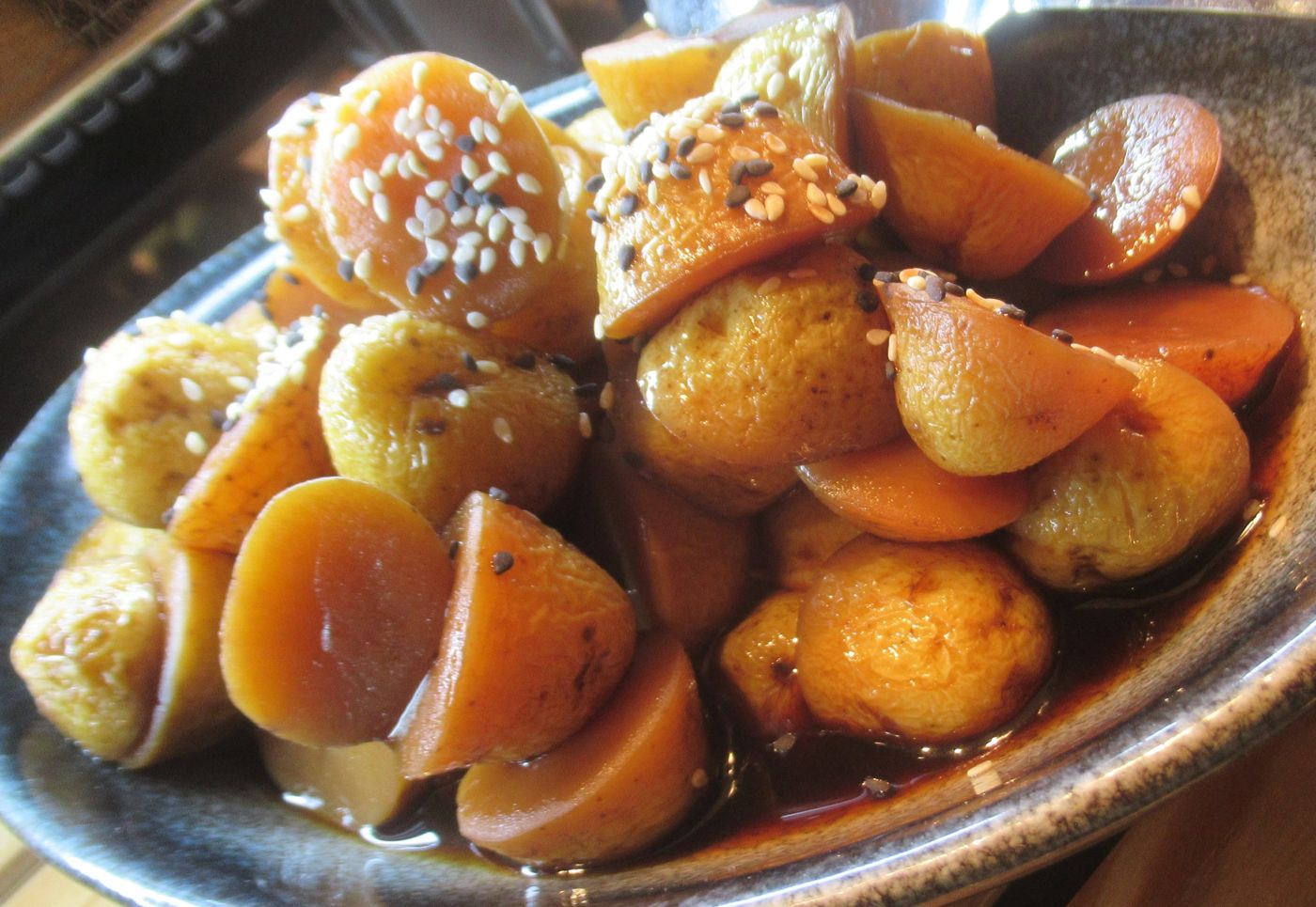 Gamja Jorim감자조림Cubed potatoes simmered in soy sauce, garlic and a touch of sweetness until tender and glossy — a comforting, child-friendly staple of the Korean home table.
 Cubed Radish Kimchi깍두기Korean radish cut into neat cubes and tossed with chili, garlic and salted shrimp — crunchy, juicy and a classic partner to rich soups.