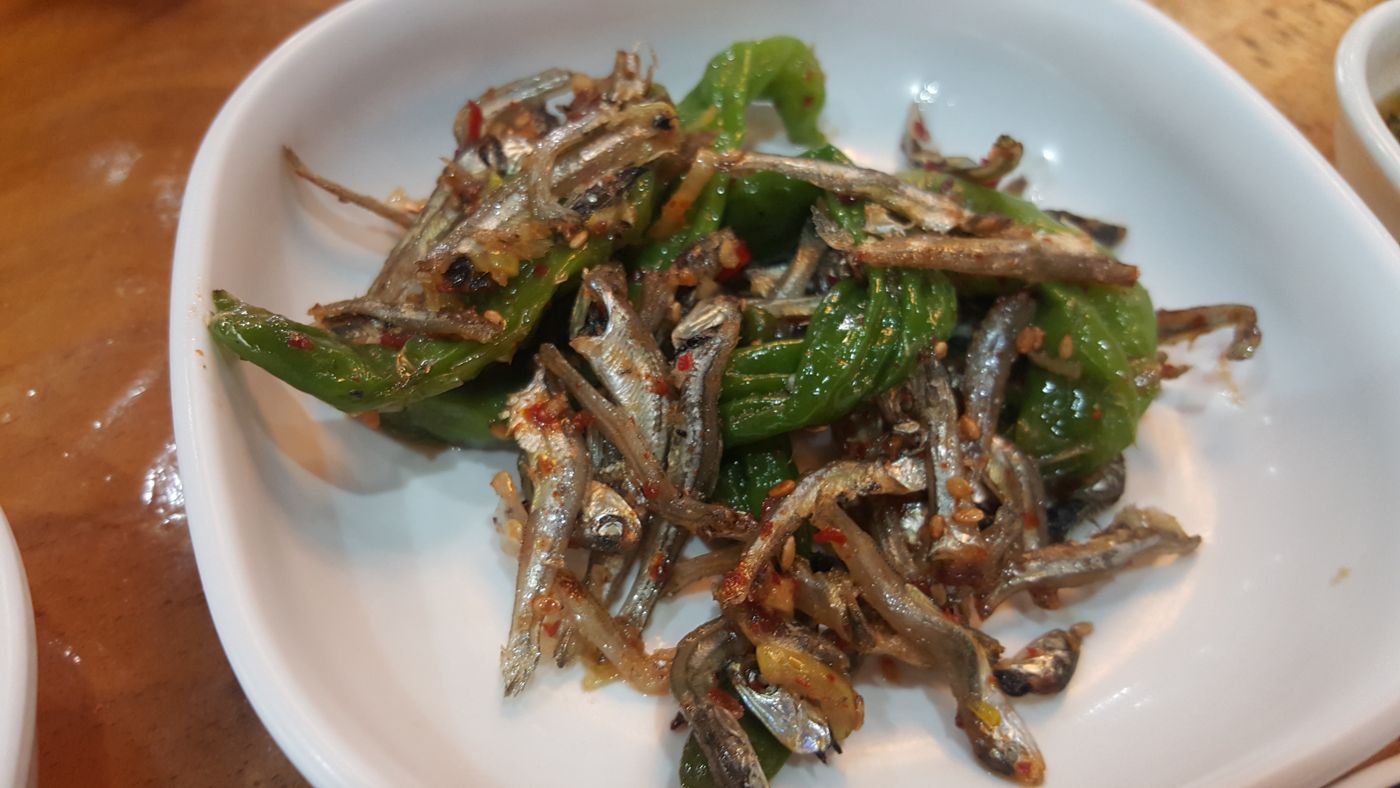
 Photo: 차차PD, CC BY 4.0, via Wikimedia Commons
Bokkeum · Stir-fried 볶음
Kkwarigochu Myeolchi Bokkeum (Shishito Peppers with Anchovies)
꽈리고추멸치볶음
Romanization: kkwarigochu-myeolchi-bokkeum
Small dried anchovies and wrinkled shishito-type peppers glazed in soy sauce and rice syrup — a sweet, salty, gently grassy lunchbox staple.
- Serves
- 6
- Prep
- 10 min
- Cook
- 10 min
RegionGyeongsang
Jump to recipeRecipe
Ingredients · Serves 6
- 50 gSmall dried anchovies (jamyeolchi)about 1 cup
- 150 gKkwarigochu (shishito-type peppers)about 25–30 peppers
- 1 tbspNeutral cooking oil
- 2 clovesGarlicthinly sliced
- 1½ tbspSoy sauce
- 1 tbspMulyeot (rice syrup) or corn syrup
- 1 tspSugar
- 3 tbspWater
- 1 tspToasted sesame oil
- 1 tspToasted sesame seeds
Method
Technique: Bokkeum: Korean Stir-Frying
Step 1: Pull the stems off the peppers and rinse them. Pierce each one once or twice with a fork or the tip of a knife so the seasoning gets in and they don't burst; cut very long ones in half.
Step 2: Shake the anchovies in a sieve to remove dust and broken bits. Toast them in a dry pan over medium-low heat for 2 minutes, until they smell nutty and feel crisp, then tip them out.
Step 3: Heat the oil in the same pan over medium heat. Add the garlic and peppers and stir-fry for 2–3 minutes, until the peppers are blistered in spots and bright green.
Step 4: Add the soy sauce, sugar and water, and simmer for 1–2 minutes so the peppers absorb the seasoning.
Step 5: Return the anchovies to the pan, add the mulyeot and toss over low heat for about 1 minute, until the sauce reduces to a glaze that coats everything.
Step 6: Off the heat, stir in the sesame oil and sesame seeds. Cool completely before storing; keeps in a covered container in the refrigerator for about a week.
Origin & History
Kkwarigochu is the Korean name for a small, thin-walled green chili with a crumpled, wrinkled surface — the same type sold in Japan and the West as shishito. Korea's food composition table lists it simply as the shishito variety of gochu. It is mild, tender enough to eat whole, and one of the green chilies the National Folk Museum's encyclopedia names among those most eaten in Korea today. Chili peppers themselves reached Korea around the late sixteenth century, first recorded in Yi Su-gwang's Jibong yuseol (1614).
Dried anchovies have a much longer place on the table. The nineteenth-century writer Yi Gyu-gyeong described dried anchovies as a daily side dish, and the folk encyclopedia explains that the smaller sizes — somyeol, jamyeol and the tiny semyeol — are the ones that are stir-fried or braised, while medium and large anchovies go into stock. Most of Korea's catch comes from the south coast, especially off South Gyeongsang, where the fish are boiled on board and then dried.
Pairing the two is a modern home-cooking classic. The national dictionary defines kkwarigochu-myeolchi-bokkeum as anchovies cooked in a soy sauce and rice syrup seasoning and stir-fried with kkwarigochu. The peppers add moisture and a fresh, vegetal note to the crunchy, salty fish, and because the dish keeps for days it suits dosirak lunchboxes.
Key Ingredients
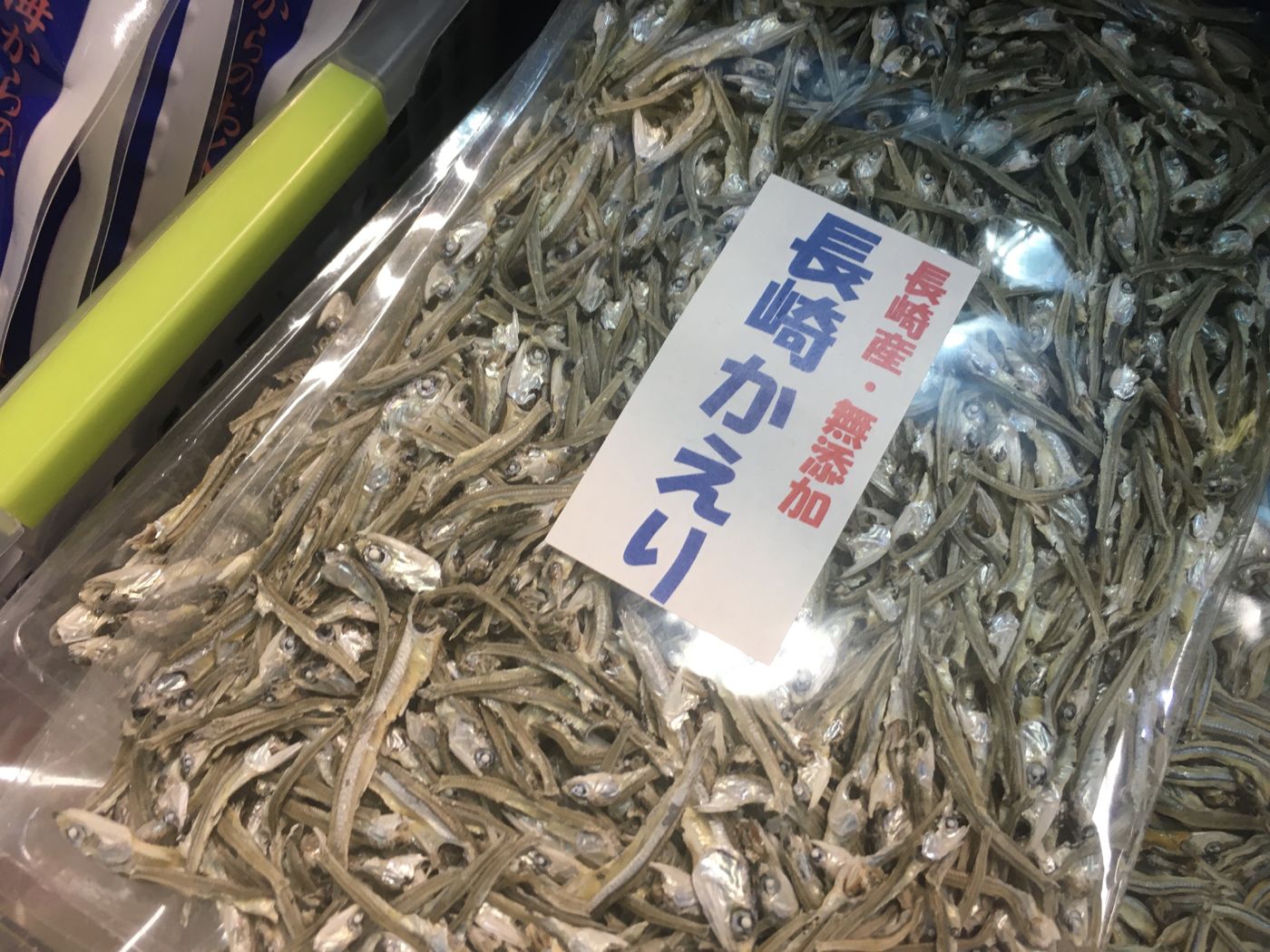 Dried anchovies멸치Small anchovies that are boiled and dried on the coast, then sorted by size. They flavor everyday broths and, stir-fried whole, become the sweet-salty side dish myeolchi-bokkeum.
- Korean Chili Peppers (Fresh)고추Fresh Korean chili peppers, eaten green (putgochu) or red (hong-gochu): from the fiery cheongyang-gochu to the small, wrinkled, mild kkwari-gochu that is braised and stir-fried as banchan.
 Soy sauce간장Korean soy sauce, in two main kitchen forms: pale, salty guk-ganjang (soup soy sauce) brewed the traditional way from meju, and darker, sweeter jin-ganjang for braises and marinades.
 Korean grain syrup물엿A clear, glossy syrup used to sweeten and glaze braised and stir-fried banchan. Its traditional relative, jocheong, is a darker malt syrup made by slowly boiling down saccharified rice.
 Garlic마늘Used raw, minced, pickled and roasted, garlic is one of the essential aromatics of Korean food — in seasonings, marinades, kimchi and namul.
 Sesame참깨Toasted sesame seeds and sesame oil (chamgireum) finish countless Korean dishes, adding a nutty aroma and gloss.
Nutrition
| Calories | ~76 kcal |
|---|---|
| Protein | ~4.6 g |
| Fat | ~3.6 g |
| Carbohydrates | ~6.7 g |
| Fiber | ~0.9 g |
| Sodium | ~437 mg |
Notable forVitamin C · Calcium · Vitamin D · Selenium
Anchovies use the Korean Food Composition Table entry “Anchovy, Small, Boiled and dried” (per 100 g: 226 kcal, 42.9 g protein, 620 mg calcium, 2,646 mg sodium, 17.2 µg vitamin D, 111 µg selenium); peppers use “Hot pepper (Gochu), Shishito, Raw” (57 mg vitamin C per 100 g, some of which is lost in cooking). Soy sauce and mulyeot use Korean table values; oil, garlic, sugar, sesame oil and sesame seeds use USDA FoodData Central. Totals divided by six. As a cross-check, the Korean table's prepared dish “Anchovy and pepper, Stir-fried” (멸치풋고추볶음) lists 262 kcal and 1,378 mg sodium per 100 g — denser than this lighter home recipe. Actual values vary with ingredients, portion size and preparation.
Health Benefits
- Calcium from whole fish: dried anchovies are eaten bones and all, which makes them a notable source of calcium; the folk encyclopedia notes that eating the whole fish, including organs, also supplies vitamin D, which helps the body absorb calcium.
- Protein and selenium: a small serving adds a few grams of protein and a useful amount of selenium.
- Vitamin C from the peppers: shishito-type peppers are rich in vitamin C, though some is lost to heat.
Regional Variations
- Soy-glazed: the standard version, with soy sauce, mulyeot or sugar, garlic and sesame — sweet, glossy and mild.
- Same dish, either name: the national dictionary also lists it as myeolchi-kkwarigochu-bokkeum, with the words reversed.
- Kkwarigochu-muchim: without anchovies — the peppers are coated in flour, steamed and dressed with garlic, sugar, soy sauce and gochugaru.
- Plain myeolchi-bokkeum: the anchovies alone, stir-fried with oil, syrup and nuts; see myeolchi-bokkeum.
Pairings
 Myeolchi Bokkeum멸치볶음Small dried anchovies stir-fried until crisp, then glazed in a sweet soy and garlic syrup — a keeping banchan found in refrigerators across Korea.
 Gyeran Mari (Rolled Omelet)계란말이Beaten egg cooked in thin layers and rolled into a soft, striped log, then sliced — a gentle, everyday banchan and a lunchbox classic.
 Kongnamul Muchim콩나물무침Soybean sprouts cooked under a lid until just tender, then tossed with garlic, green onion and sesame oil — crisp, nutty and on tables across Korea.
Sources
- 01꽈리고추 / 꽈리고추멸치볶음 — Urimalsaem (National Institute of Korean Language)
- 02멸치 (Anchovy) — Encyclopedia of Korean Folk Culture (National Folk Museum of Korea)
- 03고추 (Chili pepper) — Encyclopedia of Korean Folk Culture (National Folk Museum of Korea)
- 04Korean Food Composition Table: Anchovy, Small, Boiled and dried — National Institute of Agricultural Sciences
- 05Korean Food Composition Table: Hot pepper (Gochu), Shishito, Raw — National Institute of Agricultural Sciences
- 06Korean Food Composition Table: Anchovy and pepper, Stir-fried — National Institute of Agricultural Sciences
Last updated