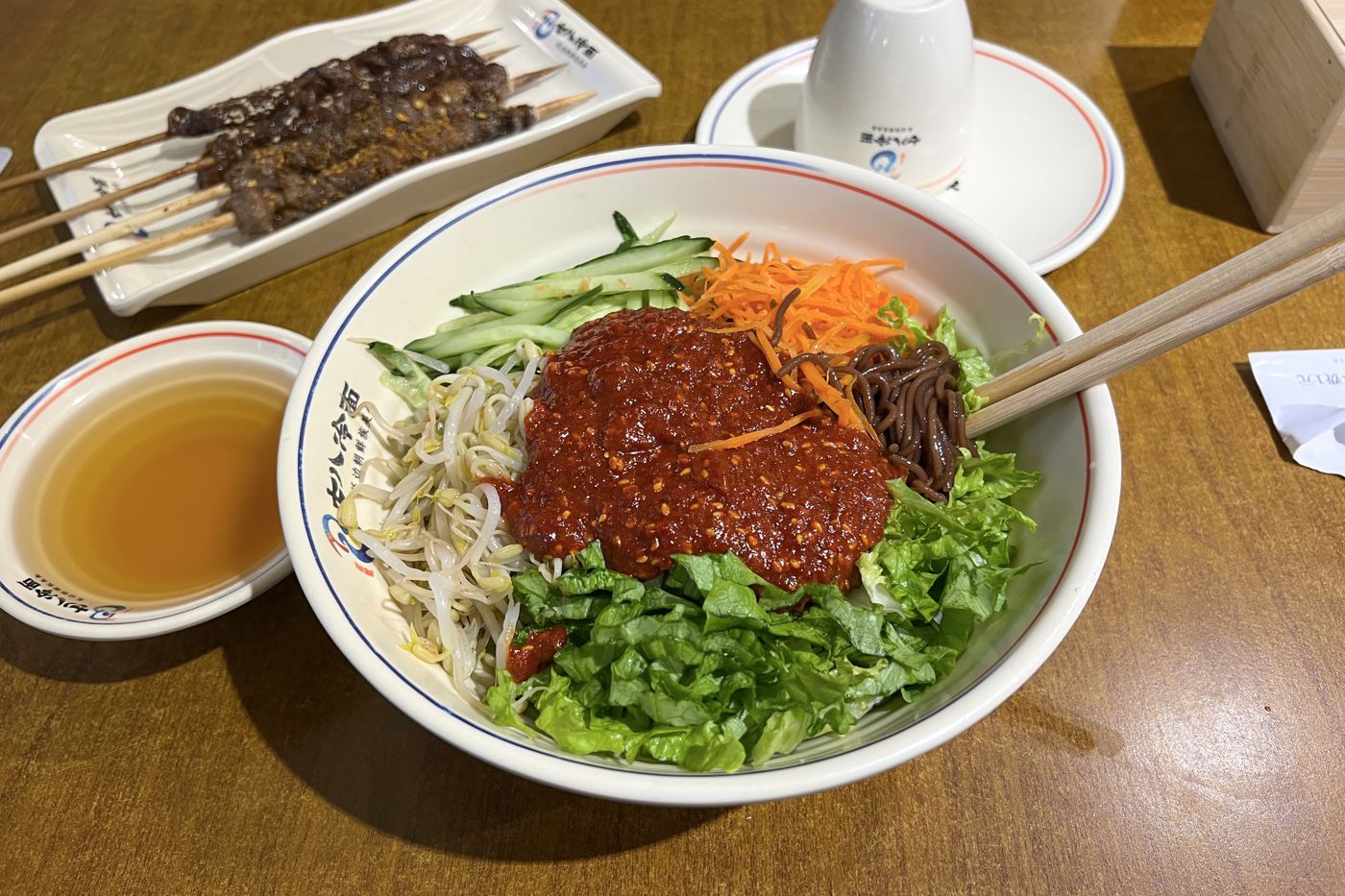
 Photo: Michael Sean Gallagher, CC BY-SA 2.0, via Wikimedia Commons
Myeon · Noodles 면
Milmyeon (Busan Wheat Cold Noodles)
밀면
Romanization: milmyeon
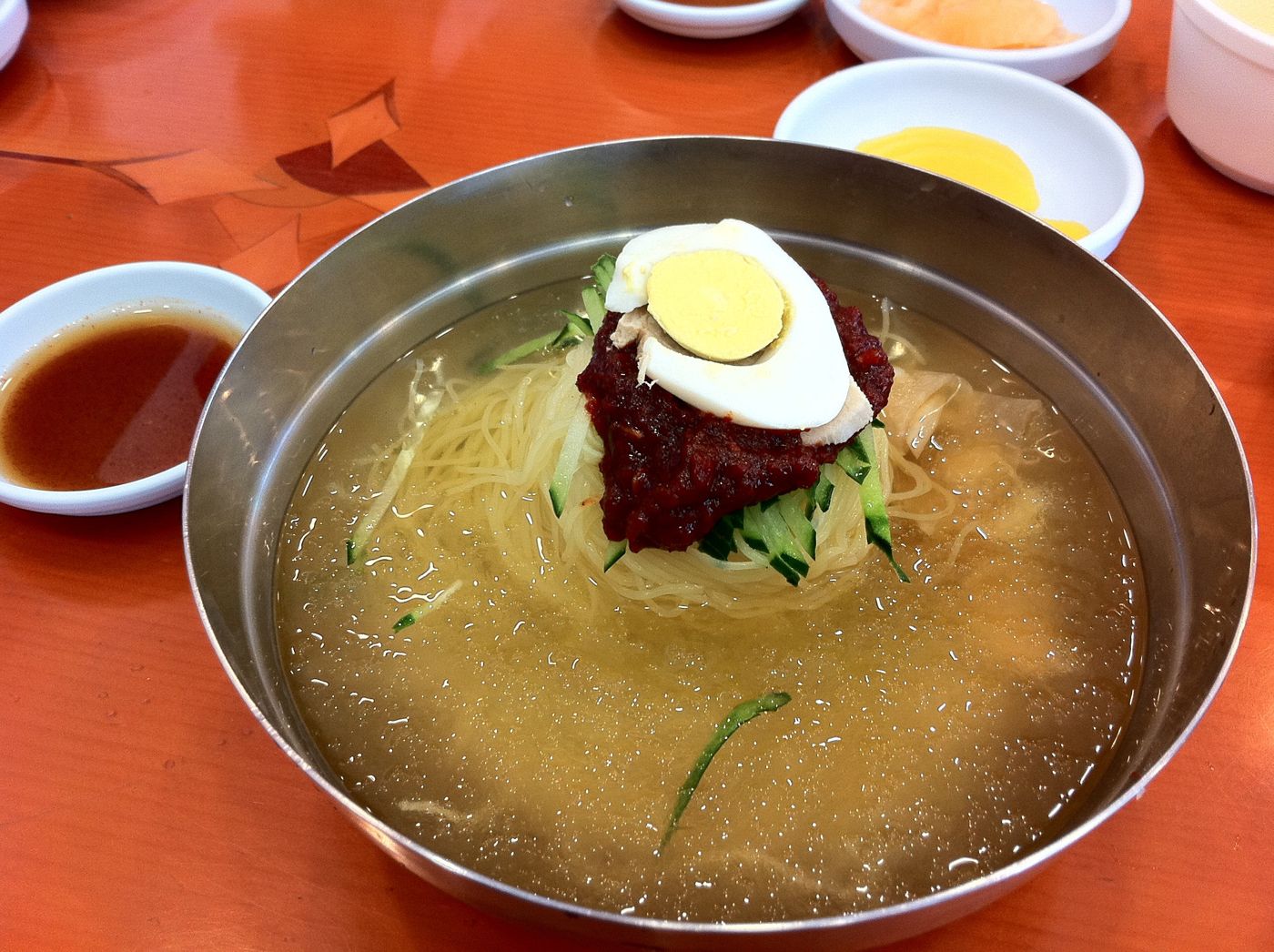
Chewy wheat-and-starch noodles in an icy, sweet-sour beef broth or tossed in chili paste — Busan's refugee-era answer to northern naengmyeon.
- Serves
- 2
- Prep
- 30 min
- Cook
- 15 min
RegionGyeongsang · Busan
Jump to recipeRecipe
Ingredients · Serves 2
- 180 gDried or fresh milmyeon noodles (wheat flour and starch)dry weight; a Korean market sells them in packs
- 90 gBeef shank or brisketsimmered in 700 ml water for 45 minutes, then chilled and sliced; keep the cooled broth
- 500 mlCold beef broththe skimmed, chilled liquid from simmering the beef; see making yuksu broth
- 30 gSoy sauceabout 2 tbsp, split between broth and paste
- 2 tbspSugarsplit between broth, radish and paste
- 2 tbspVinegarplus 1 tsp for the radish
- ½ tspSalt
- 100 gKorean radishthinly sliced into half-moons
- 1 tbspGochugaruplus ½ tsp for the radish
- 3 clovesGarlicminced
- ½ Cucumberabout 80 g, thinly sliced and salted
- 60 gKorean pearthinly sliced
- 1 Egghard-boiled and halved
- 1 tspSesame oil
Method
Technique: Making Yuksu: Anchovy-Kelp Stock
Step 1: Simmer the beef in 700 ml water for about 45 minutes. Lift out the meat, skim the fat from the broth and chill both thoroughly, ideally overnight. Slice the meat thinly.
Step 2: Stir 2 tsp of the sugar and 1 tsp of the vinegar into the sliced radish with ½ tsp gochugaru and half the garlic. Let it sit for 15 minutes. Salt the cucumber slices for 10 minutes, squeeze dry and stir-fry briefly in the sesame oil.
Step 3: Season 500 ml of the chilled broth with half the soy sauce, 1 tbsp of the sugar, the remaining vinegar and the salt. Taste; the broth should be bright, sweet and sour, and very cold. Put it in the freezer for 20 minutes if it is not already icy.
Step 4: Mix the remaining soy sauce, 1 tbsp gochugaru, remaining garlic and 1 tsp sugar with 1 tbsp of broth to make the seasoning paste.
Step 5: Boil the noodles for 2–3 minutes, or according to the package. Drain and rinse them repeatedly in cold water, rubbing gently, until the surface starch is gone and the noodles are chilled and springy.
Step 6: Divide the noodles between two deep bowls. Pour in the cold broth and arrange the cucumber, radish, pear, egg and beef on top with a spoonful of the paste. For a dressed version, toss the noodles with the paste and a few spoonfuls of broth instead.
Origin & History
Milmyeon is a dish of the Korean War years. The Encyclopedia of Korean Culture dates it to 1950 onward in Busan, which served as the wartime capital and received waves of refugees, many of them from the north. Northern cold noodles were traditionally made from buckwheat, but buckwheat was hard to find in the south after the war, while wheat flour had become common through relief supplies. Cooks began mixing it with sweet potato starch and pressing it into noodles. The dish was first called things like mil-naengmyeon, Busan naengmyeon or Gyeongsang-style naengmyeon, and the shortened milmyeon stuck.
The Encyclopedia of Korean Folk Culture records a second, overlapping account. In this telling, Gyeongsang Province already had a tradition of cold wheat noodles, said to descend from a rough press-noodle (maguksu) made at wheat harvest from freshly ground wheat and salted water. After the war that tradition merged with the northern cold-noodle style and its broth, and as the stock shifted to clam, beef-bone and other inexpensive broths, the dish came to be called milmyeon. The same entry notes that Joseon-era cookbooks already described pressing noodles through a perforated gourd, so the technique is old even if the dish is not.
The folk encyclopedia presents milmyeon as a summer special that follows the classic naengmyeon pattern of five colors (green cucumber, white radish, dark meat, yellow egg and a red seasoning), and as an inexpensive, quickly served everyday food. See also Busan and noodles in Korean history.
Key Ingredients
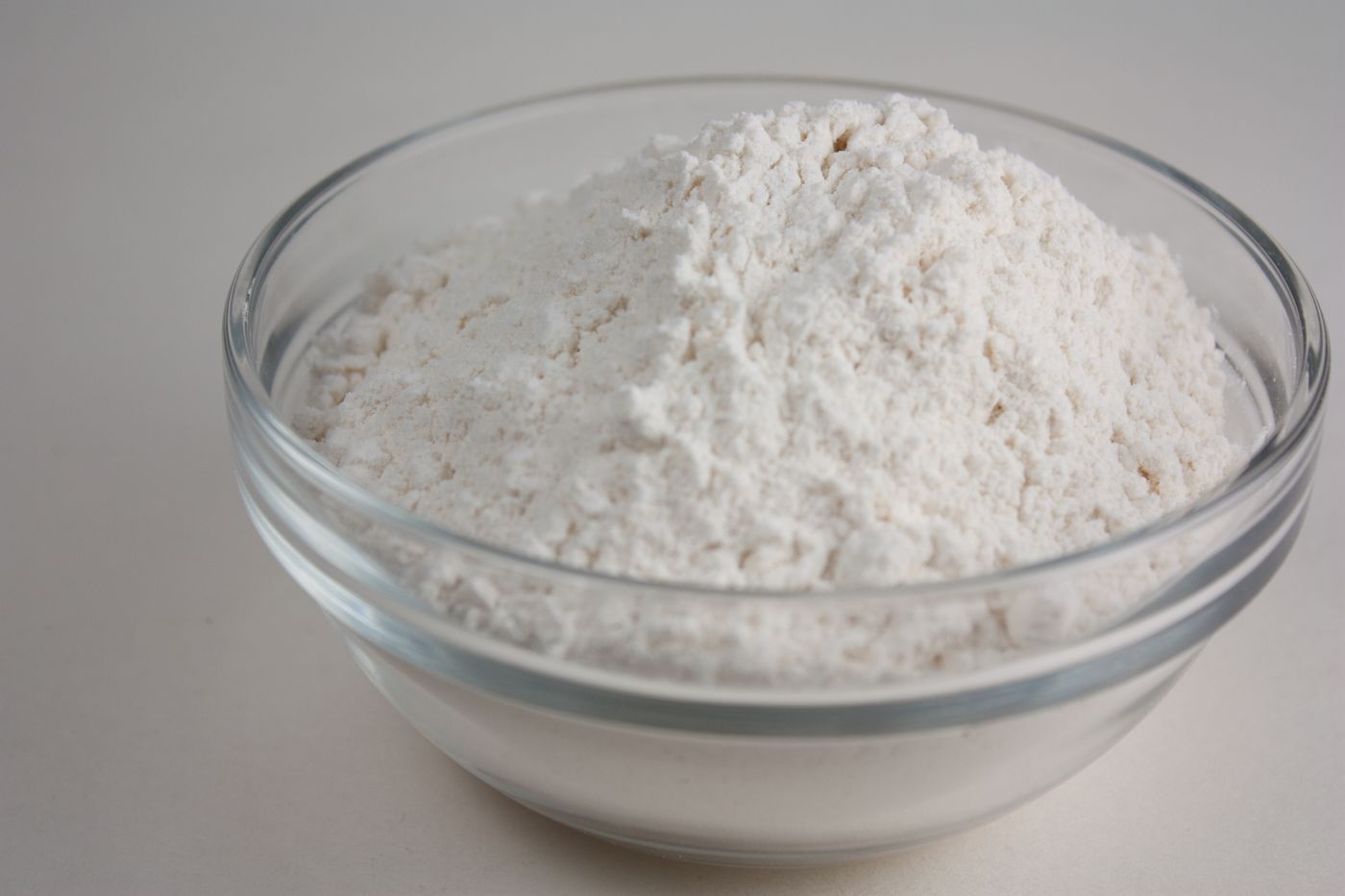 Wheat flour밀가루Finely milled wheat flour, the base of Korean noodles, dumpling wrappers, pancake batters and ramyeon. A luxury for most of Korean history, it became an everyday staple only after the Korean War, when American aid flour flooded the market.
 Korean radish무A stout, heavy white radish, often tinged pale green near the top. It is cubed for kkakdugi, left whole in the clear brine of dongchimi, shredded into salads and simmered into broths.
- Cucumber오이Slender, thin-skinned Korean cucumbers, prized for their crunch. Stuffed and fermented as oi-sobagi, dressed quickly as oi-muchim, salted into oiji or floated in chilled summer soup.
- Korean Pear배The large, round, crisp and very juicy Korean pear (bae). Beyond eating fresh, it is grated into meat marinades and sliced into mild kimchi for natural sweetness.
- Egg (gyeran)계란The everyday protein of the Korean table: rolled into gyeran-mari, steamed into puffy gyeran-jjim, simmered in soy for gyeran-jangjorim, and cut into thin yellow and white ribbons of jidan to garnish soups and noodles.
 Gochugaru고춧가루Korean red chili powder, made from dried red peppers ground coarse or fine. It gives kimchi, gochujang and countless banchan their color and warmth.
 Garlic마늘Used raw, minced, pickled and roasted, garlic is one of the essential aromatics of Korean food — in seasonings, marinades, kimchi and namul.
- Korean Vinegar식초Vinegar in the Korean kitchen, from naturally fermented grain and fruit vinegars, such as persimmon vinegar, to everyday brewed vinegar. It sharpens muchim, pickles and the dipping sauce chogochujang.
Nutrition
| Calories | ~568 kcal |
|---|---|
| Protein | ~25.3 g |
| Fat | ~8.7 g |
| Carbohydrates | ~97 g |
| Fiber | ~6.3 g |
| Sodium | ~1292 mg |
Notable forProtein · Dietary fiber
Sums USDA FoodData Central values for the raw ingredients (all-purpose flour as a stand-in for the wheat-and-starch noodles, raw beef shank, cucumber, Asian radish, Asian pear, whole egg, garlic, soy sauce, sugar, vinegar, salt, sesame oil and cayenne as a gochugaru stand-in), divided by two. The simmering broth is treated as unseasoned water, so only the salt and soy sauce added to it are counted. Store-bought and restaurant noodles contain added salt, so real bowls often run higher in sodium. Actual values vary with ingredients, portion size and preparation.
Health Benefits
- Cooling summer meal: the Encyclopedia of Korean Folk Culture describes milmyeon as a summer specialty served in a cold broth, nutritionally comparable to naengmyeon.
- A balanced bowl: noodles, lean meat, egg and vegetables (cucumber, radish, pear) provide carbohydrate, protein and fiber together; the estimate above is about 25 g of protein per serving.
- Chewy texture from rinsing: the cold-water rinse removes surface starch and halts further gelatinization, which is why the noodles stay firm, according to the Encyclopedia of Korean Folk Culture.
Regional Variations
- Mulmilmyeon (cold broth): the basic form. Fresh noodles go into a chilled broth of simmered beef or pork bones, or beef brisket or shank, and are topped with stir-fried cucumber, seasoned radish, pear, boiled egg and sliced pork, according to the Encyclopedia of Korean Culture.
- Bibim-milmyeon (dressed): the noodles are tossed in a sweet-spicy seasoning of chili powder, garlic, onion and more, with little or no broth. It echoes bibim-naengmyeon.
- Broth styles: the folk encyclopedia lists sour notes from radish-water kimchi (dongchimi), water kimchi or omija water as classic cookbook sources of the broth's tang. Some restaurants also simmer herbal ingredients and vegetables into the stock.
- Radish topping: thin radish half-moons seasoned with chili powder, sugar and vinegar, or shredded radish kimchi. Napa-cabbage kimchi appears in some bowls.
Pairings
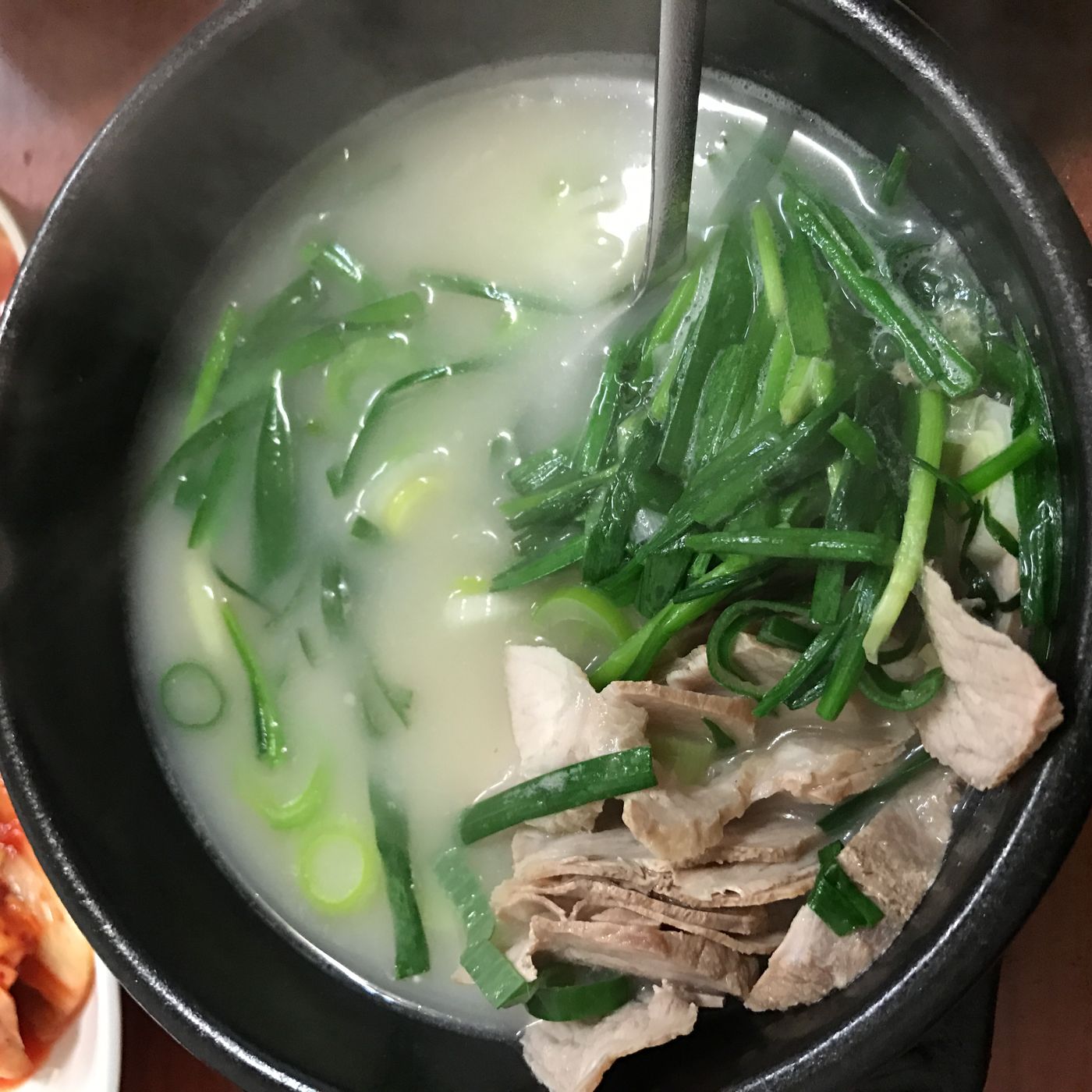 Dwaeji Gukbap (Busan Pork and Rice Soup)돼지국밥Slices of boiled pork in a milky pork-bone broth over rice, seasoned at the table with salted shrimp and garlic chives — Busan's signature everyday bowl.
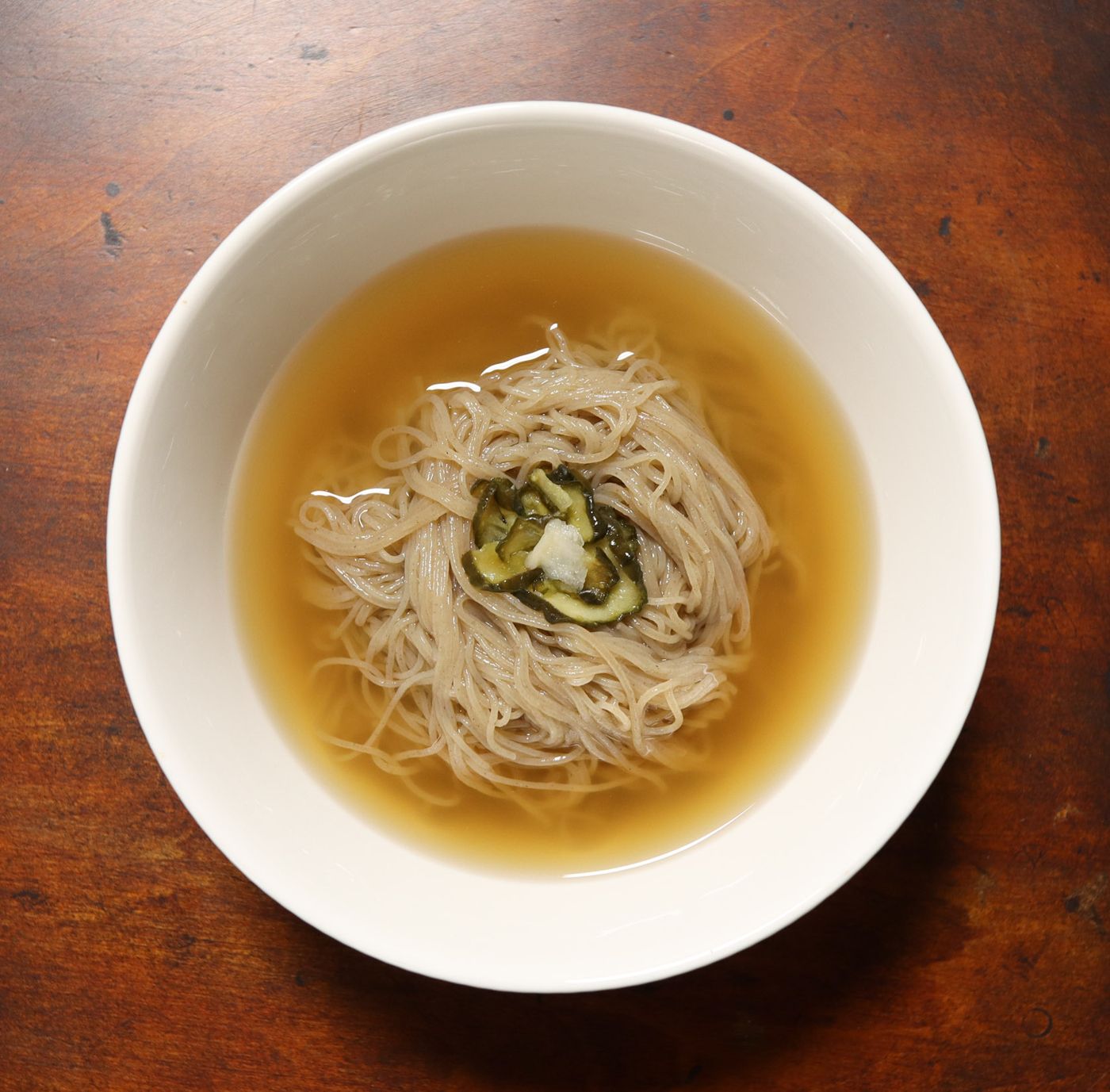 Mul-naengmyeon (Cold Buckwheat Noodles in Broth)물냉면Buckwheat noodles in an icy mix of beef broth and dongchimi, topped with sliced beef, pear, radish and egg — a Pyongyang winter dish now loved in summer.
 Bibim-naengmyeon (Spicy Mixed Cold Noodles)비빔냉면Chewy starch noodles tossed in a sweet, vinegary chili sauce, topped with cucumber, pear and egg — the Hamheung tradition of hoe-naengmyeon, carried south by refugees.
 Mandu (Korean Dumplings)만두Thin wrappers folded around pork, tofu, kimchi and sprouts, then steamed or boiled — a Goryeo-era arrival from China that became a winter staple of the North.
Sources
- 01부산밀면 (Busan Milmyeon) — Encyclopedia of Korean Culture
- 02밀면 (Milmyeon) — Encyclopedia of Korean Folk Culture (한국의식주생활사전), National Folk Museum of Korea
- 03Wheat flour, white, all-purpose, enriched, bleached — USDA FoodData Central
- 04Beef, shank crosscuts, lean only, raw — USDA FoodData Central
- 05Food Allergies — U.S. Food and Drug Administration
- 06Safe Food Handling — U.S. Food and Drug Administration
Last updated