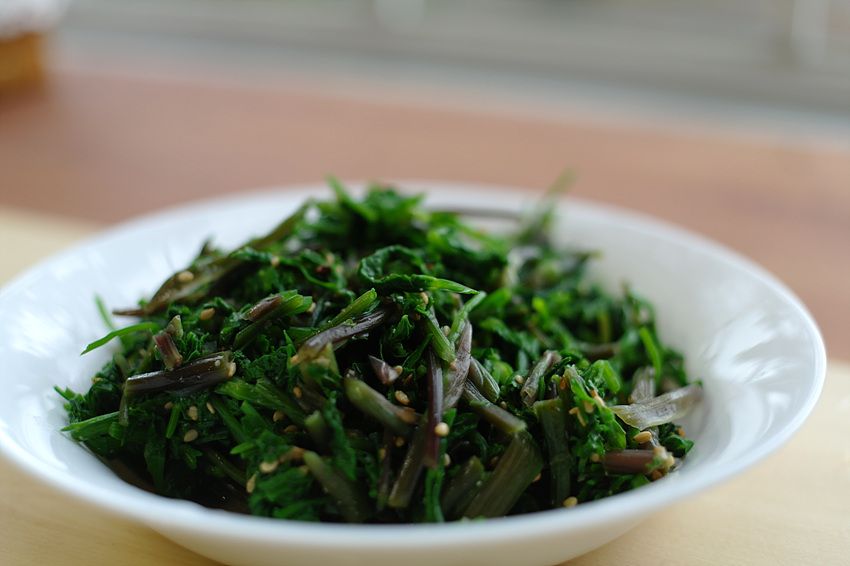
 Photo: 배누리바느질하는농부, CC BY-SA 2.0 kr, via Wikimedia Commons
Muchim · Dressed side dish 무침
Minari Muchim
미나리무침
Romanization: minari-muchim
Korean water dropwort blanched for a few seconds and dressed with tangy gochujang and vinegar — fresh, herbal and very much a taste of spring.
- Serves
- 4
- Prep
- 15 min
- Cook
- 2 min
RegionGyeongsang · Jeolla
Jump to recipeRecipe
Ingredients · Serves 4
- 300 gMinari (Korean water dropwort)about 1 bunch; leaves and tough lower stems trimmed (roughly 250 g trimmed)
- 1 tspSaltfor the blanching water
- 1 tbspGochujang
- 1 tbspVinegar
- 1 tspSugar
- 1 cloveGarlicminced
- 1 tspToasted sesame oil
- 1 tspToasted sesame seeds
Method
Technique: Blanching and Seasoning Namul
Step 1: Wash the minari very well in several changes of water, swishing to dislodge grit (and the occasional leech, as older cooks warn). Trim the roots, tough lower stems and most of the leaves.
Step 2: Bring a large pot of water to a boil with the salt. Add the minari, stems first, and blanch for 15–20 seconds, just until bright green.
Step 3: Drain and plunge into ice-cold water, then squeeze out the water firmly and cut into 4–5 cm lengths.
Step 4: In a bowl, mix the gochujang, vinegar, sugar and garlic until smooth.
Step 5: Add the minari and toss gently with your fingertips. Add the sesame oil and sesame seeds, toss again and serve right away — the vinegar dulls the green color if the dish sits.
Origin & History
Minari (Oenanthe javanica), often called Korean water dropwort or water celery, is a native wetland plant with a clean, peppery, herbal aroma. Its use as food goes back at least to Goryeo: the Encyclopedia of Korean Culture points to a mention of a minari field in the biographies section of the Goryeosa, and the National Folk Museum's encyclopedia notes that minari kimchi was offered at Goryeo royal ancestral rites. In the early seventeenth century, Heo Gyun included minari namul in Domun daejak, his catalog of memorable foods.
Joseon texts record several ways of dressing it. Sallim gyeongje mentions minari dressed with gochujang; Nongjeong hoeyo seasons it with chili powder and soy sauce; and Siuijeonseo gives both a stir-fried version and one boiled and dressed with vinegar. The folk museum's encyclopedia observes that before the 1920s minari was mostly blanched or salted and dressed, while later cookbooks increasingly favored stir-frying. Sweet-sour versions with vinegar and sugar, sometimes with sliced boiled meat, were served in the court and in aristocratic households.
Minari also carries symbolic weight. It was traditionally a symbol of long life: long, uncut blanched stems were placed on a baby's first-birthday table, and minari namul was one of the seasonal foods for the Buddha's birthday on the eighth day of the fourth lunar month.
Key Ingredients
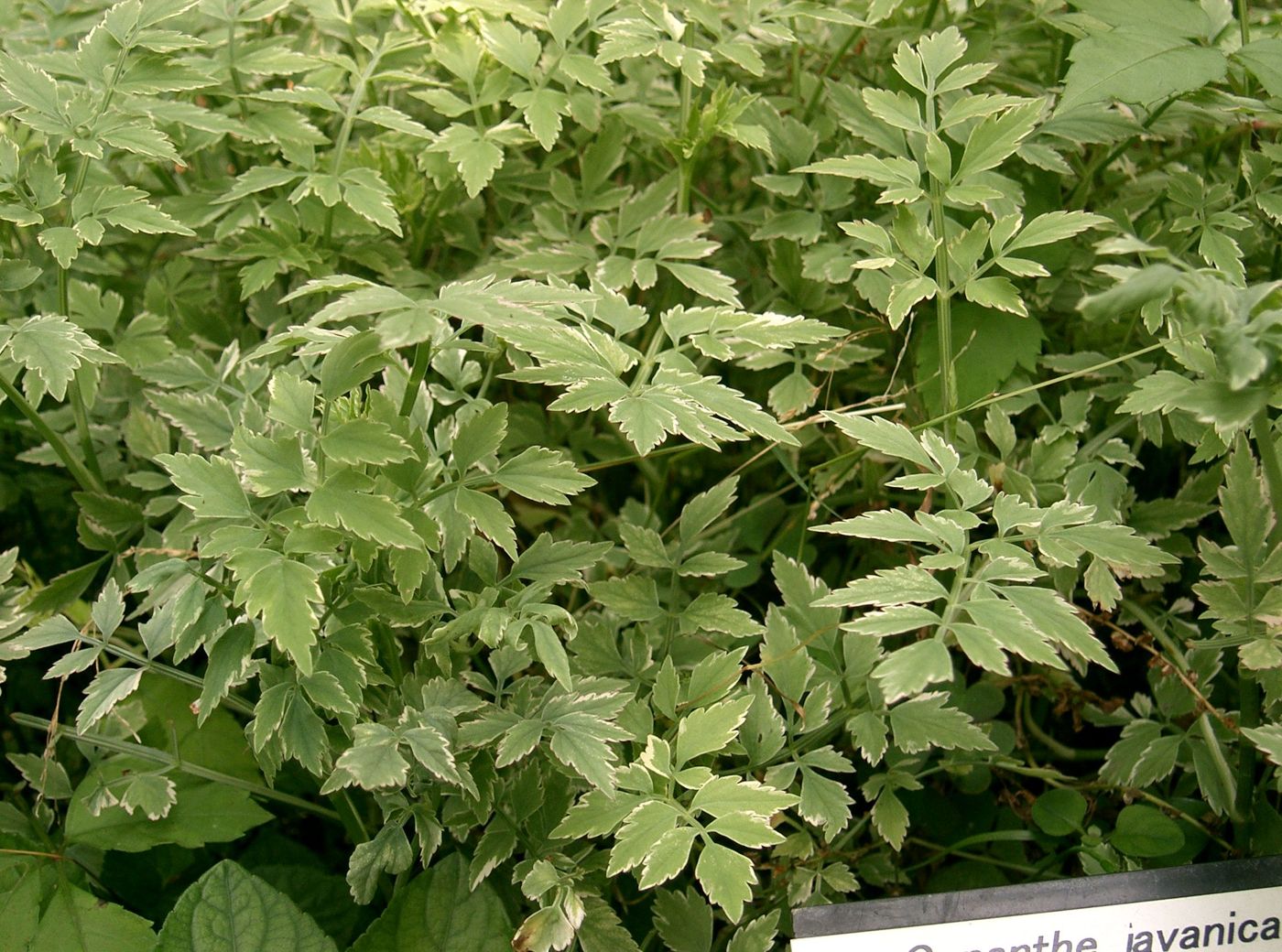 Minari (water dropwort)미나리A long-stemmed, aromatic water plant with a fresh, celery-like perfume. Blanched and dressed as minari-muchim, tucked into kimchi, wrapped into little bundles for minari-ganghoe and piled into fish stews and hot pots.
- Gochujang고추장Fermented red chili paste — sweet, savory and hot. Made from meju powder, glutinous rice, malt and gochugaru, it is a later addition to Korea's family of jang.
- Korean Vinegar식초Vinegar in the Korean kitchen, from naturally fermented grain and fruit vinegars, such as persimmon vinegar, to everyday brewed vinegar. It sharpens muchim, pickles and the dipping sauce chogochujang.
 Garlic마늘Used raw, minced, pickled and roasted, garlic is one of the essential aromatics of Korean food — in seasonings, marinades, kimchi and namul.
 Sesame참깨Toasted sesame seeds and sesame oil (chamgireum) finish countless Korean dishes, adding a nutty aroma and gloss.
Nutrition
| Calories | ~41 kcal |
|---|---|
| Protein | ~1.4 g |
| Fat | ~1.7 g |
| Carbohydrates | ~5.9 g |
| Fiber | ~1.8 g |
| Sodium | ~120 mg |
Notable forVitamin K · Dietary fiber
Minari (250 g trimmed) uses the Korean Food Composition Table entry “Water dropwort (Minari), Whole, Raw” (18 kcal, 2.4 g fiber and about 187 µg vitamin K per 100 g). Gochujang uses the Korean Food Composition Table value for commercial gochujang; vinegar, sugar, garlic, sesame oil and sesame seeds use USDA values. Divided by four. Actual values vary with ingredients, portion size and preparation.
Health Benefits
- A vitamin K–rich spring green: the Korean Food Composition Table lists raw minari at about 187 µg vitamin K and 2.4 g fiber per 100 g, along with carotenoids, potassium and calcium.
- Traditional reputation: minari has long been eaten the day after heavy drinking and paired with fish soups, and Donguibogam describes it as cooling and good for thirst and post-drinking headaches. Laboratory studies of its plant compounds are ongoing, but these traditional uses are not proven treatments.
- Aromatic, not salty: the herb's strong fragrance means the dressing can stay light.
Regional Variations
- Sweet-sour gochujang (cho-namul): blanched minari dressed with gochujang, vinegar and sugar, as in this recipe — a style the folk museum's encyclopedia notes is now often made with squid as well.
- Plain seasoned: dressed with soup soy sauce, garlic, green onion and sesame oil to let the herb's aroma come through.
- Court style: blanched minari tossed with stir-fried shredded beef, soy sauce and sesame, finished with threads of dried chili, as recorded from the cook of the last Joseon royal kitchen.
- Cheongdo Hanjae minari: the Hanjae valley in Cheongdo, North Gyeongsang, is famous for thick, fragrant spring minari, registered as a geographical indication in 2010; visitors come in spring to buy it and eat it with grilled meat.
Pairings
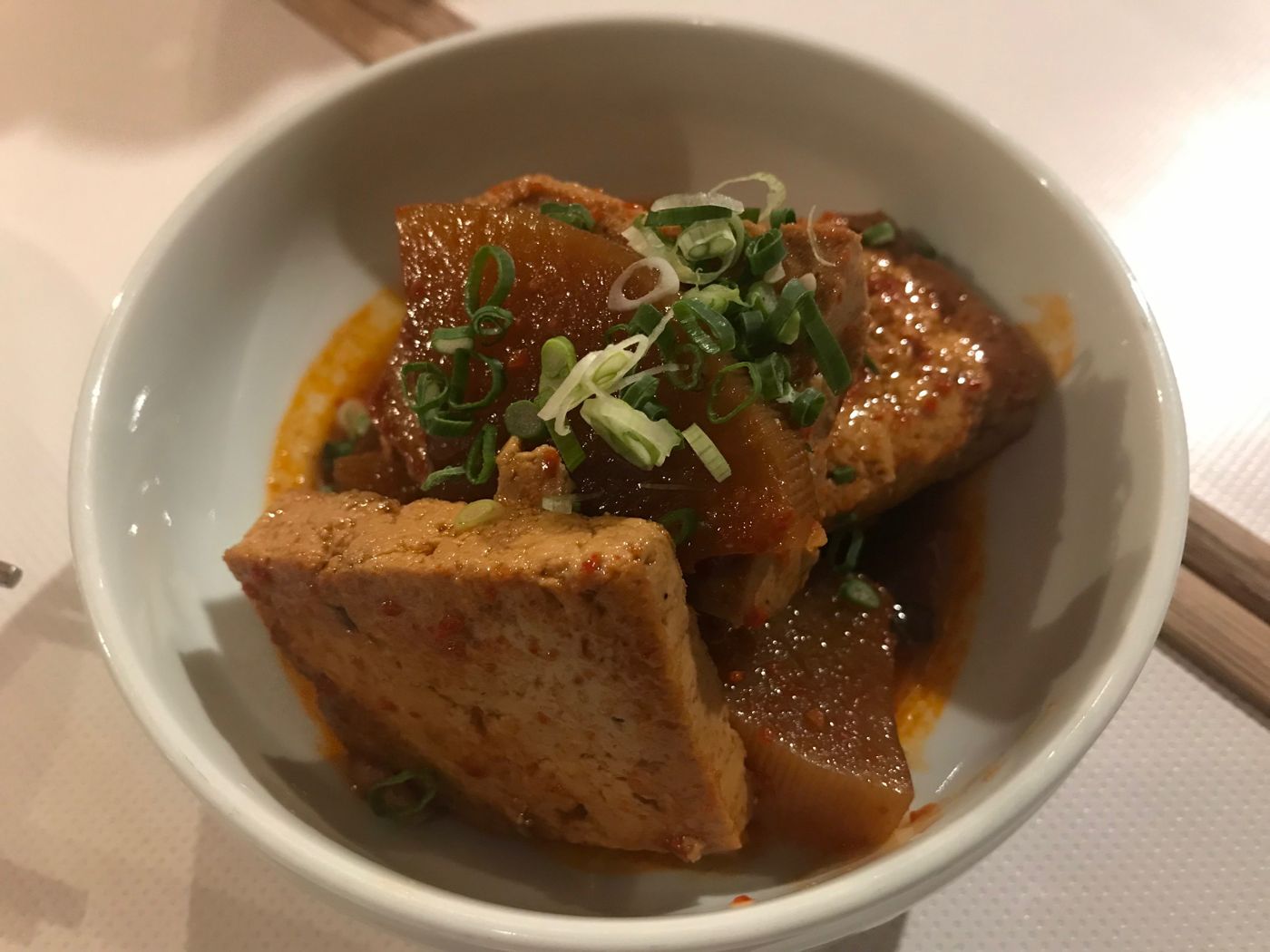 Dubu Jorim두부조림Slices of firm tofu pan-fried until golden, then simmered in a garlicky soy and chili sauce — an inexpensive, protein-rich staple of Korean home cooking.
- Sukju Namul숙주나물Mung bean sprouts blanched briefly and dressed with salt, garlic and sesame oil — lighter, juicier and more delicate than soybean sprouts.
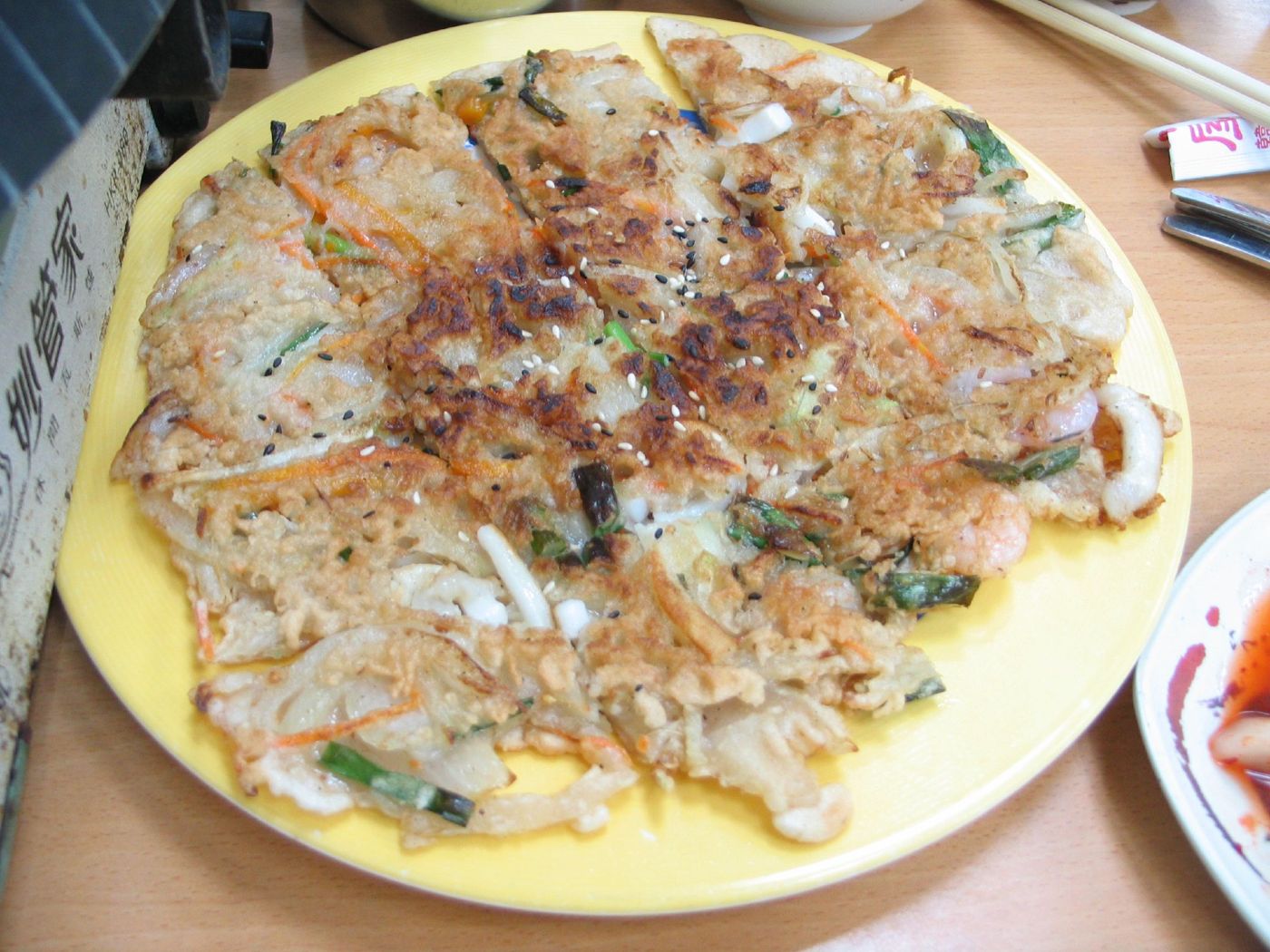 Haemul Pajeon (Seafood and Green Onion Pancake)해물파전Whole green onions bound in a light batter with squid, shrimp and clams, pan-fried until crisp — a generous jeon for sharing, closely tied to Busan's Dongnae.
Sources
- 01Warfarin — MedlinePlus Drug Information (U.S. National Library of Medicine)
- 02Korean Food Composition Table: Water dropwort (Minari), Whole, Raw — National Institute of Agricultural Sciences
- 03미나리나물 (Minari-namul) — Encyclopedia of Korean Culture
- 04미나리 (Minari) — Encyclopedia of Korean Culture
- 05미나리나물 (Minari-namul) — Encyclopedia of Korean Folk Culture (National Folk Museum of Korea)
- 06미나리 (Minari) — Encyclopedia of Korean Folk Culture (National Folk Museum of Korea)
- 07청도 한재 미나리 (Cheongdo Hanjae minari) — Encyclopedia of Korean Culture
- 08About Fasciola — U.S. Centers for Disease Control and Prevention
Last updated