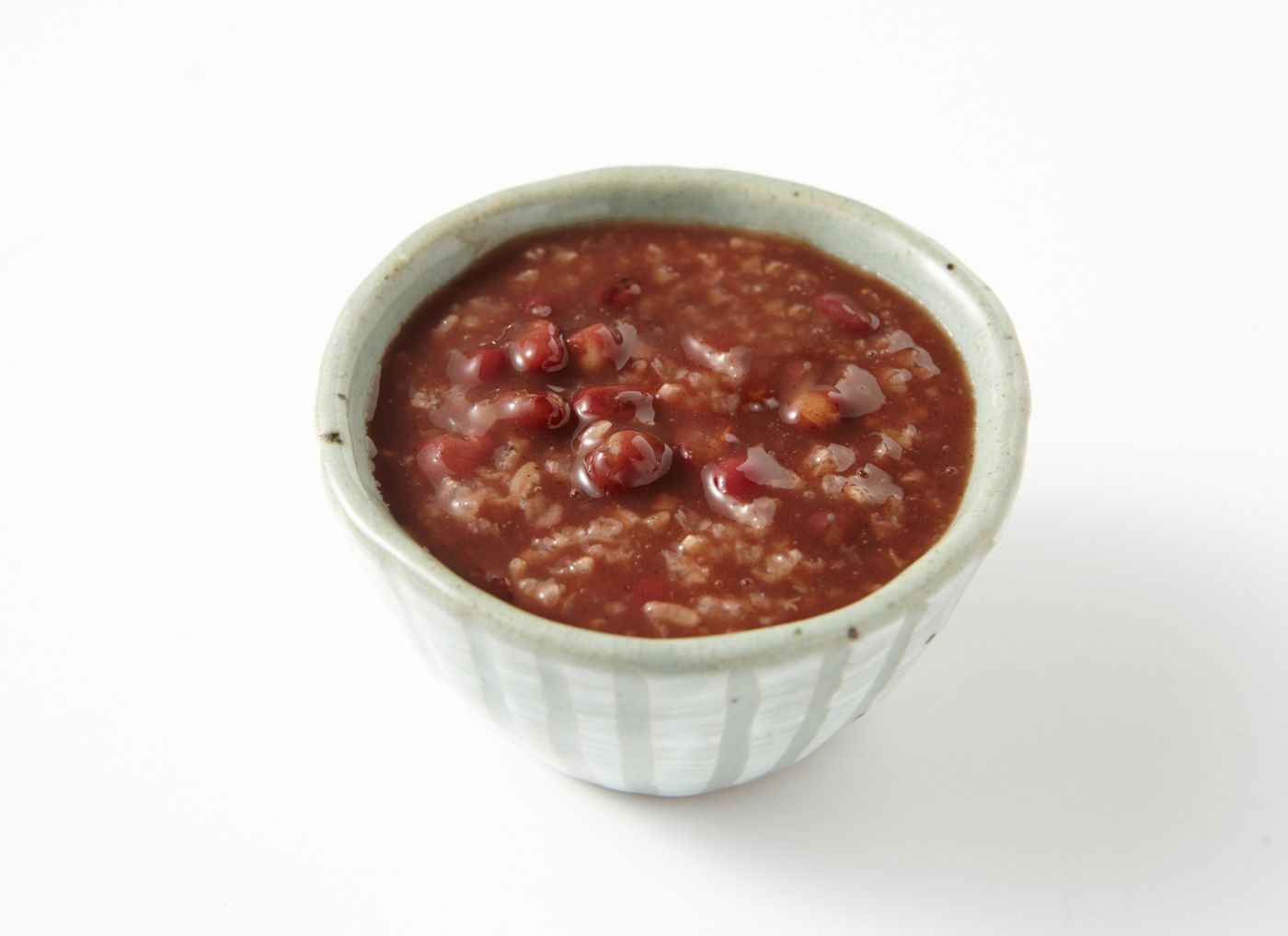
 Photo: 국립국어원, CC BY-SA 2.0 kr, via Wikimedia Commons
Juk · Porridges 죽
Patjuk (Red Bean Porridge)
팥죽
Romanization: patjuk
Porridge of puréed red adzuki beans and rice with chewy glutinous rice balls, eaten at the winter solstice to ward off misfortune and shared with neighbors.
- Serves
- 6
- Prep
- 30 min
- Cook
- 130 min
RegionJeolla · Gyeongsang
Jump to recipeRecipe
Ingredients · Serves 6
- 300 gRed adzuki beansabout 1½ cups, rinsed and picked over
- about 2.5 LWaterplus water for the first boil
- 90 gShort-grain white rice½ cup, soaked 1 hour
- 150 gGlutinous rice flourfor the rice balls
- 6–8 tbspBoiling waterfor the rice balls
- 1¼ tspSaltplus a pinch for the dough; adjust to taste
- to tasteSugaroptional, at the table
Method
Technique: Making Juk
Step 1: Cover the beans with water, bring to a boil for 5 minutes, and drain, discarding the bitter first water.
Step 2: Return the beans to the pot with 2.5 L fresh water. Simmer, partly covered, for 1–1½ hours, until the beans burst and crush easily; add water if the level drops below the beans.
Step 3: Press the beans through a sieve set over a bowl, pouring some of the cooking water over them and working with a spatula until only skins remain. Let the purée settle for 30 minutes.
Step 4: Meanwhile, mix the glutinous rice flour with a pinch of salt and knead in the boiling water a spoonful at a time to make a smooth, soft dough. Roll into balls about 2 cm across and keep covered.
Step 5: Ladle the thin liquid from the top of the settled purée into a heavy pot, add the drained rice and simmer, stirring often, for 15–20 minutes until the grains open. Stir in the thick sediment.
Step 6: Bring back to a gentle boil, add the rice balls and cook, stirring along the bottom so nothing sticks, until the balls float and turn glossy, about 5 minutes, and the porridge is thick and deep red. Season with salt and serve hot, with sugar on the side.
Origin & History
Patjuk is porridge made from red adzuki beans (pat) boiled soft, pressed through a sieve to remove the skins, and simmered with rice; small balls of glutinous rice dough called saealsim, "bird's-egg hearts," are cooked in it. It is the food of Dongji, the winter solstice. The oldest Korean references are poems by the late-Goryeo scholars Yi Saek and Yi Je-hyeon, which the Encyclopedia of Korean Folk Culture reads as showing that people of Goryeo all ate bean porridge at the solstice, shared it from house to house, and offered it to elders as a gesture of respect. In Joseon, officials served it at solstice ceremonies, families offered it to ancestors, and it was also eaten in the summer dog days (as bokjuk) and given to the old and sick to restore strength.
Joseon writers, and the almanac Dongguk sesigi, attributed the custom to a sixth-century Chinese account in which the son of the mythical Gonggong died at the solstice, became a plague spirit, and could be repelled only with red beans. The folk encyclopedia doubts that a single borrowing explains it, seeing instead a notion shared across East Asia that links the solstice, the rebirth of the sun and the protective power of red. It also argues that patjuk was a nourishing everyday food first, and became a ritual food only when its red color was attached to the solstice.
Before eating, households took bowls of hot porridge around the house, flicking spoonfuls at the gate, kitchen, well and storage jars to drive off misfortune, and set bowls where the household gods were thought to dwell. If the solstice fell in the first ten days of the eleventh lunar month, called aedongji ("child solstice"), many families made red-bean steamed rice cake instead, believing porridge that year would harm children. Patjuk was also the standard gift to a house in mourning, made without rice balls, and temples cooked it for solstice services and shared it with villagers. On the solstice as "little New Year," see seasonal foods; see also making juk and red beans.
Key Ingredients
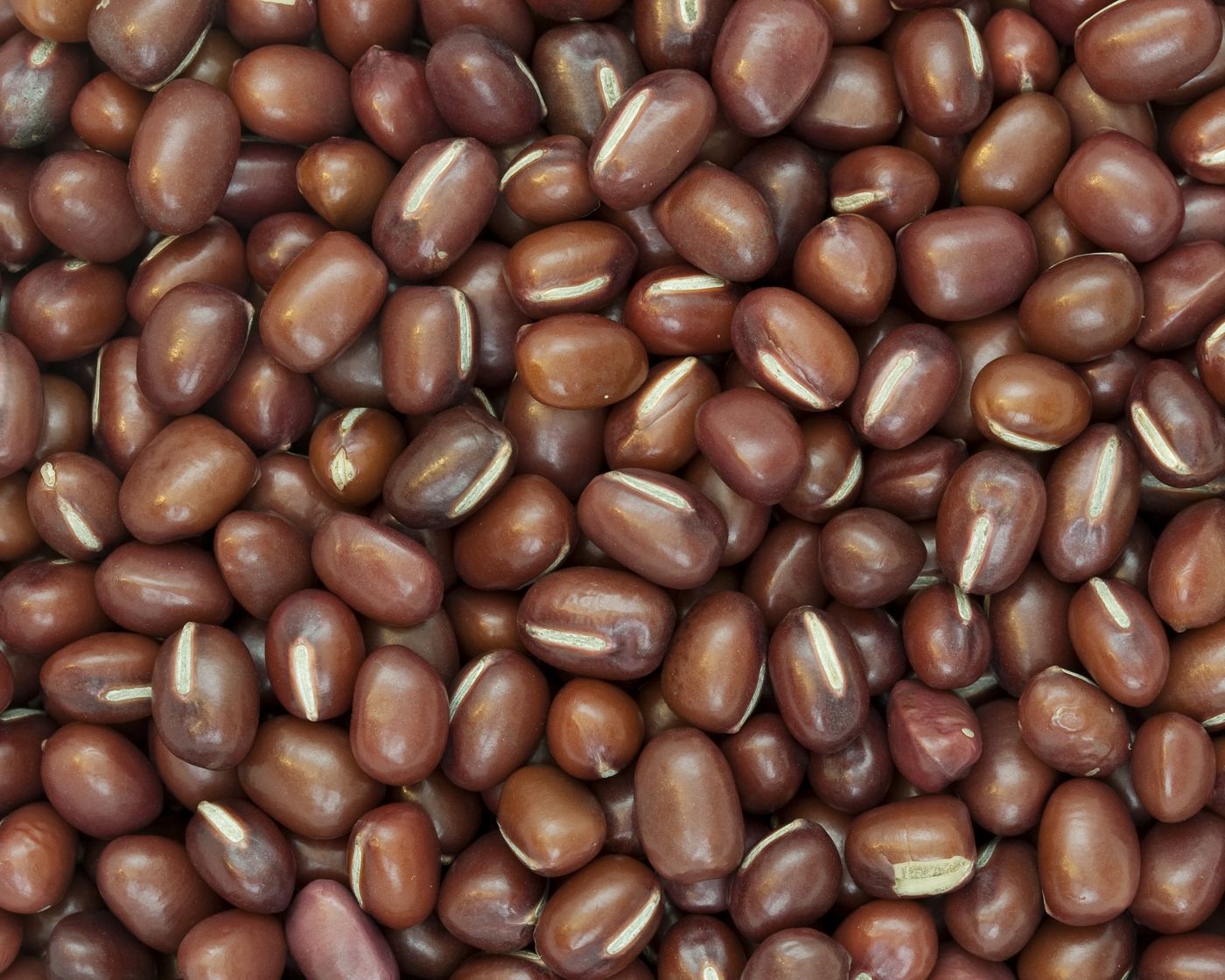 Adzuki beans (red beans)팥Small, glossy, wine-red beans with a thin white seam, simmered into savory porridge, cooked with rice, and mashed sweet for rice-cake fillings and coatings. Their red color was long believed to drive away misfortune.
 Rice쌀Short, round grains of japonica rice that cook up glossy, soft and gently clinging. Steamed white rice, bap, is the center of the Korean table: every banchan, soup and stew is planned to be eaten with it.
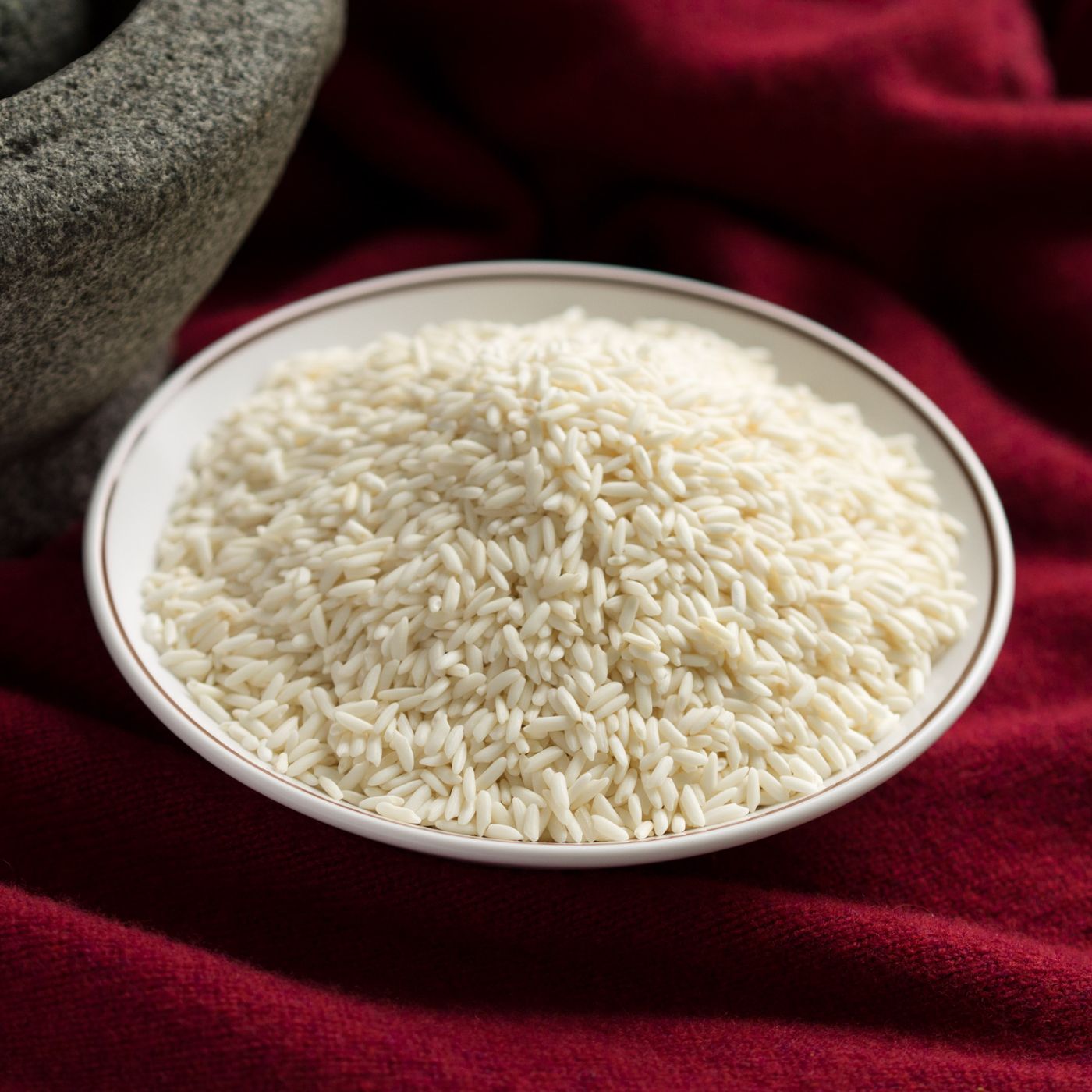 Glutinous rice (sweet rice)찹쌀Opaque, chalk-white grains of glutinous rice that steam into a chewy, elastic mass. Chapssal is the rice of festivals and comfort food: pounded into rice cakes, sweetened into yaksik, and tucked inside the chicken of samgyetang.
Nutrition
| Calories | ~310 kcal |
|---|---|
| Protein | ~12.6 g |
| Fat | ~0.5 g |
| Carbohydrates | ~64 g |
| Fiber | ~7.3 g |
| Sodium | ~520 mg |
Notable forFolate · Dietary fiber · Potassium · Manganese
Estimated by summing USDA FoodData Central (SR Legacy) values for raw adzuki beans (FDC 173727), medium-grain white rice (FDC 168879, standing in for short-grain), raw glutinous rice (FDC 168883, standing in for glutinous rice flour) and table salt (FDC 173468), divided by 6, without added sugar (each tablespoon of sugar at the table adds about 50 kcal). Some folate, potassium and fiber is lost with the discarded first water and the bean skins. Actual values vary with ingredients, portion size and preparation.
Health Benefits
- Fiber and folate from beans: adzuki beans are rich in dietary fiber and folate and also supply potassium and plant protein.
- Low in fat: the porridge is made without oil, so almost all its energy comes from beans and rice.
- A warming winter meal: long associated in Korea with restoring strength in the old and unwell, it remains a gentle, filling dish.
Regional Variations
- Dongji patjuk (nationwide): with glutinous rice balls; some families add one ball for each year of a person's age.
- Pat-kalguksu (Jeolla): red-bean broth with hand-cut wheat noodles instead of rice balls, a summer dish; the folk encyclopedia notes that in South Jeolla the word patjuk often means this noodle version, while the solstice porridge is called saealjuk.
- Mourning patjuk: made plain, without rice balls, and carried to a house in mourning to feed visitors through the funeral.
- Bokjuk (summer): patjuk eaten in the hottest days of summer, recorded in Dongguk sesigi and by both encyclopedias.
Pairings
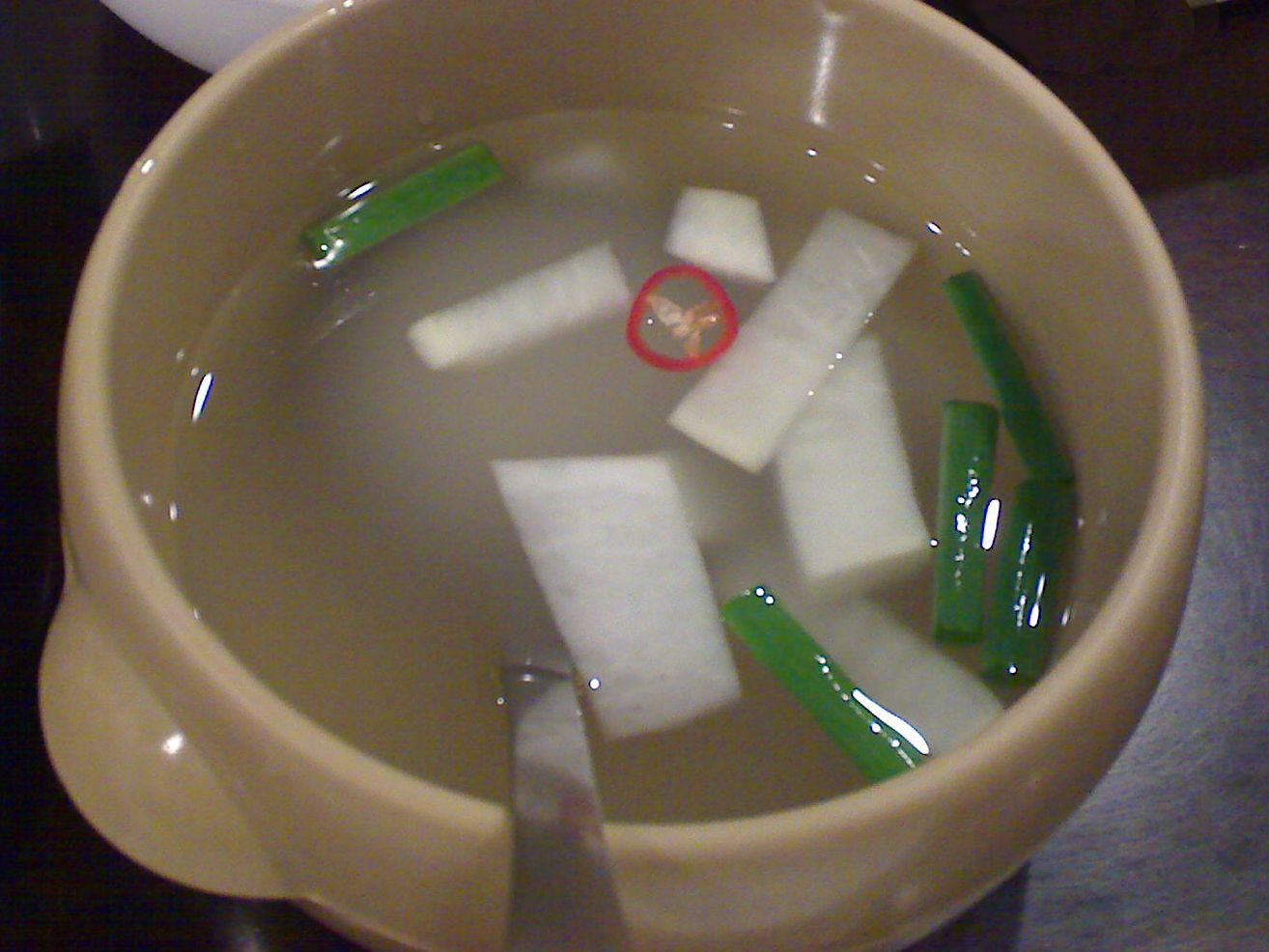 Radish Water Kimchi동치미Whole radishes steeped in a clear salt brine with pear, ginger and green chili — a winter water kimchi whose tangy broth is prized on its own.
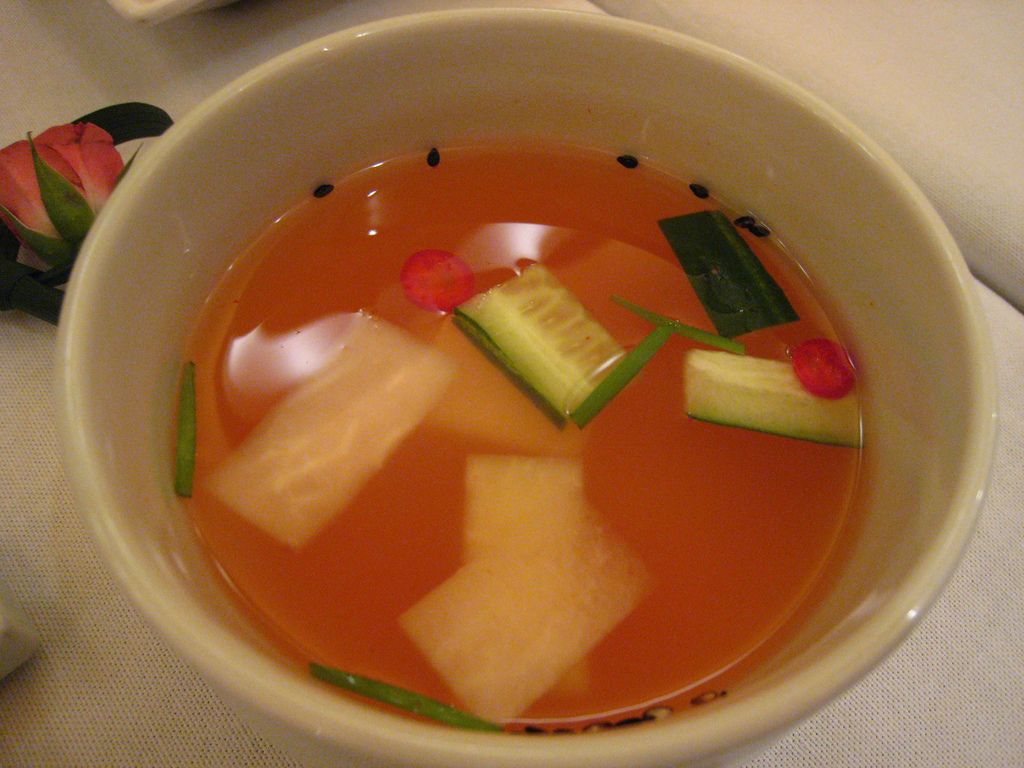 Radish and Cabbage Water Kimchi나박김치Thin squares of radish and napa cabbage in a lightly salted, pink-tinted broth — a mild, refreshing water kimchi eaten by the spoonful.
 Napa Cabbage Kimchi배추김치Salted napa cabbage layered with a red paste of chili, garlic, ginger and fermented seafood, then left to ripen: the kimchi most people picture first.
Sources
- 01팥죽 (Patjuk) — Encyclopedia of Korean Culture
- 02팥죽 (Patjuk) — Encyclopedia of Korean Folk Culture: Korean Food and Dwelling Life
- 03동지팥죽 (Dongji patjuk) — Encyclopedia of Korean Folk Culture: Korean Seasonal Customs
- 04팥칼국수 (Pat-kalguksu) — Encyclopedia of Korean Folk Culture: Korean Food and Dwelling Life
- 05Beans, adzuki, mature seeds, raw (FDC 173727) — USDA FoodData Central
- 06삼킴·질식 안전사고에 대한 소비자안전주의보 발령 (Consumer safety alert on swallowing and choking accidents, May 2026) — Korea Fair Trade Commission and Korea Consumer Agency
Last updated