 Photo: Tmannya, CC BY-SA 3.0, via Wikimedia Commons
Bap · Rice dishes 밥
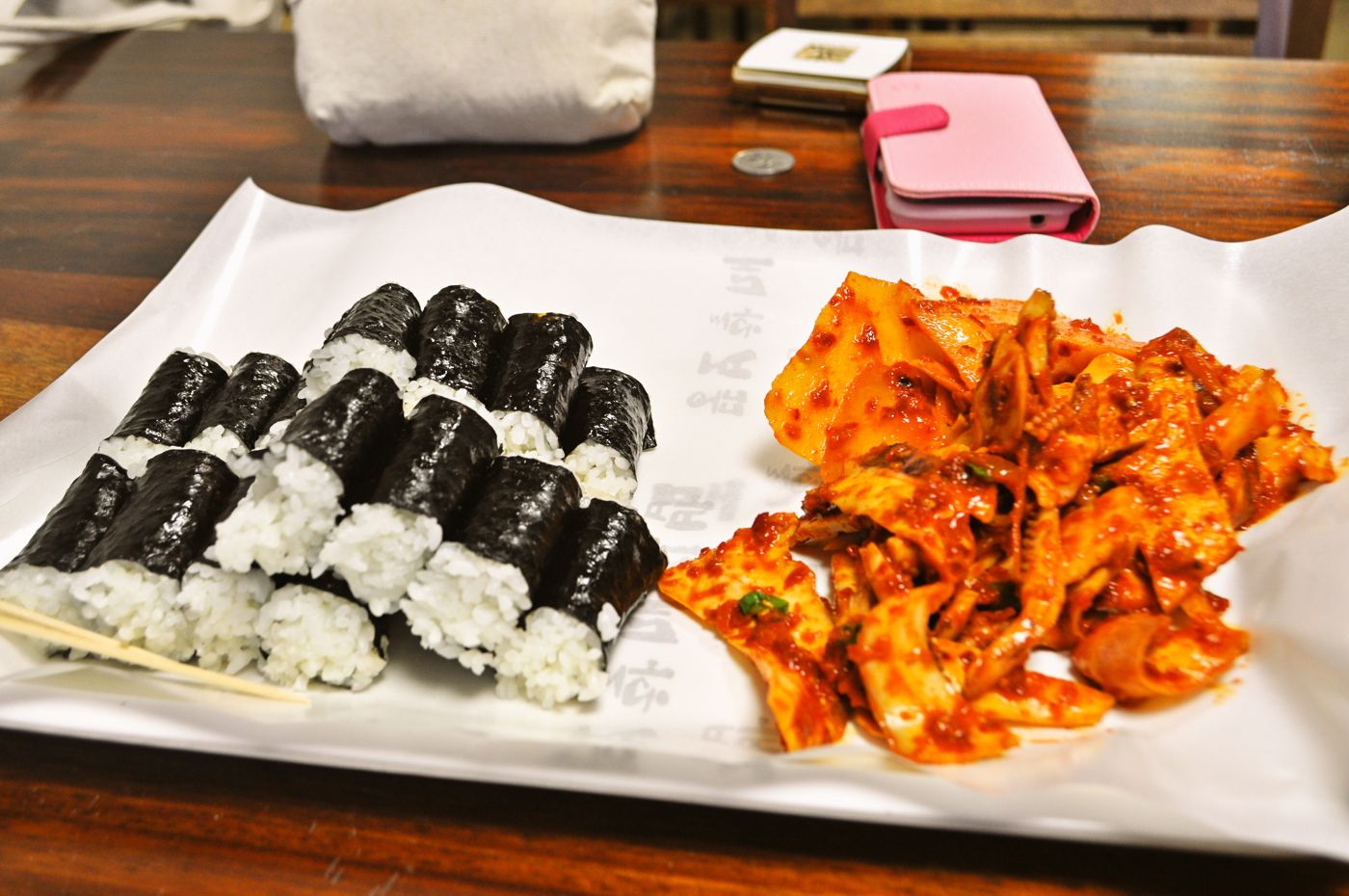
Chungmu Gimbap (Tongyeong Rice Rolls)
충무김밥
Romanization: chungmu-gimbap
Finger-sized rolls of plain rice in laver, eaten with spicy squid and chunky radish kimchi on the side — Tongyeong's harbor food, built to survive summer heat.
- Serves
- 2
- Prep
- 40 min
- Cook
- 10 min
RegionTongyeong · Gyeongsang
Jump to recipeRecipe
Ingredients · Serves 2
- 400 gFreshly cooked short-grain ricecooked slightly firm
- 1 tspToasted sesame oilplus 1 tsp for the squid
- 1 pinchSaltfor the rice
- 3 sheetsGim (laver) for gimbapeach cut into 6 pieces
- 200 gSquid or cuttlefishcleaned
- 2½ tbspGochugarudivided
- 1 tbspSoy sauce
- 4 tspAnchovy fish saucedivided
- 4 tspSugardivided
- 4 clovesGarlicminced, divided
- 25 gGreen onionchopped, divided
- 1 tspToasted sesame seeds
- 300 gKorean radishcut into thick bite-size slices
- 1 tspCoarse saltfor salting the radish
Method
Technique: Cooking Bap, Making Kimchi
Step 1: Make the radish kimchi first: toss the radish with the coarse salt and 1 tsp sugar and leave 30 minutes. Drain the liquid without rinsing, then mix in 1 tbsp gochugaru, 1 tbsp fish sauce, half the garlic and half the green onion.
Step 2: Blanch the squid in boiling water for 1–2 minutes, just until opaque, then cool in cold water. Cut into bite-size strips.
Step 3: Dress the squid with the remaining gochugaru, the soy sauce, 1 tsp fish sauce, 1 tbsp sugar, the remaining garlic and green onion, 1 tsp sesame oil and the sesame seeds.
Step 4: Season the warm rice with a pinch of salt and 1 tsp sesame oil. Lay a piece of gim shiny side down, spread a thin finger-width line of rice along one edge and roll it tightly into a pencil-thick roll. Repeat to make 18 rolls.
Step 5: Serve the rolls whole with the squid and radish kimchi in separate dishes, with toothpicks or chopsticks to pick up a roll and a bite of each side dish together. A light soup, such as radish-greens soup, goes well alongside.
Origin & History
Chungmu gimbap takes its name from Chungmu, the name Tongyeong carried as a city before its 1995 merger. The rolls contain nothing but rice; the flavor comes from what sits beside them. Both national encyclopedias regard it as a dish of the years after liberation in 1945 and record two oral accounts. In one, fishermen who could not stop for regular meals took gimbap to sea, but in summer the filled rolls spoiled, so they began rolling the rice plain and packing radish kimchi separately. In the other, vendors sold it to passengers at the old Tongyeong ferry terminal, a hub for boats to the islands and to Busan, which earned it the nickname baenmeori gimbap, "ship's-bow gimbap." The common thread is keeping rice and banchan apart so the meal would last without refrigeration.
The side dishes changed with the local catch. The folk encyclopedia, citing the national agricultural institute's dictionary of traditional local foods and the official city history, says that early vendors threaded webfoot octopus, small squid and mussels from nearby anchovy grounds onto bamboo skewers and sold them with the rice and radish — hence the alternative name kkochi gimbap, skewer gimbap. Cuttlefish, plentiful around Tongyeong in the 1970s, later became the standard seafood. It was laborers' food, cheap and heaping, with more side dish than rice; another nickname is halmae gimbap, grandma's gimbap.
The dish became nationally known after it was entered in the food contest at Gukpung 81, a large state-organized culture festival held on Seoul's Yeouido Plaza in 1981, and reported in the press. Today a street of dozens of chungmu gimbap shops runs along the Tongyeong waterfront, and the Encyclopedia of Korean Culture observes that the dish has drifted upmarket: smaller portions, higher prices. For filled rolls, see gimbap; for the city, see Tongyeong.
Key Ingredients
 Rice쌀Short, round grains of japonica rice that cook up glossy, soft and gently clinging. Steamed white rice, bap, is the center of the Korean table: every banchan, soup and stew is planned to be eaten with it.
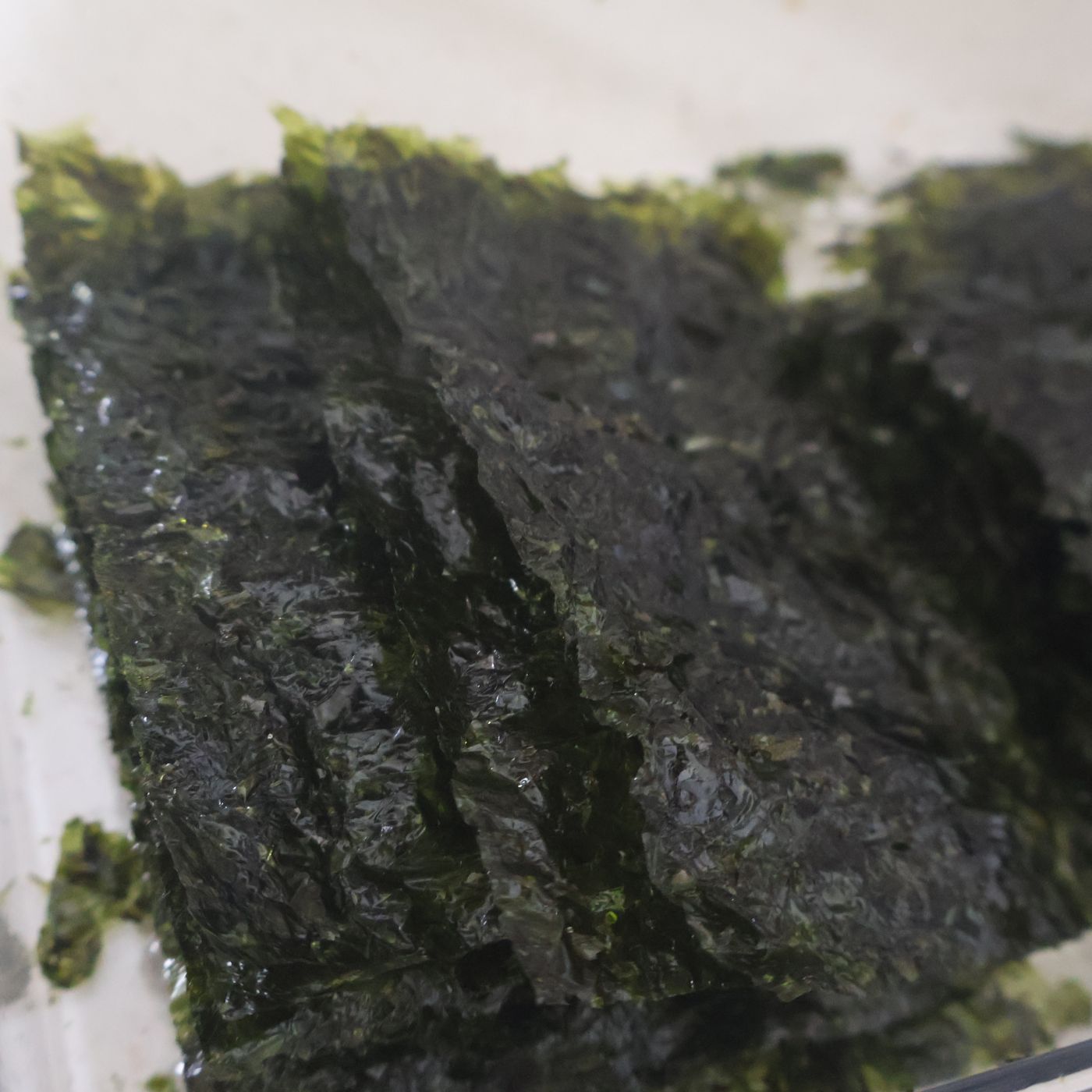 Laver (gim)김Paper-thin sheets of dried red seaweed, toasted until crisp and fragrant. Gim wraps gimbap and rice, crumbles over noodles and soups, and — brushed with oil and salt — becomes the everyday side dish gim-gui.
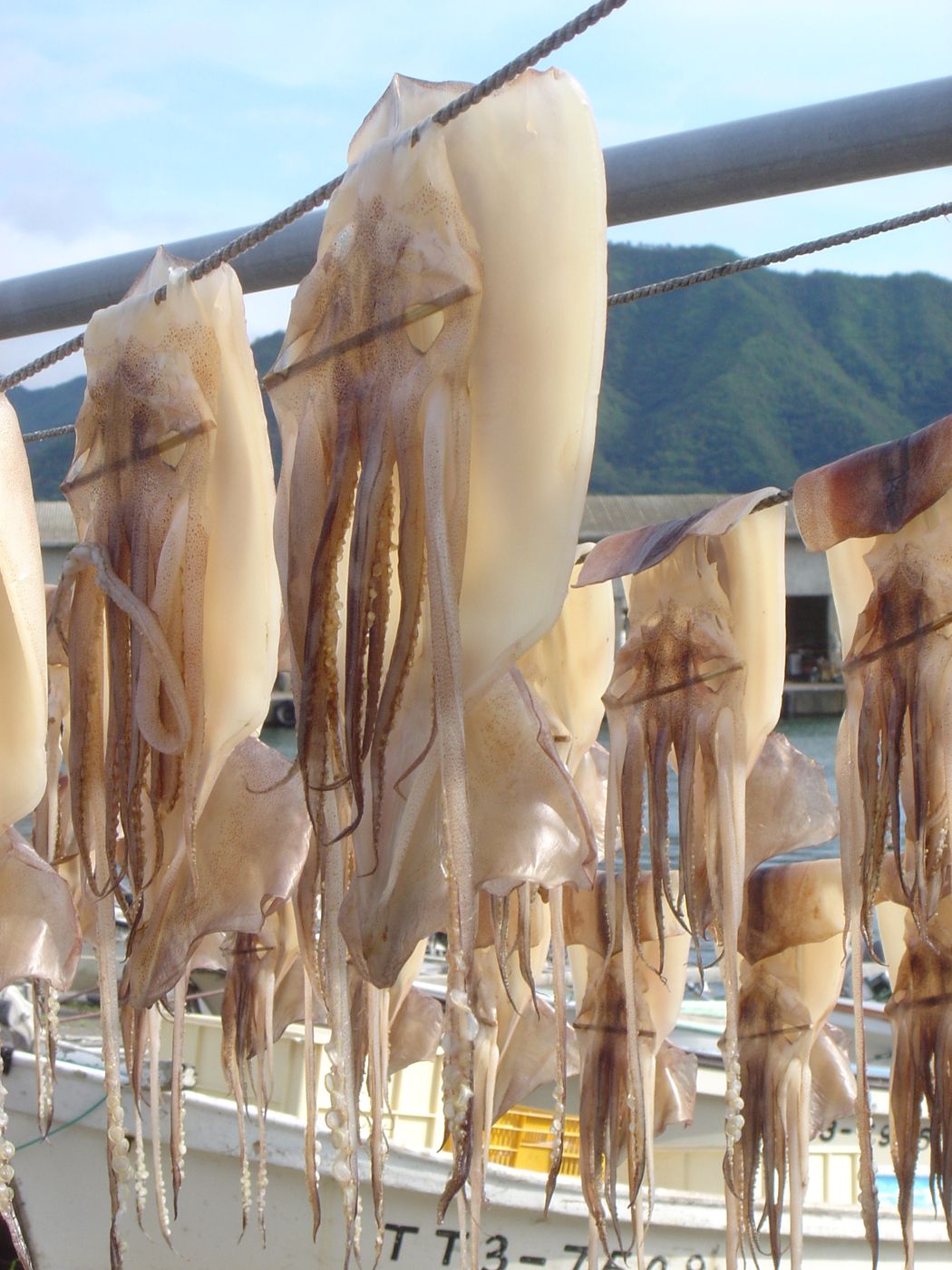 Squid오징어Fresh squid for stir-fries, pancakes and stuffed ojingeo-sundae, and dried squid — whole, sun-cured bodies or sweet-salty shredded jinmichae — that has become one of Korea's best-loved pantry foods.
 Gochugaru고춧가루Korean red chili powder, made from dried red peppers ground coarse or fine. It gives kimchi, gochujang and countless banchan their color and warmth.
 Soy sauce간장Korean soy sauce, in two main kitchen forms: pale, salty guk-ganjang (soup soy sauce) brewed the traditional way from meju, and darker, sweeter jin-ganjang for braises and marinades.
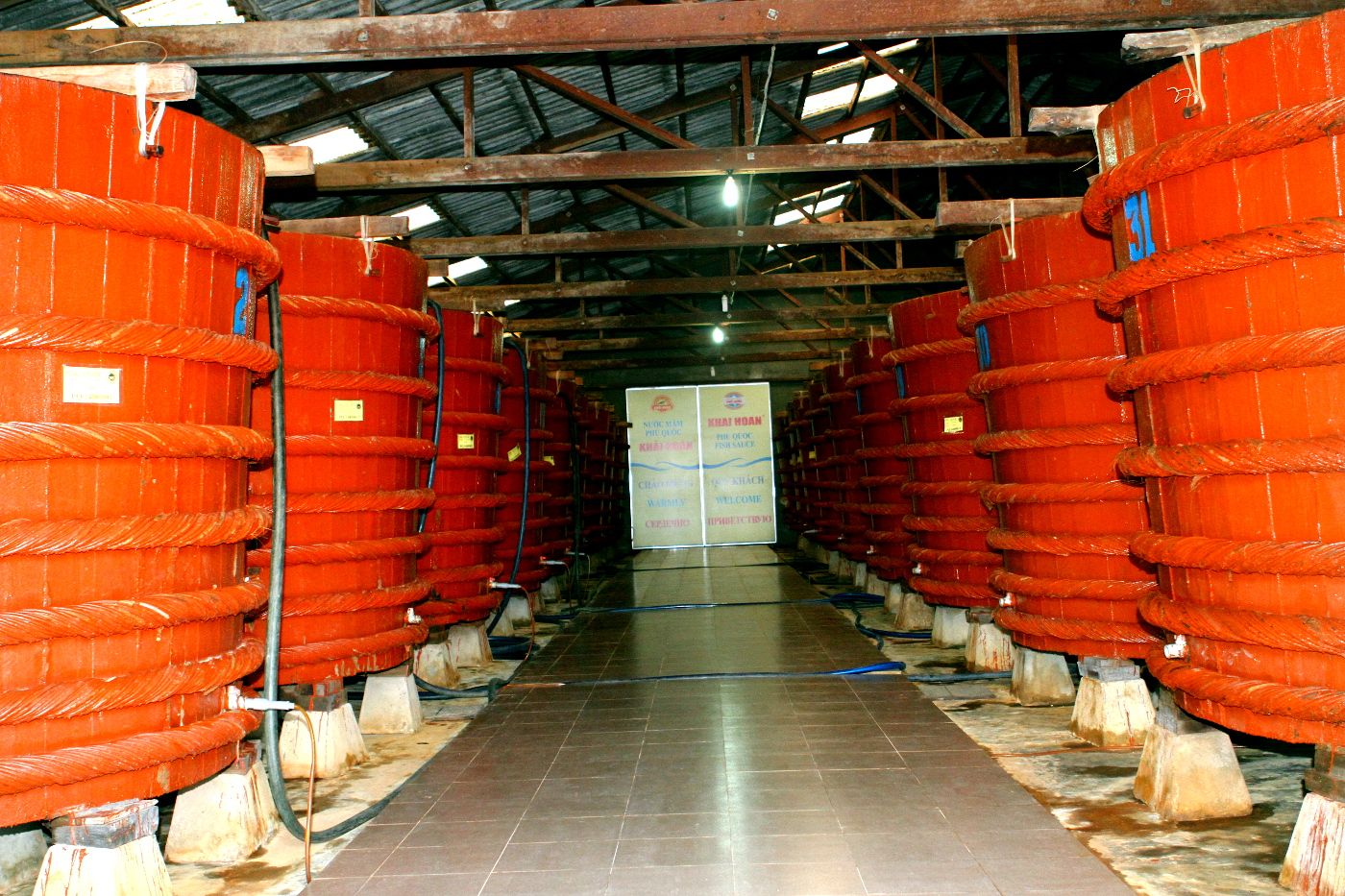 Anchovy fish sauce멸치액젓The clear amber liquid drawn from salted, fermented anchovies. A jeotgal in liquid form, it is the savory backbone of much southern-style kimchi and a quick seasoning for soups and namul.
 Garlic마늘Used raw, minced, pickled and roasted, garlic is one of the essential aromatics of Korean food — in seasonings, marinades, kimchi and namul.
 Green onion파Korean green onion (pa), from thick-stemmed daepa to slender scallions — chopped into nearly every seasoning sauce, soup and kimchi, and the star of pa-kimchi.
 Sesame참깨Toasted sesame seeds and sesame oil (chamgireum) finish countless Korean dishes, adding a nutty aroma and gloss.
 Korean radish무A stout, heavy white radish, often tinged pale green near the top. It is cubed for kkakdugi, left whole in the clear brine of dongchimi, shredded into salads and simmered into broths.
Nutrition
| Calories | ~515 kcal |
|---|---|
| Protein | ~27 g |
| Fat | ~7.6 g |
| Carbohydrates | ~87 g |
| Fiber | ~8.4 g |
| Sodium | ~2860 mg |
Notable forSelenium · Vitamin C · Folate · Vitamin B12
Estimated by summing USDA FoodData Central (SR Legacy) values for cooked short-grain white rice (FDC 168932), raw squid (FDC 174223), Asian radish (FDC 168451), sesame oil, sesame seeds, soy sauce (FDC 174277), sugar, garlic, scallions and table salt with Korean Food Composition Table values for gimbap laver (L0030010001a), red pepper powder (R0070000005a) and anchovy fish sauce (K069001000Ia), divided by 2. USDA does not report fiber for cooked rice, so its small contribution is not counted. All the salt used to cure the radish is counted, though part drains away; most of the sodium is in the radish kimchi and squid seasoning, not the rolls. Actual values vary with ingredients, portion size and preparation.
Health Benefits
- Lean seafood: squid supplies protein, selenium and vitamin B12 with very little fat.
- Radish: Korean radish adds vitamin C, folate and crunch; the rolls themselves are plain rice and laver. See vegetables and namul.
- Low in fat: with no frying and only a little sesame oil, the meal is light in fat.
Regional Variations
- Tongyeong standard: six-cut sheets of laver around plain rice, with seasoned squid or cuttlefish, radish kimchi and, often, fish cake; a cup of radish-greens soup comes alongside.
- Kkochi gimbap (early style): webfoot octopus, small squid and mussels seasoned and threaded on bamboo skewers, as the folk encyclopedia describes the first vendors' version.
- Radish side: small cubes like kkakdugi or larger, chunkier seokbakji, salted and dressed with jeotgal and chili.
- Substitutions: baby octopus (nakji), small squid or fish cake in place of squid, as the Encyclopedia of Korean Culture notes.
Pairings
 Cubed Radish Kimchi깍두기Korean radish cut into neat cubes and tossed with chili, garlic and salted shrimp — crunchy, juicy and a classic partner to rich soups.
- Chunky Radish and Cabbage Kimchi섞박지Big, flat-cut pieces of radish and cabbage mixed in one chili and jeotgal seasoning — a late-autumn “mixed” kimchi, and the name for big radish kimchi today.
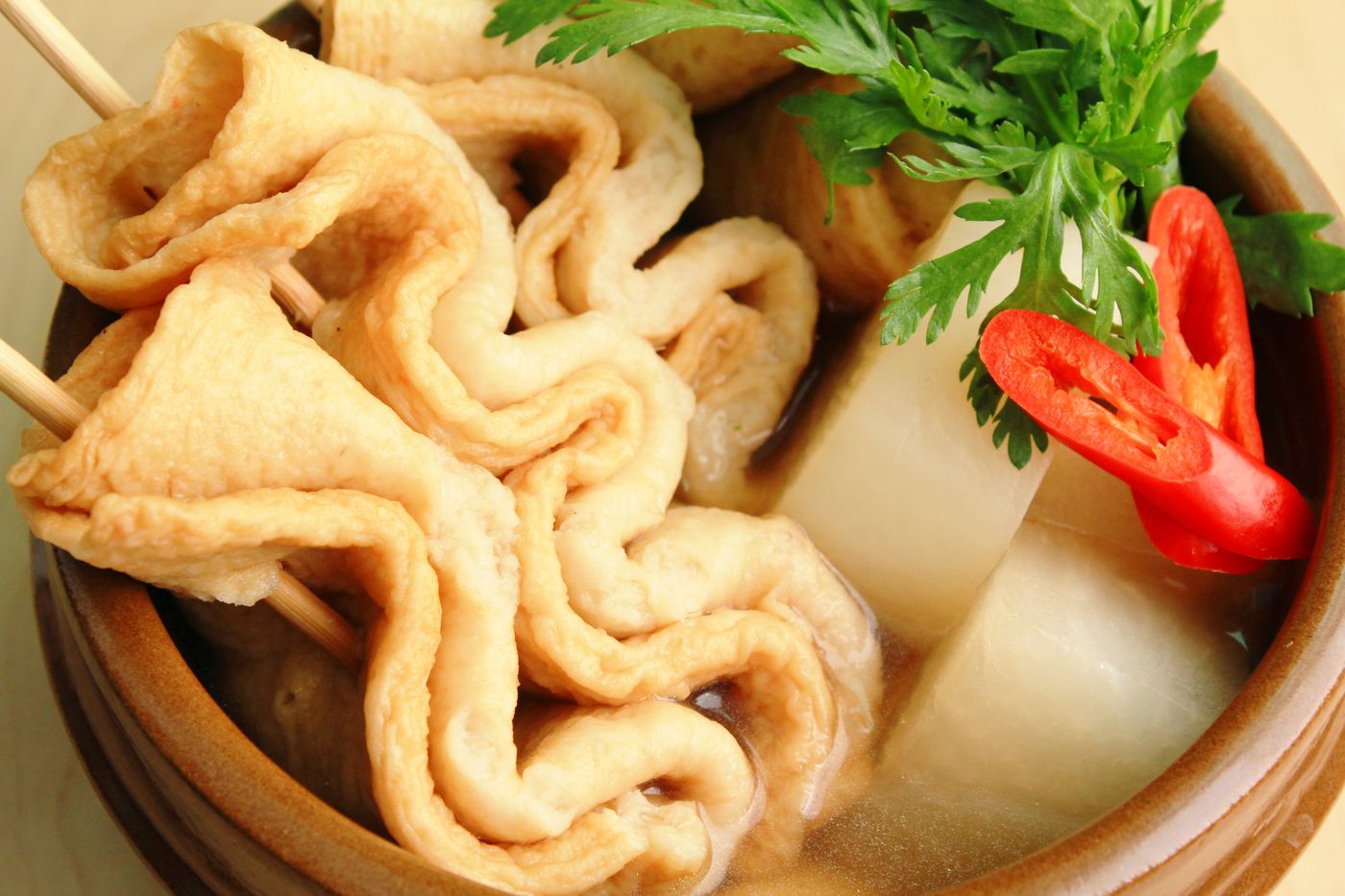 Eomuk Tang (Fish Cake Soup)어묵탕Fish cakes, often threaded on skewers, simmered in a clear anchovy, kelp and radish broth — Busan's winter street-stall soup and a quick home dish.
Sources
- 01충무김밥 (忠武김밥, Chungmu gimbap) — Encyclopedia of Korean Culture
- 02충무김밥 (Chungmu gimbap) — Encyclopedia of Korean Folk Culture, National Folk Museum of Korea
- 03Laver product, For Gimbap, Dried (L0030010001a) — Korean Food Composition Table
- 04Mollusks, squid, mixed species, raw (FDC 174223) — USDA FoodData Central
Last updated